Virtually wholesaling all across the country with Paul Lizell - Payneless Wholesaling Podcast
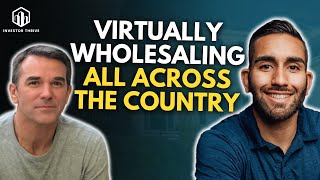
Paul Lizell wholesales properties across the country by buying bank REOs through online auctions, then flipping them for profit with minimal cash down. He turned a $177k Ohio property into $345k and a $53k Texas deal into $128k. His method works in wet-fund states where back-to-back closings let investors close without their own money.
Chapters
We are live with the Painless Wholesaling Podcast. I'm here with Paul Lizell. Is that right, Paul?
Is that—
good, good to have you on here, everybody. Today, stay tuned because we're going to be talking about how to wholesale across the United States, across the nation. We got Paul, I think You were saying you've done over 45 states, wholesaled in over 45 states.
So 44 out of 50 states have wholesaled. Yeah, man.
What about those ones you haven't? Are those ones still like keep you up at night or are you going for those?
Not really. If something happens, great. There's certain states I avoid and a lot of them fall into certain states. The only one I would probably do additionally would be actually two, Hawaii and the three, the Dakotas and Hawaii.
Oh, the Dakotas.
Wouldn't bother. Yeah.
Yeah. I know that when I was doing a lot of marketing nationwide for pay-per-click leads, they would tell us to not even turn on than the Dakotas. They're like, don't even worry about it. Yeah, well, that's really interesting. So let's dive right in. If this is your first time tuning into the Painless Wholesaling Podcast, what our goal is, is to make wholesaling and real estate investing painless for you, because everyone knows it takes time, it takes effort, and if you do this on your own, you feel like you have to do on your own, you're going to make a lot of mistakes. So we try to make— take away those mistakes by bringing on experts. So we have Paul here to tell us a little bit about his business, his life, and, uh, provide as much value as we can in the short time. So Paul, take it away. Tell us a little bit about yourself and, uh, what got you into real estate.
Sure. So I'll go back to where I started. Um, 2001 is when I— very end of 2001 is when I started investing in real estate. And I bought my very first bank-owned property off the HUD Home Store. And I partnered with a guy on it. We picked it up for $29,500. Uh, we put $4,000 into it. We sold it for $69,000. We each walked away with $15,000. So a $30,000 net profit in a few months. It was great. And then I rinsed and repeat. But I was doing this while I was working full-time for a bank. I was a commercial loan underwriter for a small community bank for a year. Then I became a business development officer for a couple years thereafter. And then I went to Citizens Bank, a bigger bank, bigger, more regional bank there. Went for a few years till 2004 when I finally quit my job and went full-time into real estate investing.
Wow, sounds like you went through quite a bit in that short— that time. Wow.
Oh yeah, absolutely. You know, my— and one of my keys was like— and I had to do this, convince my wife potentially as well, but for definitely for myself— I had to save up 18 months worth of bill-paying ability. In other words, a year and a half a bill-paying ability before I would eventually just jump and go on my own. That's what I did. Once I got that 18-month, boom, it would end up being like December, end of November, early December of 2004, I quit the job and did it ever since. You know, I went through that financial crisis, 2008, shifted my model. That's where I was doing a lot of fix and flips and I was buying almost exclusively off HUD and bank REOs off the MLS in the suburbs of Philadelphia at that point.
Okay.
And then I kind of shift 2009 once I lost a ton of money on a bunch of the fixer-flips I had going, I'm like, I did a couple wholesale deals and they were easy money and I didn't have any risk. Why don't I go back to doing that? So I flipped my model from 90% fix and flip and 10% wholesale to 90% wholesale and 10% fix and flip. And I did that for a while, you know, until 2013 roughly, when the market shifted and started to go positive. And then I did a mixture of stuff, but I started doing all over the country. Really end of 2009, going into 2010 when it became a little bit easier. I started buying in Indiana and Ohio, New Jersey, Virginia, the Carolinas, Florida. Before you know it, I bought 44 to 50 states.
Wow, that's amazing. And if you had to go back, would you have changed anything on the model of going to more towards wholesale? Would you wish you would have kept more?
Oh, definitely wish I would have kept more. I think we all say that. We've been around for a long enough time, 22 years doing this business now, right? Always wish I would have kept more. But I've also done really well in building up some rentals, selling them when the market's gone up, and then building up, getting some more, and sell them when— I didn't expect the market to go parabolic here after COVID, but it did. And I sold some more and made some more. Now I'm building again, and we'll see where that leads. But now what I'm building is I got some like 12-unit building, 5-unit building in Wyoming. I'm going to probably just refinance, keep those things long-term, and they'll, they'll be in my, you know, just stick it, set it and forget it, because they cash flow very well. And then I'll add more as as I need to at that point, you know, pick and choose which markets I want to be in for the buy and holds.
Yeah. Are you continually looking for more deals, um, like multifamily deals right now, or not so much?
Yeah, we do, but not the big moldies right now. The big moldies, we look at them, but when you do the underwriting on them, they just don't make sense right now. And especially with the cost of capital right now on a refinance side. Now the smaller ones that say, you know, 20 and under or 30 and under units, that's a largely ignored class. So you can go in there and get some pretty good bargain basement pricing. You can even get some owner refinancing on occasion, right? And those are good ones getting— so you could really do some value add with them. Like the one I picked up at Casper, Wyoming, I picked it up for $430,000. I put $500K into it, but it just appraised at $1.3, and I'm roughly about $1 million into it, and I'm refinancing it right now, and I should be able to pull almost all of my cash out.
Yeah, that's awesome. Yeah, so the reason I'm asking you is because today one of my, uh, family members has a website where he generates traffic to, um, I guess leads from multifamily, and sometimes he gets them outside of Tempe out of Arizona, and we got— he got one in Salina, Colorado, which is like close to Pueblo. It's a 12-unit, and I don't have any buyers there.
I'm interested.
Yeah, yeah, I'll have to— I'll have to send you the information. My way. Yeah, it's under— it's under-rented. It's like each unit's between $500 to $700, and it's way, way under rent. But again, I don't really know that area, and I don't really mess with, you know, outside of Utah when it comes to multifamily. So Look at that. I'll send you that.
I'm definitely interested. Those are like that. 12 units seems to be my specialty number.
Okay, well, there you go. 12 units right there outside of Pueblo and like south of Denver. So that would be cool.
Awesome.
All right. Well, tell, tell me a little bit about what you do to help new investors get into wholesaling, because you said you do virtual real estate wholesaling. So do you teach it? Do you— what do you do?
We do. We do. So we have REO Auction Academy. You see it right here behind me. And what we do is we do something totally different than everybody else out there. And it's kind of how I got in, right? We teach people how to buy bank REOs, but mostly on online auctions, whether it's Auction.com, Hubzu, Xome, Hudson Marshall RealtyBid, Auction Network, Williams Williams, any of these platforms. And even every once in a blue moon, there used to be stuff on eBay that you can get. And there's some smaller little auction houses that are more local in different markets that you can also sign up for. And potentially pick up stuff. So that's what we specialize in buying in. We have an educational platform, teach people how to do that. And a lot of people are leery of buying outside of their area where they are. And we kind of take the headaches away from you there. It's not as daunting as it seems. We have systems and how we go about doing it. And it's fairly simple. And we've been doing it since 2009 and with really, really good success. Like an example of a property we just are about to close on, I think on the 23rd of this month here in June in Hubbard, Ohio, we picked it up for $170,000.
$177,000.
It's a big, big building, big house, 6,088 square feet, I believe, and like a 3 or 4-car garage, big, huge finished basement. We picked up for $177,000. We put almost $40,000, just under $40,000 into it. We're selling it for $345,000. We had 6 offers in or 6 offers over asking price. We went highest and best, and that's going to be $105,000 payout. It's a rarity, right? They get one. That's a great one.
Yeah, that's amazing.
But they do happen. And we have another one in Cuero, Texas, which is south of Houston. We picked it up for $53,000, put just about $8,000 or $9,000 into it, and we're selling it for $128,000.
Wow. And on these auctions, you need to come up with the cash, correct? Like, you got to buy it all out. So how do you— how does that work for, you know, someone that probably has $0?
So some of our students will joint venture with them, right? If they've got no money, if it's a deal, we're going to do it. We'll JV with them.
Of course.
We have JV. So, yep, JV is always a great one for them. We have private lenders on our platform, believe it or not, that will fund a lot of deals as well. Other people, other students will sometimes joint venture with each other on different deals. If one person comes in as a capital partner, the other person is the one who finds the deal. So we got that. We also connect them with companies, asset-based lenders like KeyAVI, Dominion Financial, LendingOne, Lima One Capital, and others, Kogo Capital, Lee Arnold's group out there. And we're working on a few different other ones as well. That way they can get in there without having to worry about coming up with the money, right? And the funds themselves, because that is, you do, when you buy these bank-owned properties, you've got to come with the cash. Cash, right? It's not a assignable contract. They don't let you in general allow that. Yeah. So you've got to do a back-to-back closing. However, there are states, if you work with the right title company, there's wet fund states and dry fund states. If you're in a dry fund state, you can use your buyer's cash to pay for you on the A to B side, and you're just collecting the difference there, which we do as well. So that's a way to do it basically with almost no money down because those are the best. Those are the best. I love when we get those. And you can focus on those markets if you wanted to.
Do you know a couple more of those markets off the top of your head that you can say?
We do Texas with that a lot.
I believe Mississippi is one too, isn't it?
Mississippi is. I'm trying to remember. I don't think Alabama was. I believe we did New Mexico. Missouri. Missouri, Nevada. I think there's either 8 or 9 of them somewhere in there. I have a list somewhere.
Yeah, those are seriously the best. We did one of those where we had the— we used the end buyer's money.
Yeah, that's great. Those are the best when you could do that. And again, you need a title company to be on board with you to be able to do that, because not all of them will do it because they want to make sure none of them cause any issues.
So that's the main marketing strategy you teach in REO Auction is how to find these, source these deals.
Is there—
would you say there's a limit or is it because it's the whole United States that you can open this up to?
Is there no limit? There is no limit. And I used to do the direct mail marketing, right, which I cut off in 2013 because I just had too many deals. On the auctions, I didn't need to do any direct.
I was doing it myself. Super expensive too. I'm sure this—
your strategy is inexpensive, costs nothing, right? So there's zero marketing costs. That's a big bonus. But when you think about getting in, do you want to spend $3,000 or $10,000 a month marketing when you could just do it? Now, you're— it's your time, and your time is a value, right? You and I, we have value on our time, right? So if you're putting in 15 hours a week, there's no reason you can't find a deal, maybe 2 or 3 a month putting in that once you get good at it, right? Once you get good at properties and know how to contact the agents and what questions to ask them and get the information that you need, it becomes more simplified.
So these, these bank-owned properties are represented by real estate agents still?
It's not— not all of them. There are some that aren't. There's a program out there called the HUD CW COT program, which they created a few years back, where instead of throwing them on a HUD Home Store because they're trying to get away from the HUD Home Store. So if you go on there and look at it, you'll find very limited inventory in different states. Most of them, they throw on the online auctions. But with the HUD, CW, COT, they'll foreclose on them and then just list them with an auction company. And they're not listed on the MLS. They're like off-market properties, right? They're off-market technically. They don't really have a price on them unless they feel like throwing something on Zillow, which they will at times put it on Zillow to put a number on it. And then, and then basically we're trying to find an agent in that area who's kind of somebody who's an expert in that area, has been there for a while. To give us an idea what they think would be worth. Go out there, take a look at it. A lot of them, they don't let you in even if they are vacant. And we try to get our students focused on the vacant ones, not occupied, because, you know, of course, with ejecting or evicting anybody, focus on those. If they could peek in the windows, they'll generally— the agents get a pretty— especially experienced agents could go there, peek through the windows, get an idea what they think it's worth and what kind of repairs they think it needs, and then just give you a ballpark estimate. And then you can assume, you know, there's $15 or $35 per square foot to renovate the property. You put those factors in, you come up with your minimum allowable offer.
Man, I really like this strategy. I haven't really heard of it too much. That's very interesting. I've been in the game for a long, like, 5 years. I'd say that's a long time, but no, I haven't really heard of people using this marketing strategy very much. Do you know why that is?
I don't know why. We're the only ones in the game. I think people are creatures of habit, and they're used to your traditional— if you think of it this way, it's, it's riskless if you're doing your traditional wholesaling method, direct-to-seller, except you are risking your marketing money, right? You are, you are risking that. With ours, you actually have to close on a property. So people feel maybe it's a little riskier. But for— we did— a lot of our students, believe it or not, are experienced investors that do a ton of deals in certain markets, and they feel like they're missing out on the REO inventory. And they just buy in our program. They usually assign somebody to just deal with the REOs, and then they realize, shoot, I can go in other markets too. And it's another segue for them to start another market to invest in.
I love that. I think that's amazing. Do you Are there some states that just because it's a hot area, hot state, I guess market, there's less REOs, or is there always opportunities?
There is always opportunities, but there are areas where there's just such a little bit of inventory, it'll go like that regardless. Like a lot of these properties will move really, really quickly, or the asset managers or banks will recognize that instead of putting it on the auction platform, they'll throw it on the MLS. They can get more of that. Can't blame them, right? Can't blame them. No, of course.
Especially eyes on it.
So what's your market again?
I forget. Are you in Salt Lake City? Yeah, it's pretty hot.
It's a hot market, been a big-time hot market for a while now, so it's hard to find inventory, at least fairly priced inventory.
But I'm assuming the Midwest probably has tons of opportunities, like Ohio, like you said, um, Michigan, Missouri, um, Kansas, Oklahoma, Texas, uh, the Carolinas, Maryland, Pennsylvania.
Yeah, a lot of—
we focus just knowing where to look. You just got to know where to look.
You just got to know where to look, right? And if you follow demographics, where people are leaving the cities that people are vacating, the states people are making, like Illinois, right? That's— that market is really falling. New York, um, parts of New Jersey. New Jersey's weird because people are leaving maybe more towards the city and they're shifting downward within the state. So they're going more towards the shore points, or they're going to Delaware or Pennsylvania. So that market has become red hot. But other markets, people are shifting out of— they're going out of Minnesota. Minnesota's losing a little bit of its luster in around— what do you call Minneapolis, all the issues they've had there. Other parts of it, the suburbs are doing great, they're flourishing still.
So if, if they are losing the zeal, or like we're talking about some of these markets, those are where you would target or you wouldn't target?
I wouldn't target if I'm looking to hold long term, but you can target to find bargains occasionally. Like, if you— and I won't, I won't do cash flow rentals in those markets because I don't trust the, the government, the local governments and municipalities there. They'll let the the tenants stay in for forever. So I tend to go just zero income tax for my rentals. But some people do it right. It's their market. They don't mind doing it and dealing with that. So you could occasionally find some really good deals because there is a little bit more inventory, especially outside of Chicago proper, right? The suburbs of Chicago are still very hot, but you go outside of that and more rural areas and you'll find really good deals in those markets. Same with Kansas, the same with Oklahoma and Tulsa. Yeah, it's different markets. So there's some really good, really good opportunities. You kind of want to focus. And so if you're looking at Missouri, St. Louis, don't I don't focus necessarily on St. Louis itself because you got so much competition there, but if you go 30 minutes, 60 minutes out to Flossmoor, say, or even a little further out, you'll find really, really good deals in that market.
Sounds like something I need to check out, Paul. I didn't know about this. So, Paul, for my listeners on here, since we're going to wrap up, what would their, uh, this call to action— what would you have them do if they want to learn more about what you're talking about?
So if they want to learn more about this, like if they want to reach out to us, that's great. They can reach out to us at reoauctionacademy.com, and we have a couple different platforms they could— if they feel like they can do it themselves, we have a do-it-yourself program for like $497, $497. And we also have a full-fledged coaching for $5,500 where we show them everything and they get all kinds of training videos and all kinds of access to lenders and other things.
Wow.
But if they want to do it on their own, start with your local REOs on, on MLS. Look at auction.com, Hubzu. Those two platforms have a ton of inventory, your two best biggest sources for looking at properties. And then start contacting agents and try to feel like, what is the value of this particular property? Right. Start targeting properties and testing it and seeing if you can come up with a good comping. Like if you figure out what the value of the property is as opposed to what the realtor gives you, it's a good way to test yourself.
Of course. And so if they come— if one of the listeners today finds something but they don't know what to do with it, could they also reach out to you and say, hey, absolutely.
We've done that with people. People have reached out to us. They found a deal. They can't fund it. They don't know what to do. We look at it, we analyze, say, say, yeah, this is a deal, we'll go, we'll join together with you. Or we say, this isn't a deal, the reason you're not finding lenders for it is because you're overpaying. Here's what the comps are and here's what you're paying, here's kind of repairs and needs. So gotcha, you might do that and then maybe help them get out of that deal so they don't lose their earnest money deposit.
Well, Paul, it's been a pleasure speaking with you, and I actually, I'm going to send you that deal that I have, the 12-plex in Salina, Colorado. And also, they are willing to do terms. They— I talked to him about it, he said he'd be open to doing 10 years $10,000 to $15,000 down, 10-year balloon amortized over 30 years. So we'll see. Again, I come to the point where this is kind of a newer territory for me in a different market, but I have all the per— the pro forma and all that information. I'll send it to you and you can—
Yeah, I'm extremely interested. This is right up my alley, this type of property.
All right. Hey, we— hey, everybody that's listening, network, network, network. That's how you do deals. All right. Talk to you guys later. Thanks, Paul.
Thank you. Appreciate it.
More from Nathan





Why Traditional Wholesaling Keeps Failing You (Use This Pre-Flip Method Instead)





