What They Don’t Tell You About Real Estate Analysis
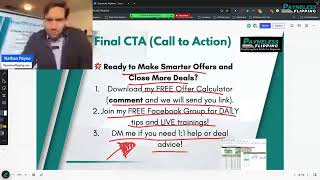
Nathan Payne breaks down real estate deal analysis using three essential numbers: after-repair value, repair costs, and maximum purchase price. He walks through a $120,000 San Antonio contract, shows how different deal structures affect profit, and explains why overestimating ARV and underestimating rehab are the biggest mistakes wholesalers make.
Chapters
So let's just have to press go live and we're going to be cooking, everybody. Let's see, just have one place left to go. Let's see. And I hope everyone had a Merry Christmas. Uh, anybody— if anybody's— I would love to see, like, if you guys want, one last time before we get right into the training, did anyone get anything they really were excited about? Anything that they gave that they were really excited to give? And the reception of getting that gift, like giving that gift, they, you know, brought joy to someone. I'd love to see that, love to hear about that. Throw that in the chat, guys. I was able— my daughter, who's like 16, 17 months, we gave her a nice chair and she's just loving sitting in that chair. So that's been super fun to see that. I know that's probably super like whatever, right? But no, it was really cool. It's the little things, you know, the kids these days, like little babies, they just usually— it looks like they like gifts that aren't even supposed to be gifts, you know, like the wrapping paper, the boxes, all that. So okay, alright, last thing I'm doing is I'm just putting this in the live, then we're going to be in the Facebook group and we're going. Alrighty, looks like we're all ready, ready to rock, everybody. Okay, being with the family. Alright everybody, give me a 1 if you're ready to go because I'm ready. I got this whole presentation ready for you guys. I'm super excited, but I just want to make sure everybody's good. So give me a 1. We got a lot of people in here today. I'm really happy to have you guys in here. I'm gonna be doing a a demo, a deep dive. So if you guys have been like, man, what do I exactly, what do I offer? How do I analyze the deal? I'm going to tell you everything you need to know so you can crush it. My name's Nathan Payne, but I go for it by Professor Payne now, because my goal in 2025 is to show you guys exactly how to do everything. I want to be the best teacher. I want to make wholesaling simple because it can be extremely complicated and it shouldn't be. Right. So my goal is to simplify, simplify, simplify. That's what we're going to be doing. So I'm pumped. I'm so excited, guys. Let's go right into this training right here. Um, let me share my screen. And like I said, I got something really special for you all. I'm super excited to do this. And, uh, I just want to make sure before I get into it, can everybody see my screen right here? Can everyone see my screen? Um, let's see. I just want to make sure. Give me a 1 if you guys can see my screen, because I don't want to do a whole presentation Without everyone being able to see what, uh, what they're— what I'm trying to show. Okay. All right, everybody give me a 1. Let's see. All right. All right. Looks like we're good. All right, guys, time to dive in. All right, so here we are. How to analyze a real estate deal and make offers with confidence. That's extremely, extremely important, guys. We want to feel confident about the offers we're making. We want to feel good. We want to know when we're talking to sellers that we can complete and go through with what we're saying, or you don't feel very confident, you don't feel good about yourself if you're like, hey, I can buy your house, and you don't even believe you can, right? Who's ever been— if you guys are watching this, just let me know if you've been in that situation where you've made an offer, the seller's accepted, and you still don't feel good about it. You're like, oh crap, they accepted my offer, now I gotta go find a buyer. I don't even know if this is a good deal. Has anyone ever felt like that? I know I have in the past. Not a good feeling. Let me know if you guys have felt that. But today we're going to go over how to analyze a real estate deal and, uh, make, make offers with confidence. And I want you guys to stop guessing, okay? I want you to stop guessing because it doesn't feel good to guess, all right? And okay, Deborah, you feel that way? Awesome. And guys, if you stay till the end, I'm going to be giving you my offer calculator so you guys can see everything I'm going to be doing, the deep dive, the demo, everything. You guys are going to get exactly that, that exact same calculator that I built. I've spent thousands of dollars on this thing because knowing your numbers is extremely important, everybody. So, uh, let's dive right in and let's go to the next slide. All right guys. So if you don't know who I am, my name is Nathan Payne, also known as Professor Payne. I'm going by that this year. Why? And going forward is because my goal is to make wholesaling simple. I want to teach you guys everything you need to know so you don't have to go get it anywhere else. And I'm going to, I'm going to go crush every topic. So you don't get— so you're not left with wondering, okay, what do I do here? What do I do there? I'm going to give it to you all. Okay. Everything I got. And I've done over $1 million in wholesale fees. These are a bunch of checks that I've done just to show. I can let you guys know. Yes, I've done this. I'm not making this up. This is legit. Um, and if you guys don't believe me, I don't really know what else to tell you other than showing you proof and deals I've done. I got my business degree from BYU-Idaho. I love teaching. I didn't get my degree in teaching because I found out that being a teacher, it didn't really help me accomplish my real estate goals, my financial goals. But teaching is my passion. I love to teach. It's so fun for me. And growing up, I wanted to be a teacher, but I shifted to real estate to achieve, like I told you, my financial goals. And I was able to hit my financial goals. Luckily, I'm mortgage-free, debt-free in the sense like I don't have a paid my home, which just happened this year. Freaking super exciting. And I live in Canada. I bought a farm. I live the life I'd love to live, and all because of real estate, right? And that's why I want to show you guys how I'm able to do it and how you guys can do it. Now I get to combine teaching because I know what I'm talking about. I've done the deals, and now I can teach you guys. And these are just a few people like Daniel, Henry, a couple of the students that I've worked with and clients. And a lot of them aren't students, they're just people I've done deals with and I've given advice to. So these are people I've taught so far, and I continue— I look forward to teaching you guys. And hopefully you guys can watch all this and go crush it, because my only desire is that you guys go crush it. I want to make wholesaling simple for all of you, okay? That's my goal. All right, so if you guys are— if you want to know why you're here, okay, because I know you guys— this is the day after Christmas, I appreciate everyone being on here. The goal is for you to stop missing out on deals and master the process of evaluating deals step by step. You, by the end of this video, you should be able to know exactly how to analyze a deal, how to make an offer, how to feel confident about it. Okay, so I'm going to show you the step-by-steps today to confidently evaluate deals so you're never questioning if a property is a winner. I know that sounds crazy. How can you know by watching this video if every property's a winner? I'm going to give you my whole process. I'm going to give you how I do it. And you're probably like, Nate, how do you— how can you know if a deal is a deal all over the United States? I'm going to tell you guys. I'm going to be completely transparent how I do it. You might not like it, but I'm going to give it to you guys. Okay? So stay until the end, guys. Remember to stay till the end because I'm going to be giving you my offer calculator that I've built, uh, over the last, um, couple years I've been doing deals. I've purchased this thing. I've gotten a lot of these resources from other wholesalers. You guys are going to be getting all this, so don't, don't worry. Just stay till the end. I'm going to let you guys know how to get that thing. Again, I've spent a lot of money on it, but it's all for your benefit. Okay, and I'm going to teach you guys how to use it. All right, so before we get going, I just want to make sure everybody's with me because we are doing this live. Give me a 1 in the chat or wherever you're watching this live, just so I know you're with me, because I don't want to jump in ahead into going deep into how to analyze deals, how to make offers, if you guys aren't there. I think I've been pretty clear at this point of why I like teaching, why I'm doing this, and, um, you know, what you guys are going to get out of this. So just give me a 1 in the chat. I know a lot of people are watching it in the live Zoom, so, uh, let me just check. I swear the little chat box was up here somewhere. Oh, I see, I see you guys coming with it. Great. Let's dive right in. Let's go for it. Okay, so this is why knowing your numbers and this is why analyzing deals is so, so important, guys, because I don't want you to missing out on deals. Okay, you know how many deals I've almost walked away from because it it didn't look like it was quite a deal or it didn't really quite make sense. So I, uh, you know, I wasn't sure if I should do the deal or if I should make the offer, but because I know how to analyze my numbers and because I'm going to show you the process, which I do, I've been able to make money. Let's take a look at this deal right here. $93,000 deal. I barely could wholesale. There was this property that we had in Salt Lake. It was actually in, um, where was it? Uh, south of Provo, Utah. If you guys are familiar with that, that area, Okay, and we were in this area and this property, it was an older home, okay, and it was, um, it needed quite a bit of work. But when we had got it under contract, we tried wholesaling it, everybody, and we were getting like offers that were, were gonna make us maybe like $20K at most. And I was like, no, wait, no, there has to be a better way to make money here. And, and a lot of the people that were gonna get us like a $20K wholesale fee, which is decent, they were iffy about it. They were like, you know, you've been there with the cash buyers, they drag their feet and you're not 100% sure if they're legit or not, like if they're going to go through with it. But they were dragging their feet. So what I did is I ran the numbers. I said, look, what we can make like $10,000, $15,000, $20,000 on this deal, or let's look at our other options on how we can make money. Let's analyze this deal and let's make sure we're going to pull out as much as we can because I don't want to lose out on this deal. I don't want to walk away and make zero. Um, So I ran the numbers. I'm going to show you what that looks like today. And we were able to make money on this deal. Okay. The result is, um, wholesaling the deal, we would make some money, but we decided to wholesale it. Now I'm going to explain what wholesaling is in this video. So if you're watching this, don't worry. It might be like a lot of information today, guys, but you need to know all these things if you want to make— you want to expand and make as much money as you can in this industry. So if you feel a little overwhelmed, you might have to watch this a couple of times, but that's okay. Cause we got it recorded. All right. So this is, this is a real deal we did. And, uh, the moral of the story that you guys know about this is like, if you try to wholesale something and it doesn't quite work or make sense, you need to have other strategies to make money on the deal. And I'm going to explain what those strategies are because a lot of the time you get a deal under contract, you try to disco it, maybe you disco it for 3 or 4 days. You're relying on the fact that the cash buyers that are going to buy it see that deal, see your post, see your email, see however you disco it. The chances of someone that's like the best buyer for that deal not seeing it within the time you try to display it are pretty high, right? And I know that because, you know, you're, you're cutting into a short window, especially if you don't have relationships with those buyers. You're just kind of gambling and hoping the right buyer will want to see it. So I knew that, and I knew the numbers made sense, so we whole-tailed it. Again, we're gonna explain how to do that yourself today. But look, the numbers don't lie if you know how to calculate them. You have to learn how to calculate, which we're gonna be going over. All— know all the ways to do deals. We're gonna be going over that in this next slide. Okay, so when you run into deals, there's a couple different options to do deals. But let's first, real quick, before I talk about all the other options that are available to you guys when doing deals, let's talk about the problem that we're gonna be solving today as well. If you're guessing, no more guessing, okay? We're gonna be, we're gonna be showing you guys how to go over that. All right, so no more, no more guessing on this. Um, the problem most wholesalers have— and guys, please enter in the comment section what problems you face. These are the problems that I feel are most prevalent— is guesswork leads missed to deals or bad offers and having to cancel contracts. Fear of making the wrong offer keeps you from not even making offers, right? A lot of people don't even feel comfortable because they're like, well, I don't even feel comfortable enough with my numbers, so I'm not going to do it. And you don't know how to structure deals. Let me know if that's been any, any of you have had these, these 3 problems, or let me know your problems that you've had that aren't listed on this. Okay. And the solution to these, both these problems here and any problems you guys have is a proven formula, the offer calculator that you're all getting. You're all gonna learn how to use it and leveraging cash buyers the painless way to, to help you make the right offers and feel confident, right? Because if you've never done a deal, it's probably gonna be difficult to feel super confident. You are gonna feel more confident today, but you got— you guys can leverage cash buyers to help you out. Okay, so we got Some people saying structured deals. I'm having dinner with my son. Great. Appreciate you. All right. Um, so going back to structuring deals, I just wanted to make sure you guys understood, um, the problem we're going to be solving today, but knowing all the different ways to structure deals. Okay. So you got a cash offer. Okay. That's one of the options, uh, for working with a seller. You have a wholesaling it. Wholesaling it, what that means, everybody, is you— it's like lips putting lipstick on a pig. You purchase the property, you, you, you sometimes don't even do anything to it. You just buy it and you relist it on the MLS and you actually own it. A lot of people, what they do is they buy it, they'll clean up the property, they'll do, uh, yeah, just clean it, maybe hire a cleaning company, and then they'll relist it with good pictures. That's wholesaling it, and that's when you actually buy it and own it. And how do you do that? Well, you get hard money. Okay. You get private money, you borrow money. Okay. You rehab it yourself. And when I say rehab, we're talking like a full, like full-on flip. Okay. Where you're, you're doing $40,000, $50,000, $60,000 in rehabs. Wholesaling is like $15K or less. It's just, it's just less than a full rehab. Wholesaling, you're not really remodeling a ton of stuff. You're just doing the bare minimum. Okay. There's this lady that I talked to, we did $18,000 on a wholesale deal with her. She just didn't want to list it. Deal with all that. So I said, hey, look, I'm gonna buy your house and I'm gonna clean it up and I'm gonna list it. And once I close on the property, I'm gonna pay you out the rest of your money. That was a creative deal, okay? And she was cool with it because she didn't have to wait, deal for the listing, deal with the listing and all the agents. Anyway, there's a lot of ways to structure deals, but wholesaling and just cleaning a house and listing it can make a lot of money. Novation, okay? If you guys— how many of you guys have heard of doing novations? Novations is just, it's listing the house on the MLS and you're signing the documents for the seller. You don't ever own the property, you get paid out at closing. That's another way, right? A lot of people don't do novations because they don't really know how to, right? They just, they stick with the cash offer. I'm gonna tell you right now, 95, I would even say 98% of people will deny a cash offer. They're gonna say no. No to your cash offer, 98%, because it's too low. Okay, that's the hard truth, guys. Like, if you're just relying on lowball cash offers, you're in trouble because people— that doesn't always fit everyone's needs. You're looking for that low-hanging fruit that's just willing to take a low cash offer. So you need to be able to provide options and structure deals for people by saying, hey, you know what, I'm willing to take this one down because the numbers make sense. I'm willing to rehab it, uh, myself and go do a full rehab because the numbers make sense. Or I'm I've been transparent with the seller and I'm saying, hey, you know what, I don't want to buy this thing, uh, myself. I don't want to give you a lowball cash offer, but there's an option where we can do a novation. And you can explain that process. We're not going to go into the sales process of explaining it, but you can do that. Or creative, creative financing is buying it on payments, right, on terms. Okay, and again, we're going to go over all these numbers, um, in the spreadsheet. So you, we got We got a lot we're going over today, guys, but I want, I want some feedback from everybody watching. Have you heard of these options? If you have, say 1, and, um, give me a, give me a, uh, let me see it, give me a 0 if you know how to do all these things. Say 0 because I want to know how many of you guys know how to do cash, wholesale, rehab it yourself, novation, creative financing. Give me a 0 if you're like, yes, I do, and give me a 2 if you're like 'Nah, I don't really know how to do any of that stuff, but I want to learn.' Because again, I'm being honest, guys. Like, now, statistically, is it really 98%? No, it's not all— it's not 98% like perfect. I haven't done a study, but I know it's not very high compared to all the different options to structure deals. But again, that's why we have the calculator. I'm going to give you guys the option. Not very good in some. Kelly, Kelly, what's going on? Good to see you. Awesome to have your structured deals. Okay, great. So guys, let's go into this because I'm going to be explaining what you need to know and how to use this calculator of mine to do these, to do these, uh, structure these different types of deals. Okay. And hopefully this has been helpful, guys, because again, I'm taking on a big load. Maybe I should be like doing one, one of these at a time, but I'm going all in. Okay, and then maybe we can do separate videos and I can teach you guys a little bit like more in depth going forward. But let's go over right here. So what makes a deal a deal? 3 numbers that you guys need to know. ARV, if you cannot get an accurate ARV or somewhat an accurate ARV, you're in trouble, right? Because you're gonna send this deal out and it's not, your numbers are just gonna be already off, okay? I know we've all felt that pain of being like, dude, it's kind of hard to know what this property's worth. Okay, we're going to be going over what we do when we're in that situation. ARV stands for after repair value, what the property is worth when fixed up. Okay, repair costs are very important. Okay, the problem is none of us really have— if you're new, you haven't really rehabbed anything, so you don't really know, so you're just guessing, right? We're going to be going over the best way to estimate rehab costs so you don't blow it. And the best way to do it, we're going to be going in. I was going to tell you, but let's wait. Okay. The amount needed to get, uh, get it to ARV. So you need to know how much repairs are needed. Okay. And the different options, because like the different deal structuring, sometimes you don't need to do any rehab to the property in an Ovation and a creative deal. Sometimes you don't need to do it in a, in a wholesale deal. Right. But in a cash deal, you usually do usually. Usually, okay, so you need to know what options to pick when you're, uh, depending on the rehab, right, and the situation of the seller. Your purchase price is the next thing. They call it max allowable offer. I just say purchase price, but it's the most you can pay and still make a profit. So basically, can you make money on this deal? That's what it comes down to, guys. Can you make money on this property on an Ovation, on a wholesale, on a fix and flip? Any of these. Okay, are you guys with me? I, I'm always checking in on you because I want to make sure I'm not going too fast. The whole goal of wholesaling, wholesaling, fix and flip is to make money. No one is doing anything to lose money. And guys, unfortunately, I've lost money on some flips, okay? And not because I didn't run numbers good, it's just sometimes the markets— sorry, sometimes the markets can jack you up. My— this dang alarm always comes on at 4:30. I got to turn this thing off. Sorry, guys. Let me put this back on. Okay, sorry, gotta take off that dang alarm. Okay, so what I was saying, everyone, is, um, lost my train of thought. Gosh darn it. Let's go to the next slide. Okay. So the question that you guys are probably having right now is like, Nate, that's cool. I need to know those 3 things to even get started. Where the heck do I get this stuff? Okay, so where do you get ARV? You can get it— most people get it online from different types of softwares. I like using Batch Leads. There's other services I like, but Batch Leads is a good one, which I'm going to be showing you guys how to use today. You can try it for free. If you don't want to try it You have Zillow, right? You have those other free services and more. Okay, I'm gonna show you guys in the live demo on the next slide how to do it. All right, so we're going right in. I'm gonna show you guys a live demo. No, no, just theory. We're not just talking theory, we're talking application here because I want to show you guys how to do things. Okay, repair costs. How do you find the repair cost? Okay, estimates on the calculator are gonna help you on this live demo. There's estimates on how to do the repairs, how repairs are needed. You need pictures if you're doing this virtually. It's very hard It's hard to know what the condition of a property is without seeing it in person or getting pictures or video from the seller. You have to make that a part of your process, okay? If you try to wholesale or make a deal happen on a property that's sight unseen, every buyer is going to offer way lower because they don't know what they're getting into. You're just going to get real offers, like lower offers, all right? That's where you're going to be getting your repair costs is from pictures, seeing it in person. Estimate and leveraging cash buyers to help you out. Okay, I, I, guys, I still don't really know what things cost, like a roof and, uh, foundations and stuff. I don't need to know that because again, I leverage my cash buyers and I use a general estimate, right? And I've done this long enough to kind of know, okay, I'm good, or I'm not shooting it too low on the rehab cost. Okay, and how do you find your purchase price? Well, guys, you get the purchase price from the formula, right? This calculator is going to show you how to get your purchase price. Okay. All right. All right. And if you guys are a little worried, don't be worried. I'm going to walk you through this whole thing. I'm going to hold your hand. Don't worry. I got your back. Okay. It's time to do a live walkthrough step-by-step on how to, how to analyze, analyze deals, a flip, wholesale, wholesale, novation, creative finance. Deal using my calculator. Buckle up. Are you guys ready? I feel— hopefully I haven't lost any of you guys in the first 20 minutes of going through. I know this information can seem a little overwhelming, but basically all I said in a nutshell is you need to know 3 things. You need to know the ARV, the repair costs, and your purchase price. You need to be able to make money or make whoever you're selling the deal on to money. Okay, it's pretty simple. I said it a lot, but you guys ready? Buckle up. We're doing a deep dive on a real deal that I'm working on right now. And this is the truth. This is the realness. Like, this is the deal that I've worked on and it hasn't gone perfect, but I think a lot of you are going to be able to relate to this situation. All right. Um, but give me a 1 in the chat if you guys are ready, because we're about to, I'm about to do a live demo. Okay. I got to make sure you guys are with me. And has this been good by the way? Give me some feedback other than a 1, be like, yeah, this is helpful. Give me like, if you guys are like, I'm a little lost, but that's, that's okay. Just want to know where everybody's at. Cause I'm doing this good feedback. Okay. Keep, keep going. Doing good, Deborah. Thank you. All right guys. Good, good. So let's dive right in. Helpful and questions will come as time unfolds. Perfect. All right. So guys, let's take a look at a real deal. All right. This is going to, we're going to go to batch leads first. Okay, so batch leads, and I like batch leads in Zillow. All right, so I have a property right now that I am, uh, I'm doing an Ovation. I'm going to explain how I got to an Ovation on this deal, okay, through this process. All right, so this is my house. I listed it on the MLS. I'm not a real estate agent. I do, I do not have my license. I, I, uh, do not live in Texas. I live in Canada right now. How did I list the property on the MLS in, um, in San Antonio. That's for— maybe that's for a different call, uh, but I will say I did it for $100. I did it on brokerlist.com. You guys can figure out the rest, but we can do— we can do another video later on. But it's listed on the MLS right now, okay? And with batch leads, you can just type in the address, you can go to comparables, and you can start looking. And you can filter by single family, you can filter by the year built, the bedrooms, all that stuff. Okay. So this is a real scenario, guys. And I can't go too in depth with Batch Leads Live because, um, I'm— it will get like blocked on some of the feeds because it gives a lot of personal information, which is like good for if you're looking to do deals. But anyway, um, guys, this is a real life situation and it is funky. Look at this. I'm right by the highway. That's probably not a good thing, right, on this property. There's a house for sale right across the street, okay? And I'll tell you a little bit about what happened with that one. The houses are all pretty different. It's a very funky area. And then, you know, if you go a little bit further out, there's houses that are in the, you know, what else, $240,000, $279,000 range, $280,000, $220,000. I'm over here, my property, this is $215,000. If you If you go out further, there's properties that are worth a lot more. Who else has been in a situation where they just go in, they're like, oh my gosh, the— this is the most difficult property to comp because everything is all over the place. Anyone felt like that? I know I have. I felt like that a ton. Been there. Okay. And guys, as you guys can see, I'm not trying to go easy on myself. This is Texas. This is a non-disclosure state. So that means that I cannot look at properties, what they sold for, because it won't give me the information. So I'm going off of— when you're in a non-disclosure state and you don't have that information, what do you do? You go off, you go by active, pending, selling data, and then you look and see how long has it been on the market for. Okay, let me give an example. I can't go too in deep with BatchLeads, but I'm saying that it's a good tool. I like to use it. I'm gonna go on Zillow because I can show you a little bit more. Okay, so this is, this is my property right here that I've listed. Okay, the house across the street, okay, it's about the similar size. This house has been on the market for 230 days. So what can you guys assume when it comes to ARV? If the house across the street is, is nicer than mine, about the same size, but they're asking for $215,000, they just did a price cut, a couple days ago, what are you guys going to assume about this property? $215,000. It's overpriced. Thank you, B. That's amazing, right? It's, it's, it's overpriced. So do I think I can sell my property for $215,000 completely rehabbed if this one— this one's not completely rehabbed, but if it's been on the market for 230 days, it's going to be tough, right? So I look, I look a little bit over at some more stuff. Okay. Now the tough part is there's not so many comparables here. We're only working with, you know, for sale, sold. Like I said, you don't really get the information, non-disclosure states. So we'll look at this one, $185,000. All right. This house is nice, right? It's across the highway. And I don't really know the market that well in San Antonio to know if across the highway is worse, if it's more dangerous or not. Right. I don't know. I'm not going to— I would love to give you guys the answers and say I know everything. I don't. Okay, and that's— I think it's good to admit that. So this is $185,000. It's been on the market for 20 days. That's too short to know if this is, um, you know, like gonna sell or not. So what if you're, if you're really serious about this property and you want to flip it yourself? I would not take this thing down, uh, and I'm going to show you the numbers around it. I wouldn't take it down unless I called this guy who flipped the property and been like, hey, um, Oh, wrong property. I wouldn't, I wouldn't flip this thing unless I called the guy and said, hey, are you getting a lot of action on that property? And if he's like, man, I got no calls on it, then you think I'm a little bit worried about flipping this house myself if I think I can even get $185,000 if I flip it? Um, yeah. So what I did to get the ARV, everybody, okay, I could show you the formula. Um, we're actually, we're gonna go into the calculator, but I made a phone call. Okay, I did, and this took me about 10, 15 minutes, all right? So it doesn't take you a lot of time. I called the agent that had this house and I said, this is my, I have the conversation recorded. Maybe I can send it to you guys if you want to hear how I had this conversation with the agent. I said, hey, I have a property across the street right now. I'm working with a seller. I'm potentially planning on flipping it, but I might put it on the market. What's going on with your house? Your house across the street hasn't sold. It's been on the market for 230 days. What's going on? It— it— like, I would like to know because I don't want to get into a project that, like, where the house is just sitting. And the lady gave me everything. She's like, look, the seller won't move it down. Nobody wants it. She's way too high. So then I was like, well, look, if I flipped my house right across the street, what do you think it would sell for? She's like, oh man, you'd have to be around like $180,000, $175,000, right? So I'm like, oh wow, okay, great information. Right, isn't that extremely helpful, guys? Like, making one phone call to an expert in the area is better at helping you do the comps than just trying to analyze all the data. Now, the data is good, but making a quick phone call can help you, I would say, even more. Because especially if you do this nationwide, rely on the experts, okay? And that's the good thing with batch leads, and it gives you the information. The agent, if you just go to MLS, gets it really fast and easy. And you can even filter to show like what agents represent flippers, which is important to know, okay? So I called and she said, um, $175,000-$180,000 ARV. Okay, so, and yeah, you'd love the script. Let me see if I can hook you guys up with that. Um, I do have a script for talking to agents, and like I said, um, I have, I have the video of me talking to her directly, so we can get into that later. Anyway, she gave me a ton of great information. So I was originally talking— the, the way that we have this deal is we're working one of our clients Uh, got this house under contract at $120,000. Okay, he, he just locked it up, right? And we tell— we kind of navigate, uh, the sales process a little different than just locking it up. But basically, he wasn't able to find a cash buyer at $120,000. Okay, we know the seller's motivated. Okay, we know cash doesn't really work. You know why? I'm going to show you right here on the numbers. So if we go here to the painless flipping calculator, um, This is what the deal was looking like, and I'm gonna break this down. So what— on why we weren't— the guy Nathan that had the deal under contract— why we weren't able to wholesale this thing, but why we're still working it, because there's a motivated seller here. Okay, so if you got— when you guys get this, is what it looks like. You basically can take the average— this is not the average of this deal, this is on another deal— but you can take the average of, you know, batch leads, Redfin, Zillow, and it will do an estimate. That's a way you could get ARV. I honestly think the best way to get ARV if you got a funky area like the algorithm's not gonna really help you out that much because it's so funky, and especially it's a non-disclosure state. I think the best way is to call, call an agent that has a listing right by it that's maybe not moving or that moves fast. Okay, what do you guys think? Do you think that's like— no BS, like I could say, hey, you can, you can run comparables and you can do this and that, but really just call an agent that has a listing right next to the property you're thinking about doing. What, you guys agree? Give me a 1 if you agree, give me a 2 if you're like, I don't know if I feel comfortable doing that. It's like, that's it. That's— they're the agent. That's it. Okay, they're the expert in the area. I wish there was a way I could say, hey, use this software, you don't have to talk to anybody. Unfortunately, that's not, not the case. Okay, uh, and it's also a way to network. All right, so let's take a look at this deal, guys, that, uh, we're, we're looking at. Um, so the ARV— let's say the ARV is $185,000 if we do a nice flip. The, um, the seller wants me to buy his house at $120,000. We already know that's, that's about a $65,000 spread. Most sellers are like, oh yeah, that's a lot of— that's enough room for you to make deal, like make money. Most sellers will say, oh yeah, I'm giving you a great deal. You guys can already see that this doesn't make sense, but we're going to break down why with the calculator. This is just if I want to flip the house, okay? Not to wholesale it, but this is if I'm flipping it. So don't worry so much about the numbers here. This all gets calculated automatically. The numbers that you need to worry about are the rehab costs, okay? And the numbers here for how long you're gonna— how long you believe this will take to flip the property. So let's go through it together. Okay, we're gonna go to my house and we're gonna do a quick analysis. It's about 1,000 square feet. And the outside needs— obviously needs some work. You could paint it, you can make— you could do some landscaping. You need to paint the insides. It's got like a little bit of a foundation issue. The bathroom isn't that nice. Now look, in this area, you obviously don't have to get crazy with the rehab. You just have to make it look good if you're gonna do a flip. So probably needs new windows. It's not ugly, but it just needs— the kitchen's old. You can do a new kitchen. Um, the layout's kind of funky, so I wouldn't say this is a teardown, but this is going to cost quite a bit to do the bathrooms, the, uh, you know, new flooring. You're definitely gonna have to change the flooring. The backyard's kind of nasty. Um, yeah, look at that. It just needs to be cleaned up. So for me, guys, like You know, maybe the roof needs to be done. I didn't even ask about the roof because of what I'm going to explain to you guys with the next step we took, but that's our property. So we take this and I would say, guys, um, you know, just from the numbers here, if it's a basic rehab, that's like, that's just floors and carpet, uh, sorry, floors and paint. So you do $20 a square foot times 1,000, you put 1,000 in there and it says it's going to co— if you go over here to basic says $20,000. Okay, now the numbers on where you're doing this are different all over the United States. It might be more expensive to do rehabs in, uh, New York or California than it would in San Antonio, Texas. So you can adjust these numbers to and change them up to be whatever you need them to be. All right, it all depends on where you're doing deals. Okay, but I'm just going to keep it at 20, 30, and 40. Okay, and this is an estimate. So I believe that this house, um, you know, I would say a medium re— I would actually, just from my experience, I know it's going to cost a lot more than this. Um, and I know that's hard because you're guys like, well, how do I know exactly? Always err on the side. It's because I know it needs a foundation as well. Um, always err on being a little bit, um, what's the word, uh, not— I say conservative, right? Like Always do a little bit more. Don't be— don't like try to make it the rehab cautious. There you go. Thank you. Okay. So I would say this. Let's just say it's 30. Okay. I think it's more— no, we're actually going to go— I'm going to say 37. All right. Because it needs a foundation. All right. So $37,000 and we're going to go to other. Okay. So usually if I were to flip this house myself, hard money costs 12% interest and 2 points, which means if I'm going to borrow somebody else's money to flip this, I'm going to have to pay them $1,020 per month to use their money. I'm gonna have to bring down 15%, $18,000 of my own money to even get in the deal. And I'm gonna have to put in, pay 2 points just to use their money, which the points are— where the, where the points purchase cost of money there. Okay, so this is your cost of money total. So it's just 2% of the, the what you borrow. Okay. Now, how long do you guys think it would take to rehab this whole house? Okay. Um, I know it's just 1,000 square feet, but I would say at least 2 months. Okay. At least 2 months to rehab the property, at least. Okay. Now, 2 months, when I say hold time, how long are you going to hold on this property? So let's just say it takes 2 months. Let's actually go 3, 3 months. Um, to give you some more time in case something crazy happens. And let's say it takes 2 months to sell it because it doesn't seem like this area in San Antonio is that, is that popping, right? It doesn't seem like, cause remember you're going to fix it and then you got to list it and you got to sell it. So you want to make sure you have your money right now. If you just, I see someone saying 90 days, totally get it, but you want to be safe. Cause if you go 90 days and it takes you 6 months, right, then you're, you got an extra $3,000 plus of money you're paying for that you, you didn't really, prepare for. Okay, so let's go 5 months. Commissions— you got— you're gonna have to sell this thing. You're gonna have to list it with them, and, and you're gonna have to pay a commission to the buyer's agent, um, for bringing a buyer to your deal if you're a flipper. Okay, so you're gonna pay at least 3%, and then if you list it yourself, then you have zero commissions. If you, um, like, if you can list it on broker lists, and if you list it with a real estate agent that wants to charge you 6%, like 3% to list it, which you, you can find someone that'll You can list it for way cheaper than that, but let's just say it's 6%. Everyone get that? 3% on the buyer's side, 3% on the listing agent. That's where it's coming from, 6%. And then you have your closing costs. So what this does, everybody, is this takes, this takes in your total costs that you're going to have to pay over the next 6 months to flip this property. It takes all the money costs and then it takes the rehab costs and it says, okay, Nate, If I bought this house for $120,000, that's what the seller wants to sell to me for, $120,000. Can I make money if I sell it at $185,000? Guys, what is this telling me right here? This is telling me that if I— if everything works out, it takes 5 months to do this, I'm going to make $6,000 after putting $18,000 of my own money, $37,000 in rehab, 5 months of my own life. To make a 3% return. Okay. It's in the red. It's not good, right? That is how you can analyze deals like a pro. It's not a 70% formula, guys. The 70% formula does not work because sometimes people will buy at a slight, slighter margins than 70%, right? They're, they're willing to make less money than, you know, 5%, 10%, or 15%. Like it, it depends on the market. Okay. I know nobody that's watching this would do this deal at $120,000. It's too risky. Even if you could, even if you crush the rehab, you're at 10%. But still, $19K to do all that? I'm not doing that. I'm not taking all that risk, okay? Um, so let's see, we'll go back here to $185,000. And this is if you're looking at it from the perspective of a flipper, guys. This is not with your wholesale fee included. So we're going to go over to the wholesale, uh, the wholesale analysis so I can show you guys what it looks like. It's very similar, it's just a little different variation. Before I move on to that, does everyone kind of understand how the flipping calculator works? Does everybody get that? Because I don't want to hop on and move forward if it's, uh, it's a little confusing. I know, I know there's going to be some things that you guys need help with, but basically it's just like You got to find out how much your money costs, how much your rehab is, and if you're going to make money. Okay, have to add your cost of holding. That's so important because if you— that's why a lot of us are like, man, buyers are like lowballing us. Guys, sometimes, um, we just have bad deals. Okay, and we have to be able to explain to sellers sometimes that like, hey, the cost of this, even if you're wholesaling it, right? Like, hey, you got to explain, hey, I wish I could do this deal, but it's, you know, it's going to be a risk for me, right? Like, look at all the houses that aren't selling right now in the area. Okay, so look at this. This is if we analyze it as a wholesale deal. Okay, so we'll put in the same— we'll try to put in the same numbers. $185,000. So it's just another tab, right? It just says wholesale. Okay, and then we get it at $120,000. We're going 5 months, we're going 3%, and we're going to go other, and I'm going to put in 37. Okay. I think I messed up one of the numbers. I messed up because this is a little off, but let me take a look. 5, 15, 2. Let's take a look over here. Okay. It's because I, the 6%, it's 6%. All right, but let's keep it at 3% at this example because most— if you wholesale it, most cash buyers are gonna buy it. They know how they can list it for free, right? They're either agents or they know somebody. They're not paying all 3%. Okay, so what is this? What do you usually want to make on a wholesale deal? You usually want to make maybe $15K, $20K, as much as you can. Well, let's put $15K is the wholesale fee. That's what we want to make on this deal. All right. So if you want to make $15K on this deal, guys, if at this deal at $120K, you're losing $3,343. That's terrible, right? Like no one's doing that deal. So how do we make this deal work? Okay. Well, most cash buyers, if you understand your market, most cash buyers want to be 10% return. Or higher. Some of them in hotter markets like Utah and in bigger, like the West Coast, like LA, just depending on the area, will— are willing to go a little bit lower, a little bit lower, right? That's the tough thing with cash buyers is sometimes they have a different exit strategy. Sometimes they can get costs lower, but they usually want to be around that mark. So if I want to make $15K, all I have to do is I have to drop my purchase price of what I'm getting it for as a wholesaler so I can get them in the 10% mark. Okay. Let's— and we're just assuming that 10% is what they like in San Antonio, right? I would say the higher you can shoot, the better. Like, would someone take this deal if you got it at 90 and you could wholesale it to them at 105? I would say, yeah, someone would probably take that because they're going to make 28. Some flipper will do it. Okay, somebody's gonna do it because the numbers make sense for them in that range. All right. Now, if you want it to be a juicier deal for you, okay, or the buyer, you just obviously get it lower, right? Does that make sense? You do, you put in how much you want. And the thing is, like, if you bid it up, right, if cash buyers are willing to take it for more, then you're gonna make more money. But the goal is to be in above the 10% mark Okay, so again, this is why the 70% rule doesn't make sense, because it's not always 70%. It's not always, uh, this is 80%, right? So it doesn't always make sense, guys. Like, if you go by the 70% rule, um, this is 80%, this is $148,000. Like, it doesn't all— it's not always there. Sometimes you're lower, sometimes you're higher than the rule, okay? It just depends on the market. That's why you got to scrap that rule. Does everybody understand what I just did here? Because I want to make sure everyone's following me because we're going to another— what I did to this deal since it wasn't making sense. Okay. Okay. Everybody's with me. I could do a couple of these and maybe I can, um, let's see what time's looking like. Maybe I can do another. I'm going to do more of these guys because I feel like this is a topic that's really important, but the, the The fact of the matter is we are in a market in San Antonio that is— it's a funky market. I have a funky property. I have a motivated seller who wants too much money. Okay, he's, he's motivated, but he wants too much. He wanted $120,000. $120,000 doesn't work. Okay, so you're probably all wondering, Nate, what did you do? How did you work? How are you working with the seller? Are you guys all wondering that? If it's not a wholesale deal and he won't accept less than $120,000, what do you guys think we did? I want to hear in the comments. What do you— would you— first of all, would you walk away from this deal, or would you try to make something work if you knew he was motivated, but maybe he's not in the money yet? Maybe he's not ready to accept that he's wanting too much. Dropped your wholesale fee. Well, let's look at this, man. If he's not willing to take less than $120,000, I don't care. You could try and make a dollar on this thing, but if it's— if he can't go less than $120,000, no, no one's taking that deal, even with that wholesale fee, right? Doesn't work. Yeah, we have to go creative, and we're going back to the slides that I told you guys about knowing your options. Let me go over here. So for me, if a seller is motivated I mean, that looks terrible, but if a seller is motivated, if cash doesn't work, which again, remember cash doesn't work 90, like 98% of the time, you have to go wholesale. You have to rehab like wholesale. And again, we looked at it. Wholesaling doesn't make sense. I'm not buying this thing at 120 and then just relisting it and hoping someone will buy it. I'm not buying it. Doesn't make sense. I'm not going to put her full rehab. It doesn't make sense. So what does that leave us? It leaves us novation and creative. Okay, you have to know what to do with these deals. Okay, this is a perfect example, guys, of why— sorry, got so many dang windows— what— why you got to know. Does everyone kind of— is everyone vibing with me? What's going on? Motivated seller, cash doesn't work, you don't want to flip it, you don't want to wholesale it, nobody wants to flip it. What do you do? Do you just walk away and just say, well, call me when you're, you're, uh, you know what's going on, like when you, you come back down to earth, seller? Nah, nah, that's not what I like to do. I like to be transparent. I like to say, hey, Mr. Seller, I know you want cash for that price. Look, I can't pay that. I can't, because you know why? Because the numbers don't make sense. You can even send a little screenshot. You can take a screenshot of the property and you can run the numbers and send it to them. I do that sometimes. I send it to them and say, hey, these are, this is what I'm looking at. I'm not a bad guy. This is just what I'm seeing. Um, you could rehab it. You could try and do that, but I, looking at the numbers, that might not even make sense for you, right? So who's gonna want this house? Who's gonna want to buy a property like this? Well, you got to look at this, guys. Is this a potentially like a rental area? Is this a place where people probably buy rentals and they're not so worried about having like a really nice, uh, flipped house? Yeah, this is what you're seeing. So if it's a property in an area where it's more of like a rental market, it's not like fully flipped rehabs, then you have to look at it from a different perspective. You have to say, okay, let's try and buy this creatively, or let's try and wholesale it creatively, or let's put it on the market and use that information to kind of set this, reset the seller's expectations, right? Because I'm not the bad guy at this point. I'm saying, hey, let's, we got to take this thing to the market. We got to see, you know, if we can find a partner that we can flip this deal with, right? And I'm hoping that we can find a seller that will want to live in it. Or a buy-and-hold investor that wants to buy it. But I don't have those buyers in San Antonio. So what do I have to do? I have to get it on the MLS. Okay. Now, um, those are the two options that are left. Creative. Okay. And when you do creative, a lot of people don't put it on the MLS. They just like kind of negotiate terms. And that's, that's, that's a big problem I have with creative deals is like, people are like, well, Let me kind of structure it how I think like would be good, and then let me go sell it. When I just say, hey, look, these are potentially the terms, but I'm not going to be the one living in this property. I'm not going to be the one, um, you know, buying it. I'm going to bring a partner in that's going to work on the deal with me. So this is kind of where I'm thinking it would make sense, but I don't know. Okay, someone else is buying it. I, I'm a master finding the buyer. But I'm not 100% sure, like, what those terms look like. So I'm very transparent with the seller to say, like, hey, I don't, I don't know, okay? But I know if you want to sell this for cash, you're gonna have to be at like $90K, right? And he's like, no, I don't want to be at $90K. So, okay, well, this is what we're going to do. We're going to put on the market, and I'm going to look for someone that's going to be able to buy it, and we're going to either get someone that's going to buy the house right? Like, you can do a lease option, you can do a creative deal, or you can just sell it outright if a family wants to buy it. So we put it on the market at originally at $140,000. But you guys think that would be low enough? We didn't get a single phone call. $140,000, I just dropped it recently and we got some calls. So let me show you the numbers on why we did that. Okay, so flip didn't make sense, wholesale didn't make sense. We went novation. Okay. So I put it at $140,000. So what is a novation? Again, you're just listing the property on the MLS in the seller's behalf. Um, you're signing the listing documents on their behalf with an attorney in fact. Okay. And I just made a video on how to fill all that stuff out. I give away my contract that has all the paperwork so you can put properties on the MLS like this one is. Um, you guys can go get that. I just, if you're interested, just put in the comments like, hey, I want that video and that contract that lets me do this. And we'll get you that, that information. I'll send you the training so you guys know how to fill it out. But I thought if I list this property as is, it would list for about $140,000. Okay, now a fast sale, what that means is when you're doing innovation math, you're saying, okay, if it's listed at $140,000, I want to sell it fast. I want to sell even faster than it would list as is. So Let me do a percentage of that. Let me do 96% or a discount of what it's listing as is for. Okay, then you have your closing costs, uh, your— sorry, your commissions, because you're a buyer, it's gonna come and there's— you're gonna be a real estate agent that's involved. So you need 3% of that, uh, to, to get rid of that. Um, you have the closing costs because when you're doing an Ovation, you're telling Hey, I'm going to be buying this property at this price. You're telling the buyer that— and sorry, the seller that— and I'm going to be paying your closing costs. I'll pay commissions and we're going to get you this price. Okay. You want to make money on this as well. Okay. Um, you want to make it— your desired profit is $15K. So if I list this thing as is, but I put it on the market with a little bit of a discount to sell faster. Okay. And I still have to pay the closing costs and the repair costs. And I want a desired profit of, let's just say, $15K. I can get that buyer— sorry, the seller that we're talking about— I can get him more money than a wholesale deal, right? A cash offer is going to be around $90K, right? If I found the right buyer, and it would be like, it'd take a lot of work, right? But if I find someone on the MLS and do this novation, I'll make $15K versus the— what this was saying. I think we did it. Um, how much do we say? $15,000? Yeah, this would still be a deal. Okay. I'd have to get him to $90,000 versus if we do the novation, uh, we can get him— I can still make $15,000 and he'll get $113,000. So you can offer more money after all the expenses and everything. Now guys, Do I believe this will sell $135,000? I think I'm going to have to even go lower. Okay? But I'm still— what am I doing at this point now? I'm not telling the seller, "Hey, seller, I need to be at blank price because I'm the flipper." I'm telling them, "No. Hey, we're looking for someone on the MLS that we can partner with, that we can flip this thing with, and all the data and all the offers are coming back and they're saying, 'Hey, you're too high.'" So Who's, who's the bad guy now? It's not me. I'm using the, I'm using data. Is everyone kind of vibing me? Like I knew that if he's motivated, the only way I can get him to really accept the price that he's, he's going to have to, or he's not going to sell it. I got to take this to the open market. I got to take it on that MLS. I get to do an ovation or creative, but still novation creative doesn't matter because I might have to sell this creatively. But at least now I have— I can say, hey, everyone in San Antonio has seen this thing and nobody wants this at that price. So if we're going to get you $120,000, it's not possible. We got— you're going to have to take less, and he's going to have to come to terms with that, or he won't sell. But because he's motivated, we know he's going to have to sell. He has to sell it. He doesn't have an option, right? He can't afford it. Okay, so we're exploring all our options. With this calculator. Um, give me, give me some feedback, everybody. I'm taking you through a legit deal. This is a legit analysis of what happens, what this looks like. Um, someone, Diego, said, how long did you wait before you changed the price? I waited 5 days, Diego. I, I wasn't— I'm not here to waste time. I wanted— I want this thing sold ASAP. I don't want to have this thing on the market for like 30, 40 days. I gotta find that right price that makes sense. Luckily, as we drop the price, we've gotten some calls and people that are looking at it. But that's, that's a real-life scenario of cash buyer wants to— sorry, seller wants too much money. Wholesale deal does not make sense. Um, fixing it up doesn't make sense. Wholesaling does not make sense. He still wants to sell, and we're not going to give up on him. So we're going to say, hey, the best thing we can do here is we can buy it creatively., and we got to put it on the MLS so we can find the right buyer that we can work with on this deal. That's it, guys. So from the slides that I've showed you, this calculator I'm giving you guys for free, it's got the full flip analysis. It's got the wholesale analysis, the novation. It's got BRRRR. Now BRRRR method, I'm not going to be going into that, but that's basically you keeping the house and keeping it as a rental. If it makes sense as a creative finance deal and it cash flows, then it'll make sense as a BRRRR. The 1% rule, that's like, you know, if you purchase it for $100,000 and it makes $1,000, most people will go for that. I'm not going to go too much into creative because seller finance, you can do deals any, like, so many different ways creatively. It has to cash flow. A lot of people are like, oh, people will buy if it loses them money., but not necessarily like that's very hard to find that type of person. We're not going to be going into creative, but this calculator we can do another time. But this calculator does show you all of the different ways to do deals, but we knocked out wholesale, hotel, fix and flip, and novation. Um, and then when it comes to creative, basically creative is like, what payments can you make the person every month until you pay it off? And can you rent it for more money? That's it. Can you cash flow? Letter of intent, agent. That's— I just put that template in there for you guys. So if you want to send some letter of intents to some agents, it populates this. Last thing I'm going to show you here on this calculator, guys, is I like to show— after I run these numbers, I like to show like a presentation to— I like to call the seller or I like to send them a screenshot saying, hey, these are your options. I can pay you $120,000. Well, in this scenario, if you change it on this spreadsheet, it changes it on the, like, the options. I say, option 1, Mr. Seller, I can give you, I can give you $90,000 cash. Okay, but I also say, hey, Mr. Seller, you're gonna make more money if you renovate this property yourself. I want you to make as much money as possible. Do you want, uh, do you want to flip this? Because if you flip this, according to the numbers we did, after— if you sell for $185,000 and you pay all this money, your, your commissions, your fees, your rehab costs, yourself, you're gonna make $127,000. That's if you flip it, but it's gonna take you 5 months. And then the seller's like, I don't want to flip this thing. Okay, so flipping is out of the question. So if we do a novation, then this references the novation. I said, I can, I can offer you $113,000. Okay. It's going to be more than $90,000, but this is how the novation works. Okay. Uh, the benefit is, uh, we're gonna, let's, let's see. I can read this. Our preferred agent handles listings, any inspections or repair requests, et cetera. It takes about 1 to 6 months or until property sells. You guys can read all this. This explains like how to explain a novation to a seller or what's just called the first full service program. Or owner carryback. This isn't referencing the right numbers, but this is if you structured a deal. Now again, we know that this deal is only going to be done through novation or creative for how much he wants, but eventually he might just be like, hey, let's just get this thing done. This is— I'm getting tired of this. I'll take 90. And then bada bing, bada boom, you use the info and the data that you've got to get the deal done, which happens a lot of time too. They just don't want to wait and they're like, look, just pay me. I know you said $90K. $90K is what you'll give me and we'll get this done? Fine. Okay, because you've established that trust and you're like, hey, this is what we're working with. So I like to show this information to the seller so they don't think I'm just making all this stuff up. It's— this is the math, right? Okay, that's what this spreadsheet is for, for showing, showing the sellers the math. All right guys, so we— that was a big deep dive. How do you guys feel? We're pretty much almost done. I just have a couple more slides and then I'm going to send you guys this, tell you guys how you can get this calculator. Nathan Payne, can we see a replay of this? Of course you can, guys. Every— all the replays of this are on the Facebook group, the free Facebook group. I'm actually— I'm streaming this live right now in the Facebook group so you guys can watch this. So don't worry, it's in here. And not only is it in the Facebook group, guys, but I'm going to be putting on the YouTube channel that's edited so you guys won't have to watch all the ums and me messing up. So you can watch a full-blown breakdown of this, and I'm going to be doing this a couple more times because I want to be excellent at explaining all this, and I'm giving you real-life scenarios so you don't think you're doing something wrong. When you're looking at deals and you're like, man, this is kind of hard to do, or I'm trying to figure out all this. Like, this is a real scenario. Guy doesn't want— won't accept the lowball cash offer. Most people just walk away. I say, hey, look, there's other options, sir. If you're— if you're— I don't say if you're motivated. In my mind, like, if he's motivated, he's going to eventually sell. Let's work with him and get him more information so he can make the right decision. Okay. No, sorry. The replays are all on my YouTube channel and they are on the Facebook group. Okay guys. All right. Um, yay, Kelly. Awesome. Yeah, we can chat about this, brother. So we have a question from Michelle saying, still don't understand the novation strategy. I have a house on the MLS that fits the scenario. So the novation strategy, all it allows you to do, guys, the novation is you are allowed with an attorney in fact to sign the listing documents on behalf of the seller. So when you do sell it, you can get paid when someone has traditional financing, when it's a family or someone that's getting financing from a bank. Okay. In the past, like if you just sold it to a cash buyer, if you're wholesaling, you had to have someone that was going to pay cash. You could not get paid through someone that had bank, like banking financing. Like, uh, yeah. So that's what innovation allows you to do, allows you to get paid that way. All right, so you get it on MLS, you— a family wants to buy it, they don't have all cash, you can still get paid through innovation. That's the only difference. Um, but you can also find a cash buyer on the MLS. MLS is the best, the best buyers list. That's, that's it. Okay, I don't care who's got like amazing buyers list. I have a buyers list I paid like $40,000 for and, um Nationwide's got over 1.3 million buyers on it. Still, MLS beats it every time because it's active people looking for those deals. All right, everybody, so these are some common mistakes to avoid, and then we'll wrap it— we're going to be wrapping up. Some, some common mistakes to avoid is overestimating ARVs and killing your profit. If you believe, like we showed in that scenario, guys, um, that the ARV— I could, I could look at this and I could say, oh, you know what, ARV, my property pop could sell for $215,000 because this is for sale. And maybe it's like, no, it's not selling. It's been on the market for 100, like 230 days. You got to look at the real data. You can't just hope and cherry-pick saying, hey, this is ARV, right, if you don't have enough data. Okay, so the ARV and overestimating can kill you. Underestimating repair costs, another thing that can kill you. If you underestimate how much, if you're like, well, I want to make the numbers work because I really want to deal really bad, so I'm going to say that, um, let's see, this is very small now. I'm going to say actually instead of needing $37,000, I'm going to say it just needs $20,000. So I can make the deal work for my buyer. Okay. It looks good on the spreadsheet, but that doesn't mean they like it or they believe it. So underestimating your rehab repair costs is a mistake. Letting fear stop you from making offers. Okay, guys, did the fear stop me from proceeding with the seller? No, I was transparent. I said, hey, look, the numbers don't look good. I'm not getting good feedback, like, from my cash buyers. And I tell people, look, I work with cash buyers, right? Like a lot of people are scared to say that, but like my sales process, I'm just open about it. All right. Um, so how do you fix this? Run the numbers first, stay confident, and you got to practice. Practice makes perfect, guys. If you are like, oh my gosh, this seems really hard. How can I do this? You gotta practice, guys. Okay. You're going to fail. It's okay. Mistakes is, is not contradictory to perfection. Like, you can make mistakes and still become, become like better and better and better. It's okay to, um, to not be perfect. All right, it takes time. And guys, I'm not even perfect. I'm showing you this deal where it's like, hey, we've had to go through this process because we're, we're learning all this information just as much as the seller is. You, you just have to be the one they trust. All right, use a tool like my calculator to eliminate the guesswork. Now, is it still— I wouldn't say you're guessing. I would say you're making, like, using assumptions, or you're making good decisions depending on the data you have. I'm not guessing right now. When you make offers and learn as you go, that's another way to fix this. And here is to leverage cash buyers the painless way and ask questions. So that's the one thing I haven't gone over with you guys yet. Is the real way that I deal with deals that are in the situation, the painless way. I know you guys have been hearing about like painless flipping. Like, what is painless flipping? It's just the way I do deals. Okay. Um, and I have a different sales process. I have a different way of talking to buyers, being transparent, not lying. Um, not saying everybody's lying, but for me, like, I just straight up tell people, you know, hey, I have a cash buyer, you know, hey, we're going to walk the property. Um, you know, a lot of different ways, but it's just doing wholesaling the right way, in my opinion. So I want some— this is question and answer time, and I know sometimes it takes a little bit of time for the questions to come through so I can read them. So while the questions— I want any questions that are coming. I want to answer two things while you guys are typing in your questions so I can read them. One of the main questions that I get, frequently asked questions, is Um, what if it's a non-disclosure state? Okay, a lot of people like, how do I run comps in a non-disclosure state? I don't have the information. This is it, guys. We went over in this specific scenario, if you don't have access to MLS, you use, uh, selling data. That's it, selling data. All right, and by the way, guys, comment calculator and we'll make sure you guys We'll send you a link to, to download this calculator. Okay. We're going to go through all these comments and just make sure we get to everybody. All right. So, so make sure you do that. And I think I nailed this one. I don't think anyone has any questions. Like, how do you do it? If, you know, how do you find comps, ARV on a non-disclosure state? Again, you use data. Okay, you use the sold date, selling date, not sold. Um, so guys, I want to talk to you about painless flipping, uh, painless wholesaling. What is that and, and what is a portion of that? Um, let me tell you about it. It's a sales process I use to close more deals. And, uh, I want to explain to you guys some real-life scenarios that I went through using the painless way. I got to hit you guys with the cold hard truth. The cold hard truth. And why do I do the painless way? Even if I run my numbers perfectly, even if I, um, know the area extremely well, guys, there's a major problem in what we do here. We're not the buyer. We're not willing to take over the property. So we don't really know what someone's willing to pay unless we talk to everyone, right? Like, that's the main issue. You really Unfortunately, is you never really know. Okay, and I'm gonna give you some examples. I wish after doing this for 6, 7 years, I could say I know exactly when something is a deal. Well, I can when it's really low. When it's extremely low, I know it's a deal. That's why they teach you the 70% rule. That's why they're like, hey, if you get a house for 70% of ARV minus repairs minus rehab, it's a deal. It's like, well, yeah, that's really low. That's— that works in most major markets, but that doesn't work all over the United States. Everywhere is different. You have to be at 50% in some areas. You have to be 50% ARV. So that's why they say it's because they really want you to go low. That's, that's how you only know if you have a really good deal. But you really don't know because you know why? There's so many different buyers out there. There's buy-and-hold buyers. There's, um, there's buyers that have their own crews. There's buyers that buy their materials bulk, so it's a lot less, so they can beat everybody else's offers. There's institutional buyers. It is extremely difficult to know if you have a deal that's kind of tight, right? So how do you work deals that are kind of tight where you have a motivated seller and you believe there's something there? Like, we're talking with this guy, you do it the painless way. You're, you're transparent about it. You just say, hey, look, and this isn't the— I can't give you everything in this spiel right now, but you just basically say, hey, look, for me to buy this property, Mr. Seller, I would need to be around this price in this range, $90,000 to $100,000. I know, and you're saying you're not willing to be there. I totally get it, but I have some cash buyers that I network with that I do deals with that I think can pay a little bit more. Do you mind exploring another option where I don't buy it by myself, but I work with some other people? You want to explore that option with me? Sure, let's talk about it. And then you have an open and honest conversation about what you can do to potentially get them the price they want. Okay, because they're not there yet. Okay, and you use data, use information to help them get there. All right, so you never really know. So you don't walk away by just making a lowball offer and just going, hey, I hope this works out. No, we use transparency. Let me give you guys an example right here. This is an example where we did an $86,000 deal. Okay, $86K, did a couple months ago. I know all of you that are watching probably would want to do an $86K deal, right? I would like to do 1,000 $86K deals. Okay. But this is the reason why I was able to do this $86,000 deal is because of my method. It was in an area that was extremely difficult to comp. It was in the million-dollar range. Um, and I knew that the seller would not accept where the calculations told me I needed to be around $620K on this deal. She— that's where I— the, the numbers said. But I also knew that there's probably some buyers that see things a little bit differently than me. The seller originally wanted $850,000. Okay. Because why? Because that's what Zillow said. Zillow said $850,000. I told her, hey, look, for me to buy your house, I'm going to have to be a lot lower than where you want to be. That's just how it is for me, right? Like, I don't want to offend you. I don't want to make an offer that's going to make you hate me, but I'm going to have to be a lot lower. She said, well, where would you need to be? And I say— and I never give a full— I don't ever give my final offer. I always give ranges. I don't give my final offer until they're ready to make a decision. And she wasn't there yet. She was still in the process of learning, like research. I said, look, I'm probably going to be around the $620,000 to like $650,000 range, but I'm not 100% sure yet. But that's probably where I would be. He said, absolutely not. I said, oh, I totally get it. I wouldn't accept it if I were you either. But that's just— I'm just saying that's where the data is telling me I need to be. Like, if I were to flip it now, I know a couple cash buyers that potentially I can partner up with that might be able to pay a little bit more. Do you mind if I reach out to them? She said, sure. Okay, so what am I doing? I'm wholesaling the deal. I send this out. I send this out to some cash buyers that I know. Okay, guys, and by the way, I didn't have it under contract. I didn't tell her, hey, I'm gonna buy at this price because I just said, hey, let me reach out to some cash buyers that I have. Okay, I reach out to my cash buyers, guys. I get offers from $620,000 to $680,000. That's, that's the big range on this deal of where these cash buyers are at. Okay, huge, huge range happens, happens, right? Like And you— that's why I'm telling you, like, you don't really know because everyone looks at the deal differently. Everybody has a different ARV. Everyone has different repair costs. So I went back to her. I said, hey, look, most of the cash buyers that I work with on this deal, they're around $640,000 to $650,000. Okay. And I was feeling more around, you know, $625,000, $630,000. I told you guys $650,000, but I think I told her like $630,000. So I was like, hey, they can get a little bit more. Now she's like, okay, she had people walk through. She saw that this was legit. She started becoming more reasonable that she wasn't going to be able to get the $850,000. Okay. Then out of the blue, I wouldn't say out of the blue, but a unicorn shows up and the unicorn says, I'll pay $750,000. I think actually it was $730,000. He's like, I'll pay $730,000. He was $50,000 I know this isn't really making sense, guys, but he was $50,000 more than all the other cash buyers. Why? No one knows. He just saw something different. So we told her, hey, the average offer that's coming in right now is around $640,000, $650,000. Would you be willing to accept an offer in that? Like, are you good to accept our offer around that range? And she's like, if you can get me $650,000, I'll go and do it. We wholesaled it to the unicorn buyer at $730,000 and made whatever the numbers make it. We made $86K on the deal. Okay. How, how do we justify this? Because like 10, 15 cash buyers were in this range. The highest one was $680,000. So we gave her the average and we sold to the guy who just was willing to take the risk. He was willing to pay the most. He got it. Okay. Is everyone Understand the situation. I didn't want to destroy the trust that I had with the seller by lowballing her when I knew she wasn't ready for it. So I said, hey, look, this is where I'm going to be. Would you be open to that? No. You mind if I run this by a couple of the cash buyers I flip properties with? You do? Okay, great. Let me do it. Everybody's around this range except this one guy. All right. We made a $35,000 deal and we were faced— and this is another deal we did, $35,000. We were facing other gurus, other big names that you know about that run wholesaling companies and stuff, and they coach. We were going against their offers because of the painless way, because I don't have to get properties under contract, because I can just call my cash buyers that I know before, because I know how to talk to cash buyers that I don't even know and tell them what's going on. I was able to get some cash buyers to go through the property and this house is worth like $225,000, I think, ARV. Actually, I think it was $325,000 ARV. Sorry, I should have the numbers better for you guys, but the house was jacked up. We had offers around $150,000 to $175,000. Okay. Those were all the offers. That was like most of the cash offers that were coming in. What happened is we had a unicorn. We had this one buyer who just was willing to pay $225,000. Okay. So what happened was we told the cat, we told the agent that was representing the seller, hey, um, I know you probably have a lot of other wholesalers that are trying to get this deal. Um, anybody that's offering you more than our offer is probably just trying to get you a high price, lock you up, waste, like waste your time and find a buyer. And they're probably going to have to go lower. We are ready because again, the painless way, We're ready to give you, uh, I think we said $70K, um, EMD, non-refundable, obviously if it's, um, non-refundable, if it obviously, if it can close or not and no inspection period because my buyer already went. So no inspection and close in 7 days. This is very bad. I'll, I'll improve this in the future writing on close in 7 days. So why did I do that? Because my buyer, the painless way, was already able to go see the property, and I beat everybody else's offer to make $35K because I had a legit buyer who already went down. The high MD, why did we do that? The guy was already gonna buy it. He doesn't care whether they get his money now or in 7 days. He's like, yo, if it gets me the deal, I'll put down as much EMD as they need. I'm going to bring in $225,000. I just need to bring in less, you know, close. So high EMD gets you deals, but the reason why none of you want to do high, high EMD is because you don't know if you have someone, right? So what would happen if you knew if you had a buyer? You would crush the competition, right? So how did I beat a bunch of other gurus that just make low offers? It's because I said, hey, you mind? I know you're just waiting on offers. You mind if I just send some people through so we can look at it? Um, I was not getting these offers on Investor Lift, okay? Um, Diego, so that, that's how I won this deal. So the painless way, guys, as I've been for 7 years, I have nothing to sell you in the sense of being like, I have a sick software that will tell you the exact way, or I have a sick method. It's really like Just throwing your hands up in the air and saying, hey, I'm not an expert. And there's people out there that operate differently than I think, and I just need to find them. I need to— and I need to be transparent with the seller and tell them, hey, this is like— I work with other cash buyers and, uh, that I wholesale deals to, or I flip properties with, and this is what I can do. It's communication, it's transparency, it's honesty, it's painless. It's a painless way. Um, because if you go in and you just make that— find that one offer and you send that one contract and it's low and you cross your fingers, they hope that they like, they accept it. You kind of like destroy the trust because they're like, oh man, this guy's just trying to take my property. So we do this in a lot of situations to just say, look, I can buy it, but I'm going to have to be at this range. But there's a lot of, I want to get you as much as we can. Let's explore some other options. Okay. So that was a long spiel, but I think that's important for you guys all to know how I'm really doing deals that are tight. Now, this isn't every deal. If a deal makes sense, I can take it. I can fix and flip it, wholesale, wholesale, if it just makes sense. But everyone in here can admit that it doesn't always make sense, right? Like, you're not always in the money, but you have a seller that's motivated. So do you want to just let them go or no? Does everyone agree with me on that, or am I just, am I just messing I'm just talking a bunch of nonsense. Give me a 1 if you guys are like, yeah, happens all the time. I have a motivated seller. I know I can— someone's gonna buy the deal from them, but I just, I wish I could figure out how to work with them. What do you guys think? Give me, give me a 1 or give me a yes, or I want to— I want your feedback because I've walked away from so many deals in the past when I didn't do this, and I said, look, I need to stop acting like I know everything. Because I don't. Okay. There's a lot of buyers out there willing to buy deals because they're buy and hold institutions, a bunch of stuff. Let me just, let me just get on the same team with the seller and let's see if we can help them out. Um, yeah. Well, CV, that's the key. You gotta be able to find buyers either cash or you need to be able to get on the MLS and through innovation or creative. You have to be able to do that, or you're going to be struggling in this business. I think that's why a lot of people struggle in this business is because They're just making offers they think make sense at low offers, and they're going like this. You can't— I don't think you can do that and be efficient. I think you have to leverage all your options as we talked about before. Would you guys all agree? All right. So I saw a ton of questions come through. Um, let's see. Yeah. So some people said right here, why is it there are laws in several states against wholesaling today? Guys, I get it. If there's laws that are coming, that's fine. Because for me, the way that I wholesale, sometimes I, you know, I work with the buyer. Sometimes I don't even need to get paid at, uh, to wholesale it, right? I can close on it. I can do a double close. I can put it in a trust. I can do an LLC and sell the LLC. I can get paid outside of close. I can get paid after the flip is done. They can pay me as a profit. There's so many ways to get around just wholesaling and getting an assignment. Okay. That's the great thing about the Painless Method is like, you're not boxing yourself in to just a wholesale fee, right? You have your other options. You need these other options so you can make money. If people aren't leveraging these options, they're passing up on deals. Yeah. And, and CV says 'cause you were stuck at the 7% rule, toss that rule, use the calculator and leverage buyers and agents and calling in the areas. That's how you're really gonna know. Because if you're just hoping that 70% is gonna get you a deal, it's gonna take you a lot of offers, guys. And I hope this doesn't like make any of you guys feel bad, like, oh man, this is the truth. I have to tell you guys how it is. If you just make 70% offers, You're not gonna see a lot of results. B says, this was amazing and so helpful. Well, you know what? I hope it was, because I'm telling you guys exactly how it is. Um, yeah, you got to be transparent, guys. Like, how many of you guys feel shady when you're like, hey, I can buy your house at 70% of ARV, blah blah blah? And yeah, it's just like— and sometimes you don't even— that's not even low enough, right? You get it and you're like, shoot, I need to get it lower. All right, what did we learn today, guys? This is, uh, we're wrapping up and then I'm gonna get you guys the calculator. What did we learn today? How to analyze deals with confidence. Okay, I hope you all feel more confident about the way to go through the process of a fix and flip, a wholetail, a wholesale, an Ovation, and then creative's a beast and we're not going to get into creative, but hopefully you feel at least more confident in that, in that process. Um, give me a 1 if you guys feel a little bit more confident after today. Okay. Um, the 3 key numbers that every wholesaler needs to know: ARV, repairs, and purchase price. Okay. We talked about how important those are. Awesome. CV. Love the overview, Kelly. Awesome. Feel way more confident. That makes me really happy, you guys, because again, I prepared this whole thing. My goal in 2025 is Professor Payne is going to make wholesaling simple. And I'm going to just deliver as much as I can that makes this simple for you, like easy for you guys. Cause, um, I've made a lot of videos in the past and it's all jumbled. I'm just giving it to you all in one, one complete go. And when I make videos, they're going to be like deep dives. Okay. So hopefully you guys can, uh, again, feel confident and this will be simple. And we got, uh, on how we went over what you guys learned is how to use my free offer calculator step by step. Okay, so the next steps is I'm going to show you guys how to download the calculator. Okay, uh, we're gonna— you're gonna start analyzing deals today and, uh, ask questions in the Facebook group. So there's a couple things I need you guys to do. There's gonna be a couple ways that you can get this calculator. All right, so, um, let's go to the next thing. So it's ready to start making smart offers. Download the free offer calculator. Just comment. All you have to do right here is comment. I'm going to have my virtual assistant Jackie go in through here and send you guys the link to grab the calculator. Okay. Um, just go ahead and comment wherever you're watching. All right. And if she doesn't get to you for some reason, if you don't get the calculator, just comment calculator. If she doesn't get to you for some reason, um, all you have to do is go to my Facebook group. It's called Painless Flipping: Wholesaling Real Estate Simplified. Okay, I'm gonna put the link in here so you guys can get it. If she doesn't get to you for some reason, um, just go in here. I'm gonna throw it in the, the comments right here. Where did this thing go? Here it is. There's the link. If she doesn't get to you, if you go into the group and you comment on this recording, because we did this live, we're going to get it to you. Okay. Those are the two ways to get it. So join the free Facebook group just to make sure we give it to you guys. We're not here to spam you. My whole goal is to give you everything that I have to make it simple. Why? Because I love teaching. The fact that you guys are getting a lot out of this makes me happy. I appreciate it. Um, and if you guys need any help one-on-one on deals or advice, you can DM me and we can book a call. I do have an apprenticeship where I work with people one-on-one, and what the apprenticeship looks like is we actually do deals with you and, uh, we help you with the dispo process. We pretty much partner on deals together. It's, it's a, you know, it's obviously an investment, right? Because we work together and it's my time. But, um, again, this is not like a pitch for that. It's more just to say, hey, if you, you want one-on-one help, uh, I have something like that and you can just DM me. So it's pretty simple. Um, so again, calculator, that's it. Where you're watching, or join the free Facebook group and, uh, underneath the, the live video that I'm going to pin at the very top here, just comp— it's right here. So I'm actually going to pin it right as we speak. I'm going to pin this to the top. So if you just comment calculator, we'll get it to you. Hope this was helpful, guys. I would love to hear some feedback from any of you guys that are still watching this. I tried to go as deep and try to make this as simple as possible today, and I hope it was helpful because That's my whole goal, guys, is to make sure you guys can do more deals. That's it. I know this can be an uphill battle. It can feel like a lot, especially if you're doing this on your own. I've had, like I said, 6+ years of experience, done millions, over $1 million in transactions, and not by chance, right? You have a process, you have a system, and a lot of it is knowing what a deal looks like, and having multiple options and ways to make money on those deals, right? Or to, to, uh, to monetize them. All right. Wise says, appreciate the lesson today, Nate. Very good information. I appreciate you, Wise, and I appreciate everybody. Look, if you care and you want to give me a great Christmas present or New Year's present, the number one thing you guys can do for me is I'm trying to get out Professor Payne's lessons. I'm trying to give you guys everything I can. And I'd love if you could like, subscribe, or share this video. That's it. That's all I need, okay? I don't need anything else. Just share it, like it, because the way the algorithm is these days is the more likes, the more subscribes, the more interactions it gets, the more like it gets in front of people. And that helps me get my message out there that I'm trying to help and I'm trying to serve you guys. That's it. Let's do some deals. Hopefully we can get it done. Um, let's see, Diego's saying, where's the link? Uh, it's just go to Facebook group Painless Flipping. I just threw it in there. Um, Diego, hopefully you can see it. But yeah, that's it. Appreciate, appreciate you guys. I hope you have a great rest of the holidays. Um, we'll be sending out the replays to this over the next couple days. Make it a post.. But anything that I put out, I, again, that's a beautiful gift to me. If you just share it, like, and, um, you know, comment, commenting is huge. Just say, hey, appreciate your stuff, Nate. Let's see. Definitely share. When's your next Zoom? Um, Merry Christmas. Yeah, I appreciate that. So see, that said, uh, when's the next Zoom? We do this in the group all the time. Every Thursday we for sure have a training every Thursday in the Facebook group. That you guys can join. We also send you an email reminding you of the trainings. But, uh, if you guys just want to be aware, like, uh, of what's going on in the Facebook group, we're always— I'm always throwing in lives. I usually go live around 4 o'clock and I dive into topics that were— that most people search. Like, hey, you know, how do I analyze a deal? How do I fill out contracts? How do I, um, you know, go through a sales process? I'm just trying to nail and teach All the things that most wholesalers want to know, right? Especially when they're beginning, because everyone needs a refresher. I've been doing it for a long time, I would say, but still, it doesn't matter if you've been doing it a long time, you can learn from anybody. I can learn from all of you. Everybody can learn from everybody. Appreciate you. Again, we'll wrap it up. Anybody got anything else they want to say? Appreciate the, appreciate the views. Appreciate the interactions today. It's been awesome. I've just joined the webinar. Can you, uh, give me the link to download? Oh, awesome, you just joined. Sweet. So we're going to be sending out the recording to this, guys, tomorrow. So, uh, if you just missed it, the recording is in the Facebook group, uh, but we'll also be emailing out the recording, and we're going to be making sure everybody gets that calculator. All right, so peace out, everybody. Hope you all have a good time. Have a good night. Oh, look at that. Whoa, hey. It's just making all these weird, all these weird things. Okay, later everybody, have a good one.
More from Nathan





Why Traditional Wholesaling Keeps Failing You (Use This Pre-Flip Method Instead)





