Wholesale Real Estate Contracts For Beginners (Full Breakdown)
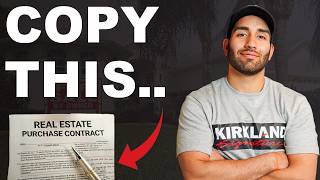
Nathan Payne breaks down the wholesale real estate contract he used to close over $2 million in deals, covering purchase price, due diligence periods, and assignability. He explains how to cloud title to lock in deals and shares stories from Denver and Atlanta that show why specific contract language protects you from sellers backing out.
Chapters
This is the exact wholesaling real estate contract that I've used to do over $2 million wholesaling real estate. And in this video, I'm going to show you exactly what a wholesaling real estate contract looks like, how to use it to make money on properties that you don't even own, what key clauses you need in this contract to protect yourself and protect deals from other people snaking it and from buyers backing out and sellers backing out. And I'm going to show you everything you need in order to know what you're doing, to feel confident doing deals with this piece of paper.. So my name's Nathan Payne and I've done hundreds of deals, made millions, and helped hundreds of other people launch and grow their wholesaling businesses. So let's dive right in. So let's start with what everybody overthinks, and it's this little piece of paper, this contract, because it's a lot more simple than most people think. Really, most real estate purchase contracts are just 1 or 2 pages. Mine is 3 or 4 because I've added additional clauses that protect me and I like to have in my agreement. Also, I have an attorney-in-fact at the very end of my contract, which allows me to do novations when I'm talking to a seller and saying, hey, we're actually going to put this property on the market. So there's a lot of different options that you can work with sellers. But having this piece of paper and knowing how to navigate it and how to use it is extremely important because if you try to send this to a seller and they don't and they have questions and you don't know how to explain it, you're not going to look like you know what you're doing. And people want to work with experts. They want to work with people that know what they're doing. Now, this contract that I have, I can use in any state in the United States. It's a real estate purchase contract that I've been using for years. And of course, there's a couple states like New York where if attorneys are involved, they're going to want you to change a couple things in your contract if you're working with attorneys that dive in and don't like the language and the wording. But that's fine, you can change your contract. Now, whatever contract you use, I like the one that I have again because it's battle-tested and battle-proved. I use it and I've modified it as I've done deals, especially in the beginning when I first got this contract. It was good, but it was just a normal one that an attorney drafted up. And I've had to modify again because there's been situations that I've had where sellers have tried to back out of deals where I've tried to stop them from doing it by filing the right paperwork. And my contract back in the day did not allow me to do that because I didn't have the right wording and the seller and I didn't agree to actually what needed to be put in the contract for me to stop them from backing out. So you want to make sure that you have the right language and you might not know what language you need. And that's why I'm going to explain to you what you need in this video. But really the real estate purchase contract, the wholesaling contract is pretty simple. You can and/or assigns in any real estate purchase contract, it will allow you to sign your right and your ability to buy that house to someone else, and you can do it for a fee. And I'm going to show you that paperwork later in this video, and that's called an assignment agreement. But let's go back to the real estate purchase contract and why it's pretty simple. Really what you're doing is you're just telling a seller that you're willing to purchase their house as is for cash, and that's what your agreement says. Also, it should have the date that you guys have entered into the agreement, should have the purchase price, Without a purchase price, it is not valid. I've actually had agreements where I just signed it and the sellers have signed it, but we didn't put a purchase price because I was like, oh, okay, we got to figure out what you owe and then I'll just buy it for what you owe once you find it. And then the people try to back out and I don't have the purchase price on there, so, so I'm not able to go and fight it. So make sure you put the purchase price in there. Also, you want to have a due diligence period. Not only that, you're going to want a date for the closing and then the signatures that both people sign, both parties, okay? It's pretty basic and you can have as much as you want in this agreement, but really mine, the thing that's most important is letting them know you're buying it for cash, it's assignable. You're letting them know that if the seller does not perform on this and I'm able to perform, we have the rights to file a notice of interest, to cloud the title and file memorandum. That's the language I'm going to read to you guys in a little bit. This is actually a story behind it because there was a deal where I tried to buy a house from a seller and he backed out and I was not able to cloud the title or file a notice of interest when he backed out. Because I did not have the right terminology and the clauses needed in order to cloud the title. So again, we're going to be getting into that in a little bit. But to sum up the real estate purchase contract, really what it is, is it's an agreement between you and the seller to buy their house, and then you have the rights to buy it, or you can assign it to someone else. And we're going to get in a little bit deeper of how you're able to do this without ever owning the property and how you can get paid. Now, if you want this exact contract and you want to know how we work with real estate investors hands-on help them close deals and fill this thing out in our painless flipping apprenticeship, I want you to check out the link below. All right. All right. So the question is, how are you able to use this piece of paper to make money without ever owning the property? So when you sign this agreement saying that you're going to buy someone's house, you are saying, hey, I have the rights, I have the equitable interest to buy your house because we both agreed on this purchase price. Now, what you're able to do is you're able to buy the house, right, for what you agreed, and you can go get a hard money loan. You can get a loan. It doesn't matter. Most of the time it says for cash. So you need to get hard money or have cash. Or what you can do is you can assign your right to purchase this property to someone else for a fee. What you do on that assignment agreement is you state who is under contract, you, your LLC, and the LLC that you're assigning it to. It could be an LLC that you own. You can assign a property yourself or pretty much any entity or any person. So you say, hey, this LLC, Nathan Payne Enterprises, is assigning it to Bob Cajun Enterprises, for $15,000. And then let's say the purchase price of the property is $200,000. You would assign it to Bob Cajun for what, $220,000, $240,000 to make $20,000, $40,000. So you really, you just increase the price by what you're selling to someone for, assigning it to someone for, by the assignment fee, right? So again, you have a property under contract for $200,000. You want to make $40,000 on it. You assign someone for $40,000 at close after the property's been funded and closed and sold and the Bob Cajun LLC bought it. The title company will wire you the money. Money directly to your account. Pretty dang simple. Now, it's— the concept is simple, right? You find a seller who's motivated, you make them an offer, they accept it, and then you find someone's willing to pay more than what you have it under contract for, and then you make the difference. Now, the concept is simple, but finding a motivated seller that's willing to sell at a discount, that can be difficult, especially when there's competition and you need to be better than the competition. They need to know, like, and trust you that you can say what you can do. You need to be able to find buyers. So again, the concept is easy, but getting the contract, getting the deal is not as easy, especially if you want to get a deal that will actually make money, right? Like you, you can get any house under contract if you just give the seller what they want, right? But you actually need to be able to make money off of it. And by you being able to make money, that means who you assign it to, the flipper, the landlord, they need to be able to make money. So it needs to be spread for everybody and it needs to be a win-win. Okay, so how do you make sure that this contract protects you? And protects the deal so the buyer can't snake it from you or a seller can't just back out of it. I'm going to explain exactly that with a story. So I was doing a deal when I went nationwide a couple of years ago in Denver. Now a seller had agreed to a price and we were able to assign it. We had a buyer, everything was ready. Then the seller said, hey, I don't want to sell anymore. I'm going to go with someone else. And for us, we were like, hey, you can't do that. But when it came time for us to enforce the contract, we didn't have the right language. And we reached out to the title company that we had the contract with and we said, hey, can we cloud the title? Can we stop them from trying— the seller trying to back out and go with someone else. And he said, according to the agreement that you have, the contract that you have, it's not in your contract that you can cloud title or file a notice of interest. And I was like, dang it. See, and that's the thing is you just don't know what you don't know. And in that time, I never had anyone that tried to back out up until that point, or at least that I didn't know, that I knew of, that was trying to back out. Actually, before all this, like, when sellers tried to leave, I would just be like, okay, sounds good, I can't make you. But then I found out that like, hey, you don't just get to leave and take off and go work with somebody else because they said they could pay a little bit more. But anyway, so the attorney at the title company told me, hey, this is the language, this is the exact language that you need in your contract in order for this to be valid. And so you can stop people from backing out by clouding their title. So I'm going to read it to you so you guys can have it too. It says seller agrees by executing— it's just right here— seller agrees by executing this contract that buyer has the remedy for breach of contract by the seller to record a memorandum of contract to enforce its rights and interest to the property. The The memorandum is to protect buyer's interest and enforce its rights to purchase the property. Now, I'm not in the game or the business of making people sell their house if they don't want to sell. If they agree to sell their house and then they decide, you know, it's not the right time, that's okay, right? That's fine. I'm not going to make you sell your house, but I'm not going to let you sell to someone else because someone came along and said they give you a little more. That's not fair and that's not ethical and that's not right. So what I do is I say, hey, that's totally fine if you don't want to sell anymore, but we have the rights to purchase the house. So we're going to file a notice of interest, right? We're going to record an affidavit memorandum, and when you are ready to sell, we'll be alerted and we'll know that you're ready to go and we'll buy it. Now I say that, and most of the time the sellers are like, oh, well, you can't do that. And I'm like, why does it matter if you're not willing to sell? And then you find out that they're trying to go around you. Now having this has helped me save a lot of deals, and not only that, but it just gives me confidence knowing that, hey, once they sign, we're good to go. Now This is interesting. I actually have a deal in Atlanta that I'm doing right now on the MLS. I'm doing a novation and a previous wholesaler that did it actually clouded the title. So I'm trying to sell it and the title company's like, hey, the title is clouded and you need to reach out to them and give them a payoff. So I reached out to the wholesaler and said, hey, I noticed you clouded title. I'm assuming the seller, something happened, but hey, it's totally fine. We can get you paid. We're just trying to get the deal done and get the seller out of the situation they're in. And the wholesaler is totally cool with it. He's like, yeah, man, I'm not here to screw anybody over. But when we had brought a buyer to the deal and ready, we're ready to close, she didn't want to close anymore. So we just clouded it. I said, hey, I've been there, done that, totally get it. Let's get it done. So this is a good thing to do when sellers that agree to something change their mind. You don't cloud every deal that doesn't work out, especially you don't do it on deals that you don't have a buyer. I only obviously do it for deals where I have a buyer, I'm going to buy myself. Okay, so you want to make sure this language is in there and it's going to protect your deals. And again, I have countless numerous stories of people trying to back out the day of close saying, oh, I changed my mind. And all I do is I say, hey, totally get it, you signed an agreement saying we have the rights to buy it, we'll just be ready when you're ready to sell. And then they're like, whoa, whoa, whoa, hold on. And then they end up closing. Okay, so make sure to add that in your agreement. Let's do a quick recap. The real estate purchase contract, a wholesale contract, is pretty simple. It's just an agreement that states that you're buying the house and it gives you the ability to assign your rights to buy it to someone else for a fee. Okay. The assignment agreement between you and the party that you're assigning to for the fee, you sign that with them, you send it to the title company. The title company pays you out when the deal closes. Bada bing, bada boom. Now, if you want a contract and someone to help you walk through it with sellers on the phone personally, where we can hold your hand, that's exactly what we do on the Painless Flipping Apprenticeship program. Just check out the link below. And if you want to see exactly how I made over $2 million wholesaling real estate and the strategies I used, and not only that, but exactly what I would do if I had to start all over from scratch again today, click on the video on the next screen.
More from Nathan





Why Traditional Wholesaling Keeps Failing You (Use This Pre-Flip Method Instead)





