Wholesaling Real Estate: Real Deals and Real Scenarios
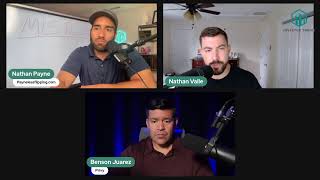
In this live YouTube session, Nathan Payne and Benson (co‑owner of the real‑estate software Privy) walk new and experienced investors through the complete process of wholesaling properties listed on the MLS. They share personal anecdotes, from listing their own homes to handling contract‑for‑deed disputes, and break down the emotional journey sellers experience during showings, feedback, and price negotiations. The conversation covers practical logistics (scheduling showings, coordinating with agents, handling multiple buyer inquiries), strategic offer construction (price vs. timeline vs. value‑added terms), ethical pitfalls (locking contracts without an exit, low‑ball automated offers, contract‑for‑deed mishaps), and the importance of transparent, relationship‑focused communication. Throughout, they demonstrate how the Privy platform can quickly identify local buyers, streamline negotiations, and enable investors to make aggressive, well‑backed offers. The session ends with concrete scripts for talking to agents, advice on follow‑up cadence, and a call to adopt a win‑win, respectful approach to MLS wholesaling.
Chapters
Maybe we should put some like— start. Here we go. What is going on, everybody? Today we are coming to you live. What's up, Benson? What's up, Nathan Payne? How's it going, guys?
Doing amazing.
Going on.
All right. All right. So if you guys, this is your first time on this call, this is where we talk all things real estate. We usually make calls to sellers, make calls to agents. But today we're going to be talking about something that maybe not a lot of investors, new investors know about, and that's the process of selling a home on the MLS, what that looks like, how it feels to be an investor selling a home on the MLS. Are you anxious? I mean, the whole process, we want to kind of break that down because I know when I first started, Benson, Nathan, I had no idea what the process even looked like when you were selling a house on MLS. That was not something I had ever done. I didn't even own a house until I, like, my first 6 months of getting into wholesaling 6 years ago. So anyway, that's what we're going to break down, guys.
Yeah. And before, guys, any of you tune out and you're like, oh, I don't need to know about, you know, listing a house or selling it. From an acquisition standpoint, it's really, really good to be able to understand who your customer is, who your client is, because when you understand everything they're going through, what they're experiencing, what they're experiencing in each step of the process, you're going to be able to connect with them that much better. And whether you're talking directly to a seller or directly to an agent, both of those are going to be really, really helpful. So this is a huge part in you doing more deals.
100%. So that's what we're going to be breaking down. And just so people, if they don't know who we are and they're watching this the first time, they're coming across this, I'll start and then I'll have you, Nathan, and Benson, you can wrap it up. My name's Nathan Payne, been in the game for about 6 years, been wholesaling, then got into fix and flip, done it, you know, done a lot of deals. And, uh, basically what, what I'm— the goal of me coming on here is I want to help people do more deals. And I know the more people I help, more deals I'll do. That's just how it works. Nathan, Valley?
Yeah guys, my name is Nathan Payne. Been in wholesaling for about 5 years. Um, man, done a bunch of stuff, bunch of deals, bunch of different states, um, locked up over 100 contracts in a single year. Some of you might have seen a 30-day challenge I did a little while ago to where I picked a totally brand new market and did a $20,000 deal in 30 days without spending any money on marketing. And the only thing I used was yours truly, Privy. The only tool to get that job done.
All right, Benson, who are you for people that don't know?
Um, I am one of the owners of Privy, the, um, the herefore mentioned software. Um, been in the business for 20 years. Uh, Nathan and I, we were on live last week talking about our two properties that we do have on the MLS and, um You know, it's an interesting thing looking at it as an investor, right? Because we typically just see it from the acquisition side. But, um, you know, I have sold many houses in the past, but it's been a while. And as much as I think I've got the process figured out, like, you always get blindsided with something new. And that's one of the things you really have to think about from somebody who's coming up, is that you're never going to know it all. You're just never going to know about. So you have to get comfortable with being uncomfortable. And if you can do that in this business, you're going to be way better off than somebody who just feels like they have to have it all figured out before they start. So start the process, jump in with both feet, get wet, make some mistakes. And guess what? Worst case scenario, like maybe you have to cancel a contract or two, or maybe you get on the phone with somebody and they curse you out, or you make a mistake. And you know what? Woe is me. Who cares, right? Right? Thick skin, take action. If you can do those things, you'll make money in this business.
It's—
this is not something to happen overnight.
Yeah.
Oh, go ahead, Nate.
Just to back that up, I mean, guys, I'm living proof that you can get cursed out hundreds of times on the phone and you'll still be here and you'll still be able to do the business. But also, there is a way to where you can go about things and you can communicate and negotiate with people to where you really I, I never get cursed out anymore. You know, it took me a long time to kind of figure it out, but there is a, there's a way to do it.
It's actually pretty funny, my talking about just jumping in with both feet and not caring. My second deal landed me in court because I did a deal that was a contract for deed, um, and I let the guy stay in the property after close. And then I tried to evict him, and there, there he did— he wouldn't— he went to court and was like, I'm not leaving. So then we had to go in front of a judge, and the judge was like, it doesn't look like you own this. And I was like, I, I do own it, but I had no idea how to explain anything. So anyway, guys, you can jump in. And even if you go to court, if you do the things the right way, even if you can't explain it, you'll be all right. All right. That's worst case scenario. But hey, I'm still here, too.
Yeah, we're not trying to scare anybody here, but we might have just scared some people a little bit.
Yeah. Yeah, guys, don't, don't do a contract for deed unless you call me first and then I'll set you straight. Okay. That's, that's a big— that's a bigger if that's like your second or first deal, that's a pretty big jump, don't you think, Benson?
I don't even know what a contract for deed is.
Exactly. Exactly. It's a really— it's sub-2, but extra, extra sauce. It's extra creative.
So it's just too easy the other way. Yeah.
Anyway, so let's get right into it, guys. Let's talk about the MLS process and what that's about. So I just listed my house. Benson, you say you got— you were going to sell yours. It was going to close, but next week it closes, right? So we're in the thick of it. So congrats. And about me, I'm actually moving to Canada and we're selling our home and we're selling our rental here as well. And so what does that process look like? We got a real estate agent. I had the option that I could— I'm not a real estate agent, but I could have listed it on BrokerList for like $99. But instead I had a buddy who, you know, we've done a lot of deals together. He said, oh, I'll do it for $2,000. So it was like, well, $99, me do it, or someone take care of everything. And he's got my back and he'll do everything. $2,000. I was like, okay, let's do that. So got it listed. It's been a week and we've had multiple people come through the house. Hey guys, let me tell you, with showings, if you live in the house, it's not, it's not very convenient. It's not convenient at all. Like, because people are wanting to come in at all times of the day. The agent is just texting us saying, hey, this showing, this time, this time. Sometimes people don't show up on time. You got a family. So just, just first of all, with that, when you're talking to someone who wants to list their house, it's not very convenient, okay, at all. I don't know if you guys want to elaborate on that, but that's the first thing I've noticed by doing this. It's, it's all hours of the day, and, um, it's not, um, it's not easy to coordinate.
It's not, it isn't. And from someone who's going to like to look at the house, it just reinforces the fact that like you got to respect the other people's time, right? So you want to be there in that window that, right, they allot you. And usually it's like an hour or two that you'll get to go do a showing. But, you know, I've— sometimes I'll go look at like— I mean, it's been a while since I've looked at more than 10, but I've done 20 houses in a day. And trying to like plan that all out, you get where you— so every window is like overlapping and you got time to drive from one property to the next.
It's—
oh God, it's a lot of work to do. But I oftentimes missed my window and I had to call and try to reschedule, and I would have unhappy agents who are like, no, there's a— they got a family, they got dogs, yeah, they have to move stuff around, work. And, um, yeah, so try— do your best as an investor to like make it easy for the seller, and being on time is one of those ways.
And one— oh, sorry, last thing I'm gonna say about this, and the reason why I bring this up and I think it's really important is sometimes when you talk to a seller that's off market and they're trying to decide what their options are, if they should sell for cash, if they should do novation, if they should do listing, their options, they're looking at their options. If they're kind of pressed, if you notice that they have like a mess in their home or if they have a lot of dogs, you can just let them know, hey, listing is a good option, but just be aware of what we're telling you right now. It's not very convenient. Nate, what were you going to say?
Yeah, I, um, Just lost my train of thought. I, uh, where would—
Benson, you were just mentioning, um, scheduling and trying to schedule and trying to be on time, you know, being aware of, right, sellers' needs.
The— yeah, the, the walk— scheduling walkthroughs and just walkthroughs in general. You know, guys, one good thing to know about that is, like they had both mentioned, there's kind of a lot more that goes into it than just, ah, like, let me pop by and I'll just do a quick walkthrough. The nice thing for you as wholesalers to know is you can use that in your conversation when you're talking with a seller or an agent. We're like, ah, well, we'll just come and look at it. Just come and look at it. We'll just come and look at it, right? And especially when they try to do that within the first, you know, 2 minutes of the conversation. Well, I use that exact example, um, as to why, hey, well, let's chat a little bit more first to see if it even makes sense. You know, I don't want this to— I would hate to come and walk the property and have it be an inconvenience to you and the seller if we're not even in the same ballpark. We might be, you know, but I— there's a lot I can do just by asking some questions about the property. And if it sounds like a good fit, yeah, then maybe after that we can set something up. And so it'll, you know, just even having that little bit of knowledge can really help you guys get a lot more information before having to go out and see a property, because that takes up a lot of your time also, you know, being efficient and being effective with your time. Yeah, and a lot of people do do that as new investors.
They're like, oh, let me just go look at a house. Not really, not necessary, right? When you're, you're looking for those specific deals or those motivate— those, uh, homes of the people that might have some motivation where you can make something happen. So, um, yeah, don't— no, not necessary to go see all these houses. So anyway, we, um We got all these people scheduling, you know, we've had maybe, you know, 15, 16 people come through, maybe 20. It's been a lot. And we've had like 3 or 4 offers, right? So one thing you'll notice is on the MLS process is like a lot of people will look at your house, but they won't make an offer, right? And that's, that's a feeling that a lot of sellers will feel. They'll eventually they're going to be like, I just want an offer. I just give me an offer, right? Because a lot of people Um, yeah, I guess that's what everybody wants. They just want an offer, even if it's a low one. My wife was even saying, like, when we— like, 3 days in, she was like, I just— just make an offer, right? So that's, that's a feeling that's very real. And Benson, I don't know if you felt that with your, your flip, but you're— we're like, hey, it's been less than a week.
What's wrong with it, right? And right, you know, you, you view your own property through a different lens than somebody else that's coming through. But there's a process, there's a feedback loop that's built into it that agents use in the backend where after a showing, the— and a lot of these systems actually have this automated where the showing agent gets an automated email or a text and says, hey, you showed this property, do you have any feedback? And then they can tell the listing agent, yeah, well, you know, it's priced too high, or, you know, we like it, but we got, you know, a bunch more properties to see this weekend. 'Or, you know, we like it all except for, you know, we really thought that, you know, that third bedroom was going to have a closet, but it doesn't. So it's really not a bedroom, it's an office. So we're passing.' Like, that feedback is really important because then you can take that and possibly even use it to negotiate. Exactly. Another deal.
Yeah. And, um, just— we are lucky enough to have, you know, full price offers and enough offers, but Guys, put yourself in the position of a seller. They're, they're listed for just a week and no, let's say 5, 6 showings, no offers. They're starting to— it's been a week, they're, they're already feeling a little— maybe I would say majority of people are feeling anxious. They're like, what's going on? So I think there's a lot of opportunities on the MLS, um, and just having understanding the, the psychology of what's going through sellers' minds. You know, obviously there's going to be some that, um, are like, oh, we can wait, we don't care, you know, but if no one's making offers on their house, they're going to start to second-guess, like, am I at the right price? What's going on? Like, like Benson was saying, what's wrong with my house? Um, so even if your house is awesome, if no one's making offers on it, you're starting to question, like, maybe people don't like the area. I don't know.
So I mean, it— even if, if you think about just kind of the average person, you know, what's the longest buying or selling cycle that they've that they go through in their entire life, for most people, it's probably going to be their house, right? Because if you think about it, they buy or sell a car, you can do that same day or same week, pretty easy. You know, buying or selling just about anything else, same thing. It's going to be a same day or same week. A house, people are not used to something taking a month, 3 months, 6 months. And so emotionally, that really starts to kind of wear and tear on people. And again, when we're calling— and even the agent too, not just the person that owns a home. The agents are going to be a little bit more accustomed to it, but you have to understand the agents are representing the sellers. So whatever feelings that the sellers are, are having, that pressure is put onto the agent. So when the agent has 20, 30, 40 people walk through a house and they don't get any offers, or they've only got one, the agent starts to be like, oh man, like he start— the agent starts to sweat because, you know, the sellers are, you know, hey, what, what on earth is wrong? Is it, is it you? Is it the house? And so that's where, again, guys, I'm a really, really, really big, uh, supporter in the The way I have a sales process with a seller is the exact same, or just about exactly the same, uh, uh, as a process as I go through with an agent.
Got—
because they're also feeling their own emotion. And so we don't want to call and beat up the house and be like, oh well, you know, this one over here sold for 10 grand, you know, blah blah blah. No, because they're already— they're feeling these emotions, they're in this vulnerable spot, and that's just going to turn them off and, and hang up the phone on you. But when you're that one person that's nice, polite, and actually is concerned about their outcome, you're going to be able to connect and get all these little details, you know. And so little details, um, Nate, like in your situation, you know, I know you guys are looking to move in a, in a, um, you know, quick time frame. Um, Benson, you know, you're an investor, you don't want to, uh, you know, nobody wants their money tied up in a house for too long. You know, all of these things can kind of come into play, and all of these little details, one, helps you understand the situation better, but two, gives you opportunities to create a unique offer that nobody else can make, right? Just for that person, just for that seller.
Well, the situation we're in is we— I'm waiting on my permanent residency, um, like my green card, so that hasn't come in yet, but we're trying to sell, so we actually need time. We don't need to sell quick. We need time so I can get that. And then we have 30 days. So if we're like, hey, if someone can like close in 60 days or 30, like a specific time frame that we need, that makes— that's more important to us than like potentially like the highest offer, right? Because we need time. So I think, yeah, you're exactly right. Like constructing an offer, it's not always price. What we're looking at, like we've had a full I'll give you two options, two examples. So we have a full price cash offer, which is great. That's awesome. But they want to close ASAP. That means we would have to get out of the house. We'd have to go somewhere quick, or we have someone that's like $15,000 lower at the moment, but they're going to be willing to close on our timeline. So we're like, I don't know, maybe if the person that is a little bit lower can come up a little bit. Like, so you guys can see that it's not always just price that wins it. It's like Nathan Payne said, it's, um,, you know, forming the right offer, right?
And guys, think of— that's such a perfect example. Think especially as investors, how many times do we make an offer, we say, oh, we can pay all cash, close in 30 days or 14 days, you know, quick close. Don't make the offer until you know what the offer is that they want, because you might be saying things that they're like, whoa, my gosh, no way, 30-day close, you know, 14-day. Oh my gosh, I have all this junk I got to clean up out of the house and get it. Like, I can't make that happen, you know, or they're like, I, I need to be here, you know, at least, uh, for the next 45 days. Now they might not communicate that to you, right, because you already said cash offer, close within 30 days. So in their mind, they're up, okay, no way, this isn't going to work. But you don't know that, and that's the worst part, is so many people lose out on opportunities because they jump the gun or they assume what that seller or agent or whoever— they assume what that person wants and what that person needs. And that's why in all these scenarios, go into it with the mindset of a doctor. Don't just— as soon as somebody walks into your door, if you're the doctor, don't just hand them a prescription, right? Hopefully not, right? No, ask, hey, what's going on? What, what are the symptoms? Where does it hurt, right? And you can do that with a seller and with an agent. And then from there, once you know kind of all the circumstances around that situation. Oh, this is exactly what you need to cure your symptoms.
Yeah, I like that you guys caught on that because I hadn't thought about it. Like, everybody's taught that they want a quick close, like that the sellers want a quick close, but this is a perfect example, and it makes me realize that probably most people don't want a quick close. They need time to figure stuff out. Yeah, and especially if they don't have their house, if it's off market and they weren't planning on selling anyway, like, they got a lot of stuff to figure out. Where am I going to move to? You know, even if we got a price that we want, like, how long is it going to take me to pack all my crap up and leave? Exactly. What would be like a better strategy then, you guys, is when you go in there and you're saying, okay, here's all the stuff we can do, do you say we've got flexible closing options?
That sounds better already just off of that. Just say, hey, we can close on your timeline, not like I can close ASAP.
Yeah, one of the things that I like to do is, um, I like to— just like with price, I like to keep things pretty open-ended and want to see, hey, what are the things that they're going to give to me? So perfect example, during my 30-day challenge, amazing conversation I was able to have with an agent on a house that it looked good, priced right, you know, but it was like, yeah, could use some updating. Um, it was definitely priced, you know, Retail price for sure. But one of the questions I always ask is like, hey guys, this is every single one. You can use this whether you're talking to a seller or an agent. I use this a lot when I talk with agents. Hey, find anything to compliment about it. I don't care if it's a dump yard. Wow. It's, you know, it's got so much square footage, whatever, right? Find something to compliment about the house, right? So if I'm talking to an agent, hey, you know, It seems like, like a really, really cute house. I, you know, it seems priced, you know, reasonable. What do you feel like's been holding people back from moving forward, you know, and pulling the trigger on it, right? And that's where we can get some information as to, hey, what, what are some of the issues popping up? But then from there, when we start talking about offer and trying to create a custom offer, I, um, you know, a lot of times I'll ask, well, hey, you know, um, Mr. and Ms. Agent or Mr. and Ms. Seller, Obviously price is the most important thing, 100%, get it, you know, getting you the highest price, that's always number one priority, we're on the same page. Putting that aside for just one second, other than price, is there anything of value, anything that would be valuable to you, uh, uh, throughout this process? And what I'll do is, guys, a lot of time, here's the key, a lot of people will ask that question and stop there. 'But that doesn't do anything.' You got to get them kind of thinking in a creative way. So you want to give suggestions of, 'Hey, think about things like we could do stuff like this or this,' because they might be like, 'Oh, I, I didn't even realize that was a possibility,' right? So I'll say, you know, 'Is there anything other than price that would be of value to the seller?' Uh, for example, um, you know, if they've got a bunch of junk at the house, like, they don't have to worry about cleaning it out, you know, even furniture, stuff like that. I mean, please, they can take whatever they want, whatever's value to them, but anything else they don't even have to worry about it. Or is timeline important to them? You know, I know some people, if they need, you know, if they'd prefer a quicker timeline, you know, great, that's definitely something we can cater to. But I know some people, they need a little bit more extra time. You know, what, where's kind of the seller at with that? And so you can kind of give these suggestions, and the agents, you know, they'll be like, oh, okay, I get what you're saying now. And that's where we can get them to open up. And they also, this is the moment to where they see Oh, interesting. You are a lot more valuable than— you're not just a cash offer investor. It's like, this is where a lot of times when I have conversations with agents and especially suggesting all these things, they start to see the value. And even if we're not on the same page on price, and typically I'm not, you know, we haven't really gone too deep in price, but this is where they start to see, okay, I understand the value in what you do. And it's a huge kind of transitioning moment in the conversation with the agent because now is where they start to get on your team and they're like, okay, I get it. Like, you can help my seller in a really big way. You know, might not be with price or it might come, you know, at a cost and they might be okay with it. They might not, but they're like, okay, I get it. I understand now.
Yeah, great point.
Love it. So, um, another thing I want to bring up is, guys, when we listed this thing, um, my agent got flooded with calls his first, second day. He still probably isn't even able to return calls, okay? So I think a lot of the times, like, when we make a call and the agent doesn't get back to us, we kind of give up on the property. I know that's, that's happened to me a lot when I've seen opportunities. I'm like, okay, well, never mind. I 'You know, he's not answering.' Guys, like, these agents— some of these agents are slammed. And after, let's say they're slammed, things don't work out, a lot of people just forgotten about those properties, right? They just sit there. So don't— I wouldn't give up on those. Just know that there's one agent, and let's just say they're getting swarmed with like 50 calls. They can only do so much.
So, um, I don't know.
The other likely scenario too is that agent is like a part-timer and they have another 9 to 5 and they got their kids they got to take to school and they got all this other life stuff going on and your call just kind of slips through the cracks, right? Just give them a little, you know, friendly reminder. Hey, I left you a voicemail. Or text them as well as call. Like, it's all in the follow-up, just like you said before. Maybe they're busy, but likely they just forgot.
Yeah, yeah. And And, you know, guys, you're— a lot of times I see people, they're worried. Well, ah, you know, I don't know, I don't want to bug them, I don't want to follow up too much. Guys, it, it's an agent. Like, they get paid on you buying or selling the house, you know. And it's like, imagine if a seller is calling you back, you know, and they call you 3 times this morning, leave a voicemail, send a text message. They call you 3 times this afternoon, leave a voicemail, send a text message. And then they call you 7 o'clock at night, and, and maybe you were busy throughout the day and, and you lost track of the number and all this stuff, and you pick them, they're like, oh hey, yeah, sorry, you know, I, I kept trying to get a hold of you. We had a conversation a week ago about me selling my house. Um, I figured you were busy today, was just looking to pick up where we left off. Would you guys not be so thankful that you had a seller blowing up your phone because they were that interested? Same thing with an agent.
Yeah.
You know, they get paid off of that.
Now, my property is rehabbed, right? So it's a little bit different scenario, right, on the type of people that are calling. But I think the rules apply no matter what. Like, you got it. The follow-up is still strong on the MLS. You got to be really strong. And even if it doesn't work out, doesn't mean like— and they go somewhere else, doesn't mean it's gone forever. There's a lot of properties that hit the market again, right? A lot of people are interested in backup offers. But one thing I want to say additional is if you don't really have buyers in line or someone that you can work with, the MLS, if you're wholesaling, is tricky. I wouldn't recommend doing it unless you're going to buy it or you have somebody that you can immediately say, hey, would you buy? I'm not a proponent for lock it up and then, you know, see if somebody else will buy it, right? I don't think that's just the best way to— there's a lot of people, if you do that with people that are on the MLS that have their lives and everything in order, that they're like on hold and you just, uh, just lock stuff up and you have no idea, I don't think that's the right thing to do. So you can definitely do a lot more things, be prepared, get to know the investors in your area, know what a deal looks like. And, and yeah, that's— I think that's the best way to do MLS deals, in my opinion.
Well, you know, it's a really good point. I, I wish people kind of take that mindset to both, you know, whether it's off-market or on-market, you know, I think I'm really, really big in the principle of, you know, not locking some— you know, don't just lock up properties unless you know what you're able to do with it. More importantly, if the seller or the, you know, if they understand kind of what's going on. Because with, you know, with using Privy and working with MLS properties, one of the things I love to do is kill two birds with one stone. As I'm talking with the agent, getting more details and negotiating that property, I like to find local buyers. And this is where I love the comp tool with Privy. I'll be able to find buyers in 2 minutes that are within a half mile of the property that I'm negotiating. And I have a conversation, hey, I saw you did this flip over here on 123 Main Street. I'm currently negotiating one right around the corner. Would you be interested in another flip in this neighborhood? And guys, 9 times out of 10, if they're a real investor, you know, they're going to be like, oh my gosh, yeah. And the nice thing is you're not calling an investor out of the blue. It's not just some random person. It's not, oh hey, I saw you, you, you bought deals cash in the state of Florida. What's your buy box? No, you've got a specific deal. You reach out to that specific person with a very specific message, and so you're able to have a really effective conversation and you can get a lot of feedback and you can get that answer. Hey, what are you able to sell the house for at the same exact time as you're negotiating with the agent? Hey, here's what we're able to pay. And the nice thing is, especially with the MLS, what makes it so effective is when you have the buyer lined up beforehand, I can be that much more aggressive with my offer. Because I've already got it sold. Oh, Mr. and Mrs. Agent, you want to— you want a $10,000, $15,000, $20,000 nonrefundable earnest money deposit?
Great.
You know, do you want the seller to— to, you know, we close in 14 days and then the seller gets to stay, you know, in the property for an additional 14 days, but they'll have all the money from the house. And so they can go buy the apartment and do all this. And the only reason I'm able to do that is because I already found the buyer. And I ask them, hey, are you able to do this? Are you able to do this? And most, most time, you know, yeah, you know, the buyers, they have no problem with it. But yeah, you know, and that's where negotiating comes, comes so important is there is a way, guys, that you can wholesale to where you can negotiate and be transparent and to where everybody's on the same page and everyone's on board with, with kind of what you're doing. And it also makes your job easier, especially when getting buyers to come do walkthroughs and give you feedback. And all that good stuff. Nailed it.
You nailed it. Yeah, I think we— I've seen too many deals that have come across my desk where they— wholesalers are just locking them up at the price or above asking, and you're just like, what are you guys— and do you, do you have an exit strategy? And they're like, no, I just thought it was a deal. Don't do that, right? It's not. That's why people don't like what we do. Um, but if you do it the right way, it's— it can be very, uh, lucrative and and easy, you know, it doesn't— not a lot of back and forth in the sense of like not feeling confident and, you know, wasting everybody's time. So, um, yeah, guys, I feel like we've gone over some really good stuff. I'm pretty much— I'm out. We've gone 30. We've talked about some really good stuff on, um, you know, with agents. I just want everyone to know deals that are on the MLS are— you, you can do deals on the MLS. You just, you just got to do it the right way. That's all I got to say. You got to do it the right way and you got to understand what people are going through and, um, you know, do it tactfully.
Be respectful. Think about wasting people's time, their efforts, money. You know, time is money, right? So if you lock a property up under contract and, you know, you just mentioned too, like, if, if you call an agent and they don't call you back, you move on. Well, same thing if you look at a property and it's under contract you move on. But if it's under contract with a wholesaler who doesn't know what they're doing, they don't know what a deal is, and all these investors are coming through and all these buyers, and they're just moving on from that property because some wholesaler didn't know what a deal was, right? You just screwed that seller.
Yeah, man.
And that's—
I mean, that's, that's why I get— yeah, you did. Because the, the issue with doing that, among many, and not being transparent, honest, is when that property goes back on the MLS after you cancel the contract, it looks really bad. It just— it does. Like, people are like, well, they start to question, like, what happened? Like, what's wrong with the property? Why was it on under contract for then, like, 5, 7 days and now it's back? So avoid that.
The days on market goes up.
Yeah.
So if it's under contract for, let's say, 10-day inspection period and they cancel, now it's 10 days on market. When they weren't really marketing it that, that whole time. It was under contract, but DOM still goes up. So from perception outside looking in, it looks like there's something wrong with this. Why hasn't it sold yet?
That's right. Yeah, so take that in mind. I keep that in mind, everybody.
But anyway, um, should I— I know we talked a lot about of what to be careful of and what not to do. I— should I give like the secret sauce real quick as to Hey, what do I say to an agent to let them know, hey, I'm wholesaling this without saying, hey, I'm looking to wholesale this? Because there is a way, guys. And if you've seen a lot of my calls with Trivi, I do it every single time.
So if you want to give it, yeah, go ahead. Let's go. Let's hear it. And then we'll wrap up.
So a lot of time, and if you've watched my calls, it's so funny. You can always tell when an agent's dealt with wholesalers like, oh yeah, I got locked up and I got canceled. And, you know, I don't think they were able to buy it. And I'll always call. I'll be like, man, sounds like, sounds like you had a bunch of wholesalers, you know, locking up the house. And they're like, oh yeah, they're the worst. I'm like, I know. I'm like, well, here's what I can do. You know, I know you've got the house listed for $300,000. I know you said $280,000 is the lowest they would take cash. I'll be honest, you know, I still got to crunch some numbers on my end. I'll be honest, I'm probably not going to be able to get all the way up to that number. If I'm not able to get up to that number, do you want me to, you know, still call you back and just let you know where my price is at, or should I not even bother? 9 times out of 10, like, oh yeah, no, no, call me back, call me back. I said, okay, got it. And also what I'll do is if I'm not able to get to your number, or a lot of times I've got a few key relationships to where for whatever reason they're able to pay more than me, sometimes they're already doing a project in that neighborhood or that, you know, rehab is just the perfect fit for them and they're able to do it cheaper than me. What I'll do is if we are able to, to be in the same ballpark price, when we do the walkthrough, I'll have some of my key relationships look at it. And if it's a— if I'm not able to make it work but they are, we don't even need to change anything in the purchase agreement. We can just kind of keep that in place, and then I can just assign it to them, uh, at the end, and we don't need to change dates or timeline or anything. And you just boom, you go over like them, like, oh, Okay. Yeah, sure.
That's fine.
Yeah.
They don't even blink an eye.
Yeah. Because I don't know if you guys know, that's the natural progression because that's gold. No, that's gold. And it works. And not only that, it just makes sense. It makes sense, you know?
And now it's, it's in their court to where they can decide. You're not having to trick anybody. Everybody knows what's going on. They know you're looking at the property. They know it's other buyers looking at the property. And so they can make the decision of yes or no if they're comfortable or not with that. And guys, if they're interested in a cash offer and working with an investor, I like— I never get issues. You know, when you go over it smoothly, you know, might take a little bit of practice, but guys, you 100% can do it.
I'll tell you what doesn't work, and I hear this all the time. What doesn't work is just sending out a lowball 70%, 50% of Zillow into their— the agent's email and expecting a deal. I've had so many people that just send out automatic offers. Guys, like, what gets deals done is done, or, uh, is like the relationship you can develop with the agent, that they trust you, they like you. People do business with, um, people they like, who they trust. So, you know, if you're not getting deals and you're doing the deals on that, trying to do deals on the MLS, you got to take a hard look at yourself and say, hey, am I actually calling and building relationships, or am I just making low offers and hoping I get lucky? So if that's you and you haven't got a deal yet, I'm letting you know there's no surprise. It's because you're doing it wrong. I did it too. I sent out 150, 150 automatic ones and it took forever. Didn't get a deal. So yeah. Anyway, just letting you guys know. Lesson learned. All right. Well, hey, I appreciate everybody that's joined us on the live. And if you guys are watching this live, hit us, give us a like, subscribe to Benson's channel, subscribe to mine or Nathan's and you know, help support us as we're trying to get this content out there. And if you watch in the future and it's not live, give us a like. We really appreciate it. Benson, do you have anything you want to add before we take off?
No, I think that was great. I like this kind of MLS discussion thing. It's kind of like pulling the curtain back, giving people some insight into, like you said, the psychology of a seller, what they're thinking, and just, you know, from the other side of the fence, just being respectful and If you go into it hoping to find a win-win, that's going to be way better off than just trying to take advantage of somebody and wasting their time and their money. So just better. There's just a better way to do business. And we're trying to show that for people.
Love it. All right, guys. Nathan, you got anything to say here?
We're good, man. That's, that's it. I think we went over it all.
All right. We got Julius, Just Julius, coming in saying Privy rocks. Wholesaler's true tool. That's dang right.
Thanks, Just.
All right, later.
Thanks, guys. Good seeing you. Good to have you back, Valley.
Yeah, I wish I could say glad to be back, but Barbados was pretty nice.
More from Nathan





Why Traditional Wholesaling Keeps Failing You (Use This Pre-Flip Method Instead)





