003 Startup Show San Diego Government Show @ #SDSW
A ~30-minute YouTube episode covering San Diego Startup Week with on-site interviews and sponsor spots. Host Eric Westridge speaks with organizers and local leaders about event logistics (e.g., a growing startup crawl expanded to seven paths, Demo Night at Broadway Pier, a startup festival at the Courtyard Friday at 5pm), engagement strategies (industry, academia, and city), and opportunities for startups to partner with government (SSC Pacific/technology transfer, city programs and funds). The episode also includes short sponsor segments (Istudio, veo, Emma's Realty, Scalematrix) and practical details for startups to connect with city and military contacts.
Questions this video answers
619-553-2718
Seven (previously four)
Broadway Pier (Demo Night tonight); Creative Mornings at Railway Pier the following morning; startup festival at the Courtyard Friday at 5:00pm
75 events at three buildings (One Columbia Place, 701 B, and 707 Broadway)
About six months ago (from time of interview)
Hi, I'm Eric Westridge and you're watching Startup Show San Diego, a startup TV show about startup companies. Together, we celebrate startup heroes and leaders and grow our startup ecosystem to create even more. In the next half hour, we'll connect you with the fun and culture of the startup community, with inspiring stories and with the tools and resources that startup companies need to succeed. This week we're at San Diego Startup Week and you absolutely don't want to miss this special government startup episode. Please stay tuned. Welcome. We are at San Diego Startup Week and so far I've had a lot of fun and, and we've got Neil Bloom, who's one of the organizers of Startup Week. So welcome. Thank you and thanks for being here. Like all the people working on setting up Startup Week, you're a volunteer. This comes out of your own time. What do you do when you're not volunteering for Startup Week?
So I run Hired.com San Diego team. So Hired is a tech platform for hiring the best engineer, sales and marketing people. And we opened our San Diego Marketplace about six months ago and I'm running the team here, getting clients up, using it, just hiring it at speed.
And working here in San Diego.
Correct? Yeah. So I took office space upstairs of this building in the vine and drop in whenever I need a desk. But otherwise I'm all over town meeting with new companies, helping them hire.
Great. And your job in getting all this together has been engagement and partnership. So how is this year different than previous years when it comes to engagement and partnerships?
Yeah, you know, every year we've tried to just grow our audience. That's obviously a goal, but strategically. And so with this being our fourth year, companies have been a part of Startup Week for four years now and they've actually come a long way. They've hired teams, they've grown revenue, and it's no longer just the founder who wants to be engaged. The whole team wants to actually come out and participate. And so we've worked on packages to incentivize them to get the whole team out. 100 person team, seismic software, telium. These are 300 person teams that they want everyone out there, either on panels or in the audience, just learning from each other. So that's been my big focus, is just building that larger audience from the growth stage companies.
And previously you did a good job with the academic world. And how's it working with government? I'm just mentioning that because the mayor kicked this whole thing off. I don't think that's happened before. So how do you see anything changing with the government?
Yeah, you know, we started engaging the city about a year ago and the port at the same time. We realized one, it was a venue thing. We wanted to get the city helping us get the bigger venues. And the city really is stepping up, especially the mayor, in just this tech ecosystem. And so he's stated he wants to be at any event he can. He wanted to be at the crawl last night. He wants to be out in public enjoying and learning from us. So that's been the big part of it, is just engaging with them and seeing how easy it is for them to say, here are some ideas. How can we do this? So it's been great working with the.
Government and speaking about the crawl, which is my personal favorite event. And if you come on the crawl, you would have seen Neil in his astronaut outfit because you do have a JPL background.
Background?
Aerospace.
Yeah, aerospace. Aerospace background. He actually has a real astronaut outfit. He was wearing it last night, which was fun. And I personally enjoyed Underground Elephant's new building. That was.
It's pretty incredible.
I thought I was walking into a restaurant, bar, business, office. Fantastic.
I think the crawl is kind of our showpiece of these, of the larger audience being engaged.
Right.
Like, you get to see offices, and a lot of these were brand new. Some of these opened within two weeks ago. Veil Logistics opened. They opened their office on Friday and they said, we're going to put this together. We want everyone in there. And this is the larger audience we want to appeal to, is showing off. These are the companies that are growing. This is the culture that they want within themselves, and it's great to show that off. And then eventually they're going to recruit from people who are starstruck by walking into their places, like underground elephants. So the crawl is amazing. We had seven paths this year, where previously it's four, so it's just grown immensely all throughout downtown. We'd love to add even more and maybe simultaneously we'll do a Torrey Pines one next year when we ramp up the biotech track too.
So for those that don't know startup crawl, instead of like a pub crawl, eating and drinking between pubs, you eat and drink between tech companies. And you get to see lots of different tech companies and lots of different people, lots of different workplaces, and they're all very interesting and unique in their own way. So. So real quickly, sum up. How do you think this week's going and what's left?
Oh, man, it's beyond what we even expected, honestly. We planned for 10 simultaneous events happening at all times. Right. And we didn't necessarily expect how by doing it all throughout downtown, mostly how much engagement. There'd be these kind of random engagements of people walking across the street with the badges and shirts and all of a sudden you're getting random networking on every street corner. So I think that piece, the density piece of it has really ramped up this year. The banners throughout downtown is big. So there's like a lot of this being within a city that we have not seen before.
And in 30 seconds, what's left this week?
So big, big night tonight, Demo night at the pier, Broadway Pier. It's going to be huge. And then tomorrow we've got creative Mornings in the morning at Railway Pier and then our startup festival, which will be at Courtyard Friday afternoon, 5 o' clock into our closing party and awards ceremony. So those are, those are the main ones.
Great. And the design event that we design.
Forward happening today in conjunction with UCSD Design Lab, it is taking place at Broadway Pier. And then we join them for demo night. So we will kind of. They'll be all enthused and engaged after a day of design work. And then we're going to have a big party tonight.
Well, thank you so much for coming and thank you for what you do and thank you for watching. We'll be right back.
Do you have a small space maybe in your home or in an office environment that you'd love to turn into a freestanding broadcast studio? I'm talking about in a really small space if you need to. Something that would include a chroma key backdrop, custom lights, a media grid that could be moved anywhere very, very quickly, and monitors, cameras, all the lighting you need, all in one place that be totally clutter free and not leave a trace behind. I'm talking about no holes. Well, this is a big idea and it's called Istudio. And what the Istudio team does is meets with you, looks at your space and helps you configure a completely customizable, personal, portable broadcast studio and studio environment that can be used for practically any purpose. You could create products inside it, you could broadcast a message, you could bring in guests, but you can also continue to use this environment as an office as well. So you can mount any number of monitors in front of you. Maybe it could have statistics on it, it could have keyNote presentations or PowerPoint if you're doing corporate presentations. But more importantly, you could control and configure everything yourself if you want to, or even bring in an assistant. What's really, really nice about Istudio is it's completely customizable and like I said, clutter free as well. So all you need to do to take advantage of this and find out more is meet with your Istudio team. They'll ask you a little bit about your space, what you want to do with this system and what your outcome and goals are. And they'll find the perfect equipment and the setup, the lights, the chroma key, the wall environment, the screens, everything you need, all in one place. So check out istudio, right.
Josh?
Hi, everyone. I'm Josh Kamenda, founder and president of veo. We're really excited to be here this week and to be a sponsor of San Diego Startup Week.
Every year this gets better and better.
As we build this community together. We're really excited this week for the pub crawls, the sessions, the events, the fireside chats. I'd really encourage all of you to get involved and let's build this community together.
Really excited to be one of the sponsors of this year's Startup San Diego. Really excited about tacos with 10 air. It's a big event for all of us, especially here at Seed San Diego.
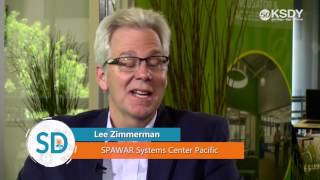
Hi, I'm Eric Westridge. Welcome back. We're at San Diego Startup Week and we're here now with Lee Zimmerman, who's the technical director for Spey War Systems Center. Lee, welcome.
Pleasure to be here, Eric. Thanks.
So you work at a very large organization doing sophisticated projects that take a lot of skill and time. Out here we're doing a lot of fast things. And how did you get into this game of innovation and startups? Where did your journey start?
Well, so it started 33 years ago when I was recruited right out of college to go to work for SSC Pacific, as we call it, doing software development and engineering and eventually project management. That progression has led to my new position as the technical director. Now, it's interesting. So you talk about government being big and bulky and that sort of thing. Huge emphasis now from the top levels of DoD about innovation and agility and doing things better and faster. And so that's one of the key elements of my new job, is trying to figure out the wide range of technology solutions that are out there, regardless of who they come from, and trying to figure out how we incorporate those into to the projects that we execute.
Now, if you go to Spay War System center, there's gold hidden all over those. I've been in rooms and opened a door and there's somebody there doing something sophisticated. Part of the challenge is how does a startup community find out what they can use? And the other part of the challenge is finding out what they have that can drive your demand. What's your biggest challenge in doing that? When someone's dropping this big challenge in your technical director lab, go heirly solve this for me. What are your challenges in doing that?
Well, so I think you did a good job of laying them out. Part of it is just understanding what the full spectrum of solutions that are out there are. So I'm pretty good. I understand what the major defense contractors are doing, I understand what the big vendors are doing. Right now we have very little visibility into what the startups are doing. And so I think that's one of the things we need to address is how to get that two way communications going. Both so we understand what really cool innovative things they're doing. But honestly, I mean our requirements are incredibly diverse and we build almost everything we build nowadays based on commercial hardware and software. And so I think the other side of it is we need to figure out in an unclassified way how to get those high level requirements out there. So maybe some person who didn't have an idea for a startup all of a sudden gets one. Now the other piece of that that we do have a long history of and I think do very well, we have a dedicated technology transition office and we license our patent portfolio, we do cooperative research agreements and that sort of thing. So we've got a pretty mature process for doing the interaction. But we do need to, I think, expand the audience more to the startup community to try to get advantage of the latest innovations they may be coming up with.
And what's the funnest, coolest thing you're working on right now that might be kind of startup likey. Is there anything in there that.
So it's interesting because it's actually almost more a startup within some of the big defense companies. But one of the companies that is leading in this area, there's a concept called hyper converged infrastructure and trying to take our huge racks of processing and storage and network switches and collapse it down into a much smaller physical footprint. And so some of the big folks are doing that, but there's also been a few companies that have come out of nowhere who saw this as an innovation and an opportunity for them to get into what's potentially a huge market. From the DoD point of view, it's great because it maybe means that I can have a much smaller stack of computer, computer gear that uses less power. And it also just happens to be faster and more secure. And so that's kind of an exciting one given that a lot of what we do is build big scaled IT systems for the benefit of the Navy.
Right. So keep that in mind. Startups in there. That's one. My friend's son is working now at Spayware in virtual reality. So I know there's lots of things. There's too many things to mention basically to find things there. So final question. We're sitting back here in three years, maybe we're at a government conference even, or a startup conference. And I say, Lee, what are you most proud of? What do you think your answer is going to be.
Something that I'm not aware of right now. That allowed us, you know, the classic mantra in project management is better, faster, cheaper. I want to find some cool technology that is going to allow us to build some system for the warfighter and do it one or more of those things, better, faster and cheaper. And I think that given that everything we do is based on IT solutions and there's infinite room for innovation in that space, I bet that working together, we can come up with a solution that is one or more of those things.
And how do startups contact you if they want to get involved?
Well, so the Technology Transfer office, we would be a good opportunity. The Public affairs office would be a good opportunity. Unfortunately, our web presence is undergoing an upgrade right now so that we can actually get into the 2000s with it. And so actually calling the Public affairs office probably would be a really good idea.
Can they find that?
They would find that. I bet if you can Google that, you can find that. But. 619-553-2717.
Give that number one more time.
619-553-2718.
Very good. Thanks for your time and thank you for being here. And we'll be back in a moment.
Hi, it's Christine Takara with Emma's Realty Services, and I'm excited to be here at the start of San Diego Startup Week. We are hosting 75 events at three of our buildings. That's One Columbia Place, 701B and 707 Broadway. So I hope to see you there and come hang out between sessions at our terraces at 1 Columbia Place.
Hi, I'm Chris Orlando with Scalematrix and we're extremely excited to be part of Startup Week in San Diego. We sponsored this event to help drive the startup community and we're looking forward to being able to promote some of our new services which help startups make better use of Their IT investment. We can help in any way. Please look us up at Scalematrix. Good luck this week in the idea competitions. We look forward to seeing you all here out at Startup Week. Welcome back and again, welcome to San Diego Startup Week and to Evonexis. With me now is special guest City Council President Sherry Leitner. Welcome.
Thank you for having me. I'm glad to be here.
So thank you very much for taking the time. Great place. Yeah, it's a great place and great week. Great time.
Yes.
You're one of the first city council representatives, government representatives, that I heard talk so passionately and consistently about the startup ecosystem. How did you get involved with the startup ecosystem?
The way in which I was involved was my husband was very much a startup guy and has been involved with some startups all his professional career. And very interesting in that none of it has to do with what his degree was in, which was chemistry. It's all been firmware, software and the hardware. So it is about how you actually create your own business. Part of our involvement was actually putting the house on the line. It was having to go to British Columbia or in. In the old days, Toronto, for venture capital. It was not getting paid, getting stock options. Instead of getting paid, the employees get paid, you get stock options and eventually it does all work out, or it did for us in any case. And it is following your passion, following your dream.
That's correct. So you really know the startup ecosystem. You've lived it.
Yes, sir, I know quite a bit about it.
So now, as a government representative, what is your biggest challenge in driving the startup ecosystem?
A big part of the drive comes from the community itself and it's the way in which the city government can actually help startups. We've heard comments about reducing the regulatory hurdles, making information more readily available. Note that with my current position as council member, I've met with a lot of people and it is hooking them up. Depending on what their ideas are, it may be just a casual contact. Oh, I met some person over there. You really should go talk to them. And it is, for instance, with BlueTech, I had my first visit from the Maritime alliance about three or four years ago. And then working with them and connecting them with other people, getting them, you should really go to the mayor's office, you should really go to public utilities department. And then again, the council members and themselves have what we call CPPs funds. They are savings from our council budget that a number of my colleagues and I have awarded to folks to help them out with their mission. And if you need help negotiating how to get your license or whatever, we're getting there. You know, we're working on the webpage. It's going to be 21st century maybe finally. I hope that that was one of the things that really got to me when I first came into office. You can go online, buy medical insurance, you can go online, buy a pizza, but my goodness, you cannot get a business license online. Or find out how best to do that. You have to print out the form. But we're moving along.
So you said the magic word funds.
Yes.
So how does somebody go about learning about those funds? Where would they go?
Contact your individual account council members and talk with them.
Awesome.
So what are you most proud of that the city has done for startups in San Diego?
I think some of the things I personally am most proud about are when I came into office, we did not have an economic development strategy that was current. We did not have an economic development department. We did not have a council committee that focused on economic development. And those were all changes that. That I brought about. I was chair of the economic development committee for a number of years. And since then, we have put out an economic development strategy. It's due to be updated. I would like to see more emphasis on the tech sectors and certainly the startups and what we can do for them. The focus has been more on the larger sectors, but just the small businesses are what makes San Diego go, and we need to support them the best way we can.
So the next one to three years, let's say we're interviewing you again right here.
I'll be wearing blue jeans and a T shirt.
All right. But if I ask you what you are most proud of with city government and the startup ecosystem, what do you think your answer will be?
I think one majorly, it is getting. Getting the city's web and IT services in line. The support for just doing the regulatory relief would be very important to me. Just monitoring. And.
One final question is, would you.
Ask that question again? Because. I apologize, I was thinking about something else.
Sure.
What would I be most proud of?
Yeah, let's say we're interviewing you here in one to three years, let's say. And I ask you, what are you most proud of that the city government has done for startups? What do you think your answer will be?
It continues to be the partnership between the city, the startup community, the academic institutions. All of us together, we can make San Diego the place to be. And I would love to see that within three years.
One final question.
Yes, sir.
How do you think the city best takes advantage of San Diego Startup Week?
By promoting it, attending it, meeting with people. I mean, Startup Week is huge for the individual entrepreneurs that come out and connect, get connected with resources, talk to other people who have done it. And as I tell lots of folks, if you don't ask for something, what is the answer? What is the answer? You know, you've got to put that. That effort out there, follow your passion. It's really hard to do certain things, but if you're passionate about it, it'll work out well.
Very good. And thank you so much for your time and for being here for everything you do. And stay tuned. We'll be right back.
Hi, I'm Kayla Malone, CTO of Underground Elephant, and we're really excited to be part of San Diego Startup Week. I think the thing I'm most excited for is to be in one of the stops on the pub crawl tonight. So I hope to see some interesting outfits and faces there. But also for us at Underground Elephant, we really see this as a great opportunity to meet people not only within the network of San Diego, but also to meet fresh young talent and have new opportunities to hire.
Very excited to be here at San Diego Startup Week, looking forward to all the events, all the activities, and most importantly, getting a chance to meet you. As the founder and CEO of Seismic Software, San Diego Startup Week represents a great opportunity for us to continue connect with potential employees and also raise the awareness of San Diego as an excellent software scene.
How did you get caught by the startup bug? How'd that catch you?
Well, you know, I, as a tech entrepreneur myself, it's always something I've been interested in. And coming from the tech industry, I think it's something that when I came into city government, I thought, how can we better leverage our local startup scene, our technology companies, and bring some of that innovation and mindset to City Hall? Which is not easy because as the city government, government at all levels, frankly, is not generally a place that welcomes innovation. So it's been a challenge, but it's been good.
And so now that you've got balls rolling in the court, so to speak, what are you most proud of?
You know, I think getting the city's open data initiative passed was a very proud moment for me personally. It was something that early on, after I got elected to office, I met with a lot of folks within our data community here in San Diego, and, you know, they were imploring me as to the necessity of this right and all the cool, innovative things that could arise as a result of having a city open data policy. And whether you're talking about for profit companies that are creating apps that they can leverage to, they can leverage that data to better advance their company, or whether it's non profits or people looking to just increase civic engagement between citizens and city hall, or all the above, and maybe things we haven't thought of yet, but either way, the data belongs to the people.
Right.
And getting it out there in a way that's accessible, it's machine readable, it's understandable to people. We're not just dumping a bunch of PDFs on them. I think it's going to be really, really good. In fact, the city just got an award yesterday. We got recognized with platinum certification down in Austin for our open data policy. So that's something that's been really positive.
Well, data for the people. We've got about 2,000 people, people this week running around as part of what we're doing. How would they get access to this data?
So we're in the implementation phase right now. We passed the policy last year and so now we're implementing it. And as you might imagine, the city has a ton of data, terabytes of data that we maintain right on everything from crime to traffic to housing to all these things. And so getting it out there in a way that makes sense, it's methodical. Again, we're not just dumping it out there and people scratch their heads trying to figure out what they're going to do with it, but we get it out there in a way that they can actually use it. That's what we're doing right now. So it's going to take a little bit of time, hopefully not too much time, but we want to make sure we do it the right way.
But the Smart City hackathon is one of those efforts. So Gary Hayslip was there judging.
Absolutely.
So what's been your biggest challenge in rolling this out?
You know, I think the biggest challenge is really just getting people within city government to embrace that mindset, that spirit of innovation. Because again, government is not necessarily a place that fosters innovation. There aren't necessarily a lot of rewards for people taking the risk to adopt new technology and sometimes the risk that goes along with that. So we have to make sure that we've got a better culture in place that really does somehow incentivize people to want to embrace technology. It's really, it's kind of ironic when you think about it, because San Diego, we have such a vibrant startup scene and We've got a lot of great technology that's being developed here, and yet the City hall itself has been very, very slow to embrace that in terms of what it does internally. So up until about six months ago, we had a website that was circa 1998, the best technology that Windows 95 could offer. So it's, you know, it's something that the pace of progress and change at the city hasn't always been what I would like. But I would say that we're in a much better position today than we've ever been, and that's really, really positive.
And so how do you think the city can best leverage San Diego Startup Week?
You know, I think we've got tremendous advantages here in San Diego. We've got a great workforce, we've got a great higher educational system, some great colleges and universities churning out really well qualified students and graduates. And so I think what's on us now as policymakers, as business leaders, on us as a region, is really how do we get out and sell that narrative to the rest of the country and really the world? Because traveling in other places, people don't necessarily think of San Diego as being a mecca for startups, for innovation. They think the beaches and sea world and all this, and that's fine, we're happy to have our tourism economy here, but we've got so much more, and we don't always do a great job of telling that story to other places. So that's why I've been happy to be involved in things like the Regional Economic Development Corporation, which that's exactly what they do, is they go out and they sell San Diego. They try to get businesses to come here, businesses that are already here to expand, expand their location here. You know, we had a thing we put out about three months ago where it was an economic impact report of our software industry. And we found that our software industry is actually really, really strong. And we were at a company that they're located in the Bay Area, but they decided to expand their operations not in the Bay Area, but down here. And one of the reasons was because although we think of San Diego as being an expensive place, place to live, it's really nothing compared to Silicon Valley. Right? So the more that we can get out there and we can sell that narrative to people, I think the better off we're going to be.
And one final quick question. How's all this look in one to three years from today?
I think the trend is only going to be in the right direction. I mean, I think when you look at what's happening with Startup Week now, the participants compared to just what we had just a couple of years ago, I mean, it's growing by leaps and bounds. And I think that's really emblematic of our city and our region as a whole, just in terms of the startup culture. We've got the spirit of innovation that we're fostering here, and it's not driven by government. I mean, we could be partners in it, but this is not a government thing, right? This is driven by the industry. It really has to come from within that culture. And my goal always is to have government to be a partner in that rather than an impediment to it. So that's my goal here, and I think we can just keep moving forward.
Great answer. Thank you so much for being here and thank you for what you do, and thank you for watching. We'll see you next time.








