AI for Main Street, Not Just Big Tech
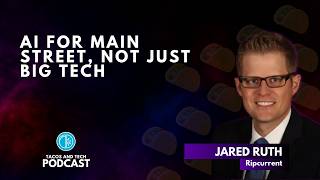
Jared Ruth, founder of Rip Current, built a marketing and automation agency for small businesses using lightweight AI tools. He combines multiple LLMs and integrations to create voice and chat agents that save owners time, but warns against automating moments that matter to a brand.
Questions this video answers
AI for Main Street, Not Just Big Tech
2026-01-20
Commotion
Chapters
Startups get the party. Startups get the party started. Startups get the party. Startups get the party started.
You want tech and tacos, Tacos and tech, you know, we got it.
Hey.
Startups get the party. Startups get the party started. Startups get the party. Startups get the party started. Startups get the party. Startups get the party started.
You want tech and tacos, Tacos in tech, you know, we got it.
Hey, And welcome back to the Tacos and Tech podcast. I'm your host, Neil Bloom, and I am joined by a good friend here, a founder, the Main Melon, Jared Ruth of Rip Current. Hey, Jared. Hey.
Hey, what's up, Neil? How are you?
It's good to have you on this side of the pod. You've been on behind the scenes of many of our pods before. It's good to have you here.
It's good to be here. It's funny, I actually you said main melon, and I. I totally forgot that I put that on there because I was like, I don't. I don't just. I don't feel comfortable saying anything else. I'm like, I don't know, man. Throw main melon on there.
Yep. Well, it's been used. It's your official title now, Jared. We go way back. We go back, I think, maybe 10 years. Yeah. To the early days of Startup San Diego. The early days of you, I think, in San Diego, bringing big telecom to the startup community. But now you're doing Rip Current, so we're going to take it back in a second. Do you want to give us a quick high level of what Rip Current is?
Yeah, sure. So Rip Current is a marketing agency that specializes in really small, medium business. In fact, we really like to focus on Main street businesses. And we'll go into it a little more detail, but I think what I found is as I. As I migrated outside of tech back into Main street and started talking to business owners, there was just like this massive gap of, like, understanding how to leverage tech in their marketing. And. And I think it was a lot of frustration, too, around, just like, I'm getting all these emails, people telling me I need to fix my SEO, I need to, you know, fix backlinks, I need to do this and that. I need to advertise more. And so it just. It kind of started from an idea of trying to help them just cut through the noise and help them be more efficient and thus rip current. It's like, you know, how do you do something that's a little different and use it as your competitive advantage. So, and so anyway, that's where. That's where it came from. And yeah, it's been a cool journey because now it's kind of morphed into, you know, not only just the marketing side, but also a lot of automation, which, again, we're going to talk about that as well with. With agents and whatnot. But tech that a lot of small companies just weren't able to leverage before. And now it's become extremely easy, which is super exciting.
Yes.
It's hard for me to not keep going into more stuff.
I know, I know. We're teasing a lot of it. I'm just gonna say that. From where. When you say marketing agency to me, I'm always like, you're an AI agency. Uh, and I don't think they're any different at this point now because of where you started and the tools that are at. It's just easier to build from scratch now as opposed to assessing someone's stack and saying, you need, you know, yeah, analytics or something. It's like we can just prompt the thing.
Yeah.
So anyway, we're gonna get there. We're gonna get there.
Yeah, yeah, I. There's so much to unpack there and I get fired up about this stuff. You know that, Neil. So I'm. I'll hold back for now.
Well, we do tool talk all the time and I just said, let's just jump on the pod and do tool talk here. But you know me, I love to tell a good story as well and so take it back for us. Like, how did you end up in the tech world here? Where was your journey to that?
Well, yeah, I mean, I think back, you know, it was. It started in a. With tech and telecom. I mean, I was in telecom forever and sort of what I found in telecom, being there for, you know, 20 years. Well, actually, 25 years almost. When you were. I skipped. What's that?
So you started when you're five years old?
I started when I was five. Yeah. I was watching. Watching television and using the phone, so we'll leave it at that. But yeah, so I, you know, I was working with a very large provider here in Southern California and it was sort of before they were serving businesses. So kind of my first foray into. Well, prior to that, I was working as an IT manager, but then getting into. Into telecom. They weren't really serving businesses, they were more serving customer consumers. And so I had this really great regional vice president who came to me and said, hey, Jared, you know, you're. You're pretty technical and your seem like you got a good marketing head on your shoulders and stuff. So of course he was way, way, way overselling my capabilities at the time when I was young. But that's okay. So he said, hey, you know, let's, let's kind of double down on this commercial services thing and let's go after it. So, so what was really cool about that is it was like I had this opportunity to build my own company within a really big company, right? And that kind of plays into the rest of my career, which is sort of like how I built, you know, different facets of the, of the, of these businesses. But, but really, you know, they gave me a budget, they gave me, you know, a very little budget, but they said, hey, you know, go build a network, go find the customers, go create this thing. So you know, it's pretty hilarious. When we were doing that early on, everybody was using TDM and using, you know, T1s, you know, DS3s, et cetera. In fact, DS3s were pretty expensive even back then. But you know, we couldn't necessarily afford to put in a large obstacle network. So I started using Ethernet and I was like, I'm going to build this Ethernet network that is cheap because I can buy Cisco switches for cheap, I can buy media converters over fiber for cheap and I can pull this whole network together. So we built, we built a massive Ethernet network for one of these providers. And you know, it was, it was essentially started because it was the most cost effective, effective way to do it. That was before Metro Ethernet was even a thing as far as transport. So it was right when it was coming out. I won't say it's before, um, but it was, you know, there were some security issues and things with it anyway going way too deep into the, in the weeds here. But it was, it was cool because it was the first time where like something we created was working really well. I mean, so well in fact that you know, people were migrating from AT&T and other major providers in Mass because of, you know, how well it worked. And you know, later on people would ask things like how did you guys have the foresight to do Ethernet over tdm? And I was like, well, it was actually kind of a happy mistake, as Bob Ross might say. So anyway, so that kind of led me into the technology and really launching products with these telecom companies. And with my most recent stint there in San Diego, everything kind of married up. So I was doing engineering, I was doing operations, I was doing sales engineering. And then ultimately Marketing. It's. When I landed in San Diego in that role, when I've met you, it was really about, okay, let's go really fully understand the startup space and the ecosystem there in San Diego and in Orange County. And it just plugged me into this whole new world of like, okay, I feel like I've been a startup, even though I had a ton of backing and money, so it was kind of cheating. But I just related to that energy and that, that excitement of building something. And I, I, I think that was kind of the first time it sort of, you know, really sort of put it together for me. It's like, okay, this is, this is what I'm feeling. Because these, these people, you know yourself in a big way, and everybody that, you know, we were introduced to, we were just talking in the same language and it was really, really cool. So anyway, that was a really long way of saying that. But you can edit out anything you want.
Well, no, it's unique that startup and telecom are talking the same language, that's for sure. And that people who are in the startup community building startup community run into a big company, someone within a bug company that cares and gets it. And you guys, you and Todd Backus right away, right?
Love Todd Backus.
Yeah, we started right away the founders dinner series. Right. Founders and funders together, which, and then we also. So, and what you learned at the table at a convert dinner conversation really quickly was new set of tools, new set of problems. Right. And you said, you know what, we're getting so much alpha from this, even just you, let alone the company. We spun up a second dinner series, the CTO dinner series, to say, lets me technical leaders and understand their problems separately from company leaders or CEOs in that regard, we had to hold dinner series going in multiple cities actually. Right?
Yeah.
San Diego, Santa Barbara, Orange County.
Yeah.
And then during COVID we kept them going through virtual cocktail making classes, which was a trip. And we actually introduced people who are now co founders who met on, online, on Zoom, making a cocktail because of that series we did, by the way. I don't even know if you know that story.
I think you mentioned it. You know, it's so interesting because you see these success stories and I remember, you know, sitting at dinner and I, I remember this distinct feeling and I know we've talked about it several times, so hope you don't mind me sharing, but I, it's like, why is this, you know, guy from this company here with us, like he's, they're not a startup They're a big company and, and you know, I have to give credit to, to the company because they let us invest in, in that space. And that I think was a great amount of foresight for a large company to even understand that. And, and so, you know, kudos. But it was really neat bridging those connections. And then now, you know, it's like, it's wild to think about it's been that long. But now you see these startups, well, they're not startups anymore. There's actually some pretty decent sized companies. And it wasn't like, hey, you know, they, that was their first stage or anything, but it just feels cool to be a part of like that history and you know, and I just, I'm eternally grateful to you for, for pulling us in on some of those because that was super fun, just a great time.
I mean, I'm pretty sure at the first dinner, maybe the second was Cody Barbo and Daniel starting trusted Will like they had just started it or something. And that's Right, right.
So yeah, I love those guys that, yeah, the hardest working, I mean, just unbelievable story. So. Yeah, that was, that was cool.
Well, some of the things we learned though was that especially the CTO series because I remember there was times where we had say the CTO or chief architect of Intuit sitting next to. Right, you, who's thinking through kind of a product management and marketing lens, sitting next to the CTO of a two person startup. Right?
Yeah.
And you had this Intuit guy saying Alex, I think is his name being like, man, I wish I was you. I could be nimble, I could try stuff. And they're like, man, we wish we were you. Right?
Yeah.
Have funds and teams. Right. And you're in the middle kind of like helping this conversation happen, saying, you know what, there's a lot of value here learning from each other and leaning on, I don't know, I just found a lot. I remember a lot of those conversations where we wouldn't think, man, we should only have startups. No, we should actually have like multiple stages. But same kind of thinking, yes. To share in networks in that regard too.
Yeah. You know, and it was, what I loved about those nights is, you know, we'd usually plan for a couple hours through two, three hours, I think what the dinner was and I, I love every single time, you know, we're shutting down the restaurant and the people, the employees are sitting there like, hey man, like you guys told us this was gonna be over and it was just a fantastic time. I Yeah, I, I, I love doing that. It was, it was great.
So, well, and it kept you nimble too, kept you with your ear to the ground on what speed looks like, what strategy looks like, you know, and where the industry is headed. And I think that was smart with a telecom. Luckily you were at a private telecom that did reinvent itself often. Right, right. Started as a newspaper company and eventually is like a media company now, I think, or something, or sold off its media anyway.
But, well, it's, it's a phenomenal company. And, and I, like I said, I am, I am very grateful to have worked there. And I think that they just looked at the world differently. It wasn't, you know, it wasn't like it was actually the smallest telecom that I worked for and, and believe it or not, and, but they just thought of things differently. Very much investment focused, very much startup. Lots about, you know, people and how technology impacts people and really wanting to make a change. I, I remember telling you this and every single time we had a dinner talking about how this company is different and they, you know, even though maybe their brand perception isn't always the greatest, it is really a special place. And when they say, hey, we're, it's fixing things, we're changing things for the better, they actually meant it. Like I've worked for companies where I'm like, yeah, whatever, we're, we're a green company. We say paper, don't print this out, etc. But no, this was, this is a, you know, they're, they're a different company. They're, they're pretty special.
So anyway, it's pretty obviously our listeners are smart. We're apparently purposely not saying their name. Okay, fine. And so we'll move off them soon. So that doesn't sound so much like we're talking about the company here, but they did. I do want to talk about one thing which I think probably led to your current path, which was they also gave you the freedom to like scout, talent scout new technologies to invest in.
Yep.
Which I saw that's. So it's when you and I start stopped working together as much because you, you know, took it on professionally. Say let's expand the company services in a certain regard. Where'd you kind of learn from kind of the managed services piece.
That, yeah. And that was, I mean, man, I'd love to say that it was like all orchestrated and I was the guy, you know, orchestrating it. It, it really was more of than that. It was sort of like, you know, we had a real good connection with the startup ecosystem in, in Southern California and there happened to be some very good managed services companies here. And so I worked with a few people at corporate and you know, talked to them about what the opportunities were and started meeting with these companies out here and ultimately ended up in an acquisition play, which was just incredible. Really cool experience overall. But it, Yeah, I think it was, it was interesting because, you know, and I see it all the time now, especially now where people are saying, buy versus Build, buy versus build, buy versus Build. And I think that that message is maybe shifting a little bit now is buying is becoming less attractive in some cases. But, but, you know, I think it's, it was, it was sort of this realization of tech is moving so fast. If, if we were going to go build this thing, we would already be behind, you know, and so it was like, okay, we need to, we need to go make this investment. And so, you know, I feel like, you know, that was kind of the first step in creating this startup ecosystem within the company. And you know, I know we were talking about, you know, 3M and sort of how they kind of look at innovation back in the day and how they're. And this will play into ultimately our AI conversation. But, you know, I saw that, that spirit, that, that startup spirit, living and breathing and really looking for these next big opportunities, which was, again, you just don't, you don't always see that in, in large corporations. And I just, I felt very, very fortunate to be able to, to be a part of that.
Yeah, well, it was apparent. I mean, I traveled all over the country to. With the, with your company.
Yeah.
Saw them sponsoring techstars, which was a startup accelerator.
Yep.
And you know, employees actually come out and mentor there. I mean, it was totally different. Right. So I think that was, there was no re. There was very many, many reasons why you ended up there and why you ended up on the path you are now. Do you remember your kind of first, your own personal build moment? Like the first time a spark went off and you're like, I could build my, my something myself?
Well, yeah, I mean, you know, a long, long time ago. So when I was actually in college when I first started creating my own companies and I started board game company and it was funny because at the time we sold the product to Nordstrom and Amazon and you know, and Amazon was still a bookseller so, you know, back in the day they didn't have the Amazon market. You actually had to sell to Amazon, you know, product and then they would resell it just like any Retailer. So I had the spark. And I think, you know, at some point, you know, I realized while I loved it, I, I loved being a startup. I loved having that my own company when I was younger. And this was before you could do like, hey, I'm at an online marketplace or anything. Like, wasn't. We weren't quite there yet myself. Right. But, but it's, but I think what I realized at some point, I'm like, okay, now I gotta grow up and get a real job, quote, unquote, and get into corporate and do this thing. Right. So it never left like this. This drive to be an entrepreneur was always there. It's, you know, even before that and, you know, doing painting and blonde mowing and stuff as a kid, I'm like going to, you know, bang on the neighbor's doors and trying to get jobs.
Wait, tell us about the board game real quick. What was it called?
It was called Commotion. Yeah, it was a play on charades. It was a buddy of mine in college, his name's Mark Medley, he's a great guy. And so, yeah, we launched a board game. And again, it was. I talked to my kids about it. It's not like you jumped online and found, hey, here's a board game manufacturer like you were going to, you know, look at, you know, these catalogs are trying to find manufacturers and looking. So we find this, this company in Texas who can do board games. And we're flying out there and, you know, I'm like 18 years old, right. And then we're flying up to, to Nordstrom and Seattle to talk to the buyers there and to Fred Meyer and some. So I'm like, you know, we're 18 years old, flying around, you know, trying to sell this game. And fortunately we had some, some bootstrap, you know, fam, Friends and family kind of money that helped us get that initial run going. But yeah, it was wild. It was, it was super cool. And I don't know if it's still out there. I know we, we ended up selling it to a distributor. But anyway, I don't believe it's out there. You might be able to find some old, old versions of it somewhere on Amazon or use Game. I think it's probably still got my picture on there from when I was 18. So. Yes.
Oh, we were going to find that.
Yeah, that would be funny.
Okay.
But anyway, so that was it.
Just retap your inner entrepreneur.
Yeah. Yeah. And so I think always love building, always love creating. And then so when I got out of. Well, when I was able to do that in, in my last job, which was great. But then when I left, I was immediately thrust into this new world of like, I, you know, I almost, it was scary because I, I had been in corporate so long and getting, you know, a paycheck and just like, okay, cool, we're doing this, we're doing that at meetings, you know, presentation, you know, going to do, you know, all of a sudden it's me and I'm like, okay, let's go. Like, what? We're, we're back on the, on cre. On the, on the train of creating things, you know, and, and you know, it took me a minute just to, you know, get everything sort of organized and say, okay, what, what do I, what do I know? What did I, what do I need to brush up on? Because again, like when you're in a large company like that, you're not building everything. You're, you have teams to do it. You have. And I had a fantastic team, love them. But now it's like, okay, now I'm going to build it. Right, so you start building stuff. And, and it was really cool because all of a sudden, like that energy, I, you know, I used to find myself at the end of the day getting tired. And then I found myself again being like, okay, it's three in the morning, I can't sleep because I'm like just fired up, you know, creating something. And so it's like, you know, I gotta go to bed because I'm, I don't think I would go to sleep if, if I kept going on this.
So.
And I hadn't, you know, I hadn't had that in a minute. Be totally honest with you. Not to get all therapeutic on you here, but, but it was, it was cool because all of a sudden I'm like, I don't want to put this to bed because I'm, I'm in a, I'm vibing right now. I know it's overused, but I'm, I'm totally vibing building this thing. And so I just started building stuff, which is super cool.
Well, you have been a transition at the perfect Gen AI moment where you really could actually vibe code.
Yeah.
And you know, so what was the first thing you jumped on? Do you remember, like, what transitioned your mind? That was like, whoa, the power is in my fingers right here.
That's a good question. I, you know, it was interesting. I was working on some work for a company around brand and you know, so I, I worked with some of the largest brand companies in the country, you know, on projects that were millions of dollars, you know, with some of these large. And these are, you know, Chicago, New York based brand companies, right? And it was always interesting to me because I would, I knew their process, I know their process, I have their process, right? But I don't have the resources and the people and all this to put, to put it together. So I think the first realization where I was kind of putting this, I was like, okay, let me get out this, this old brand deck we did and this brand deck and let me see if I could piece this together about, you know, remember how, what we were doing and, and then all of a sudden it hit me like I could, I think I could just build a tool that does this and takes you through like these brand questions and then does the analysis and research and take stakeholders, you know, and says, hey, you know, this is the leadership, this is, you know, this is the employees, this is the survey for, for customers. And automatically send this out, pull the, pull the data back into. And I was using at the time, superb Supabase and, and pull all this information back, reanalyze the data and then say, okay, this is what, you know, your stakeholders say, this is what your customers say, is what your investors say. This is what your employees say. This is what the leadership thinks. And, and it was surprisingly easy. And that was where all of a sudden this light goes on of like, no, I just created this front end and back end. And again, I'm not, you know, I think I said this the other day on LinkedIn. I'm not, I'm not trying to flex. I'm not like, oh, I'm a coder. I'm not. I just use these tools that are available to us now. And it just, it blew my mind. I sat there and watched this thing come together. And I'm, you know, I'm technical enough, you know, based on being an engineer in the past where, you know, a lot of it made sense, but I'm not a coder, you know. And so it was, it was just this realization of, man, it was wild just seeing this thing get compiled in front of my eyes and that. So that I think that was probably the first like, real project that I just said, oh my gosh, this is, this is scary and awesome and every other emotion you could think of.
So I think I remember you were seeing some of your stuff on Lovable, right? Is that what you were using? Lovable?
Yeah, I mean, I played with, I played with a bunch of different platforms. I. Sorry, I Got this light hitting me weird, so trying to dodge it. I played with a bunch of platforms, so I, I, I was working with V0 lovable base 44, man, trying to think there was a few others in there. I'm trying to, it doesn't matter. But you know, so, so yeah, and, and there's positives about each one of them. And you know what I really liked about I, I started finding I liked platforms that were a little bit LLM agnostic. So it's like, I don't, I don't necessarily, especially now, I don't mind the compiler and builder being LLM specific, but I like being able to access different models for the application. Right. So, so there's things that I think, like if you look at anthropic Claude, and I mean, there's just been recently another moment in the last month with Opus 4.5 where it's just, I mean, I'm building stuff now and even when I was building stuff on Claude, you know, a few months ago, it's even surpassed that. And so it's, it's, it's wild. But, so there's things like that where you go, okay, cool. Like this is, this is really where this model, this LLM fits. This is really good for this specific use case. You know, no disrespect to Google, because for a while they were a little bit behind. And then all of a sudden Kim and I came way back, but from a coding perspective it's, you know, falling behind again. And so it's, you know, I think it's just a, you almost have to, you have to use all the, all the models, I feel like, because everything is moving so fast that if you're not, you're going to miss out. So I, I kind of like to just go back and forth. I mean, you know, for a minute I was using Lovable and then via V0 and going back and forth with Vercel and, and then what I really liked about what Lovable did is they started to integrate all this. So they use Claude Opus 4.5 for their main, you know, chatbot. But then they started to integrate know, things like Supabase, GitHub, make it really easy to connect, and even things like Google Analytics, Page Speed Insights, they've started to integrate into that interface. And so, you know, a lot of times if people don't want to go in and use Claude code directly, you know, as a cli, I always tell them just, you know, go get a Lovable account and upload your PRD or You know, even if it's not a prd, just upload your. What you're thinking and just be ready to be blown away because it's really, really cool. So anyway.
So you start working with just really. I think you're walking around your community talking to shop owners, business owners in the retail space, and you started just what I remember from you're building, coding by night, vibe, coding by night, but talking to retail owners.
Yeah.
You also knew because of where you live in San Clemente. Yeah. And started. I feel like you started like merging to being like, wait, these are these problems. I could be integrating them into these kinds of things. Like, tell us that, like, where did the online offline kind of piece start to.
Yeah, I, you know, I think marketing is such a massively broad practice. And, you know, you can talk about brand, you can talk about, you know, acquisition, and Legion, you can talk about. I mean, there's so many things to go over. And so I think what I started to realize is just like anything in any startup, you know, if you go too wide, you're going to fail. So you got to kind of tailor that message. And then I, I just really enjoyed working with small business owners because that's really where the passion is at. And I know, you know, when you, I, I would compare it to technology, right. When we would talk to, to business owners about technology, you know, I don't think I've ever met a tech business owner that when you say, hey, you know, let's talk about your technology, they go, oh, you know, I'm so happy. That makes me feel warm and fuzzy inside. I love my technology. It's like, it's a point of, it's a point of frustration and stress. And even in technology companies, it's, it's, you know, there's so much technical debt. I was actually talking to a friend about this today where, you know, it's like, hey, I'll get to that later, or we'll patch that later. You know, I just use my password for right now, and then we'll, we'll figure it out later. And I feel like marketing's the same way it's become, you know, there's so much messaging out there about, you know, you need to do this and you need to do this and you need to do this and you got to have this advertising. And what I found is that, you know, there's a lot of companies out there that you'll look them up and they don't even have a Google business profile set up. And I'M again, I'm talking about Main street, you know.
Right.
Which is like so fundamental. You know, the, the idea of searching. It used to be growing up, you know, if you had a great business, people would talk, you would, you know, they would come find you and everything would be great with Google search, you know, inserted into the middle of that process. Now if you don't have a Google business profile, it's like you almost don't exist in some ways. Right. To people that are dropping into town and we live in a, in kind of a transient community here in San, in San Clemente because people are shooting through, you know, on the freeway. So you almost have to give them a reason to stop and they're like, oh what you know, here's, here's a cool spot. So anyway, so it kind of started with that. It's like how do you start to find, you know, your, your business and how do you, you know, get it set up so that people can find you? And then you know, that's just the bare basics of, of, of marketing. And then it obviously turns into, you know, how do you now with, with, with LLMs and with AI, how do you make sure that when people are doing voice search etc, that they're able to find you? But I think that's where it started. Neil was just figuring out what some of these small business owners were dealing with. Their frustrations, their pain points. And it's no different. You know, when we used to, you know, do these pitch competitions, we always used to coach people on starting with the pain point. So I do the same thing. You know, I look at, see where, where the pain is and then try to solve it.
Yeah, but even, even tools like, even modern things now you have to consider like, like your example of are you in Google Business Review? It's just as important now that search has moved to the LLM. It's like well are, are you being. When someone's saying I need this, are you showing up in GPT right? Yep. Which further even puts a business owner, they're like I have no idea. I don't even know if I have a website.
Yeah.
Am I showing is an LLM knowing how to do that? So is there, is there even so you know, are you coaching them on that more or they're just saying just take it off my plate. Just, just get me in there.
It depends on the, on the client, on the business. There's some people that are very interested in, in understanding how it works and they want to know, you know, how to, how to navigate that. But I think there's, there's a lot of business owners that, I mean, think about it, right? I mean, you're running a business and you just want to focus on your business. You want to figure out, you know, how to maximize your revenue, how to, you know, clean up your operations, how to make sure that, you know, customers are getting what their need, what, you know, their needs met. And, you know, so I think it's, it's like, I don't think a lot of business owners have the time. So it's, you know, as much as I think they, it's, it's, it's interesting. A lot of, A lot of startup and, and small business owners, they're actually great. They're actually really good marketers. They're, they have a very good intuition, otherwise they wouldn't have got it as far as they are. Right. They've got a great intuition on, on marketing and sales. However, I think sometimes it's just they don't have the data to really see what's working and what's not working. And so part of it's giving them the data, another part of it is creating some automation so that, you know, they're not sitting there, you know, worried about returning email or, you know, some of this, some of these parts, their business are just very transactional. Right. And so the last time they're spending on this, these transactional items, they're actually able to really focus on the larger, large scale. And we see that. I mean, look, there's the same thing when we, when I was a corporate, we would spend a ton of time on transactional stuff and it would really keep you from, from driving the strat, the overall strategy of the company.
Interesting. So what's, what's resonating from a new tools perspective with, you know, business owners right now, where, where are they understanding that, like, they need to get up to speed a little bit?
Great. Yeah, I think, you know, I think people are still trying to understand. I mean, it started out where, you know, AI, they're like, yeah, we know we need to implement it, but it sounds like it's hard. And so I think we've kind of surpassed that now where people are realizing that adding chat agents to your website and whatnot is not necessarily hard. But I will say, had another discussion about this. You need to be really careful because you're, you're essentially enabling an agent to, to take care of your brand in certain scenarios. Right. So, you know, there's a lot of phone systems. We actually do Voice agents. And I'm always very careful about where and what businesses we use them. I think in highly transactional businesses, it works great. It's like, hey, I don't really want to talk to anybody. If I know it's a virtual agent. Doesn't really matter because I don't. I'm okay with that. There's other moments where as a customer and you know, I, I know you felt that. I know I have. Where you get on and you've got a virtual agent there and they're saying, I'm sorry, I didn't understand that command. I'm sorry, can you repeat that? I'm sorry, did you say this? And you're like, no, I did. I didn't say that. And you're yelling at the phone. And so that, that can take actually a really great brand and destroy it. I mean, you can take a brand where they love you and you put them through that and then it could be literally one interaction where now all of a sudden their brand, you know, you know, metrics and, you know, their love for your brand is, is, is, is not there. So. Yeah, yeah.
So yeah, it's like you don't lead with tech. It has to be behind the scenes and just do solve the problem, which is kind of what tech's always been. Right. Like, you really shouldn't have to talk about AI. You should just be like, to solve your problem. Great.
Yeah.
Right. You know, no one cares what you built it on. No one cares if you have Dev team here or somewhere else.
Yeah.
This comes down to is, is. Is that business solving that person's need and therefore they will pay you. Gladly. Pay you for that.
Yeah, yeah, yeah. And I think it's just a matter of being able to route that to the right location. Right. So there's, there's, you know, brand moments where you need to show up for your customer, and that includes when they're having trouble and they have a pain point, I think are some of the most critical. And it's no different, you know, in, in your personal life. You know, I wrote recently on, on LinkedIn, it was like, you know, AI can take care of a lot of things, but AI is never going to be you. Right? AI is not going to sit down and have a conversation between you and me. AI is not going to show up at your kids, you know, soccer game. AI is not going to, you know, grill burgers with your buddies in the backyard. It's not going to be there when your parents are, you know, potentially on, you know, in the hospital or something, you know, and so there's, I mean, it's like, no kidding, right? But, you know, I think sometimes as businesses, we put AI in that seat. And I mean, think about that, right? You send a, you send a humanoid, you know, to your kid's game, it's like, hey, don't worry about a kid. Like, I sent a humanoid who watched it, and I'll watch later. Your kid's like, come on, man. Dad, really, you know, I mean, this is going to be a thing, right? Soon. And, you know, we have this opportunity to own moments in our lives, but also as a brand, in a business. In business. And I think we, you know, we're far too eager to throw stuff on AI and it has a mass impact on our nps, for our brand. So I'm always really careful about where we implement it. It's not like, hey, just go implement it everywhere. It can do this, it can do this, it can do this. And then when you do, you need to make sure that it can. That it can do what it says it's going to do, because that's, that's. Those are brand moments. Those are, those are opportunities that you're either gonna get people to promote you or detract from you, and sometimes you don't get another shot.
Yep, you're right. And I think you and I have talked about this. It's. Hopefully the tech gives you the freedom to have those human moments, even as a business owner, to be upfront with the customer as opposed to having to rack your brain out and doing bookkeeping and accounting behind when you're just like, I just want to help people, like, find, like, the love of surfing. Right, or something. Yeah, right.
Man, now you're getting me pumped up. Because this is where, this is where it gets exciting, right? If it's done right, if you implement this correctly, then you get. Shop owners come out, you know, from the back where they're doing inventory and they're doing, you know, and they're dealing with employees and payroll and responding to customers and, and they're there and they're like, hey, Neil, what's up, man? How are you? And you can sit there and have a talk with, with the owner of the company and talk about his passions. And I, you know, I was in Costa Rica last week and, you know, this happened. So that, that's where, like, you know, when I want to say, yeah, when we get to that level, that's going to be really, really special. And that, you know, you know, that's going to create brand equity far greater than anything that AI is going to do or anything. Especially for small business. It's a little harder for, for large enterprise, you know, but, you know, again, it's not impossible. I think, I think, I think it was Target, actually. They were, they were walking or they were doing a daily walk with associates around the store and saying, hey, we want you to talk to people. And I was in a Target, actually, before I knew about it, I was in a Target and I was walking down the aisle and this employee came up to me and said, hey, you know, how, how you doing today? And I like, almost fell over because I'm like, I. What did I do? Like, I didn't steal anything. Like, what's going on? You know? And he goes, ah, just checking in, see if I can help you find anything. And. And I was shocked. I mean, it was literally this moment of like sort of I'm in the twilight zone, but also like, hey, that's pretty cool, you know?
Yep.
And so I get, I get excited about that. I think that if we can do this right, and I feel like we're on a good track. Scary at times. Yes. But if we do this right, then all of a sudden this gives us these moments back to own and to be, you know, and to connect with each other. And that I think is going to be the most powerful thing.
100%. The tech part layer on top of that might be that they've tracked your entire, like, path through the Target and they're like, Jared, why are you walking around the thing? Yeah, yeah, but that might, but that might light up an associate. Be like, we got a lost guy here who can't find like that thing. Right. Which is good, that's fine. Or they might have recorded that conversation on an AI note taking bracelet.
There you go.
Being plumbed back. Being like, here's a conversation we had, here's how we can improve human interaction.
So it will, by the way, I need to get one of those. I got you.
I'll send you a B.
All right.
A B. Wearable. Yep.
Yes, I need to get a B.
So it is going to get creepy for a little bit and, and then hopefully we get past the creepy into the, the value. Which you said the human. Right. That's, that's definitely the, the opportunity here.
I think we will. I mean, I, I feel like, I feel like that's what we're taking. Maybe, maybe I'm being too optimistic potentially, but I feel like, you know, that is the real opportunity for us as builders and creators. And I just love this idea of like letting the technology loose. And I get, you know, especially coming from corporate environment with, you know, corporate guidance and security and everything, I get it. It's, it's hard. Easier said than done. Corporate governance. It's, it's. If you could release this in your organization and you know, whether you're big or small. And I go back to that 3M example, you know, when they really tried to let their, their customers innovate and they came up with some of the most amazing things, products today for 3M, you open this, this up for, for your employees and all of a sudden everybody's creating. And I think that is, that's the most exciting thing, I think, for, for any company, any size, because you can compete. It totally levels the playing field. I mean, you know, you, you and I have seen it because we've, we've been in, you know, in these co working spaces and whatnot. And so we see, you know, people talking about an app and developing it and pulling it together. This starts to happen at scale now and it is, you know, you don't need to sit there with a coder. And again, I'm not saying you don't need coders because you do actually. They become more important, I feel like, in this equation. Yep. But I will say that you, you have these ideas that ultimately get spun up in, in a very short amount of time that are power, super powerful. Yeah.
Well. And you and I join the tech world because of the optimism for it. Right. Tech for giving people a new life, a better life, to change our lives in all for the better. Right. So, you know, we're always going to be tech optimists in that regard. Yeah.
I can't help it.
Adoption rates can be different. But you know, we've seen also, we also know marketing has also taught us a lot about adoption rates too. And trust goes, it's all about trust in the beginning. I think this year we're going to learn the first time of mass trust of autonomous vehicles. People are going to suddenly realize what they get with their time back when they don't have to drive.
Yeah.
And it's not just going to be the Tesla super nuts. It's going to be everyone, you know, and I think that's gonna, if that domino falls, people will start being like, well, where else can I get my time back? Where else can I be, you know, human again as opposed to in the spreadsheets all day? So I think you and I are both pretty excited about that. You're doing it, you're on the street, literally, like seeing where that Nexus line is, right? And I'm here sitting here being like, the future in 10 years is going to look like this. So it's kind of fun to share notes like this, that's for sure.
I, I love it. Well, and to your point about autonomous driving, you know, I, I showed my wife, you know, I had her in, in the Tesla early in the, earlier in the year, and I put it on fsd and, and she's, she's like, oh, I don't really like how it did that. I don't, I don't, I don't like that. And that felt a little weird. And that was, and so whenever I'm in the car, she essentially was saying, I don't want you to use that. That freaks me out. Right? So fast forward to the end of this year. Now we're on 14, whatever, release. And so I said, I'm just going to show you, like, it's gotten really good. And she goes, I don't want you. I said, no, just, honey, listen, like, like, let me just show you. This is really cool. I don't want you. I said, let's just come on. Like, I, I've got my hands right here. Like, watch. So I push it. And she's sitting there and, and to your point, right, all of a sudden she's looking at this going, actually, this isn't bad. This is kind of nice. I kind of. Oh, you know what? I like that, I like how it. Oh, that felt pretty normal. And she, like within maybe a week, all of a sudden, was preferring it. And we were driving down the road. In fact, we went to Carlsbad, meet some, some friends and, and it was like, okay, you know, I think we could do this. And she. So, so to your point about it, about just the mass acceleration, the incredible acceleration of, of tech and autonomy and how this all comes together to build the trust in the system. And as you know, I mean, trust is like, that's the foundation of, of any brand, right? Once you start to be able to trust it, that's really powerful. So, so, yeah, it's gonna, it's, it's going to get crazy, you know, I mean, it already is, and it's just going to go faster, which is super exciting.
Exciting things are going to break and we're going to unlock human potential. So the one thing that might not change too much is our communal love for good food, including tacos.
Oh, man. Okay. Huh.
So, yeah, everyone who's listening Must know where, where do you break bread or tortillas? Where do you go for a good taco Jerry?
Man, that's a tough one. I mean, I think, gosh, there's so many good ones. And I, not in San Diego as much as I used to be. Try to get there as much as I can. You know, I'll, you know, I'll say, I'll go with. Since I was just in Carlsbad, I'll go with Grubby's Senior Grubbies. I, I, I don't know. It's got a special place in my heart.
So I'll, I'll do that Carlsbad Village special. The back patio. Back porch is where it's at.
That's right.
With the extra bar. The Back porch bar. Yeah. Great spot. Great spot, for sure.
Yeah, I love it. I, I, I don't get down there as much as I'd like to, but we, we actually stopped in last time we were there, so.
Well, you and I have been meeting at, like, the same coffee shop in downtown San Clemente for a while now. It's, it's become a little home away from home for me, too. So thanks for always having me with some good local coffee.
Yeah, yeah, There's a couple spots here all. I mean, you could stop it. Bear coast is a really great family that owns that. Sir Coffee is another really great. And then High Tide Coffee. I mean, there's, there's a, there's a few of them down here. But just one thing I love about our community in San Clemente and even a lot of places in, in San Diego is just a lot of small business owners. So it's, it's really neat to be surrounded by entrepreneurship and that energy. So, yeah, we're fortunate it's not always like that.
It's true. It's true. The hustle never sleeps. That's for sure. It's so great to have you on. Glad we didn't have these conversations out in public. And I'm excited for you to continue building in public because I know you've got some fun other apps that are coming out soon, too.
Yeah, it's, it's like I actually, I can't stop. So that's the scary thing. I had a buddy who's actually moving to the Philippines, and so he hit me up yesterday and he goes, hey, you know, I just realized, you know, there's not this, there's no real good rental applications in the Philippines, and, and he's like, you know, is there anything you can do And I'm like thinking to myself, yes, I can build. I don't know, I don't know Tagalog, you know, I don't. I don't speak, you know, Tagalog, but I'm just like, I think I can build it. Let me try.
Let me just have the power.
So I. I think that's it, man. Right now I. I am. I can't stop. I. Which is scary. I think I was up till 3:30 last night too, just creating stuff and building stuff. So anyway, I. I'm starting to freak myself out a little bit.
Well, you have AI to talk to when it's late at night as well too, so. That'll.
That's right, that's right. Well, I stay away from those. Yeah, I. I try to. I use it as an employee, so.
Of course, Jared. Thanks, man. We'll see you soon.
Thanks, Neil. Take care, brother.
Bye.
Tacos, you know we got tacos in tech is on smash for the green guacamole Keep accountants counting beans Contador Quentan frijoles found us trying to raise some queso la vida San Diego school of rappy rapping Paella, tortillas, round jalapenos in these modern times a craft beer and coffee my coding yoga, polter body origami we be surfing corn Coronado eating tacos El gordo the taco stand in puesto lucha libre and sombrero Got a shout out to costanos by the ocean, watch the sunset La Jolla shores Entrepreneurs trying to get funded when San Diego Startup Week is popping in the summer Oceanside, the Tijuana SD be full of hustlers from couch surfing to penthouses right on the beach. Tech leaders who believe stars are within reach we interview and founders who be shooting for the Moon hashtag SD TechOS with your host, Neil Bloom.
Come on.
Startups get the party. Startups get the party started. Startups get the party. Startups get the party started. Startups get the party. Startups get the party started.
You want tech in tacos, tacos in tech, you know we got it.
Startups get the party. Startups get the party started. Startups get the party. Startups get the party started. Startups get the party. Startups get the party started.
You want tech and tacos, tacos in tech, you know we got it.
Hey, Sa.








