Blueprint Equity’s $333M Bet on Early Growth Software
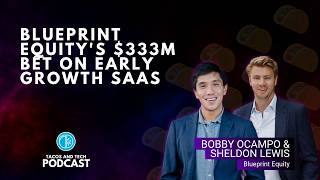
In this episode of the Tacos and Tech podcast, host Neal Bloom interviews Blueprint Equity co‑founders Bobby Ocampo and Sheldon Lewis. The conversation walks through Blueprint’s definition of "early‑growth equity"—investing in SaaS companies with $1‑$7 M ARR growing >75% YoY—and how that sits between venture capital and private equity. The founders recount their career paths from investment banking (2008 crash) to operating at Paylease, a San Diego software exit, and the eventual launch of Blueprint in 2018. They detail Blueprint’s hands‑on operating model, including a free recruiting director, go‑to‑market specialist, and a growing AI/CTO team that works directly with portfolio companies to build sales functions, marketing automation, and technology stacks. The discussion covers the fund‑raising timeline: Fund 1 ($65 M) raised over 18 months, Fund 2 raised in ~45 days, and the newly closed Fund 3 at $333 M (the “lucky number” of Sheldon’s wife). They explain why they cap fund size, the composition of LPs (foundations, endowments), and their disciplined capital deployment strategy. The hosts explore Blueprint’s view on the evolving SaaS landscape, their “anti‑VC” stance, and the convergence of SaaS with AI, arguing that early‑stage companies can remain capital‑light if they adopt AI‑driven efficiencies. They outline founder criteria (industry expertise, curiosity about AI, willingness to collaborate) and typical sales‑cycle timelines (3 years average, but can range from weeks to years). The conversation also highlights the San Diego tech ecosystem—its talent pipeline from universities and Qualcomm, the scarcity of large software exits, and Blueprint’s desire to build a local portfolio. Light‑hearted moments about tacos and local culture round out the episode.
Chapters
And welcome back to the Tacos and Tech podcast. I'm your host, Neal Bloom, and I'm thrilled to have on the guys from La Jolla, Bobby Ocampo and Sheldon Lewis, co-founders and managing partners of Blueprint Equity. Hey guys, thanks for joining the pod.
Yeah, thanks for having us.
It is great to have you on. Long time coming. In fact, round 2 for Sheldon for the episode that, that never went.
Uh, I wasn't good enough. I think that was the problem, you know, still learning the pitch at that point.
In the start— in the startup world, we just jumped the gun, recorded and said, you know what, maybe we should wait a little bit. Uh, I think it would have been episode 2 of my podcast.
Yeah.
Um, I think we're over—
it's good. Yeah, I could, I could have tanked the podcast. That's good.
No, not at all. Episode 1 was Ashley Van Zeeland, a serial founder here, uh, in the genomics space. So she, she was number 1 on that. But excited to have you guys on because you got some big news to share, uh, which is awesome, from the investment fund world, which will break the news here coming up. But Sheldon, you want to give us a quick high level? What is Blueprint Equity?
Yes. So Blueprint Equity, we call ourselves early growth equity. So that kind of sits in between venture capital and private equity. And that little specialty space is called growth equity. We consider ourselves early growth equity. So what that means is we invest in businesses doing 1 to 7 in ARR, growing north of 75% year over year, bootstrapped or capital light. So we're usually leading the first institutional round into these businesses and have been really fortunate to grow a great big team right here in San Diego. So have a big ops team to help these portfolio companies when they need it most, in our opinion. When they're at this inflection point and trying to, you know, create their first go-to-market engine and, and, uh, and really, uh, lean into the AI initiatives, which I'm sure we'll talk about. Um, so yeah, that's the, that's the high level.
Love—
we love that it's here in San Diego because San Diego, I think, has a unique software community in that regard. You know, companies really have to, uh, bust their ass to get recognized by at Capital in that regard. So I know you guys have got a bit of a history here of seeing software and other companies grow or try to get off the ground. So I'm interested to kind of compare contrast a little bit of what you're seeing nationwide, globally, and local. We'll talk about that. But you guys have both done a variety of different roles within investing. I'd love to take it all the way back. Maybe we'll start with Bobby. Where, where did you grow up and how'd you get down this investment path?
Yeah, I mean, I, uh, I grew up in the Bay Area, Neal, and, um, um, that— yeah, my, my parents were— worked in tech, and, um, but I didn't really know what I wanted to do coming out of college. Um, so I was a physics major, and I— all my, my roommates were econ majors, and so I thought, oh gosh, they're applying to these like finance jobs, and iBanking jobs, like maybe I'll just do the same thing because it seems like exciting and I don't know. And that was it. And that's where Sheldon and I met in iBanking. And that was it. We were both in a tech group and, and I thought I'd like technology given where my background was. And as most iBankers do, after you do your tour for 2 years, you go and join different private equity funds, venture capital funds. And that's what Sheldon and I did. We parted ways, but we stayed in touch. And I think over the years, we kind of honed in on what we really wanted to do at Blueprint. And so while Sheldon was an operator and exited from his company, now as a partner in my prior fund, the timing worked out where we were ready to do it. And we did in 2018.
Hmm. Oh, amazing. Was this both of your first jobs out of school in investment banking?
Yep.
Wow.
Yep. So we were bright-eyed, bushy-tailed, you know, whatever, 22, 23-year-olds. It was an interesting time to have your first job in finance too, because 3 months at least after I started— Bobby started a year before me— 2008 happened. And so, you know, that was— I think both of us were like, what did we just get into? Everybody here wants to open up a window and jump out. But yeah, crazy time to start.
Yeah, great time to start. Just like we tell, just how we see entrepreneurs tend to, you know, through trials of fire, tend to be the most resilient during the hard times, probably similar, right? Where you're just like, I got to go hustle at 22 to prove myself. So, I mean, you didn't know it at the moment that all you knew was just 2008. Did it get any easier afterwards or no?
Yeah, I mean, I'll go first. I mean, I think 2008, like looking back, you know, at least, you know, we— I don't think we really knew, you know, what we were even doing. We were just doing what we were told, you know. So it's not like— it's actually, to your point, a pretty fortunate time to start, assuming you can keep your job. Because you're making the, hopefully, the lowest amount you ever will in your career. And so, you know, when you don't, when nobody gets paid their full bonuses because it was a horrible year, it doesn't impact you nearly as much as a senior partner. But yeah, I mean, you know, it, I guess what kills, what doesn't kill you will make you stronger. And so, yeah, we luckily both survived that year or two and and came out on the other end of it.
Let's just stay with you, Sheldon. You ended up at a software company, uh, which I think is where I met you, um, when I was doing my startup, I think, and helping connect junior talent. And then with hired.com, helping get senior software talent, I think, originally how we connected, like 2014, '15, '16 timeframe, maybe. Uh, what was it like going on the operator side? Like, was it a big huge changeup, kind of like learning everything from scratch all over again?
It was, yeah, it was different in a couple of ways. I mean, I remember my first day on the, on the job at Paley's. I came out of my office and it was like 3 o'clock and nobody was there. And I wasn't used to that coming from the banking world in San Francisco, but it was a very good surf day. So I understand that. It wasn't like that every day, but no, it was great for me because I think ultimately it helps you at least on the operational side and the investing side to have been on both sides of the table. And while I wasn't the CEO or the founder like you were, I still got to see how the sausage was made for 5 years and, and, uh, uh, you know, be on the, the C-level of, of, uh, you know, fast-growing software company. So yeah, I think it, you know, helped, uh, helped me at least, um, on the ops side, uh, working with companies. Then ultimately, Blueprint's a startup too, you know. We had to go out and, and, uh, peddle for money and pass the hat and do everything we, we, we could, uh, you know, create a culture, our own, you know, eco, you know, software ecosystem, uh, and, uh, you know, and a working partnership. So, um, so yeah, it helped me for sure.
Yeah. Let's just sit on Paylease a little bit just to tell a little bit of San Diego software history. So one, did you move to— was that your first time coming to San Diego was for the Paylease role?
Yeah. Uh, well, not my first. I mean, I think I visited Okay. Yeah. And I was working like helping out on the board for, you know, the 3 years before I actually joined Paylease because Mainsail, my old firm, invested in Paylease. And so, you know, I was fortunate to, like I said, be on both sides of the table. But yeah, then I came down here for what was supposed to be like a 6-month externship just to help recap the company. We did that to Francisco Partners. Then I was supposed to go up to back up to Mainsail, but kind of fell in love with San Diego and the opportunity to be a part of a, you know, fast-growing software company. So yeah, it was, it was cool to be a part of a, you know, I think when I originally started, we were doing about— or when we originally invested, they were doing about $2.5 million in ARR. And by the time we left, or by the time I left, it was about $75 million. But yeah, ended up selling for almost $1 billion to Global Payments, you know, right around 2020, 2021.
Oh, good time.
So yeah, yeah, good timing. But yeah, cool to see, you know, there's been obviously plenty of successful startups here in San Diego, but cool to be on the front row, one.
Well, to be honest, not a lot of software exits though, right? In San Diego, right? A lot of startups who have raised a lot of capital. But to go from that, you know, single-digit revenue through a PE exit and then another exit on the other side for— that's actually, I would think, rare. I would think to have that kind of expertise here. And so I think that brings tremendous value now in what you're doing. To have actually gone through that regardless of, you know, what your role was there. So I think that's pretty huge. And is there any presence of Payless at all left in San Diego?
Yeah. Yeah. I think there's, yeah, there's plenty of folks that have stuck around. You know, the company's still an operating entity under Global Payments. So they still have an office and, you know, I'm not sure how many of the old crew or old guard are still there, but But yeah, you know, folks have gone off and, you know, I don't know if they've started other companies, but they've joined other companies.
Right. Well, that's the huge opportunity here is that people don't want to leave San Diego living-wise. Right. And so one, to have talent who has been there, done that, and grown something like that, and then to take them to another company and bring them on. That's, that's the dream, right? That's closing the flywheel that we hope to do locally.
Totally.
That's awesome. And I think I remember your guys' office was like right there in Sorento, right there, right, right up like—
yeah, we're right above the Chicken of the Sea building. Yeah, yeah, we actually got— it was always interesting because there was a lot of protesters out, yeah, up front, out in front of our office on a weekly basis because the Chicken of the Sea Wow. But we liked them. They gave us free tuna all the time.
So that's funny. Now there's a Chick-fil-A, I think, in the parking lot. So now I can go, you know, fight the, uh, the, the cow crowd.
Yeah, exactly. I would have been an extra like 50 pounds if I was there, uh, around that time. So it's probably a good thing.
Yeah. Bobby, let's— how about your end? You went off into venture capital, right? You went to a few funds, including Revolution, which has a big thesis around investing in the non- kind of obvious tech bubbles, if you will. What was that like going from, from iBanking to VC?
Yeah, I think it was neat. You learn and meet a lot of people. And what I found in venture though, which is very different from kind of what we do things here, how we do things here, I mean, it is very network-driven and very subjective. And my contention is that there's probably only a couple dozen funds in the world that deserve the right to be subjective and where they've proven that they could predict the market and go invest and create that winner. And I don't— I would be lying if I told you I was one of those funds. I'm not one of those people. I'm not. And, but there are elements that I picked up on there and where obviously Sheldon picked up at Mainz, which is a more closer analog to what we're building here at Blueprint, about the things that we liked and didn't like. So it was important to kind of have that of like that experience. And one of the things was, as you know, Neal, investing at great companies can be built anywhere. And if you look at all the successes that we back here at Blueprint, even at Revolution, even at Maincell, I'd say it does not matter where you are. In fact, if you're building a great company and you're not in San Francisco, New York, or Boston, that probably means your product is pretty darn good. And so that's one of the things that we get behind here at Blueprint is that how do we show that? I mean, almost all but one of our companies is in a major metro. And that's our belief. And then now, even with COVID hit when we first started, and then, I mean, even now with throughout COVID and now the rise of remote work, I mean, it does not matter where you went to school, if you went to school, where you got funding from, if you got funding. What matters is like what is what you're building being adopted by the market and You can look and feel however you like. We're going to try to find you and partner with you.
That's awesome. I want to hear a little bit of the founding story on Blueprint. Like, when did you— who reached out to who and who was like, I got an idea? Who pitched who? How did it come to be?
Honestly, it was pretty natural, but I'll probably give more credit to Bobby. Like, I— we had just exited um, Paley's. And so I was taking like a, uh, you know, a little sabbatical. Um, I got pretty bored pretty quick, and when I started doing like arts and crafts, I knew, you know, as a 33-year-old, it was probably time to go, uh, do something. So, uh, yeah, I, I was just kind of like, I don't know, not, not trying to find something, but just talking to people. And, uh, and then Bobby came— I think you flew down here for like to— and we were grabbing dinner or something and you brought up like— I had no idea Bobby was thinking about, you know, doing his own thing. And, um, you know, but we had, we had talked about it for the— over the last, you know, over the course of the previous 10 years. But I think it was Bobby who had originally brought it up.
Yeah, I, I don't know, like I think, um, maybe, but I thought it was pretty organic, right? We were talking about it for a while, and I think the timing lined up where you had just sold Paylease a second time, and I either had to sign up to another fund at my prior fund or do something on my own, or which could have been entirely outside of, of what we do now. But I had a very strong inclination that we were going to— I want to do what I want to do. And then, and then Sheldon and I would what officially would do it. So, but yeah, I thought, I thought it was— I don't think there was a hard and fast calendar agenda. Yeah, right, Sheldon? It was not that.
No, it was kind of like, you know, we had that dinner, we kept like kind of hovering, and we'd always over the last 10 years like been interested in the same types of businesses and thesis. And, uh, and then, yeah, even after that dinner, it's not like at that dinner we were like, hey, shake hands, we're in business. You know, it was like, let's start looking at some opportunities together. And so, you know, it was still, you know, even from that dinner, probably 8 months before we actually like signed any paperwork and started the fund.
Yeah. And you know what's funny, Neal, is that I was telling a story. I was talking to one of our friends at another private equity firm, and we were talking about the first company we ever looked at at Blueprint. Because they— this firm actually invested in them and they did great on the deal. It was a fantastic outcome for them. I still give Sheldon a lot of trouble about it because, you know, we ended up not doing it. We didn't really have the capital or anything ready, but it ended up being a great return. And, you know, it would have been a pretty good start for Blueprint. It was like a 10x plus. And we went and visited the company and did all that. But unfortunately we didn't get there, but very happy that they did well.
Yeah, that's cool.
Yeah, cool to remember that. The anti-portfolio, if you will.
Yeah, exactly.
You got to have it. But Sheldon, I know of you, even when you were at Palis, you were continuing to invest. You had your own angel syndicate that you're running. So you obviously have kept, you know, you kept investing throughout and then decided to go kind of full time on it. Who were like, how were I'm curious to know how you were pitching it originally for Fund 1 versus what you're pitching now. Has it changed much?
The thesis has not changed. Like the types of businesses we like have always fit in that, that same category, you know, kind of led off with. So from Fund 1 to now, you know, I think our pitch has obviously gotten, you know, raising Fund 1, even though we thought like, hey, we put together a couple you know, SPVs and done these side deals and we've both had, you know, good experiences at solid firms. You know, I think we would be lying if we said it was easy by any means. It was, you know, it was so much easier to raise for an SPV than it was a fund. I think because, you know, those SPVs are not like as— or the funds are not as tangible. Like you don't, you know, you're just a blind pool. Hey, give me, you know, X amount. And, you know, it's basically like a pre-revenue, pre-product startup, right? You're like, you know, our fund one was $65 million. So, you know, give us $65 million and, you know, 5 to 10 years and trust that, you know, we're going to do, do make some smart decisions. Whereas people really like that, the control of SPVs. So yeah, fund one was definitely hard to raise. I think it took us like 18 months. You know, once we got the results, which we were fortunate to have in Fund 1 and Fund 2, then fundraising was, you know, night and day.
Take us through a little bit of how you constructed the fund operationally, because I know you guys to have from the outside both a great team who does on the sourcing side, right, who does a lot of work of finding companies. And then operationally wise too, you spend a lot of time, uh, for companies who are really early in their life cycle that, you know, probably way more than probably a founder is thinking a VC would spend with them and even a growth fund. Like, take us through a little bit about like, yeah, like what's the day-to-day on both pre-investment, post-investment that's unique to Blueprint?
Yeah, I mean, the really what differentiates Blueprint is where we focus this early growth. I think a lot of funds have had success here in their early, you know, their fund ones, and then they earn the right to, you know, raise a much bigger fund than they do. But then all of a sudden they get out of this early growth space and it's, it's just there's no doubt about it. It's way more competitive upstream. And so we've chosen, you know, one leg of the three-legged differentiation for us is, is staying in early growth equity. And not raising a massive billion-dollar fund, even though we probably could have. Two is that, as you were alluding to, that heavy outbound sourcing, which we've always had, it's kind of the same DNA as TA Associates and Summit Partners and even my old firm, Mainsail. But really, you know, reach— having, you know, we don't rely on our network or folks to come to us. We try to find the best companies like Bob as Bobby said, all over the US. And then 3, and fortunately we've had the ability to add to this team now that we've raised bigger funds and have more AUM, but it's just building, you know, giving the actual, you know, people and time to help these companies when we think they need it the most. So, you know, we have all free of charge, we have a, a director of recruiting who helps, you know, with director level and above, uh, staffing, um, for our portfolio companies or hiring. Um, we have a go-to-market, uh, specialist. We have, uh, as you know, Taylor Kavanaugh, uh, from PetDesk, uh, who's a local, uh, CEO rockstar who's now on board, you know, helping coach and, um, and work with our portfolio companies. We're in the process of Bringing on a full-time CTO slash AI specialist. We, you know, have an associate on that team. That team continues to grow. But the point is we're not the, you know, fund who, you know, we're just going to jump on a call and, you know, give you advice on what to do. We're actually like rolling up our sleeves and helping you as the portfolio. And that again is not a huge differentiator if you're a multi-billion-dollar fund investing in businesses $15 million or more in ARR. But for where we play, it is absolutely like we're one of one who has an ops team like this that helps for free. We don't charge a single dollar and we've seen the impact on the returns.
Yeah, Bobby, speak a little bit to that. Like some of the— just give like a scenario where the companies you've been able to change their trajectory because of after investment involvement.
Yeah, I mean, what shall I remember? Our first company, Sunwave, we got in there. I mean, they didn't have or know how to use a CRM system and have one in place or marketing automation at all. It was all one part-time salesperson who was the nephew of one of the founders going to a conference and signing up business when they dropped their cards in the fishbowl. And I mean, but that's not atypical, Neal, for our type of company. In fact, we like that versus a company that might have 10, 15, 20 people in its go-to-market already. You know, if usually if that's the case and all the low-hanging fruit has been picked off, But we like kind of helping build that whole function from scratch. So France, one of our team members here, went out there and sourced all the different CRMs at the time, 7 or 8 years ago, whatever. And we went with one, trained, implemented it, trained the team, hired their first real AE, hired their VP of sales. And that was, you know, transformational. For the business to go from what it was doing, which is good. But I mean, you're capped at how much you can grow doing that, right? As you know. And I think, and then from there till our first partial liquidity event there, we were working hand in hand with them, working with them weekly or more, just getting all the rails in place because they're, as you know, our typical buyer is later stage growth in private equity. And our thing here is we, we like to think we know exactly what they want, just at scale, right? And so we're, we're just trying to come in earlier and help professionalize and grow these functions that, that might be completely missing when, when we first, uh, get involved. I love it.
Well, let's talk a little bit about the change in SaaS from, from then to now a little bit, right? Uh, and how you guys still play in that world, probably even more, honestly. But so SaaS used to be more about raise around, grow, raise around, grow, raise around, grow. Like you can't just keep up this hopping up stairs to eventually hope that, you know, you're at the billion-dollar mark and some big enterprise can take you, take you out because no one's really going public really too much. That's the change in two ways. One, during COVID everyone public. And so suddenly there was that. And then it started to die. And then with GPT and the onset of it, OpenAI, now SaaS looks very different for what venture capital wants to invest in, right? Growth rates look different. How have you seen the lens? Like, take us through the lens, what you've seen of the market of SaaS specific to kind of where you guys are versus what you think, you know, the market has been doing and changing, being a bubble maybe at times. Sheldon, kick us off.
Yeah, yeah, yeah. I think our thesis and strategy has always kind of lended itself to this type of an ecosystem. You know, if you go on our website now, we say it kind of tongue in cheek, but we say like anti-VC. And to your point, we've never subscribed to the let's go down the alphabet and raise the A, B, C, D, E because we just don't think that's the right move. Not only for us as early stage investors, but for the founders, because, you know, we are on the lower side of the cap stack. And so, you know, it's all gravy if you become a multi-billion dollar unicorn. But in the, you know, 90-95% scenario, that's not the case. Then you absolutely get crushed as an early investor or an entrepreneur. And so we've always avoided that. We've prided ourselves on working with entrepreneurs to create a self-sustaining, profitable business that is self-sufficient and, you know, doesn't need infusion from, you know, in the form of a B, C, D, E round. You know, we, that being said, we've raised plenty of B rounds, but they're always at our option. And not because the business absolutely needed capital. It was, hey, you know, we've created something great. Somebody wants to, you know, pay what we think is a fair price for it. And so let's take some liquidity, put some more money on the balance sheet and continue to do this. So anyway, back to your question, you know, the new era of, you know, of SaaS, I don't think, you know, I think the SaaS apocalypse, while I think the term is kind of funny and I like and I I've said it plenty of times over the last couple of weeks, like SaaS and AI should not be looked at. They're different words, but they should not be looked at separately. Like those two worlds, if they already haven't, are combining very quickly. And all it's doing is, yes, there's absolutely going to be some SaaS companies that suffer, and especially if they can't adapt. And start leveraging it like they should. But, you know, it is making SaaS much more efficient. And if you know how to plug and play and make it interchangeable, it is, you know, the best thing that could ever happen to, to an early stage SaaS company. So, you know, and it allows you to do it even more efficiently. And so, you know, hopefully these companies don't need that B, C, D, E round, and entrepreneurs don't get crushed when they sell their company for $200 or $300 million. They should be rewarded, not left with nothing because they raised too much capital because, you know, because that's what the business needed. So yeah, that was a little bit lengthy, but yeah, that's how I see how things have evolved. At least under our lens.
Yeah. If anything, it seems like companies now don't need to raise any capital before they're ready for you and they'll be in that single-digit ARR, you know, with very— with even less raised. So which is a good thing for you guys, right? You want as little capital raised for them to reap some sort of pre-milestone for you, right? So That's a good thing, I would say.
Totally.
You guys, the market's opened. Anything else, Bobby, on your end of what you're seeing?
Well, no, no. I agree with everything Sheldon said. And it's certainly a brave new world out there. But with our team that we're hiring on the execution front, that we're— I think we're— if we do our jobs right, I think that the firm that can build that kind of AI execution transformation arm is going to be the most successful. And we're really excited about that here.
So you're building tech to bring into your portfolio companies, is what you're saying?
No, it's more of like a team to go and help execute and transform the tech stacks and execute on all and stay at the forefront of all things AI right now. And it's very, you know, I think all of our companies now are they, they know, they recognize some are better than others about capturing what's out there. But to really push, push envelope on that, right, and to help execute, I think that part is what no one has done yet, even us. And we're hopeful to build that team to go and do that with our portfolio.
That's great. Well, it's great timing to have a new fund. So let's get right to that part because we haven't really officially said it, to have capital to go into these companies who are growing with new tools and more efficiently. So, Bobby, why don't you kick us off? Give us the headline of the new raise on the new fund.
Yeah, no, thanks, Neal. So we raised and closed our Fund 3 of $333 million. You can ask Sheldon why it's that number. We— yeah, and we're really fortunate. We did that in record time. You know, Sheldon mentioned our Fund 1, we raised in 18 months, and Fund 2, we raised in what, like 40, 45 days, right, Sheldon? And then Fund 3, we raised in '12. Um, and, but, uh, and we're fortunate too that we're, we still have, um, a few more bullets left out of our current fund. So I think maybe 2 to 3 more, right, Sheldon, out of Fund 2. Um, like, uh, uh, Fund— when we were raising Fund 2, Neal Bloom, we, uh, raised that early and activated it in the summer. Um, we did the same thing here. So our plan is to activate and start deploying out of that fund in the summer at some point. So that's it. Like, you know, all of our investors, our large LPs re-upped. We brought in some great causes and foundations and endowments and entities like that into Fund 3, which we're really excited about. And it was hard because, you know, we were blessed to have all this demand. I don't know where all these LPs were in Fund 1. That's kind of what it is. Really hard. Like, we, you know, we were getting a lot of tough calls in Fund 1, always people passing. And then, you know, we're the ones having to give the tough calls in Fund 2 and 3. And hopefully we'll always have that problem.
Well, that's because Sheldon kept it at 3, 3, 3. Why, why, why the limit to kick people out?
Yeah, well, I think, I mean, part of it was just we wanted to stick to our knitting. But I'd be lying if I said a big part of it wasn't because my wife, it's her favorite lucky number. So, you know, we were already in that range. You know, you, you got to, you got to believe in your wife and her lucky number.
So love it.
Yeah.
So carve everyone down. Hey, everyone, you all got to cut down 33% so that we hit this number. Got it.
Yeah. Yeah. Yeah, probably ended— she doesn't know, but it probably ended up costing the family not, uh, not raising more money and sticking with her number. But hopefully it's the right thing to do for the investors in the long run.
Yeah, we think it is, right? I mean, I don't— I think we'd be lying to everyone, Neal, if we told you that we have a, like, a target return we're looking for, and the more money you raise, like, the harder it is to get there. And, and so we're very cognizant of We told everyone, here's our target, here's our hard cap, one number. That's all we're going to do. And we don't care if we have billions in demand. It doesn't, it doesn't matter. We're not, we're not here to raise a bunch of money one time and then have our results fizzle. We would very much want this to be like a franchise set up for hopefully a long time.
What— let's speak a little bit to what the founders that you're looking for, if a founder is listening, just starting or has been operating for you know, about a year in the native AI environment, if you will. Uh, what's the right kind of founder that you want to meet, and when do you want to meet them?
Yeah, I, you know, when, uh, like, we, we, we love to, you know, start relationships and conversations early. Um, what did you— you looked up the stat at one point, Bobby, of like our average quote-unquote, like, sales cycle, like when we, you know, first started?
3 years.
Yeah.
Wow.
Amazing.
Get to know you.
Some deals will have been 3 weeks, right?
Yeah, sure.
And then it's not dollar weight or anything, but if you looked at everything, some have been 5, 6 years, some have been 2, 3 years, some have been 3 months or a month. But yeah.
Yeah. So we always encourage folks to like, let's get to know you early. Let's get, you know, you get to know us. We want to be hopefully one of one that you think about when you're raising that Series A, but at least one of a few. And so, yeah, the type of entrepreneur, I mean, you know, usually they're like industry celebrities, quite frankly, like, hey, I lived this problem, I want to solve this problem in the industry. Nowadays, like, you know, And, and this is, um, uh, becoming bigger and bigger, but like, you know, very curious, hungry. Like, I, you know, nowadays, and, and with everything that's gone on with AI over the last year or so, like, I do want that entrepreneur who's at least like testing it and playing around with it. And, you know, I don't want them to necessarily be, you know, trying to be the CEO and cut all the code and close all the deals, but If you're at least curious, you can help hire the right resources and that does help you define where the product and team go. So yeah, those are the things I think that, you know, and obviously you got to have a good relationship because it's a long-term relationship when you take on an investor, whether it's Blueprint or somebody else, you got to make sure you get along, you like them and you respect each other.
Totally. So from a founder who is toying with AI and experimenting right now, what you're saying is you wanna see that their Open Claw has completely taken over their email.
Yeah.
And just gone crazy. Uh, that's a good sign if suddenly it's just emailing as a bot on their behalf.
Yeah.
'Cause they're obviously playing with Open Claw. Got it.
Okay. Definitely.
Uh, well, we got, definitely got some plenty more founders we gotta get in front of you locally. Uh, take us through a little bit about the local environment. I mean, you guys, you know, Bobby, I think you moved here for the fund, right, to start the fund here. What has it been like to get to see the local software community, especially now in the new, you know, the new build times that we're in, uh, with it, with AI?
Yeah, yeah, it's been neat. I mean, there's definitely a handful, you know, we've looked at here locally. And, um, you know, we— when Sheldon And before we founded the fund, Sheldon was doing a lot of local investing too. So I think the ecosystem's great and it's just we're waiting for that, that, that first one here. And but it's a neat market. It very much maps to all the other markets we try to cover around the country. You know, it's like typically, you know, proximity to an airport, great colleges and universities nearby, really young, smart people. Like near, there's usually a couple kind of like a large tech company incumbent hub with like a, and here Qualcomm and others, but there's like those 3 things, right? And so, and then there's like a fragmented capital market or venture capital private equity market, which we really like, you know, where we frankly don't do as well as of course Silicon Valley, New York, and Boston where you're, you're, there's no reason for a company in those geographies. It's rare for them to talk to us unless those companies don't fit the mold of where all that capital is, which is usually venture capital, which is our nearest derivative. So, but yeah, I think that was it. My wife's family's from here and we're thinking, well, where do we put the fund? Like, Sheldon, you're already there. My wife's family's here. Like, why? We love it here. There's no reason not to put it here and especially near an airport and our belief that great companies can be built anywhere. So, but yeah, no, we're eager. Neal Bloom, we would love to, to do— I mean, selfishly, I'd love for our entire portfolio to be here. Yeah, unlikely, but, but maybe, maybe in the near future. And, and having great people like Taylor here too only hopefully amplifies our reach.
Yeah. Well, you nailed off some, some great attributes locally. So it's on the community, we got to surface them for you for sure. Uh, and I'm interested in more of like where the right talent is spinning out from locally too, right? I think to, to still have to say Qualcomm, you know, come on, like, you've got to have some new exits and some new pay leases, if you will, where the talent goes and builds the next thing. And we haven't had a lot of it, right? I mean, you like have to point back to like, um, like an IPO that didn't even happen here with ServiceNow, right? Yeah, now talent, or maybe Active.com, that talent stayed, but man, that was a long time ago. Uh, those were some of the big tech wins on the software side, and man, like, we need, we need some more recyclability. Uh, and I think it's coming. I think maybe hopefully we'll see the recyclability of some Seismic, some, some, uh, some ClickUp, maybe the Shield AI, you know, so, but it would be nice to not have to wait a full 10 to 15 year cycle from the VC kind of companies for new companies to sprout out. That's for sure. So I'm interested to see where else. So let's keep sharing notes on that. Like where, where is local talent? Because like you guys know, no one wants to leave here if they don't have to. And we would love to live and work here. A lot of people live here but work elsewhere or live or work virtually. Right? Be great if we're all in person working with our teams locally, building something great here too. So another one, Drata, that could be another one that, that's putting out some great talent here, right? So, um, anyway, uh, appreciate that, guys. And I will definitely— it's on me to send more companies your way as well too, um, one of which who I think shares a wall with you that I need to send to you.
Yeah.
So, um, all right, well, you guys are living and working here, office in La Jolla, which is great. We see it outside Bobby's window there. And actually, at one point on the same floor, I think there was a VC firm and maybe another capital provider. And then you share a wall with two other SaaS companies all on the same floor, which is pretty cool. And then there's a few other VC firms right in the— or capital firms, if you will, like JMI and a few others right in downtown La Jolla. So it's kind of cool, right, to see some density, if you will. So a few family offices. Who have been doing some SaaS. They're like Talapod down the road from you guys, right?
Yep.
So all good to see. But the audience has got to know, where do you go eat? Like what's sitting on your desk right there, Bobby? You got Puesto on your desk? Or what's the taco scene like for you guys here in town?
Sheldon, what is your favorite taco, Sheldon?
Well, I feel like if I said Puesto, Bobby would run over to my office and kick me on the shin, even though he did go through a point where he was eating there like every single day. So you can't— you can't talk. I mean, I'm like a kind of like, you know, make you feel like crap, greasy Rigoberto's type of guy. But I don't know. My wife just went to Taco Time in La Jolla and she said that was like some of the better tacos she's had. So I got to check that one out too.
Taco Time. I like Neal Bloom. I need suggestions from you, but For— I like a good fish taco, and, um, El Pueblo is pretty good. Like, I, I really— I remember the first time I ever went there, I was getting my car washed and there was this like line in wherever it was in like Cardiff. And I'm like, why is there a line in this gas station? And so I go in, there's like an El Pueblo there, there's like a huge line for these like dollar fish tacos. I went and waited and it was great. And then now they have a location in Del Mar and they're like $1.29, but they're like really good. I would pay— don't tell them that— I would pay 5, 10 times that. But that's my favorite fish taco.
Okay, good shout out. So on a few threads here, the gas station taco or actually gas station burrito that's worth trying is Sombrero inside the Convoy and the 52 gas station right there. I'm a Sombrero California Burrito. Like, that was the first one I had. It's mentioned in a Blink-182 song, so it's really nostalgic for me. So Sombrero, we'll have you try Sombrero. Uh, for something near your guys down in La Jolla, it used to be for me Galaxy Taco. I love Galaxy down at La Jolla Shores, but I think it went out during COVID and is something new, right? It's another taco place now.
I don't think I've heard of Galaxy, so I bet you it's gone.
Shore Rider, maybe? Now, yeah, going over it. So I think it's the same spot. I think it used to be Galaxy and now it's just a different name. Um, just a great spot, like walking. And now they made the little pedestrian zone of La Jolla Shores right there. Good, good one from there as well too. Um, more North County-wise, uh, I've been really enjoying City Tacos in downtown Encinitas. They have a few spots actually. I've got like 35 different tacos. I'm still working my way through the menu, so we'll get you there, Bobby, to try their fish tacos.
Okay. Deal.
Yeah, I got you. These are good ones though, guys. Taco time hasn't been mentioned, so we'll add that to the taco database that we have that we keep here. Well, guys, I think it's new. Yeah, we love hearing new stuff here, but, but even more love just having both of you here together back in good companies and, and bringing some operators under the house too. You mentioned Taylor Kavanaugh a long time. SaaS founder here in town. Um, that's when you build more density like that. So thanks you guys for what you're doing. It's on us to surface great talent for you to look at locally, which we'll make happen. And, uh, here we go on fund 3. So congrats and thanks you guys for the time.
Thank you, Neal.
Yeah, thanks for all the support and everything you do for the community, for sure.
You've been great.
Hey, if founders are successful, we're all gonna be successful. That's what it's all about. So. Thanks.
Cheers, guys. Cheers. Beer and coffee, Makoto yoga, bossy, fold the body, origami. We be surfing Coronado, eating tacos el gordo, the tacos standing puesto, lucha libre and sombrero. Gotta shout out Tecostejos by the ocean, watch the sunset, La Jolla shows, entrepreneurs trying to get funded when San Diego Startup Week is popping in the summer. Oceanside, the Tijuana Esti, Be full of hustlers from couch surfing to penthouses right on the beach. Tech leaders who believe stars are within reach. We interviewin' founders who be shootin' for the moon. #SDTechos with your host Neal Bloom. Startups get the party, startups get the party started. Startups get the party, startups get the party started. Startups get the party, startups get the party started. Startups get the party started. You want tech and tacos, tacos and tech. You know we got it, hey! Startups get the party, startups get the party started. Startups get the party, startups get the party started. Startups get the party, startups get the party started. You want tech and tacos, tacos and tech. You know we got it, hey!








