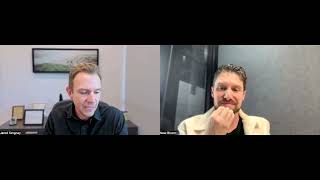
Jared Tangney, CTO of Biolinq, discusses the company's semiconductor microneedle wearable that measures glucose without blood draws. The device got FDA clearance for type 2 diabetes patients and will launch commercially early next year. Biolinq pivoted from sweat sensing to skin microsensors and can measure glucose, lactate, and cortisol.
Chapters
Startups get the party. Startups get the party started. Startups get the party. Startups get the party started.
You want tech and tacos, Tacos and tech, you know we got it.
Hey.
Startups get the party. Startups get the party started. Startups get the party. Startups get the party started. Startups get the party. Startups get the party started.
You want tech and tacos, tacos in tech, you know we got it.
Hey, And welcome back to the Tacos and Tech podcast. I'm your host Neil Bloom and I am thrilled to have on a longtime founder here in the community. We, I think we go back 12 years to the evo Nexus days. Jared Dengue from BioLink, Co Founder, CTO and Present. Hey Jared, thanks for being on the pod.
Thanks Neil, Appreciate you inviting me on.
I can't believe it took 12 years to get you on the pod. No, I'm just kidding, man. You have been building. I feel like you were made to change the face of sensing completely. That's what I've known of you. Yeah, we're going to tell some stories. I remember sweating on a bike in your office long ago. But why don't you give us a quick high level of what Biolink is today.
Yeah, for sure. So yeah, based right here in San Diego. So we're a wearable sensor company as you mentioned, you know, a whole new, whole new approach to sensing, to biosensing. In particular we have a semiconductor based sensor that measures just within the first few layers of the skin. So no blood, no pain, very simple user experience. First product is targeted measuring glucose. We can talk more about that. Obviously just got FDA clearance a couple months ago. But that's the platform, right, is measuring in the skin. And we've now shown that we can do much more than, than glucose. And so we'll talk more about that. But yeah, first product is targeted at people that have diabetes, type 2 diabetes that are not on insulin. So that's the biggest segment of the, of the market as far as the number of, number of people with diabetes. And so we're, we're really targeting to serve that population in particular for this first product. But measuring glucose is now becoming mainstream so there's just so many different applications for that. Obviously diabetes is, is the, is the most most relevant but you know, it's hard to find somebody who hasn't worn a worn a CGM nowadays. So it's, it's becoming popular. But yeah, that's where we're starting. Just, we have this vision to kind of really be that source of, of information that right now is so hard to get right. You have to, you know, either go to your doctor and, and, and get a blood draw for most these metrics outside of glucose. So that's, that's our vision is to be this wearable sensor that you can get all this crazy information about your body and yeah, today it's just not possible. So. Yeah, that's amazing. Yeah.
Talk about, you know, long time coming, timing wise, where you viewed this as a necessity. And only today has the consumer who has tried every wearable out there. Right. But now the mainstream consumer is trying, you know, science as opposed to before, which felt like toys. And so let's talk, let's talk about that. But how does this, where did this all start? Where are you from originally? How did you end up on this sensing journey?
Yeah, so born and raised in the Bay Area and came actually from a, a family of entrepreneurs. So my, my dad was a, was an entrepreneur, founded a few companies over his time. And even my grandpa who, you know, was in the Marine Corps, fought in World War II, came back from the war and, and started, I don't know, half a dozen different companies in the heating and air conditioning business up in the Bay Area. So got to watch that, you know, at least hear the stories from my grandpa and all the, just the crazy relationships and, and all the fun stuff that he got to do, kind of being his own, his own boss with his identical twin brother. So a lot of great stories there. And then kind of firsthand got to watch my dad do that as well. And just from a young age, kind of knew that entrepreneurship was something that I was super interested in. And then technology in particular was super fascinating for me. And so one of his side businesses, he actually, he taught me how to solder at like, I think it was like 10 years old. And so that was, yeah, you know, for, you know, a few bucks here and there I would, I would do some work for him and, and just got exposure to technology at a super young age. And so that was always a big interest of mine. And then, you know, as I, you know, went through high school and was trying to figure out what to do for college, just the health, healthcare industry was super interesting. I was interested in medicine, but never really wanted to be a doctor. Didn't want to do the kind of hands on type thing dealing with patients one on one. Just had this broader vision of how could technology and healthcare kind of combine. And that's when I first heard about biomedical engineering. And that is a potential field and an area you could study. I was like, oh, this is awesome. You can combine science and technology and engineering all into one. And did some research and found out that UC San Diego was one of the top programs in the nation for, for bioengineering. And with that, you know, applied and ended up getting into, into UCSD and moved down to San Diego. And once you're here, man, as you know, you're stuck. You can't, you can't get out of San Diego. The quality of life is so great and just such a great ecosystem. So that was kind of the pathway to getting here to San Diego. And then just the ecosystem at the university was awesome. And Scott exposed to some great technologies there. And yeah, what is now biolink and at the time of founding it, as you recall, was electrozyme came straight out of the university. So that was kind of my, my, at least my pathway to San Diego.
Amazing. Yeah, I mean definitely once you see San Diego, you can't unsee it. The genie is out, you know, you're cursed. But I think we, we. I didn't realize we were there at the same time. In undergrad I was 08, I think you were, and I was a mechanical engineer. So it's possible. I don't remember if we crossed paths then, but a year, few years later we did. Did you already, as an undergrad already have like ideas for startup ideas or where, where did electrozyme original to come to fruition?
Yeah, I mean I. So, you know, it's funny, I looked back and was looking at some of the projects that I did even in undergrad and I forget which, which class it was, but we had actually, I think it was for a bioengineering based physiology class. We had to come up with a project and one of the things we came up with was essentially a version of a closed loop, you know, artificial pancreas. And that time I, you know, didn't have a real idea of exactly what, what I was going to do from a, you know, from an entrepreneurial perspective. But was one of the big things that drew me to UCSD was just the, the innovation and the technology was there. So I was kind of keeping my eye out for what was possible. And I actually did a couple projects again just through taking courses on a couple different ideas around wearable sensing. Right. One was something designed for runners, the other was this wearable sensor insulin delivery system. So definitely it was just funny looking back, that was some of these ideas that have been planted, but wasn't really until grad school that this kind of concept of what is now biolink, you know, became a reality, but definitely got super interested in, you know, at that time, as you might recall, like Fitbit was just starting to become a thing. Wearable sensors and whatnot. Was just kind of new and emerging field. But we were basically under the premise that hey, steps and calories is great, but there's definitely much better things you can measure than that. And so, but yeah, so undergrad, some initial, initial ideas. But it was until grad school that really got the focus on what we're doing.
Okay. And along the way everyone's been like, Garmin's gonna do this, Apple's gonna do this. Which I'm sure you've heard every time and you hear every day. And here we are now. But what was the original electronic idea? Like what was. Give me the original pitch, if you remember it.
Yeah, actually we. The very first pit, we actually entered into one of the rady school business plan competitions. Right. It ended up morphing into the entrepreneur program. But there was a few. Some of them are worse than others. But there was. The original premise was like, let's use this ability to leverage electrochemistry to measure different biomarkers. And that's been the same premise really all the way through. The form factor has changed and the way of sensing has changed. But there was a couple different patents that UCSD that came out of Joe Wang's lab there that my co founder, Josh Windmiller was, had been working on. And one of them was a sweat based sensor. So it was actually at that time they were publishing papers on a tattoo, right. It was one of these temporary tattoos for measuring sweat. And that ended up really being not a very viable form factor, but was a cool idea and was a great way to get papers published and whatnot. So there was. The original pitch was really around sweat and what can we measure in the sweat? Because, you know, if you take a droplet of sweat and you analyze what's in it, there's a ton of different markers there. And. But the challenge was that most people didn't know what to do with that. Right. If you give a doctor blood values, obviously they know what to do with that. If you give a doctor concentrations of, you know, glucose or something in the sweat, they're like, I don't know what to do with that. Like, what does that even mean? So the most obvious application was for athletes and looking at, we really ended up narrowing it down to hydration and fluid loss. And then we were also looking at lactate, which is really the key marker for exertion for athletes and kind of really giving feedback on overall athletic performance. So yeah, the original pitch was let's monitor the sweat for, for electrolytes and give athletes feedback on hydration status. Like that's really what it came down to is the original pitch. And, and, and also measuring lactate as well. So it was hydration, electrolytes plus lactate, Both of those things are present in the sweat. And yeah, as if you recall, we, we set up a little, a little lab, exercise physiology lab in the Evo Nexus headquarters there and had hundreds of people come in and sweat it out on the bike. And we were actively measuring electrolytes and lactate in their sweat and then using some other wearables to kind of compare that to and also looking at sweat loss and what people were were losing from a amount of sweat perspective. So that was the, that was the original, you know, electrozyme concept was really targeted at athletes.
Oh, okay, I forgot the athlete part. Um, interesting. I remember. So in a sense, you kind of ran your own little clinical trial, got a few hundred people through. Did you, did it invalidate itself just from that or what, what did you ultimately learn and how did that, what was the pivot then to buy a link?
Yeah, so there was, there was two, two key patents that we licensed. One was the kind of sweat based approach of measuring on the skin. The other was a, a microneedle array. You know, basically this array of tiny sensors that you can measure in the skin. And we decided to focus on the sweat first because it was less invasive. There was this kind of, you know, potential for a pathway that didn't involve, you know, FDA oversight. And so that's why we had originally focused on the sweat. And the, in that, that approach where we landed was you could measure fluid loss and electrolyte loss, which is an interesting thing to measure. Can kind of give people feedback on what to drink and how much to drink. So that, that got the attentions of the power raids and the Gatorades of the world. Right. Like how do I give that, give athletes feedback on, on hydration status? But at the same time we ended up, and this was what, 2014, 2015, we ended up getting a large grant from the NIH to look at glucose in the skin using this microsensor approach. And what we found was that you can measure the same types of things now in the skin as opposed to sweat. And sweat is just a really tricky marker. It evaporates. When it evaporates, it changes concentration and Things get tricky. So the sweat just ended up being a really tough fluid to try and deal with. What we found was that we could leverage a lot of the same electrochemistry principles that we had learned from sweat sensing and apply that to this skin sensor if you were measuring in the skin. And it was just a much better platform. So we said, let's. Let's focus everything on this microsensor approach. And with glucose being a very obvious application and a good place to start. And so it was then that we said, all right, we were, I think, four people at the time trying to run two different projects.
And.
And we said, let's focus. Let's focus on. On the microsensor and measuring in the skin and. And it's just got so much more potential. Let's. Let's focus there. And that was. That was 2015. And that's when we said, all right, let's. Let's. Let's do the pivot. Let's pivot and focus on. On that. And that's where electrozyme became biolink and has been. Been Biolink for now. Yeah, just over. Just over 10 years.
Wow.
Yeah.
Is there also a story around you guys cold emailing Mark Cuban? Is that a story around that?
Yeah, well, actually, he cold emailed us.
Oh, amazing. Tell that.
Yeah, so that was our. Our seed round. So, yeah, we had. We had just kind of set out on raising capital, right? We had. We knew nothing about raising money at that point in time, and so we had, you know, angellist was. Was popular at the time, and so we put our, you know, our pitch up on. On angellist. And actually I had. I had a buddy that Mark, Mark Cuban had invested in his company, and he was like, Mark, like the Mavs have to have this sensor technology. Like you should. You should check it out. And at the time, my. My brother who was in. In college was. Was interning for us, and he was running our website, and he set up a newsletter to follow along. And he came to me and he's like, hey, testing this newsletter. I want to see if it works. And so I logged in, put my email address in, and kind of forgot about it. And end of the day I went and I said, hey, let's see if the newsletter is working. I tried it earlier today. So we pulled up the list, you know, on mailchimp. It was a mailchimp newsletter. And sure enough, there was my email address at the top. And then right below me was Mark Cuban. And I was like, this is a joke. I thought my brother was messing with me. He's like, I didn't do that. I don't know where that came from. And he's like, we also got an email to the info at Biolink that, you know, Mark Cuban is interested in investing. And sure enough, it was the real deal. It was actually him. And yeah, we. I was like, hey, you want to get on a call? He's like, just, just send me your pitch and send me your, your. Your valuation. And so we go back and forth over some emails, and two weeks later, we get a wire from Mark Heughan for our very first money in. Into the company.
So that was. Yeah, off of. Off of a newsletter that he replied. Your first newsletter on mailchimp that he replied to immediately saying, let's talk. Did you actually ever get on a call or is it just all through email?
No, never did not get on a call. I was like, are you sure? Like, do you like, you sure you don't want to get on a call to make sure that we actually, like, exist? And he's like, yeah, nope, just sure.
You'Re not a Nigerian prince. Are you really, like an alias of Mark Cuban?
Yeah. Yeah. So, yeah, I mean, it totally skewed our perception of raising money. Right. We were like, oh, this is so easy, right?
It's.
You just gotta throw it out there. And there's just billionaires who are gonna send you money. But obviously fundraising proved to be quite challenging, as anybody who's raised money knows. But it was a cool way to start. Yeah, I still have the screenshot of that, that mailchimp login.
Oh, amazing. If you have it online somewhere, we'll put it in the show notes. Cause that's a super.
Yeah.
Super cool story. Well, okay, so you went the microneedle path, which has proven to be, you know, a whole technology development in its own regard, taking hundreds of millions to get there. Take us through a little bit about, you know, the history and where the current state of micro needles related to biolink is now. Cause that's. That's been a bit of the holy grail, I feel like. Right. Yeah. For this new stage of sensing. Take us through a little bit of then to now.
Yeah, for sure. So, you know, as I mentioned, technology originated at UC San Diego, Joe Wang's lab. You know, my co founder was. Was in. Was in his lab and. And then they were like 3D printing microneedles out of plastic. And they were hardly. Hardly micro. Right. They were actually pretty. Pretty daunting. Like, you wouldn't, you wouldn't Want to shove these things in your skin, but you could, they showed that it could work on the bench. And so we explored a bunch of different ways of making micro needles. And it's tough, right, because they're super small. They have to be sharp enough to get into the skin. They have to be strong and robust because you don't want them to break once they do insert. Because, you know, today our, our chip has seven micro needles on it and each one of those is roughly the diameter of a human hair, right? Super, super tiny. And they're only going a fraction of a millimeter into the skin. And so yeah, we explored with a bunch of different materials. Silicon ended up being the, the right call. From both a materials perspective. It's super strong, super robust, but also really scalable, right. We knew that these are, these are disposable sensors. So if we're out, you know, serving millions of people, it has to be something that can scale. And semiconductors is obviously a great platform to build on from a scalability perspective. And so yeah, that, that took from when we started on semiconductor based micro needles to when we really locked that design. It was about seven years of, of iterating. And that's the, that's the downside is that when you iterate in silicon, it's, you know, you're like, you're talking six month cycles, right? Fab time takes, takes a long time, but once you lock it in, it's turnkey, right? So the, you know, you can, you can go to hundreds of millions of units very, very, very quickly once you lock it in. So that was really a core piece of the innovation is showing that you can make these out of this super robust material and you can do it in a very scalable way. So I could ask you what is the key innovation here? And it's really the silicon, the semiconductor aspect of this and how these are made combined with our chemistry, because you can just. A piece of silicon is not a sensor. We have to put our chemistry on it to be able to sense things like glucose and lactate. And we're now pushing the boundaries, which we can talk more about, into other cool things we're measuring. So it's those two, it's making these sensors out of silicon and then it's depositing them. We do a technique called electrodeposition. So it's similar to electroplating jewelry. And you apply it basically you apply a voltage to the surface of your electrode and we can stick our chemistries on very selectively. So yeah, what you, what you end up with is this tiny little sensor that to the naked eye it almost looks like sandpaper. Right. These little tiny sensors and they go like I said, a fractal, you know, less than a half a millimeter into this, into the skin, so you don't feel it. No blood, no pain. And it's a really, it's a really good user. User experience. So the microneedles have definitely been. Yeah, a labor of love. Like there's these tiny little, tiny little sensors that took a lot of development to get it, to get it locked in. But today they have basically built this very robust platform around it.
Interesting. Wow. And how much did you have to do? Learn the chip side within the company versus going to like a fab and learning and partnering with that. Like how much of the that pieces now done for you you guys in house.
The, the kind of the core expertise and the knowledge around it. We've built that expertise in house. We definitely have to, you know, we definitely have fab partners, you know that, that make these for us. Right. And that's, they're, you know these, these companies do billions of units per year. Right. So it's definitely not a manufacturing endeavor that you know, we would take on internally. But yeah, our, our, our partner can do hundreds of millions of units. So it's really around building the core, know how internally and then working with these partners to say here's what we need and then, you know, scaling that up. Got it.
Okay, let's talk about the chemistry a little bit. You mentioned, you know, the different areas of what you're sensing now. So what, what, what was the original premise that Biolink was starting to send to now where have you expanded into based on the, the chip's capabilities?
Yeah. So for, for the micro needles, the, the original goal was glucose. Makes sense from a market entry. Right? From a. As you know, as an entrepreneur, we, we break everything down into risks. Right. And this was huge technology risk like no one's ever been able to measure in the skin before. So we didn't want to layer business and market risk on top of that. There's a huge market here. And basically the premise was if you can do this, this is a huge opportunity. And so we started with.
Glucose alone. Huge opportunity. Got it.
Glucose alone is a huge opportunity. Right. There's obviously great companies like Dexcom and Nabit Medtronic that are, that are doing that, but it's such a big problem that, you know, the need is substantial. And this was a very different approach. Right. Getting rid of that invasive needle and that whole process, so started with glucose, really leveraged just some of the fundamentals of electrochemistry and built the platform around glucose. However, we built it in a way that we could swap out the chemistry and also do multi analyte on the same chip. So I mentioned there's seven of these little, you know, micro needles on one, one patch and each one of them is individually addressable. So it's actually multiple channels of data coming in. So when we're measuring glucose, we're not measuring one channel, we've got multiple channels coming in. So as you can imagine from an algorithm perspective, that's super helpful to have multiple channels of data. And then with our unique method of deposition, now we can do multiple different biomarkers on the same tiny, you know, chip. So started with glucose, we then went to lactate. So, you know, lactate is really, as I mentioned before, the, just the, the, the holy grail with respect to performance and, and athletes. There's also some other really interesting applications there from a metabolic health perspective for sepsis in the icu. Lactate is a, is a big thing that's measured. So a lot of interesting applications for lactate, not just athletes. So we've now shown, and we've published some of this so we can talk about it, that we can do lactate and glucose on the same, same little patch. So that's, that's been super cool. And then we've also recently published on cortisol. So being able to measure cortisol as a stress biomarker and just showed some first in human data on this recently and published some of that. And that's a first. To our knowledge, we haven't really seen anybody be able to do cortisol continuously on, on, on the body before. And it's just super fascinating, like when you see how cortisol changes, right, you've got that kind of standard rise in the morning. That's what helps you get out of bed and you get on with your day. But there's things that disrupt those patterns, right? You know, stress changes your, your, you know, cortisol levels and whatnot. And so I think it's going to be super fascinating just to better understand us as humans and like how all these things play together. We've just never been able to measure that before. So I'm really excited about that. And the other thing is cortisol in particular is it's a million times lower in concentration than glucose. So super low concentration. And historically, right, you need to do a saliva sample or a blood sample and Send it off to a lab to do those measurements. So the fact that we can measure at such low limits on a little tiny wearable device like the size of a quarter, that's pretty incredible. It just opens up the world of what we can measure. And this is a new platform that we've now established with this cortisol sensor. So we're starting to expand what we can look at. So imagine just being able to measure other hormones, whether it's testosterone or estradiol or even fertility markers, luteinizing hormone. All these things that today you just can't get are now possible with the platform. It's going to take time, it's going to take work to get those to the level that, you know, it'd be, you know, viable from a commercial perspective. So that piece is, is still fairly early, but shows promise. So we're, we're excited about that stuff.
Amazing. Wow. So many different pieces there. 1. For whatever reason, Brian Johnson comes to mind that he needs to already be the company spokesperson.
Yeah.
Because of what he is measuring, especially in cortisol. He's such a big cortisol guy around sleep, you know, and just being able, like sleep regulates everything, which regulates cortisol, which regulates your day's ability to have to make good decisions. Right. And, and so that's all pretty interesting now and that be able to actually detect that. And then I just go to as well now, the data that you're just sitting on with today's kind of new, I don't know, data analysis, AI tools, if you will, are you finding like whole new ways to do the analysis of this data or is it still just the fact that you're getting this data is a big, big enough deal doing like next level, I don't know, AI analysis, clinical trial level. Is that kind of the future of now that you're actually sensing this stuff?
Yeah, I mean, the AI piece is going to be huge and we've really focused on building a good platform to collect the data. Right. So just getting a good sensor is step one. Right. Because if you don't have a good sensor, then your app doesn't matter. Your ability to pull other insights, no matter you have to have a good sensor. So that's really where we've, where we focused where, where I think a lot of the benefits of AI are going to come is one is in insights. Right. There's just so much data that we're collecting, whether it's from multiple channels. The thing I didn't mention is within our wearable, we Also have an accelerometer, so we can measure activity and movement, and we also can measure sleep, sleep duration, so we get feedback on that as well. So now when you have all of these different metrics together, using AI to pull key insights, there is going to be big, right? Whether it's insights on certain patterns that you see based on day of the week or time of the day or whatnot. So there's a lot there. And then you've also got algorithm development. So there's, you know, definitely, you know, machine learning tools are big when it comes to developing new algorithms and analyzing some of this data. Um, and, but yeah, I think, you know, we're only just scratching the surface on, on what can be done with, with some of these, these tools. But I think the insights are going to be big. And then, yeah, just getting. Because the reality is, it's like, how do you take all of these data streams and make it actionable, make it meaningful? There's very few people that would know what to do if I gave them lactate, glucose, cortisol, you know, all these things at once. Right? Like what, what do you do with it? So that leveraging these, these powerful models is what, in those contexts is what I think is going to be pretty, pretty cool in the future, definitely.
And is that kind of pulling you towards the commercial side? You know, especially now that Dexcom has put out this. Was it the Stello, kind of the consumer version of pretty much their same G7 sensor kind of unlocks and expands this idea of commercial ability. Is that kind of what's pulling you in that direction of which, which avenue to go or take us through? You know, how do you bring this to market?
Yeah, so our, our, our first product is indicated for people that are not on insulin. So people with type 2 diabetes that are not on insulin and even others that are, that are not on insulin. And really the goal there was, you know, around. That's where most of the people living with diabetes today, they're not on insulin and they have type 2 diabetes. So that's the biggest segment as far as the number of people. And we really designed the experience around that, around what those people need. And now that this is cleared, we can talk more about it. So we're, we're, we're distilling it down. So the, the device itself has an LED indicator on it, so you can glance down. It's worn on the forearm, you can glance down and see roughly where your levels are. Right. So we've got a blue light that flashes when you're in normal glycemic range that basically says, hey, I'm okay, all good, I don't need to do anything. And if it's yellow, that means your levels are high. So, and there's action that you can take, right? If your levels are high, you can go out and walk around, you know, your building for 10 minutes and your, your, your glucose levels can come back down. So, you know, providing that information at a glance is really powerful. And we're kind of taking the emphasis off of this specific number, right? The number that you see if you're wearing a traditional CGM is designed for people that are on insulin, right. To know, do I need to dose, do I need to dose insulin? If so, how much? Or it's feeding into a pump that's automatically, you know, closed loop driving that insulin. But if you're not on insulin, let's, let's make it a little easier. Right. And so our app is very intuitive and we're going to start showing more about what our app shows as well. So it's not just, you know, a color on the device. You get more information on the, on the app. And the first version is prescription, prescription only. But we're definitely going to go into the OTC side of this as well. And yeah, you're right, this, this consumerization of it, you know, in Dexcom and Avid and those guys have been doing a great job at kind of making glucose mainstream. And now that it's mainstream and people know about it, there's a big opportunity there as well. So, so we'll definitely have products that are over the counter in the future. We'll definitely have products that are also targeted at the, the, the type one and the type two community that are on insulin. So we'll be able to, to facilitate the, the distribution of that in the full, kind of the full spectrum in the future. But that's where we're starting today. And, and yeah, there's just definitely a, a broader application for measuring glucose. And then when we add these other markers, that's when it really starts moving beyond just diabetes that everyone can benefit from from measuring these things.
100. I love that. Are you wearing one right now? Is that, is that daily wear for you?
You know what? I just, I just took one off. It's right here on my, it's right here on my, my desk. So I was holding it up. Cool. But yeah, about to, about to put the next one on it just, just met the end of its wear period.
Okay, I'll get on the Wait list whenever you need the next use group to try it out. For sure. Let's talk a little about just the ecosystem in San Diego. There's just such a density of talent here. Right. We talked about some of the bigs who all have, even if they're not headquartered here. Dexcom's based here, but Medtronic and Abbott have either bought teams here or built engineering teams here. We had Fitbit's R and D team in Rancho Bernardo. Right. That got full, I think got folded into Google and the team, I think Google recently said that their team's still there and still working on Google Health and even like Google Silica part of this. And then obviously the Qualcomm and Chip community, super strong here, just kind of wearable IoT for the body, all that. And then you mentioned UCYSTI, obviously. How do you see this as an ecosystem? Obviously, you've been a part of it for so long. You travel though, to all these conferences around the world. Does the rest of the world see it as like a density of talent for sensing in health?
Yeah, for sure. Sensing in particular, Diabetes, definitely. Right. We. There's also, you know, tandem diabetes. Right. They make one of the, one of the best insulin pumps out there. Even Insulet, who's another, you know, big insulin pump company, has, has a team here in San Diego.
So Medtronic Bot. Companion too. Other.
Yeah, yep. Companion, yep. And then now the Beta Bionics. Right. A lot of those guys are now Beta Bionics, which is a lot of them are, are based here in San Diego. So definitely in the diabetes community. San Diego is very well known as, as, like the, the place. If you're going to start a company in the diabetes space, this is the place to do it. And then I'd say broader, you know, medtech, which is where we're focused. San Diego is also well known. I think the three hubs there are definitely Bay Area, San Diego and Boston. And so San Diego is definitely rising on the charts. And yeah, I mean it is. It's just such a. It's a great ecosystem. You've got great universities, great medical schools. So when you combine really good doctors with really good engineers, like, that's, that's what it's all about. And so San Diego's an awesome place for that. And what we found is even when we're looking for talent, if we find really good people that are not in San Diego, you don't have to twist their arm to get them to move to San Diego. It's just especially if they're, you know, in the Northeast or something and you invite them, you know, on a nice sunny November day and they're flying out of Nor' Easter or something like it's just not, it's not hard to get to convince people to, to move here and even from the Bay Area. I'm a Bay Area native and love the Bay Area, but you know, cost of living and just what you get, you know, for what you pay for is, is, is just, you know, better so.
Yeah, totally agree. And I think the other pieces that I would say make the sensing ecosystem interesting is the sports and active lifestyle community here too. Right. We've got some really strong sports brands which also brings talent for kind of the consumer side. Right. Like how to actually bring a product to the consumer is really interesting. And speaking of kind of that Nexus, I've heard Oura Ring, I think opened an office here recently. Right. So now you've got aura which is kind of this next generation consumer sensing platform now tapping into San Diego talent which is another good around that as well too, I'm guessing. I'm sure you guys are out there competing for talent. So in one vein, we are. Yeah, yeah, yeah, right. So it's good and it's bad. Competition's good, you want the best and therefore, you know, you gotta be the best company, you gotta get the best talent. That's a good thing that the talent wants to be here, not beyond just lifestyle but for working on, pushing the needle. Good one, you know, for, for changing lives in a positive way. So it's just cool to see the density of the full ecosystem and you guys at the center of it who both started it and have pulled in talent from those other places and, and the story is still being written, right? You guys are still on your journey here and still going to bring this to market. So I'm sure there'll be plenty more to share around that. Anything last that we should know. Kind of like leaving, leaving last piece of biolink like where, when we can try it and share it with others.
Yeah. So you know we're, we're in the stages of ramping up our manufacturing capacity. We're going to be raising some, some more capital to, to do that. There's huge demand for, for what, what we've built and so we need to, we need to be able to make, make more of them. So that's where we're focused. We will have kind of a, call it a small scale launch early next year. So we'll have, we'll have that kind of more on more focused areas and we've got some partners there so we, we're taking a partner partnership first approach. So we're working with you know a bunch of different partners that are interested in selling and distributing and marketing this and so yeah next early next year is when we'll be be actually selling product and then scaling as as fast as we can. So would, would love to get to the point as soon as possible where you can yeah just order one on. Order one on our website but but yeah we'll, we'll get you one Neil so of course let you try one.
Yeah, I'll be rocking one of those. We've got a Luna as well that I've worn as a. No insulin delivery. I don't part but just wear it to see how long it sticks on me. The Luna Luna Health team which is another diabetes insulin delivery company startup here, they're still really quiet under the radar I think on purpose.
But these guys too. Yeah, John and those.
Yeah great great group group actually we interview. We intervested twice from Interlock out of that. Um so yeah love to see it and love to see local building happening around that. When you do do you know the launch we obviously going to throw a little local party because it's been a long time coming and what we'll serve there is tacos which is the lifeblood and one day there'll be a taco sensor to detect that you have, you know, the best tacos or were they subpar tacos but where what tacos be served at the launch party for. For Biolink. What's your go to?
Oh there's so many good options. I would say though being a North county resident, my go to is fish 101. So fish 101, their fish tacos are my go to.
Yeah legendary but also under the radar. You know it's a good spot for sure. We recently had a group that did like a co founder build day right at Leucadia Boulevard and Highway 101 and someone's like let's, let's walk to Fish 101 for lunch. And it was a little bit further than we were expecting.
Yeah, from there, from that intersection it's. Yeah it's a little, it's a little bit of a walk.
But it was a good hike, you know. It was a good, good walk. If we would have been sensing ourselves we would have had different numbers from when we started to when we got to fish 101. But it is a solid one also people confuse fish 101 with fish shop on the south end of Encinitas. Yeah, yeah, another little gem. And then obviously the people, the general consumer goes to either the Robertos that are probably like three in Encinnas alone, or a version of it. And then taco stand and city tacos, which are staples in like the downtown Encinius area. So can't go wrong pretty much anywhere along. 101 for good tacos there for sure.
Yeah, agreed. We're. Yeah, we get to mix it up. A lot of different options, so.
Yeah, solid. Well, Jared, it's been awesome to have you on here. Like I said, the story is legendary and still being written and can't wait for the continued great progress that Biolink's making. And thanks for being an active member of this tech community here. Thank you.
Awesome. Thanks, Neil. Appreciate it.
Of course. Cheers.
Tacos. Founders trying to raise some queso la vida San Diego school of rappy rapping Fire tortillas round jalapenos in these modern times A craft beer and coffee my coating yoga posse fold the body origami we be surfing Coronado eating tacos El gordo the taco stand in puesto lucha libre and sombrero Gotta shout out to cost angels by the ocean watch the sunset La Jolla shores Entrepreneurs trying to get funded when San Diego Startup week is popping in the summer Oceanside, the Tia Juan a sd be full of hustlers from couch surfing to penthouses right on the beach. Tech leaders who believe stars are within reach we interview and founders who be shooting for the moon SD Tecos with your host, Neil Bloom.
Come on.
Startups get the party. Startups get the party started. Startups get the party. Startups get the party started. Startups get the party. Startups get the party started.
You want tech in tacos, tacos in tech, you know we got it.
Hey.
Startups get the party. Startups get the party started. Startups get the party. Startups get the party started. Startups get the party. Startups get the party started.
You want tech and tacos, Tacos in tech, you know we got it.
Hey, Sam.








