Building Intentional Capital for B2B SaaS
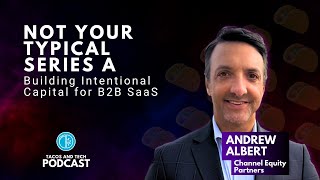
Podcast interview (Tacos & Tech) with Andrew Albert, co-founder and managing partner of Channel Equity Partners. Albert describes the firm’s “early growth equity” strategy: targeting B2B SaaS companies roughly in the low-mid ARR range (around $3–$45M per transcript phrasing, more precisely sub-$5M to mid-single-digit ARR examples) that are lightly funded or bootstrapped and helping them scale to roughly $15–$18M ARR in 3–4 years. He contrasts their Series A approach with larger VC/growth firms (smaller checks, last-money-in alignment), explains how thematic theses (e.g., influencer/creator economy, vertical CMS products) guide sourcing, discusses AI’s impact (product infusion and improved top-of-funnel efficiency), and summarizes recent fund formation: SPV activity starting summer 2022, a first close (~$20M from a family office), and an additional ~$10M commitment from a fund-of-funds.
Startups get the party. Startups get the party started. Startups get the party. Startups get the party started.
You want tech and tacos, Tacos and tech, you know we got it.
Hey.
Startups get the party. Startups get the party started. Startups get the party. Startups get the party started. Startups get the party. Startups get the party started.
You want tech and tacos, tacos in tech, you know we got it. Hey.
Welcome back to the Tacos and Tech podcast. I'm your host, Neil Bloom and I'm so thrilled to have on my friend Andrew Albert, managing partner and co founder of Channel Equity Partners. Hey, Andrew, thanks for joining the pod.
Thank you, Neil. Great to be here.
It is great to have you here. It's been fun to spend some time in the ecosystem with you over the years. We've hiked, we've invested and we've broken bread or brunch together. But I'm really excited many times, many times. And I'm excited to get to know your story a little bit more and share it with our tech ecosystem community here. How's it going? How's the week been?
It's going great. But before I get into my story, I just want to say a big thank you to you and what you do for this community because there are a lot of unsung heroes and the amount of events and people you pull together, it's incredible. The emails that I get, it's not just one every couple of weeks, there is something happening every week. I don't know how you do it, but this is critical to every ecosystem, every city has it. And Neil, you're one of the guys here, so thank you for doing this because every bit helps and you're a major contributor here, of course.
No, thank you. Thank you for being part of the ecosystem as well. I mean, you do your part too. I'm actually today recording from the Leucadia Club, a private club up in Leucadia where I have founder Build Day happening downstairs. We've got 25 different software builders who are actually in three different locations. This is happening simultaneously. Third Thursday of every month. I do a little pop up co Build day and downstairs people are literally just sharing what they built and collaborating on stuff together.
Amazing. We need more B2B SaaS here. The more the better. Obviously we invest all over the country and North America, but we'd love to find them here and find them here 100%.
So yeah, take us real quick right into what Channel Equity Partners is. Give us the headline and then we'll dive back into how you got here.
Sure. Our core focus we call ourselves early Growth equity. So we're not a venture capital firm and we're a smaller version of where growth equity is today. Our key focus is finding B2B software companies between 34345 million ARR that are lightly funded or bootstrapped and help them grow to 15 to 18 million over the next three to four years and provide optionality for the founders. That's in a nutshell what we're trying to do. Obviously there's lots of different series A's out there. Sequoia Series A and an Insight Partners and A Channel Equity Partners are all very different. They may all say series A but our in our founders are trying to go from 4 to 5 million to 16 million over the next set of years and they can do it on their own in six years and reach 1516 million at a 15% growth rate and be profitable with really one option and that's to exit or the other option they have when we engage is to do it in three years with a little bit of dilution, a trusted voice at the table with a lot of references to back that up as to why to partner with us. And they can do it in three years and be entering that phase at 40 to 50% growth, break even maybe slightly profitable and at that point they can more minority growth, minority recap, majority recap or full exit. So our whole vision for our firm and the why we and why we exist is to provide that option for founders is really why channel equity exists.
Amazing. And this is. This comes from some experience. You definitely have done some investing before. You've helped a lot of software companies and you've seen a lot of different kinds of software companies which we're going to get to. But I want to know the deep background like where, where does. Where did Andrew grow up and how did you find your way into this niche tech world?
I grew up in Westport, Connecticut. It's about an hour outside New York City and really thought my whole life was going to be in the northeast. I went to school University of Pennsylvania in Philadelphia in the late 90s and always found myself attracted to the story of equities. I remember my dad telling me to pick a stock in high school, gave me a few bucks to invest. I think I picked McDonald's because I've probably eaten too many Big Mac Happy Meals after soccer practice and tenor and tennis practice. And that's when I really got enamored with following stories and understanding companies and how they can grow and was able to first job at a school. Was very fortunate to join a company called the Jacob Internet Fund. It was one of the original Internet mutual funds run by Ryan Jacob. And my timing was bad. Joining in March or February of 2000. I think the absolute top of the NASDAQ bubble was March of 2000. But I was a young analyst, not a lot of skin in the game. And I got to see the Internet bubble meltdown and I got to see, I got to be in front of executives that many of them were just lying to my face and really inform my view of investing and understanding that there's what people say and there's the numbers and there's the data and other aspects that you have to go out and find on your own. So it was an incredible experience to and also many businesses that went through a market cycle but have gone on to be tremendous companies. So you know, you get to invest through these cycles. But I was over time in the public markets for 1012 years, becoming a little disenfranchised with the micro cap, small cap space that I was in. The number of public companies shrank by about 40% over the time that I was in the public equity markets. When a stock trade went from fractions to decimalization that allowed ETFs and algorithmic trading and all these things to occur which quite frankly I think turned a lot of the public markets into returns being generated from beta, just the overall movement of the market instead of alpha, which is the individual research and assessment of a company. So if you look over time there's been a lot less alpha generation from funds. And I wanted to take that passion for equity research down into another part of the category and that was private software companies that had an opportunity in 2014, late 14 to move from New York City to Southern California and join a firm that was based here. They had had fund one and two and raised fund three. And I was brought in to lead thesis driven origination, sourcing, execution, served on the boards of many of these companies and, and that's where we really honed the strategy that we employ today at Channel Equity Partners. And as I mentioned earlier, I had to figure out what our Series A was and why it's different from, from other players in the market and what's a, what's a channel equity deal? And it was all the things that I've described before. The last thing I'll say on this topic is a lot of what we do we try to model in our firm building and fund Building how we talk and discuss with the software companies that we invest in. And the example I'll give is we talk regularly with our CEOs about you need to identify your ideal customer profile, your icp. Don't try to sell to people that don't want your product. You're going to waste your time and they're going to churn. Well, we do the same thing with our firm and fun. I call it ideal founder profile. There are certain founders that recognize the solution that we have with the fund that we have is right for them. And there are others where we're engaging with them. And before we've closed on the Series A, they're already talking about the pipeline they have for Series B investors. And that's just not a perfect fit for us. And I can go into more detail later on that strategy, but that, that's a little bit about how I got here from New York City to Southern California.
Amazing.
I want to and I want to.
Double click on what is the right channel equity partner company. But I got to know, do you still have your longest held stock from childhood? Are you still holding a public stock, McDonald's?
No, I do not own McDonald's anymore.
Okay.
Unfortunately, also I consume way less if not none of McDonald's, maybe a fry or two from, from my kids who still like McDonald's. But I can't remember the last time I had a Big Mac. And that's a good thing.
Yeah, same. I hear that. Okay, got it. You, you are what you eat in terms of also same with your stock. You know, stay focused on your, on your lane in that regard too. How. But take us through. So obviously, you know, you've been with another, you've been with other firms and invested in public and private. How like how did you hone in on what is the right ICP for you? Like, because there's so many flavors of growth, there's so many different words we talk about from rocket ship to maybe more of an airplane compared, you know, and majority of businesses, 99% of businesses are none of this. Right. They're slow and steady. Barely any growth.
Yeah.
So how do you, like, how do you hone in and zone in on. On where your expertise that you have versus the kind of capital you want to put to work.
A lot of it has to do. Again, going back to the early years of being in the public market, I forced myself to read every 10k I could of every micro cap small cap technology company. Every time Morgan Stanley or Goldman Sachs or Credit Suisse did It an industry initiation piece on payments, logistics, SAS software, you name it. I would voraciously consume that data so I can understand how each of these verticals work. What's the value chain up and down because that's where I thought research would always be the edge and identifying that. And over time you start recognizing linkages within these various categories and you can see patterns of what's working in one category and how it applies to another category. So I had that as a foundational backdrop and then realized that a series A for what I'm doing this early growth equity is usually a TAM that on the COVID is not 10 billion, let's say a lot of times it's a 1,500,000,000 to $1,000,000,000 TAM. And that's where the founder that has a lot of knowledge of the category is executing towards. And there's a great $150 million exit that can be had in that category. And we don't need the category to be generative AI or crypto or something huge that we're investing in. It's as simple as a vertical specific app that is higher up in the budget hierarchy today because some macro factors than it was three years ago. And that's helping this company make sales faster sales cycles and get from 5 to 15 with less capital than it did two or three years ago. So ultimately we are just scouring all of these different industries and verticals and looking amongst the value chain and where is the opportunity and where's small pieces of change that are happening. And at some point I can describe some of these theses that we've had in the past and how they've worked out.
Yeah, let's dive into that now. I mean obviously software over the time period has changed, just software in general from whether it was on prem to cloud to AI now. Right. And just where the industry's that are hot for software take us through like how you index these down.
I will go soup to nuts on one that has come full circle and it was a great outcome at the previous firm. I did not have a lot of social media in my personal Life back in 201516 I was not a big Facebook, Instagram person. But it was very clear as the leader of research and thesis driven origination that we needed to be doing something in enterprise social, that it was permeating this category. But what I had to realize was if we do something in social media, we can't do, you know, social listening or brand monitoring. Andreessen and others have put a billion dollars into these Categories amongst a handful of companies we might find a good piece of software but we're going to get trounced by the amount of capital that's gone into them. So I read everything I could on all the different pieces of this market and I stumbled upon a category in 201516 called the time was called Influencer Marketing and I looked at my personal life and said I'm doing everything I can to put shows on a DVR and sign up for subscription TV so that I don't have to watch commercials. And if that's the case and the brands need to reach consumers and the biggest, most effective way they've been doing this through linear tv, you know, your typical cable subscription and that's going to go away over time, there's going to be other channels that they're going to need channel for lack of a better term other ways to reach consumers. And I found this category and realized the TAM was 3,400 million too small for, for many of the typical investors but a thesis was that this was going to grow and get bigger and eventually be a huge category. We found a company in 2016, 5 million ARR, nice growth rate. The problem was of their revenue, I don't know, 50, 60% was still SMBs and agencies. There was not enough enterprise contracts with sticky revenue and the gross retention wasn't high enough. So we built the thesis, we scoured the landscape, we found companies, we found one we like but it didn't have the metrics and the category wasn't mature enough. But we did the work so we were prepared when the right company came along. Fast forward 18 months later and we came across a company called Creator IQ up in LA and their business was 75% plus enterprise contracts, high gross retention, 100% growth, not burning all that much. And we were able to short circuit a process very quickly because of they hadn't met an investor that had as much knowledge or worked in the category and knew all the players before that we didn't invest with and they wanted to do something with us. That company is now on its way to 100 million ARR doing phenomenally well and they are the category leader right now for enterprise Influencer Marketing. It's now called the Creator economy but it's basically a CRM for social media and all of that. And it's. So that thesis was, was the underlying and. But we just didn't find the right company. You don't have to do a company just because you develop a thesis and that happened over and over again and you but you keep them on the shelf and you're ready to act when the right company comes along.
So wow, a lot to unpack have within a thesis have you ever had where you've gone multi company investments. So you've got, you know, a bunch of different or one or two investments that are complementary or anything or typically you're looking for the best company to meet that thesis specifically.
So typically because these are verticals and sort of sub verticals we want to be when we identify a company, we want it to be the number one or two in the category. That's very important. You know, if it's a bigger category and we identify something with good metrics but it's number five, I don't feel like that's a great winning strategy because over time the resources are less than the other companies have and you may get it at a good price. But I don't think that that's the right strategy for us. But what has happened is we, I think I mentioned earlier, we see pattern recognition. So we had a thesis years ago around content management system vertical specific website creators and if they had two or three other modules that they were selling to their, their customer base, they're much stickier than your average SMB business. We found a company in wealth management. This was me coming over from New York City to Southern California, having a financial services background and trying to connect with companies in Southern California to bring myself over there and realizing that these wealth manager websites were horrible and look like they were created 15, 18 years earlier. And there was a huge opportunity and there was a great company that we identified. We got into the process at the time we missed it because the founder wanted a few million of secondary and the firm I was at, we sort of had a no secondary for existing management rule at the time. It did change over time after that, but another larger growth equity firm 18 months later did that investment and through my relationships I know they made 8x in 5 years. And then we saw a similar product in small law firms, another category and we had that opportunity. The founder of that company in Tucson, Arizona, not in the ecosystem, really was hesitant about minority growth equity. If he was going to let go, he wanted a full majority. And so we weren't able to do that investment. But again, here comes another opportunity. And this was summer of 2001 and we find a company in the restaurant vertical, vertical specific content management system, doing all of these other marketing activities. Incredible company. And we pounced. And it's been one of the most successful investments of the Previous firm company has gone from 8 million to 10x that and very efficient, barely burning capital. It's absolutely incredible for a $6,000 a year product which is to have the distribution model that they have and to be doing that profitably and still be growing at a great rate. And one of their competitors, owner.com raised money at a billion dollar valuation yesterday. 880 million pre money, 120 million in. And so we're, we're proud of these categories that we identify and finding some of the companies in it. So again that was multiple companies that fit the same thesis, but they were different verticals. And that can happen over and over again. And so the thesis, the underlying foundation of thesis is very important because it can pop up anywhere.
100%.
Wow.
Okay, so what is AI? We have to talk about it. What is that doing to the landscape? What is that doing? And I don't. We'll talk definitely about your role. Like what, how you're using within your role. Let's talk about more like what kinds of companies within SAS you're looking for and how are they utilizing the capital versus the tools themselves.
Well, AI is creating, let's say I'm trying to think how to put this more uncertainty, which from investor standpoint, which I think is a good thing. Right. If our process is based on deep fundamental research, then we're going to be, we have to be extra critical, not that we weren't before, be very confident that the investment that we're making is more of a disruptor than being disrupted. And our view on AI especially we're not investing at the infrastructure layer. You're not going to see us investing in a company that's challenging, anthropic or one of those other large companies. What we're going to do is find vertical specific companies that have great customer experiences, great customer relationships, own a little bit of the distribution model, having the end customer and then infusing their product with all of the billions of dollars of investments that's going into AI to make their product better. So that's one aspect number two, AI is making our top of funnel better in a certain way. What happened for 10 years was the prevailing thesis was these companies need to raise a lot of money and spend a ton on go to market. And first to market that gets the customer with 90% gross retention wins. So you gotta blanket the world with sales and marketing. And now CEOs have figured out that they can go to market much more efficiently and they don't need to be spending three and four Dollars for every dollar of ARR they're going out. When they're raising their Series A, a lot of them might have said, well, I got to do 15, 20 million because I got to own the market. And that's emerging. And they're now saying I can do what I need to do because of all the tools and investment that's out there that I can utilize was 6, 7, 8 million. And that has been our strategy and our focus for 10 years at the previous firm and now of the right amount of capital for the right business at the right stage that they're in. And, and that message was there was a lot of noise around that for many years and now it's, now it's ringing true. And I can't tell you how gratifying it is the number of CEOs that we connect with and say, oh my God, I didn't know that a fund and a firm like this exists. And we're not the only one. There's a handful of others, but everyone knows about the ones that can write $25 million and $50 million checks. But what's key and different about us is when we write a 6, 7, $8 million investment, we're aligned with management and we say there's a good chance we're last money in. And that's the big difference between our Series A and the Series A of these other firms that I've talked about. We're going to have a smaller fund size and we are more than happy with being last money in because that that small font size can absorb that and it still has a meaningful impact on the overall return of the fund.
Yeah, and, and time frame wise also less as well too in that regard. So last money and because time frame of hopefully the return of capital is quicker than some of these 10 to.
12 year funds, everything that we do, every investment that we Underwrite is a 3 to 5x return in 3 to 5 years. That's what we're trying to do. And we build alignment with the founder going into it. And that's when I was referencing earlier my ifp, my ideal founder profile is they are looking for what we provide and recognizing that they don't want to be pushed into the B if they don't want to do it. A lot of times there's $120 million exit and that's generational wealth for the founder or co founders. If there's an earlier investor before us, it's a fantastic return and for us it's a forex return. And everybody's happy and we see this over and over again and it's a great feeling when there's alignment from all three constituents. You know, the, the founders, the early, early investor and, and us coming in at the A and that's a really nice place to be because we see a lot of companies push to do unnatural things because the, the A, the valuation was taken at way too high so that investors never incentivized to sell at 100 million because it's a 1.2x return or something like that. So really building alignment at the early is key to us having a successful investment and, and being able to adapt a little bit and change with the business is very important as well.
Yeah man. Awesome. I'm so pumped just to have other opportunities for capital for more founders. That's, that's what we all want is what more founders to win. Because then we all win, that's for sure, by building great companies. Take us to where you're at stage wise right now.
You're.
I know you're fundraising, but I think you've already had some, some early success in raising so far. Take us through what, what the environment is like and what, how you're doing.
Well, I'll first want to give a, a message here or a, a shout out to my co founder, Jensen Bryant. The two of us started Channel Equity Partners in the summer of 2022. We really felt passionate about this strategy, this early growth equity and we'd been working together for seven and a half years in a great partnership. We really wanted to do this on our own and build this firm and we had an opportunity to lead a series A investment with one of the founders that we had mentioned in that profile and we did it as an SPV. It's been a long time since summer of 22, but the SaaS bubble was imploding and it was not the best time to go off and raise a committed capital fund for Growth Equity. But we decided to do it anyway and not a fund but, but we were able to get an SPV done and get a few more SPVs done and that allowed us to have conversations and be in front of LPs. We never really had a lot of our hand in the LP function at our previous firm. We were research, execution, term sheets, portfolio management, sitting on boards, but, but not a lot of LP interaction. So we needed time to get in front of people with our strategy and talk about it and show the investments that we made and we were fortunate enough to get that done over 18 months and that's when we turned our attention to a committed capital fund. And last year in a difficult environment we were able to connect with a very large family office that you know, owe $5 billion that really liked our part of the market. It was new to them and they recognized that there's a difference between venture and it's not quite growth equity and there's a lot of alpha in the category. And they were our first close of 20 million to, to seed the fund and get us off the ground. And we then we decided to use that capital and focus on a first investment in the fund. And we did that in the second half of last year. So we got first investment closed in November of 24 and then we went back out to fundraising again in this year. Seemed like there was a lot of optimism going into the year. A lot of excitement about M and a and IPOs and a lot of returning of capital to LPs and some of that that changed and maybe it's coming back now, we'll see. But it was a great experience and we're happy to say that we now have another 10 million dollar commitment from a well regarded fund of fund that wants to lead a second closing for us. So we're pretty active in communications with a lot of LPs and we're just excited to close on a little bit more capital alongside that lead and build the team that it's been Jensen and I for almost three years now and I couldn't, I could not have a better partner. I mean 10 years working together and really forged this partnership and seeing a lot of ups and downs and working through, you know, slight disagreements that every partnership needs to go through and that's one of the big risks of a fund 1 GP. But we've got 10 years of history so that's really nice. But what we're really excited about is the team underneath us. We've got tremendous number of resumes that have come in. We're a known entity, a known quantity in what we do. Lots of the larger gps that will exit our companies to or take on larger growth capital from they know people at other firms that are senior associates, associates, bps and they like us and they think we'd be a good place for them to get in an early shot at growing their career. So we're really excited about this next stage of, of building out the business. Amazing.
Congrats man. Let's so cool on the progress. It's still a grind, you know, and, and then it's a grind to go deploy the Capital two, to be honest. Right. To, to have the money in pocket and be like now we got to find, put it to the best of our abilities and into the best founders. So kudos to you to being in the arena on the macro level even. I mean, yeah, it's always been hard. We were promised Alina Khan free environment for M and A and, and instead we got tariffs. So you know, but no, but like the, I, the, the IPO market seems maybe it's broken back open again. You know, Etoro had a good IPO. There's been some really good acqu billion dollar plus SaaS acquisitions lately. So I'm hopeful also that the rest of this year is just going to get a little easier.
Well, and that's, that's another good segue into our focus and part of the market is that I would expect zero companies that we invest in to ipo. And maybe that's not attractive to some people, but that's, that's the gist of it. And, and people have asked in the various parts of the cycle for 10 years that I've been on the private side and 14 years before that when it's a hot market or a cold market, you know, well, what's happening and what I say is not much changes in the hot market and the cold market for what we do. We're just trying to find B2B software companies that are one or two in their specific category, have early product market fit, want to get from 5 million to 15 million in a slightly accelerated way without putting binary risk on their business. And that founder has more options than they can ever think of, there's a voracious amount of capital. When you have a $15 million air business growing 30% or greater in your break even. And that's what we're trying to do day in and day out. And whether the IPO market is open, whether we're in a recession, there's always going to be software companies that have a product that's meeting a customer need that can execute from 5 to 15 million no matter what.
But on that, just to push back on that, the buyers of your portfolio companies are either publicly traded PE firms or publicly traded other software companies. No, we're kind of affected by that a little bit.
Yep, I would say that. But again, we are coming in at a market multiple. That's what we've been able to achieve over and over again. And, and you know, that's a little bit of, of my DNA in terms of how we identify these companies and value them. But so we only expect an underwrite to a market multiple. We do not need these big strategic exits to hit the 3 to 5x returns in 3 to 5 years. I mean, the simple way to think about it is if we have a 4 million ARR company get to 16 million ARR, that's a 4x increase in an ARR right there. So if there's not much change in the multiple, we're able to achieve what we're trying to achieve as long as the multiple hold steady. And, and that's key to the strategy. Now, the downside of the strategy is after 10 years of doing this, we're pretty confident and convinced that if we were to eventually in fund 2, 3, 4, raise greater than 200 million, the alpha that we think that we can generate starts to evaporate for two reasons. Number one, we either have to do too many investments in the fund. We like to be concentrated and really identify the best opportunities that we can. So we're going to do 8 to 10 and fund one and a little bit larger fund maybe 10 to 12, 12 investments. Number two, the check size would have to go up dramatically over a $200 million fund size, which means that the post money goes up, which means the exit value required to generate forex goes up. So all of those things then push you into a new category. And there are other structural reasons that, you know, probably don't have enough time on, on the podcast to go into. But this fund that we have set up and this strategy, everything about it, from fund construction to sourcing to how we engage with CEOs, the word I like to use is intentional. Everything that we do, there's intent as to why we're doing it. And it's informed on 10 years of doing it and learning and iterating on why we should do it this way for this category.
Well, that, that's obvious, but that's more for me personally knowing you, that you're, you know, hyper focused, you know, and from a community organizer who just gets excited about putting people together in a room every day, I appreciate that you have your IFP and you know what you're looking for because that helps me curate and put the right people in the room with you alongside that as well. And so I am looking forward to gathering the right founders around San Diego that makes sense to meet those newest fund, if you will.
You already put me in touch with a great founder that I'm talking to. I'm not going to say the name here because I don't want to Open up the competition. But they're a perfect example of the type of B2B SaaS company that we're looking at where they don't need our money. They're growing nicely. 3 to 4 million of ARR and profitable or break even. But they'll come to a decision point of do I take a little bit of dilution? Do I take another voice at the table on my board? Is it a trusted voice? Is there other references or other people that vouchers for these people and how they interact? And is it worth it for me to do that and accelerate my time horizon from six years to where I want to get to to three years. And so I thank you for that introduction that happened a while back. They don't need our money and we'll continue to build that relationship when the time is right. Maybe we'll be the one and maybe we won't. Who knows? But we've always got a dozen of those that we're balancing 100.
You gotta meet them early for sure. So love to hear that, that you're still engaging with them. And this is a call for more founders to get in touch if you are in Channel equity partners, ifp. So, Andrew, this, this is the time where we put the spotlight on the hardest question of the interview. San Diego is known for his tacos. It's known for a lot of things, but we know the taco scene. I happen to have Cody Hot Junior Taco or burrito for lunch down next door to the located club. Where do you go? What is your go to taco spot here?
Okay, well, this may be a little cheap in terms of not directly because it's not a taco, it's a burrito. Does that count?
Okay, it's okay. We'll allow it.
So because I'm from the east coast, you know, grew up in Connecticut, first part of my career in New York City. Not a big taco scene out there. But we do love our breakfast burritos. I think that's our way of thinking that we got some SoCal flavor out on the East Coast. So I was a big breakfast burrito fan. So as a kid, as I mentioned, I was able to consume a Big Mac when I was playing soccer in tennis. Can't do that anymore. But the guilty pleasure I had in New York City or other places was breakfast burrito. So I came out here. This is not a unknown, undiscovered hole in the wall place, but one of the early breakfast burritos, I had that twice a year. I'll Do a guilty pleasure and treat myself to it. I love Roberto's Breakfast Burrito. Yeah. One, you know, in Carmel Valley Del Mar near me, there's another one in Solana beach on the way to Cardiff, and that's. That's my favorite that I'll. That I'll go to a couple times a year. And I have to do it in the afternoon or if I. I certainly can't have an investor call or CE call, CEO call after, because that's a sleeper. That's a sleeper. Totally get to sleep afterwards. But you got to do it. You got to treat yourself every now and then a couple times.
Such a solid choice. I mean, for how many Robertos there are, it's so consistent across the area. Of course, you pick the. The Del Mar Calmer Valley with the best view of all of them, where you can go take a nice little walk along Torrey Pines Beach.
For the food, you can walk or.
Go right next door to Bird Rock Coffee and get a little caffeine injection to, to preempt that food coma.
Well, and then you can't leave out the place in the middle, because I'm a New York pizza guy.
Oh, yeah.
When I came out to San Diego, the place I had to go to was Buongiorno's, because that was the closest in my mind to New York pizza up here in north county. Ish area. And then they opened up Bonasera, which is right in between Roberto's and Bird Rock, and that's a great spot overlooking the Pacific. And I'll go with my son, and he's a big taquitos guy. And I, myself and my daughter, we want the pizza. So, you know, you get the best of both worlds right next to each other.
Seriously, there's, like, stools you can sit at right there with, like, the wine taps. Ah, can't beat it. For sure.
If I'm there a couple times a year on a night when the sun is coming down, it just reminds me how lucky I am to be here. And, and we love what we're doing. And people say, oh, how do you do it in San Diego? You know, I think there's this expectation that we spend half the day surfing. I came out here 10 years ago expecting to teach myself and learn how to surf. I still have not done that, because investing in software companies across the North America for what we do is a competitive business. And I can't surf half the day and do what I'm doing half the day. You know, we're. We're working around the clock certainly as two people as you know, founding our firm and we love it. But when we walk outside the moment and the moment we can take a break from, from what we're doing and what we're building. It's. We love where we are and we feel. Feel lucky to. To be here.
100 no. We're. We're grinding. We're building an ecosystem here by building and investing in great founders and great companies. 100 though I will say if you ever get a little side quest time.
I would challenge you.
It's time for your podcast to start. The Pies and Pe podcast. Mr. New York Here you can, you know, see how many times Joe's pizza is mentioned a challenge to you.
It might be too much controversy. Who's the bar stool guy? He's got. He's got the pizza thing covered already.
That's true. That's true. Dave Portnoy.
Yeah.
Dave Fortnite has coined that for sure. But Andrew, it was a real pleasure to have you on here. Congrats to what you and Bryant are doing and we're excited to have another great firm and fund here in town powering great companies. So thank you.
And I just want to recap with how I started. Neil, you're one of the people that pulls it all together here day in and day out. And cities are lucky to have people like you that are really making things happen, building connections. There's a lot of small pockets here and it's hard to pull it together in San Diego. And you're one of a very small handful of people that do it and do it well. And every event that I'm at, there's joy. People are generally building connections. And I have many here that I've met from your, your events and. And I appreciate that.
Oh well, I appreciate that. Thank you. We only do it because others, you know, we see the fruits of our labor. Right? The connections and community matter and real curation matters. You know, like we don't have time to meet 10, 000 people. We need to meet the people we need to meet. And that's what makes it all work. Building good ecosystem here. So thanks. We all got our part to play and let's go off and do it. So thanks, Andrew. Thanks for being on the pod and we'll talk to you again soon.
Cheers.
Tacos in tech is all smashed for the green guacamole keeper Captains counting beans Contador Quentin free holies family trying to raise some queso la vida San Diego school of rappy Rapping fire tortillas round jalapenos in these modern times a craft beer and coffee my coating yoga posse fold the body origami we be surfing coronado eating tacos el gordo, the taco standing puesto lucha libre and sombrero Got a shout out to cost angels by the ocean watch the sunset La Jolla shores Entrepreneurs trying to get funded when San Diego Startup Week is popping in the summer Oceanside, the Tijuana sd be full of hustlers from couch surfing to penthouses right on the beach. Tech leaders who believe stars are within reach we interview and founders who be shooting for the Moon. Hashtag SD TechOS with your host, Neil Bloom.
Come on.
Startups get the party Startups get the party started. Startups get the party. Startups get the party started. Startups get the party. Startups get the party started.
You want tech in tacos, tacos in tech, you know we got it, hey.
Startups get the party. Startups get the party started. Startups get the party. Startups get the party started. Startups get the party. Startups get the party started.
You want decking, tacos, tacos in tech, you know we got it, hey.








