Building Local Startup Ecosystems, Investing & Influencing with Neal Bloom of Interlock Capital
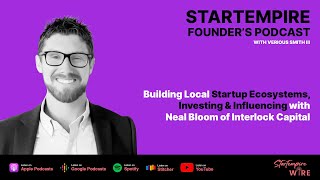
This is a YouTube video titled "Building Local Startup Ecosystems, Investing & Influencing with Neal Bloom of Interlock Capital" recorded in 2022. It features a conversational interview primarily between Vers, the host, and Neal Bloom, a prominent entrepreneur, investor, and community builder in the Southern California startup ecosystem. The discussion covers Neal Bloom's background, his startup journey, community building efforts, angel investing, and the development of his investment syndicate and fund, Interlock Capital. The conversation also touches on strategies for growing local startup ecosystems, venture capital dynamics, and the importance of building sustainable entrepreneurial communities. The content is an in-depth dialogue focused on startup ecosystem development and investment insights.
Welcome to the Start Empire Wire Founders Podcast, where we make entrepreneurial founders a top priority. Each episode features risk takers, business builders, community shapers, institutional and government supporters in our local startup ecosystem. Tune in weekly to hear all about what's happening with the movers and the shakers of Southern California's Inland Empire and beyond. All right, ladies and gentlemen, welcome back to another episode of the Founders Podcast. And today we have a conversation with someone who is actually having. He's actually a part of the San Diego ecosystem. I would say I'll let him tell more about himself though. But he. I would consider him an influencer for startups and influenced me to help me get some things going with Start Empire Wire as well. But I just wanted to sit down with Neil to get a full. Just kind of who is this guy? And so I would like to introduce you to Neil Bloom. Neil, please introduce yourself, tell us a little bit more about who you are, and then we'll dig in.
Well, first, Vers, it's a pleasure to be on. Thank you. And I love seeing the work you're doing. We are cut from the same cloth because I'm an entrepreneur, I'm an investor, and I'm a community builder. And all those three are not in any order. They're together. They are my priorities, number one. All three. So I run a company called Rising Tide Partners. We are a content and media company. Also run an investment fund called Interlock Capital. And my day to day is out building community and both of. And I use my vehicles, my companies and my community to make sure that, you know, all those get the loop closed.
Yeah. How long have you been doing this, Neil, and where did you start? Because I'm very curious. We've never, we had that initial conversation, I believe, right when I. I don't know how you got in touch with me, but it was through Twitter. Twitter. I don't know how you guys notice it so fast though, but it was, it was you and Alexa. Ray Navarro. I had just posted the first like tweet on Twitter and I was holding this sign that said I will work for startups. And that was like my little preview, like, you know, thing for what I was doing for Start, Empire Wire. Alexa contacted me first and then you contacted me second. So how does. What's going on with the startup community in San Diego? I know both of you are part of it. I know Alexa plays a part where she at now and then what are you doing and how do you guys all fit together? What's going on there?
Yeah, And I, I don't remember the order but we met in person actually at Excite.
Okay.
Steve Massa had me in.
Yes.
Do a startup week side chat. Yeah. Maybe three years ago now or four it was for sure.
Okay.
He brought, when he was working at the city of Riverside, he brought me in to say hey, what you're doing in San Diego, I want to do in, in Riverside. I'll do a whole day in Riverside for you. So we, we had. My whole day was planned out to just meet with other community leaders.
Now I remember, I remember that chat.
You and I immediately hooked up there. We had a call. So yeah, it's super cool to see where you've gone from there. Fast forward a little or backwards for me. I'm born and raised in la, San Fernando Valley. So also Cal my whole life. Little tiny, supposed to launch recently. Waiting for Artemis rocket to launch. And I worked on the first stage and future second stage. And then they let go of everyone work on the space shuttle and they retired it and I didn't get let go. So I had some survivors guild of being like the young one still around at this company where they let go of 30, 40 year old or 40 year rocket scientists.
Wow.
And so I started devising a, what I thought was a platform, a LinkedIn for engineers.
Okay.
To help engineers get jobs in a different way than what was normally happening. So that was my first startup back in 2013.
What was the name?
It eventually was called Portfolium. We had some major pivots. We started talking to every customer we could think of and it turned out to be a much better tool for new grads who hadn't worked anywhere yet but needed to be employable. And so we built really like pre LinkedIn for students, undergrads and grad students to help them build a visual resume to get their first job. So 2012, 1314, I was hustling around all the UCs and Cal states in California selling this software.
So I was at this bootstrap.
It was until 2014.
2014.
Okay.
The first two years we were, we got into an incubator in San Diego called Evo Nexus, which is what brought me back to San Diego from la.
Oh.
And I lived on my co founder's couch for a number of months until we actually moved in together. Which was, you know, problematic in the end being co founder roommates.
Right.
We were selling you know, software to universities. That was really what we which was helping students save their best, their best career memories of school. And it would auto kind of Build a resume for them when they're ready to get a job.
All right, so just one little pause right there because we want to continue with your story. But as a side note, do you think, like, the whole founder dating notion could carry into, like, a founder, like, marriage? Okay, like, okay, you see your founder every day. Like, not technically marriage, but, like, you see your. Your co founder every day, and you say it became, like, a little problem. Like, you. He was your roommate.
So.
Yeah, so that you. You need your separate space, right?
Totally. Especially, like, two young engineers who at the time had not had little emotional intelligence, were passive aggressive, did not confront each other on, you know, conflict, I think boiled up and boiled over. So if someone didn't do the dishes for a day, somehow that spilled out into, like, you didn't answer that email and vice versa, you know?
Yeah, yeah.
Business. So, yeah, it was just a little more than we needed. So I learned a lot from that. Eventually we did had a breakup. I left the business.
Okay. Okay.
So, yeah, that's. That was the foreshadowing of I lost a friend out of that too. Which sucks.
That sucks. That really sucks. Yeah.
But. But the. So when I got into San Diego in 2013, I was in this incubator which was honestly ground central for the San Diego startup community.
Okay.
40 companies in one giant floor of a building, all open floor floor plan. So we were bumping into each other. When we brought someone in for a meeting, we immediately introduced them to people around as we're walking to the office, you know, ping pong. So everything started happening there, like, every night of the week there was an event in our space because you already knew there'd be like 100 people there, so you might as well also throw your meet up there too.
Yeah.
And very quickly, a lot of US CEOs and co founders of our company said, you know, to have random, like, Marketing Mondays and meetups like that. What if we organized a bunch of events to happen over two days or three days only, and we make it get as many entrepreneurs to come out as possible. This became the first San Diego Startup Week 2013.
Very cool.
Only 10 events, 200 people, and I was just an attendee. And I was immediately hooked on not only building my business, but building community that brought people together to learn. And so I was, the day after it ended, I was raised my hand to say, I'm ready to Build Startup Week 2014.
That's so cool.
And I've been involved every year since eventually. So we were running this on our credit cards Just like personal kind of stuff, putting on this event. And eventually we realized, you know what, we should get organized. And we created a non profit called Startup San Diego 17. I became chair of the board shortly thereafter. I was like the second chair board and I just finished my time on the board last year, so been pretty involved in growing community and building, building something that brings entrepreneurs together. We peaked at 3,500 attendees for San Diego Startup Week in 2019. That was our biggest year.
That's great.
And Covid, obviously, you know, changed the trajectory of that. So we're going back to person this October. I'm pretty excited to see everyone, that's for sure.
You're still on the board.
I'm not, no. I actually had. I forced them to change the bylaws to kick me off, but I said, guys, I've been involved for eight years, we need some new blood. I'll just be a volunteer. And so actually behind the scenes, I am helping curate the content for this year's Startup Week out and getting speakers, keynotes and panels and stuff like that, but I don't have to go to board meetings and that kind of stuff. We, we looked for our first hire, our executive director, and did a big search, had one for a little bit, and then ultimately found a new one, Alexa Ray. So that's how we met Alexa Ray Navarro. She started as executive director of Start San Diego December of 2019. So came into the organization brand new, it's our first employee, and boom, the pandemic happens.
So I remember, yeah, it was, it was right before the pandemic where I met her and you told me she had just become the, you know, she just came onto a position.
So she's got deep roots in Southern California startups as well. So she works for the LA Chamber, running their innovator, their innovation, their incubator.
Incubator. Okay.
And then, and then she's lived in Temecula for quite.
I know she's right in Temecula.
I'm like, right, so she's all a part of this. I go and meet her for coffee and Temecula often, because I'm in North County San Diego, and I, you know, I'm like, hey, I'll come to you.
Right, right.
I'm about an hour from Temecula, so.
Okay. And then Steve Masa as well. I've had him drop in and meet her as well, just because he's down the street too. So.
Yeah, he's in. Where is he at? He's in Temecula too.
Yeah. Yeah. Okay, cool.
Yeah, he's, he's helping run the bitcoin meetup in Temecula and then him and I've been working on getting a date together for a Temecula founders happy hour at some point.
Oh, cool.
Yeah, I've been to the bitcoin meetup several times. It's great. Great little meetup over there. Usually they change it up the last couple of times, but 8 bit brewing is where it's at a lot of times.
Yeah, yeah, exactly. So I was building my own startup while building community, kind of. It's always been. Building community has always been like a volunteer thing for me kind of.
Okay.
Okay, that's cool.
And it helped my company because we were trying to build a marketplace for talent. So we're getting employers on getting talent. And then I had this big founder breakup and that really like knocked me back on my feet in 2016.
Wow.
And I said, you know, I really like the business and marketing and sales part of startups, but I have no business doing it. Like I've never learned formally how to do it. I just.
Right, yeah.
So I said I'm gonna go take a job with a fast growing startup and learn from the best. And So I joined Hired.com, which is another talent marketplace.
Okay.
I've seen articles about that, about our own, if it was a press release or something. But yeah, they got big.
I mean, I joined, we're about 20ish people. Within 18 months we were 350 people.
Wow.
We raised 100 million plus in funding in that time frame too. This is 2016, 17, 18.
Okay.
And I was tapped to go launch new marketplaces around San Diego. So we would look at Citi and say, how much VC$, is coming in? Well, great. We know a percentage of that is going towards hiring talent. So we should put our marketplace in wherever there's a lot of VC capital. That was our plan. And so San Diego was my first city that I helped and then I helped other cities launch this two sided marketplace. And eventually I was kind of running marketing, demand generation marketing for all of our North American cities.
Okay.
And I learned a ton. I mean this was a rocket ship that the part of the, the part of the my startup that I didn't get to see because I left. We were only 20 people.
Oh, wow. Okay.
And now I was taking the next page, the next phase of startup land, and learned it from hired. The piece we learned, unfortunately was that, you know, our VCs that we hired from, I would say were not marketplace VCs they were much more SaaS. Oh really? Meaning that they were looking for us to really force a subscription model on our marketplace that didn't exist and our customers did not want to pay for. Most people do not prepay for talent. Right. You don't say, yeah, here's, here's, here's a hundred grand and I just will cross my fingers that five engineers are going to show up this year.
No, no, that's not.
Yeah, it's backwards. And so the business model really started to contract our business and most people left the business because they're like, I can't sell this.
Wow.
Fortunately, hired fizzled and died and was sold for just assets last year, I think so Great. An amazing group of people that we like got to work alongside, but also a great experience for me. I left way before I left in 2018. It was still high flying and I said to myself, you know, I'm helping like 15 different communities grow their startup community, their venture capital scene, but I really just care about mine in Southern California. I'm going to focus on Southern California for now. My blog and podcast called Fresh brewed tech in 2018. Okay, so that's kind of where I really went 100% full time on community building.
Yeah.
Not just a pure volunteer thing.
The Inland Empire startup ecosystem industry is tremendously fragmented. A few top tier hubs, San Francisco, Los Angeles and San Diego are well covered by media events and data platforms. Finding reliable information relevant to startups or the tech industry in the Inland Empire is extremely difficult. As a result, startups can't scale fast enough. Investors are having a hard time finding the right deals and corporates can't find the right companies to partner with for their innovation activities. Start Empire Wire, the leading Inland Empire startup publication, is providing the Inland Empire startup ecosystem with the most accurate, engaging business and financial data, events and news. Our reach of entrepreneurs, C level executives, angels, VC investors, startup employees, key management at innovative corporates and big tech is the Solution for your B2B or B2C needs. As we build out our platform, we're looking for partners. This is your opportunity to get in on the ground level if you're looking to align yourself with the local and growing startup and tech ecosystem of the Inland Empire. We have created the platform to get your name noticed and the opportunity for you to grow the recognition of your brand. Contact us today for availability and pricing options. We look forward to our partnership with you.
Okay, so tell us a little bit about Fresh Fruit Tech. We've got. We've gone through pretty much the origin. But where are you now and what is it about? And you're in several communities, right?
Yes.
Yep. So 2018 timeframe, I was already thinking about leaving, hired. I also was already putting on some events in San Diego myself called founder Dinners where I would bring 20 founders to dinner, have a sponsor and just put the right people in the room, a few investors, a few founders, early and late stage, and make sure that people are mingling and meeting people they normally would meet. One of my sponsors said, not only do I like just this dinner series, I want to put our brand alongside yours to kind of reorient our brand. And that. That company was called Cox Business.
Okay, okay.
Most people know them as your Internet.
Cox Cable, right? Yeah, yeah, yeah.
In fact, they're. They're much more than that. They're 125-year-old family owned business.
Wow.
And it's still private. It's still family owned. Cox the fourth is the CEO at Andrew Taylor. And they invest for multi decade kinds of investments. Right.
That's cool.
When they put broadband fiber in the ground, they know that It'll be there 30, 40 years, right?
Yes. Yeah.
They invest in, you know, in rivian. They put $350 million into Rivian Electric Vehicle Company in Irvine.
I know, I know about, you know.
They'Re investing for big. And so they said, you know, we're tired of being known as the cable guy. We want to be known as a tech company. So alongside you, we want to be putting tech people from Cox in the room with tech people from San Diego.
Okay.
So that was the first kind of light bulb moment for me that said, oh, like the things that I want to do. There are brands that want to be aligned with me. They want to align more than just me talking to people like we can do this on a bigger scale. And that's what they push me to start a podcast to have these conversations like you and I are having. Like this could be a zoom call, right? You and me just talking basically that we're going to broadcast it to the world. That's true. They pushed me to say, tell stories, tell stories of great builders of technology. And we want Cox's name and image alongside that. And that would be great.
That's cool.
That was the start of giving me a kick to say, start a business around this as a. Supposed to just do something for fun, you know?
Yeah, yeah.
It becomes a business, right?
Yeah. And so we started doing dinners quarterly. We started an email newsletter where we would summarize everything that happened in the community over the last two weeks, from events, jobs, fundings, acquisitions, stuff like that, and news. And I started posting on LinkedIn five times a day. I would pretty much I share anyone else's news. My LinkedIn is their billboard.
That's cool. That's cool.
That got a lot of traffic, which got us over 10,000 subscribers of the newsletter. And sponsors came with that. And so we opened up new cities, actually. So we opened an Orange county version of it. Fresh Squeeze Tech.
Same squeeze, like the orange juice.
Yep. And then Fresh Coast Tech in Santa Barbara, Central Coast, Ventura and San Luis Obispo counties. So we just looked at communities that were underserved at the time. And were there sponsors available to say, hey, I want this in my community too? And my goal was to come to Inland Empire too, until I met you. And I said, great, let's empower you to do it. I don't need to reel here. Like, I'm definitely not here to step on people's toes. I just want to build good tech communities because I know that that will make everyone rise.
That's cool.
Yeah.
No, Well, I could tell you what inspired me, like, what inspired me to do start Empire Wire was, you know, just realizing how we were pushing so hard here in the Inland Empire for some notoriety and nothing was happening. And I'm like, okay, well, somebody's got to start a publication for news in this region. And so that was. And then, you know, actually, after meeting you, I'm trying to see if I got, you know, for. For the. For the podcast portion. Maybe that's part. Part of what. What I'm doing is inspired. Absolutely. By what you're doing with the Fresh Brew tech. So that I think that's pretty, Pretty awesome. So with. With Fresh Brew Tech, you know, you guys have been publishing regularly. How do you come across the founders that you're interviewing on a regular basis?
Oh, man. At first it was tapping people I had met in the incubator, you know, building 2013, 14, 15. Obviously a lot of them, their companies were much further along. And so by 2018, there were some big name companies just purely because of time. So that helped. And then I would always ask them, hey, who should I invite on next? And so started getting the referral. My dinner series brought a lot of new people there too. And so it started going from there. And now we get PR companies that reach out our local news organization. The writers who I'm friendly with will also say, hey, I just interviewed this person. Might be good on your podcast, and vice versa. Sometimes I interview people and then I say, hey, Standard Business Journal, you should talk to this person too.
Yeah.
I think a friendly presence with local media has helped as well, because we don't feel like we're stepping on each other's toes. We feel like telling stories in a different way.
Yeah.
The biggest thing that happened though is that when we eventually sold my first startup, which I was no longer working at, but we sold it, I got a little bit of cash, which was nice, but I immediately started investing in my peers, just writing small $10,000 angel investment checks. These same people that I had started was building with them in the incubator I was able to write. And that helped because now when I was doing my dinners and my events and interviewing people, I'm also thinking, is this someone I could invest in?
Who can I invest in?
Exactly. And invest, to me is talent spotting. You're looking at people saying, are you the person that's going to lead the charge for the next 10 years? Can you run through walls? Can. When something is thrown at you, do you figure it out? Do you, do you stop? Do you fail?
Do you.
Or do you keep going and learn from failure? And so a lot of that started happening simultaneously of interviewing people and investing in people, and that eventually sped up my angel investment piece where I was investing heavily. The other big piece that started happening to help write about people was that local city government started taking notice that Fresh Brew Tech, really what we were doing was economic development messaging. We were promoting a community for say, San Diego or whatever. City or county. Right, Orange County.
Right.
And the city said, you're doing, you're doing great at that. Our city does not promote the business community as often as we'd like to. This is an economic development manager who's talking to, who's coming out.
Right.
And you can do that for us. And so we started actually getting contacts to a white labeled version of fresh brewed tech on behalf of a city.
So smart.
Yeah, yeah. Content.
Content as a service, right?
Yeah.
Write about someone, promote it. And the company feels like they got free PR out of it from the city. They feel a gratitude that their city cares about them. While the city is trying to use that story to attract more business, their city and more talent because they look at the successful clustering of clean tech we have here, or ad tech, whatever you want. So that's really started growing my, my Rolodex as well, of meeting founders by getting to write about them on behalf of the cities as well, too. Fast forward now. Rising Tide Partners has 15 cities that we do content development work for Including Cities Riverside. We're in talks with a number of other cities in Inland Empire as well too. And we just want to tell good stories. So we've been writing, if you have the stories by the city of Riverside. We've written a lot about clean tech innovation that's happening, especially in the foundation district. And we're constantly looking for good companies to write. So I know I hit you up sometimes being like, hey, can I know anyone? But now I just use your blog and I, I say, oh, here's a, we got to make sure we write about them too.
Right?
You know, you know, we're, we're writing, we're putting out, you know, the daily article for, you know, what we're doing. And so we're, we're constantly doing a lot of research and, and glad to help you get some content there. So how, let me ask you about your perspective as an investor. Who and what and why did you want to start? Like, who are those companies you identified? How did you identify them, you know, and why, why did you invest in them?
To me, there's two pieces to invest in. There's that talent scout piece where I'm looking for talent and I can go on a lot about talent because obviously I built two talent tech companies. So I've kind of got this algorithm in my head of what makes good talent because we wrote it in platform, you know, and, but really it's investing to me is about knowing as much about someone as possible. And so when I worked alongside startups in my incubator, I got to see them every day, hard decisions. Right. I saw them have their ups and their downs. And the more data points I had about people, the better it is to make a decision to invest in them.
Okay.
So for me, investing, I want to take as much time as possible. I want to meet someone as early in their startup career, not when they're pitching me their deck.
Right.
Pitching me their deck. Like the data points are way less if you need money today versus if you need money ten years from now. I got a lot different opinions about you. Yeah, you as an operator of a business and as you, someone who can return capital to people. So, yeah, that's how it started was just being the community for a while and, and then having cash to back the people I, I had thought were good operators. Now I can today, now that I'm doing it professionally with Interlock Capital, I've got a lot more that I've filled in on what, what I like, you know, yeah. And really it's about de risking the investment. So okay, I'm gonna hands on money. That money would, I would love for that money to turn into more money as quickly as possible.
As quickly as possible.
Right.
Most startups don't do that though. Most startups burn the money for a lot of time and you know what they're doing is they're trying to run experiments and learn things about their business. And the quicker you can stop learning on my dime and the quicker you can start growing my dime, the better. Right. And so if I find so, so some of those things that come from that. Right. Is have you ever run a business before this business? Have you ever sold that business before this business? Have you taken venture capital money in a previous business and returned money? Those are some basic simple de risking things that, you know, make sense when you say it out loud. But when you're a first time entrepreneur sucks because you don't meet any of those qualifications. Right, right. And so, you know, those are some of the pieces that go into it. So if you haven't run your own business, have you worked at a startup that boomed and succeeded and you learned a ton there too? So yeah, I kind of got, we've got this, our own little ranking algorithm that we've built now at Interlock Capital that we start to use to. Just because we're getting so much deal flow, starting to rank what deal should we be looking at now? And I didn't tell the Interlock Capital Store, we can get into that shortly as well.
Yeah, I was about to ask some, I was about to ask some questions around this, so because I feel like the first question I want to ask you is do you feel as if moving from what you did with freshly Brewed tech and the startup team moving into Interlock Capital, do you feel like that's a natural progression?
Yes and no. I think Fresh Brewed put me at the center of the community. Still does. So theoretically I should be meeting a lot more people than others because I'm out there at events and I'm reading articles a lot more than most people about other people. So theoretically I'm getting more deal flow than others. That doesn't make a good investor just because you meet a lot of people. Right.
Yeah.
I think having the talent network, the talent tech background helped me as well.
Right.
And also realizing, starting to realize a lot of things about myself, my superpowers. And I know, I know one of mine is being a super connector. Meaning when I hear two random people out there who say I have a need. And someone says I have a need, my brain knows to connect them. Like say, oh, have you met this person? Have you met this person?
Yeah.
Can be mutually beneficial if you meet. And I started really good at that. But being good at connecting people doesn't pay the bills. And so I actually started really thinking, how do you monetize being a super connector?
Yeah.
And investing capital is one of those where your own capital, you're investing other people's capital into else. That is a connection point as well too.
So you created a syndicate, Is that what you did with Interlock Capital?
Correct. So I invested almost into 50 companies personally, directly.
Okay.
And the pandemic happened. I had no plans to change up my angel investing style. I was just going to invest my money into companies when another community builder and mentor of mine in the community reached out and said, hey, we all have a little bit more time on our hands during COVID at least working from home. How do we learn to invest alongside you and scale, but also how do we as tech entrepreneurs invest in other tech entrepreneurs? Because locally that's not what's happening in angel investing in San Diego. And I'm sure this is the same in Empire.
Yeah.
Capital does not come from domain experts. No. At least in tech, biotech's a different story. But because we haven't had the billion dollar exits in San Diego, still the money is coming from elsewhere, coming from just high net worth doctors and lawyers and real estate who, you know, have some disposable income and say, yeah, you know, it'd be fun to throw some money around and put it into startups. Well, to us it's not for fun. Like this is a lively. And so what we wanted to do was put people who have built tech companies but maybe don't have the millions of dollars to invest yet, take them as as domain experts and diligence members. Maybe they're writing five or $10,000 checks. Yeah, if we band enough of us together, we could be writing those bigger checks. And so that's right. Capital became in summer of 2020, only two years ago, we created our first syndicate, which is a special purpose vehicle group, meaning for each investment we want to do, we spin up an llc. We say, hey everyone, here's the diligence we did here. Who was on the diligence team, their relevance to this industry and if they're investing or not, Me and my partner invested in every deal as well too personally. And then we built our own little light platform using Bubble IO and airtable and we put our diligence memo up on our site and said, hey everyone, here's our new deal. Do you want to join us or not? And anyone who was in just said, I'm in. They'd put their amount, we'd send them the documents, they'd wire to an escrow account and we'd write one check to the company. Could be, you know, 100 grand, could be 250 grand.
But individual fancy pitch competitions or anything like that?
None. Yeah, none exactly. No, it wasn't angel, angel conference style. It was really done purely by email and our platform. And yeah, we started writing a deal a month. It got pretty fast and furious. We were writing easily a deal a month for 18 months straight. And yeah, that was all kind of on the side. Wow. Fast forward to beginning of 2022. We had 17 investments already and we had 260 people who had participated in one or all 17 of our investments. And everyone asked like, what's the future of this? We're just going to keep doing a deal a month. I can't keep up with all that. A lot of people said, I want to be in every deal. I just can't read every memoir. So we started alongside our syndicate, a fund where people could write one check and they'd be in every investment that we do. So that's what capital has morphed into. We're both a syndicate investor where we spin up these special purpose vehicles and we're a fund where people can write into, invest in the fund. So that means now every investment we do, we write two checks, we write a syndicate check and a fund check, which is great. We just pretty much doubled the amount of capital we can invest into every company.
So there's a lot of technical terms you're using here. I don't know if a lot of people are familiar with it. I've been, I've been reading a little bit about the business of venture capital. What would you recommend people go to find out about some of these things?
Sure, yeah. No, it's a great question. The first book I ever read was called Venture Deals by Brad Feld. He literally wrote the book on venture capital for community builders, people like us. And he runs every, I think it's twice or three times a year they run an online venture deals like scenario where you can sign up, pretend to be a venture capitalist with a team over six weeks, where you're given a chance to make an offer to a company, where you have to like write up your terms, you're given a scenario where you have to reinvest in a company, you have to decide if the terms are good for you or not. And you learn everything through like a, you know, kind of a real life scenario. Obviously you're not really investing, but right up with people.
Have you, have you done that?
I did it, yeah. In fact, we decided to find people join from all over the world, but we decided to field a team locally and we met up in person and did it like as a group.
That's cool.
And yeah, it was really cool. Like, learn to think like a VC is like what the whole point is. And you realize like investing as an angel and being a venture capitalist is very different. When it's your own money, you really don't necessarily think about the time of return. You think, hey, if I got my money back, amazing. And if ever, right. If I got two or ten times my money back, amazing. Because I already love that I'm this person I'm investing in. You're a venture capitalist. You are under the gun to not just get your money back, but make money on top of it over a set period of time. And so you start thinking very differently through the lens of what makes a good investment once you're managing people's money. Because now you're competing against any other place that people could invest in your other firms, the stock market, real estate, all of that I'm now competing with. Whereas when it was my own money, I just want to invest in the best people I literally knew. Yeah, so it's my, my, this year has been just eye opening for me to just really like run investing at industrial grade or institution grade, if you want to call.
All right, so one of the, one of the main things that I want to understand while helping to build the startup ecosystem here in the Inland Empire is what, what is it that brings in venture capital? And how can, how can people be informed to approach their startups that way? You know, be trained to structure things correctly? You know, because we're, we're dispersing a lot of information. That's really what we're doing. So what would you say from the perspective of a VC or an angel? Because angel money is great as well. What would you say community should do or how should communities approach it from several perspectives? What should the entrepreneur do? What should the universities do? You know, what about local governments? You know, how can this become a way, how can their community become attractive to bringing in these necessary funds from ventures, venture investors, or angels?
Okay, so first of all, and I'm sure it's mentioned many times. The book to read on this is Startup Communities by Brad Feld.
Yeah, it's done so much, man.
Done so much. And I actually had. I was lucky enough to have him on the podcast two years ago when his new version of the book came out.
No way.
Very successful. I'm sure he'd love to be on your podcast.
I would love to have him all. Yeah, please.
But the piece that I think is at the root of it all is that to have build a good community, we need to build good businesses. Like, no matter what.
Yeah.
You just gotta build good businesses. Quality, good, growing businesses.
Okay?
That's the name of the game. If you can't. If we can't even do that, we can't do the next steps but build good businesses. Now, the piece about venture capital and startup communities that is different from your general business community is that there is an exit in sight. There has to be. Money has to be returned back to investors, which either means the company gets acquired or goes public. And 90% of the time they get acquired, they don't go public, which mean someone else buys the business. And that changes the business. Usually either it grows, it gets moved somewhere, they lay people off, they streamline processes, they get outsourced, but something changes in the business, for better or for worse, exit. But from a capital perspective, it gets recycled. Meaning whoever invested, whoever had shares in that business is going to, hopefully, if they built a good business and they grew it and had a good exit, theoretically, they're gonna have more money because of that.
Okay?
And hopefully most of that money stays local. Now, to do that, the entrepreneur needs to be living local, and the investors need to live local as well, too. And so do the employees. That's how you get the capital stay local as well, too. And most likely from that business will spin out other businesses. Either that same entrepreneur opener will start the next one. And usually they'll bring back a lot of that team again because they're like, hey, we were successful this time, we could probably do it again. So you want to see that, you want to see them start another one. And that usually will draw the same investors to come back, being like, you made us money this time, you're gonna probably make it for us next time, and maybe even more. And that should start drawing some new investors who are saying, hey, you had success, you built a business, you sold it, you're starting the next one. We want in on this ride next time, too, okay? And that's the flywheel that needs to start happening in communities that recycles capital. Now this flywheel takes decades, Right. To start. And that's the Silicon Valley story. Why they were been successful at it. They've been doing it for 40, 50 years of recycling capital, recycling talent which builds the next company.
Right.
So that's, that's what I think still is why parts of Southern California are still kind of in the early stages, early innings. I think LA is obviously out the furthest because they've had success.
Like Santa Monica area.
What are you.
Yeah, Santa Monica, where they had Riot Games and Snapchat. Like billions of dollars returned back to people who then started venture funds. Because now let's say if you made enough money that you don't have to go build another business, well then you can start your own fund.
Right.
People like you and me probably, who are serial entrepreneurs would probably still go start another business and start a fund because you can't not build. And so that happens too. So you get investors who are both operators and investors. But we can't ignore the exit part. That has to happen.
Which means exit.
And that's honestly what I think the ceiling above San Diego right now is we have not had enough exits and therefore capital has not been returned back to people who invested like 15 years ago in some of these companies.
Wow.
So yeah. So that's why I honestly go out to other communities and compare and contrast what have they done. And so one example, two, two cities I like to compare to Southern California like Santa Barbara.
Okay.
Has had billion dollar exits. They've sold. Sonos is headquartered there publicly. Appfolios headquartered their public company. Procore is their public company.
Wow.
All went public within the last five years and are now multi or single digit billion dollar companies.
Wow.
And that's a lot of capital that that goes to people who want are not going to leave Santa Barbara because.
Yes.
Or there you are not going to leave there.
Right.
The same can be said for other communities in Southern California. We just haven't had those exits yet. Procore was founded in 2005, four I think. And it just went public last year. So 16 years in the making. Like we just gotta be patient. We also gotta help these companies grow and find talent locally so that they don't leave and go to another town because they really miss out on that exit as well too. So from your and I perspective, let's take the investment part out of this. Just you and me being promoters of community. We can be showcasing what it's like to build and grow a company successfully in a community. So that People feel like I want to do that, I want to build my business in that community. We should be connecting talent to make sure that talent knows that Jobs. There are job openings. That's honestly the biggest problem. I find someone's looking for a job, they look up three companies, hey, did you know there's 300 that you could be applying for that are hiring in your backyard? Usually they don't know that. So make sure that we connect the dots, that there's good businesses, there's good jobs.
Right.
Stay local because you probably already like the city you live in.
So have you, have you, you. I'm pretty sure you're familiar with like Built in la, right?
Yep.
Do you know any of the people from there?
I don't know. I've never met them. I've been watching them, waiting for it to come to the west coast. Eventually came to la, but it actually started in Chicago.
Started in Chicago.
Okay.
And was in a lot of other cities before it came to the west coast. I've seen a lot of like these, these multi community media companies and obviously I am now building one too. Right. So you know, I'm watching them being like, hey, I can be your person. You need me to tap on you and share the news of San Diego? I haven't found this, this like the person who's the chief editor for San Diego yet. I don't know if there is.
Okay, well, I know Built in la, man, their, their website just is a tool for like the startup ecosystem and totally they, they, they dominate all of the search engine results for jobs and job searches. That's it. If you want a tech job in la, buil in LA is coming to.
The top for sure.
Yeah, it's great.
I love, I've been finding, I've been using them a lot lately because they've got a like search directory of companies by industry. So I found myself going in there being like clean tech.
Hmm.
Wonder how what companies they have for clean tech. I know they were missing a ton, but there was also ones that I hadn't heard of. I was like, great, here's a bunch more that I hadn't heard of. I'll make sure I get them on the podcast.
Yeah, man, that's great. All right, so Neil, what would you say are your. Because we're focusing on you. Everything that, that you're doing right now is all included in this podcast. We were going to focus on just one thing, but I'm like, you know what, let's just focus on what are your short term Goals in the next two months. Like what do you plan on doing? Like with whichever endeavor short term.
Right now we just did a first close of capital for the fund, which means you can start deploying more capital. So making some investments I'm pretty excited about. As well as attracting some new LPs, limited partners to join our fund. Those are really the term goals to get going again. And then we'll be hiring for the fund shortly as well too, which I'm pretty excited about.
That's awesome.
An associate and a product builder, which means can start deploying more capital. So making some investments I'm pretty excited about, as well as attracting some new LPs, limited partners to join our fund. Those are really the short term goals to get going again. And then we'll be hiring for the fund shortly as well too, which I'm pretty excited about.
That's awesome.
And associates and a product builder, but that's coming. You know, all those things are before the end of the year. That's really the focus of Interlock Capitals is invest more people, invest in our fund and build a team with Interlock.
Okay, awesome. Awesome. Any, any, any other short term goals within like you know, with. Because you're doing three teams, right? You're doing rods and tot partners, you're doing fresh. So yeah.
Rising tide. We're working on some new cities which is awesome. We're adding some new services, including PR services. So we are not just writing content for the cities. We're now taking those interesting stories and pitching it out to local media so that they pick up the stories we're writing and telling.
Yeah.
And we've started a new, a new event series. One of the cities wants to be an ag tech hub.
Wow.
And they, they found a building to turn into a full time year round agtech incubator. This is the city of sbo and they've hired us to run an ag tech hackathon. A three day hackathon for the week and awesome.
Wow.
And so we're going to be launching that end of October. So.
Okay.
Depending on when this episode goes live, people love for your audience to join us. October 21st, 22nd, 23rd. That's when we're doing the San Diego AgTech hackathon. Expecting at least 100 people there. We've already got some VC firms, judges for the pitch competition at the end of the hackathon. So yeah, we're pretty excited to offer kind of a new suite of services to cities who really want to make their city like an innovation hub.
That's cool. So let me ask you, how will people find out news about that? Do they go subscribe somewhere? Get on the email list?
LinkedIn. LinkedIn. Follow me is the quickest way that you'll see everything. But yeah, get on freshbrewtech.com and subscribe to our newsletter. That's what we'll be promoting it since it's under the Fresh Brew Tech brand that is going on Ag Tech Hackathon. So yeah, those are the probably two best places. And then follow Fresh Brew tech social handles LinkedIn and Twitter and Instagram are kind of our more popular ones as well, where people can find out about the events we're putting on in the Southern California community.
All right, now we're going to talk about some future goals. Okay, what about next 3 years, 5 years and 10 years? What do you see yourself?
Okay. It's going to be heavily investing focused. I would say three years from now, I hope I'm raising fund two that hopefully is somewhere between a 35 and a $50 million fund. That would be truly the goal as well as maybe even having my own incubator accelerator at some point. Kind of a housing for interlock capital where we not only is the fund living, but so are other entrepreneurs that we're all helping each other and building good companies. I wouldn't say like venture studio wise. I don't think we'll be starting our own ideas. I think we just want to be creating community physically.
Okay.
Because I've just not found that Covid did anything for building. You can't replace the in person community part.
No, you can't.
Yeah.
I'm glad someone else believes that.
Yeah. I just think we actually, we went backwards, honestly. Like people felt like, ah, you know, 30 minute Zoom calls, replaced hour long coffees. Look at all this time I got back. There's just nothing to be said about sharing in person random bumping intos. There's only so many intros you and I can make as opposed to hundred people bumping into each other being like, whoa, I didn't know you're doing that. Let's. So I want to do more of that. I want to build more physical community over the next years. 10 years, man. I would say I want to go explore and live elsewhere in the world, to be honest, over the next 10 years. So I'd like to go while creating community and building and scaling it. I also would like to not be the sole center of the universe in my community. I'd like to have figured out how to grow beyond just me.
Right.
And therefore I want to go live in a Latin American country or European and experience it in another language.
That's cool.
That would be a great next challenge for me is to take. Just learn from other people and doing it in another language, Spanish or whatnot.
I heard, I heard Italy is pretty big with startups and things like that too, so.
Interesting.
Yeah, I mean I have one of, one of my graphic designers. He, he lives in Italy. He lives in Mulan.
So. Yeah.
Cool. I mean I'll be back. It's just like, okay, myself up to come go live abroad for a little bit.
That's cool.
And experience some more deal flow and just build more investment funds too. So yeah, I think that's. Hopefully it'll be running. I think also on the investment fund side, I would like to start building not just generalist funds which they kind of are now invest in all things tech. I think there's some interesting pockets of talent. Like in San Diego, diabetes tech is really big. Really kind of cool to have. If there was enough density to build a, to just invest in good, you know, very specific thesis niche down that.
Would, that'd be very interesting. Does anyone else do that or, or.
No, there's definitely funds that like focus. You know, there's like med device only. So it's not, it's not necessarily novel in that regard. I just think what matters is do you have a connection to that community?
Right.
You have an in to people who are building unique things.
Okay. Okay.
And I would hope years from now we will, we will have had that. I think we also are interested in like franchising our syndicate a little bit. So.
Okay.
Right now while yes we are Southern California based, we'll invest anywhere.
Right.
If I find the version of you or me in say the east coast or even abroad, I'd love to empower them and say, hey, if you have enough deal flow, our community will back you and you can spin up syndicates in our group. It can be done not geographically. Also like an industry base too. If there's an ag tech expert who knows every ag tech or diabetes tech, like why not spin up syndicates under the Interlock brand under there too?
So I can see that's pretty cool. Yeah, no, yeah, that's really, that would be really awesome because a lot of people are not aware of, you know how to do that and if you can just franchise that out, that's really freaking awesome.
Yep. So that's kind of where we're headed. I think we just gotta right now Continue to write the playbook. We're figuring it out as we go. Right now we've done 20 investments and we haven't returned capital really yet. So we got a lot more to learn. I can't claim to say we know it all, but eventually, five, 10 years, hopefully we will figure it out. And we're expanding and growing.
That's awesome. Neil, I really appreciate your time and I thank you for coming on to the Founders podcast. This was a freaking awesome podcast. How can people get in touch with you and, you know, if they, if they want to, you know, either talk to you about working with you on some level, how do they get in touch with you?
LinkedIn is one of the best. I will say I really appreciate if people don't just send a blind connect. If you add a note and just say, hey, I heard you on the Start Empire Wire podcast, or hey, I'm working on this, can we chat? I pretty much ignore blank connects that don't have a note. So connect with me on LinkedIn and tell me what you want to connect about. Twitter is another great place. I spend a lot more time on Twitter than maybe I should, so. At Bloom N E A L B L O O M And you can send me a DM there as well. Too. So yeah, I'd say on social is probably the best place. And then obviously, if you, you know, get our newsletter, Fresh Brew Tech, just reply to any note. It'll find its way to me. Reply to any of our newsletters and it'll find its way to me as well too. So, yeah, those are great places to find me.
All right, ladies and gentlemen, you heard it here on the Founders podcast. If you want to connect with Neil, send him a note on LinkedIn. Don't just send him a blind connect, also find him on on on Twitter because he's probably gonna answer there quicker for you. And get on the email list@freshfruit tech. What is it? Freshfruit.com, right?
Yep. Find risingtidepartners cat, our city focused content company. And Interlock Capital is our investment group that you can always find more information about.
Awesome. So all of those options. Ladies and gentlemen, to connect with Neil. We're so grateful he came onto our podcast. Connect with him and hopefully we'll have a part two coming up sometime in the future. We'll see. But once again, thanks again for coming on Neil. Ladies and gentlemen, thanks for having me. Absolutely.
I love the work you're doing and any chance I get to collaborate with you and share notes and make each other better from all of it. The great work.
Yeah.
Thank you, Neil. And ladies and gentlemen, make sure you subscribe. If you haven't subscribed to this channel, like this video and we will talk to you next time.
Peace.
Probably gonna answer there quicker for you and get on the email list.








