Building Together: Growing San Diego's Startup Scene Podcast
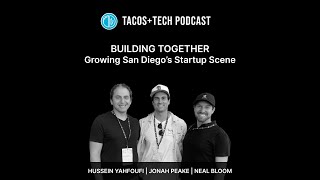
Podcast episode (Feb 2025) hosted by Neil Bloom with guests Jonah and Hussein discussing growth of San Diego's startup ecosystem. Key threads: the changing ways people get influence and early funding (shift to "alt elites"/communities), founders' journeys and how founders should focus on customers and de-risking, event-driven community building (mixers, coffee chats, hikes, co-working/build days, brain trusts), and practical matchmaking tools: Hussein describes Startup Beach's profile-based matching algorithm (scores attendees, balances matches to maximize collective fit) and Jonah describes Social/Career Coyote Slack/newsletter experiments for pre-event warmups and local job matching. Episode includes tactical ideas for greeters, pre-event matches, and enabling more event hosts to grow local networks.
Have you listened to. Do you listen to invest with the best with the most recent one with Mark Andreessen is really, really good talking about the shift of just technology in general. But he's talking about the. This concept and I just don't like the phrasing. So that's why I was like, hey, don't add this. But he's talking about the shift from the elites to the alt elites. And one of his examples, there's many. But one of his examples was like, you know, Jeb Bush elite, Donald Trump alt elite. The idea that, that the. The people aren't happy with the current state of affairs. And that can happen with like Harvard could be considered an elite. Fox News or CNN is elite. And so people are shifting to podcasts to get their media. And the reason I was kind of thinking about it is there's sort of a bit of a play from the traditional elite, if you will. Tricky word to use to these newer forms, these sort of like, you know, communities that Chad's building and, and you know, Hussein, you're building one and kind of Fred's kind of take it. Have a. Having a different take on news that's kind of shifting away from the traditional models.
And so the world interlocks shift of how you get early funding to a certain guard as opposed to angel groups.
Or something, you know, 100 and so people unhappy with old systems. And so the reason I thought it was interesting, just between chatting with you guys, is that that might be a shift that's happening pretty significantly San Diego away from kind of what. What are they aside from an event. And they are a great event. We need them. But if they are they more than that? Hard to say. And. And so that might be worth an episode worth listening to. Just from kind of how you talk about transition, I thought that was something that's kind of happening here.
Startups get the party. Startups get the party started. Startups get the party. Startups get the party started.
You want tacos, Tacos and tech? You know, we got tacos and tech is on smash for the green guacamole keeper Counting, counting beans Contador Quentan Frijoles found us trying to raise some queso la vida San Diego school of rappy rapping fire tortillas round jalapenos in these modern times a craft beer and coffee my coating yoga posse fold the body origami we be surfing Coronado eating tacos el gordo the tacos standing puesto lucha libre and sombrero got a shout out to by the ocean, watch the sunset. La Jolla shores. Entrepreneurs trying to get funded. When San Diego Startup Week is popping in the summer. Oceanside to Tijuana Sd be full of hustlers from couch surfing to penthouses right on the beach. Tech leaders who believe stars are within reach. We interview and founders who be shooting for the moon. Hashtag sdtacles with your host, Neil Bloom. Come on.
Startups get the party. Startups get the party started. Startups get the party. Startups get the party started. Startups get the party. Startups get the party started.
You want tech in tacos, tacos in tech. You know we got it.
Hey.
Startups get the party. Startups get the party started. Startups get the party. Startups get the party started. Startups get the party. Startups get the party started.
You want tech in tacos, tacos in tech. You know we got an A.
We are back for another building together. Growing San Diego startup scene with my tech besties, Hussein and Jonah. Hey guys, welcome back to the show.
What up?
Hey Neil.
Guys, it was so fun to do the pod. I think it's been two weeks now even though we put it out last week and continue to drip out clips which are really fun. And we just put out our action item clip which we will also link in these show notes. Already getting inputs on what events are missing in the ecosystem. And it definitely made me look like, all right, not just events, what else is just generally missing in the ecosystem. Right. Like what is what and like who's our, who's our customer? And so I thought be fun to really like come back and have that conversation now. It's a good time to do it in terms of just timing, it's topical. We've had changes at, you know, legacy institutions like Connect and others and you know, feels very, very good time to just talk about like what's the state of the founder in San Diego. Both of you guys have founded your own companies right now I'd love to kind of take it through your guys journeys a little bit if you're cool and game with that.
Yeah, yeah, I think that's awesome. I mean, I'll just say, you know, we had a really, we have a really good side chat going on where we're all kind of debating what what a founder needs and what a founder is really, you know, in San Diego because we're kind of a unique community. But I think kind of like you're saying, I don't know, I mean, I think Hussein, you have one of the most unique perspectives having Found, exited, and then founded multiple things. I don't know if that's a great place to start to kind of just say, hey, like as a person who's already kind of gotten past 101, maybe even 102, I don't know, you speak to that. You know, what, what is, what does the ecosystem need for someone who's already done some stuff and then how can we kind of add it in and make sure that the people who are kind of new to the founding journey kind of get what they need too? Because there is a lot of resources out there, but maybe we build a little bit different here in San Diego.
Yeah. And I think let's take through a little bit of your journey, Hussein, and let's put it through a few lenses. Like, we talk a lot about startup ecosystem, tech ecosystem, bootstrapped startup, VC back, startup. Like let's define those terms as we're talking through it. Maybe let's take it back to like money makes if you want. Like when you started it, what was your intention of a kind of business you were going to create versus where it ended up? Yeah.
Yeah. So first of all, thanks for having me on again. It was really fun being here. And funny enough, I'm getting. So my son is in a basketball league and then his coach, one of his coaches is Eli Rin, who I guess knows you and is part of the network. And he's like, oh, I didn't know, you know, Neil Bloom. And then now we have this whole new connection. So it's like really small world out there. Yeah, yeah, happy to chat about. Yeah, happy to chat about Money Minx, Startup beach, all of that. The, you know, when I was doing Money Minx, it was a side project, pretty much how Startup beach is now. And when I was working on Startup beach, it wasn't my first startup, but it was like my first one that felt pretty real. Like I had built a lot of products in the past. Like when the iPhone came out, I built a calculator to help diamond dealers price diamonds and things like that. But those weren't startups. They were more widgets and gadgets and tools and utilities and things like that. And Money Minx was like a proper startup. And back then I felt like I needed help with knowing what to do and not like how to incorporate a company and like paperwork and things like that. But just how do you think about building a startup and growing it and how do you go from one phase to the other? What does it mean to have a pre seed round versus a Seed round and what is a safe and like, things like that were pretty critical back then. And what I've learned through that and how I'm approaching Startup beach is really this idea of there's kind of two worlds I think, or two things I think about quite a bit. One is the side of risk and de risking, right. Because I from money makes talking to a lot of investors, I realize it's all about the risk and the journey. So in the beginning, is it a good idea? That's a big risk. Can they build the product? Can they put together a team? Can they get it out to market? Will anybody use it? Will anybody pay for it? And it kind of keeps going eventually. Can you scale it and grow it and keep it, you know, stable and all of that. And then the other one is this idea of what is an action I can do to move this forward. Right. So a lot of times people get stuck in, you know, analysis and trying to figure out what to do. And so when it came to help from community and things like that, I feel like back then it was more just education on running a startup and what that means versus now it's really working with people who are willing to try your application, give you feedback and help you move it forward, if that makes sense.
Interesting. More was like how to operate a business, how to know what kind of business to be operating. And now you're way more maybe just customer focused, maybe even. Yeah, you mentioned some like investment vehicles of just like not even knowledge. But I feel like a lot of people get almost like pulled by that. Like that is the goal in a sense. Like I'm building something and I know I need to raise money for it. Therefore that is my goal is to go raise as opposed to maybe now. Like, I know I need to hear what my customer wants. I know I need to build what my customer wants. And whatever it takes to go and build what my customer wants, I will go and do. Right. Which may mean capital, which may mean talent, but eye on the prize customer. Right. Which I think is very common for people to. To think through that. Is that. Am I summarizing it right?
No, absolutely. And I think, you know, the market has changed quite a bit where now just having an idea and a plan and a vision and then trying to raise for it. Like, unless you've done this multiple times, I don't know that you'll be able to raise versus, you know, do you have a product? Are people using it? And even to the point, are people paying for it right before anybody will even talk to you about a raise these days.
Is that feedback you're getting from conversations or. It's more of a feel.
Not from conversations because I'm not actively raising for Startup beach, but more a feel of what I'm seeing out there and really what my behavior has been too. When I get, you know, on LinkedIn or email, cold outreach from people raising, you know, it's just because you have, especially with AI, you know, it's very easy to connect to OpenAI and get a ChatGPT wrapper out there. So building that isn't enough, you know, it's can you get users to pay for it and then maybe we'll have a conversation.
Yeah, interesting. I 100% agree, as in both investor and builder. I've just always thought that was the way. Uh, but that's because my first startup, we had not no background. We had to. We started raising while we were in Evo Nexus. So we'd like kind of gotten into an incubator and we only applied because we were like, we need to be surrounded by other entrepreneurs just to like osmosis, learn how to be an entrepreneur. We had no clue whatsoever. So we didn't know what we didn't know. We didn't know we needed fellow entrepreneurs at the same stage and mentorship from people just down the road and people who had been at it three, five times already. We had no idea that's what we even needed. And it was just like a waterfall of learning from being around that. And through the process of applying, getting into an incubator which you get judged in a certain regard, they watch you, check on you. And people, I would say, just quote unquote, people who are watching us approached us and said, we think you're ready to be invested in. And we said, okay, what does that mean? We're busy, focused on just trying to get a first customer. And we're watched kind of, we're watched on our progress to get validation, if you will, and get a first customer. And the check didn't close until contract was signed and money was, you know, going to be exchanged. So that that was in 2013, 2014. And I've just kind of felt that's that's been the way you can do it so much quicker now, as you said, to a certain regard. And you can, you know, maybe get even further without capital, that's for sure. I kind of want to bring it into the same conversation with Jonah. Like, what are you feeling now? Because you've built a few of your own businesses and tried tested some monetization strategies. Right. And like what are your, what are you thinking? Like the founder?
No, it's a great, it's a really good question. I was kind of just thinking, it's funny being a little nostalgic for because you were, you were at Evo Nexus, but I came a little bit later and I was just thinking this might be a little bit of a rewind. But as you actually have to go through that process, whether or not you decide that an incubator or an accelerator is the right move, you still have to think through a lot of different things along the, along the process of building the business. And that's where I think a lot of the value comes in. Because you're trying to say I'm this type of business, who's going to do this type of thing? There are a lot of applications, you know, also on the other side of Evo Nexus, just thinking about how people understand their own business, which I think is maybe good and bad now. I mean you're able to kind of build a, an application and fill it out quickly with chat GPT, but maybe you're not it, you know, have, you don't have the luxury of putting a ton of thought into what this actually is. And so that might actually hurt a.
Little bit like the context, like matching be able to contextually tell a story that says, you know, we are trying to do this with a big angle of that and here's how we plan to do that.
Totally. I mean, here's a really obvious example. I mean you've seen all over LinkedIn, it's like someone posts the perfect prompt for a perfect LinkedIn post and now everybody's LinkedIn post exact same.
Right.
And like, is that good? I mean it's good for people who weren't able to do anything or even come to the table. Maybe it's good for them. But it, but is it now kind of getting boring where it's like why does everything have five green check marks? And like, why do I have to comment some weird thing in some lead funnel anyways, it's kind of getting away from, from the, the, the conversation a little bit. But, but, but that's kind of, you know, that's kind of what you, you could potentially see if you kind of over use some of the tools. But that helps you get further faster, which makes it feel like you can actually be a little bit more, you have the ability to bootstrap a little bit farther if you're able to kind of be in that position because you can get a lot of the support around you, answer a lot of the questions that, you know, might be basic or you might even be embarrassed to ask someone. So I do kind of see like this other path kind of diverging from raising or raising later because you're able to actually get a little bit further and kind of have a little bit more kind of control of your, your company. But for me, I mean, for me, I kind of, I put out the Social coyote as kind of like a, an experiment to see if we could fill a need in the city. But then it became later, you know, clearly people would kind of join and read and we'd see the stats there. But then it's like, okay, can this be a business as opposed to not necessarily another.org that's kind of operating in a different way? And that's kind of what we're experimenting with now is saying, hey, how can this be, you know, more than sustainable? It's completely sustainable now, but it's like it's just sort of paying for itself. Can it be something bigger or do you need to use that and bolt on something else and turn it into a media business versus some, some other type of business? But I guess the main thing is just kind of noticing that our community needs ways to come together and there's, you know, there's something you can kind of put on top of that. And we are seeing the shift in, in our, our kind of local ecosystem like you said with, you know, with Connect changing and Connect kind of hosting one of the bigger events and you know, Startup San Diego has one of the bigger events, but we need more and we need more kind of people coming together in sort of more select smaller groups. Which is, you know, I think why we're so excited about what you're doing. Hussein is kind of making it really easy for people to kind of find, you know, use my word, find their packs, right? People who, they're very closely aligned with what you're trying to do. Because then not only can you talk about your idea with a lot of relevance, you don't have to stay super high level and kind of do that one minute pitch over and over again, but you can actually get a little deeper with other people who are in, you know, product or AI and actually talk about the solutions that you want to do or get ideas from them. So, you know, that's another way to do that is, you know, checking out groups like indie hackers and, and I love those groups because that's kind of what ends up Happening you don't necessarily get sold something as much as you get an idea on a different way you can build your tech stack. So a lot of kind of thoughts there but I kind of, I kind of, I don't know, I'm pretty excited about where San Diego is going and currently at right now.
Totally agree.
Yeah. And I think we told a really good story on the last episode in a certain regard of like the whole. The gaps we saw kind of what kind of COVID kind of just stopped all events from pretty much happening. Really there was like no. Which really stops community. And both of you saw two different holes. One like there's a few events popping up but no one's knowing about them and there's not enough events happening. Maybe certain GEOs or certain topics and therefore you start to go start your own and then start building your own platform because the platform, the tools didn't exist that for the things that you need. So love the both of you. Just like finding a problem worth solving. Jonah in your regard and you're both solving maybe two different size problems. I don't know, we don't know yet per se. Therefore maybe you're going to turn into two different size businesses. Do you think about like the kind of size like Joan, how do you think about like size of kind of business or problem you're trying to solve.
In terms of work?
Because you, you mentioned media, you mentioned some funding mechanisms. I would say like a substack or Beehive has really changed the game in terms of giving tools for certain kinds of businesses. But are you building something bigger? Like how do you think through that?
I mean I would think, I would think they're. Yeah. I mean Beehive was probably one of the enablers to make this a thing. Which is funny because Hussein, before you had even started Startup beach, you were building a newsletter on Beehive. So I kind of watch what you did a little bit there, but it made it made it just a lot easier to just kind of build something and put it out there. But the way that I kind of think about it and this is maybe where I diverge a little bit from you guys potentially. But you can let me know is we do have, you know, a fairly small startup ecosystem when you look at it from a companies raising money or building, you know, seed through. Through a rounds and so on. But I, but if you think about everybody else who has specialties at some of our biggest tech companies, you know, they're all part of our tech ecosystem too and they all might Create something in the future or at least just participate in it. And so I kind of think about it as there's a potential to be. You know, we're at, you know, we're over 2,000, but I think there's a, there's a world of 10,000 and I think there's a world of, you know, just in San Diego. And I think there's a world of like these sort of invite only style events. I think there's a way to bring people together both through the ecosystem where everybody's organizing publicly. And then I think there's a way to sort of say, hey, let's, let's curate a little bit and let's do some stuff over here that has a bit more of a specialty that gets those people colliding that, that really need to meet each other. And so you are adding serendipity, but you're kind of pulling the edges in a little bit so that you can kind of say, you know, maybe have an investor meet a founder, or maybe meet a founder who's struggling with something that someone else has already solved. And so I really think that, I think it's a lot bigger than it could be. But if we look at it, you just have to zoom out a little bit and say, what is a tech, Someone in tech. And I think it's fair to assume that people who are into tech might eventually and have the ability, with a lot of our tools, be able to kind of create new things of their own, even just have a side projects. I think you're still a founder in many ways, even if you're employed somewhere else. So that's kind of how I view it. That's why I kind of have this slightly different lens. And I don't know, I think there's so much opportunity when you look at how big it could possibly be in just one city.
Oh man, you saw me smiling throughout. Because you're just hidden on things I've thought about for years and especially the contextual base matching that Hussein's, you know, been working on is, is that totally your. Like you're, you're nailing like so much that jives at me is just like we could all be in the same room and not know we should be talking about. Right? The three of us could know, could be talking for hours on this pod and still not know yet what is the one thing that we should be all maybe be working on together yet or experience. And like, I don't know, there's something here between Jonah and Hussein to Be thinking about that, right? Like everyone could be contributing to grow ecosystem companies, jobs. But like we don't necessarily one know how, don't know each even our own specialties, how they apply to someone else. So I'm deeply interested and passionate about.
What can I add one real, real quick thing? And this is one thing I think is really important about what you're doing. Hussein, is this happened to me a couple times where you know, you run into some people at an event and they're on a, they're laser focus on one mission. Are you an existing example? Are you a hardware tech investor? No, I'm not that they're like, great, okay, bye, you know, and so see ya. So, you know, if you can kind of, if you can figure out a way at least to get a little closer, then you eliminate this sort of like this like, hey, Hussein, what do you do? Give me two seconds. Okay. I have to figure out how to go to the next person because this isn't aligning with my, my mission, which is complex because, you know, you've heard this story where it's like once you've raised money, you got to laser focus on building your business, which means you have to pull back from the ecosystem or the community a little bit, maybe a lot, depending on what you're building. But it'd be nice to know that you could still be engaged and have that kind of group that you're running into and at least be a little bit more close in the likelihood of talking to someone, you know, either really relevant, really cool, or really worth kind of your time. So I don't know, Hussain, I think that's awesome that you're doing that.
You know, it's the way what I also tell people it's a little bit shortsighted if you're going to an event and you're laser focused on to keep your example. I'm only going to talk to hardware investors. Right. Because if you talk to others, you talk to me, you talk to Neil, you talk to Jonah, you talk to whoever, we might know those people. Right? But if you didn't take the time to connect with me and talk to me and like build a relationship after the event, I'm not going to think about, oh yeah, I met Chelsea and she needs a hardware investor. Let me try to connect her with somebody. Right? But had we taken the 2, 3, 4, 5 minutes to get to know each other and know why she's looking for that investor and what are we talking about here, I might actually go out of my way to reach into the network and figure out who's a hardware investor that needs to meet this lady. Right. And so it's kind of important to also remember and I keep using these words, we all, all human, right. And we're all people. So as you're meeting, build a relationship first and then business will come. Like the good stuff will come. Just build relationships start.
Totally.
Yeah.
It's report 100%.
I use the vein looking at from the investor. Let's say I'm standing right there and you're like, who's saying, you're like, oh, Neil invested harder. Meet him. And you know, they give me a five minute pitch and they're like, we're raising. I'm like, you know, great. I guess clock's ticking. I gotta like start analyzing if I'm investing. And I met you five minutes ago, right. Just because it was called out that I'm an investor. Like, I'll be honest, I need and try to take that just the title out as often as possible. Because people just perform differently as soon as they're like, oh, investor, got to turn it on. I'm like, I need to watch you not on for as long as possible. I want to know you, right. Like we should have met three years ago, five years ago even. Maybe before you even started this company even had this idea that's ideal for me. Right. It's like many data points over time as possible. Maybe, maybe it's 30 data points. 30 days ago. We met every day for 30 days. We had the same impact. Anyway, I'm just like, yeah, like the human part. We want to get to know humans, not just like invest in an idea.
I love that. I mean, to add to your point, Hussein on shortsightedness, I mean, yeah, you're going to want to work. I feel like you should theoretically want to work with someone that you really like. So you should probably get to know and see if you like them before you kind of go and be like, neil, Neil, invest in my stuff. And you're like, I don't know, what if you send me an email every 10 minutes? You know, I'd not say you do the opposite of that, but I don't know that necessarily. So you should probably get to know the person a little bit before I know there's plenty of kind of investors out there that maybe you do and don't want to associate with. So it's not just about the title.
That's why we all need to meet more often to a certain.
Yeah.
To meet each other. So that the clock can start sticking on all of us to know, you know, who is our one circle of 150 that we want to associate with because we're all going to have our Dunbar's law of, you know, networking. I don't know so well.
Hussein, you want tell us more about how you're thinking about matching people together and, and what kind of, what goes into that just so we can, so you know, we can kind of understand it a little better too because there's, it's really pretty powerful potentially, you know, without going too, too deep under the hood.
Yeah. So the thing with the matchmaking is I did obsess over it quite a bit to figure out how to make it work. And the logic that I use is actually very similar from what I've used in my day job. Right. So day job is art of finance, wealth management, all of that. And what we do there is, we do have these questions that you can answer and then we match you with investments that fit your goals and needs and things like that. So what it does under the hood is when you fill up your profile on Startup beach and you go to an event, it reviews your profile against everybody else. And I've given it different weights and scores on like investor and fundraiser. Like that's a pretty good fit. Hiring, looking for a job, that's a pretty good fit. Some people just, I'm just looking to make friends, that's a good fit. But it doesn't have as high of a score and then it scores you against everybody at the event. So like the 200 person mixer, you're actually getting scored against all 200 and then it sees who have you matched, been matched with before and it kind of goes down the list. And the goal of the algorithm is to figure out how to maximize the potential score across every single attendee in the room. So it's not just Neil gets his highest score, because Neil might get his high score but then yours might be super low because he took your match. So it'll actually look into how can we make sure you both get a better score so that the collective score is higher and it kind of goes on from there.
Super interesting. I'm comparing it to like what we do in person. So like at the founders hike, I don't know if you've heard it recently, you haven't been to a hike in a bit. So I ask who's raising? Who's an. Arms up. Right. Who's investing? Arms up. Who's hiring, who's looking for a job? Like those are the first four questions. Then I say, what industry? Who's in life sciences, who's in tech, who's in consumer. Like literally we do that. And I'm like, all right, look around, make sure you all meet talk. So first of all, I don't think we've compared those kinds of notes, but it makes sense that, that. And then recently at the VC Outlook event, I said, can I go do manual matching of all the attendees? And you just like push it out to the event and you gave me an initial match frame, like here's what the system created. And I went and then edited and said, all right, here based on context of people, here's it is. So hopefully you should take, you should take those pieces and like maybe like train the model a little bit and like see compare our notes. Teach me how to be a better matcher and vice versa. Right? Yeah, yeah.
Wait, Neil, you're one of the best. You're one of the better. Maybe best, but. But I'll say better. Matt, like matchmakers in San Diego. As far as like just your memory of people and how you think about putting them together, what's like your algorithm for how you think about that as far as you know, how do you recall so many people? If that's a skill that you built or how do you even think about who needs to know each other?
Well, it's a deep question. So it's a few veins through my event vein. I look at technical versus non technical. A little bit of just like what is someone. Not necessarily their background because you know, I have an engineering background. I don't think anyone uses me as.
Technical in the community.
So I look at like, what are people's skill sets right now? What are they focused on? You know, I'm leading the product side of a build and I'm looking for a co founder of the and I don't necessarily look at do they know that they need a non technical co founder. It's just like maybe they're both someone who's been in that industry before. I could give some feedback on the opposite part of what they're focused on. So I'm very focused on like fill each other's gaps, opposite skill sets. When I think about putting early stage, you know, co founder, not co founder, I'm like, I'm not trying to get them to say you should be co founders, but it's like, hey, you should talk to someone who's thought about this orthogonally to a certain guard, but you know, has spent many more hours Maybe than where you're at thinking about it. So that's one piece is just like the yin and yang aspect through the interlock lens. We build when we get to a deal where we're like, terms look good, let's dive in on diligence. We build a diligence team with high diversity of subject matter expertise. So we look at technical expertise, we look at go to market expertise and voice of customer, if you will. So like has been sold to or is having this problem per se. Right. And so that is another way where I match make a group that may not need to all meet each other. By the way. Like, this is more fulfilling interlock's need. Like, I need someone who has built a, you know, events platform with matching algorithm before. Right. Like, all right, I know who to talk to with Hussein. Right. I need someone who has sold and built and gone to market with an events platform. Oh, let me go see if I have the meetup, the founder of Meetup.com in. In my network. Bring them in because they know the journey of creating this and the monetization. So anyway, like those are the pieces there, if that's what you're asking.
Yeah, I think so. That's a ton of it. And then I think you need to do a masterclass for all of us on how you recall so many people. But that could be a longer conversation because that's one of those things that you're like, oh, this guy and this one and this one and they're all full names and you know, I'm sitting here kind of trying to figure out. I'm just like, oh man, I got to like search through my LinkedIn chats because I forgot that person I talked to two weeks ago and you're like scrolling for a half hour. Anyways, it's a superpower. No, nonetheless, definitely.
I, yeah, I don't even. I think it's just like a trait that I was born with. So, you know, can't. Can't give myself any credit. It's just DNA. I would, I would like to and realized that only recently that like, oh, this is something I do. These two people need to meet. Maybe they're physically three feet from each other. Literally. I have done that like you do. Anyway. Yes, I agree. Happy to. But I think there are abilities. Let's, let's do that on next pod. Like talk about how we could do more of that. Like learning to be better matchmakers. I'm down to talk about that in the future.
Well, and here's why we can Jump after this. But here's why I think that's really important is like, you know, you had mentioned at one point that it can sometimes feel like you're a bottleneck to a lot of things happening if everybody says I have to go to Neil to get a connection. Whereas if we can teach more people how to think about that, then you could send out hundreds, thousands of people that are like, are think with that frame of mind to say, oh wait, we got to start. Because really, I mean, that's what this is all about, I think in many ways is making sure people run into the right people so they can kind of have either their, you know, they can figure out the problems they're stuck on, they can help other people get through what they're doing, and then this entire ecosystem, I think would thrive a little bit more. If we had hundreds of people who are really, really smart matchmakers, then you know that the more the better really is kind of what we're getting at.
It's like, okay, let's, let's coin this, but I'm gonna jump, I'm gonna go in hyper local and then phrase out like what we can coin this to build an army of. So I have dreamed of at an event, when you. An experiential moment where you show up at an event, let's say you check in, right? Like a lot of events have check ins, some don't. You just walk in. Even more important, by the way, but like a greeter, but like a contextual greeter who knows a little about you and walks you to the first person that says, and this is, hey, I want to make sure you guys meet. If nothing else, you meet no one. You guys should meet. Because a lot of things at an event, you're like, people are already talking, how do I break in? So there's already that. But also it's like, where do I start? Right? Sometimes people do like the name tag, you do a color. So like, all right, at least I know, go look for an opposite color. But still you're like breaking in. So I've always thought about like someone to be, to be a greeter, to intro every single person to their first conversation. That same thing should be happening in the ecosystem, I think. Like, you think you want to start something or maybe you just like, we're like some sort of person. Be like. And here's where you go to start on your journey or your path. I don't know what that role is for an ecosystem, especially for a founder who's are at different Parts of their journey. Wayfinding, I don't know. But, man, I don't feel like anyone is championing everyone to make sure that it's like, make progress, whatever you're doing next.
That's really interesting. I really like that a lot.
I don't know who's motivated to do that. Yeah, you know, there's. But anyway, that's just like. My thoughts are just like, make sure people are constantly making photo progress, whether that's the person they should meet, find a customer they've been trying to figure out a problem we're solving. Anyway, those are.
It's. It's awesome. Let's definitely dig into this deeper because I was thinking about it. I put it. When I put out that Monday newsletter, I was thinking about just meeting up with people before events start so that you actually walk in a little warm and just like, I think little adjustments like that can actually help a lot. Where you walk in and you're like, okay, cool. I've. I've talked for 10 minutes, half an hour. So now I feel like, okay, I can go, you know, walk in and. And do something. Whereas, you know, if you just sat at your desk and you're just like jamming a spreadsheet or whatever, then you. You drive in your car and you go walk into a room, it's like, well, I'm ice cold. This is gonna be cool. Can't wait to, you know. Anyways, I think there's lots of little ways, but I think sharing, you know, that type of stuff couldn't be more valuable.
Real quick, tactically, you, Hussein, you've made matches ahead of time and people have. You found. People have figured out a process of how to find that match in person at the event. Do you know?
Not a. Nothing specific yet. Like, I. I'll hear conversations. And right now it depends on who gets matched. And my hope is always that one of them is a little bit more type A than type B or a little bit more like outgo, because they'll go find the match and go, hey, you're my match. Let's talk. And I do hear that quite a bit at events. But to what you were talking through, I. That's kind of part of the journey that I'm thinking through, right. Is getting to this point where if I think about Startup beach, right, and San Diego, like, I almost feel like we'll have two different ecosystems here, like the north county one and the south county one, because we're dealing in person stuff. And maybe once a year we have the big Bang. That's like in the middle. And its Innovation day is gone. Maybe we'll do a different day, right? But will be something like that. And the thinking is for each one of these ecosystems, you need all the different types of events. And the way I think about it is you need the mixer types, right? It's in the evening, you come together, you hang out. It's like a party. People are drinking, they're getting loose, that kind of thing. You have the coffee chats, which are more energizing for the day, right? Like you start your day with the coffee chat. So we have Founder Friday that Neosha hosts. I know, sir. Hot and new funds. Sometimes they'll do the Mission Bay one where everybody's in Mission Bay at 7am on a Saturday. Like, things like that. Then you've got industry specific things or role specific things. Like SDX does a really good job on keeping all the AI stuff right. Then you've got all the fun things like the hikes, the pickleball, the soccer games, the basketball games. There's one coming up for K1 race, speed and all of that. But what I'm getting at is, as you have all of these events, I think what it then gives us is this ability to say, all right, you're a founder, you're in this stage of your company, you're trying to do these things. Here are the people that can help you along the way, and then here's all the events happening that can where these people are going to be. And, you know, here's your way to get into them. And my thinking has been, how do we get more people hosting events so that we can build all of these places? Because I do think it's one thing to introduce somebody via Zoom or LinkedIn or email and say, here, go meet this person. But when you meet in person, there's a special bond and a special connection. Like, I stand by this. I don't like Zoom meetings, although we're on Zoom right now. But it's okay. But I think, yeah, as we have these things, then it becomes more doable to say, this is who you should meet. And then for me personally, what I am working on and I'm starting to think through is this idea of you go to an event and this could be done with AI, right? Where you check in and you say, I'm here. And then the app could tell you, great, you're here. Your two matches aren't here yet. However, this guy showed up who could potentially be your match. You should go talk to them. And during this direction. Right. Or something like that.
Can I add one thing to that? Because I think it's pretty awesome to think about event organizers. Oh, that's one of the things I was thinking about when I was creating the Coyote because I was like, you know, I want to get connected myself, but I want to help other people. Who's like the node of the community that knows everybody. And you're like, dude, event organizers, because they know everybody, they bring a bunch of people together. So the more of those that you can actually enable, like you're saying on your platform, I think the more people that can then kind of, to your point earlier, Neil, of being kind of the. The concierge of the community, the more concierge we have. So really, I mean, we just need more people who are okay to kind of have a somewhat recurring thing happen. Because that's really. I mean, I think that's really the main thing, right? I mean, you need a theme, roughly. You need a schedule that you can kind of count on. And then you just need to do it. And I don't think it takes a lot. I mean, it doesn't have to be a stadium, you know, Innovation Day Stadium to be impactful. You just need to be consistent enough to say, this month I'm going to go meet my people and. And you know, it's going to happen.
Well, and the reality is the three of us and others, we've. We've done a lot of the work for everybody now, right? So if you decide there's two types of events that I didn't touch on just in case somebody's like taking notes on all event types, right? One is the co working, which Neil is now hosting these build days. And then the other one is this idea, which we haven't done one yet, but I'm thinking about either a wall breaker or a brain trust, right, where we all get together, help us startup with whatever it is that they need and move them forward. And there's other things too. But to go back to your point, Jonah, I think for event hosts, if I think about building an event, right, One is how do I make sure people are engaged in my event? That's what the matchmaking is for, right? And then the distribution of the event between the social coyote. And then if you use my platform and you, you get sent in the email on Monday, right? So you don't have to worry about will anybody show up to my event. And then I've added tools now to help you find sponsors, ads, things like that to even Help you monetize your platform. Right. So really the only two things that I'm missing that I'm working through is this idea of how do I find the location and then if you need speakers, how do you find speakers once you have that? Maybe like what should be the topic? But when you have these three things figured out, if you're somebody who had any inclination of maybe I should host an event, why not? Like, literally all you have to do is decide that you're going to host one and then go put it. And then we're going to help you fill it. Right. And there's definitely demand for it. I'm going to a mixer tonight. That Jaron Frazier, it's. I think it's like a sports tech one, right? But he's got 60 people signed up for this thing and he's starting to tell people, look, we. We can't fit any more people in the. In the. In the venue. And then tomorrow is Mind mixer and we have 200 people. And this is. We're both in Leucadia, right. So there's room for more events. People just do them.
Totally. I owe you an intro. I'm saying it out loud, holding myself accountable to culture where we just held our event. These are really good problems. By the way. There's three events tonight in Carlsbad alone, by the way. Like Carlsbad Fashion File event which has got like 70 people RSVP. Down the street is the Post Exited founder event at K1. And then. And then Leucadia with Duran. I always picture him in Carlsbad. Sorry. But yeah, still like those are three events that are at max capacity, which is crazy.
And they're all in north county. So south county, people. Come on, let's do this.
Or Central. I don't. Still don't know.
Central.
I call south county south of downtown, but I don't even know there is South Bay.
But it's not that. It's. You're right, it is. We need. We need a name for that because we need to. Because I'm trying to say Hussein. How do we. How do we put another one of yours down in Mid County? South County.
Yeah.
To me it's like after Del Mar, it's South. That's far.
Yeah.
A quick points, real quick. We'll wrap up here in a few minutes. But. But Jonah, you're super den group of meeting up. First of all, it's super cool to see the conversations happening in Slack. Then to all like who's going to the hackathon? Let's meet up or who went to TedX. Let's meet up. I love that. Can you take us through a little.
Bit of that idea?
Because that is the concierge experience. Yeah.
Yeah. Well, so it's kind of that, it's that concept, that idea. I've kind of been dreaming about this for a little bit, but it's that idea of now that I've been, you know, while building this thing, I know that I'm going to walk into a room and know somebody. I've just been to too many events not to because it was just really kind of a luxury. But if you don't and you're just walking in and you don't know someone, it's a little bit. It can be a little bit trickier. And so I wanted to change the perspective of the whole going out to an event to, I'm going to go meet a friend at a place and if the event's awesome, that's great. And if it's, if it's okay, I've just gone out to meet a cool friend. So kind of to your point, Hussein, of matching people in advance, how do you get people to have a little bit of a conversation and start to get connected and plan to go somewhere and then feel like you're going to know someone there? And then, you know, that makes it either a little easier to get into a room or at least you have some sort of ice broken so that when you get there, you have someone to chat with. And so I just wanted people to be able to say, hey, look, I'm going here. Is anyone going there? For two reasons. One, to make a friend and two, to say, hey, what's some, some advice, some feedback on, on the event and have someone to look forward to seeing. And so that's starting to just kind of happen organically. But I really, that was kind of the main point of starting this slack group is how do you get people warmed up before the event actually happens either hours or days? And then how do you kind of make it so you can have even more people going to things because they're excited to. To see someone else? So, yeah, that hackathon was like the best example ever. And two of the folks who kind of, one of them just popped in for the challenge trying to get four events in the month of February, but he's like, I'm just sticking around. I met some people and then they happened to be the hackathon group who ended up winning, winning the whole thing. So I take no credit for that. But the that they were kind of planning to meet up there. And I don't know if they had groups assigned beforehand, but they knew each other and maybe that helped just a little bit. So that's kind of the concept. How do you, you know, how do you get people to. To meet each other outside of just meeting someone at. In a space? And honestly, events are kind of short, so can you extend the time before and after to get people to connect with each other and have another place to keep chatting?
I love one. I love that hunger to get to know your customer to a certain regard so much to, like, hear those pieces. Which leads me to the next question. Like, what were you hearing to know to start Career Coyote?
So it's funny, it's a lot of times this was at the first time was at one of Hussein's mixers. But when you go around meeting people and you realize that people are, you know, people are looking for work constantly and people are looking to hire good people. And then the third piece is people were kind of complaining that LinkedIn was kind of a bit challenging to work through. I kept having those conversations with people to try to understand if that model made sense, which I'm still figuring out, admittedly. But everyone kept saying, yeah. So the whole concept of LinkedIn monetization does not lend itself well to helping you find a job or helping you fill a job, because then you leave the paid platforms and you go on your merry way. So could we somehow find, can we make it a little easier for someone who's building a startup in San Diego to find a person who's in San Diego? Not everyone wants to work with their co workers directly. There's a lot of remote teams, but there's a lot of really good people here in the city. The more people we can get working for our San Diego tech companies, I hypothesize, the more people would come to their tech events, participate in the tech scene. I think it's just another way, felt like another way to kind of pull in more people into this ecosystem through some. Some different channels.
And we got breaking news here. You. First of all, I love your metric. Your metric is get them to unsubscribe to this list.
That's fair.
Officially, you got someone. You made someone get their first job. And they unsubscribed. Congratulations.
Yeah, they hit the. They hit the big unsubscribe button. I need to. I want to make it like I usually have an official one. Yeah, it's awesome. They messaged me and actually sent me texts along the whole process. So part of me was like, so excited. I was like, I have to share this. But the other side is I'm like, just ever so slightly superstitious where I was like, just don't say anything. I don't want to screw it up for them. I wasn't going to talk to the company or the founder. They asked for some advice. I was like, I should reach out to him. I was like, just, just let it happen. Just, you know, sit on my hands.
But yeah, you were motivated to track the progress, which was huge. Which was awesome.
Yeah, I mean, and, and there, there's a couple reasons for that, but that part of that is just like.
If.
You can help, you want to help, but you want to also know that the people are finding things and they're progressing through the process. And I do think that smaller companies in some ways don't have as much of an advantage to fill the roles at their companies. And they're just, you know, it's easy to get buried in some of the big platforms. So how do we do a little bit more to help people? And that's kind of just another piece of data that I found kind of spread out over our, our ecosystem on random different, you know, personal company websites that I thought I could collect and share a little bit. So it was cool to see that I'm, I'm kind of amped and actually I'm talking to that founder who, who is the CEO of the company to say, hey, look, you got other roles. Like, let's chat, let's see, let's see what this experience is like for you guys and see if that can kind of build into this as, as, as a business in and of itself and say, hey, maybe this can be another way to be a little bit more sustainable. So I have some theories on how I do that, but we're just testing and seeing what the customer wants.
I love it. If I can be helpful there, let me know. When we were building Hired, which was a matching platform for tech builders and companies, we also had to stay involved and watch the progress and see someone get the job because that's how we got paid by the company. But we had two. Like we had. We gave every person got hired a two grand check, like a signing bonus from Hired, and we gave him a bottle of Dom Perignon, which at the volume we, by the way, was like 200 bucks, maybe 100 bucks, maybe even $50 a bottle. Everyone was out for the bottle of Dom, like they wanted that. And that got us People wanted their dom. They followed up. Where's my dom? Like, no way.
That's amazing.
Kept both sides in the loop to a certain regard to make sure that we saw where things were happening. So you never know what the right carrot to stay in the loop and make sure that the win actually happens.
Yeah, yeah. Two grand. That's cool. Where's my champagne?
Because they wanted an Instagram photo. They wanted the box, they wanted to share it.
Oh, that's amazing. That's genius. All right, I put a pin. I gotta, I gotta. I'll grab you offline. That's amazing.
Happy to jam more on that. Guys, this has been awesome. Sounds like we have a lot more conversations to have which let's wrap here. What do you think?
Yeah, sounds like that's the pod. Cool.
Well stoked to see you guys in person soon and as always, let's keep building. Thanks, guys.
Oh, hell yeah.
Take care, guys.
Startups get the party Startups get the party started.
You want tech and tacos, Tacos and tech you know we got tacos in techies on smash for the green guacamole keep accountants counting beans Contador Quentan frijoles found us trying to raise some queso la vida San Diego school of rappy rapping fire tortillas round jalapenos in these modern times of craft beer and coffee My coating yoga posse fold the body origami we be surfing coronado eating tacos El Gordon the taco stand in puesto lucha libre and sombrero gotta shout out to costaniels by the ocean watch the sunset La Jolla shores Entrepreneurs trying to get funded When San Diego startup week is popping in the summer Oceanside the Tijuana sd be full of hustlers from couch surfing to penthouses right on the beach Tech leaders who believe stars are within reach we end up interviewing founders who be shooting for the Moon SD TechOS with your host, Neil Bloom. Come on.
Startups get the party Startups get the party started. Startups get the party Startups get the party started. Startups get the party Startups get the party started.
You want tech and tacos, Tacos and tech, you know we got it hey.
Startups get the party Startups get the party started. Startups get the party party Startups get the party started. Startups get the party Startups get the party started.
You want tech and tacos, Tacos in tech, you know we got it a.








