Building Together: Growing San Diego's Startup Scene Podcast - March 27, 2025
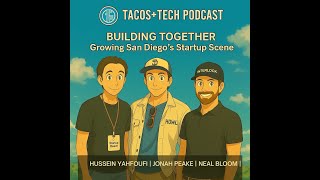
This is a YouTube video titled "Building Together: Growing San Diego's Startup Scene Podcast - March 27, 2025" containing a conversational podcast episode featuring multiple speakers including Neal Bloom, Junan, and Hussein. The discussion centers around the San Diego startup ecosystem, community events, networking mixers, local investment initiatives, and the importance of environment and culture in fostering startup growth. Neal Bloom shares insights on local tech community dynamics, CEO roundtables, and upcoming company lists, while the group explores ideas for strengthening connections and physical hubs for entrepreneurs in the region.
We were just talking about mingle, march, mingle. And I don't think you were there. Were you there?
I didn't make it.
Okay, no worries.
We can talk about it. Why? Let's just talk about now.
No, I. I'm into it because I. I love some. There's a lot of conversations about environment and what environment do it does to an event. And I have some really interesting thoughts on that. I think they're interesting.
I like the tease. It's like a tease. Go ahead, show now.
All right.
Startups get the party. Yeah.
Startups get the party. Startups get the party started. Startups get the party. Startups get the party started.
You want tech and tacos? Tacos, you know we got tacos and tech is all smash border green guacamole keeper countins counting beans contador quentan frijoles Founders trying to raise some queso la vida San Diego school of rappy rapping fire tortillas round jalapenos in these modern times Craft beer and coffee my coding yoga posse fold the body origami we be surfing Coronado eating tacos el gordo the tacos stand in puesto lucha libre and sombrero Got a shout out to costeos by the ocean watch the sunset La Jolla shores Entrepreneurs trying to get funded When San Diego Startup week is popping in the summer Oceanside the Tijuana estee be full of hustlers from couch surfing to penthouses right on the beach. Tech leaders who believe star are within reach we interview and founders who be shooting for the Moon SD TechOS with your host, Neil Bloom. Come on.
Startups get the party. Startups get the party started. Startups get the party. Startups get the party started. Startups get the party. Startups get the party started.
You want tech in tacos, tacos in tech, you know we got it.
Hey.
Startups get the party. Startups get the party started. Startups get the party. Startups get the party started. Startups get the party. Startups get the party started.
You want tech and tacos, Tacos in tech, you know we got it. Hey.
No, I think so. Okay, so look at last year, right? Did you guys go last year?
Yeah. Valley.
Yeah. So it's like. Okay, so Hussein, it was like bay. It was like Bayfront Next, kind of near the airport, but not like airporty, but like you're looking at downtown, super beautiful on the water, Mai Tai's Max 2. They're like there. Someone was telling me there's like not even juice in this thing. It's like liquor. So, you know, and then, you know, the whole thing, it's a different vibe. And so you kind of had more of a party. Like it was like a party was happening this year. You know, you're in a museum, you're in the gnat, you're having beer and wine, there's exhibits, there's like 10,000 year old fossils around. And so I think the, you know, the whole environment is different. So I just really was doing a lot of thinking about what does the environment actually do to change an event and how you kind of feel about the space. You know, there's the right amount of people for the space. But, you know, you have your events at a patio and so it's like kind of has a different feeling than if it's at a law firm. I don't know if you have that. Have had that feeling, Neil, where, you know, you're walking into like a really, really nice law firm and you're like, man, this collared shirt doesn't have enough buttons for this place. You know, and it really kind of changes how you think about it, how you think about being in at the event. So I thought that was interesting last night. Just kind of the.
And so what was the museum vibe like? What'd you feel like the museum. Did you feel like you need, needed some. I don't know.
Well, I know. So I was walking around being like, you know, the taco stand, the taco station was in an area that was normally like really interesting taxidermy museum. And so people are just, you know, tacos going crazy. I'm like, I don't know. In the back of my mind, I was like, well, don't spill the taco on the triceratops. Like, you know what I mean? Which I don't. I mean, it has to be part of the deal, right? I mean, they put away a lot of the stuff. But in your mind, in my mind at least, it was kind of like, let's be a little classier, I think, because you're in kind of a, you know, you're in Belvo park, you're in a fancier place. I mean, people weren't necessarily dressed up more, but the, the surroundings that you're in were kind of seem to dictate a little bit of a different kind of vibe.
I love it. I already hear our opening. Don't spill your dog on a triceratops.
It's funny. Yeah, you can, you can DM me that there's probably not really a triceratops there. But it's all right.
No, it's all good. Love it. Yeah, it's funny, I just came back from Orange county where I was invited for lunch. Kathy Poocha from SDSU brought me up to an OCVC CEO roundtable where it was like an ecosystem conversation about oc. I think it was very much like, how do we build a local capital network that supports local startups? Right. It's like, man, how often are we. When are we not having that conversation here? But it was held at this really nice old school but private club in Irvine or Newport. It's like on the border. And Kathy had to text me last night to say, hey, make sure there's a dress code. You know, like no sneakers, no jeans and jacket required. I'm like, whoa, I haven't been around that in a while. And like the VC dress up for me is like a polo instead of like my V neck, black V neck with my European sneakers or something, you know, so it's just funny. The environment matters, though. It really felt like there was some gravity to the room of that conversation that I have five times a day. Right. Whether it's on Zoom or in person. Yeah. Just interesting. I think you're right. I think environment matters.
How did you feel about. Because what ends up happening to me? I don't know if this happens to you. Maybe you dress up more than I do, but I remember just being like. I just feel uncomfortable because the suit, it's like, it's like buttoned more and the jacket fits different. And so I get in the environment and I just don't. I can't relax as easily because I don't practice being looking nice. You know, as you go to a wedding and you're just like, I don't.
When.
When do we undo the buttons?
You know, I don't know. I agree. I do not wear button downs at all now. I barely wear polos and. But I think if it's. Everyone's in that, it's just like kind of just you don't have to think about it. Like, I felt like, oh, well, everyone's dressed up great. We don't have to like even spend time thinking of playing that game in your head, which is, oh, that person's dressed up and I'm not. Are we on different social standings? I don't know. Kind of takes that part out of it. It's almost like uniforms.
Yeah.
So. But that was just today. I can't relate to other days, but I have been living under this feeling for the last Few years and very much since COVID Like, the more dressed down you are, the more means that you don't have to dress up. Right. Because you've achieved some social status Right. Now that we're all yoriwear. Um, you know, like the billionaire next door to you at the coffee shop is in sandals and jeans, right? I don't know. So.
No, it's true. But yeah, because it's a banker lawyer, right?
Yeah, I mean, that's true. But I do think when you do dress up, you kind of stand out a little bit more. Right. Like, why is this person dressed up a little bit more than the rest?
I don't know.
I mean, I don't dress up that often either, but I do feel like every now and then it's nice to dress up and you get a little bit more presence when you do. Because everybody's in viori for sure.
Yeah.
But when I dress up, I wear my green velvet.
It's a San Diego version of dress up.
Right.
Not a New York one.
Yeah, you're right. No, I do. I'm wearing leather sandals. They're my dress up sandals.
I'm in like a bit of dressing up wisely. I'm in a zuck moment where I am wearing the same thing every day. I've decided to go black V neck tee chinos and like every day. So I'm like, in this decision, like, I need to simplify my closet, simplify my morning, and just be comfortable in something nice enough for myself right now. So not wearing my uniform right now.
Well, here's a crazy story. Do you know the story of, like, why, like, Steve Jobs did that outfit?
No.
You know, he was always in the, like, the turtleneck stuff. So did you hear that story where he went to. I think he went and tours Sony. Like Akita Morita was when they went out to Japan and everyone was wearing that was like the outfit. He's like, that's the coolest thing ever. And it was done because of resource limitations and not necessarily because he's like, I want my staff wearing a uniform. And so he tried to bring it back to Apple and everyone's just like, yeah, not, not happening. And he just stuck with it. So everyone's like, oh, it's this way of, you know, not wasting brain power on all this other stuff. And that might be true. I think the origin was like, couldn't be more different.
That's funny. I didn't know that story about Steve.
Wait, you got to tell us some details on, like, how another close by proximity. Texting is talking about investing locally. I think that's really interesting.
Yeah. So they perceive that Orange County, I say they. It's different. It's interesting because San Diego, I think we feel like we are on a different SoCal island. Like we are just San Diego, whereas Orange county, they're in the center of Southern California and view it from LA to San Diego and they're. I don't think so. It's just an interesting. Because for us, north of Kent, Pendleton is Northern California, you know, and so you fly there. Yeah, like honestly I could fly to San Francisco quicker than I drive anywhere else. Right. In SoCal. But anyway there's. They have actually a lot more Fortune 500s in Orange County. They've had a lot more, I would say probably tech exits than San Diego. But it is the same lifestyle where people want to stay and live. Like everyone in the room before we're talking like 40, 50, 60 year old guys all talking about their surf spots. Right. How they surf, Newport, San Clemente, Huntington beach, you know, that's their morning thing and they've lived there and they wouldn't go anywhere else. So very much like lifestyle first, but I think more enterprise tech and enterprise life science, especially on the wins. San Diego, probably a lot more of like the R and D side of life science that have had the wins. But in Orange county maybe more like enterprise level kind of companies that then spin out startups that then go have wins as well too. So they've probably had a lot more recyclability of capital in that regard and a lot more money made in real estate also like a lot more. So what they did is they started this group of the CEO roundtable. 40 CEOs of the 40 largest innovation focused companies. That's all the Fortune 500 CEOs are there. Palmer Lucky is part of it, who is Anduril founder and previously Oculus, who was also. Both companies were close to mesa and the CEOs. Not only did they have like CEO mentorship and forum kind of level, but they also went to other cities that had these CEO roundtables to share notes and like share playbooks and like learn from each other. And then they started in Orange county, the CEO Roundtable Fund. And so they got these CEOs who collectively just said here are the areas we care about. We care about mentorship of each other, peer to peer mentorship of the up and coming CEOs and mentorship of the up and coming talent that our companies need. So they set out those as areas of focus for leadership within this group. And then they said and now we're ready to. We're seeing that future generations, we want to invest in them. And now there's these funds. I can't remember the name of the funnel. I have to go back and find it something Master fund, maybe CEO Master fund, OC Master Fund or Southern California Master fund. Anyway, it's a multitude of funds now. Now they've got a fund of funds. They've got a direct fund and yeah they've been making investments. They've got a secondaries fund where they're buying secondaries and Androl and other from early employees and you know like this is just started with 40 of the largest company CEOs.
We have that here. Do we not have that here?
Nothing close to it.
Not even close. I was going to say what's the closest thing? I didn't want to step on my own toes and be like you're like oh yeah, that's totally over here up in Encinitas. But like yeah, what's the closest thing?
I mean to be honest, I learned about this OCCTO roundtable, OOC CEO roundtable like in 2019 pre Covid. And to one extent I've felt Interlock could be that like we could convene that. And that is a little bit of the you know, piece of the Interlock summit is to get the largest CEOs there and as LPs in our fund to. Because I saw success there and same I've been kind of whispering behind the scenes to a few orgs in town that like they should do that the mayor should do this, someone should convene the CEOs because on every other board of every non profit that I'll just call them out EDC standard edc. The connects the chambers, they all claim They've got the CEOs but it has been so delegated down to just someone from the company go represent the company.
Yeah.
On these boards and it's not the voice of the CEO. And I'll blame the CEOs because the CEOs need to show up in our community, in every community. So if they feel like ah, this isn't worth my time, I'm delegated to someone else. I think that's a failure of leadership as well too. And so I think we are lacking that in San Diego. So yeah, I think we're you know, six years behind that. If it's taken them this long to get to this point in stage in.
That regard, you know, the CEOs are, you know, they've got the gravitas, they've got the following. They also have the money to start these funds and invest in these companies and they have the knowledge to mentor. Right. So your point on we need the CEOs to get out more is definitely key.
I actually think like they have the limit amount of time. They only have so much. And so it is the quickest path for them to like have an impact. Right. Like, they don't have time to sit on nonprofit boards. They don't have time to really mentor too many CEOs unless it's been filtered for them. And you know, their domain expertise is really valued and mattered as well too.
What was the order like? The order was did they start coming together and then. And then they formed the fund after. Because it feels like we could do. Sorry, yeah. Is that, is that the order that they did that?
I think so. Because it almost feels like we can invite them on a future pod and have a conversation together, to be honest.
Well, I mean, it feels like we could start to. I mean it feels like if. If the. Because the fun maybe is a little harder. Like you need to have, you know, maybe trust of the people in the group and maybe that's a later stage or maybe you start with that, you could invert it. But it feels like you need to get the groups, the. The I don't know, top 30, 40, 50 together and just say, hey, look like this is the quarterly thing that happens. I don't know when their frequency is, but like just start making it a trend because it does. It has to help the community. I mean, just to get these kind of mind share working together.
Totally 100%.
Well, Neil, when are your lists coming out?
Next week. S hard tech 50s coming out next week. Countless.
Let's go set it here.
It's hard, man. For what we're talking about, I'm building like top 50 top 20 lists of four, I guess three categories really of companies. And what's hard is I don't want to like rank companies. 1, 2, 3, 4, 5. I just want to find here are the 50 companies to watch in hard tech. And to be honest, some things have been really surprising. I thought there was actually more defense tech companies here. There's more robotics, autonomous that aren't defense tech, which is kind of interesting, like a brain corp or stuff like that. So what's been interesting is to like just take the companies that have had the most progress in hardware hard tech and then just find what are the groupings to group Them around, you know.
Yeah.
So anyway, that's will be my first list is the hard tech 50. That one will be 50. And I'm over, I'm at like 70 companies right now. So I'm going to pare it down to 50 and then what the consumer 20, maybe the software SaaS, AI 50 and then we'll go from there.
So I'm curious how you're going to organize it because it could alphabetical is like natural but maybe not as cool.
You know, like defense tech. And then here are five companies in defense tech to watch and then Autonomous robotics here, seven in Rotonix Robotics, Space tech. I think it's just gonna be like that. That's how I'm going to do it. Yep. Anyway, thanks for calling me out and doing the public accountability on that because I've been talking about it for months.
Well, can we, can we. Hussein, I want to hear what you've been hearing about the new, the new San Diego county founders mixer because it was awesome. But what are you hearing as like the guy who started, you know, it's.
Great because when I talked with Brian who hosted the event before him hosting it, you know, he was, it felt like he was a little bit hesitant on hey, we should do this in south county or Maine. San Diego, I guess not South County. And I think he wanted to see my reaction on like, no, dude, I'm the one doing the mixers, which is completely the opposite of what we want. So him and I chatted for a bit, he put on the event and we started inviting people. And then, you know, you put it on your newsletter too and everybody went in and it was great because we've had people who drove all the way to north county to go to the mixer that now did not have to. But I did notice there was quite a bit of people going from north county all the way down to the mixer. So I think even though we've got the locales now, and I hope Brian keeps doing this, people are still going to travel. And then Neil hooked me up with Judson who's going to do a 4s RB one. So we'll have the three. Goal is to make those recurring once a month trying to decide if we need a downtown one or if the one that is going to be in Central is enough. We'll see.
Well, so the feedback for me, north park, it was easy to get there. It almost might cover it. I don't know how people who are further south of the city would feel, but I think more just the, the Vibe of it is very good. You know, where it really, like, I don't know, I. I forget where it says I didn't get a single business card kind of thing. You know, it felt really. It had the right energy to it. I think it's cool that you could do that. I guess. Now it's.
He.
Oh, the update is he said, I think, fourth Monday. So he's going to keep it a Monday.
And.
And it's going to start recurring now, which is awesome. So it's. It's started moving.
That's cool. Yeah. But, you know, it touches on the point we were doing at the beginning of the call, which is the environment. Right. Which is why doing it at a brewery, doing it at a dive bar like Dalou or anything like that keeps the vibe casual. So it feels like a mixer, feels like a party. Just come hang out with your neighbors. We're all professional, we're all doing stuff. But just come chill and hang out and have a good time. And that's how you build the best relationships, you know, I mean, that's how you and I had this relationship. It was a lot of talking at the mixer, Right. In the beginning, at least.
Sure, yeah. Neil, what'd you think? I saw you there.
Yeah. I thought it was great, one to see some other north county people there, like Ryan Cooter and others. You know, I have now been to equal amounts north county, and this one, I've only been to one of Hussein's mixers, which is not a good stat. So what I liked was what was cool was to see, like, the Trust in Will mafia, if you will, came out. So a bunch of people who formerly worked at Trust and Will who are all doing different things now were there because Brian invited them. Right. Like, I love that. I love to see the density of, you know, the alumni networks come out. We all ended up actually hanging out pretty late. We went to and we had a nightcap, if you will, and dinner at another bar nearby. So, yeah, I thought one. I just love that Brian stepped up and was like, we're doing it. But in the moment, him and I stood pretty much right at the front there, and he was already in his mind. It was already like, all right, so this is happening. Recurring. Great. He's like, what. What are the things we do? Could we do some lunches, some dinners, private events? I'm like, oh, you're, You're. You've read some Red Pill now, you know, like, it was great.
That's awesome.
Yeah. So I love to see it and.
I was asking him after because he said he, he had a hundred name tags, I think a hundred name tags. And I was like, okay, how many people came? He's like, I didn't count, but I had 10 name tags left. So a simple mathematician can deduce. So yeah, I mean, people were pretty stoked on it. I, I think, I think there's one thing I'd like to test and maybe this, maybe I don't know if this is the right move, but what do you think would happen? Both of you guys are pros now. What would happen if you move the name tags towards the back of the room, kind of forcing people to get in to a space and like moving through? I, maybe that's the wrong move. But I think you can kind of do these little funny things that, you know, mess. Manipulate the environment in a positive way just a little and just start to do these little tests. Because it always was like people are spilling out towards the front and then the, the group's kind of like, hey, can you.
Whatever.
But the other thing that's really, really interesting is I have to imagine Hussein, maybe this bakes into your model a little bit. How stoked is Harland on a Monday to get like 90 people buying tons of beers? Like, let's be honest, like, I feel like there's got to be group like or like bars that are going to ask for this soon. Just say, hey, come on, you're part of our marketing budget. And I think that's really. Maybe I'm, maybe I'm. The cat's getting let out of the bag by accident. I don't know your plans, but it seems really interesting to me.
And, and the, at this spot specifically, you go to the bar and it's, it's visible where the check in stand is there. So some people are going to the bar first before checking in and they're already being told, oh, your drinks comped. And that was like a cool feeling. It's like, oh, it's already been paid for.
Thanks, Neil.
There's a few of us but happy to do it and more just like a, you know, investment in, in the event and in Brian and in Hussein. But just that feeling was cool. It's like, oh, awesome, I'm in. You know, you're right there. You're in the event. But I love there was the bottlenecker at the front. So I agree. Move it back though. My style is to stand up front more because I get stuck in a good way, like in conversation for three hours in any one spot. But being up front there, you just kind of see everyone who passes through, which is good though it also just makes any conversation about two minutes long before the next person cuts in. But that's just a bottleneck problem, I would say.
I can see some of these locations starting to host their own founder mixers or, you know, specialty group mixers and bringing people together, especially as they start learning about the Social Coyote and Startup beach and Neil and everybody who helps bring people together. Because why not, right? Bermuda Club is like one of these private clubs up north. They just signed on to start a beach and they're trying their first event, but it's like a comedy night. So I don't know if that's gonna stick with our group, but it might. But when we talked, you know, I told him, look, we've got the platform, we've got people who want to get together. My hope is eventually they'll start opening up for co working days and things like that where we don't have to pay and we can just go hang out at the club and have a founder day, investor day, whatever day and just get free space. Right. And in return they get to host these events and a bunch of people get to go learn what the Bermuda Club is.
Yeah, well, it's, it's a great idea because I was chatting with one of the co working space, like local chains about that, you know, and you know, I was like, it'd be fun to promote you guys in the newsletter and this and that and they're like, that's all nice and we love that. But if you don't get into the space, you just don't appreciate it as much. So kind of to your point, if you can just use that space, get a whole, you know, pack of people in there, then I think it's going to really help them. But it's also, it's cool, unique space. I mean, that's what was nice about Brian's event is like that whole space was kind of reserved. But if you can have a location that's just kind of yours that's a little hidden, it's even cooler. Yeah, I don't know, Neil, I was at lunch recently and someone was talking about kind of hybrid coffee co working spaces and the infrastructure that would go into that and what that would look like. And I was just wondering like, you know, you're kind of doing that. What do you think about just having the community sort of not politely take over a co working space or a few, or not quirking a coffee shop Or a few and be like, this is where the tech people hang out. And if you start to do that at maybe two or three places and that starts to get known, not only does it help the brand kind of be a certain way, it might be like, oh, that's where you go if you want to get a little more plugged in with the tech scene. And I don't think you go there to like, take calls or put your headphones in, but I think you go there to do some stuff and meet some people. And if you could pick a couple spots and just start that trend, I think one, a coffee shop would love it. I would imagine if people are busy there not sipping their coffee for eight hours, but I don't know, you could kind of create that because it feels like people are just sort of rotating around. You're kind of already doing this, so maybe you have some insights. But it would be interesting if the tech community sort of claim some territory, if you will.
I love it. Yeah. At the Founder Build Days, it's like half of what we talked about. Is that right? Perfect. Because Founder Build days, which are right now, will be third Thursday of every month. It's really a test for me to see if people want it weekly and then do people want it daily. Right. So it's exactly that. Now what I would do is go tap into the tech coffee guys who do do it weekly in a multitude of bees places, and they do spill out into some places and just be like, hey, over the last 12 years, like, what have you learned and noticed? You know, take that as a data point. Why hasn't it turned into a thing, a hub, a physical spot, but also like, how does that work? How big do you get? What are the problems there? And then go. Yes, and then go do it. We've even talked about maybe do we approach like a restaurant that's only open for dinner and be like, hey, we're going to extend one meal before. If you just let us hang and you have WI fi will, you know, pay it, buy accordingly, because it's already open. All you need is maybe just like one person on service or something like that.
Maybe you can get a Lofty or Bird Rock to actually help promote these things. Right. So in the Bay Area, everybody goes to Phil's. That's where you go brand your startup product Hunt. All these startups started at Phils. I don't know that we have that here.
Right.
But it'd be cool to say all these startups started at BirdRock or Lofty's. Or one of the local shops.
Yeah, I think that's really interesting. I, I'm, I'm. I love this idea. I mean even this is New York City. I think we work bought them. It was, it was almost like you're describing Neil. Did you hear about that company, that one that was like. They would do. They would basically bring in WI fi and coffee to a restaurant that doesn't open until dinner time. And they would just get some revenue for the. The morning, midday while people just co worked. I love the idea a lot. It is kind of private and it's like, you know, gives some extra benefit to the restaurant.
I would imagine there was in techstars anywhere maybe four years ago, three years ago. We should ask Ryan Cooter. There was a startup that this was their whole thing. They were gonna go activate spaces that were unactivated for co working. It goes a very Covid thing. I wonder what happened to them. Maybe we need to go and be like we'll be your San Diego county champion or something. But this is the natural progression that we should want, is that we should want to activate spaces because we want this. And look, we're seeing other build days pop up. So we've got tomorrow, Friday or whenever this goes out. Startup San Diego is now doing last Friday coworking day. And then Tobin got indie hackers where they pretty much do this too. Right. We're building alongside each other. He came and checked out two different founder builders of ours, which was awesome. So yeah, I think this is all really good signs, I will say. And even look at the tech coffee. So this is like four different gatherings of people. I would look around and be like, you know, what are the different audiences? Is there a quality bar needed yet? Or is there some categorizing that maybe one is bootstrappers focused? And then. Okay, let's head them towards Jonah's bootstrapping at a house kind of events pop up events which we'll talk about in a second. Is there ones who are more focused on kind of like scale big? I don't know yet. And maybe that's the bigger conversation we're having in the ecosystem is that at the earliest of stages they all look the same and maybe that's okay. I don't know. Yeah, I think about that a little bit of just like the curation of are the right people in the room or the best people that should be meeting each other in the room at that time.
Yeah, the curation part is a really good one. There is that pendulum. You Know, we really just overshoot on either side typically. But I think we're, we're going back towards remote is not as awesome. You know, it's like, you know, I, I don't know, I like leaving the house a bit. Like I don't have to leave every day, day, you know, nine to five. But it's kind of nice, get out there. Yeah. That's why I go and visit you guys up north and do all the stuff. It's like. So I think, I think that's what's bringing people to build days. I think they're, you know, all these AI tools are allowing us to build a heck of a lot more with way less people. So there's a lot of solopreneurs rolling around and then people just are moving to San Diego because it's awesome, you know, and so you find yourself here remote from some HQ somewhere. So I don't know, I think all this is, is probably just going to build momentum from here. It feels like it. At least.
Let's just double click on that because you've done some events specifically on. Are you remote? Are you solo? What is the pulse you get? Like, is it a 50, 50 split? Like, who are the people who are being.
It's weird. It is. It's about 50, 50 from who's coming, which is really surprising. Kind of interesting. As I go deeper though, that's where I'm kind of trying to understand which direction to go because it's two people who have the same sort of core problem. It's a little bit of a loneliness thing. Right. You're like working alone in your terminal at your house, but then a layer down. That couldn't be more different. You know, it's like you're doing every job at your company because you're a solopreneur or. Yeah, I'm annoyed because my, you know, my boss is in Miami and he's annoying or whatever. You know, it's like a different sort of thing. So I'm trying to decide if they roll together or not. And it is nice to have some sort of mingling. Although one thing that was really interesting is, you know, when, when you had people introduce each other at the very first one, we said, hey, you know, remote or solo, you know, obviously your name. And then what's one thing you're kind of excited about? And mostly everybody said something related to an outdoor activity like rock climbing, surfing, gardening. It was really interesting. And almost no one said something work related. And so then people started to form these pods on let's just. There's like the rock climbing group, the jiu jitsu group, the gardening group, the surfing group, which was really wild. And so it was almost like if you stand back and look at it, you're like this just really feels like people just want to get together which is in line kind of with what you're noticing. Who's saying it was like people just want to get together and meet and it isn't necessarily about at that point, you know, getting new information or maybe it is kind of one on one to one level. But it. I thought that was kind of a surprising thing to find.
Yeah, I think to have a strong cohesive ecosystem you kind of need all of it, right? So you need the activities because that's where we go and we all become friends. You need the ones where as a founder you go meet other founders because then you can share stories, strategies, investors, etc. And then you need the, if you're just remote and you want to be with more remote people like here, go work next to other people so you can have the water cooler conversation. But yeah, I think for a strong ecosystem we kind of need all of it. Right. And then you have like the, the industry specific ones. So we've got E commerce things going on, we've got sales things going on. We've got, you know, people in automotive and defense and whatever, rocket ships like starting to create their own little groups and. But I think that's what makes it such a great ecosystem is once all of these things are happening and you've got the choice, right? Like I'm going to go to this one, this one, this one, I'm going to skip this one, go to that one. But then you start seeing the same people in all these different ones and that's how the relationships are made and that's how you start to feel like there's real density here. Right. Because we're all running into each other all the time. Like my kids think I'm famous now because I run into people that I know from the mixer and I'm like, well they're all. We're all in north county and we're at Target. Like chances are we're going to run into somebody that goes to the mixer.
Neil.
He is famous.
He is.
Neil is famous.
What's funny is when I go to like kid, same kid or fam, like family stuff and we find a connection right into the tech world. Totally. It's or, or like you know, a non profit thing for my spouse and it's like, oh, of course we found a connection there. Right? You know? Yeah, I love that.
I love it.
Well, that's what makes the human part worth it, is to find how small the world is when it feels like massive and. And to connect and relate, you know, that's what it's all about. So the quick. Yeah, Anyway, all for that, for sure. But I think.
But go ahead. Oh, go ahead. Now, all I was going to say, I was going to add is like, I think that's the whole point is the more you get out, the smaller you realize it all is and it feels less sort of big and scary. I don't know, maybe that's a little dramatic, but I think that's totally true.
Yeah, I think so too. I think just like the physical hub aspect, though, one will. I mean, you'll learn that much quicker. You'll learn the power of using that network quicker. Because right now you go out maybe to the mixer once a month or. And you go to an event most, I would say, I don't know if the average person is going to probably one event a week, maybe if that. Maybe one every other week, you know, and like, you kind of have to, like, turn on the networking engine just for that event as opposed to like always being on. Being like, anyone I meet is opportunistic too, and therefore need to make sure we find, you know, I don't know, everywhere. And I feel like if we were doing everything every day, like we had this hub, like maybe one of these buildings behind me was just like the hub of it all, you know, and you had the bootstrapper floor and the hard tech floor and all that. That's the dream where you're all right to each other all day. And we all just plugged in and we're like, okay, where can I get the help I need this second? Oh, second floor. Go right there to it, you know?
Yeah.
And it kind of makes me feel a little bit like when I don't know if any of you have worked at, like a big company before where, you know, all the employees were your peers and your colleagues. And now I feel like the ecosystem is that everyone is a peer and a colleague, yet we all look for different companies, but yet we've got to do some water cooler work right out to, like, know who should I meet and the randomness and how to know what to talk about so that we do connect dots. But that's what it feels like the startup community is for us right now. It's just like we're all peers Employees of each other somehow. Because we're all working towards the same mission, which may not be the company's mission, but it's the ecosystem's mission, you know?
Yeah.
You guys feel that sometimes?
Yeah, I mean it feels like we need to your point, like a. Almost like a center of excellence, right? Where you go and then you've got the mixers, you've got the parties, you've got all of that. But you also have programs, you have accelerators, you've got mentors that maybe come in, right. Bring in the CEOs from all the top companies in San Diego that can talk to the. The new founders, people that can connect you and just put it all in one. I think that's, that's the dream. We'll get there.
Yeah. We just gotta keep manifesting it for sure by talking about it and then knocking it down one at one. Because look at our style. You, the three of us here, we're super grassroots guys, right. Like we're just gonna do it. And the only way to know how to do it is bottoms up. There is a tops down approach. It just. And it has to work. You kind of have to work on both, I guess. It's just tops down is kind of like enterprise model, right. You got to go big, you got to create some big offering and it's just going to take longer to sell. Meanwhile, you work on the bottoms up to try to find your way there. So. Yep. Yeah, I agree with that. Where do you want to take this from here, guys? Should we go deeper into March, mingle or. We think we've checked that.
Jonah was the only one there.
Yeah. I want to talk about why I wasn't there and then let's go into it. So yeah, planning to. I got an invite to at and I was told that the city council of Escondido was to at their. I guess council, what do they call it, board meeting. I guess once a month they were presenting their findings of the feasibility study for the Ag X hub. So some backstory here. So for about two and a half years I've been helping the city of Escondido understand what is the agriculture science and technology community within the greater county and therefore host host events Ag X Ag Tech Hub, Ag Tech events in Escondido to see who comes out and see who's of interest. And we've. So we've had, you know, multi generational farmers come Avocado and other great venters. We've had the water department of Escondido who have Built a recycled water plant just for the agriculture community so they could have a local source, consistent source of water and not have to rely on Colorado river and the Sacramento Delta for water. So that's already online and we've put on two hackathons to date, in person, multi day hackathons and then these quarterly thought leadership events where we've had speakers from like Lou at Blue Nalu or the San Diego Food alliance and others. Just talk about what is, you know, what, what are people working on. And in the meantime, the city of Escondido identified a three acre piece of property with 110,000 square foot building on it that's completely empty. It's been empty for 10 years. I guess it was a mattress factory like 10 years ago. And they took it over and they own it. It's in there like excess inventory. Honestly, it's a problem because it's like we're homeless, want to encamp, right? So they want to activate it. And the big question is from an economic development standpoint, like what is best for the community? What does. And so one, they did a deep dive into their own agriculture history and agriculture output. And it's like really high. Escondido was formed as a city in the 1880s because of grape growing and avocado growing. And it's got a huge economic impact, except the farmers have this competition against Mexican avocado farmers and against the cost of water and against urbanization. And so they're like, the farmers are asking, should we keep farming? Should we convert our land to something else? Should we just sell? And so it's been really cool to have these conversations over the last two and a half years. The University of California Agriculture and Natural Resources Group came in, saw our events that we were putting on and proposed that they help put on a feasibility study to say what does the region need? What are the gaps for entrepreneurship, science, consumer package, good entrepreneurs even. And so that was the presentation to the city council last night, was their findings which they. And so I was there to just voice my opinion for supporting it after reading the findings and it was super well received. The what they found is that agricultural community really is lacking resources as a ecosystem to know how to maintain their farms in a variety of ways, financially, resource wise, all of these, they lack kind of voice of customer understanding. So like they grow avocados but they don't see the end user using it, right. Unless they show up at a farmer's market, which many are not doing. And so that's, that's one area where they saw interest. The other is the consumer packaged goods. So these are people who are building, you know, companies like Beef Jerky company or Kombucha or others. They lack places to cook, co cook their spot pack store, like do the whole stack from making their product to selling it, which is like the cooking and packing and logistical piece too as well too. And then science. So we've got a lot of academic researchers who have labs maybe at Salk or Scripps or ucsd, but don't actually have a place to do like cutting edge science just for like entrepreneurial science. Like they have to do science in their labs that are grant funded but maybe like they want to tinker and play with an idea on their own. They don't have that. So anyway, all those came to fruition in this presentation. This great story which is the Ag X hub. That is, it's going to come to fruition now. Like the city council pretty much all voiced opinion said not only yes, but can you expedite this and come back as fast as possible with an operating plan of how you're going to make this work financially because it cannot be city funded. It's got to be maybe private, public first with you got to be able to wean off of public eventually. So it was awesome. It was super cool. It was like really, you know, three years in the making with Jennifer Schoenick of the city of Escondido who approached me at Startup week, I think 20, 21 or 2 and said hey, I have this like crazy idea. I was like, let's try it out. And it's really fulfilling to see that come to fruition. So just to be around that, to feel that we, hey, we, you know, we're making progress. We might have a physical hub for the Ag X community, agriculture technology. So that's where I was instead of March Mingle. And so I missed March mingle. I missed all of you. But pushing forward, another effort here in town, that's for sure.
That's, I love that. So the space is going to be used for any number of those things that you were describing. It's like half, half greenhouse, half tech. I mean that's amazing.
A full time farmers market operating at any time where people have a storefront. Right. There'll be training rooms from the University of California to be training new talent on like lab tech or ag tech. There'll be coworking, there'll be an incubator built into it with dedicated space. There'll be event space.
That's what we're talking about for tech, right? Center of excellence.
Right.
Neil, you got any warehouses in the middle of the city? What are we talking about?
Miramar, Miramasa. All places that are run by the blob of city of San Diego. So it's good to see that it's working in a small city. And now my thinking is great. We have a little bit of a playbook. Let's go try it in other places as well too.
That's cool.
Yeah.
Yep, I like it. Well, here's what you missed. No, our marshmakel was awesome. Dude, I, I, I wish you guys made it down, but I think you, you guys are both doing important stuff. It's, we started talking about the way that it feels, you know, being in a new place, but what they did was they ended up taking over. I think it was ultimately the third floor, but you didn't, you couldn't go higher or lower. Maybe it was the second. So you walk in and you're kind of in that entryway. Do you ever see that, that big timepiece, the thing that swings, I think, with the rotation of the earth? So that was kind of cruising around, but they set up a bunch of action figures. And so every like time it just starts knocking over like he man and like Legos and all sorts of, I might be getting characters right. That part was dope. So I was like, I need to, I just watch this for a little bit. But then you go, you right into the, that giant shark. And that's where you kind of have startup San Diego and, you know, UXP keys kind of on the right. And then so the whole thing is actually just basically wrapped around the entire floor. And so you could kind of go towards the back, hit the bar, go around and then, you know, get into the tacos. And so people are just kind of doing, doing laps around the whole thing with, you know, booths kind of set up here and there. But I pretty, it felt, it felt pretty packed. I think 3, 3, 400 people registered. And it was a really good slice of the, the community. But it was also like, I mean, we, I mean, we've been to a lot of things, but I think two thirds of the people I, I felt new, you know, new to the ecosystem, new to this community. You haven't kind of seen it other stuff, and, and that's just really exciting because, you know, you do end up at some, some things and it's just kind of like a friend fest, which is really, really fun. But then you get to, you know, you get to events like this. And, And I mean, Neil, I don't. You probably know the history a little bit better. Better than I do, but I think this. Is this going on 12 years.
10, 20.
20 years.
It's either 18 or 20.
Oh my God.
For 15 of it. And he what? Didn't start it.
Oh, my gosh. Okay, so, yeah, so this has like been happening for a while. And so they've been just kind of rotating. Rotating locations and it seems to be, you know, it's getting some size to it. So anyways, I, I like that environment, to be completely honest. And just. And just the way that it kind of forced you to. To find pods. You know, when you have like a big room, it's a little bit different. It doesn't force people into these little areas. That's another thing that I really liked about this. And then, you know, you need a break. You go look at the. That exhibit back in the corner that's talking about the. All the ash falling on the Earth and changing the climate zone. I was like, I found it myself there. I was trying to get around the other side. I was like, I'm by myself in this museum.
This is.
Give myself 10 minutes over here. Just do a little bit of a breather. It was, it was cool. I. I like that. I like that kind of thing. And just like you said, I've been thinking about environment a lot. So I think that's why it's really cool to do experiments like this and try different things and, you know, just take the notes when you. When you know of what's working. So I'd be curious what they do next.
Yeah, I love that they move around to like, you unique spots. I've never actually really talked to them about, like, what goes into. What are. How do they stack rank the. The things, the uniqueness. But it's always been unique. I think this is the second or third time at a museum in Bilbo Park. I think they did Museum of Man before and maybe one other spot they've done a paintball park. They've done like. Yeah, it's been. I love that they're so into it. I've always pushed them to be like, do a second one sometime in the year. And last year they tested a little like March Mingle Mixer in November. I know it's not March, but it's. It just feels like maybe because it's once a year, people really show up, right? They really come out because, like, oh, it's only once. And so anyway, yeah, I agree. It's a good thing that happens. So good job, Junan. And full on.
Yeah, that was. There was. It was. It was. Well done.
Take us through the Bootstrappers event. It's coming up. Cool.
Yeah. So kind of like we've actually had a lot of these offline conversations, but we were talking about the shifting landscape as far as building companies. We've been talking about some of the shifting landscape as far as funding companies. I've had some good conversations with Al, who's kind of thinking about with his new venture, which I don't know if it's announced yet, so I don't want to say too much, but he's talking about just that companies aren't necessarily going to get funded in the same way. But as we had said, and Hussein, you've written about this a bunch in the past, is you could build a lot more with a lot less. And so I kind of wanted to make sure that we at least covered the fact that bootstrapping is an interesting method that people can build businesses with. And then got a little closer with Ross with clinical notes. AI. I don't know if you guys know him well. I think you've done some events with him, Neil. And so he invited me to his house up in Escondido, and he's like, hey, see this whole first floor, this used to be my living room, a bedroom and something else. He's like, it's all desks now. And he's like talking about the economics of if you're bootstrapping your business to a certain size, you. You know, I think I forget his numbers. He was like 10 people. Maybe somewhere in that ballpark. He's like, I could go buy, like, get an office somewhere. And it ends up being like, you know, tens of thousands of dollars, maybe $10,000 a month. Or I have my house and, you know, I could just kind of use this and be as efficient as possible. And so we just said, okay, well, let's just start gathering some people. Let's see if there's interest. I know a lot of people. There's a lot of different ways to build businesses. And we're starting to uncover that, you know, a lot of people do build this way. Oftentimes it's because they've, you know, maybe exited something in the past. People are kind of having a shifting mentality towards raising money, and it's a very different way to think about growth. If you can grow sustainably, maybe, you know, if certain businesses will benefit a heck of a lot more. But we're also starting to see is that there's a lot of people that are bootstrapping side hustles. That's really interesting too. So it's like, yeah, I got this job over here, but did you know I got this E. Commerce thing. I'm bootstrapping to, you know, 3 million over the last year, last couple years. And you're like, wait, what? Like, I had no idea. And so I think just kind of having, getting people together who can kind of talk about at least some of the, some of the strategies they've used to sort of be lean, grow their businesses and maybe focus on the business as opposed to kind of taking some of the effort because it's such a different skill set to go raise money as it is to kind of build, build on your revenue. So we're just going to do something small. We're going to get some people together and kind of just hang in his house and he does have a pool. So if you guys want to come, come jump in. That's also, that's also possible too. But the other thing too that starts to get interesting and I know you guys have been organizing some of these too is, you know, we do get a lot of value out of 300 people all coming together and seeing the whole ecosystem. But just like with the builders days, it's really cool when you can get people that have a bit of a tighter, you know, amount of specialty to kind of say, hey, look, like I'm, I solve problems this way or I do, I find, you know, the solution over here to be more impactful. And I think that can be really, really helpful when you get, and you bring the boundaries in a lot more and say, look, we're all bootstrapping, therefore we have a similar type of set of problems. And so I think we need, I really do think we need a lot more of the very specific stuff. Just like you were saying earlier, Hussein, where an ecosystem needs huge events, it needs mixers, it needs casual stuff, it needs build days and it needs, you know, a special type, special types of events where people that are very close to together can kind of share their solutions. So that's kind of the genesis of this.
I'm like, so for curated events, like I put two to three on a week, really, right. That are not publicized, that only Hussein sees because they're private. On Startup beach, you know, I'm sending out invites right after this to music tech founders, behind the scenes tour of the San Diego Symphony, right? Where it's just like 15 of that last two weeks ago, I did the Retail Tech roundtable of just 10 companies and yesterday did the Jewish Tech Breakfast. So I am. I am like, so for curated to it. To its own regard. Like, I like, I do probably more work to get 10 people in a room than to get 150 people in a room, you know? Totally. And I agree. I think we do both. I agree. Yeah.
That's the takeaway I'm finding from this is you kind of can't just be blasting it out there in the same way because it just doesn't work in the same way. So it's actually harder to get. Just like you said. Yeah, it's harder to get 20 people than it is 100 in some senses, which is crazy.
I wouldn't guess that on your platform. Pete, are there a lot of private events?
There's definitely tons of private events popping up. You know what's exciting is starting to see the community come together and people starting to host more events and come back. So Cooley is now hosting an event on Startup Beach. Hoban is kicking back up Indie Hackers. We've got Bill Routeson who is doing like a sales type event. So talking about the curated groups. So this is just for salespeople, by salespeople. So if you're not into sales, don't.
Go to that one.
But if you're into sales, you should go. There's a DevOps one, there's life Sciences. I'm starting to see quite a bit of events coming up too. Run Quan, who I think you introduced me to, actually. What else is out there? Launchpad San Diego is doing an event coming up soon. They're doing like a pitch night and Pedro from Wallaby is actually one of the people pitching his startups. So it's starting to come together. I'm seeing more and more of that.
That's cool. You have such an interesting lens because.
You don't see the private.
Yeah, I want to start doing some. And Neil, you mentioned that in email the other day. I want to try to do like a. Almost like an infographic once a quarter of what's going on in event land. And, you know, not get into the details because a lot of them are private, but at least just say this is how much is going on in San Diego right now when it comes to events and things like that. Like, it's. It's cool. It's called the cool.
Do they all have logos and stuff? Like, could you actually have this? Really nice. That's so cool.
Well, so all the organizers are public Right. There's no private organizer. It's just their events are private. So you'll click on an organizer and it says there's no events right now, but they might have a few in the, in the back end are all private.
I want to pick up on a little theme here. One, yes, please do the quarter. Visual visualization of the quarter. I think between the two of you should do that, like somehow, you know, aggregate some data. The other piece that I've been one, I was just giving it as advice to other event organizers was to densify, meaning put two of your events together, right. So you're running your event like Aquilius does, this monthly symposium. And so I told them like do a, do a coffee founder coffee meetup just before it, same same day and you'll get spillover of audiences purely because two different events are getting promoted. You know, two different people and maybe people stay for one or the other. And so I kept telling people do that and now we're going to do that. So April 16, the organizers are of the brand of bringing back 1 million cups is coming back to Anseer. I don't know if they used your platform or not yet, Hussein, but we'll get them over there. All right. And so we said, all right, whatever that is happening, we're going to do a few other events right after. And so we're doing startup 101 half an hour after that. And that one's a bit of like a. We're curating that to make sure that it's people who are pre fundraised to make. And we're going to do kind of like Angel 101 investment 101 and even dissect like what kind of company are you building? All right, here are some paths you should think about, right, so you might find, all right, there's some bootstrappers in here, there, stuff like that. So and then right after that we're going to do mentor hours. So we're going to curate a group of mentors, curate a group of early founders and 20 minute kind of mentor madness around that. So these are three different events that are semi not related. But we know if we just stick it in the same day, same location, stuff will happen. And so we're doing this answer. And then that night, actually I just saw an email go through where they want to do startup poker at the same venue as well too. So it's almost like, it's like a little bit of a startup day, Startup week, Startup day, which is how startup Based started by just. Hey, can you all just coincide in one day? So anyway, we're testing that out.
I mean, that's cool, because if you think about the big events, south by Southwest or even like the Salesforce one, Dreamforce and things like that, like, you've got the main event, but then everybody starts hosting their own events around it, right? So maybe the call to action here is for everybody to just, when there's a big event, just host events around it. And, you know, Jonah and I were talking about this the other day. The hard part is done. Now, like, between the three of us, we have pretty good distribution power. And so if you host an event and you put it on Startup beach, we're going to blast it out and everybody's going to know about it. So don't worry about people showing up. Just do the. The logistics of putting the event together.
Well, don't. Don't just. It just doesn't just happen. You still got to do the. The work of getting your customer there and knowing is my customer out there.
One of the stool legs is one of the stool. The stool doesn't need three legs or amplify it.
But don't just, like, think, like, I'm gonna do an event and boom, don't have to worry about audience. Like, you gotta make sure you got an audience.
But yes, totally.
I mean, you still have to do a good job, right? Like, do a good description, a good image, all of that. Share it with your network. But we will amplify. I like the amplify word. That's better.
That's awesome. All right, dudes, I gotta go get the little one. I gotta jump.
Okay, this is great. Thanks, guys. And I will. I'm sure we'll see you within the week. Thanks for a good chat.
Startups get the party. Startups, get the party started.
You want tacky tacos in Tech is on smash for the green guacamole keeper captains counting beans contador Quentan frijoles found us trying to raise some queso la vida San Diego school of rappy rapping paella tortillas round jalapenos in these modern times of craft beer and coffee my coating yoga posse fold the body origami we be surfing coronado eating tacos el gordo the tacos stand in puesto lucha libre and sombrero got a shout out to costaniels by the ocean watch the sunset la Jolla shores entrepreneurs trying to get funded when San Diego startup week is popping in the summer Oceanside the tijuana Estee be full of hustlers from couch surfing to penthouses right on the beach? Tech leaders who believe stars are worth within reach? We interview and founders who be shooting for the moon? SD TechOS with your host, Neil Bloom. Come on.
Startups get the party? Startups get the party started? Startups get the party? Startups get the party started? Startups get the party? Startups get the party started?
You want tech in tacos? Tacos in tech? You know we got it, hey?
Startups get the party? Startups get the party started? Startups get the party? Startups get the party started? Startups get the party? Startups get the party started?
You want tech and tacos? Tacos in tech? You know we got it, hey?








