Dev & Data Night x CTO Talks March 2024 Full Panel Discussion
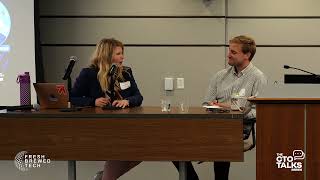
CTOs from Stable, Illumina, and Insulet discuss AI adoption in their companies, hiring challenges, and what the role demands. Jamie Shield, Bindya Kulkarni, and Mark Field share how they handle regulatory validation, prevent burnout, and build tech teams in a competitive market.
All right. Hey, everyone.
Good to see y'.
All.
Thank you for being here.
My name is Neil Bloom with Frailproof.
Tech and Interlock Capital, and we're really.
Excited for our first partnership here together.
Here in San Diego between Dev and.
Natalia and CTO talks.
So my collaborator here, Sarah.
It's true.
We do one in Orange county as well.
The YC is not.
All right. All right, well, we're continuing.
They can't hear you.
You can't hear us.
How about that Closer?
It sounds like it's a bad mic.
Sounds like you're underwater, I think.
Really?
Yeah, go with it.
We don't have an audio engineer.
Do we have an audio engineer in the house? Doctor.
Talk loud.
Just talk loud.
All right, we'll talk.
It'll work for me, I'll tell you that.
We should do a test on all the mics, as.
Yeah, I would say so.
But in any case, let me introduce Baron from cto.
Thank you.
Let's try this.
Can you hear me without the mic?
I'm part of the CTO talk series, which is a community powered by Arcus Nexus. Arcus is a nearshore software development company, and we've been doing the community thing.
For more than five years, or I would say more.
Before Pandemic, Marco used to organize only events in Orange county, and now we're organizing Molly events in San Diego and OC and also supporting other communities like Fresh Brew Tech Interlock Capital and Startup San Diego. Other communities.
So thank you all for coming to.
The third event of the year in San Diego. I hope you like this panel. I know you're gonna love it. So hopefully to see you in the next event. Excellent.
Awesome. Thank you.
Mike's gonna. Good. All right, well, let me introduce Cheryl.
Goodman, our moderator, which we're thrilled to have.
And really, the idea between Devin Day to Night and CTO Talks is really.
Focusing on San Diego's technical leadership. We really believe that if our leaders continue to lead and lead good teams.
Good companies, it lifts all of us up.
And so that's really what part of our conversation will be about tonight.
We hope that if you have questions, we will.
Well, we'll shout, I guess, or I'll.
Walk around with maybe one good mic.
But we'll test some of the microphones.
We'll see if we have. Maybe we might pass one microphone back and forth.
We'll try.
Sorry about the audio issues, but we'll.
Save room for questions at the end.
There's more food and drink and more.
Networking at the end as well.
Bathrooms are out and around the corner.
And again, thank you.
And introducing you to Cheryl Goodman from Fine Good Tech.
Hello. I've always been accused of having a big mouth, so I don't find this a challenge at all.
Let's just try the other two mics just in case. Maybe we have one good one. Try yours.
Does this work? Is that. Is it better to just talk or to use this?
Better now. Good thing there's no technologists here. That would be embarrassing. All right, all right, well, let's get this show started. As Neil said, it's about it. We'll do Q and A at the end. It's about an hour long conversation, 45 minutes of questions. We have three amazing panelists on the pre call. I just got to say I was really excited to be able to participate in this. As Neil said, I run a company called findgood Tech. That company basically is a consultancy for AI workflows and workshops. Book coming out next month, how to win friends and influence robots. It is about AI. And finally, I am the vice chair of Startup San Diego. So I'm always looking at how do we really rise to meet the opportunities of innovation. And every company of innovation has to have a cto, right? Sometimes they have to have a CTO and a CIO and a few other O's in there too. So let's get to the O's that we have here on our panel. So number one, Jamie Shield, he is the CTO of Stable. And Jamie, just tell us a little bit about your SaaS platform. It's in the auto industry. Unpack what that is, who your customers are and how large your company is.
Yeah, absolutely. So we're an AI based application and we help people. Hello. We help people model and optimize networks of electric vehicle charges. So if you are a major bank, you're a utility, insurance company, automotive oem. Anyone looking to deploy vast amounts of electric vehicle infrastructure in the United States, you can do that through our platform. So we have about $5 billion worth of infrastructure being built using our platform. We are a growth stage company, so raised our Series A early last year in a really fortunate position. So I can speak a little bit to the kind of startup journey, scaling from zero, raising venture capital, particularly in a couple really challenging markets with COVID and Silicon Valley bank and all kinds of hiccups along the way.
Yeah, all kinds of adventures. And so he's a Kiwi from New Zealand and was also herding cattle at one point. So how does that relate to your day job now? How much cattle Are you herding. That's a joke guys.
Just by the way.
There'S probably something profound and pithy to say out of this. No, I don't think it's really any.
Let me ask.
Right.
Excellent. Okay, so jumping over to our other panelists, boy she has got. When I asked for some fun facts, I got three slides of epic amazing and I got a feeling that there's more, there's more slides but she is just a true Titanic. Oh, sorry. Binda, Dani, Kula. I said it perfectly earlier so I'm. I'm a little frustrated with myself. Thank you very much. So Benja is with Illumina, mom of twins. But while you, you had your six month old twins, you moved to Singapore, you built an entire platform for Illumina and I believe you also led the construction of a redo of a house and had like a best winning restaurant at the same time. That's no joke guys. These were in the slides. So tell us Binga, but tell us. You know. I know.
Okay, so how do you keep yourself engaged while you are having twin girls and a full time job? You decide to move to Singapore. Ilyam and I are setting up a manufacturing and RD site for the very first time in Singapore and they were choosing the right people that they can send there to set up the plant. And I was chosen from the R and D to represent the RD team and go set up our engineering plant there. It was exciting. You learn a lot. But when you're carrying twins with you, you also become pretty good at time management. You are very efficient in what you do. You're always thinking about the roi. What is the best thing you can do for your company? What is the best thing you can do for your family. And with that you figure out time management is a tool and how you use it is really what it makes of you. So with that, building a house in the middle of pandemic with no general contractor, having my husband as my partner, while we knew this and the home was done in a year and a half and it's a beautiful home, we love it. And it's all done within budget and on time. The way I look at it is can you solve a problem? Every problem is an engineering problem. Just throw the problem solving techniques at it and you can solve it.
Yeah. And also I gotta unpack. The movie distribution company as well launched an Indian movie distribution business and enable Indian movies that is very diverse across. Talk a little bit about that.
So it's back to the Indian community, right? So when we were In India, growing up in like 1980s, that's when we were born. Movie was a big part of our growing up. Right. So it's, it's where the family got together. Our movie nights, or going out for a movie followed by a dinner was a big event. It's not like here where every day you go out and eat. Right. So movie being such an integral part of our culture and how we connect with our family and friends, it was very critical to bring that to San Diego. And the time we did it, there were not that many Indian movies that were going around here. And so establishing that network, getting the movies, being able to display it here, and getting the Telugu community, you know, the South Indian community to come and enjoy the movie was the biggest accomplishment. Did we make enough money? Probably not. It's a good lesson learned. But it was good while it lasted and that's where we moved on to the next big things.
Yeah, and you kept busy, no doubt about that. So thank you for the insight there. On to our final panelist, Mark Field. So Mark is the senior Vice president and CTO of Insulate Corporation. And Mark, just unpack a little bit about the mission of the company, the market cap, how many employees and oh, and his fun fact, he's got a four month old. Right. So thank you. Yeah.
So Insulet, $2 million medical device company, now the most prescribed insulin pump in the United States. We're a company whose mission is to help improve the lives of people who are impacted by diabetes. I joined the company about four years ago. We were number three in the market at that point. But we had a vision to create essentially, FDA's not listening.
Right.
Artificial backgrounds. And you know, we did that, we delivered that through the pandemic. And we are 18 months into this journey of commercialized product that is literally changing hundreds of thousands of people's lives. So it's awesome to know that our technology improves people's lives to this extent.
Yeah. And I think that's probably what I imagine as a CTO is working on something that transformative. You probably sleep well at night despite the four month old.
Yeah, no, I think it lost.
I don't know. I'm just guessing. I'm just guessing on that last one. I got to call out though, that you, you are our second Kiwi. We did not design this. It's not underwritten by New Zealand or anything. But not that we won't ask later though, but you also spent 17 years at Oracle and some time at Thermo Fisher. So most a career In San Diego?
No, actually I graduated from college in New Zealand at the University of Auckland and I got hired by Oracle at the time, a company I hadn't heard of, strangely, and was there for 17 years and saw them go from 3 billion to 40 billion in that time. It was quite a ride.
Yeah, so try and true. So incredible experience. So, as Neil said, there's, there's a wide range of things that we're going to talk about tonight. I think Heavy on My Mind, which wasn't on your question list, is obviously, you know, the Woodstock of AI is happening right now in San Jose with Nvidia and keynote yesterday. Every icon and every logo of partners was all companies that we know and would expect in the technology spectrum. And then there was a slide of a lot that you wouldn't expect. And so AI is eating the world, much like software ate the world, you know, 10 years ago, 15 years ago. So can I ask each of you panelists, relevant today, what is on your mind today? It related to AI and how you're moving forward through that, through your process. So let's start with you, Mike, since you got the mark together, Mike, I.
Actually think all the AI hype is underhyped. Yeah. This is so transformative.
Yeah, I agree.
And in healthcare, this is gonna be completely changing people's lives all over the world. And I'm super excited about it. I'm excited to see how diagnostics changes. I'm excited to see how therapeutics changes. I think people are gonna live much bigger lives. They've learned the impact on research, I think. Illumina, I'd love to hear what you guys are doing on that.
Yeah, there we go. Yeah, I think this is great. And then just, you know what, a good. To me, a good panel isn't me asking the right question. A good panel is asking a question that gets Binja to lean into her mic and then Jamie to wrestle this away from me. Because you want to hear from them and I want you guys to engage. So please, Bindya, jump in.
So AI is a new buzzword, but we have been using AI in different forms for many years at this point, Right. Machine learning, deep learning, it's been there in everything we do. So is AI new? I don't think so. Is it new in terms of ChatGPT that we are using today? Absolutely, yes. But back to the part, AI is so critical in terms of how it gets utilized to accelerate the research, to accelerate the development cycle, to enable us to get the right technology to our customers. But with it, it Also comes up with the challenges on how the regulations should be applied to it. Where does the privacy boundary stop? Where does the cyber security come into place? So there's things that need to be established and an ecosystem that needs to come around it. But as a technology it's absolutely critical for us to evolve and for us to accelerate our learning.
Yeah, great.
And then J. Yeah, Bindi is still my answer. So. But I'll add on to that. I think it's worth kind of defining like, like you say, when we talk about AI, what do we really mean? And I think what we're really talking about is transformer models. There is a lot of different kinds of AI, so people who are non technical, when we talk about things like ChatGPT or any of these big advances we're talking about, they're a type of transform model. And I think the really amazing things about that is what we call one shot analysis. So you can give a GPT a pretty unstructured data set and you can get pretty good insights out of it right out of the box. And it's pretty incredible in the context of more traditional data science. And AI takes a long time to prototype these systems. So if you're trying to bring a new product to market, if you're trying to test out a new feature, whatever it is, it's a lot of engineering effects to invest in, which is money. You want to know that that thing's going to work out. The thing I'm really excited about is transformer models allow these one shot prototypes very, very, very quickly. That's why you see all these startups coming out with whole new applications that seem really professional in a short amount of time because they're using these GPTs. The thing is though, this technology is so accessible that your competitors can do the same thing, your incumbents can do the same thing. And so it's really a short term competitive advantage. And if your incumbent is not copying you, then they deserve to lose market share. But it's the long term competitive advantages that I think are really important and those really haven't shifted. So I think it's important for us as technologists to definitely take advantage of this new technology. It is really, really fantastic, but it hasn't shifted the fundamental properties of a good business, which is, what is this GPT? What does this transformer model gain you? Does it gain you more access to user data that you can retrain your model to make it better? Does it create a network effect? Like all these things I think are still really fundamental for Businesses and transform models definitely shift the playing field, but I don't think it shifts the rules.
I think that's insightful in one shot, literally it's like one prompt. Right. So one prompt, I mean is the same thing. And I think as a CTO making decisions for your company, you have a 20 person company without AI enabled tools, would that be a 50 person company? How's it driven efficiency for your business? And I want to just underline, double click. What you just said about efficiency is that you have to know your business first. AI isn't a magic wand.
Right.
You have to know your business first. So what other areas are you prioritizing in your business? And I think that's the template that folks are looking for.
Yeah. So I guess first of all to define the kind of AI we do, we don't do transform models. So transformer models are a particular type of self attention system that requires a lot of data. If you don't have a lot of data, it has a tendency to overfit. There's a lot of research being done on this, but today that's pretty much true. And so we have a very different style of AI. So I can speak to that a little bit. But it's kind of less related to kind of the more exciting types of AI that we're talking about.
The more buzzy.
The more buzzy stuff.
Yeah.
In terms of like will we be a larger company with or without AI? There's definitely an argument to be made for that. It's, it's increased a lot of operating efficiencies. But I think capital efficiency within a startup is maybe a slightly different choice. And part of the reason we've gone a very capital efficient route is because of some of the dates along the way of COVID and Silicon Valley kind of. That's an ingrained part of our culture to be very capital efficient and keep an eye on growth rate. It's also a product of our market. Electric vehicles are in incredibly slow growing industry. We read so much about it in the press, it sounds like it's inevitable. No one is making money in electric vehicles, I'll say that much. So it's more kind of a choice on how to run our business within the current market. And also we've been really lucky in hiring some phenomenally talented people. So just being really careful with our students.
That's awesome. That's a great answer. So Mark, hearing that, what's your response to that? I mean 20 plus years, Oracle, thermo Fisher, same question.
Yeah, no, I Think this is actually completely transformative. And it reminds me so much of when I started my career in 1995, graduated from university of New Zealand and joined Oracle. And that was the year the Internet was deregulated. Okay, 1995. And for the next probably five years, this crazy wild ride sort of happened. The dot com bubble just started.
Who participated in dot com bubble?
I lost.
All right. One third of our audience has pattern recognition.
Absolutely.
This is what where we were then happening all over again. Except I think this is not going to be a five year, this is going to be way shorter, maybe two years, three years. And it's going to transform just about everything. Now I'll share with you a very private fact about myself. I'm dyslexia.
It's not private, just saying.
So, you know, I've struggled with dyslexia my entire life and it's been really difficult to, you know, study and get A's. And when you've got dyslexia, you know, really slows you down. I tell you what, this chatgpt is for me is a game changer.
I love that you said that. Because the reality is almost everyone has something that they're struggling with. And whether it's commas or a dangling participle, we all love these LLM tools. Right? So I love that, I love that. I think it's completely computer vision. It's. We are carbon based life forms that are deteriorating every day. I know, right? So I'm like raising my hand like, let's bring on the AI, let's bring on the hardware, let's augment this. Maybe I'm a little nutty on that, but no, I think that's a really, really good point. The learning is going to be exponential. The outcome is going to be exponential. Benjak, what are your thoughts on that, especially as you work Illumina, clearly one of the most pivotal data driven organizations there are.
Yeah, if you think about it. Right. So every sequencing run we do generates ton of data. Right. So a lot of data needs to be processed and with that we are looking for a needle in a haystack. That's what sequencing does. It works at its best when you are trying to find a rare disease and nobody even knows what to look for. So that's where sequencing comes handy. And there's a lot of applications that are known and tried it like your oncology and other applications that can go with it. But for each of those, it's all about the learning and how quickly can you explorate it because the time to answer is a key part of that equation. So AI and or deep learning or different forms of it is going to be so crucial in terms of data mining, making calls based on the data and being able to train and benchmark that against known standards. I think end of the day AI is an amazing tool, like as we can see with ChatGPT. But what it gives us and how you take that information and translate into the next step is really the key. And everything starts with how do you validate your model, how do you benchmark your model? What is reality and what is virtual? AI being so good it is today, it starts blurring the lines between virtual and reality. How do you create that difference and how do you empirically validate information and what is the right place to validate? Because you don't want to get too carried away and validate everything empirically because then it again creates a burden and elongates your product development cycle.
So this makes for a really long day for ctos, right? I mean, and I guess let me go back to my original question. How are you. And obviously this is a public venue and not interested in proprietary information, but interested in how are you balancing the practical efficiency of your day to day process that's already in place versus possibly dealing with the pressure of AI ifying everything. And I'm an advocate, but it's not meant for everything. So how do you balance that in your role? What strategies do you have?
So I guess we are lucky enough or we are in the area where AI is used to accelerate upright development cycle versus AI taking over anybody's jobs. So we are not in that place because our industry is still pretty driven by very talented people. And there are multiple elements of this technology. So sequencing is not just digital. There is a whole hardware element to it, there's a chemistry element to it. And all of that needs still talented people. And Illumina is lucky to have all the right talent that's pulled together in San Diego just next to this location. So that team exists. And I feel that for us, because of where we are in the market and what needs to be done, AI will be a tool that enables us and it complements us versus somehow reducing the company strength or the population, then the net advancement.
Okay, raise the pants. Who's in life science in this room? Okay, got a 1012. How about software? SAS, right? Yeah. Look at you. And hardware. Yeah. Okay, great. Just gonna get a read on that. Same question to you, Jamie. I. How do you balance this?
It's always hard following you have great answers. We should just.
And they're good. Hey, she's, she's a multitasker. Okay.
I mean, so we've talked about a couple impacts of AI and I think one we mentioned in the previous question was more around kind of like the operational impacts of the organization. There's also the, you know, technological impacts. What are we doing with our own tech stacks, our own competitive advantages? I think with operational stuff, like with all operational things, it should be bottoms up, you know, it doesn't need to be a top down thing. So I think creating systems and practices in your company that really encourage people to explore these solutions, adopt them, bottoms up teams know what they want to use and just enable them to make those decisions. I don't think it's particularly complicated and most engineers really want to keep up with this stuff. That's why you're all here today. In terms of technology, it's just a balance.
Yeah, it's just about, it's the day job, it's what you do, it's what you signed up for. Yeah, exactly.
It's really just about enabling your team to go explore these things. People want to explore them and they should. In terms of the second part, which is the technology, which is I think a really difficult question. It's a little less so for us, like I say, because we fundamentally, like transformer models do not yet help at all with that kind of problem. Maybe they will in the future. But how we think about those things and how we keep track of them is really useful. Framework I've used before is kind of think of it as a little bit of an investment thesis because fundamentally you're trying to predict the future, which is never a good idea. It's really hard to do. And if you could, you'd be an amazing investor and no one really is. So really what you do is you use the same investment hypothesis, you create an index fund and so you want to make sure that you have a good proportion of your work being done on things that satisfy your existing customer base. Maybe a solid 20% of work being done on things that extend your customer base into adjacent markets, that whatever it Is, and maybe 10% or even less some of those further field things. So it's all about kind of diversifying your risk across different areas of technology. That's how I've thought about it in the past.
Yeah, insightful, Mark.
You know, I actually think I disagree, Cheryl, with a little bit of what you said. I actually think that it can be applied to virtually every single operational aspect of running a company. I think as a cto, you have two primary objectives. One, you're going to grow top line revenue. With delivering innovation to the market, you can actually help the efficiency to grow bottom line profitability and efficiency.
And we're not a single business model.
I don't think there's any business.
Even the funeral industry needs a legacy.
The cost of selection is a very tough chance. And I'm sure that ChatGPT or something else could actually sell the cost of way better than that lottery guy.
Right, because it really is. You won't be left dead. But, but you know, you really is.
It is.
These are efficiency tools. But do you agree that you really have to understand your business first? You can't just aify something, right? You have to understand the business.
You know, I don't know who truly understands their business. Like, we're dropping some truth here, right?
You make a great deal. No, I think that's pretty insightful. Benja, any, any comment on that?
I love ChatGPT, so I don't think it's the AI itself. I guess for me, I still would have to agree that there's a time and place to apply it. It's a tool. And so I think depending on the needs and how it enables us to get the latest technology or a brand new product or what a customer needs, I think that's where AI applies. It's not a universal tool that just gets applied everywhere. So that's where I think there's still more thought process.
But don't you think every business needs a strategy at every division? What is their AI strategy? If you're in finance, how are you going to use AI in finance to close the books faster? If you're in the legal department, how are you going to use AI to produce better contracts? Like you can actually ask these questions?
Yeah, no, yeah, absolutely, I agree. Hey, I'm a believer now after I received all this insight. No, I think this is good. I think let's shift gears a little bit. I think maybe we're a little high on the AI and. But then, you know, it's a good thing. I mean, I don't know. Audience, raise your hand. Do you need more AI? Okay, all right, it's 50.
50.
Yeah, it's 50. 50. We're gonna ask ChatGPT, Claude Po and all the LLMs and see what they say. But you know, I know we want to talk about talent too. And actually, that is actually, actually related to AI. So McKinsey says that 70 million jobs will be Lost over the course of, I believe it's one to five years, 90 million will be replaced. I am talking about the US but it's that transition time. Right. So in that transition time we know that we have, there may be just some disruption. So in general, talk to me about how you retain, train, incentivize, keep talent. What is your talent strategy? Because there's pipeline issues for the roles that you're trying to fill. I'm imagining. So, Mark, do you mind if we start with you and please give some more secrets?
Okay.
All right.
All right.
So talent, you know, it's actually struggled for the last few years through the pandemic. We in this industry would have experienced extremely high attrition rates. Right through the pandemic, we were at one point annualized attrition rate was hitting 30%. Could you imagine trying to run an innovation program and losing a third of your engineers a year? It was crazy, right? Something's changed in the last year. It's plummeted. We're arch 6% and I don't think we changed a lot internally. I think the market is what's changing. I'm not worried that AI is going to replace tens of thousands of people. I think every technology has these fears, oh my God, the telephone. All these people who work on phone exchanges are going to be out of the job and what are they going to do? No, you know, there's always something else that opens up so many more opportunities for new industries that I think ultimately I think the economy is better off for it. However, there are those people who are unable to transition and do get displaced. And I think that's where as society we need to be very thoughtful about those people.
Yeah. Yeah.
Were you okay with that attrition rate? And we diagnose that.
Everyone delve into that and follow up questions.
I mean, yeah.
Yes.
No.
We looked at why this was happening and before the pandemic there were 1.2 million open positions for software engineers in related fields in the United States. When the pandemic ended, that number had exploded to over 2 million. Right. And that was just in a few years. And so there just weren't enough engineers. And they want every single business to stay alive, had to build e commerce solutions, delivery phone apps. So every business had to hire software engineers to stay in business to survive the pandemic. And so because of that, people were desperate and were offering crazy salaries, sign up bonuses. You just couldn't hold on to your developers long enough. That stopped. I'm glad.
So what would you Say the challenges are today then in balancing those. And that's going to be the same question for each of you.
I think the challenge today is not the engineers, it's the managers. I think that we have really shitty managers in this industry. I think we've done a bad job.
Are there any managers?
We're all managers.
The ultimate manager, the cto.
Absolutely. I'm the chief manager of all companies. So no, we're engineers who landed on being management positions. And that's our biggest challenge because right now there's a massive change in the workforce happening. I'm sure many of you are struggling with this. This whole hybrid working remote situation is something none of us were prepared for, none of us were trained for. And now we have to drive high performing teams amongst people that we've never met and they have not met each other and we haven't got the operating mechanisms to work with that efficiently. So I think right now that's our biggest challenge.
But in that time frame, because of COVID not that we want to go back to Covid, there's exponential growth and innovation. It's, you know, I think the concepts of Digital Twin has significantly matured which, you know, Jensen Wong talked extensively about where we are with Digital Twins. So, you know, as much as there has been growth, there are still drawbacks and it sounds like maybe these are culture drawbacks. You're hiring someone, you have no idea what their values are. You're basing it off of, I guess a resume. Maybe we should AI ify the resume process on culture. I don't know.
You don't think we're getting resumes written by ChatGPT now?
Oh yeah. Well, I, I meant it in terms of culture. Right. You get all kinds of skills, but can you find through AI cultural values? Can you that I don't think we're there yet, but start up for anybody that wants to work on that, that'd be amazing. The same question to you, Jim.
I think Mark's going to kill me for this answer. But we're a remote company, we work on AI and we're adventure backed. We don't have a problem with recruiting. We don't have a proper recruiting.
I probably need my engineers to deliver on time.
Yeah. But I can speak to a little bit of some of the things that we've done within recruiting. I really like. It is still really competitive to get AI engineers right now. That's, that's 100%. And for us, we definitely try to view recruiting as an ROI activity like anything else in the business, you have to operationalize it and you have to really invest in making it be really efficient.
I know. She knows.
Yeah. My first applause. Thank you. I think a common reaction for a lot of startups is like advertising on LinkedIn, for example, because everyone is already on LinkedIn. That's where the job applications are. We've done that before. Turns out LinkedIn is really, really expensive and you get thousands of applications for it, but most of them are crap. Most of the applications you think, how did you even apply for this company? Did you read the job description? And so what's been really, really effective for us is two platforms, Angelist and Climate Based. So for us, we're a startup, we're in climate tech. Those are kind of our niche audiences. And so Wealth Found angel is kind of the same thing right now. Really small communities, Climate based, really, really small community. But we were able to come in as a startup and rank super, super highly on those platforms. So we were the number three clean tech company on Wealth Founds last year. We've been featured many times on Climate Base. And so we get really, really high quality applicants through there because we're a small company going after a niche, really, really able to optimize for those groups. So, yeah, I guess the core message, I think is really understand who you're trying to attract and go after very, very small audiences that you can rank highly in versus kind of the broad bucket, because it's hard to compete in the big buckets when you're dealing with companies the size of your companies. We can't compete with that, so we don't try to.
Can I come to that? I agree with everything you say, by the way. So I opened up a CISO role, Chief Information Security Officer, back in November. I had over 3,000 applicants in one week. Okay. And we had to shut that down because there was no way we could even deal with that volume. But there's such low number of people looking for work. So I was a hit scratcher. Like, wow, there are 3,000 people who probably already have a job who are unhappy and wanting to move to work somewhere else. This is a crazy thing happening, right?
So when somebody looks for a job, I wouldn't say by default it's a shitty manager, right? It could be also opportunities, something that they want to explore in their life and they're at the right time and the right place to look out. And also, I think sometimes it's just a validation to say people like to go through an interview process if somebody's been in A job for long enough and they want to know, okay, am I still valued outside? Those are the people who want to go through an interview process. Not that they want to take the job, but you want to just go through it to know that you are capable and you can get any job that you want. And they might just want to stay back with the company. So that's why you've got those 3,000 resumes. Doesn't mean everybody was going to take a job. But I think those exist out there. Right. I think keeping talent is a challenge. Right. So if you really think about it, talented people want challenges. How do you give them the right challenges? And these are not the challenges that they're not EQ challenges. They're more like IQ challenges. Right. So how do you make sure that the highly technical, talented people who want IQ challenges are somehow able to deal in EQ environment? I think that's one of the biggest challenges we're running today. How many of us are good at getting solving a problem? I think almost everybody else. Right, but how many of you can do that in a team environment? And how many of you can do that in a pressurized team environment? I think that's where the EQ comes in. So so many EQ trainings are getting applied and a lot of the employees and leaders are going through that these days. Because being a leader is no longer about iq, it's about EQ as much. How do you bring the most challenging team together and get them to deliver the most complex challenge that you have in a timely fashion without burning bridges, without killing people and then meeting the topic?
Yeah. So shitty managers killing people. I told you this was going to.
Be a good challenge.
So. But yeah, and I think, you know, that is the question of the, you know, one question specifically that Neil and I think Dyrah wanted to be asked as well. And just to really unpack that, think about it. Would love actually an answer to that, like, what is your solution? How do you do that? You are so successful at so many things. I know you got an answer, but here's the question specifically from Neil. How are you mentoring your leaders with new tools and in the new work environment, all fair game.
Yeah. I think the way I do it is I spend enough time with my team members individually, so no person is similar to each other. So the solution also can be same cookie cutter solution. So you really need to understand you.
Can'T AI them is what you're saying.
There's a personal aspect to it. Maybe we can eventually AI when we Make AI get to understand the team culture and the people behavior. But at that point, until then, it's all going to be the manager's job. The manager's job is to understand their employee need, to understand what the employee wants and enable them to get there. And I think that's really what an employee appreciates and values and providing them the tools along the journey. And sometimes it's tools for communication, sometimes it's technical tools that enable them to achieve a specific goal. But those are the ones you want to enable them with so that they can achieve their future goals. Whether it be a three year roadmap, five year roadmap, but have it done in a systematic fashion. Set smart goals, enable them to see the value of those goals and get those small accomplishments along the way and acknowledge them. I feel positive reinforcement and constructive feedback goes a long way. And if you create a path with them, they're more invested in it with you. And that's where even though they get a. And I'm making it up. Right. Even though you get a higher salary, you want to stick with a manager who really gets you, who really enables you to grow in a company and make those strides.
Yeah. And I guess that goes back to the culture. How do you quantify values and culture fit is very difficult. So if you wouldn't mind administrative note, we're going to ask one final question, then we're going to break it out into Q and A, which will run about 15 minutes. Start thinking about those questions that you want asked. What is the number one piece of advice that you would give a younger cto? Whatever that range is, I don't know. But what would you think is an.
Important.
Piece of wisdom in your role that you can pass down to the range of circumstances? CTOs and aspirational CTOs in the room. Mark, let's start with you.
So I think the temptation is, once you get to sort of cto, is that you know everything. Be humble, ask lots of questions, don't do a lot of telling, do a lot of asking. Sometimes you know the answer. It doesn't help to tell somebody the answer, it helps for them to come up with the answer themselves. And you do that, asking questions?
Yeah, I think that answer is universal because as you get into leadership positions and you're leading very talented teams, sometimes it's all about the nudge. How do you guide them to get to the right questions? You don't want to give the prescribed answer. And if you just give enough motivation and enable the team to ask open questions and especially a cross functional, a very diverse team that gets together, you have brilliant answers that come out. So you don't want to prescribe anything. And I think that's very difficult as leaders, especially when you get to a high leadership position where you feel like you need to guide the team and you feel like they're struggling. But taking a step back, enabling them and guiding them along the process will give you the best answers. And those answers stick because it comes from them.
Yeah, yeah, it's great.
And Jamie, I think it's very telling that all three of us have pretty much the same answer here. So it sounds like that is the core thing. I mean, I literally wrote down pretty much the same thing, which is that it is not always your responsibility to come up with solutions, actually, but the role really is about facilitating other people who provide the solutions. And that's how you have superpowers. It's not your output, it's the organization's output. And that's your role as cto.
I'll give a quick follow up. So there was a, I'm not going to quote this word board correctly, but somebody had once said that they met Gladstone, the British Prime Minister, and after the meeting with Gladstone, they walked up the meeting thinking, oh my gosh, this is the smartest guy in the world. They then met with Disraeli, the former Prime Minister, UK Prime Minister. And after that meeting, coming out of that meeting, they said, wow, I'm the smartest guy in the world.
You're going to make a great dad.
You are a great dad.
That's the end of our panel. Love to take some questions from the room.
Love to also pose.
We talk so much like AI is the future. Love to also challenge the audience to.
Maybe pose and challenge the that they're.
Going through that maybe the panel can still solve. There's some AI solutions as well, too. So if you have that, I'll plant that. If anyone wants to pose a question to the panel. But also any other question open as well, too.
Microphone.
I guess this is related, but different.
It's not about AI, but it's about the future.
And I think sustainability is on the minds of a lot of people that I interface who are younger engineers working toward it, especially in hardware and healthcare. I'm biased. That's what I'm in.
And I'm trying to drive it from a grassroots approach.
And maybe Jamie's company is just specifically in that.
And I still think there's interesting challenges and how do we meet the needs for sustainability when we See things in.
The news that 2030, it's already too late.
And then we go and work in these corporate structures where it's obviously not a priority. I know that Insulet has a chief Sustainability officer. I know that Alumina, we work really.
Hard on it, but a lot of.
Times it's driven through our corporate sustainability.
And what can we do as engineers to drive that future that we want to see?
So it sounds like csr, right? So you want to talk about csr, Jamie?
I mean, Stable is hiring, so.
I.
Don'T know what you guys think. It's a tough question.
Yeah, there's a lot of layers there.
Yeah. I think it's back to everything starts with the mindset. Right. All the corporates have now switched gears and they're all thinking about sustainability. They're all thinking about green footprint. I think that's the right first step. From there, how do you get to the right technology, a scalable technology, a cost effective technology, technology that enables us to make this a reality at every, every point we touch. Even with Illumina, we have taken, we have made huge strides in sustainability over the last few platforms like Ambient Shipment is one of the first things that as a sequencing platform we were able to launch. It's a game changer. Right. But the industry also needs to start appreciating what that means. They need to think about the total cost of ownership. They need to think about the carbon footprint that we leave. At the end of the day, if, if our customers who receive these platforms or who does not appreciate the cost of sustainability, then it gets very difficult for corporates to start investing big amounts in it. So it's a cyclic event. Right. But for the corporate that believe in sustainability, they're going at it no matter what. And that's really what we need to do as our share of this equation. So is there a perfect answer and will we all be completely green in the next two years? Probably not. Because a lot to overcome and. But I think we're all going the right direction.
Yeah. May I just comment through. And I would say, you know, it's a public company, so. Right. You obviously have ESG compliance that you have to meet. And then on the flip side of that, there's. This is not an answer, but this is also thoughtful consideration. The computational power to even process AI if there's a tax there too. So this is a really complex. This is why you get paid the big bucks. Because this is a tough job. It's a tough gig. Next question. Oh, wait, Jamie, did You get a chance? No.
Yeah.
Oh, you did.
I thought about the answer. I got a bitter answer for you now.
There you go. You're right.
I should have insights into this, and I do. I just took a second. So, you know it's going to be good.
Can you word it out?
Because it's a really important question because I'm in an industry where pretty much everyone coming to us has a green mission. And we actually see a lot of companies trying to deploy EV charges because of movements within their organization to greenify whatever it is. And we have a word for this industry. It's called greenwashing. We call it greenwashing because it usually pumps their stock price in the short term, but they abandon the plan because the reality is it doesn't actually create any economic gain for the organization. And so even though the core motivations of greenwashing is really, really good, doesn't create any lasting change, it doesn't actually have any longitudinal impacts. So to answer your question directly, I think the best thing that we can be doing is actually figuring out how to align some of these clean tech goals with the core business. When those two things are aligned, the change is going to be very rapid and it's going to be very effective and it's going to be lasting. If it isn't businesses on charities, it's just not sustainable.
Yep, fair enough.
Okay. More question mark. No, I see Cheryl.
Not the Cheryl. Hi. I have a question around the talent question. So I highly agree and sh. You want to introduce yourself too? Oh, I'm Cheryl Shaw. I have a business to help employees in corporations reduce burnout. And so I'm curious because all of your staffs are very highly technical to retain them.
Right?
But how do you give them tools.
For more of those human skills?
Don't like to call them soft skills.
But really, because I mean, we're corporations people, we're running on burnout. We have like 13 a day, right. We have so much information now.
AI.
So you know what, how do you help them with this behavior change of managing and prioritizing and really taking this pause really to manage their work days?
So I. I think you're absolutely right. And I think in this field it's very demanding. And I think when I was a young engineer working at Oracle, they were in, and I'd say, sit underneath my desk at work sometimes for days right after you have a gym and a shower to go to.
Right.
And actually I don't see that in limit intensity anymore. So I'm not sure why this Generation seems to be more suffering of burnout but not working by as hard.
I know.
But it is an issue, I give you that.
Yeah, yeah.
I think Jamie's got some insight on this.
Why don't you go.
Yeah. Specifically on the topic of burnout. Because, you know, to Mark's point, I actually think that people do like working hard in reality, like, people like working hard. They like punctuation a lot. Burnout happens when you're working really, really long hours and you're not seeing any impact. That's what burnout is. So I think the things that we can be doing as managers is making sure that people have those three classic traits, autonomy, mastery, and purpose. You have all those things and people can work long hours and absolutely love it. You don't have one of those three things and then that's where burnout comes.
That's a great answer. That's really good.
I think, to follow up on that. I think it's the purpose. So nobody wants to do a didn't job. So at the end of the day, the job that you doing needs to provide you the satisfaction. And if the job does that, the manager or nobody needs to come and ask you to put in the extra hours, you want to put the hours and you're doing it because you are seeing the results. And so I think it's that thing that keeps them going. But if, if somebody is forcing you to work extra hours, big and long hours on top of that, with no family balance or, or life balances with. I think that's where the burnout happens. So it's all a balancing act at the end of the day and making sure you're giving your employee the right task that they are excited about, that motivates them to show up to work every day. And at the end, there's a purpose to the job that they're doing and how it connects to the corporate goals goes a long way. And that prevents the burnout most of the times. But for the scenarios where there's other things impacting it, that's where the one on ones. And having conversations with your employee and building the trust relationship enables us to understand what the problem statement is. And then with that, a very customized solution can be deployed.
Thanks.
Question over here.
Yeah, thank you.
So our panel is obviously experienced in dealing with talent across the globe. I'd like to understand from you all, from your perspective, what do you think makes San Diego unique? Besides the great surf and beautiful weather?
It's the culture. San Diego has such a cool culture. So I Used to work for Zeiss in Pleasanton. Loved the place, loved the job. But every day I used to sit in the traffic for two hours from one way to the other. And no matter if it's 20 miles away, it is 10 miles away. I'm always stuck in traffic.
That was.
That played a huge role in my enjoyment and being at work. Right. Or even your personal sense of, like your everyday living lifestyle. And so when I first moved to San Diego, the thing about the weather, the thing about the people, the culture, the environment, it's such an easygoing culture where everybody is invited, everybody gets to talk to each other. We just have a casual conversation. Nobody really dresses formally. It's amazing. My first interview, where I went into my interview was the only formal one dressed. And my CEO and cto, and this was in a startup, they were all in flip flops and shots because it was on a Friday. And they're like, don't you think you're overdressed? I'm like, I thought this is what interviewers have to do. But that's what my first vibe about San Diego. And it still sticks out. And every. Every single day during lunch, you just walk out for 30 minutes. Amazing environment. Just the weather takes away all the stress and you can go back to work. So for me, that's a key piece. Why I love San Diego, and I've been in San Diego for 13 years now.
Yeah, I think it's people like Neil Bloom and Arkus, Nexus, startup San Diego, all the great companies. Right, Mark?
Yeah. I'm sure all of you would agree with us, San Diego is the best city in the United States, probably the world. And we don't want it to become the Bay Area or LA or New York or Boston. I mean, we're unique and we need to protect that and not have too many people come and find out about it. But I think the other thing, and thank you for asking this really great question. I actually feel that geographically, San Diego is uniquely positioned, unlike pretty much any other city in the world, because of what's happening south of the border. Being a border city with Tijuana and with Mexico is a unique advantage on a global scale that we enjoy here that San Diego benefits from. But the Bay Area doesn't have Tijuana in the East Bay way. Right. And I think this is. This is absolutely magical. And all of you tech executives go see what's happening across the border. It's. It's truly stunning and amazing what's happening there.
That's great. And I don't know about the edc. If you follow the edc, they have a really great chart that breaks down all the industries that exist to make a V.I. city. And we hit every single category. So it's a great research report to validate why we pay as much as we do for houses. So. All right, one more question. I think we're going to wrap this party up.
So one of the things about the.
Abstraction of AI, and I'll call it.
That, because it's often characterized in these lofty aspirations, these lofty views, these lofty goals. But at some point you have to humanize it for all the people in the conversation. So I'll strip away the context of CTO and just people talking to people. At some point you have to enroll all the people. So somebody said something about when the Internet, you know, the problem was a lot of people didn't get the abstraction, they didn't get the analogy, they didn't get the context, and so they resisted. So at some point conversation has to change to frame things in a way.
Where you invite people.
Why?
This is a good thing to think about. And you said it a little bit earlier, a little bit kind of to some of that, about how to humanize the conversation.
So I think the question is more.
Framing to start the conversation, a little bit more simple fashion something around the.
Context some of you have touched on.
Or how do you get some point where you say to people, this is.
Our great mission, but what's the little mission? And I mean from the vanished of.
Just each individual person, like why this is good for you to actually even consider, like entertaining it doing this.
And by the way, let's take these.
Very simple use cases, stop trying to transform the world, and let's just transform.
Our little, our own little world right.
Now and then we'll get to the rest. So the question is, how do you humanize this conversation so it's a little bit more digestible and people can kind of go, let me think about it. When I have conversations with people, all I say to people is just, I just want you to think about it. That's it.
So that's my question to you.
How do you get people to think about it?
That's a great question. And please introduce yourself and tell us what you do.
Er, Stilber, IT guy. Technology guy. Leadership guy.
Business change.
Great, great comments, great insight.
Thank you. Do you want to try that game.
Make Jamie do it?
Yeah, let's Jamie do it.
This is a hard question. I mean, I think you, you kind of answered a part of it yourself, which is that I don't know if there is a universal answer to that. I think it really depends on the individual you're talking to and understanding problems that they have and solutions I've seen in their lives and how you can build upon that and show that AI can be a positive change in that same direction. I'm trying to think of something really py to say that we're working universally said it.
That's what I clapped at.
You talked about roi.
That's why I'm clapping.
Yeah, roi.
There you go. Roi.
I risk my.
Give that lady a mic. Whatever use case we're working on, maybe optimize it in a certain way. I'm using jargon, but you answered it.
I think.
I appreciate that. But, I mean, I think that your point is really good, which is that technology changes really fast with these times, and AI is now going even further beyond that. And it's really scary to think about some of the stuff that it could achieve. And the dialogue around it is pretty, shall we say, aggressive at times. And I think it has a real risk of leaving a lot of people behind. And I'm thinking about my own industry here, which. Electric vehicles. The dialogue around electric vehicles has become so political and so polarized that it's really hurt the market. And I think if you want to create a lot of positive change in AI right now, we want to make sure that the dialogue around that is positive. Otherwise it's going to end up in gridlock with regulations that make no sense and can't get anything done. So it's a really, really important issue. If I had a good answer, I feel like we would universally go for it, but I don't know if I.
Have, you know, the, the. Does anyone know the sign that's above OpenAI standards? Desk. Altman is a sign above his desk. I'll give you $5 if you know what that sign says. All right, well, it says nobody has all the answers. And so, you know, every panel that I go to and every conversation that I have, and of course, I'm writing a book on AI Universalist. We are all trying to figure it out. And I think the human element is. Is at the heart of all this because last time I checked, we're all humans. So can we end this panel on that note?
Sounds great.
All right, thank you for your time. All right.
Thank you, guys. Fantastic.
Thank you, Cheryl, for leading a really engaging conversation.
Thank you, Jamie.
Two more things. We have two few events that are coming up.
Make sure it's on your radar. And then we're going to take a.
Giant gray group photo all up here.
That's my favorite thing too.
So introduce Faisal to talk about techcon.
Social which is coming up and want to make sure it's on your radar.
So.
I have a nice slide.
Yeah, let me put it.
Great conversation I think. Put your hands together for the panelists us.
And.
There we go. So my name is as. I'm also a CTO and angel investor.
And also a community builder.
So what we are doing is a conference.
Thank you. So we're doing a conference called Techal 2024. It's a full day event. We extend late June. Right now it's session where we have.
Keynotes and then we have multiple tracks there.
Also this like 8 startup that will.
Be pitching there and there company that exited in the exhibit area. I hope I can make this.
Okay.
So at high level there are four main themes of the conference.
Innovation.
So we have a lot of VCs.
That will be coming down.
We bringing folks Bay Area also and.
Then local VCs in LA, Orange county and you know, the innovation pack, we.
Have digital health, software surveys, future of transportation, semiconductors. Enough material for everyone. There are 40 sessions, 80 speakers. We are expecting 300 to 500 attendees hopefully.
So really exciting.
And we invite you all of them.
To go to techronsocal.com and and box of ink.
There's a QR code.
Oh yeah.
Oh well, there's a QR code right.
Here on the bottom.
Yeah, yeah, yeah, yeah. Awesome. Excellent. Okay. All right. Thanks Ian. And awesome.
Thank you.
We're excited for that event as well.
We also mentioned Cheryl is writing her Next.
Well, maybe 100 years after the first one that came out.
Which is a Nazi, right?
How to make friends and influence them.
Yes, that's right. Del Carnegie. And guess what? It's very much the same thing about humans. You know, you're influencing robots. It's prompting, right. You could call it one shot, but it's really just prompting. Right. And do it in a human way. So book is out April 24th and I hope that you enjoy it.
Awesome, thank you.
One last event, March Mingle. Oh yeah.
Do you have another one as well too?
Oh yeah, no, that's it.
Okay. March Mingle.
Who's been to March Mingle before?
All right, this is year 18 of March mingle. So I think it's our longest running.
Tech event and I think the same group's been running it for about 12 years now. June and Falon. So it's a week from today down.
In the Valley High. Yes. Can't drink that out. It's actually Wednesday. Next week on the 27th is Wednesday.
Sorry, I'm confusing my days.
Let's.
Yeah, let's get that right. So it's Wednesday and Valley High's most amazing restaurant and event venue in this city because it's located right on the Bay. So even if you're just over, you're sick of networking and you don't want to meet new people in your field or companies who are doing killer products. No, whatever. Just come visit the Bay and hang out, because we've got 600 people who show up. Tickets for 600 people every year. And that is Valerie, who has an amazing startup as well. All right, so we got to end this show, lady, that everyone can talk to you right now. Oh, yes. Because she's got more insight. Sorry. And you can find that and all the other events on the Social Coyote, which is a weekly tech newsletter for.
Channeling what tech events are going on.
So without further ado, everyone, come on up.
Let's do a quick photo and get back to ne.








