Engineering the San Diego tech scene with Neal Bloom
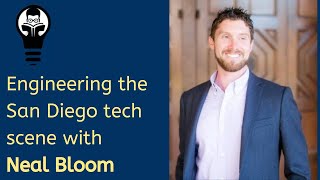
Neal Bloom went from mechanical engineer to founder of Portfolium, which sold to Instructure, then became an angel investor and podcaster. He runs Interlock Capital and hosts Tacos and Tech to build up San Diego's tech scene.
Welcome to another edition of Teach the Geek Interviews. My name is Neil Thompson. I'm the founder of Teach the Geek. It's an online platform for science and engineering professionals. You can check it out@teachthegeek.com again, that is teachthegeek.com today my guest is Neil Bloom. Neil is an engineer turned marketer turned investor turned podcaster. That's a lot of turns. He has lived many lives, kind of like a cat. He's also a cheerleader for the San Diego tech ecosystem. I'm curious to learn more about Neil's lives as an engineer and marketer. Primarily the reasons for making the switch, the com, the companies he's invested in, and his tacos and tech podcasts. Welcome to Teach the Geek Interviews, Neil.
Hey, thanks for having me on, Neil.
So I saw from the bit of research I did on you that you got a degree in mechanical engineering, or what was the motivation to get that degree?
So I grew up in a family of all entrepreneurs who were in the real estate world. So seemingly I was the first to go to college. And therefore, even before college, I kind of just thought I was going to go into the family business. And so when I applied to schools, I applied as a business major. But the last semester of high school, my physics professor tapped me on the shoulder, said, hey, we need some help on our robotics team. I think you'd be good at it. Can you join us? I was like, what's. What's that? I'd never even heard of the team, and I'd already applied to colleges already. And so come January, February, I'm joining. And he tells me, you know, hey, we need to do this, this piece, this part, Just draw it and then take it in the machine shop and just go make it. I was like, I don't have. I don't know. I don't know how to do that, but okay. And within hours, I was literally on a lathe and then welding. I was like, this is cool. I want to create things with my hands. And I guess this is engineering. And so I changed my major day one of college to a mechanical engineer. Just purely off of that not really knowing what engineers did, I just thought, ah, I get to create things with my hands. That's it. That's what I want to do.
That's a very interesting story on how you came to engineering. And it's a lot more interesting than the one I have. And the one I have was one I used to lie about a lot because I was kind of embarrassed by it. I went into engineering because my father said I should. Because a lot of people have stories like yours. You know, they, they, they actually started working with their hands and thought, okay, engineering might be the thing for me. Or maybe they were kids and they were, they used to play with Legos a lot and then thought that engineering was for them. I don't even recall playing with Legos. I certainly didn't use no lathe when I was in high school. I would have remembered that it was him saying, I guess, I guess he saw it as a stable career choice. So he said, do that. And then I didn't have any other plans on what I was going to do. So engineering it was. But I saw also that you got an mba. What was the motivation for that degree?
That was actually like checking the box back on getting a business degree, to be honest. So I mentioned how I applied to schools originally as a business major. If you asked anyone during my high school years, like, what does Neil always said he wants to do when he grows up? I was telling everyone I wanted to be the CEO of Boeing. I don't know why that company and why. And I knew, like the CEO position, but that was what I thought I was going to do with business for some reason. And that's really specific. So for me, I always thought I still want to get the. Learn the business sense. And so after the engineering degree, I went to work in the aerospace world. I worked at a company called Rocketdyne for five years and then started getting the business degree. I will be honest, the timing of the degree was very much based on impending layoffs that were about to happen at our, at our company. And the company had this policy that if you were in an education program that they were supporting, when layoffs came, they'd continue paying it for another year. And so I thought, oh, I hear layoffs are coming. Let me, let me start that MBA now. As I knew I was going to get one at some point. Let me start it now so at least if I get laid off, I can be in that program and knock it out pretty quick. So that's. The timing was because I didn't end up getting laid off. So then I actually had to do school and work at the same time. So yeah, it was hard because of that.
That's hilarious. I wonder how many people got the same idea you did. Got the whiff of impending layoffs. Let me just start the school real quick, see what happened. And then they didn't get laid off. Like, crap, I gotta do school land this stuff.
For sure. More than me, for sure.
That's hilarious. But, you know, I also, I did mention in the intro that you switched over into marketing. So what made you decide to leave engineering, go into marketing?
That. That was not planned at all. That is really the, that whole story is kind of the story of my career. And so while, so layoffs happened at, in the aerospace world where I was at, and it was really because they retired the space shuttle program. And so it was just kind of the end of the program that let go of most of the workforce. And I was, I was really bummed out by seeing some really smart engineers get let go. I mean, these are people who have been building rocket engines for 30, 40 years and all they want to do is just put humans into space. Which I was so inspired to be alongside people who were just mission driven, passionate, motivated. And so I had like real strong survivor's guilt when I wasn't let go. But many thousands more were. And so I started working on a concept with a, with a co worker who did get let go. We started like building our first startup is what it ended up being, which we thought was like LinkedIn for engineers. We thought, you know, engineers need their own way to apply to jobs, more visual, where you can show off the work you've actually built. And that turned into our first company, which, which was called Portfolium. Had many names before that, many terrible names before then, but Portfolium was our first startup. And after many pivots, we also realized, you know, it's not as much the experienced job seeker that needs this platform as the unexperienced, the person who hasn't had years of experience but has employable skills. And that turned into a really like LinkedIn for new grads and students is what the platform really ended up having. Finding its legs. My partner in the program, in the startup, wanted to code and build the technical side of it. So he learned to code off of YouTube videos and built our sites. And I said, I guess I'll do everything else. And so I took on kind of the business marketing, pitching, customer service, all of that aspects, even though I had no background in it. So I just jumped into it at first and said, I'll figure it out as I go fast forward a few years, and I realized I needed some formal skills and training in this. And so after I was on a new journey of my career, which we can get into, I actually took a job with a startup on purpose, purely. It was a pretty basic job, I would say, considering where I was in my career. And I did it on purpose because I knew I would get, I'd get paid to learn. Like the opposite of college. I was like, you know what? Like, I want to be alongside some of the smarter marketers and sales and salespeople. I'll get trade, I'll get paid, and I'm going to learn right directly from them. So it was on purpose that I took a job to learn marketing and sales. And then after two years with that company, I said, all right, I learned what I want to learn. And I approached a friend and bought his marketing agency. And that's what I'm running now. So, yeah, that's kind of the long journey to be a marketer. The connection to engineering, though, that I don't know that people as much think is that marketers are really a bit of data scientists. Meaning when you are a marketer, what you're doing is you're designing experiments to understand what gets eyeballs, which turns into sales. So you've got a bunch of knobs in front of you. You say, you know, hey, I'm gonna, you know, write a press release or I'm gonna pay for some ads or something. That one you have to wire up with a feedback loop to say, do. Did it work? Did it get to my desired goal? And should I do more of it or not? And should I do a little variation or not? A B test, right? Should I change a landing page with different wording on it? So for me, I find that my engineering background works really well as an engineer because I, I am really scientific about my methods. I, I'm understanding kind of the instrumentation side of the experiment. What am I gonna like, what's the data that I'm going to see and learn and what can I change about it? So, yeah, I kind of nerd out on the marketing side technically because of my engineering background.
You know, Neil, something you said was really interesting is when you, when you took what you would perceive as a step back, working at the startup company to learn the skills that you would need to then become more proficient at sales and marketing. I get the sense that a lot of people, they would have been way more hesitant to make that kind of change, especially if you're making good money what you're doing. Engineers tend to make pretty good money. And you know, you go into a startup, perhaps it's not as, as lucrative or even as stable as working at, you know, a bigger company. But you made the, you made that jump anyway. So, so kudos to you for, for doing such a thing. I mean, Being, being, doing this podcast for as long as I've been doing it, it's always interesting to speak to people like you that make those kinds of changes because I get the sense that a lot of people, they just, they, they continue down paths because it was expected of them to continue down that path. Perhaps other people are really proud of the fact they're on that path. They don't want to let those people down. But then you got people like yourself and other people that I've interviewed that said, you know, to hell with the path, I'm going to fall. I'm a blaze another path, and see where that takes me. So again, I commend you for making that, that change and, and whatever happened to Portfolium.
Yeah. So Portfolium, the, the personal story of it is that I unfortunately had a co founder breakup. So me and my partner had both a professional and personal breakup, which was sad. And. But in the end, the company was sold and everyone did pretty well financially from it. So, you know, can't be too mad about how it ended out where it ended. Eventually it was sold to a larger education technology company called Instructure, which makes a software called Canvas, which runs. It's kind of the new blackboard of universities. So it was sold right into kind of the university operating system software space. But for me, you know what, what I really learned from building a platform that helped people get jobs, which is really what it was, is I started to understand a bit of the, that kind of the algorithm of what it is to have to, to be talent. And that's what I think when, why, when you mentioned I went and took a job per se after running a business, I understood that it, yeah, titles didn't matter nearly as much anymore because I went from engineer to like chief janitor of running my startup. Right? Like, you had to do everything. It didn't matter if you had a degree in it. It just had to get done. And what I realized is that if you already know how to do something, that is a very valuable skill as opposed to learning it on the job, right? It's because now you're learning it on someone else's dime. And so that's why I took that role was I took those roles. I was like, this will benefit me in the future because I know I want to start another company. And with Portfolium, we really were taking people's skill sets and saying, it doesn't matter where you went to school or how long you worked at a company, it's, do you have the Skills to get the job done that someone's hiring you for. Purely that's it. And that's honestly what hiring is. Most people don't care about pedigree nearly as much as do you fit can you get the thing done that I'm hiring for? Right. So that was the great part about building a job tech platform is that I just learned a lot about the talent piece and talent scouting which is now what I think investing is for my world. Like I think what I am doing with capital is I am betting on the best talent there is to make a business into a successful business. So that was a real good lesson learned on my end from happened to be what we built in the in the portfolio talent space.
I'm glad you mentioned investing Neil. That was going to be my next question. You queued it up perfectly. So I mentioned in the intro that you're an investor as well. What type of criteria do you use to decide what kind of companies you invest in?
That is one of the hardest questions about investing there is. There's some broad areas that we can talk about. Like I'm not going to invest per se. I can't write a big enough check into a company that's doing hundreds of millions of dollars and needs, you know, outside capital from that stage. What I am looking at at least stage wise, where the company is in their journey is pre revenue. So maybe like post idea and post validation of the idea but maybe pre revenue. So you're starting to like learn some things from your customer that are telling you to iterate your product a little bit up until maybe doing a few million in revenue. Those are the kind of the areas where I find my background best suits the entrepreneur. Because when you as an me, as an early stage investor, what, what you're actually buying with me is not just my capital, you're buying my expertise, you're buying kind of my knowledge because usually that is going to go a lot further than the capital itself. Like if I were to meet someone who's going to build another LinkedIn for engineers that are they already think is going to go into the ed tech space. Well I know I can write the book on that. Here's what not to do and can save you years which you know, no check could could tell you how to do that part. So for me I looked for investing in things where I can actually provide value and insights and that's what I was doing personally just by myself for about four or five years as an angel investor, was meeting people and writing between 10 and $25,000 checks into the company. And then during COVID another entrepreneur turned angel investor in San Diego approached me and said, how about we join forces? We put our brains together, but also bring in a lot of our professional network to bring their brains together. And we'll look for companies where, collectively, as a group, a few people have subject matter expertise in that industry. And then it's not just purely about, you know, what your. The capacity of your knowledge, it's the group's knowledge. And then we can look at a little bit wider industry and size of companies. And then as a group, we'll pool our money and write one check. And so that's what Interlock Capital turned into it, what we call an angel investment syndicate, where we create an LLC for each investment. We as a group look inward and say, does someone know? Has someone built a company in this space? Yes. Great. What do you think? Join a call with the CEO. Thumbs up, thumbs down. Would you invest? Great. As a group, everyone gets to decide who wants to invest in this specific company. So that's what capital has been. We're over 300 people who have participated in at least 17 of our syndicated deals. And that's a lot of deals for. For certain for most people who are busy working to also see on the side as well. So earlier this year, we also formed an investment fund where you can just write one check into a fund and you're in every investment going forward for the next two, three years. So we now have two options for how people can invest. Deal by dealing with or be in every deal through one check into the fund.
Wow, that's a pretty cool idea. And yeah, it certainly would be more impactful as opposed to a bunch of checks. Perhaps a company getting from multiple people, getting one big one from one entity, and then also having the expertise of those people coming from that entity as well. I think, yeah, that's a much better use of people's skills. Absolutely. Neil, I want to tell you a story. And the story will dovetail into why I started my podcast in the first place. I used to work in medical devices as a product development engineer, and I had to give presentations in front of management on a monthly basis. And, Neil, I sucked at those presentations at first. They were absolutely horrendous, but I had to get better at them because I didn't want to look like a fool in front of the CEO every time I had to give a presentation. And so I definitely took the time and the effort to get better at presenting in front of people and Now I talk to people like you who are may, perhaps they also saw the benefit of getting better at presenting in front of people. That's probably a question I should ask you. Is presenting in front of others something you've always been good at? And if not, what did you do to get better at it?
No, definitely not. Always something I was good at. I would say I was always someone who got pushed to be a leader in groups that I was in, whether it's group projects or something else. Like whenever someone say who's, who's your team lead? Everyone point to me seemingly. So I knew early on that somehow I was a bit of the spokesperson of a group or would be a team lead of something. So I knew that that was the intrinsic piece that was just naturally going to happen for me. And so I realized I need to sharpen skills that came with that. And some of that was less technical and more like soft side, you know, just the understanding, awareness that all right, if I speak for other people, I've got to make sure that I represent them appropriately and I got to make sure that I'm clear and concise and getting my vision or getting the collective wisdom's vision across. Fast forward to being an engineer. I was also kind of put in a position where very technical engineers and the customer, I was put in the middle and said, you know, collectively figure out what, what the problem is, say with a rocket engine and explain that to the customer. Which I also viewed as clear communication. So, so after a few years and you know, as an engineer, I realized communication is almost more important than anything else. And so I doubled down into understanding the communication side. The public speaking part I don't think came to me until I was an entrepreneur and was pitching groups of audience to believe in my vision, whether it was for a pitch competition or for investment. And that's when I realized I needed to spend time and invest in this. But 15 years into my career, I'm still investing in this. So I just only recently joined or looked for a toastmasters, realized I need a different set of public speaking skills. And I've actually recently hired a storytelling coach to help me learn how to actually storytell in a clear and concise manner. There's one way, one thing to just get your message across clearly, there's another to captivate people and get them to come along for you and part ways with their money and the millions of dollars now to invest with me as well as well too. And so I'm investing in myself through six month program of learning how to storytell.
Well, you know Neil, when it comes to storytelling, that's something I did not think was even appropriate when I first started giving presentations in front of management. You know, when I think of storytelling, I think of when I was a kid, maybe my mom or dad would read me a story before I went to bed. But giving a technical presentation in front of people like, what the hell does storytelling have to do with it? But it has a lot to do with it. Especially if you're talking to a non technical audience. You really want to engage those people. Stories the way to go. But, and it's, that's definitely something that I came to understand. So I think it's really smart of you to hire a storytelling coach to kind of get you in that, in that position to, to tell better stories as well. When it comes to the presentations that you have to give or that you give, do you have a process for putting them together and if so, what is it?
Yeah, it depends on the medium. If it's in person, if there's slides, if and all those. So I take that into account. I look at a really kind reverse engineer. It a bit of like, what's my stated outcome? What do I want to people do I want, do I have a call to action in the end? Or is it more soft sided, win people over, you know, purely for friendship or you know, just good business relationships? So there's a bit of that, of just like what's the end goal here? And then map out what are the pieces that I think my audience will connect with. Oftentimes you don't know the whole audience's background. Right. So you have to make a high level judgment call on saying, you know, what do we think either this class that I'm speaking to is really going to connect with or this group of, you know, high net worth individuals, what are they going to, what's the, what's the common thread between them? So you know, you have to make some high level judgment calls on your audience itself, which sometimes feels like you're painting a wide brush and being judgmental. But it's what you have to do because you want, you want people to collectively do that. I build in though, like audience engagement per se. Right. So if I can find a way to ask a question, you know, has anyone done blank and get some hands raised, that'll help me understand who my audience is and what should I be speaking to and what would be interesting. So that's a bit of it. I would say that's, that's most of my framework, the storytelling side. I'm really learning though, like about the hook and kind of the. The decision point to keep people kind of on their seats to make themselves feel like they're in your shoes of like, what's he going to do? And then success. So I kind of learned a little bit of that around storytelling, which is helping me guide what's the order that I tell things. I'm also really working hard lately, as always talking in the present, which is hard for me, especially when I'm a real chronological storyteller. I love to tell here's what happened to me in the past and now. Here's why I am now. But you. The audience wants to kind of. They don't want to jump around time, time zone differences with you. You want to. They want to stay in the now in a sense so that their brain doesn't have to work too hard and picture like, oh, 10 years ago, oh, five years ago, three years ago, like, where are we? So I'm working hard lately on, on present tense. Talking, storytelling wise is kind of my focus for learning right now.
Interesting. Do you ever get nervous before giving a presentation? If so, how do you deal with your nerves?
I absolutely do. Oh yeah, for sure. There's a few pieces. One actually preparing for me, as opposed to winging it is one thing where I used to always say, I can do this. I got it. And I realized I could. But I may be nervous and fight my way through it, you know, and so I'll give a better performance if I do certain things. And so for me, I. Whenever I'm going to be on a panel or anything that there's like questions ahead of time, I write out my answers just once. And it kind of helps me sort out how I'm going to answer the question come the interview. Meaning I won't say it word for word, but at least I've put the time into thinking through. Here's what my answer is. Uh, and that seems simple, but that's what I need personally to do is to have already written out the answer once and then go out and. And it'll be in my brain by that time. So that's, that's really the. The piece that I know I need to do is always ahead of time is just think through the right answer that I think would be. Would be appropriate for it as opposed to winging it. I know I can wing it. I can usually get through most interviews. It's just. Why have the added stress of also being worried? Like, was this the Right answer. Should I have said that? Oh, did I miss something? Should I try to fill that in the next time that they call on me, or is it too late? I'd rather not have that internal monologue while I'm speaking. And I've already, ahead of time just said, these are the points you want to get across. Find a way to get them out some, at some point during that speaking process.
Yeah, I'm with you on preparing for presentations as opposed to just winging it. And I think you're right. It kind of mean getting up in front of people can be nerve wracking enough. But if you, if you're just getting up and winging it, it can be, as you said, it can make it even more nerve wracking. And I think also when you practice, you then can figure out the best way to present the information and just how does, how does it flow better?
And.
But when you do it, you know, by winging it, it just comes out as it comes out and then you don't, you don't even know, man, you might think of it later, like, I should have said 0.1 after 0.2. I should have switched them. But hey, it's done. What's done is done. But if you, if you practice beforehand, you certainly can sort those kind of things out. You know, Neil, I also mentioned your, your, your podcast, Tacos and tech. Well, what is it about and what do you hope people get from it?
Yeah, so the podcast started as a promotional tool for the San Diego tech ecosystem. I felt that I had been to a lot of cities where there were tech communities and I thought the San Diego was kind of batting under its radar. People weren't recognizing that San Diego had a great tech community of large and small tech companies. And so I wanted to be a promoter of the community by not just saying, hey everyone, look how great it is. I wanted to show here's the people behind the brands. And so I started it in mid-2018, really at the. I had a sponsor, eventually became a sponsor that was pushing me to do it. And they said, you know, you would be great at interviewing people one on one. We will put in a little capital to get it up and running. So that also helped kind of give me a little kick to say, go try this full time. And so I did. I took the leap and started podcasting and blogging full time about promoting the San Diego startup and tech community. We interview what we call the builders of technologies of community. And so it could be a founder or co, founder of A company. It could be a community builder, someone who's trying to build maybe say the defense tech community or the blue tech community or people of that ecosystem, politicians or Academia, investors and CEOs and co founders of companies as well, too. So what we hope to put out there is kind of the human side of building companies by getting to know the people themselves, getting to know their journey, what made them take the leap in actually starting a company or starting down this specific path. So I'm a real chronological interviewer in that regard. And then we have a little fun with it because San Diego is a great taco community. We have some amazing Mexican food. And so we always end the interview with kind of nerding out on tacos and Mexican food and where people's favorite spots are nice.
You know, I've listened to a couple of episodes and every time you get to that taco part, I'm always kind of curious to see what people say because I must admit, I don't really have a favorite taco spot. I just. It's all the same to me, but it's not. That's not the case. I know that there are certain places where the tacos perhaps are better than others and that would make sense. I mean, we're pretty close to the border, so you would think the tacos here would be pretty great. So this has been, this has been excellent. Thank you so much, Neil, for being a guest. How can people get in touch with you?
Yeah, the best places for social media wise, LinkedIn. Send a note when you hit connect on LinkedIn, say you heard me on Teach the Geek. That helps really kind of me understand how you heard me. Or Twitter is another spot where you can follow or just reach out to me on a direct message and would love to kind of know what, I can be helpful to anyone else. So yeah, please, please find me on those platforms and I am happy to be a resource to others.
Wonderful. Well, everyone, that marks the end of another edition of Teach the Geek interviews. My name is Neil Thompson, founder of Teach the Geek. It's an online platform for science and engineering professionals. I also offer public speaking tips for those of you all that have to give those technical presentations. You kind of struggle with them. Go to teachthegeek.com tips to get those tips. That marks the end. Again, thanks for being here.
Thanks, Neil. Thank you. Appreciate it.








