Exploring Identity, AI, and Leadership
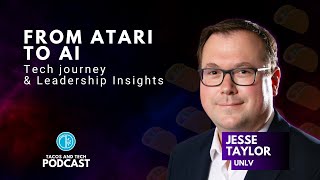
Jesse Taylor, who manages identity systems at UNLV, talks through the university's shift to Okta, rolling out passwordless authentication, and navigating AI governance. He also shares how he built his technical career from Apple retail to leading infrastructure teams.
Startups get the party. Startups get the party started. Startups get the party. Startups get the party started. You want tech and tacos, Tacos and tech, you know, we got it.
Hey.
Startups get the party. Startups get the party started. Startups get the party. Startups get the party started. Startups get the party. Startups get the party started. You want tech and tacos, Tacos and tech. You know, we got it.
Hey, foreign.
And welcome back to the Tacos and Tech podcast. I'm your host, Neal Bloom, and I'm thrilled to have on Jesse Taylor, senior manager of identity and middleware services at unlv. Hey, Jesse, thanks for joining the pod.
Yeah. How's it going? Thanks for inviting me.
Yeah, it's good to have you here, you know, especially connecting the Vegas tech community, you know, coming off of the Top Tech Awards Vegas from last year, which, congratulations on being a top tech award recipient, which we'll talk about a little bit, what that means to you personally. But we just love to be able to shine a spotlight on technical leaders here. And so that's what's really fun about tacos and tech podcasts and the Top Tech Awards, by the way. Right? I mean, it's kind of a. A group that doesn't get to meet together, you know, your peers in other industries as well as kind of celebr. Holding the whole back of the world together, you know, to a certain regard. So it's fun to talk about, but yeah, thanks again for being on and looking forward to getting to know your background a little bit. Why don't you take us back to that a little bit? Where did it all begin? Because I know you've got a background that I would say is off nominal for a technical leader to a certain regard. Right.
A little bit. It. It's weird. It all started like I remember very vividly being very young and my dad had an. Had an Atari 4200. So if you remember those, it's. It's basically the one that has the keys that are kind of like pressed into the. Into the unit itself and cartridges. I remember playing Space Invaders and going, this is really cool. Like, I, I want to know more about this. And as time went on night, and not to get too. Go too far back and age me too much, but got into Apple 2Bs very young as well. So, you know, big five and a half, quarter inch floppies, organ trail, which is. Oh yeah, best game ever. Yeah. You know, and then, you know, all through middle school, high school, and starting into college, I started Kind of finding out ways to learn more about tech. I started building my own computers when I was 14. I worked in a small computer shop in Napa, California, where I'm originally from, building computers. I got to help out with a few wineries, which is really kind of cool. But from that point on, I knew how to tear a computer apart and put it back together, which is fantastic for skills for moving on to my career. After I got out of high school and started college, I decided that I was going to be an MIS major and started working at Apple Retail. So this is 2001, end of 2001. I helped open Apple Store fashion show, which is the first Apple store in the state, actually. The first one in the state, yeah. I think the one up in Reno might have been a little bit afterwards. And then from there I worked there for four or five years and then I ended up doing. I left right before the iPhone was launched. So it was all about the ipod era, which is really kind of cool stuff. Did some system administration work for the art institutes and then also for vegas.com, which was a big travel company, but also was a conglomerate. Other companies at that time, now it's different, but they had all the Greenspan Corporation companies in it. So I worked for the Greenspan Media Group and did some things with this Apple administration for Macintosh administration for them because it was kind of my, my, my wheelhouse. And then from there went and worked for Fountain Blue Resorts, which was a. This, the F, which is the one in Miami Beach. I did some work for them and also the one here in Vegas a little. This is, this is back 10 years ago. And then after that I did some. I actually started. Was chief technology officer for Niche Media holdings and Green Gale Publishing, which was in Los Angeles. That'd be Los Angeles Confidential in Miami. Miami would be Ocean Drive in Vegas. It was Vegas. You know, it was magazine company all. All around the country. I got. I got to rebuild the whole network from, from the ground up and rebuild an IT department from the ground up. It was a lot of fun. A lot of infrastructure builds. After I did a little bit of consulting in the Apple space and then I found an opportunity to come serve the university. So I ended up at the University of Nevada Las Vegas as running their identity and middleware programs with my teams to help. I wanted to help out. I thought it was a great idea. Public service is one of those things I wanted to try and it's been super rewarding for me because I get to see how it affects people's. Lives and changes people's lives for the better.
Yeah. Amazing. It's funny to hear the different gateways that lead people down a path. Right. Whether it's gaming, you know, kind of the first game that at least gets you paying attention to technology. And then Apple really the first to like really engage the general consumer on technology. Right?
Yeah.
And have a store. Right. The Apple Store is just quintessential literally nexus of saying come general public experience technology. And Apple's a community. So it kind of, I mean it's interesting but it also really makes sense that you find these, these consumer technology nexuses that powered you forward in that regard. But especially the hospitality and schools have kind of been like pulled along in the technology frame. Right. It's, you know, we now just take it for granted that we have a computer on in our pocket at all time. But now we expect it everywhere we go. Right. Like somehow we have a wireless device, yet expect everywhere to be wireless, which takes plugs as well too. What is. Yeah, like take me through from seeing that first Apple store around that experience when the iPhone then came out years later. Yet you're. And you're still an Apple, you know, expert in that regard. Like what's the push pull you think for we're bringing technology to people, vers, vice versa, you think, you know, the.
Ipod was really where it started for a lot of the handheld generation. Getting, getting an idea that you could have something with you that was, that was enabled you to have your entire music library with you. You know how powerful is that? Pretty powerful to me. And then you think about, well then the iPhone was the next revolution of that of having, hey, I have now Internet communicator and I have email with me, I have webs with me and eventually you get apps. Those apps connect to your entire world. So it's kind of the natural conclusion of hey, now we're moving to the app economy. We're moving to the fact that we have an iPhone that can basically access anything I need to access or an Android device too. Not forget our Android folks. And the idea that those experiences are now almost expected. Right. You go into a resort or something like that, it's like, why isn't my phone talking to the room? Or why is my. Or should my phone be talking to the room? I should be able to order a room service from my phone or I should be able to do XYZ from my phone for the resort or interact with it. And I think some resorts have capitalized on that and I must talk about anyone in particular. Some resorts do other features like check in and stuff like that. I think it's really important to see how that consumer facing hey, I've got, I've got, Hey I got this stuff and it's mobile and it works, it works every time to hey I've got a phone in my pocket that works. And how do you build that with those type of applications? How do you build that interface for modern life? And I think we're seeing a lot of that, I think we're also seeing a lot of that predictability coming from all this data that's being collected by all these organizations and then being use to help build collaborative AI agents that are also helping garden that experience or curate that experience. It's, it's you know from loading, putting five and a half quarter floppy in an Apple too and turning on and watching it take a few minutes to boot up and then being excited and watching you know, green and black graphics on a screen, monochrome, you know on a screen, to being able to watch full 4K movies on my phone no matter where I am. It's really, it's a modern marvel that we're, we're at this point and it's amazing to see where we're going to go next with that. I, I see a very bright future in that regard.
Totally. Well we'll get into some like predictions around that but to, but to a certain, from a technology owner, you know, yes the, the cons end user consumer sees maybe less but you actually still own the whole stack. Like just because the person doesn't have to put the floppy in that file, still has to sit on your server somewhere. Right. And so it actually kind of compounds on the technology owner to do more. Does it feel that way? Because it seems that when you kind of pull back and say hey look at the end of the day you still need to deliver content to someone's device regardless of how you do it.
You know, I think there's a, there is not to steal something from Joe Biden but an inflection point on that. Right. We used to have, you have to front load everything. You have to have everything loaded up in memory and get everything rolling. And then as, as time moved on then it was hosted somewhere either private in the private cloud or on premises or locally. And then it became more of a, then you have start having cloud infrastructures that were hosting some of that content, some of that loading and I think so although that whole infrastructure stack kind of got moved off the device and moved out to Somewhere else to be, to run virtually somewhere else and then be displayed on the device. So the device almost is a carrier at point. But I think, and don't quote me on this, but I think, you know, your modern iPhone for a couple of years from 10 years ago is more powerful than most spacecraft that we had NASA at that point juncture. So I think it's interesting to see how you have that much power still in your, in the palm of your hand in a phone or a device or tablet. But it's this whole backing infrastructure that's also there to be leveraged. And how powerful is that? I mean that's crazy.
Apply that to the education space. Like what has been different going, you know, from hospitality now to education. What are the different needs, you know, and end users and the technology stack that you, you power there.
So when you look at, you know, so my, my role at the university is identity and access management. So we're the, we make sure that the, the right person gets to the right resource at the right time and they're authorized to do so by the role that they have or the, the role their entity has at the university. And so that whole infrastructure is SaaS based. We moved from, we actually had a big project removed from an on premises identity access managed system that we had. It was huge during the pandemic we moved it to, actually to a SaaS based identity provider and that identity provider does all the heavy lifting in regards to the coding and the servers and the resources and it's utility based. And what that's enabled us to do is focus more on the end user experience and focus more on ensuring that the stuff that we're building around applications for access, the users that we're provisioning is more, is not only more accessible to the end user because it's just, it works better than it had before, but it's more secure and it's always updated. That's the cool thing about some SaaS providers is that, you know, patches are rolled out as they need to be rolled out and it's done in a modular fashion so you don't have have to worry so much about their downtime is very little because it's all done modularly. And so applying that type of a, you know, back from before I got to I got there, you know, there's, and this is way before I got there. So I'm not saying I change this but you know, there was servers, there's physical servers, file servers and you know, corners of the university doing things. And that's all, it's all been modernized. There's, we still have quite a bit of stuff on site for research and stuff like that. But you know, as time moves on and we keep shifting and looking at different areas to explore in regards to, you know, hosting with other providers or maybe building our own capacity or building using newer technologies like Kubernetes or Docker and stuff like that to help manage our workloads. It's, it's almost the same thing over again. Like you know, there's some, a friend of mine once told me that we all, we went from mainframes to personal computer and then we went from a personal computer back to servers and Internet, which is cloud, right. And then we kind of went back. So it's kind of like this pendulum that keeps swinging back and forth. And so I see the same thing happening with educational technology. You know, you have some things on site, you have some things that are hosted in the cloud and that's or server or privately hosted somewhere. It's a hybrid approach really. I think that's kind of where we've all ended up in the consumers, right? It's a hybrid approach. Your phone has local content, it has content on a server somewhere. It's being hosted. True.
The one big overarching piece around it is the kind of the security aspect, right. And a school with tens of thousands of end users, tens of thousands of endpoints that you know, you have to kind of like you can't just teach them here's how to respond to emails kind of thing. Like how does the security layer kind of play into all that?
So the CSOs, our CISO Vitor Rocco is really good at what he does and he has a really great program that he runs with with for training our end users, our end users and our staff members at least on what to look out for and phishing emails and stuff like that and faculty. And then when it comes to students, our help desk is extremely helpful in making sure that our students are aware of to be safe online. But when it comes to my role in all that within access platform is designed to ensure that we, I'll give you an example of this. So when you know, five, six years ago we didn't have multi factor authentication in a lot of our stuff because it was higher ed was a little resistant in my opinion was a little resistant to that type of two factor authentication, multi factor factor authentication. And we actually were able to implement a MFA program right after the pandemic with majority of our students and at the time we had both app based, you know, token based. You know, you could have a token generator on your phone or you can have a push notification to an app on your phone or you can have a Yubikey or you could have an SMS text message. And we just recently, last year said, hey, you know, SMS isn't the safest thing anymore. It used to be. It's really not. And we're able to actually work with our, our community, our students, faculty and staff. And through the, through the help of our, our client services desk and through the help of our marketing team and our strategic communications team, enterprise systems, we're able to really figure out a way to work with, you know, campaigning. Hey, we're going to move you guys. If you're not, if you're on sms, let's move you to the, the verify app that we have. And verify in that way you get a push notification to your phone or if you have an Apple Watch, this is really again, this goes back to technology, right variable. When I log into my application or whatever I'm logging into because my watch is attached to my phone, the app actually works on here. So I can just hit yes on my watch and I'm off to the races. And surprisingly that was the coolest thing people liked. The thing people really loved about that they had their wearable tech on and their wearable, wearable tech was able to authenticate them to a resource. Use me and password still. But how? I mean, and that. And I really kind of was taken aback by the first time I heard someone pretty high up in the organization say hey, that's the best way. I love that it's so easy versus them having to look for the phone and look for the stuff. And so I think as we move on and tech moves on and we keep moving forward, we're going to see more stuff like that where it's a lot easier to authenticate and not have to have password lessons. The next passwordless is the next big thing that I want to push forward. We'll see how far we get depending on the way things roll with the adoption of that. But I want to go to passwordless or pass keys and we actually already have those enabled. But it's not the type that everybody's used to. And what I mean by that is if you've ever logged into a Microsoft stack of some type, you get the passkey for them is basically you put your username in that asks you for the passkey in current system I have, it's, it'll let you Use any type of passkey you want, but it doesn't mimic that style. And that's coming soon. So I'm hoping to get that enabled soon because I think that's, I want to be able to move that, push that forward and get rid of passwords at the university next. But also some endpoint configurations so that we're able to actually say, hey, this is a trusted device on a trusted network and start doing some zones. We do a little bit of that already. But it's, it's about, it's really about the, in fact, I won't go into how much we do, we do of that actually we do a lot, but I won't talk too much about it because it's about the posture. But you know, we really want to make it easier for the end user. And so the more of stuff like the Apple Watch or Android Watch, the more of maybe a beacon or a ring that has an NFC in it that allows us to talk to our stacks that actually is hosted in the cloud and doesn't matter where you are, it works. One interesting thing about education technologies, we have researchers and sometimes they're not connected to anything so they're having to be out in the middle of nowhere and find a way to do things. And luckily a lot of our apps and a lot of our authentication protocols can cache themselves or they can have their way to let you have temporary access while you're offline. But I also think with the advent of satellite based Internet access, some of the big ones out there definitely helps with that as well. Push, push the needle forward. I think the satellite connected phone stuff is going to be revolutionary. That's just me being little like looking glass out there. We'll see how it actually does. But I think that's, that's pretty cool. For example, my, my dad actually lives in the middle of Elko, Nevada. The middle way up north. And he's on a very, he's on a point to point wireless system so he can get broadband to his, his house out there and it's really cool. Oh no, no, no. This is, this is, this is crazier than that. So it goes from one city to a, it's a two basically. I think it's about ubiquity, point to point. So it goes wireless to a, to a wire, to a repeater that's running off solar batteries that goes to another repeater, they're running off solar batteries that's going to where he is. So it's basically a point to point and there's multiple customers working off of it and it's 5 milliseconds latency. It's amazing how well it works. But of course there was a storm up there. It snows. So I've been, we've been talking about do we want to do satellite up there for him instead. But right now it's working for him. So anyway, I got off tangent.
No, no, it's awesome. My brain goes to like, well, this is a great use for Starlink, but I'm sure.
Oh, totally is. Yeah, yeah, yeah.
Interesting. I love. Obviously you've continue to lean in to Apple leading the way on identity management with the wearable. I mean a lot of us on Apple laptops have gotten used to the fingerprint in place of password and obviously unlocking our phone with face id. Right. So all that makes sense that that's what you lean into is that app or is that the big OEMs pushing that way and saying, well, they've already established a consumer way of accessing or I mean you saying a ring with an NFC feels. No, that feels like you leading and coming up with kind of new area, new barriers.
Yeah, the NFC is kind of. It's just an idea that I've had, you know, or a card that's got NFC on it. But I think that's all possible. It's all in the realm of the possible. The OEMs, since we got standards like WebAuthn that allow us to do interactions like that securely and safely. Some of the things that researchers are coming up with. I go to some conferences for Internet too and watch what those folks are up to in other countries and here in the States and universities have done. There is some pretty interesting stuff being done with wearables, but also just like having a card in your pocket that you tap. That's been, that's been around for years though. They've been able to do that with sun, with Sunrays and Solaris and all that good stuff. And Apple and Mac and Windows can do that too. But you know, so I'll give you an example. So our stack is Okta. So that's what we use in the back end. And the Okta Verify app has a companion app for the, for the oh, Apple Watch, which, which are. And so that's why I think there's the Android one too. That's why it links because you basically set up your authenticator on your phone and then your watch is like, hey, I'm a trusted partner. So it goes. And I find it interesting the way that they, and I think this is how this works. Don't quote me on this, but when you attach the watch to your wrist and you type in your passcode, I believe that's what's causes, causes the authentication effect. Like it knows it's, you know, that's how you're able to authenticate. I think that's the rationale behind that. Again, don't quote me, but it's kind of cool to see that. I mean, I think that we're going to see more and more that I wouldn't be surprised if one day, I mean, you've already seen like the Amazon go stores, right. Where you walk in and you can walk out with merchandise. They actually have, they have one at Harry Reid International right now actually. I got the chance to finally try it and I remember I picked up one of the soda or something and I was walking out. The person's like, hey, there's somebody still in there. Hey, have a nice day. And I'm like, oh, I forgot to get some chips and pick up a chip. She's like, well, hold on, you have to go back. So I think I may, I think I screwed it up basically.
But that is your role to break the system a little bit, you know, and. A little bit.
A little bit, yeah. So cyber security is super important. We want to protect our students, faculty and staff. We want to make sure that they're, you know, whatever they're working on is secure and having multi factor authentication is really important.
Yeah.
So that's one of the big projects.
We had and that kind of sets the stage for, you know, we can't have a technical conversation without mentioning AI, obviously. Right. The world is awash with like just tons of new tools that everyone is trying all the time. Right. So one got to know, like any new fun, generative AI tools that you're using, I don't know, maybe in your personal or professional life, they're just kind of helping you on a day to day area.
So in a, in a personal life, I like to use it to help me sketch, to basically storyboard and sketch out ideas. So hey, I'm thinking about doing this and I want, and here's the variables and here's, here's my back give. It's. I find it kind of interesting because, you know, 10 years ago we were talking about big data, remember the conversation around big data? And now you can take those big data sets that were taking forever to parse through and drop them all into a large language model and say, hey, I have all this Data. Do you see a trend? Hey, I have all this data. Do you see? By the way, I think you might doing this. How would that work against this data that creates up against this scenario? And granted we have to be careful of it hallucinating and saying things that aren't true and we have to trust but verify. That's a big thing. I find it, I find it helpful for that. But I, I use it a lot also for, for helping me proofread things. I would say, is it. That's, you know, Apple's got Apple intelligence built into it. I've got chatgpt set up some other things. So personally, we have to be very careful about it when it comes to univers, the university and, and students and, and, and faculty and staff because of privacy and data and making sure that we're not putting things into AI that we shouldn't be putting into AI. And so, you know, working on building up policies like that around that are important and I think a lot of companies are like, you know, Microsoft's got Copilot, right? Which is, it's almost integrated into everything. It looks like when I logged in the Windows laptop, I'm an Apple user, obviously Windows laptop and you know, Copilot and is, is right there. Hey, I'm here. It's like, great. I don't, I don't need that right now. But it's how powerful that will be for folks to say, hey, I'm building a Excel spreadsheet. I want to build this formula. How do I do this? And it's like, hey, by the way, you can do it better this way. That's cool stuff. That's, that's productivity, that's collaboration. That's. I, I like to refer to a term that was, I'd heard before, which is called collaborative intelligence. Like the idea is that we're working with the AI. The AI isn't working to replace people. That's super important to me to look at it that way. And I, I almost don't, I don't want to say that on a podcast, but I feel like the word AI has a very strong science fiction set of accoutrements to go along it with it. And collaborative intelligence sounds more like, hey, it's there to kind of help me. It's like a, you know, I believe this is attributed to Steve Jobs. You know, a bicycle, a computer is a bicycle for the mind, right? So AI is like a race car.
So, you know, and I think Microsoft naming it Copilot is smart in that it is oh, absolutely.
Yeah.
But it also right now is acting like Clippy. Right?
Yeah.
Okay, great, I get it, you're there, but I don't need you right now. And it needs to inject itself and say, hey, here's where I can be helpful into what you're doing as a pure co pilot. You know, I guess it's the sense of agency that's the difference. Right now we have to go push to pull the things we need as opposed to it saying, hey, you know, here are three ideas to, you know, make what you just did more efficient so you don't have to like take your time away and stop your brain power from that. So I hear you for sure. And that's why, you know, AI being this two letter word now, it's like, you know, we're, we're unfortunately whitewashing a little bit of it of all the power that it's doing behind the scenes. Because all the things you just mentioned are so many different. Like deep dive, right? Just the data side itself, data infrastructure, data engineering. That wasn't even a world of study before 10 years ago. Right. To a certain regard and all these roles of data analyst, data engineer, all that. So yeah, there's a lot to unpack there.
And the first time I heard prompt engineer, I'm like, prompt engineer, really? It's a thing. And I'm just like, is that really. That's their thing. And I'm like, okay, that makes sense. Somebody who knows how to use the ins and outs of the large language model to be able to make it perform at its peak. How cool is that? Yeah, yeah.
So in a sense, like tech is just, you know, I think to a certain guard, all of us are just expecting it to do the things that we need to do behind the scenes. But really the unbundling of a lot of it, right? Whether it's on prem cloud and then everything that comes with it, and then now the intelligence stack on top of it in a sense gives you a lot more responsibility and you have to have a lot more different teams to build in that regard. Which kind of leads us to the Top Tech Awards, which is this opportunity to take everything that's happening behind the scenes and give it a spotlight and say here are that it's not just tech talking to tech. There are people who are making all of this happen. So, you know, Top Tech Vegas is actually pretty, pretty new in that regard. And to get nominated and actually awarded in the first years is pretty great in that shirt. So congrats. What did it do to kind of get this. This award for you.
I actually had had a little suspicion that something might be going on in regards to getting the awards a little bit. Not much, but it hit me pretty. It hit me pretty hard when they. Yeah, I said, hey, I saw a video of me up. Up running on the screen. I'm like, I remember shooting that a couple years ago for some other project. And it's being so. I was like, no wonder I didn't know anything about this. And it was pretty. It was awesome to be recognized. It was awesome. My team got recognized. It's really important that I'm a. I'm a huge. I'm huge into making sure the folks that work with me are recognized for their contributions. I mean, it's. We have a very small team in regards to identity and access management. We have a very small team for middleware, and they put a lot of hours and time into making things successful for our students, faculty and staff. And the fact that we got the recognition really was amazing because it felt like, okay, folks are being seen and how cool is that, that we're being seen and being recognized for some of the things that keep the lights on, you know, and that's. It's hard to. And. And a lot of times, you know, it has. That has that old adage that's kind of the unsung heroes, right? It's the folks that. That if everything's working, you know, that means they're doing everything's great. And. But the second something goes sideways, there can be, you know, it's like, what's going on? It's like, well, we've been doing this massive project for, you know, six months to do this, and XYZ happened, but we had a great, you know, it was a great experience. I. I'm very happy. Of the group of people that. That were Eric one education, there was several others who got awards as well. Really cool seeing other people in. In southern Nevada that got the award and the people that had received the award beforehand, actually, as well as seeing them in the audience cheer us on, is fantastic as well. So I think it's. It's a great event. It has a. It has a great purpose, and I hope to see it continue for many more years to come.
Yeah, agreed. Likewise, to especially be, you know, nominated by your peers and then judged to a certain guard by your peers is pretty powerful in that regard. And I know one nominations are open now for the next year, so hopefully everyone listening is submitting their favorite technical leader for that. But to a Certain regard it, like you mentioned about, it's, it's, it's your team. What do you think is kind of your role in shaping your team as the future top tech award winners and really technical leaders in this space?
I've always believed in developing my team members and helping them reach their goals. A lot of times, you know, sitting down, just getting really, to know people that are on my team and what they're. And you learn naturally strengths and whether it needs some opportunities for improvement and you learned how to, how to help them, you know, be the best that they can be in that role. And sometimes it's like, hey, I want to try something else or I want to move forward and do more or hey, I want to become a leader myself. And I have. I love working with them and helping them get training and, and working on, working with them individually on, on their projects and showing them how, how things can be done, how to move things forward. And I really think making sure they're taken care of in that regard is really important because even if it, if the answer is, hey, it's yeah, I really want to go to go to this, instead it's like, how can I support you in doing this? And I find that people are very positive around the help, development help because it's like, okay, this guy, this, this leader really wants to make sure that we're, that we're, that we're performing well as a team. I'm gonna put my best foot forward. I find that happens a lot more when you're, that when you're involved with developing and training, but also making sure that I'm there when, when things, make sure to back up my team when things don't go, go the right way, the way they're supposed to. That's a huge part of being an authentic leader. I'm, I'm, I'm a big, I'm big into authentic leadership. That's one of my things that I would like to harp on because it's, you have to not only be the leader, but you have to actually also, you know, embolden what that actual term.
Actually means 100 show up first of all to a certain regard. But also, yeah, be the, be the, be the change. But also like lead by doing. And I think it's super important where you work. I mean, you work in education, which is the starting point for so many people's careers, right? You're getting to see kind of this raw talent to a certain degree get shined and honed, you know, in university space. So Is that like what kind of advice do you give to people around where to go forth and start down? Maybe a technical path might be good for them.
I think it really depends on what your goals are, where. But if you're just getting started, find something looks interesting, give it a try and see if it, if it makes sense, if it starts and learn more about it. But if you're university level, you know, CS or MIS are great, great, great career paths to go down, you know. But also outside of that, and I say this very cautiously because of where I work, I also believe in apprenticeships. I also believe because it. So my other background is other hat switch hats real quick so I don't get in trouble is I'm the chair of the Society for Information Management Las Vegas which is the. There's a San Diego chapters but I'm Las Vegas chapter present chair rather and we really support workforce development programs. And so one of our things that we like to do is give back to the community. So we actually have a golf tournament every, every year where we do that. We actually get proceeds from that from some sponsors and give back to not only universities and colleges, but also some technology starting programs where you go and learn how to be a programmer, you learn how to go to BA and to do technical, technical technology work. But also I'm a huge believer in both paths. It doesn't really. So. So there is, I guess the answer I have is technology is such a wide expanse that there's multiple ways to get to where you want to go. You know, colleges and universities obviously the preferred path for me. But that doesn't mean it is for everyone. For everyone.
So 100% yeah. And I think in this changing world there's so many new roles that are going to be created, empowered with technology that, you know, I think we're just starting to see all the different new career paths when you embrace technology as a co pilot. So we will see and I'm sure you will find new ways to both help mentor and you know, be be a leader within those communities. So thanks for that. We have to end every podcast with and the audience demands this at this point. Favorite taco spot. You know, do you have one in Vegas or is it elsewhere? Somewhere you travel through? Where do you, where do you go to chop it up?
So my favorite taco spot is.
It'S.
Actually a fajita place. So it's Flaming Wands Fajita Cantina. Very, I mean awesome tacos. Place is always packed. There's a couple of locations in Vegas but they make a fantastic fajitas. They also make fantastic tacos. I usually just like a, you know, either beef and chicken taco or you're good enough for me. So that's my favorite place in town.
Okay, good. To add it to our taco database, which we do have and visualized. I. I imagine I'm a big fajitas fan. I imagine, like, a fajita taco would sound great. Like, everything pulled separately and then added to tortilla. Oh, man, that gets me hungry.
So lots of different salsa options. You know, all the different types you think there would be there. And it's. You just know it's. The food's good and you just keep going back and it keeps. Like there's a. There's a restaurant where you're sitting at a. Sitting outside and the line keeps getting longer outside. It's one of those.
Love it. That's always a good sign, that's for sure. We'll have to come chop it up sometime and have some. Jesse, thank you so much for spending time. But even more, thanks for being an authentic leader. Thanks for leading the change, both technically, but in people. In people that are going to be, you know, empowering all of us to just take it for granted that we're all just connected. And that is real leadership, I would say, in that regard. Right. Which is keep the lights on at all times and be the people behind the scenes. So thanks for spending the time with us and thanks for doing what you do.
Thank you having me. I appreciate it.
Appreciate it. Cheers.
Startups get the party Startups get the party started. You want tech and tacos, Tacos and tech. You know we got tacos and tech is on smash for the green guacamole keeper Counting, counting beans Contador Quentan Frijoles found us trying to raise some queso la vida San Diego school of rappy rapping Fire tortillas round jalapenos in these modern times a craft beer and coffee My coding yoga posse hold the body origami we be surfing Coronado eating tacos el gordo the tacos standing puesto lucha libre and sombrero Got a shout out to cost angels by the ocean Watch the sunset La Jolla shores Entrepreneurs trying to get funded When San Diego Startup Week is popping in the summer Oceanside, the Tijuana est Be full of hustlers from couch surfing to penthouses right on the beach Tech leaders who believe stars are within reach we interview and founders who be shooting for the Moon hashtag SD TechOS with your host, Neil Bloom. Come on. Startups get the party? Startups get the party started? Startups get the party? Startups get the party started? Startups get the party? Startups get the party started? You want taking tacos, tacos and tech? You know we got it? Startups get, get the party? Startups get the party started? Startups get the party? Startups get the party started? Startups get the party? Startups get the party started? You want tech and tacos, tacos in tech, you know we got it?
Hey.








