Finding Natural Solutions to Healthcare Problems with John Burd | Tacos & Tech Podcast
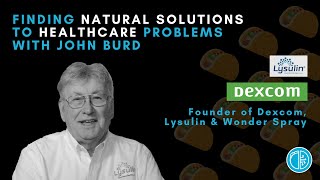
Podcast episode (Tacos & Tech) hosted by Neil Bloom interviewing serial entrepreneur John Burd. Burd recounts his long career in diabetes diagnostics (including co-founding Dexcom), describes developing natural-product interventions—Lysulin (lysine/zinc/vitamin C supplement) and Wonder Spray (hypochlorous-acid topical/mist)—and discusses San Diego's startup/diabetes-tech ecosystem. The conversation mixes product history, personal anecdotes, and commercialization details (sales channels, manufacturing, small-team operations).
Startups get the party. Startups get the party started. Startups get the party. Startups get the party started.
You want tech and tacos, Tacos in tech you know we got tacos. And tech is on smash for the green guacamole keeper Captains counting beans Contador Quentan frijoles found us trying to raise some queso la vida San Diego school of rappy rapping fire tortillas round jalapenos in these modern times a crab beer and coffee my coding yoga posse fold the body origami we be surfing coronado eating tacos el gordo the tacos standing puesto lucha libre and sombrero Got a shout out to cost angels by the ocean Watch the sunset La Jolla shores Entrepreneurs trying to get funded When San Diego Startup Week is popping in the summer Oceanside de Tijuana esti be full of hustlers from couch surfing to penthouses right on the beach Tech who believe stars are within reach we interview and founders who be shooting for the moon. SD TechOS with your host, Neil Bloom.
Come on.
Welcome to the Tacos and Tech podcast where we discover cutting edge San Diego technologies and the builders making it happen. I'm your host, Neil Blum, San Diego's tech ambassador and together you're going to put a face to the name of today's tech leaders with our own blend of local lifestyle. I want to take a moment to thank our friends at Cox Business who have enabled us to tell these amazing stories of local leaders, technologists, founders and funders. Cox is actually a 121-year-old family run private company that thinks in terms of decades in connecting communities a lot like we do in building a tech ecosystem. For years now, the local Cox business team has helped us grow through partnering at San Diego Startup Week. SD Quick pitch and in celebrating our technical leaders at the Top Tech awards this October, we're very excited to kick off an entire month of virtual networking and learning at San Diego Startup Month with talks on sales, marketing, data, people, design, development and more. There's something for everyone in the startup and tech community. Drop in on the pitch competitions, get your LinkedIn reviewed, meet new colleagues and listen in on investor panels on the future of deep tech. Check out the schedule and more@sandiegostartupweek.com and thanks again to Cox Business for your partnership.
And welcome back to the Tacos and Tech podcast. I have with us serial entrepreneur, specifically in the diabetes space, John Bird. John, thanks for joining us.
Well, thank you so much for having me, Neal. It's A pleasure to be here. I love speaking about natural solutions to big healthcare problems without prescription drugs. So that's my mantra.
Okay, well, we're going to dig into that. I think what you probably are known for a lot is the co founding of Dexcom, which is the $40 billion now glucose meter device developer here in San Diego. But you've been deep in the diabetes space for a long time, correct?
Yeah, since about 1990 is when I got myself actively involved in it. Actually my first job out of college, I worked for a company that Ames division of Miles Laboratories was the first company that developed at home products for people with diabetes, urine tests for glucose and the first blood test, finger stick blood test for glucose. But. And every time we had a corporate meeting they would always be allowed to talk about it because it was such a large and growing market and Bayer was a leader in it for a while they were. Miles Labs was purchased by Bayer and they, they were the leaders for a while. But then Livescan kind of like beat their socks off with better products and better marketing. So.
And then that was all in the early 90s.
That was back in the 70s when I graduated from graduate school in 1975 and went back to work at Miles Laboratories in Indiana. I'm from Indiana, originally Fort Wayne, so it was close to home. And I love working, I love science, I love working in the lab. And I was a director of one of the labs at the company. We developed a lot of clinical chemistry testing products and it was a great start to what I was up to. And then in the 80s, I left Indiana and headed west for fame and fortune. I joined a startup that had a doctor's office allergy blood allergy testing system. And that was where I got introduced to the business side of medicine, which is really tough because we had a great product, but we couldn't get the insurance companies to reimburse it because they all had allergists sitting on their boards and they allergists love to do prick testing on your skin, you know, like a pin cushion. And they didn't want anybody to use blood testing because it was a lot easier and would allow actually primary care doctors to do allergy testing. And they didn't want that to happen because they had a franchise of people with allergies coming to them and getting all that prick testing and shots and all the hassle of allergy. So. And then I left that company. I went there as it was called Masked Immunosystems. I went there as director of R and D And then I was promoted to chief operating officer a year later when there was the usual management shakeup in small companies and I was made chief operating officer. And I was there for a couple years and then I went to move now down to San Diego in the mid-80s, I guess it was late 80s, and joined a company here called Quidel that had tests for the clinical lab, the doctor's office, and home tests for like pregnancy. And they had an allergy test also and ovulation test. And I was there for seven or eight years as VP of R& D. And then I left and started my own company. My first diabetes company was called LX and Lexin. And we had a home test that allowed people with a single test a week to give them their average blood sugar over the previous week. With a single test, if you do a glucose test, strip test, that tells you what your glucose is right at that moment in time. But for people, especially with type 2 diabetes, taking the random glucose test doesn't give you very much information. But we had a system that allowed you to know if your diabetes treatment was working or not working. And if it wasn't working, you go back to your doctor and the doctors do what they do, which is usually prescribed more medicine. So that's, that's, you know, that's again, kind of a political thing where doctors and big drug companies love to write prescriptions. So then, so that company was eventually sold to a company which was also sold to Johnson and Johnson. So LXN became a J and J property and they kept it going for a year or two and then shut it down. And I joined a venture capital firm, Windermere Venture Partners, here in San Diego, run by a buddy of mine, Scott Glenn Friend. And we knew we wanted to do something in diabetes. So I did a road trip and I found the technology that became Dexcom in Madison, Wisconsin, which is where I happened to go to graduate school. And we started a new company, Dexcom, and the folks that had the technology got half, Windemer Venture Partners got half. And we raised a million dollars at a million dollar valuation. That was in the year 2000. And I was first CEO there for a couple of years. Then we hired a new CEO, Andy Razzle. And I always tell everyone that he's the fellow that brought the value to the company because when we started the company, we were developing a long term implantable sensor. So you'd go to a doctor and he'd do an incision and put one of these little sensors under your skin and it would Radio transmit your glucose levels to your pager. At that time, I was before cell phones, I think. So anyway, Andy convinced the board to develop the needle sensor, which is just instead of having an implant, you just put a small needle on your arm and it accomplishes the same thing. I always joke that if I'd have gone to the board and said, let's forget this long term sensor thing, it's too much hassle and it's a bad business model. Let's do a needle sensor. They'd hooted me out of the room because there were already two on the market. But Andy took the technology that we had developed up to that point and converted it to the needle incredibly fast and got it FDA cleared and it performs much better than the competition. And it's now become the leader in continuous glucose monitoring. It's called, and that's the latest and greatest thing in diabetes monitoring. And I'm so happy it was a big financial success. You know, the company went public in 2005 for 500 million compared to the 1 million it was valued at in 2000, and it's over $40 billion today. But even more than the financial success I'm so pleased with, I'm so happy that there's over a million people on the planet using that product to help them manage their diabetes better. That's kind of evolved up to that point. And then in the early. Well, the company went public in 2005. I was gone by that time, and Andy Razzle took the company public and I was doing some work on some other products that had to do with chronic kidney disease, which is also a huge problem. I mean, there are at least two or three times as many people on dialysis as there are that have diabetes. And half the people on dialysis for their kidney problems do have diabetes. And I believe that actually the reason that people have kidney problems is the same reason that they have diabetes. And that is that glucose. We need it for energy, but it's a toxic chemical, It's a reactive chemical. It's like a poison in our bloodstream. So all those tacos you have behind you there, they all have carbohydrates in them, and they turn into glucose in your bloodstream. And we need glucose for energy that we use every day to keep our minds active and our muscles working. But it's like I said, it's like a poison. It reacts with all the proteins in your body, in your eyes, your nerve endings, in your kidneys. And your kidneys are basically swimming in glucose because your kidneys don't want to let glucose out. You normally don't excrete glucose in your urine unless it gets above 200 milligrams per deciliter, which is pretty high. So your kidneys are just bathing in glucose, and it's reacting with all the proteins in your kidneys. And when. If this is a protein and this is glucose, when it reacts to that protein, it changes its structure. And when you change the structure of a protein, you change its ability to function. It doesn't function right anymore. So I got an email from one of my co founders, a nephrologist in University of Wisconsin, and he says, quit messing around with all this dialysis stuff. Do something important. Work on glucose toxicity. And I'd never heard that term before. I don't know if you've ever heard that term before. If you talk to me, you probably have, because I'm like a evangelist or something for glucose toxicity, because glucose is toxic. I thought, well, why is glucose toxic? And it's because it's reactive and it reacts with amino groups on your proteins. And I thought, well, how can we stop that? And as a biochemist, I thought, well, it's just chemistry. If we put lysine in the body and glucose has a choice of either reacting with the lysine that's on all of your proteins, it's an amino acid in your proteins, and you just form glycated lysine, and you can excrete that. The kidneys will excrete glycated lysine because it's not glucose. It's glucose attached to lysine. And I thought, well, okay, that seems to make sense. So I googled it and did a lot of research. The Internet and studies were done back in the late 2000s that showed that lysine actually helps people lower their blood sugar levels in addition to stopping that reaction. And I thought, well, lysine would be great for people with diabetes to take, but I can't sell lysine because you can buy it at the grocery store or drugstore right now. You go and buy a bottle of lysine. And I thought, so what other supplements might be useful for people with diabetes? And that's where I found research on zinc and vitamin C. So I came up with this formulation that has lysine, zinc, and vitamin C, called lysulin, because it's got so much lysine in it. And I wrote some patents in 2017, four of which have now issued. And I started the company, and I contacted a contract manufacturer, and he made the product for us, and that basically is Lysulin. Yeah, Lysulin. So we started selling it in 2018, and we've been selling it for two and a half years now. And sales are growing every month, a little more every month. And we're not on any retail shelves. We only sell it on our website at Amazon. And also now we just signed up walmart.com so it's available on walmart.com and that's kind of a brief history of how it evolved, how it all evolved. And I actually wrote a book about it. It's on Amazon also. It's called the Natural Solution to the Diabetes Epidemic. The discovery of Lysolin and historically the discovery of insulin is also a fabulous story. You know, back before insulin was discovered, people with diabetes basically didn't live very long because their glucose killed them. And when they discovered insulin, they started giving insulin shots to people mainly with type 1 diabetes, which is an autoimmune disease, and your pancreas stopped working and it basically allowed them to live somewhat of a normal life, although they had to take daily insulin injections. Type 2 diabetes is not an autoimmune disease, it's a diet disease. And there again, you can thank all those tacos behind you for type 2 diabetes, because when people eat carbohydrates, they go into your bloodstream and make glucose, and glucose is toxic, and it basically leads to insulin resistance and diabetes. Lysolin is the only product that targets the cause of insulin resistance and diabetes and can stop that reaction from happening. We just published a study done with 100 people with pre diabetes and showed that it basically slowed or stopped the conversion from pre diabetes to type 2 diabetes and also improved insulin resistance and beta cell function. That's the cells in your pancreas that make insulin. And Lyselin is the only product that does that effectively. So I'm just thrilled with how great it works based on literature research I did back in 2017.
So interesting. So you've, I mean, you've gone through the history of getting to hear obviously things that you've worked on have gotten you to a natural solution, which is interesting, right? You've worked a lot in the pharma diagnostics and then went more to kind of an E commerce model now, which is interesting, right? You're building a natural product that doesn't need FDA approval and is, you know, kind of on the shelves for anyone to able to buy. How do you feel about kind of going up, going, in a sense, going around the typical drug world to get Your product to market.
Well, I feel fabulous and I've really not been involved, sorry, been that much involved in the pharma industry. Most of my life has been in what's called the diagnostics industry, making testing products for labs and homes and things like that. So this is actually my first foray into products that people can use therapeutically. Although they're natural, they're not drugs. And the FDA doesn't, doesn't clear or approve vitamins and nutritional supplements. They just make you put a little black box on there that says the FDA hasn't looked at this, so you know it's not meant to diagnose, cure, prevent or treat any disease. Well, as you hear me talking, you realize it does actually treat diabetes and can potentially prevent prediabetes from becoming diabetes. So I have to walk a fine line because I don't want to upset the fda, have them come in and tell me, I can't, you can't do this, you can't do that.
So I grew up in a household with type 1 diabetes. My dad was diagnosed with type 1 at 21 years old. And I've always been told the story of. Right. When he was diagnosed, there was no method for really telling you your blood sugar at the time. He had to drive from LA to San Diego three times a week in the early 70s to scripts, I was told they would take his blood and then maybe 24 to 36 hours later they'd tell him, here's what your blood sugar was at, which is really hard to, really hard to make decisions on what, what insulin to give yourself a day before. Right. So it's pretty incredible to see where that's come. Is that, is that potentially a true story? Was that the case that you would have taken that long to get blood sugar readings back then?
Yeah, back in the old days, the 70s, basically it was a lab test. And a guy I worked with at Miles, his name was Ernie Adams, he was quite an interesting character also. And he actually developed this test strip that allowed people to test their glucose at home, first in their urine and then later on a finger stick blood test. And it was a complicated test. I mean, you had to stick your finger and put a drop of blood on this test strip and then rinse it under a faucet and wipe it off and then compare it to a gluc, a color chart, to see what your glucose level was. Well, then another guy at Miles Ames came up with a meter to read those strips. And that was the first home test strip with a meter that gave you a number that was your glucose. And now, you know, basically you, before Dexcom and the continuous glucose monitors, you had you prick your finger and you put just a tiny little amount of blood on this little strip and five seconds later, you know, your. Your glucose. I mean, it's come a long way to help people try to understand how the things they do every day affect their glucose levels. So, yeah, that's a, that's a good story about your dad. I mean, it's sad that he actually developed it. 21 is actually a sort of late, late ish to develop an autoimmune disease like that. But it's pretty tragic because it's like it basically runs your life when that happens.
So, yeah, and I mean, I think he's really definitely been fortunate and benefited from science advancing kind of at the stages that things would affect him. You know, something you mentioned around pricking your finger multiple times a day. Well, you do that for 30 years. Your fingers are pretty calloused. And to now have a just a needle in you that is running full time, you don't have to prick your finger is actually a really big deal for diabetics. Right.
It's incredible, really. And, you know, the only. I only have two complaints about the Dexcom system. One is it's too expensive. So it's fairly expensive. Most insurance companies now will pay for it if your doctor writes a prescription and their customer service leaves something to be desired. I've called them myself a few times and it's too long a wait and too few answers. But other than that, it's like a fabulous company that's done an amazing job of spreading the word about continuous glucose monitoring. And actually here again, Andy Rasdal, the guy that followed me as CEO at Dexcom, one of the many things he did that was great was to manage and control the publications about the company. And he did a great job of making sure that all the publications told how great the product worked and what it could do for you. So that's really important.
Something you said was that you moved to San Diego, it sounded like for a job at Quidel, but you also brought the technology from Madison to San Diego. And there's now a bunch of diabetes tech companies in San Diego. You've got Tandem Diabetes, you've got Companion Medical, just got acquired this week by Medtronic. Is there something that you can see back a few years back that showed that San Diego was becoming a bit of a diabetes tech hub?
Well, I think. I don't really know. There's anything specific. I mean, the fact that you've got Scripps around here and doctors that had been working on diabetes here for a long time. Dr. Goff at UCSD or maybe San Diego State, he had been working on the needle sensor that Minimed picked up first. It was picked up by a fellow in Orange county whose name, unfortunately, I'm blanking on. He's a fabulous story himself. His first name is Al, and I can't think of his last name right now. He picked up that technology from Golf and then he developed it into the needle sensor that was then acquired by Medtronic. And Companion Medical has a insulin pen, a smart insulin pen, and they were just acquired by Medtronic. And I'm really happy to say that I was actually one of the first investors in that company too, that a friend of mine, Sean Saint, who's the CEO there, my wife sold him a house and he was at Dexcom. And he called me when he started Companion, and I thought, that's an interesting idea. So I put a small amount of money in there and it's given me a fabulous return. So I congratulate him on a job well done. But I just think San Diego is such a fabulous, as, you know, fabulous place to live that it's. It's a lot easier to recruit people to come and work in San Diego than it is to work in Indiana. I have an interesting little story about when we started Dexcom and we had to get the technology out of the university. There were four people that had developed the technology in Madison. One of them is another fabulous person that I feel blessed to know, and his name is Mark Schultz. He's a bioengineer and he's the one that did all the technology development there, along with this doctor who was nephrologist, Dr. Updike and two other people, an electrical engineer and a veterinarian. They were the company, basically, and they knew they needed money and management. So they were open to the Windermere model where we'll put some money in. But you've got to take one of us to manage the company. So to get the technology out of the company. The first international headquarters of Dexcom was in Madison, and it was in the basement of a dentist's office. We rented some space in the basement of a dentist's office and set up a lab there and did all this stuff to get the technology out. And I hired a couple people from California and we lived in an apartment there, it was like a dormitory in Madison to get the technology out and then once we had it, we moved the company here to San Diego and the rest is history. But I love that story about being in the basement of a dentist's office as our first international headquarters. It just got good. You can accomplish a lot. So.
Yeah, it's absolutely true. So, so what is, what is the team like for, for Lysolone that you're building now? What does that look like for growing this company?
Well, basically it's just me as chief cook and bottle washer and I have another friend of mine who I worked with in the past, Mike Biesert. And Mike is a, the finance guy and he's our chief financial officer and he's also our chief operating officer because he manages the books but he also manages all of the inventory management and things like that. And when we don't make the product we haven't made for us and it goes to a warehouse and when we get an order, that warehouse ships products to customers. So Mike does his best to try to manage that and that's a full time job. And we've got a website manager and I've got a digital marketing consultant, three or four of them that help us with the digital marketing. And then the chairman is Michael Walsh. He's also had a lot of success with starting and funding and small companies and having them be acquired. He was the founder of a company here called Prometheus that had a system for people with stomach issues like ulcerative colitis and inflammatory bowel problems. And that company was acquired by Nestle after Michael ran it for several years as the CEO and later the chairman. So. And he's a, I worked with him when I was at Quidel back in the 80s and he's a great, great guy. So it's a small, it's a lean, mean team. But really since we don't have to make anything, we don't have to have a lot of employees and manage all that manufacturing, which is usually a big part of the company. And our marketing and sales is all done with consultants. So it's a very small group.
That's great. Nice and lean as we like it for startups if we can keeps overhead down, tell us a little more about the product itself. So is this really for someone who is in, who's been told by a doctor they're in a pre diabetic phase or should anyone be taking this to really just keep glucose from destroying the hurting the body to begin with?
I think actually glucose basically ends up poisoning us all. So like I fortunately do not have diabetes, but I take glycerolin every day and you know, as you can see from my beautiful complexion, it's, it's working, but it's totally safe and non toxic. So. And we've had a lot of people that, you know, people with prediabetes usually don't know they have prediabetes because you only find out if your doctor happens to run this A1C blood test. And if they're low, if that number is high, then you have either prediabetes or diabetes. And we have a companion product that we actually sell with Lyselin, which is an A1C test kit. I'm just looking around the box there, I don't see one off the top of my head, but we sell a test kit that you can run a 1C at home. Like your dad used to go to the doctor to get his glucose test. Most folks go to their doctor and he draws a blood sample, sends it to a lab for what's called an A1C test. And that gives you your number, average number, average glucose number over the previous weeks to months. And we've shown that when people start taking Lyselin in as little as two weeks, that average blood sugar number can start to drop. So we know that lifeline is working and it works for 70% of people who try it. And we don't understand why it doesn't work for 100%. But prescription drugs only work for 30 to 50% of the people who use them because they don't work or there's side effects that they can't take them and so on. But Lysolin is good for 70% so it can really help people a lot. And I think it's tragic when people with type 2 diabetes get started on insulin injections because that's a one way street and you know you're going to need more and more and more because your body is resistant to it, your cells disallow it from working properly. And Lyselin. I wish doctors would all try Lyselin for a couple months before they start people on insulin. So if you're listening in and you happen to have type 2 diabetes and it's not being controlled very well, and your doctor starts mentioning the possibility of getting on insulin shots, I hope you will try lyselin and 70% of you will find that you will improve your diabetes management and hopefully never have to get on insulin because it's, it's tragic. That was long winded.
No, it's great. You're a serial Entrepreneur that's obviously a parent. You like to start things. Do you want to talk a little about what else you're also working on simultaneously now, too delicately? Wonder Spray.
Yeah, actually my public relations person, a consultant that's helping me and got it. You and I connected, actually. She's always warning me about just focus on license, don't get off on Wonder Spray. But I have to tell you, it is a fabulous product. Where is it?
We appreciate Michelle's expertise, but you know, entrepreneurs just want to talk about the stuff they make.
Yeah, I got interested in Wonder Spray because of wound healing. And when I launched Lyshowin, I went to LinkedIn and everybody had anything to do with diabetes on their description of themselves. I contacted and said, let me introduce you to Lyshulan, an all natural solution for people with diabetes. And one of the guys who contacted me is a podiatrist, Mark Hinkes. And he loved the story. It's a great science story. If you look at my book about it, it's a little science tale. And he said as part of our discussion, he once told me about this other product called Ultramist. And there was just actually a press release about Ultramist. They were just acquired by somebody else. And he said when he used it on people that had wound heal and even had gangrene, he said it was a miracle how well it worked. So I contacted the company and I said, how much does one of your Ultramist systems cost? Basically, the system is just like a little gun, that handheld gun that's connected to saline and it uses ultrasound to generate a mist that you spray onto the wound. As I said from Dr. Hinkus, it was miraculous how well it healed things. And he said, well, it's $30,000. And I said, oh man, no wonder nobody knows about it. I said, why don't we work on a low cost version of that product and we can. I'll pay for the development of a prototype, you can manufacture it, we'll both sell it, and we'll help a lot more people with their wound healing problems. And he was a Russian, the CEO was a Russian engineer. There's two strikes right there. And he said, no, I'm not interested. The parts are too expensive. I've got 50 patents that cover the technology. I said, okay, fine. I said, well, I'll pay for the development of the prototype and you can make it and we'll both sell it and help a lot more people with a lower cost system. And he said, no, I'm not interested. Well, a couple Weeks later he sent me an email, said, well, for three and a half million dollars, I'll give you the non exclusive right to one of my patents. I said, well, I don't have three and a half million dollars, but I will pay for the development of the prototype. We could both sell it and I'll pay you that 3.5 million out of the royalties on the sale of the product. No, I'm not interested. It was his immediate response. So I, like Marco Polo, went to China and I found that they had a little ultrasonic nebulizer that basically you put a solution in. And I wish I should have all my parts here to show you what it looked like. It's a small little thing like this and it basically push up, put solution in the top, push a button and it puts out a mist of whatever's in the container. So I bought some from China, they're not very expensive and I sent them up to a lab in Burbank to test against some bacteria to see if the saline in a little nebulizer would kill the bacteria. Well, two weeks later I got some good news and bad news. Well, the bad news was that that little nebulizer with saline didn't kill the bacteria. The ultrasound was just too weak. And I knew from my graduate school days I used to use ultrasound to kill bacteria. It will basically put bacteria in a test tube and put an ultrasonic probe in it. It screams at it for a few seconds and it breaks open the cell. So I knew it would kill bacteria, but the ultrasound and these little nebulizer wasn't strong enough. Well, that same day I got an email from a wound healing organization that I am a member of and they introduced people to hypochlorous acid. HOCL and H O C L, I prefer calling it that instead of hypochlorous acid because it's not like hydrochloric acid. It's not actually acidic at all. It's neutral ph and it's what our white blood cells use to kill all pathogens. It kills bacteria, viruses, yeast, mold and fungus. It's incredible how powerful it is. It's 100 times more powerful than bleach as a disinfectant, but it's totally safe and non toxic. In fact, you can spray it in your eyes, your nose and your throat totally safely. I do it all the time to demonstrate it and it's just incredible how powerful it is. I thought holy moly, I should try this to see if it will work in a little nebulizer. So I Contacted a manufacturer and they sent me some samples and I sent them back up to this lab and in Burbank to test. Basically this time I had them test the bacteria that causes strep throat and also the bacteria, one of the bacteria that causes pneumonia. And they put this hypochlorous acid solution into the nebulizer, sprayed it on a plate that had these bacteria on it, and in less than 15 seconds it totally killed both bacteria. I thought, eureka. So I contacted the company and I said, can I private label this product? You make it, I'll sell it. And I said, how are you selling it now? And they say, well, we sell through McKesson and Cardinal and these are organizations that sell to doctors. And I thought, okay, you want to sell us the doctors? Here's the wall, here's your head. Beat your head against the wall. Because doctors, unless they can write a prescription, they're not interested. And actually the product that they make is FDA cleared as both a prescription and an over the counter product. So I had them manufacture it for me. And a few months later, I started another company called Wonder Spray. And I don't know if I've sent you information on it, but not only is it good for wound healing and first aid, it's good for every skin problem you can imagine. Sunburn, itching, and it's immediate relief. It helps right away. And it's also good like a mosquito bite. You got a bug bite of some sort, just spray it on there, it'll immediately stop itching and burning and so on. My brother, I sent him some and he said, I woke up one morning with a sore throat. I sprayed it in my throat, my throat immediately felt better and the sore throat didn't come back. So really, Wonder Spray is the cure for the common cold. I mean, how many centuries have people been looking for that? It's here, it's available on our website. I mean, it's incredible. Of course, I can't say all this in public because it's not FDA cleared. It's only FDA cleared for use on the skin, not in the body. But people use it in their eyes, nose and throat, ears. Look at the testimonials. People have found it's just incredibly safe and non toxic and useful for all kinds of ailments. So did I send you any?
Not yet, but I'm going to look for some.
All right, you send me your mailing address and I'll send you some. And actually, anybody that's listening, if they want a sample, email me@jbirdjburdburd.com and I'll be happy to send you a sample to try. Once you get it, you'll wonder, how did I get along before I had this? You can throw away about a dozen products in your first in your medicine cabinet and use Wonder Spray instead. I'm so happy that I found that not only for wound healing, for people, diabetes, but for all sorts of other ailments. I mean, we also just now that this COVID 19 pandemic is on us, it turns out that the active ingredient hypochlorous acid is on the EPA list of approved disinfectants for use against COVID 19. So we just started selling these foggers which you can use to basically put hypochlorous acid and just spray a fog all over the place and it disinfects and deodorizes. You know, anytime there's a smell, it's because there's bacteria causing that smell. And this will get rid of the odor as well as it will use for disinfectant. And you can see all this on www.thewonderspray.com. it's funny, our website is thewonderspray.com When I went to register the domain name Wonderspray, I could get Wonderspray.com for $28,000 or I could get TheWonderspray.com for $18. So I chose TheWonderspray.Com oddly enough, there is another product called Wonder Spray and it's a. Actually it's, it's used during your. In the bathroom after they use. They advertise it for use after you go to the bathroom. It's like a little bidet that sprays something. I don't know what they use, but it's not. That's not our product. Somebody asked me about that on one of the chats. I get messages, I get is like, what is this Wonder Spray product? And they gave me that website www.wonderspray and that's not us. We are www.thewonderspray.com. so another long winded explanation. So I'm so happy. I've got two great natural products and two companies trying to find people to help them to better health with these amazing natural products. And again, it's all done without a lot of manpower. But it's pick and shovel work finding customers. We, as I said, sell half our product on Amazon and half on Facebook, but it's a lot of work. But I'm happy.
Sure. Yeah. But it seems like you're always after you know, the ailment space. Right. You really want to help people, which is obviously very different than the other Wonder Spray product, you know, but from a larger, mission driven purpose. You know, you're really after helping thousands, if not millions of people better their lives, which is pretty fulfilling. Even more so than, you know, the financial piece of which is apparent.
Obviously, that makes me happiest. I mean, I get calls from customers all the time. I had a fabulous call from a customer a couple weeks ago. She had a skin. Facial skin problem, and she had acne and she had scarring on her nose. She had to wear a bandage on her nose because it was so bad. And she said, I've had this problem for 30 years and nothing has helped. Doctors, plastic surgery, drugs, nothing worked until Wonder Spray. And it's like a miracle. I can't tell you how happy I am about Wonder Spray. And she says, I've got tears in my eyes. And I mean, I had tears in my eyes too, listening to that story. It's like, oh, my gosh, that is just so fabulous. And she wrote us a great testimonial about how Wonder Spray has really changed and helped her life. So those are great stories. I've got them for both products. And it just makes life so satisfying to have that.
It seems like the kind of companies in San Diego, for whatever reason, were driven by that. It seems to be a bit in our DNA. We want to be impacting people's lives here. So it's pretty great to have you here continuing to build products. Few other things you like about San Diego. I know you keep mentioning the carbs in my tacos. So does that mean you only do the protein of tacos? You have a favorite taco meat that you go to.
Well, you're not gonna want to hear this, but you know what Rose and I both really like? Take a guess. Ding, ding, ding. Here's a clue. Taco Bell. I love Taco Bell stuff. I love that beef that they put on their tacos and burritos and enchiritos. I mean, but we also go to, like, Fidel's. I'm sure you've been there in Solana Beach. That's a great restaurant.
Good little hidden spot.
There's a place.
All right.
No worries there, too.
We're not going to judge about Taco Bell. You got to get your tacos somewhere. And Taco Bell is usually pretty convenient, that's for sure.
Yeah. Although sometimes you have to wait in such a long line in the drive through these days, it's like so frustrating not to be able to go out and eat.
But John, it was really great to talk to you. I really am inspired by the work that you're doing to better so many people's lives. I'm looking forward to go checking out some salicylin. Appreciate it and thanks so much for being on the podcast.
Okay Neil, thank you so much for having me. It's been a pleasure and I hope we can actually sit face to face one of these days and have a coffee at Starbucks or something.
Thanks for joining us on the Tacos and Tech podcast with Neil Bloom. Thanks again to Cox Business for helping make this possible by expanding the reach of the San Diego tech ecosystem. Big shout out to School of Rap for our rad intro music. And thanks as well to Nest Podcast Network where we are recording live inside their studio at Nest Co working in Bankers Hill. You can find Neil Bloom on Twitter eealbloom as well as fresh brewed tech and tacos in tech Pod on Twitter too.
Startups get the party. Startups get the party started. Startups get the party. Startups get the party started. Startups get the party. Startups get the party started.
You want tech and tacos? Tacos in tech. You know we got it.
Hey Sa.








