Flip the Switch Ep. 74 - Neal Bloom: Building an Empowered Entrepreneurial Community
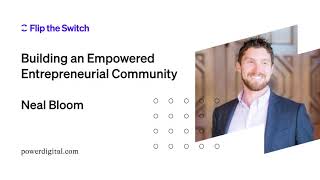
Neal Bloom on building San Diego's startup ecosystem and what makes founders successful at raising capital. He explains why network density matters, how to choose between friends and family funding versus angels and VC, and why sticking to your investing thesis beats chasing every opportunity.
Questions this video answers
Portfolium; acquired in 2019.
Startup San Diego (organizer of San Diego Startup Week).
Podcast: Tacos and Tech; Blog: Fresh Brewed Tech.
EvoNexus.
It's.
What's up, John?
Neil's joining right now too.
Sweet. God, it's so stupid. I got a. Hey, Neil. How's it going, man?
Hey. Good. How are you?
Good. I gotta restart this computer. This thing hates Zoom, so the camera does this to me. Let me just restart. I'll be right back. I'm sorry, guys.
Yeah, no worries. Any apple.
Good.
I'm the guy that sets this up for Grayson so that the technical difficulties are minimized.
I understand that. I've got John too, for my podcast.
Yeah, it's. I'm gonna join each one and so I just sit here for the first two minutes and then. Good to go.
What are you. Are you recording just the zoom or you record the audio in another way too?
We just record the zoom when we were. We're all remote now, but when we were in the office, we had like a whole switchboard and professional microphones and the whole get up. But now it's a little bit more difficult with everybody just sitting at home.
Yeah, totally. I've looked into a few. Podcasts are like sending people mics, which I am not interested in investing in at this moment. But yeah, it's a big change up for sure. Really?
So they'll send a mic prior to the actual interview?
Yeah.
Wow. Maybe we'll look into that, spice it up a little bit.
Yeah, I mean, I listened to a few of them last night. Quality, audio quality. Sounds great. So I don't think you need any big changes.
Yeah, we put out the first couple that we've done over Zoom. They haven't been too bad, even from, you know, Grayson's laptop. So we'll see. I don't know, but definitely was a higher quality when we had the good mics.
Yeah. Where's the office? Are you guys in utc? I forgot where you guys are. We're in Old Town. Oh, okay.
So we're right next to the Marriott in Old Town. It's actually a nice spot because the traffic is never too bad, so.
Yeah.
Okay, looks like you got it. You guys are recording, so I will jump off Grayson, if there's any issues, just ping me.
John. John. So for the recording, do I just hit stop recording at the end?
No, it's just once you leave the meeting, it'll stop recording and then it'll stop. Send it to my account.
Do you have it on the side by side view? It's not like that for me right now.
If you guys have gallery view up at the top right hand corner, you can hit that.
Okay, perfect.
Okay.
All right, great. Well, Neil, nice to meet you, but let me know if there's any issues.
So it's okay? Perfect. So it's recording and you'll just edit out our conversation at the start?
Yep. Great.
Thanks, man.
All right, bye, guys.
Neil, how's it going?
Good, how are you?
Good. I got a good intro that I want to make for you, too. That could be of interest. This guy, Tim Ortiz. Have you ever met Tim before?
I don't think so.
He's got a cool kind of AI startup around the music industry, and he's kind of like trying to figure out the best approach. Ideally, he's been bootstrapping it himself, and ideally it'd be time to go raise some money and he doesn't have a ton of experience in it, so we did a little beach walk, socially distanced beach walk yesterday, and we're talking through different ideas, and I thought that you could be a great potential resource for him.
Sure, be happy to. I looked him up on LinkedIn. Is it Dayzig?
Yeah, that's the name of it. So he's had. He's a, you know, member. That's how I originally met Tim. I've known him for years. Really good dude. You guys will have a bunch of mutual connections and stuff, and so he's been in the event music space for a long time and, you know, he's now going more than the SaaS route with it, so.
Got it. Cool. Yeah. Love to chat with them.
Sweet. All right, let me just do this.
I listened to a few of your episodes last night with James Brennan, which was cool.
Yeah, James is the man.
You guys go back pretty far.
I met James, I've known of him for a long time, and then I've gotten to know him over the last probably five years, and just a guy that I respect a ton, and so it's fun chatting with him. We got a bunch of them coming out this week. We didn't push anything out because we had the big news with COVID so.
Got it.
All right, man. Hey, I was gonna share the sheet with you. I don't know if you care. I could still share it with you. I didn't get your Gmail to Google Drive Doc. You want me to do that real quick or you wanna just let it rip?
No, you can share if you want.
But what's the Gmail that you can get on to drive with?
Let's. I'll put it right here for you in chat. Neil Bloom, Mail dot com.
Yeah, I emailed you yesterday. I Don't know if you saw it.
Sorry, it was a little late.
Oh, I may missed it. My apologies.
All good, man. How's things?
Good. Busy. We're just, we have like so many deals we're reviewing and yeah, it's been a good thing, but we're also saying like, hey, let's not force anything. Let's the right deal will emerge. Nice. Yeah. How about you?
Yeah, super busy. We closed this acquisition of COVID on Friday and so that was like a year in the works. We faced a lot of adversity through it, but you know, super stoked to have it all completed. And so we kicked off integration this week and it's been busy. We pushed out the whole press release and all that exciting stuff on Wednesday and so it's been hectic. And then I also had a board meeting on Wednesday morning and we've got our company wide kickoff today. So we do like, we used to just do it quarterly, but right now we're doing it monthly just with the whole remote work thing and so. And it's our first one with the Covet team. So we'll have about 175 people on the call now. So that's at 11 today. So that'll be fun. It's kind of like a little bit of a recognition event from the previous month and then kind of like the key focuses for August type of thing.
Oh, wow. Okay. That's exciting. A lot going on.
Yep.
One thing you can I. The one thing in here, everything looks good except co founder, Startup San Diego. Yeah, Can I we just change that as just like an organizer of Startup San Diego? Yeah, I kind of came in like the day after the first four people started it, so I don't, I don't want to bother them, annoy them.
All good. I just ripped it off some website that I found.
Yeah.
So cool, man. All right, well, we're rock and roll. And if we have anything that, you know, we cover that isn't what we want, these guys will edit it out obviously, so we can just kind of make it conversational. My thought is, as you look at that agenda is I'll do the little welcome intro and then I think we can just get into some general convo and have you kind of talk through what you're up to right now and see where that takes us. And then I was thinking we jump into startup kind of community and ecosystem and you know, what are these key attributes that empower more growth in that area? And I'll just kind of tee off and Feel free to just go like, on some of the questions. One, one of the things I think was cool with James, he's obviously easy guy to interview, but he just kind of like runs with it, you know, so feel free to talk as much as you want. And then I was thinking we'd go from there into raising capital and kind of like, it'd be cool for you and I to even just talk through the differences for people between venture capital versus angel versus private equity versus growth, because I think a lot of people don't fully understand the differences and kind of what, you know, what it means. And then I think it'd be cool to kind of talk about playbooks for fundraising, obviously. And, you know, what is your playbook and how would you approach that if you were an entrepreneur? And things to think about and then maybe milestones for companies to think about in terms of maximizing when they bring in capital. And I'll comment on some of it too, as we kick it back and forth and any tips, and we'll just see where that goes. And then I was thinking final questions, and I'm not sure if you want to answer. You could also just talk in generalities, but what was the worst investment you've ever made or biggest mistake kind of type of thing, and why? And then what are the biggest mistakes that you see investors making in general? And then, you know, same thing on the entrepreneur side, what are the biggest mistakes that you've seen entrepreneurs make?
Okay, I'm fine with the worst investment question. That's totally fine.
Sounds good. All right, man. Yeah, do it.
All right. Awesome.
All right. Welcome to another episode of Flip the Switch. And today I am very excited and have the pleasure of chatting with Neal Bloom, who is very well known in the San Diego community and has really been a major catalyst for startup growth. In addition to that, he's been a huge player in really advocating to build a more empowered university here in San Diego to help entrepreneurs as well as investors and drive more entrepreneurship. And a little bit more about Neil. He was the co founder of software company Portfolium, which was acquired in 2019. Neil is also one of the organizers of Startup San Diego and helped grow San Diego Startup Week, which over the past eight years has empowered thousands of local entrepreneurs. And he also serves as investor and mentor to countless young entrepreneurs. And some people have even nicknamed him Mr. San Diego. So that's a big title to fill. And he also runs a really great venture capital podcast that you should check out called Tacos and Tech, as well as a really respected tech blog called Fresh Brewed Tech that I know that I follow both of them. So, Neil, welcome to Flip the Switch and thank you very much for joining me today.
Thanks for having me on Grayson, for sure.
Yeah. And so Neil and I actually originally connected through a fellow YPO member who's actually a forum mate of mine, Mike Lands. And so kind of got to know each other and really have enjoyed all the conversations that we've had. And speaking of communities, that's definitely a great avenue for people, entrepreneurs and executives, groups like YPO and eo. But Neil, I think it'd be really cool to just kick it off and kind of talk us through what you're up to right now and where your focus lies here in 2020.
So previously I've been in company building phase and I kind of feel like I'm in community building phase right now or the phase of building companies or helping an organization of companies grow. And so what I've been focused on over the last few years is creating an environment that helps our entrepreneurs grow better, that includes notoriety to the community in San Diego to bring just more attention, bring more capital, bring more talent. So a variety of efforts that my blog is focused on that. And how do we empower everyone to kind of have pride in the community that they're working in and then also exploring areas of investing in local companies. So what are the different avenues that people can invest local, whether on a small level or on a pretty large grandiose level? So kind of exploring those areas right now.
That's awesome. And so when you're doing that, obviously I know for you it's a labor of love and a lot of what you do and really empowering entrepreneurs and more business. But how do you tie it back to an economic engine, I guess, for yourself? And so how, you know, how does, how does it drive your goals and economic engine and how is that structure set up?
I think the easiest answer is having skin in the game. And so when you have some equity in something, you feel more committed and you're more aligned with growth of anything. For a while, as just a volunteer in the community, I think that was. I didn't make that leap. I was really passionate about helping other entrepreneurs, but once I said, hey, I'm in with you, that took it to a whole new level. And I obviously poured even more into things. And so I like that aspect of skin in the game. And that can mean a multitude of things. It may not have to mean just straight cash. There is sweat equity, There are other things. So that's kind of the economic driver for me, what I look for, for as well as who could be doing this at the same time that don't have the means that I do. Right. What are other avenues for people to help their community? And so that could be mentorship. That could be some sign of social accountability of some sort, you know, where, which I think you guys understand really well in YPO and eo, the idea that both sides have to gain from it, it's not just you kind of altruistically giving. So I look at those as economic drivers to help people make sure that their mission aligned with growing our community.
Nice. That's awesome. And for those of you that saw, those were my two pups that just joined the joys of the COVID era and work from home. So sorry about that. And way to stay on track there, Neil, with the two cute puppies cruising into the room. So, hey, I know one area that's very near and dear to you and that you've been a big catalyst for. And it's something that I'm definitely passionate and very interested in and feel like I can do more and make a more intentional effort to contribute to, but really is the community and ecosystem around startups. And, you know, I think historically, you know, people really think of places like certain pockets of Los Angeles, obviously the Bay Area, but I know that you have a big mission to grow that community here in San Diego. And so I'd love to talk a little bit about that and kind of get your thoughts on what that journey's been like so far. But I guess starting off, when you're looking at a great community that really empowers entrepreneurism and startups and growth, what are those attributes and elements that are necessary, in your opinion?
It's a big question. And I would say I took a lot of my learning from a Bradfield book about a decade ago called Startup Communities, which outlined kind of the different. Different pillars within a community to make a startup community. And at the center of all that is the entrepreneur. The entrepreneurs need to lead their own community. And it's actually not entirely obvious that that's true, because a lot of times, as the entrepreneur, we're told, just put blinders on and only focus on your own company, which we have to do, number one. But we also have to realize that we need the community to kind of rally around our needs as well too. And we need to ask the community of that. And you can't just expect that nonprofits, universities, and governments are just going to say, hey, whatever you need, we'll just do it for you. They have to be told, what's the unique environment that you're building? What tools do we have at our disposal to help you? And that's not obvious. So entrepreneurs kind of need to lead and say, here's what I need. And that's kind of from a high theoretical piece from the book that you come out of it in San Diego. What that means is that entrepreneurs need to not necessarily wait to give back. So a lot of times it's easy to build a company and 10 years later you maybe have some success and you say, okay, now it's my turn to give back. And what it really means is every step that you move forward, you look back and say, who could I be taking along with me? Who could I be empowering to get through that door that I just got through? It's little things like that. And so that is the piece of the community that has taken a while to learn for me is what tiny little tasks can we give entrepreneurs to say, here's how to keep growing it holistically, if that's the right word. You know, instead of waiting for some big financial exit and then saying, here, I'll give back financially only. So that's one little piece that I don't think. It's not specific to San Diego. It's all over. But it is going to help us grow the community from a capital perspective quicker. Because these are 10 year bets that we're making when we invest in companies. These are seeds we're planting that the sooner we plant them, the longer we have for them to germinate and grow. And some will fail. But the aspect of growing that seed is going to, I mean, it's going to create such a more vibrant ecosystem. So that piece is important. I used to say density was important, but Covid's kind of changed that a little bit. Kind of this physical density where we all need to be in the same space. Now I understand density more as like density of a network. So the fact that we all have our own little networks in our pockets that we're going to right now, the same as we were back when we would do coffee meetings. Somehow we need those networks to densify and they need to overlap with someone else's network. Like you and me, right? We both had a connection with Mike Glantz and now we're finding other ways that we can densify those networks. How else do we learn about each other and say, oh, Grayson, you're valuable at this. Can you help evaluate a deal for me here? And then you ask me, hey, for an intro to another company. So I think we're kind of learning the new virtual version of densifying a community. And I think that actually is going to scale us pretty nicely to not have to say it has to be a physical densification, because we've been working pretty hard at making downtown that density spot for a while in San Diego. And, you know, if we can do it virtually, I think that we're going to be in a much better place and get to where we want to get quicker.
Yeah, it's a great point. And I think, you know, being a connector and taking advantage of the platform that entrepreneurs build and grow, and I think as your career progresses as an entrepreneur and you have more successes and you're able to employ more people, partner with more people, collaborate with more people, you know, your platform grows and it gives you the ability to make a bigger impact. And I think that you're spot on. And I think you can even look at it almost as, you know, people that are passionate about getting involved in nonprofits. You know, your capital is definitely valuable, but a lot of times you can drive a lot more value with your time and talent. And so it's a really good point. And one thing that I learned early in my career, just through watching people that I respected a lot and seeing how they help me, are these people that are willing to make connections, mentor, support, get on a call, give a view, give an opinion with not asking anything in return. And I've found that not only is that a lot of fun to be able to do and the right thing, but it always comes back around. And I know for me, I've had it come back around in many ways, whether it's, you know, I spend some time with somebody and I'm able to help connect them to somebody else that can be a resource. We were actually just talking about that before we started the podcast, you and I. Well, you know, if that's a win for you and for that person, you know, you know, me being able to help you, that catalyst in the back of your head, you know, when I. When I need something or not even the right word, but, you know, I'll be on your radar and it pays off. And so I think a lot of people get too focused on, well, let me get a brokering fee or whatever it is, and they're just way too focused on the short term and not just let me help the people in my community and my Network because as they're more successful, you know, it's going to mean great things for all of us. So I guess, you know, from your view, when you look at the, and you've been doing this here in San Diego and have been very vested in this and focused on this now for, for seven or eight years, if not longer, what type of progress do you think that the San Diego kind of startup and venture community has made over that journey? If you're looking at where it was, call it eight, 10 years ago and where we sit today, what are some of the things that you're most proud of and some of the leading indicators that you think we've made really great progress in?
So the number one indicator for me is the quality of our companies. We've got companies that have grown up, that have really grown from a size and revenue perspective, you know, job creation. That's honestly the number one thing that we can be the most proud of, that people are building quality companies and we have a lot that we can show for that. So that's one thing, and that's the name of the game, build good companies. And we definitely have done that, especially on the tech and, and kind of innovation side, the community side. What eight years ago was kind of siloed either geographically or kind of what kinds of companies you're building, say like service base versus startup and tech versus maybe a craft beverage. Like a lot of these were very siloed. And now we've seen a lot of overlap where people are saying, oh, you know, you're learning a lot from growing a craft brewery. Why can't that be similar to growing a biotech and let's learn from each other, right? And so you're seeing this cross pollination of industries in San Diego, which is becoming a force multiplier because now talent can move between those industries and they're not stuck in one vertical, which is giving mobility to talent. And so if we've had success, say in building billion dollar biotechs, why can't we do the same in other industries too? So that's been really great to see. As well as the organizations that support the community, nonprofits, government and universities have also kind of built bridges to each other and said, hey, let's not fight for the same resources, let's share them and let's make sure everyone knows who to go to when they need something. So if you're an entrepreneur and you're kind of on your journey, you're saying, hey, I'm starting out, who can help me go from an ideation to fully committed to this idea, you know, that's something that's vetted and worth jumping in 100%. There's now at least a path where you say okay, these set of organizations will help you here. They then will hand you over to the next stage when you're hiring people and you're growing and I think that's really big to all of us. Lean in and say okay, it's not about us. It's not about our one brand that says we help the entrepreneur do blank. It's about the community saying let's help you find your path, your shortest path of least resistance. So that's been really cool to see the kind of support community come together and you know, build those bridges.
Yeah. And who are some of those organizations or individuals in San Diego that you think are really carrying the torch and that are great resources for entrepreneurs on this journey.
So first there is one, there's a group called the Startup Coalition. So this is all the organizations came together and said hey, let's make sure there's this path for everyone. They all are listed on startupsd.org resources and there's kind of a great airtable that is going to turn into a visualization that says here's based on what stage you're at, here's where to go. And so some of the organizations that in the early ideation mode, some of the universities have done really well in creating an environment where even off campus entrepreneurs can come and learn and grow both as mentees or mentors. So San Diego State's Lavin center has been great at that. And the Zahn Center, UCSD's basement and USD now has the brink and the angel, the San Diego Angel Conference which is helping to train a new generation of angel investors. So from the university level that's been really great to see these places that also bring off campus on because those have been siloed in the past for once you're kind of working full time on your company. Evo Nexus has been a long time incubator for companies. That's where I incubated portfolium in 2012 or 2013 through 2015 and they continue to be kind of a great starting spot for companies who have jumped in and said yes, let's go on all in on this idea. And then from the capital perspective, like once you're building a company that you know you're going to need some outside capital, both connect with SDVG standing a venture group together of combined forces and continue to be A great connector to outside venture capital. And Techcoast Angels, which is a group of angel investors who together do due diligence on companies, but then individually invest their own money. So it's a great kind of expedited path for meeting a lot of investors at once. There's 200 San Diego members in the chapter. They focus on both biotech and tech hardware as well too. And they've really turned the page in being kind of founder friendly and having a lot of entrepreneurs in the group who are writing checks to other entrepreneurs. So those have been a lot of organizations that have come together, kind of greased the wheels for entrepreneurs in their early stage journey.
Very cool.
Yeah.
And I think to your point, what's neat with some of those organizations is that you even have entrepreneurs that have been on the other side of the table, have gone through those programs, have benefited, I think yourself is one example, and I actually know several others with some of those groups and then have had a ton of success. And I think that it's such an interesting vantage point for those people to then come and get involved in these groups because they've actually been through it. And so they know the areas that maybe weren't as ideal or as valuable or were frustrating and they're able to help improve. And, you know, that's, I think, a really neat playbook in general because, like, I know for Power Digital, for example, you know, we've had a pretty awesome internship program for a very long time. And one of the ways that we've made it better is that the superstar interns that graduate and become full time hires, they then take over that program and they manage it. And so nobody knows more than they do. What are the areas of opportunity to improve that program? Where was it great? Where did we fall short? And so it's just about that steady progress. So I guess before we move on, I want to talk a little bit about venture capital and different types of investors. But I guess the last question on the community front, if you're looking at where we are right now in San Diego, and you had a magic wand and you're looking, you know, two, three years down the road, you know, what are the changes that would happen here in town? What would be the things that would occur where you would be like, wow, look at the progress that we've just made in the last two to three years. What can people like myself or other entrepreneurs that want to be a part of that do to get us to the next level?
That's a good question. I think I'm going to give it two answers. My mind immediately went to the financial side, and that's not the only answer. But I would hope that in two, three years we've had more exits which would complete a bit of the flywheel and return some capital back to the community, both in investors who've invested in companies 10 years ago and are kind of waiting for that exit to invest in the next companies and to help a lot of employees who've had maybe equity in companies kind of be able to work on that next thing too. So that's one area that I think is just going to naturally happen, like there's nothing we can force around that whatsoever. But the other piece that I am constantly looking at in terms of growth is that while we've got, say, a cohort of companies that have been growing and building really well over the last few years, we have to continuously fill the funnel up top. So we got to make sure we're always planting brand new seeds and helping the brand new entrepreneurs start that next company, because otherwise we're going to have a dry spell in a few years again too. So what I would hope is that in a few years from now, more entrepreneurs are turning around and mentoring more entrepreneurs maybe who think they have an idea but haven't taken that, didn't take the leap off the cliff yet. So we need kind of a system for that. How do we go help empower, build confidence and mentor in a real formal way, people who think they have the idea but haven't done it yet. And so that we can just wind that funnel because we don't know what happens when we've got twice as many startups starting every year. Like, we don't know how much more resources we need. We don't know how much more capital is going to need it going to be needed for that. And what does for the talent pool locally too, when you've got twice as many companies growing at the clip we've been growing over the last 10 years. So I'm constantly looking at the top of the funnel. How do we just jam more into the top? And how do we build resource so that people know, here's how to do it, here's where to go, Here are the three steps you take to validate an idea so that you determine it's worth doing, or you quickly say, no, that's a failure, let's iterate and pivot. So, not a tangible metric that I'd say that we're gonna have in two, three years, but I'd like to see more startups starting.
Yeah, that's awesome. I think one thing that helps the flywheel to your point is also I remember from my own personal experience when I was 24 years old, 25, and I think that a lot of these Unicorn Bay Area companies are put on a pedestal and a lot of the ones that don't necessarily have, they require massive amounts of funding to get critical mass and ultimately get to a point where profit can be generated. And I failed twice actually trying to go that route and was not successful. And then one of the tweaks that I made to my playbook was more focusing on businesses that I can make profitable quickly and can self fund themselves. And so I think that's a really interesting concept and something that I think a lot of young entrepreneurs should be thinking about too is if there's a way that you can, you know, have a part of your business that can be profitable and can even fund the bigger vision. Like so if there's a technology part, maybe you can couple it with a service part where you can use that service part from the start to get profitable and then self fund yourself and have it be sustainable. You know, those are interesting things that can be done too. And that's a big part of what we've done at Power Digital is, you know, we've got our technology side of the business with Nova and then we've got the service side and the service side has been profitable. I don't think we've ever had a month that it wasn't profitable in our eight year history. And so it's enabled us to not have to raise capital but to be able to put a lot of resources towards our platform nova, which gives us tremendous upside in terms of being able to make a shift in business model from a service business to where we are, where we were years ago, where we were a tech enabled service business. And as you do that, you know, the way that your company's viewed and valued goes up and ultimately what we're trying to work towards, and I think we're getting very close, is to be a platform as a service business. And so there's just immense value creation because, you know, as a tech enabled service business, we get valued on a multiple of profit of ebitda. And if we can make the jump to a platform as a service, there's the opportunity to get value based on revenue and obviously that's a massive difference in value driver. So I think that's another thing where a lot of the young super driven entrepreneurs, you know, are thinking about building the next Facebook, Google, et cetera. But, you know, getting wins under your belt, learning the lessons and really building a track record will help you do that. And so I just know where I'm in my career. I remember when I graduated college, I tried to start a company right out of college. My parents and family were networking me around. And I remember one of my dad's buddies was like, dude, go get a job. You have no skill set. No one's. It was also 2006, so it probably wasn't the ideal time, but he was totally right. He's like, you don't know shit. Go get a skill set. You want to be an entrepreneur? Learn how to be a rainmaker and really drive business and solve problems. And I'm super glad that I did that because it definitely set me up well. But I just know as you get successes and you have a track record, things like capital, the ability to attract talent, you know, all those things become a lot easier. And so I think, you know, it's a good food for thought for some of the young entrepreneurs, which is just build a business that can be profitable and grow and start there and it will give you tremendous options. And so I guess, you know, shifting gears on that, I love to talk through with you. And I know one thing that I think is confusing to a lot of people is the different types of capital that you can raise or that you can inject into your company to drive growth. And so obviously you've got angel investors, you've got venture capital firms, you've got private equity growth equity, you got using debt, whether that's SBA loan or applying leverage against profit. So I guess let's talk through that a little bit. And what do you see as those core buckets? And I guess if you can kind of share the criteria or differentiators between those, I think that would be really interesting for the audience and to better understand.
Sure, yeah. And you bring up a really good point about creating a business that doesn't need outside capital. First, to be honest, that's. That's 98% of San Diego's companies, by the way, are small and medium sized businesses that are not at this incredible growth rate, that grow at the pace that they need to grow, that are profitable and, you know, feed a family and feed a company. And that is a great starting point. Once you start getting to a point where you need to raise outside capital, it gets even more complicated. And we know as entrepreneurs, it's already hard to grow business. This is another layer of complexity. And now you have bosses too that you have to kind of answer to. So making that leap is, you can imagine in San Diego is only for a really small subset of companies. It's probably 1 to 5% of companies that are building something that needs outside capital. Usually this is in the innovation space. So you're building some kind of technology and that could be in a biotech, you're building a new kind of cure for or diagnostic for something or building a new vehicle or a new way we get to work like an Uber. So it's something that you just can't bootstrap yourself and it's not going to be profitable for years. So you need a significant amount of outside capital to help get just build the team and build the technology to a place where you can monetize it. So that's kind of the difference, I would say kind of your everyday small business versus a tech startup, at least in the way that we use startup as kind of colloquially in the venture community. So the different forms of capital and usually the path that people take in building a tech startup is that you actually bootstrap it in the beginning. So maybe you're working on writing your own code or you've found a co founder and you're kind of bootstrapping it, side hustling it. You eventually get to a place where maybe you get some friends and family and fools, three Fs as we call it, where you get parents, neighbors, someone to start giving you kind of the tens of thousands of dollars. Maybe you get up to somewhere of about 100k, 200k in capital from friends who know you. The big leap after that is angel investors. And these are people who might not know, have known you before, but they're still kind of giving from their own money. And these checks typically started around a 25k per person and you usually are raising between 100k and 500k usually in this phase though, I've seen successful entrepreneurs who are on company number three that immediately can raise millions at this. And it's all also totally depends on what are you building, right? If you are building something that is going to be so huge that a few tens of thousands of dollars isn't going to do anything in the first place, you might need to jump to bigger checks anyway. And that's totally based on track record. If you've never done it before, it's going to be really hard to tell someone to really sell someone to invest in you. So you know, it's kind of a slow progression People are in their early stages at friends and family and angel are usually investing in the person and less the idea. So usually saying you are the executor, I believe in you. I somehow have seen enough data points to know that you are going to probably fail and pivot and iterate whatever idea you have now. So I am not 100% on just this idea. It's the person. So that's kind of the first few buckets of capital. Once you get to a stage where you show that you've got consistent something, it could be consistent revenue or consistent track record or a consistent, let's say metrics of a specific, say social media platform which may not be monetized yet. That's when you may get the interest of a professional investor. This could be a venture capitalist who is investing somewhere between 500,000 to tens of millions of dollars or straight to private equity who are usually investing tens or hundreds of millions of dollars. So those are kind of the two main buckets. The big difference between all of these is also what else comes besides the check. Do you get connections to say potential customers? Usually you get that in the professional investing side that you usually have connections that will immediately help you. They also can help you with other like staffing services. They may have their own staffing arm that may assist you in filling the talent once you've hired this, once you've raised this capital too. But the big thing for everyone is also what are the kind of everyone's when they're investing. They're also thinking about the exit usually. So what kind of multiple are we going to get and return on investment are we going to get? Your friends and family are probably looking at that least they're investing in you. They may be looking at the least amount about what's the return because they just know that you need this capital and they believe in you. The angel investor is probably okay with a small A1 to 2X return. Just give my money back in a few years and it will feel good. Or Give me a 2x to 5x and it'll feel really good because it's their own money. They don't have to kind of answer to anyone a venture capitalist or private equity investor. They have pools of limited capital, limited partners who've invested, who expect a return. And so they are only going to invest in something where they perceive that they're going to meet the return that they've told that their investors will get, which is somewhere between 10 to 100 times. Their money is kind of what they're looking for and they don't expect that every one of their investments is going to do that. And so that's why they need all of them to have the potential to have a huge, huge, huge return. So these are like really big numbers, you know, for, to kind of hit and return for. You know, 100x is kind of like, you know, that's like an Uber, right? And not all of those are created every other day. And that's why it's not for the faint of heart. That's it's why it's kind of, you know, startups who are building for growth while they're building something that is going to hopefully change the world. It also has the huge potential to be a complete failure because there's so many pieces and people you have to sell along the way to believe in your idea and you have to assemble the right talent that knows how to grow to the metrics that your investors are hoping for as well too. Now that's all kind of equity based capital. There actually is another bucket of equity based capital called crowdfunding where it allows anyone to invest $100 or more into a company and it's regulated by the SEC now. And so I'm seeing that as an up and coming way that anyone can invest in companies. It's kind of what Kickstarter was where you put $100 in and you maybe got a product. Now you actually get a piece of the company. And so that's kind of a new exciting space of investment capital. And there's platforms built just for raising early stage, small equity, crowdfunded rounds kind of in the 100,000 to million dollar areas. Company like platforms like We Funder and stuff like that, where you could go and you could actually go put $100 into 10 companies and have a portfolio. There's the debt side that you mentioned as well too. And so there's actually kind of, there's debt in terms of revenue based, which you mentioned. There's also debt actually more where you can raise on, you can raise debt based on the venture capital that you've raised. So if you've raised say 1 to $5 million from a big name venture capital firm, it may be easy to go to a bank and say, hey, we'd also like to raise some debt as well. And they use your venture capital raise as collateral in that regard. And so you see certain companies pair those together, especially if they have certain assets that they're trying to grow or they're getting, they already have revenue and trying to get to kind of a next stage of revenue, and they just need some upfront capital for that, too. So, yeah, you see kind of both married alongside each other.
It's interesting. One thing I remember when I was young in my career is I really had a hard time understanding the difference between what is a venture capitalist focused on and a private equity professional. And really, I think, simply put, venture capital is typically more speculative and more companies that are not profitable yet, and private equity is usually focused on companies that are profitable. And a big part of the reason why is exactly what you just said, which is a big part of the private equity playbook, is using leverage or debt means the same thing, basically, and applying that against profit. So a private equity firm could often get three, four, even five times leverage against profit. And so what that means is if a company was doing 2 million a year in profit, they can get the bank to lend them 6 to maybe even $10 million. And so that's a really effective way to do it. You can kind of think of it like a mortgage on a house. Most savvy financial people, they'll never pay cash for a house. It's just because they feel they can put their cash to work and it can drive more value than just having it in their home. So they'll put 20, 30% or whatever down, and then they're going to get a mortgage. And so it's very similar to what the private equity playbook is. And that the benefit to the entrepreneur, if you can get to that point, is I think one of the challenges, and I've seen it with my friends that have gone, that have raised a bunch of rounds of VC, you know, 10, 50, $100 million. But the issue is that the earlier you have to do that, the lower the value of your company and the more diluted you become. And so a lot of times as an entrepreneur, you go that VC route, you kind of are no longer an entrepreneur at some point. You don't control your own destiny. The venture capital firm does. And you started off owning whatever, 100%, 80%, and then by the time you exit, you might only own 1% or 2%. Now, I think an important concept that people forget is obviously, it's better to own 2% of something that's incredibly valuable than to own 80% of something that is not valuable. And so obviously you got to work that math. But I've definitely heard a lot of horror stories on all sides. But really on the VC side, where, you know, I've got a good friend for Example that went that route was having a ton of success. His business was growing 30, 40% year over year. But the VC firm needed such a big return that they actually shifted the business model away from what was working to something that was more of a moonshot, because to them, that's what they needed. And the company ended up failing. And, you know, it was a frustrating event for this entrepreneur, but so it is one of those paths that you just really need to know what you're getting into as you go into it. Whereas for me, I've got a private equity partner at this point at Power Digital Periscope Equity, They've been amazing to work with. I've learned tons. But as we've acquired companies and we just acquired another company this week, we're able to use debt for a lot of it. And so it does allow us to drive a lot of value for the platform, but not just crazy amounts of dilution. So there is dilution as we roll in their equity and we have everybody aligned and where we're going. But it's not like what you often see in venture capital, where, you know, the cap table is just getting smashed down, you know, because of the way that the financing is working.
So.
And the other thing that's cool right now for a lot of entrepreneurs, and I'm not sure how much exposure you've had to it, but is even simple things like SBA loans. Like, I know right now at the SBA loans, they're actually, I think, deferring the first six months, so you make no payments. And I've seen people that are getting $4 million, three, $4 million in these SBA loans. Now, obviously, you've got to sometimes personally guarantee these things, so there's a lot of risk on that side, and you better be very confident in what you're doing. But it's another way that people are buying companies and buying companies that are already demonstrated product market fit. But maybe the entrepreneur is just exhausted, or maybe the entrepreneur has some debt and is nervous about that debt and wants off the hook. So I think there's a lot of avenues and I'd be interested to get your take. But I think getting capital is not that difficult. And there's a lot of capital floating around and investors want to put it to work. And so I think in today's world, it's easier than ever. And that's where strategic capital really comes into play, is it's not just really about getting the money, it's about what do you get with the money. So I guess if you're an entrepreneur, talk us through a little bit. What are things when people say strategic capital, what does that mean to you? And you mentioned some things earlier, but would love even an example or two that's a real life example that you've been involved with so that we can understand what it means. And then what was the impact and why was it so valuable?
Yeah, the strategic capital is this force multiplier that you mentioned. That's huge. So the idea that not only is the investor writing a check, but they are putting something else into the business as well. It's usually their expertise. And that's why entrepreneurs make great investors. Because they've built companies so already from a cathartic perspective. They can be a shoulder kind of cry on when things are tough because they know exactly how tough it is. So they are kind of a built in mentor. Any person who invests in your business that's run a business before, but the piece, the strategic piece is if they know your industry, they know how to cut corners legally that could save you so much time on growth. And so I have an example in a company we recently invested in. A group of us invested in an E commerce business locally in San Diego, subscription box E Commerce. And we specifically sought out other investors to join us who had logistics and fulfillment experience because we knew this is where the company was growing into, is going to have those as pain points. And so first group people write a check and they one, they understand the business, they excited by it, they write a check and then they say, they roll up their sleeves and say how can I help? And that's where you get so much more from the strategic aspect where the investors themselves now are aligned, they have capital and they have equity in the business. And so they're going to do everything they can to make that business successful and profitable and can literally make the money that they actually invested in go even further too. Right. Because really as investors what we're giving capital for is to kind of build staff or to hire staff and to grow a business to a certain metric and if we can make that money go further, it's good for us, it's good for everyone. So if we already know the talent that says that, we say here are the open roles you have. We know the perfect person to be your VP of marketing, right. For this E commerce business or we know the perfect partner in this that we can introduce you to that could be a great channel distributor. So that's the strategic piece that comes with the capital that you shouldn't overlook at all. You should really look at where you as the entrepreneur should be interviewing the investor just as much as they're interviewing you and saying is this the right person for my business? And not just only get excited about that, the dollar signs. And that's, I think what we're growing really well locally in San Diego is now entrepreneurs have the means to invest in other businesses and can really do a lot more than write that check. Even if they're still running their own companies, they still have the time to give back to help that company be successful.
That's a great point and you touched on it earlier. But that is the flywheel that we need to just get cranking is the more that there's entrepreneurs in San Diego that are having great exits because that's typically where there's big wealth creation, then they have that capital and they need to put it to work. And so obviously there's lots of options. There's real estate, there's bonds, there's publicly traded companies. But to your point, I think that the entrepreneur specifically is the type of person that really believes in that dream, understands it and is usually more open to risk. And so certainly investing in private companies is going to be more risky. And so that is the key. And so really we just need more those successful exits and more successful entrepreneurs here in the community and that'll help continue to drive that. So I guess if I'm an entrepreneur and I'm starting to get some traction and I'm like, all right, I need to turn this up, I can continue to do what I'm doing, but it's going to be slow or I can raise capital and it's going to speed it up and give me a much better chance to be successful. Where do I start? Do you have a playbook or three things or so that if you were in that seat, you know, here's how you would approach it.
So I first, you really need to know the kind of company you want, you think you want to build, right? Do you really want to raise, build a company that is going to need tens of millions to get to the place where you feel fulfilled about it, you know, like, you know, if you're building a venture backed business, it's a long time of building before you have the thing that you of envisioned you would have, right? You got to go build the technology, go get the audience. It's going to take a while. So you have to first come to grips with what kind of patience level do you have for that. But then what I like to do is look at and emulate companies that are kind of one step ahead of me. So you know, do I want to be kind of, am I trying to grow to them? These could be potential competitors by the way, down the road. But you want to look at their path, how did they fund their growth? And look at people who may have invested in them who already understand that business. Right. And so you don't have to go explain a brand new framework to someone. And this works by the way, in the service based businesses too. There are people who invest in specifically marketing agencies or even law firms or things like that. And you can go and say you don't have to go recreate the wheel if you find the business that you kind of are trying to emulate and grow into and look at their path. So that's like how I start the playbook or at least the framework for where to go. And I actually will go and befriend the company founders too and learn from them. And usually they don't view it as your competition. You're going to come up and get me. It's usually the opposite. Oh, someone else who understands what we're trying to do. Here's what I did. And you actually tend to get a lot from that relationship. At that point you're probably really starting to size up. Like what's the capital that I need now versus what I'm going to need over the life of the business itself too. And that's when you start to pretty quickly understand the path that is this a pretty big venture capital play or is this something that can be bootstrapped off of revenue? And then I can sell, you know, I can sell a piece of the business to say private equity to help fund kind of our next stair step growth. So it kind of depends on the business that you're going for. I would say the peer group piece goes a long way too in terms of finding complementary businesses. So a business that may be not in your industry but is, you know, still kind of selling something similar to you learning and kind of finding that group that are at the same stage you use really important as well. So find companies a little bit ahead and find companies right at your same stage as well too. And I think you usually will get connections to capital from those pretty quickly. In San Diego, there's a group called Connect and San Diego Venture Group that specifically are really focused on connecting you to a venture capitalist. So that's kind of like their kind of a clearinghouse for that. So if that is the route. It's good to go there and learn their process, learn that maybe you're too early. It's actually good to learn that you know and say, where do you need to be and what metrics do you need to hit to be ready to be shown to certain kinds of investors? One, it's good process for learning, kind of being turned away. You know, it's always good as an entrepreneur to have a little bit of chip on your shoulder because it motivates you, but it also, you're going to get turned away everywhere. Like so many investors are not going to invest in their company. And you need to learn one, how to take that in stride, take the feedback and ask for feedback from them. And you need to learn how to kind of pick the right investor for you. So it's kind of like a job interview. Right? You're not going to get every job you interview for. So I would say go early to the places where you don't think you're ready for capital and learn to be turned away. But learn what are they evaluating you for? What metrics do they need to see so that they're ready to write that check?
Yeah, it's great advice. And I think you know what I've learned and I think you've alluded to it, but whether it's growing a company and doing sales, whether it's interviewing, whether it's raising money, it's really a hustle and numbers game oftentimes. And so certainly you've got to optimize your pitch and you've got to really understand your audience and what motivates them and what they're trying to accomplish. But you just have to have the conversations and you're going to get rejected, you know, a lot more than you're gonna get those yeses. And so building that thick skin is I think, the key. And it's funny because a really easy and relatable example is I talked to a lot of young people and I remember being there myself. They're getting out of college and they're like, I want to do sales. Like, you know, I love talking to people. I'm very social. And then they, very few actually make it because they are getting kicked in the face and rejected day long, you know, and a lot of times it'll take 80 rejections or 90 rejections to get, you know, a couple of yeses. So it's a great point. And the cool thing is that there's awesome resources and I think it's easier than ever to start a business, especially with the Internet and these new capital sources that you touched on. Like, I've seen a ton of companies that have come out of, you know, whether it's Kickstarter or these crowdfunding. There's a, there's a company in town that specializes in it called Launch Boom, which is a bunch of great guys. I mean, they've blown up a bunch of companies from nothing through one of those programs and on. So there's more resources than ever. But I guess as we wrap up, I got a couple kind of final questions for you. So, as a investor and on that side of your career, what is the worst investment that you ever made or the biggest mistake that you ever made? Looking back.
So there's this word called thesis where you come up with kind of your own algorithm of what you like to look for in an investment. And it's kind of. Some people are pure numbers saying I need to see these kinds of growth. Some people say it's about the person and some there's a blend in the middle. And for me as an investor, an angel investor, I'm oftentimes investing in people who are pre revenue. So I don't have a lot of numbers to go off of. I'm going off of track record. I'm going off of them building rapport, saying, hey, we're going to do this, come back and then I'm going to check back in with a few weeks. And they did that. Okay, that may be enough of a point to look at to say you're an executor, you're someone I can back. So sometimes the worst investments are when I don't listen to my own thesis and stick to my plan. Because if I'm investing this early, it's probably a ten year bet. And I have to sit with that for 10 years. And so I wouldn't say I'm not going to call it a specific company, but I would say that there are certain times where I have made an investment and I ignored something that was like a gut feel, which, which I have learned is part of my thesis about people. I've said, oh, you know, there's something else shiny that I'm attracted to. And I went for that as opposed to sticking to kind of the pieces that I usually go for. And now I have to kind of sit with that for the next 10 years and be like, yep, that may be one that it could still be successful, but it's more that gut feeling the entire time for 10 years that every investor update I get and be like, Ah, yeah, that was. Didn't listen to myself, you know, so I don't know. I think that's kind of the worst idea for myself. It's just that long term waiting game.
Yeah. And it's interesting, I think, you know, I've got a good buddy that we've talked a lot about, this super savvy smart guy and he's told me, he's like, I think that entrepreneurs make the worst investors a lot of times. And I was like, well, why do you think that? And he's like, well, just think about it. You know, entrepreneurs are eternal optimists. They're trying to always come up with a solution to get there. And I think it's true that a lot of entrepreneurs or people that come from that background, you know, will find ways to find the positives and opportunities. And so you're right. And I think it's a matter of listening to that original gut and sleeping on it and not trying to justify or come up with reasons why, oh, this isn't really a problem because of this or that. So I know that the conversation and him sharing that with me years ago, I've held close and I'm very cognizant of. So I guess, last question for you. What's the most successful and fulfilling investment that you've ever made in your career?
Well, I'm still early in my investing career. I hope to have a long one because I'm really enjoying it. But the ones I think that the one that's been most successful is both fulfilling for me is that I feel involved and I feel valuable. Like I don't feel like I'm just a check. Like I like, I really am strategic and I'm a resource to the company. Otherwise why do they need me after I wrote that check? So that's from a high level. I'll call out a company I'm really proud of that I invest in early, trust in Will, invested in them in 2017. So not even that long ago, purely on an idea. I think I invested in them during their pitch competition where they had come up with the idea literally like a month before. But it was the person, it was the team, it was Brian, Cody and Daniel coming together. And I said, whatever you guys do next, I want to end on. So that's been really fun to on top of, feel fulfilled of how well they're doing, feel fulfilled for them coming up with a great idea and letting me come along for the ride. Also see how well they're doing too in building this new modern Estate planning stack. So I'm really excited for them and where they're headed.
Yeah, that's cool. And I think one interesting. And I think it's part of what you're doing right now, too, for people that are getting into the investing game is just even look at those opportunities and even if you're not ready yet and then get your gut feeling and say, hey, if I had the funding to do this or if I was in the position to do this, would I invest in this company? And then following it, you know, documenting it in your journal or whatever and then following it and, you know, starts to help you kind of hone in on your. Your gut feel as well as the things that you're looking at and be able to look in the rearview mirror and be like, man, I was right on this, or I was wrong. And why was I wrong? Where did I miss? So I know a couple other people that invested in that company and I remember hearing about it when that was going on and, you know, probably should have taken a bigger look because I think it's going to be a huge success story. But I hope it is for all of you.
Well, we can.
Neal, thank you.
Talk real quick about a company we both invested in. Real quick. Also Vessel, right? Yeah, we're both invested there. I'll be honest. I was drawn to them when they originally were Bloom because my last name and I was really jealous of their domain name, but also of the founder itself. John obviously has a bit of a track record. So I'm excited that we're both invested there and excited for them, for their growth as well as they finally are getting out to market now.
Yeah, totally. And Vessel, previously known Bloom, which is. That's funny. I didn't even think of that. Is kind of like a lab at your house and John Carter is the founder and CEO there and great guy here in the entrepreneurship community. And it's a really cool idea. And for me, what resonated actually and why I was so drawn to that is I actually had experience in the toilet industry, which is originally it was going to be an apparatus that made a toilet kind of smart. So that drew me toward it. I also obviously believe in John, but when I look at deals, I look at the marketing dynamics and the ability to acquire a customer, and that business is perfect for it because of the reoccurring revenue element. And we've actually seen it prove out in the kind of seed campaigns that have gone on. So to your point, it's like, what is your superpower or skill set in business and looking at it through that lens that you know really well. But certainly that's a company that I'm excited for and that everybody should keep their eye on as well.
Yeah, definitely. I'm excited for them, too. Cool.
Well, hey, Neil, thank you so much for your time and insights. Really enjoyed it and wishing you tons of success.
You too, Grayson. Thanks for having me on. It was fun.
Talk to you soon.
You too.
All right, let me make sure I do this right. I'm always nervous about not properly saving it.
I think he just said it will stop once we leave.








