Fresh Brewed Tech Live: March 16th Dev & Data Night
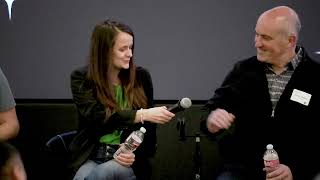
Adam Cuppy moderates a panel with Google's Brian Crook, Airspace's Ksenia Palki, Amazon's Sergey Zubate, and GovX's Rob Morrison on tech careers and leadership. They stress cultivating relationships and trust, learning fundamentals, and building inclusive teams over chasing every new technology.
Well, hey, everyone. Good to see y'.
All.
We haven't done a Devin date night this calendar year yet, so welcome to 2023. Happy New Year. We can still say it. I'm Neal Bloom. I run a tech media little business called Fresh Brew Tech. We promote the San Diego tech ecosystem. If you have news about your company or technology, send it our way. And we would gladly promote it to make sure everyone in San Diego knows about it. We have a newsletter that goes out every other week talking about tech news local and abroad. We have a podcast that comes out one to two times a week, interviewing a technologist or CEO of a tech company. And on Fridays, we try to read the top five tech news stories of the week. And then I also, my other hat is I run an investment company that invests in early stage tech companies called Interlock Capital. So if you're running an early stage company, we'd love to meet you as well too. But tonight we're here to talk about technical leadership, technical career paths, new technologies that are interesting. Besides ChatGPT, we all discovered AI for the first time about a month ago, right? Yeah.
Okay.
And so I'm.
I was a part of WAS back in September, so it's exciting to be back and to chat with all of you. Before we get too far, I wanted to actually get to know all of you a little bit. You up for that? All right, here we go. So this is referring to. This is called stand up. If so, all of you, you're already committing to all of this. This. Okay. But this is really more about just understanding who's in the room and the fact that we're all humans being human together. Yes. So stand up if you have a sibling. Look at that. All right, all of us are only children up here. You're not excluded. Now, I am actually an only child, so I'm a weird one. All right, go ahead and take a seat. Let's find out how many of you happen to be right handed. Right handed. Okay. If you're a freak of nature, stand up. I'm sorry, Left handed people. Just kidding. Left handies. Lefties. It's okay. Don't be embarrassed. It's okay. All right. Awesome. Out of curiosity, how many of you favorite color is blue? All right. Interesting. Yes. As we can see by the attire clearly. That's wonderful. Now, out of curiosity, how many of you are relatively, in your eyes, new to technology? New to technology. In your eyes, you define yourself as new to technology. All right, thank you so much for being here, y'. All. How Many of you are old dog.
And so without further ado, I'd love to turn it over to Mr. Adam Cuppy from Learn Academy.
Hi. All right, well, it is my pleasure to be here again today. The first one we did here was in September, or at least the one I was a part of was back in September. So it's exciting to be back and to chat with all of you. Before we get too far, I wanted to actually get to know all of you a little bit. You up for that? All right, here we go. So this is referring to. This is called stand up. If so all of you, you're already committing to all of this. Okay. But this is really more about just understanding who's in the room and the fact that we're all humans being human together. Yes. So stand up if you have a sibling. Look at that. All right, all of us are only children up here. You're not excluded. No, I am actually an only child, so I'm a weird one. All right, go ahead and take a seat. Find out how many of you happen to be right handed. Right handed. Okay. If you're a freakin nature, stand up. I'm sorry. Left handed people. Just kidding. Left handies, Lefties. It's okay. Don't be embarrassed. It's okay. All right, awesome. Out of curiosity, how many of you favorite color is blue? All right. Interesting. Yes. As we can see by the attire clearly. That's wonderful. Now, out of curiosity, how many of you are relatively, in your eyes, new to technology? New to technology. In your eyes, you define yourself as new to technology. All right, thank you so much for being here, y'. All. How many of you are old dogs and cats to technology? Who are the old dogs and cats to technology? All of. Yeah. Yeah. Excellent. All right, very good, Very good. All right, well, thank you so much for participating. These are all lefties, Righties? All the above. Yeah. Cheers. All right, very good. Well, here we are today. And these individuals to my right, your left, are different, seasoned, we'll call them seasoned veterans. In the world of tech, they come from different backgrounds, they have different roles and responsibilities. Some of them from very large companies, most of all of them, in fact, at some point in time from much smaller companies. But each and every one of them, and most of us, in fact all of us, started at zero at some point in time. So I'm really excited to explore a little bit of that. I know that this room is made up of both more experienced senior folk and of course, much more junior inexperienced people. And so I hope that this is an opportunity to explore the boundaries of that a little bit more so than ever. If you've got a question, there's going to be a couple of points in time in which I am going to ask if you've got any questions or insights and so forth. But otherwise I highly, highly encourage you to take, get outside that comfort zone if possible. And after the event, come up and say hi to these individuals to my right, your left, and of course say hi to one another. This is a great networking opportunity of which we have to give a quick thank you to Neil himself for bringing us all together. Thank you very much, Neil. Optimal timing. Perfect timing. I'm here all night, friends. Okay, so here we go. Let's start this. Excuse me. Let me start this off by having those to my right, starting down here at the end with Brian. Can you just give us a quick intro to who you are and what you're up to these days?
Sure, it works. Awesome. So I'm Brian Crook and I currently work for Google, which is not something I ever expected at this stage in my career. So I have about almost 30 years of mostly entrepreneurial experience prior to Google and in fact I worked for a few other large companies, Disney and then a big German software company called Software Ag through acquisition. So Google's the first large company that I've chosen to work for, I would say. And, and I'm in an interesting role. So prior to Google I was a CTO at a company up in Verve called Company up in Carlsbad called Verve for about eight and a half years. And at Google I'm basically sitting between venture capital and emerging technology. So I work with portfolio companies of large funds up in the Bay Area and also on the east coast to kind of help them with a lot of emerging machine learning, analytics and other types of use cases. So almost like a field cto. But we're. My team is basically aligned to general partners of these big funds to kind of give them an edge on mostly cloud technologies, a lot of stuff related to large language models. In fact, back to the ChatGPT use case, we'll talk about that later. That and other emerging tech. So great to meet you all.
Hi, my name is Ksenia Palki. Right now I run AI team at Airspace, which is a logistics company that does time critical logistics. So something that has to move really fast, such as an organ or a microchip that's critically needed somewhere. And my team that I built creates AI tools to make it happen, to make things move really fast. Before that I'VE been around it various startups in California, including Verve, but also other places where I picked up the difference of the industry world and academia where I started. I have a PhD from Stanford working still on data and still machine learning, although we didn't call it that way, having to do with earthquake forecasting and GPS data. So my transition from academia to the real world taught me a lot. And right now we're just building technology in a very specialized field of logistics and it's a very old field in terms of it's outdated, it's not a field where sitting on the edge of technology. So we kind of get to be the pioneers. Even though our models are very classic machine learning, we don't use fancy language models or anything like that.
Hello, my name is Sergey Zubate. I have about 20 some years experience with technology. Prior to that I was in academia, I was running software development marketing agency as a CTO and CEO here in San Diego for over 18 years and now I'm with Amazon, I'm with the fresh division and the team that I'm working with, we're doing a lot of infrastructure development for data science, for telemetry, anomaly detection, customer understanding. Thank you.
I'm Rob Morrison, I'm the CTO of GovX. GovX is a B2C company here in San Diego. But we're primarily focused just on people either in the military who have been in the military or first responders. So we, you know the tagline if you carry a gun or a hose, you could be a member of GovX. So what we do is we, we work with high end manufacturers to lower the wholesale costs to provide lower cost products to these, to this group because they're a deserving group. A lot of them don't get paid what the average people get paid. I mean that we've been at this about 12 years. We're pretty mature, we're about 125 people. So I run the tech team, the IT team, then the data team, now we're getting more into data. Before that I was at another startup that I started with some friends, more of a local company working on some older technology and before that I was at bigger companies. So I was at a company called Epicor, which is a big ERP company and Intuit here locally. I was there technically done all their credit card processing. So if you have any questions about credit card processing I can talk to you all day about it.
So I want to start by looking back in time to your very first tech experience and I'm really curious. When would any of you be willing to share what your first moment in tech was as you're seeing it? Like, what was it? Take us back. How old were you? Give us the situation. Yeah, Rob's got this one.
So I'm a 30 year old club like this guy, so I've been around for a while. So when I was little, my mom used to ship me off to my grandmother's house for the summer. And it was in western Pennsylvania. There's not a lot to do there. So my Cousin had a TRS 80 computer and just bored out of my skull. We would toy around on that and we ended up writing games and I thought it was really cool, the things that we could do. It's certainly nothing like the games of today.
Text adventure games, right?
Yeah, it was a golf game, that was one of them. But it was fun, it was interesting. I didn't, you know, after I left, go back to Connecticut where I grew up. I forgot about computers, but I found them later in my life. But it was. I enjoyed it. Just the puzzle aspect of it all.
Now, when you were that young, did you how aware of like tech and being in tech or writing games, were you software, things of that kind, or was it just really you just dug it, enjoyed it?
I was into baseball and fishing at that age, so I was not into tech at all. It came to me back later in life.
Interesting. Who else?
I think my memory is that I'm not that old, but I grew up in a place where it's not as advanced technologically. So we had this record player that I hated and the sound was so bad. And then my mom brought a cassette player and I was like, whoa. But I remember that. And then, but also like, I don't think I'm. I don't think I'm into tech right now. Honestly. I hate computer problems. Everything breaks on me. It would be magic. You can ask, we know a tech person, Milan. Everything breaks on me. And I'm really into people, people who build tech and people who use tech and helping them, but I still am not into tech, so just say it out loud. So I'm into people who use it and who build it and who benefit from it. But. But I don't care about technology just for the sake of technology.
Jess cares about math, doesn't care about tech.
Around me, Brian sergey.
Computer.
You can go and keep it on. Yeah.
Okay, now it's on, right? Well, computer is also not the first thing that comes to my mind when tech. I remember the kit that My dad brought to me where you can do electric circuit and you can saw something and screw something. That's probably my first memory. And then we just got lucky at school. Professional education was one of our subjects, and if you like math, computer science was one of the options. So this is how we saw first personal computer at the time.
So I'm one of these rare people that actually grew up in the Bay area in the 70s and 80s, as opposed to being a transplant, you know, and my dad was an engineer. And my first memory of tech, which probably was around 82, 81. 82 was going to the computer show at Moscone and seeing the early apples and seeing all the first kind of innovation around the PC. And when I was about 11 or 12, I got a TSR 80 color computer and started writing games. And so that was my first kind of foray into tech. And I actually took a slightly different path in college. I ended up getting a neuroscience degree or behavioral psychology, but pre med, and then ended up working in a lab, which led me to statistics. And that's what kind of took me back to getting a second degree in computer science. But I wrote games all through high school, and just for some reason, it never stuck until later.
Interesting. So I'm curious that for the four of you, when you think of yourself as a kid, did you. What did you want to be when you grew up?
I want to be a pilot. I've always had a fascination with airplanes. But, you know, looking to get in the Air Force Academy, that was a tall order. So I chose a different career.
Interesting.
I just wanted to grow up.
To grow up. Yeah. Well, screwed that one up.
I knew who I did not want to be. I didn't want to be a teacher and ended up teaching.
So, yeah, I thought I'd be a doctor.
Okay.
I wanted to be an actor, but that never panned out.
Yes. So I just watched a presentation that she gave about a month ago, and it said that you had a passion for musical theater.
I do.
No, you keep holding that because I got questions for you.
Community theater.
Interesting. So here's what's really interesting, is I'm curious for those of you out in the audience here who are in tech today, how many of you are? We'll call you career transitioners or industry transitioners. You didn't start in tech. You came from somewhere else. I find this to be a very fascinating truth and reality for, I mean, for most of us, not that it's a requirement by any means, is that we come from somewhere else. That leads us down this path into tech. And so I think it's very fascinating that we don't all come from the same spot. So I'm really curious though, of whether it was time as a kid or other industries or other passions or things that you explored. What is something that you've always had a heart, a love, a passion for, Whether it was baseball, flying, whether it was neuro, psychology, people, people.
I always care for people. And I think that now I get to have a team and I really care about. And working with other teams, sometimes you don't care about them as much. But like, you challenge yourself, it's a bigger puzzle than like writing a piece of code, honestly, because you need to figure out how to work with those people and then people who use your technology and then people who use your technology and help other people.
So in that regard, that's really fascinating. So I'm curious, if you didn't end up in tech, where do you think you would have ended up? What path do you think you would have ended up going down? Pilot.
Yeah, that would.
First slash. Baseball player, fisherman, probably architecture.
I think I really enjoy building things and watching what you built and the planning and the pieces that go together to put it all together to make something. There's also, you know, I like math, so there's some mathematical and symmetry to it all, you know, and it's just, it's nice to. I think that's what's different from what we do, where sometimes people don't appreciate it, where you build a building and it's there and you can see it forever. So I think it's just a different satisfaction that you get from that type of work. So I think that would have been. If I had to do it over again, I might chose that path, but I'm happy with what I do.
Great, Sergey, how to tell. Maybe economics, maybe medicine.
Yeah. Musical theater. We already know your answer with people.
Unfortunately, no one wants to see that and pay for that. Technology stole me from academia, so if that didn't happen, I imagine maybe I'd still be in academia. I went there intending to become a professor and have my group and lead it and study geophysics and the mathematical aspect of how the core deforms.
Definitely research for me. And, you know, one of the most amazing things about being a technologist is that you can jump fields, you can jump careers, you know, with the skills that you gain. And I got to go back probably about 15 years after I started, you know, in software. I worked for Paul Allen's Venture capital fund up in Seattle and was a founder of a nonprofit. Actually he built related to building a brain atlas for what is now the Allen Neuroscience Institute. So kind of an early Genomics project back 15 years ago now to kind of get back to my roots. And I did that because I had the neuroscience experience. I was able to kind of use those skills or relearn because things have changed a lot and then from a computer science perspective really add value in that context.
So let's talk about those transferable skills for a minute and kind of looking earlier on down your technical or people oriented path, can you think of any skills, habits or discoveries you made early on 80 years ago? Because I'm just kidding early on in your career that you still have held true today, that you've held onto in the roles you're in now that really cemented themselves back then.
I have something observed early on and I struggle teaching that too because that's something. When you are taking a class or you are in academia and you're solving a very narrow problem, you optimize it for for that solution. But anytime you are in industry, you're optimizing for impacting the business. So always looking at the big picture, no matter how small a thing you're concentrating on right now, I discovered it as soon as I got into industry and I think that is one thing that stayed with me and helped me avoid solving problems that ultimately are irrelevant and helped me solve problems that are very important better because I remember the big picture and not the little details that just are so distracting.
Relationship with people. That's you learn early in your life. It's easy to write code, it's not easy to make friends, it's not easy to keep friends. And that's something that completely transferable doesn't matter if you're in academia or anywhere else.
So let me ask you about the journey. What is something, a myth or a common misunderstanding about the journey that you witness or observe in more like lesser experienced folks, either junior by classification or trying to get into it that you wish you could say, hey listen, after so many years of this, this is the something. Please don't ever let this go. Like never forget this is going to matter to you. It doesn't matter how long you're in this, it doesn't matter what company you work for. Big, small, left, right, center. Don't forget how important this is what comes to mind.
I'm going to amplify what he just said. Relationships matter and how you cultivate that today pays back exponentially in the future. So building that network, cultivating that network and never stopping, you know, I mean, the fact that we know each other, right, it just turns on immediately. We can kind of talk and relate, you know, Or Eric, he's like looking down. I mean, the fact that you can relate and this is a small world here, but it gets even bigger. And when you work for, you know, a company for five, six years, those relationships that you cultivate, you know, they're really important for taking you to the next chapter, whatever it is.
For me, I think it's about learning how to be on a team because there's. For the things that we do, they're difficult to do on your own, and you have to learn other people's strengths and where they. And what their interests are. Just really, I think the teamwork has always been the thing. I've been on teams where there's some very smart people, but they don't know how to play well on a team and they're not successful. So for me it is. It goes back to the relationship thing and understanding other people and being able to work with other people. But if you're not on a good team, it doesn't matter how talented it is or how good the product is, it's probably not going to be successful.
I find it very fascinating how much even already and I think raise your hand if you feel like you already knew the people. Part of being in any industry matters. Of course, this is a common adage. But what I find very fascinating, especially when we get into new industries or we're trying something new, how much we focus on the nature of the specific work task in front of us. So if we're talking about coding or programming like, oh, I need to be good at writing the code and we so quickly can forget about how important it is, the social dynamic and how we're problem solving with other people and working together and all of those sort of aspects and. And qualities. So my next question centers a lot around something I had talked to you about, Brian, regarding Birds of a feather flock together and how does that play a role in your eyes in terms of potentially finding your tribe that you're going to lean into for support and guidance and where has that taken you today? And what advice can you give to those that might find themselves more introverted or where it's less easy to put yourself out there first? I applaud you all for being here, but get involved with other people so that you can build that network that you can later lean into and Cultivate more actively.
Two things come to mind. One is you're a product of the people you spend the most time with. And so making sure you're in the right group of friends, you're in the right culture at work so that you can, you know, build skills, understand team value, to your point, you know, so finding the right culture, I think, is critical, you know, So I know you. You saw me mention that on LinkedIn. What I was. What I was thinking about when I said that is that there are people in my career that have stayed right, that I still talk with from 20 years ago. And, you know, my original mentors, they're still there for the most part, you know, which is amazing to have that sounding board because, you know, the only constant is change. You're gonna do something different. You're gonna end up in a completely new role. You know, I never thought I'd be in the kind of role I'm in now. And, you know, I've cultivated enough, you know, people who care about me and I care about them in my life that I was able to make that very, you know, hard change because it would have been easy to just jump into another CTO role, and it would have been easy to, you know, be a part of a small company. And I chose to do something very different. And I'm thriving. And it's unexpected. You know, I never thought I would work for a big company and be happy, and I'm super happy. The second point I want to make is that time is precious, and it relates to, you know, making sure you're with the right people. But invest in the right people and don't necessarily cut ties with those that aren't the right. But just know where you're spending your time, because time definitely gets a lot shorter for some reason when you get older. I haven't figured out why that is. Maybe it's just more things you have to do, but the day goes by really fast.
I want to agree with that, but also warn about certain clique toxicity that exists in tech that you probably have witnessed. And I've been a part of it, too, in the past, where it just takes time to recognize, because sometimes people, oh, my God, they're genius, and they're making something amazing, and together you're building something and kind of almost looking down on others because you're moving so fast, you so aligned, you don't need to talk. You're thinking the same thing, and then you just realize that you're leaving other people behind. And you created a very toxic environment. So always be on the lookout for that. So if something, if you feel like you have a small group and everyone's aligned and it's perfect, maybe take a step back and think maybe you just created a very non inclusive toxic environment where no one else can come to you and you want them because you want someone who looks differently and thinks differently to help you move on to the next level.
Something that you mentioned about introvert, extrovert. It's important, it's okay to be either. That's also another thing to understand.
It's just important to be introvert or extrovert.
Right?
Yeah.
And you need to know who you are and then find the ways how to build from there.
For me, it's about finding people who fill gaps that I have. Right. That they have strengths that I don't have, and then building those people in my group just because I can learn from them and they can learn from me because I have my strengths that I built bring to the house, but I'm weak in other areas. And so it's about understanding who you are and what you bring to the table and then partnering with other people who maybe are not the same like minded as you. And together that kind of completes the picture. So I like to build, congregate with people who maybe think differently and have it bring a different perspective.
So as technical leaders, where you're building teams or have been a part of larger teams and you have new voices coming into the fold all the time, I would imagine, how do you see your role as cultivating those new voices? How are you drawing them in and making sure that they feel included? And for those of us who are either on that side of things where you are in a position where you're working to cultivate a team to hear that, but also for those of you who want to be joining teams that are cultivated around ideals, values and principles that you align with, how do you see that as technical leaders? And you're talking a lot about that role, about the responsibility that that entails. But let's get tactical for a minute. How are you cultivating that? How are you making sure that it's inclusive of new voices so that you're not creating a myopic and very homogenous organization with the same squeaky wheels. We'll call them squeaky wheels. Nice squeaky wheels.
I think there's a balance because you can empower someone and really make them feel heard and hear what they bring to the table. But it's also, I think we all dealt with Someone coming in not really knowing how things work and like really crazy and only sees their idea without taking time to learn. So encouraging people who are just joining, who are new and fresh to look around and learn and absorb, but also not be afraid to speak up and make them hear, make them feel heard and make them, and maybe use their ideas. But I think not forgetting to encourage them not to just speak up, but also observe, absorb and listen to others. It's a two way street where you listen to them but they also listen to you and maybe to a bigger extent because they're joining a new company, which is hard.
I know, because as a natural extrovert, it's easy for me to come into a group because it's my natural tendency to I'm feeling judged, but it's easy for me naturally to do that. Whereas for many, just out of curiosity, how many of you would identify more as an introvert? Somebody where. Yeah, it's very common, as I've observed, to be able to find your voice, to feel comfortable, feel safe to be included. Especially when I'm in the middle of imposter fighting, imposter syndrome, left, right and center. So speak to us, speak to that group for a minute. What can you encourage for those individuals that do want to be heard but don't quite know how to be? What can they do to be better at that? Yes, Brian the introvert, please go.
Everyone's different whether or not you're introverted. So I have, and I'm assuming you've done strength finders, Rob, because you mentioned the kind of gaps. So I've done a lot of work to kind of understand what I think are my superpowers. The things that, you know, I'm both happiest when I'm cultivating and leveraging as well as where I'm going to get, you know, kind of an amplified output. And so I'm, I'm a learner. I constantly need to be learning new things and I'm a relator. And so what I do with people in general is as a manager and then also just as a peer is I just naturally will look for things that are, you know, interesting or different or unique about that person and then relate to those. And that creates, you know, even sometimes I'm really uncomfortable. That creates a, you know, a framework that I can get to know individuals. As a manager, one of the first things that I look for is, you know, on my team, sin you can attest to this, you know, who can fill what are, you know, large gaps in my personality, I'm a very like strategic thinker. I'm not very good at kind of bottom up project management types of use cases. So I always look for people, you know, that can pay, potentially fill that gap. And I think part of building a culture of innovation is playing your team to individual strengths and interests and kind of finding that path where people can really shine based on their strengths. It's not easy. As an introvert, it's really not easy because you have to just roll your sleeves up and get to know people and really invest in their future. The other thing that I think is really important culturally is to everyone's role is a springboard to something else. So don't fill roles necessarily. Bring in people, play them to their strengths and then help them get to the next level. And if you do that, kind of create that flywheel where people feel empowered to do better, they will do amazing things. And it's again, not easy. It's something you have to invest in and it doesn't always work. Every team has, you know, good and bad, I would say culture at the end of the day. But the key is to really look for, you know, the things that are going to be unique and allow you to kind of connect to, you know, have something to invest in and ultimately get to know people. Because when you create that connection, good things happen at the end of the day.
And to follow up on this, the connection comes with trust, right? So you need to build trust. People that you work with, you need to get to know them personally, let them know you personally, which is uncomfortable. But you build trust and then you grow together.
From vulnerability. I think to have someone trust you and show your vulnerable and weaker side and allow them to trust you, you.
I would just add, you know, just it's a, it's all personal interpersonal communications. And we're all in technology, so there's some common things that you can also just start conversations with just to build personal interest. I think another thing that's important to me is people who really want to understand the business or understand the problem. And then that develops a communication that helps break, break down some of the barriers. And you can now speak the same language because you know the value that you're bringing, because you understand how that impacts the organization.
I find it interesting as we work with a lot of students that are not just learning the trade, but learning how to engage with others across the entire spectrum of personalities. How much like creating somewhat of a shield, an emotional shield around new experiences and also creating habits and Routines that serve you well and exercising that muscle, putting in a lot of reps around, meeting new people and engaging again. I want to apply to everyone that's here that was like, I was so close to just not coming out of discomfort. Including Rob. We bribed him. Just kidding. So let's talk a little bit about habits and routines. I'm really curious, what habits or routines have you cultivated in your life so that you show up the way you want to show up every day? Coffee? Anything come to mind? Habits or routines?
I get up early, I meditate every morning. I think I'm four years, haven't missed a day.
I go for a walk every morning to kind of think about my day, what I've got planned ahead, you know, my plan of attack, who I'm going to talk to, what I need to get done during the day. Usually I get to my inbox and that's blown up by the time that happens. But it helps me kind of get thinking about the day and getting the flow of where I'm going to go and where this day is going to go.
I feel like I don't have that luxury because I wake up to young kids who need to be at school and two dogs and a cat and an elderly mother and maybe my husband's traveling. So you don't have to. I feel like I'm doing well without the routine. I don't have routine, so you don't have to have it. Honestly, you'll be fine if that's not your thing, but if you love it, that's good too. But you will be completely okay with that one don't. I feel like for me, for the longest time, a pressure of, like, getting up early, doing that and doing that was just eating me. And then I was like, I'm okay without it.
I think it's whatever works for you at the end of the day.
Yeah, I need to be more organized. So I don't know if it's a routine or a habit. I look at the week ahead of time on Sunday. I look at the next day ahead of time the day before.
I love that. I love that. Yeah. There is no one size fits all approach, Right? I mean, the TikToks, Instagrams, all the things. It reminds us left, right and center, how unperfect we are parents out there. You guys witnessed Bluey yet? Yeah, Bluey. Just a great reminder that you're just not enough of a parent yet, right? Oh, yeah. Let Disney destroy your life. But while we're talking about parenthood, I'm really curious. How many of us up here are parents? I'm a parent of two. There we go. Okay, so I'm really curious. What has parenthood taught you about being a leader? I'll answer first. Nothing yet. Please continue.
I learned that it's dangerous to. My kids are older now, so they're not like little little. So I can talk to them almost like beings, adults. But then I really have to take that hat off and talk to my reports differently. Yeah, that's what I learned. Not from being a parent, but just like, I can't. I can't treat them as kids because sometimes it's tempting. It's very important. Not.
How about you can't force anything. You just kind of have to let it happen the way it's supposed to happen. With guardrails, of course.
Yeah, you can't fire kids. I. I think it's taught me patience, that eventually persistence, the messaging, maybe change the messaging when people aren't listening to you. I think that's the biggest thing.
Patience is a good one. I'm still learning, so I'm not good at that. It taught me that people are different, even your kids are different. And when it comes to team, everyone is different and everyone in the world is different. And you need to just embrace it and live with it.
All right, let's take a hard left here for a minute and actually talk about the tech, kind of. Because we're not in technology. We're in the people business, which I love that I'm really curious. So it's really easy to get drawn into what's the next fancy tech? I mean, even new versions of the tech we're accustomed to draw us in. Like it's so important, it's so critical. Here's my question to you. How important is it to stay on the cusp of new technologies against getting really good at swinging the same old hammer? Where do you feel the boundary lies?
It depends. So I think you need to be aware what's going on around you, how soon it will actually be in your domain or in your area. That depends. But you need to be aware.
I am not particularly super clever, but I haven't yet seen a technology that can pick up if I really need to. So I think that just keeping that in mind and use whatever the right tool for the current job is. We, as I said in our logistics company, do not use the the latest and the greatest because I enforce it. We want something that's the simplest that gets the work done because it's easier to maintain Easier to understand and easier to explain and teach. So just whatever currently does the work. And also I see a lot of people especially starting out really doing a project that could have been done in a week, over a month because they're using the most advanced technology and also it can do that. And those bells and whistles and they're like, you just spent a month on this, I can do it in two days in a simpler tool. Yeah.
Technology cycle. You know, there are fundamentals that I think kind of cross cut every new emerging tech that comes out and I think problem solving and the fact that you can learn the new tech is way more important than whatever is cutting edge. So just being comfortable with change and you know, keeping your brain fresh at being able to learn new things and then, you know, leverage technology to solve problems. Right. As opposed to just for technology's sake, that's what's important. And then I agree with you, you do need to pay attention because things do change really fast. I mean, the programming language of the future is English or whatever language you're in, not necessarily, you know, go or whatever is cutting edge. And so there are some things that I think are going to be game changing and you know, paying attention to how assisted development is going to impact your productivity, that kind of stuff. I think it's important to be somewhat, maybe not the bleeding edge of it, but aware of how it's going to impact your workflows because it is going to change. And you know, we've seen that with other technologies in the past. But I do think some of these language models are going to change how everyday development happens. You know, that just means we'll learn whatever is next right in the toolkit to be able to be effective.
It's interesting because it feels like it takes a degree of confidence to believe that to be true. Like I'm enough now, right? That I've learned enough. When do I know that I've learned enough?
Never.
Okay, fair enough.
The hamster wheel of technology is what I call it. It's just never stops. You're constantly learning. So I enjoy it. I like to learn new things. But I think as they said, you know, how does this apply? How does this help me? Is what you. The critical questions you need to ask this.
But so a lot about it is understanding the why.
Understanding the why. And how can I use this? Can I? You know, back in my early day I was writing C code for Windows development and it was painful and I went to a presentation just trying to keep my skills fresh and they Did a demo and they built this application in five minutes using it was Digital Basic at the time. That would take me a week. So just being aware this can apply to me and this is useful to me as opposed to everybody else is doing it, I should do it.
So it sounds to me like the best thing to learn is how to learn, right? If I take the opportunity to really lean into, do I understand how I'm going to pick up new things, how I'm going to iterate my knowledge around these things so that I kind of can end up a little timeless, Is that fair to say? Like if you gain a strong understanding on how to learn something new. I mean, you pointed this out like, I don't feel like I've hit a technology yet where I couldn't learn it. Do you feel like that is. Except for TikTok, I really figure out, but not TikTok. No, nobody. Right. So along those lines, lessons for early career folk, people who are just getting into it. What would you say, knowing what you know now, to the people who are doing the work, what should they focus their attention into? What should they invest? If it isn't just what's right in front of them, the new technology right in front of them, what should they put their attention into from your perspective so that they can maintain a sense of timelessness? Being a learner who knows how to learn.
I think you start by focusing what's at hand, right? So we're talking about. Focus on what, what at hand? If we're talking on your domain, we are mostly talking about software engineers here, right? As the audience or data engineers. If you are just starting in your field, you need to learn the basics. You need to learn data structures, algorithms, design patterns and become professional in the trade that you do. Don't worry to learn all programming languages at once. It's really not important. You will have one that your team uses and become master of it and then grow.
Yeah, go ahead.
I would even go. If you are employed, try to really nail your job well, even if it's not your dream job, because that would springboard you to the next thing. Try to look bigger at a bigger picture. Maybe what is someone at your company doing whose job you want later and understand the bigger picture. If you're not employed, maybe you're working on a project. Well, really get into all the ins and outs of that project and try to make it really yours. Understand the bigger picture and why you're choosing certain technology or certain methods. Just whatever is in front of you, just do it. Don't try to plan everything and then have a two year learning plan to hopefully fully emerge into someone you already are enough. You already know how to learn. You know how to walk, you know how to write, so you know how to learn. Just I want to empower you to where you are now. Just your life starts now. I don't think planning for learning every single thing and then hoping to turn into something that doesn't work.
I'm going to go back to your point about the fundamentals. I think it's really important to go deep at first to get that foundation. And I know that it's a lot of work and a lot of degrees don't really focus the way our computer science degrees did on memory and disk and everything's virtualized now. But I'm amazed in my job that I still talk about complexity. And now with machine learning there's a lot of nuance from a microarchitecture perspective to GPU versus tpu. And so going back to that infrastructure basic, the fact that I have that foundation allows me to still actually, I mean I couldn't do the work, but I know enough to be dangerous there. I think that foundation actually serves you really well. And then the point Rob made about why I think if you marry the foundation with being curious one, why you're being asked something. I mean I got into product because I got really tired of product people telling me what to do as opposed to letting me solve problems. And I think that like, you know, laser focus on why, asking the hard problem and then solving for the broader solution to your point, looking for repeatability.
Right.
As opposed to just the point solution will serve you well. So just, you know, starting early with asking questions and, and simple questions to get to the root of why something needs to get built will allow you to start to think bigger, more strategic about your development.
But I also think you can pick it up on the way. For example, you're running out of memory when you're training your model why? And then you started searching around and someone mentions complexity like, oh, I don't know what it is when this is your time to learn. You don't have to enroll into proper classic computer science classes to learn it. But just stay very curious at that point. That is your time to learn it and explain to the next person who's.
Going to ask, I'm going even deeper than that or higher level than that. Why am I solving for this? Because maybe I don't need to build a model. Maybe it's just a simple Statistics problem and asking the why and getting to the root of the problem lets you find the right technology to solve it.
I would just add, sometimes take ownership, right? Because when you own this domain or you own the space, you have to learn it really well, right? And that also helps you elevate within the team. So taking ownership of them and saying take responsibility for it really drives the need to know it well. So to me it solves two problems, help you learn just because you, you're responsible. I really need to learn this. But it also helps you rise up in the organization and the team because now you become the expert, you become the person they trust with this knowledge.
I really like it, taking ownership and I see it a lot hiring fresher people. That that mentality is not always ingrained. Where I'd be like, well, why didn't you ask? And you know, it's your problem. You are very welcome to reach out to everyone and ask a million people and. But ultimately the ownership mindset is how you will advance. And without it, you can't keep looking up to someone else and waiting to be told what to do. You have to own it.
I actually have one thing to add to that. Work for a startup, because no one's going to tell you what to do usually.
Or be a founder.
Or be a founder.
I just want to double down what Ksenia said. It's really important when you start, don't be shy to ask questions. Just don't be shy. You will not be judged. You will learn better. And I do it in my first one on one with every new employee. I encourage them to ask questions and it works.
I'd rather have somebody ask questions and make mistakes. Right? Questions are a lot easier to fix or answer than mistakes are fix.
It's interesting when we talk to students, oftentimes we'll say, you know, growth lives on the other side of uncertainty. If you never push yourself to do anything uncomfortable, anything different, anything new, you'll never really learn your way out of that constraint. So as we wrap up, as we wrap up, a couple of things for all of you. Number one is if you have not yet already, strive to meet a handful. 1, 2, 3, 4, 5 ish people. I encourage you to push just a little bit around the uncomfort, the discomfort. If you're feeling it, meet a couple of people. For those of you who are welcome to meet a couple of people, be mindful of how open physically you are to those people joining your circle. Okay? Keep that in mind. There are some actual physical mechanics that'll help people feel more invited. So after this, when we close it all up, please meet some more people, get to know some folks. Ask where they come from, what do they do, what drives them, what's exciting, who did they want to be? Here you go. I'm giving you a question. What did you want to be when you were a kid? There you go. That's your entry question. Now you got a little bit of hat on. Well, panel, thank you so much for joining us today. I hope you have a chance to stick around for a handful of minutes. Everyone out here in the audience, I want you to take your questions to them and to each other. Again. Neil and Fresh Brewed Tech, thank you so much for having us.
Hey, how about that panel? Round of applause for the panel. Adam, terrific moderator. Thank you. We are going to take a group photo up here, which is going to be so fun and so difficult, but we're going to do it. But before that, I want to bring up Etienne the bruun, my friend. Anyone know Etienne? Give a round of applause for Etienne here. Etienne is the founder of 7ctos and has recently written a book. And he's brought some for us. And, you know, writing a book's not an easy thing. I want to hear from Etienne real quick. What's your book about?
Thank you, Everybody.
I founded seven CTOS about 10 years ago. I am a CTO type like some of these gentlemen. And I encountered so many challenges in the C Suite. CTOs joining new gigs, CEOs trying to find new CTOs, only to struggle in the first three to six months. And so I saw that pattern repeat so often that I decided to write about it. It was my Covid project that turned into that book. So I have a few copies on the table. Anybody who is struggling with their CTO? Only one.
Wow.
Any CEOs looking at hiring CTOs? Anybody know what a CTO does? Well, actually that's a really good book for if you don't even know what a CTO does. So I'll be at the table, so come and chat with me and thank you very much.
Thanks, Etienne. And I have hardcover copies for the whole panel that I'll be sending you as well. But everyone, come on up real quick. Let's try to get a photo before we get back to tasting some delicious craft beverages. Come on up. We're going to need to multi tier this for sure. Panelists, you can stay seated.








