Fresh Brewed Tech Live: September 27th Dev & Data Night
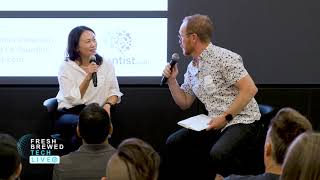
Three CTOs discuss the path to leadership roles in tech. They tackle imposter syndrome, how junior developers can stand out in interviews, and what companies should do to support early-career talent through mentorship and better onboarding.
Sam.
All right.
Hey everyone. This is the five minute warning. We'll get started in five minutes. So go grab some more food then grab a little bit more food, grab a drink and make your way down to the seats. We'll start within five minutes. Thanks, everyone. Hey everyone. Good to see y'.
All.
I still feel like we can still say like n in person, right? Doesn't that feel good? Well, thanks for being here. I'm Neil Bloom. I'm with Fresh Brew Tech. We are a San Diego focused tech blog and media company. We focus on doing this, bringing community together, making sure we're meeting, learning and connecting each other. I've been solo entrepreneur, now a bit more on the investment side. I've got an investment group called Interlock Capital and tonight is about learning from technical experts and making sure that we're sharing knowledge from peership and sharing career pathing, mentor, mentee relationship style. So we're gonna have a conversation on both of those areas, where the industry's going and also leadership career and how we can build good tech companies in San Diego because that's what it's all about, right? So we have a great panel here tonight and I'm thrilled to be working with San Diego Learn Academy. So thank you guys. Before we kick it off to the panel, just want to make sure that you, it's my job to make sure you're aware of everything else that's happening in the community. It's almost San Diego Startup Week season end of October, so if you don't know About it, san diegostartupweek.com make sure you've checked out the agenda. It's all in person at the end of October, which is great. We will be kicking off that week before with the San Diego First Ag Tech Hackathon. We're bringing together a bunch of agriculture and tech people up in Escondido where a lot of the farms are. And we're going to do a three day Startup Weekend style hackathon. So we would love for you to kick off your Startup Weekend with that. So October will be pretty busy, so make sure you come and get ready to do a bunch of startup y stuff. But without further ado, let me introduce Adam from San Diego Learn Academy to kick off the night.
Thank you so much, Neil. And hi everybody. Well, this is going to be one heck of an adventure for those of you who know me. Game on now. So I'm actually very, very excited to be here for a whole lot of reasons. So again, my name is Adam Cuppy and I am the current president of Learn Academy. Learn Academy is a code school that was originally based here in San Diego, but Pandemic pushed us to be very virtual, which has been an incredibly amazing little gift for ours. So over the last few years, We've had over 30 different states here in the United States that have been represented by students, which, that is very, very cool. But regardless, we're still based here in San Diego. So that's what brings us here today. My outcome for today with the panelists here, and I'll fill in a couple of gaps from personal experience as well, is to help bring a little bit more of the journey to junior, mid level senior and everything in between to the table. All three of the individuals to my right here are people that are highly experienced. They've spent a lot of time, calendar years doing what they do and they've kind of reached to a large extent, kind of a pinnacle in their career. And at the same time is these are three human beings just like each and every one of you all have their own journey, have all pushed through the really hard times. And so my hope, if anything, is to help normalize the playing field for all of us, help address some kind of questions that are commonly asked and also to help convey to you what are some of the things you can think about if you're on that same journey, Whether you're very junior and new to the industry. Maybe you're kind of stuck in the middle, in the middle there, or maybe you're more senior and kind of asking the question of what's next for me, where should I go and so forth. Cool. Okay, so I want to actually open it up to my panel here to introduce themselves and I'm going to start here with Yinyin. If she would please introduce yourself, give us an idea of your company, what it does and of course your favorite color.
Hello everyone. My name is Ying Yin. I'm a co founder and CTO of a company called Exokind. Exokind is a seed stage AI software as a service company. On the tech side, we're trying to make a lot of the AI advances more accessible and usable for business use cases. And my favorite color is white. I. I always wear white. Nice to meet you all.
Very good. Lou, if you would. You won.
Hello. Hi, I'm Lou Saenz. I'm the CTO of Flock Freight. Flock Freight is a logistics company, software technology company. We apply our patented now technology to optimize freight and make the supply chain smarter. And one way to think about it is to think of carpooling. So we. Our tech finds and fills the empty space in trucks so that shippers can save. Save money and have greater reliability and reduce emissions. And the carriers, those are the people that haul the food freight, can earn more money. They can utilize more of their space.
And your favorite color is.
Tough to decide, but I think I'd go with a light blue.
Good color.
Sky's the limit.
Oh, that's good, too. Good answer. Dad jokes for everyone. Chris, it's your turn.
Is Paisley a color today?
It is.
I'm gonna go with paisley. Yeah. My name is Chris Peterson. I am the CTO and co founder of Scientist.com I'm a software engineer by training. So I started my career, spent most of my career writing code. That's still sort of my happy place. For the last 16 years or so, I've been working on scientist.com, we are a marketplace for pharmaceutical research services. So along with my co founders, we saw a need to connect pharmaceutical companies with providers of research. Our goal is to make it easier for drug discovery researchers to get access to the science and the data that they need to make better decisions. And if they can make better decisions, if they can get access to that information faster, we believe they can produce drugs faster and we can get cures to people faster. So that's the founding vision of the company. Yeah, it's been quite a ride. Happy to talk about it.
And your favorite color is not a color.
Absolutely.
Okay, good. Good to know. So I sent to all three of them a series of questions. But I was very clear about one thing, and that was I wouldn't be asking these questions that this way. Now, the reason for this is that, again, I want to. These are three human beings just like you all here. So the intention here is to have a very open conversation around a bunch of subject matter. So they're yet to be surprised. I've got some fun questions. Just kidding. It's going to be great. So my first question is actually, and you can answer this in any order or I'll call on you. You have a beat of one. But you're all CTOs. You've come from long backgrounds in tech, different vehicles, whether maybe from a managerial standpoint, a software developer originally. But I'm really curious, what is one of the most common misconceptions about the journey to become a cto?
All right, I'm going to jump in, please. I think that a common misconception is that you set out to become a manager or that because you're advancing in your career that you. That one of the next steps is to manage people. And I guess one of the things that I try to instill in our team is that that doesn't have to be the case. Right. Like you should be able to progress in your career as an individual contributor. Not everybody has to sort of move into, move into managing people. Right. I think that there are fulfilling career paths, both, you know, personally and financially, where you can remain an individual contributor. I think what, what happened to me, I guess it's a. I don't know how common it is. It's probably more common than, I think you kind of fall into a management position because in my case, I founded the company and at some point the thing that you're trying to do is just bigger than what you can do on your own. And then you need other people to do it with you. And then you're a team and it feels like a team. It doesn't feel like you're a manager. And then it just, it builds momentum and the team gets bigger and eventually you find yourself in a position where you have to sort of pick up that management. So I guess if I was going to say misconception, I would say you don't have to set out to, you know, to build an empire in your department. You don't have to set out to manage people.
I love that. So I'm really curious though, was there a point in which you had. You felt like you had to make the decision though?
Remarkably recently. So I've been doing this a long time. It wasn't until probably just two or three years ago when it became clear that me trying to actively code was harming the team and not helping it. Which is a shame because that's what I love to do. That's what got me into the business. But at some point you just have to sort of be honest with yourself and realize like your job is to enable other people to do that and that that's what, what's going to allow you to, to do what it is that you want to accomplish.
My perspective on this topic is one of the misconception is you have all the, as a cto, you have all the answers and you are already set out to have all the visions, all the technology figured out. No, it's not. It's a growth process for everyone. When you make your decision to start a company and you wanted to drive the technology direction, there are a lot of things that you have to figure out along the way at Exokind and also at my past positions, I really appreciate creative problem solvers, independent thinkers, because I believe that when I'm working with these people all together as a team, I figure out more things than I do by myself. And I think that's a very valuable experience for me as a cto. Basically, it's a great learning experience for me as well.
Did you expect to be a cto? Was that something that was on your clear, conscious roadmap or you feel like you kind of fell into it?
Maybe it's a more like a conscious decision because I have been always working in the field of research, AI research, building technology, building software. So my expertise or focus has always been in the technology space. But obviously when you're a founder working, starting a company, what you are responsible for is somewhat beyond the technology itself. You care about the company growth, you care about the business side, you care about the marketing. So definitely in this, the CTO role, to me, it is focused on the technology, but there are a lot of other hats as well.
I think I would piggyback on that a little bit. I don't know if I call it a misconception, but maybe what I would say is that thinking that the role is static and that maybe there's only one, that it looks the same no matter where you are, I think, and I've experienced it, I read about this and then I actually experienced it. So I've worked in a VP of Engineering role prior to being CTO and in a different company. At one company I was the VP of Engineering, reporting to the cto. In another company, I was the VP of Engineering, and the CTO reported to me. And there are cases where the CTOs appear with the VP of Engineering, there's different. It sort of depends on the company and also depends on the stage. As a founding cto, your role is going to be different. You're probably going to be coding, and at a later stage cto, your role is going to be different. So that's maybe what I would say is that depending on the company and depending on the stage, I wouldn't expect that the roles always, that they look the same.
So I would imagine that for all three of you, your level of confidence doing Your job is 100% like you never doubt yourself. Right. Imposter syndrome sounds totally foreign to you. Right? That's correct. Right. Just right.
Correct.
Right. Right. That's what I thought. But in those moments, in your way distant past, like way distant past, because again, you have total and complete confidence now, like you know everything. You're Doing and you're way distance yesterday. Yesterday your weight isn't about yesterday. But kidding aside, when imposter syndrome does come up for you, what is the mental model that gets you to push through it? That gets you to the point of doing it anyway?
Right now when you're looking at me, I don't feel that confident anymore. So I like to answer the question quickly. Definitely. That is a phase everyone has to go through. Confidence to me is not something I can work towards as the only goal. It's often a side product of a lot of things have happened. It comes from repetition. It comes from knowing that I can be good at doing something. But what you can good at doing something, that your skill scope is growing all the time. So every time you put in, put yourself into a spot that you feel really nervous, anxious, not confident. That is your opportunity to grow. And the next time you feel you have that confidence, right away.
Yeah. I'm always reminded that growth lives on the other side of uncertainty.
Yeah, exactly. You sort of have to go through that anxiety or pain sometimes as a conscious decision yourself and then next time you just find the joy rather than the pain.
So I don't know if I'm projecting this or if this resonates for you, so please correct me. I'm just curious though. And this I guess is a question for all three of you in that state. Is growth more important to you than the pain of uncertainty or do you just find yourself too obligated to get through it and push through? And anyone can answer that.
I personally volunteer for that type of opportunities. I will feel very unsure about myself. I actually wanted to do it more just to get over that because next time I will feel great.
I think that's 100% true. I think you can sort of use your own discomfort as a compass to tell you where you should go in a lot of times.
Yeah. It's interesting because at Learn Academy, everyone pair programs and I know that not all companies will do that, but I think one of the. One of the things I would hope to impart on those going through pairing is the times in which you feel the most uncertain, the times in which you're pretty certain you don't know how to do it. It's probably when you should drive right and do it yourself because that opportunity to grow is often going to come on the other side of having done the work and put in the reps. I had this other realization about confidence which just had to do with like. It's far less about just raw belief, like I am confident as much as it is like if I do enough reps, eventually my body will just know how to do it. Right. And so that's where kind of the correlation of time comes into play. So I'm just really curious. So we're talking, you know, many people here, just out of curiosity, raise your hand if you, you consider yourself junior and it's okay if you do so a fair amount of the group. Right. So I would say a fair assumption would be we've still got a lot of reps to put in. Right. So I'm really curious, from your perspective, having put in a lot of reps in different ways. Right. Done a lot, built some confidence over time. Are there any thoughts around how can more junior people or less experienced people come into things like an interview or into a very senior team and bring value even though they haven't yet practiced all the reps or they don't quite feel as confident as others around them? Any thoughts on what could they do from your perspective, still being new to a team, still being junior, yet bring value?
Well, I mean, I would always say take initiative, jump in, try to look for things that you can help with and be open to criticism and feedback because that's how you learn. Right. So if you. Same goes for senior people, I mean, us here on stage, same idea. If you're open to feedback, if you put yourself in that mindset of, I, I want to learn. So I'm going to, I'm going to take shots, I'm going to do my reps, but I'm also going to look for opportunities to get feedback and grow from that.
So what does that look like exactly? Like, are there hints of that where you can look at it and say they are doing the thing that elicits getting that feedback? Is it asking questions? Is it, you know, what does curiosity look like as an example?
Yeah, I mean, for sure, questions. But even just making attempts like, that's what I mean by taking initiative, grab something.
I guess it could apply to anybody. Yeah, yeah, Chris.
Yeah, I mean, I think it's. You probably want to get outside of the, outside of your comfort zone. You want to get outside of your department. You want to sort of feel how the company works. If you can use your discomfort as a guide, find things that seem like they're not working. Sometimes a fresh set of eyes can look at a problem in a company that people there don't see. Maybe somebody in finance is manually processing something over and over and over again that they've just done that way because that's how it's always been done. And with a fresh set of eyes, you can come in and you can see that that's a pain point that could be automated, right? I mean, you have to temper it. You can't be, you have to go in, you don't, you can't step on people's toes. But, you know, ask questions, point out these, these things that maybe people that have been there for a while just don't see anymore. I think that's a, that's a good way to take initiative.
That's a really uncomfortable situation to be in though, right? Where it's like, oh, I don't know what my boundaries are, right. So I'm just curious, like, speaking to. How would somebody. Because it's incredibly intimidating, right? I mean, I know times in which I've been in a new group, regardless of how much experience I had doing a thing, and I'm just like, I'm an extrovert, right? Like, and, and just being incredibly intimidated by my surroundings. And so I'm just curious again, like, for you, like, what. Is there any very tangible, very specific things that come to mind that, that illustrate that, that diving in, where I'm not stepping on toes, like, what advice would you give to that person that's just like, I want to do this, I want to be a part of it. I really don't know how to determine what the boundaries are. Do I ask somebody? If so, who, like, how do I ask that question? Like, where do I go? What advice would you give to me in there?
Yeah. So I think for people who really desire to solve problem versus people who don't desire to solve problem, just want it to be loud. That distinction is pretty clear to managers. So I think that if you really have this sincere desire to solve problems, take look at the problem with a fresh perspective. People do appreciate that more often than not. And then in terms of finding the answers, if you have a lot of questions, I think often the time that people would be very afraid of stepping on other people's toes. And if other people do have something to say, may feel very afraid or defensive right away. I think one very concrete techniques or tactics I have been using myself or have been telling other people to do is when people give you critical feedback, be open to it. But oftentimes it's like how you follow up with questions. If you follow up with questions, why are you giving me that feedback? Then you're asking the why instead of asking the why, asking the how, how can I do it? Better next time then you really facilitate this feedback conversation in a very healthy way and people would open up more, people will tell you more and share more and then that's how you can grow and build your partnerships at work.
I love that. Any other thoughts, concrete examples or thoughts on how to approach there?
I love how over. Why? I also think offering to help, you know, going in, say, how can I help? How can I. Is there something that I can do here? Sort of, you know, volunteers tribute. I think that's a nice way to sort of diffuse it as well because it is easy to just ask questions and sound like you're accusing or sound like you're trying to point out deficiencies when really what you're looking to do is help. And you know, the more you can help, the more reps you're going to put in.
So we've got personality types left, right and center. You know, I'm pointing out being an extrovert and so it's natural and easy for me to go through networking. And first and foremost, for all of you who identify as hardcore introverts, I applaud you for being here. It's this very interesting dynamic that we all have in terms of the requirement to network, to get to know people. Ultimately those people might provide an opportunity that you otherwise might not be aware of. So I really do, all kidding aside, I legitimately applaud you for being here. This is an uncomfortable experience. So now to the question of the really uncomfortable nature of interviews. Because, man, they are tough, right? So I'm really curious here. So I would assume that all of you have done either, been a part of them, helped shape how they work. Yes. And if so, if you could speak to the introverts in the room, what can introverts do? Or folks, let me create kind of a scenario. Folks who struggle to speak up very actively, folks that tend to, you know, have challenge being around other people in a very extroverted, loud, or maybe not loud, but big manner. How can they leave their mark in an interview? What can they do to help make sure that they're well represented and authentic and as such themselves, yet at the same time is not get lost in the background. Is there anything that they can do?
I'd say two things. One is just go back to ask questions. I think I've seen a lot of people either struggle through an interview or maybe even fail one just because they weren't willing to ask questions. And there can sometimes, depending on the interviewer, there's a skill set in the interviewer as well and they may not detect where should I step in to maybe help guide? And so if you are just willing to ask questions to clarify what the interviewer is looking for, that can go a long way. And more often than not that's actually helpful. And your questions themselves can help the interviewer assess how you think about things. So I would say don't shy away from asking questions. The second thing I would say is it may sound funny but and this obviously depends on the style of interview. But if you're, if it's a live interview question or answer or say a whiteboard or something like that or a screen share actually kind of talking out loud like thinking through your problem verbally or the solution or how you're, how you're thinking through it and actually verbalizing that can also go a long way. That can show the interviewer vs Imagine just trying to think about it. Just I want to figure it out and maybe in 20 minutes I'll finally say something rather than just actually be more transparent with your thoughts.
Any specific questions that come to mind that seem to be lead down one path a little bit more successfully than others? Or is it kind of just the act of asking questions that's enough?
Yeah, I think, I think it's independent of the type of interview. You could use it for anything.
During interview I mostly look for maybe two things from the candidates. One is if that person has strong growth mindset and that mindset is reflected in engineering in many ways. People who come to work to finish tasks versus people who come to work to solve problems and to build, then they come from very different level of curiosity for different newer technologies or different tools. So one way to really showcase your growth mindset and also your level of experience curiosity is to build a portfolio. I've just told one of the person during the social hour, if you're junior, you, you're not so sure how much substance you have in your resume. Build a portfolio on GitHub, open source, some of your sample projects and really demo this desire of you trying to grow, trying to learn and trying to learn new things. And that's, that's a very valuable character we're looking for from either junior or senior engineers. And then the second thing is also at work even if you're introvert. I myself is a very much introvert person. But I appreciate people who always bias towards action. You can think a lot, you can have a lot of critical thinking, but then the people who eventually put those things in into action will actually make a difference. So people who can be introvert. But the way you showcase how you have act on certain things in the past, those are really good examples to showcase your abilities. Interviews.
That'S all great advice. I would do that first. When I'm, When I'm interviewing somebody, I, I really. We're all just trying to figure out how the other person thinks. Right. I can't see your thought process, so I have to infer that from what, from what you're saying. So we need to, we need to engage in conversation. We need you to get talking. Right. And if you're an introvert, that can be challenging. So one thing you can do is if you have a hobby, you have a. Some sort of something that you're passionate about. Right. There's going to be a point in the interview when you're just introducing yourself. Mention your hobby. Right. As an interviewer, I probably have a script. I've got certain things I need to ask. But this isn't probably the technical interview. I'm probably going to ask about your hobby. And then that's a. I think that's a really good way for you to showcase what interests you. And hopefully if it's something you're enthusiastic about, your enthusiasm can come through. And depending on what it is, there's probably all sorts of problem solving that you've done. It doesn't have to necessarily be technical. I've got some great stories, maybe we can, about interview hobbies that I've dug in on. We can talk about afterwards.
And there will be plenty of time for that over at the tables here in just a little bit. Well, here's a question. So probably 60% of the room raised their hand saying they're junior. Let's go with the senior. Senior ranking. People who feel highly experienced chefs. Food. Yeah, yeah, yeah, yeah. Food specifically. Yeah. Great. Yeah. Mostly programming or kind of technical nature of things. Yeah. How about who would identify, like, right in the middle, like, I'm somewhere in the mid. Oh, yes, very good. Okay, awesome. I'm going to ask a question. Hint, hint. I'm going to ask you to answer it here in just a minute. But here's a question that I want to say before today, I'm super proud of this. This is a question I tested out on. Unfortunately, the gentleman that just walked out the front door who was working over here, his answer to me got me so intrigued. I'm going to ask the question. I'm going to give you all a moment to think about it. You three, two. And here it is. What's the most unremarkable thing about you that has made you who you are today. I am super excited to tell you what his answer was. Okay, so I'm going to say it again. What is the most unremarkable thing about you that has made you who you are today? Who's going to put the mic up first? All right, Yin.
Yin, go first. The earlier days of my career, I was given the feedback that you're very quiet at meeting and then as a result people may not remember you. You will be very forgettable, not that explicit, but basically the gist of it.
And.
It'S a very. Well, if you like set aside how direct that is, there are some constructive feedback in there. As an introvert person or for someone who just need to take a minute to think before they speak, it's very normal. You're not the first person to speak in a meeting. But what I figured out later that could be very helpful for me is that you don't have to be the most talkative person in the meeting, but you can be the most prepared person coming to the meeting. Once you're prepared, you can digest the information much more thoughtfully. You could have real high quality feedback when you speak up. When you speak up, people will listen because it means something and then people will remember you. But all in all, I think that is the lesson to me is that there will be a lot of very direct feedback towards you. If you can really see the constructive side of it and then use it. You still don't have to be the most talkative person in the meeting. But the good things is that you can always be the most prepared person, the most thoughtful person.
I love that.
Lou or Chris, what comes to mind?
That's a really hard question.
I'm here all night.
I'm going to go with just the fact that I love to program. I think that that's not super remarkable. I think probably a lot of people in this room just love to program. And that's, you know, if I could design like my, my perfect job, it's probably like it's not cto. It's probably like Google Fellow or like entrepreneur.
What are you doing with your life, Chris? Are you questioning your whole reality yet?
This is a very moving panel.
But.
No, I think that left to my own devices, I will just go home and write more code. And I think that has paid dividends over the years. You put in the reps, you figure out how you can solve problems better. And yeah, I don't know, I'm running out of words because it's very unremarkable.
I love it. Lou, what comes to mind?
Yeah, kind of similar thoughts that Chris has. I just was thinking about what is kind of normal or boring or you know, that thinking back to childhood and what came to my mind was reading. I like to read books and I read a lot of books and then I guess that grew into reading different types of okay, what can I learn about? And I think over time that shaped, I think it's helped connect dots where if you read different things and use that as a way of learning, over time you build up connections, I suppose. And so maybe that was part of what made me who I am. But just reading books, you know, I.
Have a 9 year old son myself and these days I'm trying to encourage him to love coding and love reading because I think that will make him a remarkable person. I still believe so.
Well, here's what I find so interesting is of all the people, especially at Learn Academy, I meet all of these fascinating people, many of which are career transitioners. Raise your hand if you have come from a different profession, or at least you did, and into tech. Look around the room. So that's one thing that is consistent. My background was as a professional stage actor. I didn't go to school. Does that surprise anyone? No, I didn't go to school for tech and this is true for so many. Like it wouldn't surprise me. Any of you cooks in the past made a joke about being a chef. Yeah. No. Yeah, right. And here's the thing that I find very fascinating just meeting with so many early career folks is that we all come from somewhere. And what we so often forget is it's those things that we think no one else will care about that define us into the future. It's what makes us great. So this actually comes out of the question or the statement that Chris said. And this is. Or, sorry, my question comes out of something that Chris said, which is another. It's another way of asking what's interesting about you. And I think a lot of us kind of find that as a daunting question, like, well, socially nothing, maybe, maybe I feel that way. I don't mean that that's true. But at the same time as we all have a story, right? And I think if we take a second to really embrace the story as unremarkable as it sounds when we say it, we're actually going to find that it makes us incredibly unique. And because of that, if you take that belief into an interview, you now start to stand out because you're not trying to fit into a box anymore because you are you. So to each of you that raised your hand or didn't at some point in time, remember that, please, please, please. I've interviewed many, many, many people, and it's one of my favorite sets of questions to ask, because it's always where I find out what you're passionate about reading. You're passionate about writing code, you're passionate about your son. These are the things that do in fact, make you remarkable. So please don't ever, ever, ever forget that.
Okay?
All right, so next question for you two. I want to dive a little bit in kind of our. In our remaining minutes here, because I'm going to speak from a state of pure bias. One is I'm a part of Learn Academy, but I didn't start that way. I actually ran an agency for about a decade, and over those years, we brought on something like 30 to 40 different interns, early career interns, directly out of Learn Academy specifically. And I found that I became way, way, way, way, way too drawn, way too drawn to those people. And because of it, I found that I was far more interested in their story and the struggle and the strife that they were going through and the sheer craziness of giving up on a previous career to start something new. I thought it was. So my heart went out to each and every one of them, so much so that I said, it's been a good run. I love it, but I need to go start working with these folks. So it comes from a state of bias. My next set of questions. It comes from a state of bias, but here's what it's about, which is what can companies do to help encourage and support junior people coming into their ecosystem? We offer an internship at Learn Academy. I don't believe it's the solution to all things, but I think it helps. What things? Have you seen what things can you recommend to either the people running companies in this group here or those who are advocates for companies? What can you tell them to encourage to help support junior people coming into their teams and succeeding at it?
So this is going to be overly simple, but I would say just start bringing in interns. And I say that facetiously, but it's actually serious, right? Because years ago, when we were a smaller team, I would only look to bring in interns. When we were looking to hire into a position, it was kind of like a feeder for hiring into an early career role. But that meant that when we were a smaller team and we weren't Growing very quickly. We weren't bringing in interns very often. We weren't sort of flexing those muscles. We didn't have documentation on how to get our system up and running. In a couple hours, you'd have to come and sit with somebody and sort of figure it out. There wasn't. There wasn't a system. Eventually when we, when we went for our security certifications, they needed to make sure that we were off boarding people properly and onboarding people properly. We weren't doing it that often, so we weren't doing it properly. Right. So interns bring a lot of value in and of themselves. Interns bring a lot of value in the early recruiting process, but interns also bring a lot of value just in helping you sort of helping the company sort of flex those muscles and get better at bringing people into the company and unfortunately out sometimes.
Yeah, I really like that. And I'm really into finding the young talents who are really curious and have a lot of desire to grow and willing to try harder challenges and projects and definitely, I think just give them some opportunities. Sometimes you can see through a lot of things through resume or asking questions and interview or coding questions. But overall, through that process, you're building some level of understanding about that person's growth mindset and how they will behave in front of challenges or harder problems. And that is the thing I really value and appreciate from anybody, no matter what their level of experience is. So me, I'm hoping and trying to really follow that level of understanding of someone's growth mindset and give them opportunity to start working on something. And definitely, I think hopefully all the other hiring managers would see through the resume and look through, through all those strong characters behind every candidate.
So I would say you've got to be, I'm speaking to say, the people at an existing company that are thinking about, how can I do this right? And maybe it's even something where depending on the stage of the company, you feel like, well, maybe I can't because we don't have. We need people that can hit the ground running, right? And so there is. It does depend on the stage. But at some point, if you, you want to try to do this, then I would say, well, be intentional about it. Try to try to design. You have to think about the infrastructure to support it. So I was the same way. We didn't run an internship program until this year because we just didn't feel like we had the bandwidth and the infrastructure in place. And especially for an internship program, that's very important. Because that's. I look at internship programs as much more about doing a service for the intern and less about getting utility. Like it's different than hiring somebody.
You're.
You want an internship program to be successful if the people learned and it helped them through their process of finishing university, etc. And getting acclimated to the corporate or to technology industry. So it's very important that you set that up for success and think more about the interns than you think about yourself. But either way, you have to be intentional. You have to create the information infrastructure. Maybe for example, okay, we've got a few hiring managers. Let's figure out how to arrange our teams so that there's some senior people on a team and there's space to bring in a more junior person so that they can have mentorship. Or let's make sure that we have the right ratio between individual contributors and management. So I think you put those things into place. And then you also have to be intentional about your interview process where you, you want to make sure you modify your interviews so that they're applicable for different skill sets or different levels of experience. And, and then I would say just go out, be active. You can college recruiting, especially now, post pandemic. It's opening back up. That's a fantastic. You can go to career fairs, you can get quite a few resumes that way. Meet a lot of people. And even if you're only hiring two or three, that's a pretty good way to source more junior or entry level talent.
Yeah. So at our agency, one of the things that we noticed almost right away was it gave an opportunity for senior people to flex a muscle they almost never got to flex on a regular basis. And it was mentorship. I was blown away by it. And there's another side benefit for those of you out there that are a part of this group. Maybe you employ folks or whatever. Retention was incredible because it gave something for senior people to reinvigorate outside of just the code or the work they were doing. It gave life to some boring things that they could now re engage with. And that was incredible. On the agency side of the world, if you've ever worked with an agency, some of the stuff can, to be frank, can just be boring. Right. It's just the nature of it. Programming can be that way, design can be that way. And so it was a huge opportunity to just kind of reinvigorate it in that entire process. So that is a huge one, is give something for your senior folk to re engage their brain. Their mind, their experience with as much as possible. Shameless plug for Learn. So a lot of the issues and concerns that are talked about are extremely common. So the number one thing that we hear is around the infrastructure that has to get set up to support them. The fear, the worry. It's like, how am I going to justify to anybody above me or around me that I'm going to spend X amount of hours to make space for, for us to bring on folks that won't be able to produce the same level of product as the people they're working with. Right. That's a really hard conversation to have. I've been there on both sides of it, very, very clearly. Then there's another side of it which is. And then we gotta source the people. Maybe I go to job fairs, maybe we tap into another resource like a learning academy or code school, or maybe you just have a group of people that you can talk to as well. And then here's the big one. And I've noticed, I've witnessed this cause on the agency side, there was a lot of time that was spent just looking at the body of work that was in process and trying to figure out how are other people that aren't super senior gonna inject themselves into that process and be productive. And that is that you have to be aware of your backlog or your feature list and how you structure that all three of those things. Here's the Shameless plug part will help you with coming from the agency side, having been on that or if you just need to source the page people. I don't know how many people Scientist has hired directly out of Learn specifically. It's a fair amount.
We've definitely hired a number of Learn.
Grads and also setting good expectations around it too. So set Learn aside for a minute. If you bring more junior folk on, think about those three things. It's a fair concern and we can help you. Even if you never engage with Learn, we're happy to help. Number one, we're an advocacy group for junior and mid level people, like help, career, workforce stuff. So if you have questions, please ask Chantelle, who was sitting right here, she's going to be available, so please connect with her. If you do have questions. There are no stupid questions. We're here to help. If I help get one junior people, junior person into a job, we've done our work, okay? So please, please hear me out loud. We want to help you do this. It's in our collective best interest to help them to help you and vice versa. Cool. All right, my last question. Here it is. Thank you. Neil's screaming in the back. You redhead. No. And it's a simple question. What is something that brings you calm every day?
The calm. The app calm.
Very meta of you. Yes.
Well, yeah, that. That definitely is something I use often and taking a walk and workout, but I think oftentimes it's like doing a startup is very challenging, very hard, and it's a long game. It's not like you get something done and then you can just have enjoy your weekend. You take your work home, you take what you're thinking home all the time. But it's also very important to realize that people try over and over again not for certain goals. People continue trying and put out their best game and then be the best themselves because of. There is a bigger why behind why you're doing what you're doing, why you dedicated your life and your work to this. And just remind yourself that. Because in the midst of a lot of chaos or a lot of setback, you just forget, what am I doing here? And I think being able to sit down and then reflect why I'm doing what I'm doing, and the people around me, that definitely give me calm and focus all the time.
I love it. Thank you, Lou.
Well, you said every day, so if.
You have kids, the answer is nothing.
Exactly. Well, so when I do, you know, working out or, you know, for me, it's getting in the water that brings calm for sure. That's unfortunately, not every day. I wish it could be, but I'd say actually my wife, you know, and with that, maybe the larger way to say that is it's good to have a support system. Sometimes you just need to talk to somebody else or vent. Right. Or just talk about stuff. And that once the kids are put to bed, then there can be calm. Maybe a glass of wine, too.
That's a great answer. I would say family dinner with the kids. We sit down at the table and try to talk about our day, ask about school and that sort of thing. The thing that doesn't happen every day. How many people have experienced the flow state where you kind of get so into what you're doing that you kind of forget your sense of time and what's happening around you. I feel like my brain gets more and more, like, frazzled and sort of discombobulated as the day and the week sort of grinds by. If I can get into that flow state somehow. It's like. It's like little iron shavings when you push a Magnet underneath it and they all just sort of like move into place. If I can get into that flow state. It used to be programming, sometimes it's working out that can sustain me for a few days.
Wonderful. Well, that's my last question for the night. Can you please give our panelists a great round of applause? So they are going to be, I think Neil's probably going to say this. They're available to you. Please ask them questions. Practice it. If nothing else, asking them a bunch of questions. Chantel, can you raise your hand for me because you happen to walk out. If you have any questions about starting an internship, please ask her. Even if we can't help you, we want to help you. Get that. How meta of me. All right. So please come see me or her or somebody with a Learn shirt. That'd be great. Thank you, Neil.
Just want to say thank you, Neil, for having us and thank you, Adam, for organizing the panel.
Absolutely.
Cheers to that. Hands up to the panel.
Thank you.
Well, thank you.
This is awesome conversation. Thank you guys. And it's going to continue but now separate, separated a little bit. There's some tables around. I think each panelist will go to a separate table or find their own little area. If you want to, you want to talk to them, feel free. They will stay after a little bit. So appreciate that. Thank you. Remember, tonight is, I guess there's a Padres game going so they will let out like 9ish. We will hopefully all be gone by then because it will be as crazy as it was to get in. It will be the same getting out. So you know, 8, 8:30 ish, I think is kind of where we're gonna wrap it up here. I want to thank you to the UCSD team, Cindy and team for bringing us into the brand new UCSD park and Market space. This space has been open I don't even know, maybe six, eight months now and most of this year I guess. And it's UCSD's first time, you know, really downtown, which is awesome and we've been talking to them for years about it and it's great to see the space being used for this. There's more upstairs, so explore it some other time. There's movie theaters and other kind of collaboration space. But thank you to the KOVE team for slinging us drinks and for the great food and thank you all for coming tonight. Freshbroodtech.com if you want to find where all the events are happening tech scene wise, either subscribe to our newsletter or just find our events page. We also have the tacos and tech podcast which will turn. We recorded this tonight and it will be published. The audio and eventually the video will be recorded. We published as well too. And then we do some version of this monthly. Now we do marketing night, Dev and data night. We're looking at some others. We've talked about sales night and then some industries. So if you have ideas for bringing a group of 50 to 100 people together, we're all ears for it. So thank you for coming out tonight and we'll see you again soon. Thank you. Cheers.








