From Rocket Science to Startups: A Journey with Neal Bloom | 002
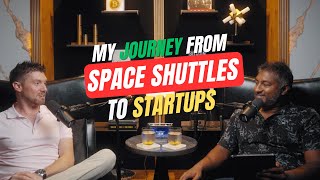
Neal Bloom worked on the Bradley Fighting Vehicle and space shuttle launches at Pratt & Whitney before co-founding Portfolium, a platform for engineers. After a cofounder split, he learned sales at a fast-growing startup, then moved into investing and mentoring through Interlock Capital.
We want to get straight to our big guest this hour for Neil Bloom.
And so I would like to introduce you to Neil Bloom.
From his success in helping to build the San Diego tech ecosystem with the one, the only, Blum has also been helping other startup communities around the world adopt aspects of the ecosystem. San Diego's tech industry ambassador, Neil Blum is here. Neil, how you doing? I have a lot of lessons learned now in life. At the time it was who's around and who else wants to work on this thing. Both had never started a company. Like we were carbon copies of each other.
And that's always the worst, by the.
Way, with us it was because we couldn't talk about and we avoided conflict. Like roommate stuff spilled over where we were like yelling at each other about the dishes when we probably were yelling at each other about the business.
So I'd like to welcome Neil Bloom to join us on the Vinny Vidi Vici podcast is one of our first guests. You know, he's the managing partner of Interlock Capital, which is based in San Diego area. And you know, he's had quite a stellar career being a serial founder operator, multiple exits. He also happened to be part of the space shuttle program at some point in his career. But you know, before I butcher the entire introduction, I'd like Neil to just tell you more about himself and just jump right into it.
Thanks, Vinny. No, it's awesome to be here. Love this studio. So I'm born and raised in all Southern California. While I've got most family east Coast, I grew up in California to a serial entrepreneurial family in the restaurant business.
Makes sense.
So I grew up just seeing my dad and my grandpa managing and owning hamburger stands.
Wow.
So that was kind of what I knew.
I kind of had the same experience, by the way.
Really.
So my parents had a food shop. Was growing up in my hometown and my dad and my, my mom and dad started this, the shop and they made, you know, at one stage, actually before they started the shop, they had a hamburger stand over like Christmas. We, you know, we grew up in South Africa. We weren't very wealthy. And so it was, I remember it was like near Christmas time, you know, people coming down. We were a small town, so it was like a holiday beach town. People come down and there was this like trailer park and we had, we, you know, my dad somehow managed to get the, the owners of trailer park to let us sell burgers there. And there was, it was an interesting experience as a young kid, I must be honest. And it Was like, it was, it was interesting because I'd never been in this trailer park type place. And this is like the 80s, right? So this is, it's a. It was very weird and. But people come in these trailers that had never really seen these things before. And then they camp out there and then they come to us for burgers at the burger stand. And that's how we, I guess we paid for Christmas presents that year.
Amazing. Did you flip some burgers? Did you cut some potatoes?
No, I didn't do any of the cooking stuff. There actually was an arcade machine where I used to go play Pac Man. I spent most of my time there playing Pac Man.
Got it.
Yeah. My parents didn't have me cooking either. I helped with rolling up coins. That was my job. Take all the every day and wrap the coins or whatever, which is kind of fun.
Okay. So you had the entrepreneurial genes. It's kind of funny. Our parents, I guess our generation, our parents were very obviously non electronic or engineering or software driven because of the 80s or whatever we grew up. And it's interesting how we watch them create these businesses and then we go on and do it ourselves. So how did your journey progress from there?
So my dad actually pushed me to start a power washing business.
Wow.
He's like, I gotta pay these people to wash our parking lot. Why don't I buy you one and you pay it off by washing? I was like, okay. And he's like, you figure out the rest. And I hired friends to kind of like be like my hoseboys, to like clean up and be like my assistants. And I paid off the power washer and I continue to use the power washer as selling to or real estate owners during college. But a month before I graduated high school, I'd already applied to colleges and everything. I was gonna go learn business in school, but really I expected to go into the family business. So my path was already mapped, I thought, a month before, literally, my physics teacher said, hey, come help us on this robotics team. We could use your help. We need someone to do some stuff in the metal shop. And someone said, can you weld this thing? I was like, I have no idea what you're talking about. And I figured it out. And I welded two parts together and I was immediately hooked on hardware, like stuff building things with my hands. The second I showed up on campus for college, I switched my major to engineering, mechanical engineering.
Wow.
And I pretty much in my head said, there goes business. I'm gonna go learn what it's like to be an Engineer. I went down a deep mechanical engineering path and figured I would go get a job at a giant aerospace firm. It's kind of where I was already starting to set my mind up. And I kind of forgot about entrepreneurship throughout college, to be honest. But I look back and I'm like, I did some pretty entrepreneurial things even in college. Like, you can't help it, right? Like, I wasn't a good student. So I therefore had to fill in with other things. So I started an entre, an engineer club, where we went off campus and toured businesses, and no one was thinking about jobs at all.
I mean, it's actually kind of funny because, like, I was in college, I had a. I had a band management business. I used to, like, rent out venues, put bands in there. I take the COVID charge of the door. I pay the bands for it. I pay for the lighting the stage, all that stuff. And then the bar would get the drinks, and that's how, like, kind of paid my way through college a little bit doing that. Did a whole bunch of those gigs and. But you're right, it's like this entrepreneurial bug bites you in university or college, and it kind of sticks with you no matter what you do. You always, like, got a side hustle. And most entrepreneurs I speak to have always had, like, a side hustle, even through high school. Like, they were doing something on the side. And. And it's like some sort of genetic anomaly, I think.
Yeah, Well, I think you're always. It's not just that you have ideas. You're like, can I go test and try something? And it scratches an itch for yourself.
You know, it's like, I think this need to want more out of life.
Yeah.
You just want more than what's been laid out in front of you. And you also want to sort of chart your own path.
Right. It's actually like manifesting it yourself.
Exactly.
And I looked around in college and saw everyone's, like, spending all their time in the library just studying. Yeah, for what? To get a job. But no one's actually working on the job part. That's what I wanted to work on throughout college. It's like, how do I set myself up for a great job?
So which college did you go to?
I ended up at UC San Diego.
Oh, fantastic.
I transferred in and I had a job lined up before I even graduated. I interned throughout the entire time because I just wanted to know, what is it like to work as an engineer. I signed myself up for this thing. What is it? I have no idea. And so I worked on. During college, I worked on the Bradley Fighting vehicle, actually, which is now being used in Ukraine, which is crazy.
Wow.
So I was actually in the Bay Area for. It kind of took like a long internship stint. And I was at this R and D plant where they build tanks or they test new equipment on tanks. And they said, for your internship, you're going to develop an air conditioning system for the Bradley. And I was like, what? They're like, yeah, yeah. There's no AC. It gets too hot in Iraq. It gets 150 degrees inside this hunk of metal. Figure out how to cool it down. And I was in college, I was like, okay. And you know, you just say yes and you figure it out. I started going around to like, plumbing supply stores and just like acquiring equipment, making friends with welders and mechanics. I was like drawing stuff like, can you make this fuel tank for me? And I did it and I built an air conditioning system that at the end of the summer, the army came and checked it out. So we had like a demo day. I was sitting there inside this tank, in a sense, and the army comes in and they're like, oh my God, it's cold. They're like shivering. Cause it was like down below 60 degrees. And my internship ended, but I heard they bought it and it's now all Bradley. They're equipped with ACs, so it's kind of crazy to see them deployed in Ukraine. Being like, I worked on that.
That's amazing. That's a cool story.
It was fun.
So where'd you go work after school?
So I got a job with Pratt Whitney, which is like one of the longest running jet engine makers, but it was on their rocket engine division called Rocketdyne in la, which is the oldest US rocket engine maker. They built engines. They got some of the first German V1 scientists after World War II and started testing rockets in the LAX parking lot in the 40s. And so the place I worked at had been around.
You don't would have been proud.
Yeah.
Oh, totally. It's a.
Well, he would be proud if he heard the story. I guess he probably knows it already.
Oh, he knows the rocket and story for sure.
Okay, cool.
Yeah, yeah.
We actually hired away his first president before Glenn Shotwell. So, Gwen. But yes, the company I was at just legacy space and really like manned space. What they'd focus on, they'd put every American into a space on an American rocket. So showing up there, I was already like, you know, who am I? And what I learned were the People that are there were the most passionate people I've ever worked with. And I can't claim that I knew and wanted to work on the space program. These people did. And that was infectious to see that people had this North Star, that the stuff that they're working on has a big impact.
How many of them went to SpaceX now that you know of?
Not many actually.
Really?
Yeah, it was interesting. I would call them incumbents and therefore looked at the way that new startups were doing things as almost like that's too risky for me or not a culture I want to be a part of. Which it took me a few years to identify that there's people they don't really like.
Change.
Correct. Especially engineers working on something that's been designed 40 years ago.
Makes sense.
So working on this at this company, Legacy Space, if you will. And I got put on the space shuttle program kind of at the end of the space shuttle career, if you will. Like everyone knew that it was gonna be retired. Didn't necessarily know what was next. So I was lucky enough right out of college to get put on the launch team, the test and launch team for rocket engines, which was crazy as like a 23 year old to be like, hey, Prilly is like a product manager. So the engine was finished being made. They're like go test it in Mississippi, New Orleans area and then be there for launch day in Florida. Which I don't know as a 23 year old, felt like a lot of responsibility. But you know, I did it and I. So I was part of 12 launches.
So this is like early 2000s.
Yeah, yeah, 2008. 9, 10, 12, actually more timeframe. And the. So we, yeah, we were launching a crew of 5 to 7 per. Bringing up still pieces of the space station or we went up even to fix one of the telescopes. You know, it was pretty cool to be a part of. But because they were retiring the program soon, they actually had to like put a lot of perks in so that people wouldn't leave because everyone figured program's ending soon. So we got to go like space camp and do the vomit comet and go to launches and just like see them. So it was fun to have you.
Do the vomit comet.
Uh huh, yeah, it was amazing.
Did you vomit?
I didn't.
Okay.
No, you float for like 30 seconds to a minute and they, they give you tasks, they're like, all right, is.
This the parabolic flight?
Yeah, yeah, yeah.
It's like throw 50m and Ms. Down and they just like straight down.
So for Those listening or watching the sort of. The Vomit Comet is this, like, you can actually go as a civilian to Vegas, and they fly out there, and it's basically a parabolic flight curve.
Yeah.
So at the. I think at the peak of it, it starts becoming. You become weightless for, like, 30 seconds to a minute. And it just kind of goes up and down, up and down in midair. And I've got friends who've done it, and they loved it. I mean, I'd love to try it one day.
You should do it. Yeah, you absolutely should do it. It's a pretty fun experience. Yeah. There's just ups, downs, high G's, low G's.
Yeah. Yeah.
Well, how many G's going up?
Oh, so it's on the up. You're weightless, so it's like negative five and then positive five on the way down when you're just, like, holding in your seats, buckled in.
Okay.
Yeah, it was pretty fun. Good way to, like, bond with other people, too, to, like, see, you know, you're working on space stuff and you're seeing who gets sick and who's like Superman charging through the space.
So, like, when it's coming down, you have to, like, buckle in very quickly, right?
No, you lay on the ground. You, like, can lay on the floor if you want do that. Or. Yeah, you can try to get.
You buckled in, lay on the floor. But it's going down. How does it work?
Yeah, it's going down. You lay on the floor.
It's just the angle is. The angle of descent just means that you're not going to, like, slide around or.
Correct.
Yep. Okay.
Yeah. You're, like, mashed into the floor.
Okay.
You just kind of hold on. You don't even have to hold on. You just stuck against the floor.
Oh, is it like Velcro?
No, you are just there on the floor.
Just like. You just.
You're not gonna move.
Yeah.
You're just. They're just pulling up.
I don't know too much of the physics of this, but, yeah. I mean, it's fascinating. I've watched the videos.
You gotta do it. Okay, let's go do it. Let's go to Vegas and do a little zero G. It's called Zero G is the Company.
I'm gonna go fast. Yeah, that's right. I'm go fasted.
Yeah.
There's no way I can take it. Like, I'll just do it one morning, like 10, 11am like, haven't had any food. I'll go then.
I'll take it yeah, that's a good time to do it.
I don't wanna be joining the moment comet.
Yeah, yeah, yeah.
This is like a light version of what astronauts go through.
I can't imagine.
Yeah.
So it was pretty fun to be a part of all of that. I started working on the next. It's still to launch the Artemis. They've had one launch. This is NASA's moon and Mars rocket. And so I worked on the second stage of that for a while and then they.
Like an aerospace engineer, because that's what you did. Background. It's kind of cool.
It was weird to.
Yeah.
To look into rocket science of some sort, but.
So, like, just talk me through how, like, how much did you have to know to go into those jobs? Like, how good were your marks?
No, they were not amazing at all.
So we were trusting guys like you with like, you know, pretty average marks to go out and build space.
Yeah. Luckily, the space shuttle was designed in like the 70s. Okay.
So.
So we were just like, little. Doing tweaks and optimizations. We weren't like designing brand new systems like SpaceX is doing, you know, so. No, for us it was really more about like, just being perfect about stuff, like not letting mistakes happen.
Yeah.
This is one of those cases where you really started to learn certain skills. I learned to pick up was just like, making sure that you don't overlook stuff, you know, like things slipping through the cracks. But I was on a team that was actually like data analysis focused. So I had 30 years worth of data to go and look at the next test fire and be like, is that sensor out of whack? Is it broken or are we seeing an anomaly? So I was a lot on like the data trace, data analysis side. And then I'd go prove to. I'd present to NASA saying, this engine is a good engine and it's ready.
To fly and use the data and backing it up.
Yeah.
But like I said, there's people who've been there like 40 years. I just tap into their brain power and be like, what were you thinking when you designed that? And the people were still around, you know, who had done that.
I'd love to watch some of these, like, aerospace engineers debate stuff. It reminds me of that one scene from Armageddon where the guy's like, they're arguing about whether to blow up the nuke on the surface or inside the asteroid. And, you know, the generals are arguing that, you know, the President's chief advisor at the White House says, you have to do. You have to. You Know you can launch it at the asteroid. And he says, I know the President's advisor. I was at MIT with him. And at this point in time, you do not want to be taking advice from someone who got a B minus in astrophysics. And I was like, line for line. That's what he said. And I love that scene. It was just like, okay, so this is like the smartest aerospace engineer in the world telling them you have to go into the estuary and blow it up.
Right. And you had like the drill guys.
The drill guys.
We know how to do this. We don't need to hear from the space guys. Right. It was a lot of that. It was like leaning into domain expertise.
Exactly. That's what I'm saying. I'd love to be a fly in the wall listening to these guys argue the pros and cons of different strategies to, you know, I mean, even Elon, like sitting in SpaceX and imagine like sitting in those meetings. Must be spectacular watching the debates between him and the engineers.
What's interesting is that these systems, systems are so complex that you have an expert for every part.
Exactly.
So everyone has an opinion, but is super microscopic. Microscopic, right. They're like, this pump can't handle that. And you're like, it was designed to do this, get people to space. We don't care about your specific little piece. So it was really a lot about getting people to think about systems, not think about how is that little wall of your pipe going to react or something like that. So that was my job. I was the systems guy. I had to convene everyone, a team of experts and be like, are we good? Right. And I had to actually balance someone saying I'm not good with my part and what's the risk around that. So actually that was my big learning was how to manage a team of diverse enough people with different opinions, experts of their own regard. And then I had a way and be like, we're going to go with that or we're not. Which I think helped me a lot later in life to learn how to.
It's fascinating how you look at like systems thinking as applies to engineering and then you apply to social engineering, like companies, right? So you have, you know, I mean, Amazon's a great example and you know, Jeff's not running it anymore, but I guess he built the platform where, I mean, I'm pretty clearly he did not know how every single part of the organization worked at some point. Got way beyond him. And he only ever famously had like six people reporting to him or Something.
Wow.
So the whole of Amazon was run by Jeff and then six lieutenants reporting into him. Five or six. And then they kind of modularize the entire business so people at AWS would have no idea what people on the other side are doing necessarily. You know, they kind of. But there's always someone coordinating at the systems level. So that applies to all large companies. Google, you have this like compartmentalization.
Yeah.
So it's very similar to the systems engineering thinking around spatial design. Anything. Even software engineering. Right. You have these massive software systems where there's a little bit of code like banks today. Famous story. A lot of banks are still running on cobol. For those of you know what COBOL is, It's a, it's a third generation language. It was popularized in the 70s and 80s, you know, you know, CLI based, you know, command line interface base. And there are a number of banks in the world, large banks that have still got a team of COBOL engineers maintaining the mainframes and the systems. This is like super low level code.
Yeah.
And they can't migrate off it. It's, it's, it's actually pretty robust. It's not very fragile. But there's just maintenance needs to be done and, and the migration is just too expensive and take too long so that it's cheaper than. And some of these guys get paid huge sums of money.
Yeah.
Millions and millions of dollars to be a COBOL engineer.
Yeah.
With like 30, 40 years experience in Cobol. Because you can't like some kid coming up the ranks at university can't exactly go and get that experience. Right. To run.
You still had COBOL on the space shuttle program too.
Okay, well you go, my point's made.
Yeah.
Like the relevant expertise. But the piece you mentioned about the big system is actually what took me out of rockets. In a sense. I was feeling like I'm a little cog in the wheel in this little just engine. We were part of a company that made everything. Pratt and Whitney was owned by United Technologies which owned Otis Elevator and owned Sikorsky Helicopter. I knew nothing about the business side of what we were doing. And that's what started to scratch an itch for me of just like what's our bigger goal here? Are we making money? Are we building a business or are we playing around with rockets? And that's where my mind started to wander towards the kind of my end of my. Just as the space shuttle is retiring.
Okay. So you had this engineering focused early career. Clearly the entrepreneurial bug's gonna bite you at some point. Where'd you go from there?
It actually came from the retirement of the space shuttle program. So I was already, I actually started an MBA program by night to just start learning the business side of the world. It actually was more about, we heard layoffs were coming and if you got laid off and you were in an education program, the company kept paying for your education for a year.
That's a great hack.
So I just jumped in and was like, I'm gonna start getting a degree, a master's degree in something. And it was an MBA for me. And the layoffs came and I didn't get laid off. So I'm like, oh, now I gotta keep working and keep getting my MBA and keep going at it. But as soon as layoffs happened, a good buddy of mine at work got let go. And in the end 60% of the engineers got let go through their retirement of the space shuttle program. And I started have actually survivor's guilt. Like why was I the one sticking around as a 20, I don't know, 6 or 7 year old, like, why am I more important than the 50 year cobalt engineer, right. Who like literally brain power is like a national security thing. Right. And so I started thinking about like, how could I help all the people that got let go? How could engineers who all they've ever worked on was rockets and there weren't a lot of people hiring rocket scientists at the time, how could I help them retool and maybe translate their skills into a new career path? And so that was my first startup, was what I thought was LinkedIn for engineers. We had many pivots, but that's what we started building. So my partner who got my eventual co founder who got let go, we utilize his new like career or really just like job hopping or job interviewing process. We started building products that he would test in the interview.
Okay, so let's pause there for a second.
Yeah.
How do you go about selecting a co founder? Because I get this question all the time. I've already posted videos about the fact that you need to have a co founder when you're starting a company. You shouldn't do it by yourself, especially first time entrepreneurs. Your co founders are great. I've had co founders in all, seven or eight of my companies have started. Yeah, I just don't think entrepreneurship is a solo gig and it shouldn't be. Now some people can pull it off, but you know, I think for the majority of people we, we need, we need people to bounce ideas off and totally. I also say if you can't convince anyone else to join your company. It's probably not a good idea either. So you got to find someone that has that shared mission and values. So how do you go about finding a co founder or deciding on, on who to pick?
I have a lot of lessons learned now in life. At the time it was who's around and who else wants to work on this thing.
Any one body will do.
Basically it was a long, yeah, it was storm body, but also relevant to somehow the problem space. Now we were both aerospace engineers. Both had never started a company. We were carbon copies of each other.
And that's always the worst, by the way. That's always the worst. I always tell people you find co founders with complementary skills. If you're engineering, you could get someone who's business and vice versa. You cannot have the same look again. They're always counter examples for the rule. So there's always like, this is like an 80% rule and you'll be 20% kind of example. So like Larry and Sergey, both engineers, great. They started Google, they had a good run. But very, very often for the businesses that are not like deeply engineering, you need to have a bit of both.
Especially because it's really like a 10x opportunity. Like when you have someone who's complementary to you, not only are you filling each other's gaps, like you've already optimized how to do something that the other person hasn't. And it's just, you don't even have to divvy it up because like entrepreneurs, you just go do. People are just doing the stuff that you're not even thinking about doing that you would have to go and learn and do.
Absolutely.
And that was the problem with me and my co founder. Like everything was new to us and we both were like almost like, you know, rolling the dice. Who wants to do this task now?
Yes, sometimes a third co founder is needed. Yeah, I'm not a huge fan of it, but like I think it is needed sometimes. Fourth co founder is never needed. Like it's almost. I'm always like whenever I see four co founders in a company, it's almost an automatic pass for me. But like my ideal is two. I'll push for three sometimes and exceptionally, like it's like a bell curve, right? You got the one and the three and then in the middle you've got like the majority.
Yeah.
The third co founder, where I often think this is valuable is my current company, Waitroom. You know, we are building video conferencing software as you know and you've done a couple of sessions for us. Thank you very much. And it was myself, who's more on the business marketing, you know, entrepreneurial side of building the company, financing, et cetera. And Michael, my co founder, who's our CTO and engineer and he started writing most of the code in the beginning by himself. And Margaret, who's our designer and chief, like, you know, kind of chief product officer. And so the three of us got together because it kind of made sense that we want to have a very strong design LED company. So we wanted design to be at the core of what we do and make sure it's a beautiful experience. And so it was critical that we had her and then Michael, myself, I think it's. The good thing is I've built technology company for 20 years. I studied engineering and I actually programmed in something like Cobol Clipper. I remember back in the day, so did a lot of that. And I just find that sometimes you just need. And having a. Honestly, having a female co founder is great. I think it's. Most teams would benefit from having a third co founder, three dudes starting a company. I think it's try and find a female to help balance out. Even if it's two guys and a girl, or if you're two girls, you're looking for a third co founder at a guy. That diversity of thought and experiences applies across genders, applies across the, you know, disciplines.
Yeah, Skill sets, like everything. I totally agree. To like have as diverse as possible. You want to learn to like be told your baby's ugly. Right. And everyone's gonna come at with a bunch of different world experiences and say, I've learned this. We should apply this. And it's the meeting of mind.
No, not just the meeting minds, the disagreements. Disagreements are healthy.
You're right.
The disagreement is actually very healthy. Like, we don't always agree on things. We go back and forth. Sometimes I'm right, sometimes I'm wrong, but we treat each other with respect.
Yeah.
And that's the one thing I think separates great companies and great founders from the ones that fail. The ones that fail. And I've had this before in previous companies where literally like we have a, you know, we have a staff of 20 people. And then like, you know, one of my companies we had, there were four of us as co founders, which was not a good idea. And we, we would be shouting at each other in meetings. We were young, we were 20, 20 something. So we would shout and people would be like, you walk out of the meeting and they're like, what's going on? And it's very unsettling for the employees. But that's just like, you know, stuff you learn, as you get older, you become more mature, you're able to manage teams and you have a lot more composure.
Yeah.
But you know, I think the, the, we would have gotten a lot further as a bunch of 20 somethings building a company if we treat each other with more respect. Even though we were friends, you know, we were friends outside of the company and we, I think we, somewhere along the way the stresses takes like respect and throws it out the window.
Yeah.
And you just kind of touching people like shit. And that's just not, it's not.
Yeah.
And I've learned from that. Right. So you know, the, the emotions and the anger and whatever, you put it aside and you get to the root cause. Like if you have the same mission in a company, you're both trying to, you know, you're trying to achieve the same things. Focus on that.
Yeah.
Like, why do you think that's a better way to go? Ask questions. Why do you think this will work?
Yeah.
And, and when you start digging into each other's mindsets, you're able to resolve these issues. And so I've had situations even now with, with, you know, with weight room is that we're discussing strategy and which way to go. And you know, Margaret might think in a different way, Michael might agree with her. And then I'm by myself and now I've got to prove my point and instead of like, you know, I don't do the whole, I'm the CEO, we're going to do this direction thing. I try and build consensus because if I'm wrong, I'm wrong and I'm willing to accept that. So I'd rather go away, do more research, get more feedback and come back with more compelling arguments. And I actually successfully did that. And it took me an extra two or three weeks to get there, but we got there and they were eventually like, okay, we actually agree with you now. So I think it's also one of the problems, I guess is entrepreneurs, you have this deep instincts around things and instinctual way of doing things. And I think where the disconnect comes with working with co founders is if you're unable to verbalize or prove it out, you have this problem where people who are not natural entrepreneurs don't see it. Especially people who are very engineering focused and engineering minded. They're like, look, this doesn't make sense. I don't understand the big picture. What do you. What are you. And the question is, like, what are you seeing that either you're not showing me or I can't see.
Yeah.
And that.
And.
And that's a way better question than, you're an idiot. Why are you doing this? This is dumb. I'm not like you. Like, you should treat people, whether it's a relationship with your spouse or, you know, your colleagues or your bosses, people. Dignity and respect.
Yeah.
Just have that, like, have that. That level of composure, no matter how frustrating a situation is, totally to dig into the problem. And that, I think, is a recipe for success in companies.
The verbalization piece is actually super interesting when you get a bunch of technical founders, typically less emotionally intelligent. They just haven't worked on that part because they relied on true, raw brain power. And that was exactly a bit of a problem with me and my co founder, both engineers. So we've never really tapped into the EQ parts of our brains. And so we had trouble not just having, like, having arguments. We actually the opposite. We were very shy to face each other and have the hard conversations that we should have had. In fact, we ended up moving in together. So we were roommates and co founders. And so both we had the same thing.
We had, all four of us moved into house together.
Are you serious?
Yeah.
Wow, that's intense.
It was like a few months after starting the company, we literally, like, it was eat, sleep, work. That was it. That was our up until 3am sleep until like 8, get up at 8, like nonstop for like weeks on end. Yeah, it was a great time. But, you know. Yeah. And then we grew the company from there.
Yeah.
With us, it was because we couldn't talk about and we avoided conflict and like, roommate stuff spilled over or we were like, you know, yelling at each other about the dishes when we probably were yelling at each other about the business, just not saying it exactly. You know, we didn't know how. We didn't know how to, like, have those, like, conversations until they blow up.
It's hard in your 20s. Yeah, it's hard. I think people, if you're in your 20s, you're listening to this. I think one of the. The key takeaways is that appreciate that without the experience of having gone through this and maybe decades of experience building businesses, working with people, you don't realize. And I can tell you this, and it may not go into your head properly, but I can tell you that when you are working with people, being patient and respectful goes a long way to helping you understand the gap between what you think the problem is and what the problem really is.
Yeah, it's super insightful to stop and think, especially when it's your baby. You immediately jump into reaction and defensive when someone else's viewpoint is actually pretty insightful. It may not be the right thing, but it's good to be able to bounce things off the wall and see, especially if you're just a solo founder, you're not going to get that feedback loop.
Well, that's the thing about having a co founder. You know what I find with solo founders is that nobody challenges them. They sit in this organization, it's kind of a fiefdom. Right. They're the king in the ivory tower sometimes and everyone else is kind of kowtows to them and does what they ask them to do. And the nice thing about a co founder is they will challenge you. They're like an equal owner in the business. Maybe maybe 50, 50 or maybe 70, 30 doesn't matter. And having two co founders, it's even better to some extent in terms of diversity of thought. But you gotta be able to manage it better. But having that person to challenge you is very powerful.
Yeah.
And so I don't recommend doing solo gigs first time around.
Yep, I totally agree. I even recommend at this point for you know, students who are working on a startup, go join one first and see a lot of this, see it happen. Right? See and learn how to manage someone, how to hire. All of that is actually really hard to do while also working on your startup too of like figuring out how to actually do the business management piece as well too.
The best advice I can give young people, when I say young, I mean like people coming out of college, early 20s, trying to figure out, you know, where you want to go in life is if you don't have a great idea, that's fine, you could be working on something or whatever. You don't feel compelled to start a company instead of taking the big paying job, going to work at the big bank, earning the big salary, driving the fancy car, whatever you want in your life, join a startup and join a fast growing startup. Join a startup that's like, you know, just about getting to revenues. You know, early stage product companies are a little harder because there's no revenues and it's hard to grow and they're reliant on funding and sometimes you can find a gem. But most of the time like an early stage company that's maybe doing, you know, 50, 100 grand a month in sales, that's trying to Ramp up. If they crack it, they're gonna go from 5 or 10 person company to 50 to 100. And I joined a company before I started my first company where I think I was employee number 50. And I left about 18 months later with 350 people. And it was an amazing experience. I learned so much. Things were moving so quickly. There were new people joining every day. It's such a great experience. And that was the last job I ever had because afterwards I started my own companies. And that's, you know, 18, 18, 20 years ago. Yeah, 20 years ago this year you.
Got a piece on a rocket ship of your own to like watch and learn how someone else is doing things.
Exactly.
And apply that to your next thing.
Exactly. And so, so that's, you know, it's kind of funny. It's just that little bit of maturation that you get. And even then after I started my company, like I said, my co founders, I were fighting, we were making mistakes. We were like yelling at each other. The composure wasn't there. It was the urgency that we had to build a company. And we had tons of financial issues in the beginning. We had cash flow problems. We had to work through all these things. But I don't think I would be able to be successful in that company. I mean, that company eventually sold for a couple hundred million dollars to Carlyle Group. And I was initially the solo founder of their business.
Oh, wow.
In, in my bedroom. And I was like, I need to build this up to be something a bit more and I need people to help me. And so we got our co founders, I got, you know, my friends and, you know, together, and we basically started this, this company. And it, it was a great, it was a great lesson, Great journey.
Yeah.
I moved to the states in 2008, so I kind of sold out in 2010. But the people I hired, the VP of Sales became the CEO and they led it on to a nice exit. I was very happy for them. They kept building it up.
And you learned to actually get past your ego and say, I'm better to do this with other people for a variety of reasons. The skill sets, the success. And now you've got this built in alumni network. I bet that you'll like forever be grateful and forever kind of collaborate with people on.
Yeah, I mean, I've had the fortune of employing thousands of people in my career at least. And you know, at least. Well, I'd say it's probably the high hundreds, maybe thousands, but at least I've created thousands of jobs through you Know, just the companies I've started. So it's very cool, you know, and the network's powerful. Yeah.
The impact you have as an entrepreneur is great. And I don't think you are aware of it as much in your day to day.
No, you don't.
And you're just so focused on, we got to move this forward. But you're, you know, changing people's lives.
But when you, and when you look back 20 years, you go, wow, that's, you know, stuff I did 20 years ago when I was like a 23 year old. Yeah, it's. It's amazing to look back to see the ripple effect over time of your actions. Yeah. And sometimes, you know, some businesses I started haven't really been financially successful for me, but that's not the point.
Right.
I did what I felt what I wanted to do, and I explored areas and in some cases, like, I didn't make any money, but, you know, investors made money out of it or whatever. That's fine. It doesn't really matter.
You learned a lot about yourself, I bet.
Exactly. It's a journey. It's a journey. If you jump into entrepreneurship just to become wealthy, you're doing it for the wrong reasons. That's an itch you'll never scratch. Like, it'll just always be there. And you've got to just move on. You got to say, I'm doing this because I'm passionate about building products or creating new industries or whatever you want to do. You have to have a reason other than making money.
Totally.
There's other easier ways to make money. Entrepreneurship is tough, and it's not, honestly, on a value adjusted basis, it's probably not the most psychologically healthy thing to do.
No. Which is kind of interesting. A lot of founders come in with their own troubled past or their own problems, and they're solving someone else's, the world's problems, but really they're solving their own and they don't even realize it's, you know.
Yeah.
So let's go into your co founder story. I'd love to. Yours.
Yeah. So we started what became Portfolium. It was originally, we thought LinkedIn for engineers. Many pivots later became LinkedIn for students. So we were the kind of pre LinkedIn platform where students engaged with each other, but really we're building their own resume. A digital and virtual. No visual resume is really what we were doing. It was almost like Dropbox meets Instagram to a certain regard. And it could ingest any file and could be used as a Showcase piece to say I'm employable. So my partner and I, both engineers, had no, we didn't have any experience in any of this. So we just said, all right, what needs to be done today? And he said, we need to build a site. So he decided to learn to code by watching YouTube and started building a website. And I said, all right, I guess you're going to work on that full time. I'll work on everything else. And so I worked on everything else, which at the time was really just like interviewing our potential customer. So I would take sick days off of work, I was still working in aerospace to go interview universities because we'd already figured out we wanted to go towards new grads. And I'd go interview, walk around a campus and just figure out who would be our buyer here. Who is it the student? Does the student actually pay for a tool? Is it the career center, which was kind of the obvious in the end was not our buyer? And who else would be interested or really care about a student's question career? Because at a university, it turns out all they care about is actually just teaching you what you're currently learning in class. There's no real actual financial incentive for them to actually employ these students, which is kind of a mismatch. And therefore students get into debt, go through college, get a degree, and then are left with what.
I've never understood why or how people take up courses at college. You have to look at what is the person studying and what are the most likely or probable career paths post graduation and what the earnings for that person is gonna be afterwards. And so I get the whole follow your dream, follow your heart thing, do what you want, go study whatever obscure non productive course you want to do at university is, but you gotta pay back that debt at some point. And so if you're gonna get a job earning 50k a year afterwards, but you're super passionate about it, that's great. You probably didn't need the degree for that job. You probably could have gotten that job without that degree and spent and saved the 150, 200 grand, whatever it was. And that's the big, it's a huge mismatch. So the education system in this country is, you know, I think education is becoming obviously overinflated in terms of the cost, you know, cost value, cost benefit ratio. If I look at places like South Africa, you know, and other parts of the world, education's a lot cheaper. And so you can do whatever you want. If you live in like the Nordics or You live in South Africa or any African country, you can go study whatever you want. You can go study, you know, I don't know. I don't want to insult any career because every career is respectable. Every job is respectable. The real reality is that not all careers earn the same amount of money. And so America's got this weird problem where there's a baseline cost to study everything. And that baseline cost is often just unprofitable, it's uneconomical for you to go do. Whereas if you lived in South Africa, you could do whatever you want because the cost is relatively low relative to how much you'd earn afterwards. Once you're a graduate and in other parts of the world, education's free. Free university education. So you have free education. You could go and study the most low level you can. Like, I'll even do like janitorial 101 at university, whatever and become a janitor. And that's okay because you're not paying for a student loan, paying for back, Right?
Yeah.
And nothing wrong with being a janitor, but that's, you know, that's, it's a low paying job, it's a minimum wage job. And so I think it applies across the board when America has this problem because I'd say 70 to 80% of the degrees you're gonna do out there will not be economically viable in terms of your future earnings as it relates to the premium you would earn over and above a non degreed job.
Correct.
Right. So if you were getting a non degree job for, let's say, I don't know, 40 bucks an hour or 30 bucks an hour and you get a degree and now you're earning 50 an hour, does that incremental 10. How long does it take for that incremental 10 bucks after taxes to pay off your student loan? It takes a long time, a lot. So it's all about the increment. Now again, you can do it for other reasons. You can do it because you find it interesting. And well, yes, but don't fool yourself and don't settle yourself up with debt that you can't afford to pay back.
Yeah, we can go deep into this, by the way. I mean, I'm in higher ed. I know because I got working in it and selling into it, got a little jaded. I mean, the biggest thing is we've told everyone you won't get a job without a college degree. So everyone's like, okay, well my goal in life is to get a job. I guess I'll go get A college degree. But we don't take them past that. We don't say, and now we will help you get the job that's right for you.
Well, actually I think you're starting the wrong point there. I think you have to start with what job do you want to do and then find the degree that matches that for sure. Because what happens is people go to college, they finish their degree and they go, okay, what am I qualified to do? Well, I don't like any of those jobs right now.
What. And have we ever reverse engineered the true path for what employers need really for people coming out of college?
What I found, and this is from South Africa is I found that because I studied in University of Cape Town. What I found is that what industry needed at the time and what I was studying was it was a clear mismatch because back in those days Microsoft, I think they were sponsoring a lot of university courses and forcing universities to forcing, but making it very easy for them to teach Microsoft. And then when you got out there was MCSD programmers and that whole era and they highly commoditized the market. So even if you had a university degree, you had to deal with this Microsoft problem back in the 2000s, late 90s, early 2000s, where it's visual Basic and all these products that they were pushing and the university's never adapted. It's probably changed by now, but at that point in time they were so in bed with Microsoft to teach Microsoft skills that when people come out of university and as someone who by the way, when I started my first company in 2003, I had to hire developers and when they came through and gave me their transcripts at university and what their computer science or information systems courses were and it was like a lot of Microsoft crap, we couldn't use it because we weren't building on Microsoft Stack back then. So it's very interesting how mismatched and how misaligned universities often are for the wrong reasons. In some ways you can argue, even though these are sort of non profit organizations in South Africa, but there is a level of corruption. And I'm not saying Microsoft bribed anyone, I'm just saying it's like, like you know, they had their view, they gave free software. The university said, oh this software's free, like great, let's teach it to our kids and let's put them out there. Meanwhile, the highest paying jobs were, you know, on other stacks, right?
Yeah, totally, yeah. So for us we had to figure out who actually cared about students getting a job. It didn't seem like anyone on campus did. And you see universities all expanding, always because they want to put more students in, which really is just creating more debt out there. Because the business model is not. Yeah, but we figured out our. It took probably two years of figuring out who our buyer was of this. And it was alumni associations.
How did you get to that?
We were heavily set in career centers, like, really trying to get to know, like, what's the carrot? Who cares about if someone gets a job? Really? In the end, we found out, no, they just think they're helping students. And what they think they're doing is making money at queer fairs. So they just charge a bunch of companies to have a table. And they're like, look, we create 100 grand for the university every quarter by running a career fair. Like, that's not the business we're running here whatsoever. So it was very apparent to us quickly that they're there just to kind of review your resume, but they do not care whether you get the job or not. We had to figure out that, like, who makes money because you get a job. And the alumni center, it took a.
While and it was, why did they make money?
Why does alumni centers make money? So if because they want your donation back and they put a long time value or a lifetime value, an LTV calculation on every student who graduates with a degree and then in debt or not in debt, got a job before.
He graduated or did they already profile all this? They knew exactly what it is. Yes. So you guys, after two years of trying to find product market fit, you found this.
Yes.
This gap.
We figured out that if the career center could get you student to have a job before you left, you immediately loved your university for the rest of your life even more.
So this is one of those growth hacking techniques. Like Facebook, I think was 30 friends in 30 days or something like that. And once you had that, you were hooked on Facebook. And so the key thing is to get people to that point.
Yes.
And so everything you can do below the funnel to get people to that sort of threshold point was highly accretive for Facebook and obviously for the alumni association as well.
Exactly. And so alumni were one. First of all, they realized they have no presence on campus. People first interface with their alumni after they graduate. So they're like, we need people to get to know us before so that people understand we care about you for the rest of your life. The day after you graduate, through the day you die, when you hopefully have bequeathed your estate to us. So we had to bring them on.
Campus, you'll do that still?
Oh, yeah, big time.
The whole estate to the alumni.
Yeah.
Wow.
I know. So we had to bring them on campus, really, is what we did. So we brought alumni associations on as soon as you got into school. And we said, this is your tool to document your learnings, to show employable skill sets. So we had to kind of retrain people. Even freshman year, what you're learning now could be used to help you get a job. And no one was really thinking about that until after they graduated. They're like, all right, I have this degree. Where am I employable now? So that was our big thing. And it took us a while to get there, but alumni associations became our buyer. And we sold into thousands of schools through that.
And so how did that company play? How did you.
So we got into the UC system, Cal State and San Diego, or, sorry, California community colleges. Those were our first three systems that we got into. And then I had to go. I hit the road to go implement it. So I visited every school five times within a year to actually get people to use the software that they just bought, which was tough. So I was kind of away from my co founder for a while, on the road, just kind of implementing while he was building new features for it. And we communicate through just two of.
You in the company.
We were four at that point, and we just raised our first kind of angel round and we hired two people, kind of hired a CTO to rebuild the product that he had built and then someone else. So just four of us. And then we started to hire people. But at that point, there started to be like this physical disconnect with us. Right. We weren't spending every day with each other anymore. And this gulf where I was with the customer every day, and he was locked away building product whether it was needed or not. He was working on his own roadmap. So we just kind of had a distance between us.
Drifted apart. Yeah.
And I felt like I kind of raised the money, made the sales, was implementing, I guess, starting to feel like the CEO, yet he was calling himself CEO, and titles don't really matter. But in the end, it became one of these points where we're like, who's doing what here? Who's the decision maker?
I'm always skeptical when I see these co CEOs in a startup. I'm like, this is not going to work out. If you guys can't agree who the leader is, who the natural leader is, then you're probably going to screw it up somewhere else.
There's a little bit of ego there with the title. Why in the title?
That's my point. Like the moment it's an ego battle for CEO title, then the two people are probably incompatible, right?
Totally.
So what happened?
So one day I showed up at the company and he said, we need to talk. And our other board, we had a board, it was me, my partner and one board member, our only investor. And I was handing a note saying, you're being asked to leave the company. And I was shocked. Like I was like, how much of.
The company did you own?
30 plus percent. You know, I was shocked. Like I did not see it coming. Did not know even what to do in that moment. Obviously communicative wise. Didn't even know how to push back or anything. So I just left and walked out and pretty much never saw him again in person, by the way. But it hurt a lot. It took me months to recover from being just kicked out of my company, let alone everything else that kind of came from that.
How did you deal with that at first?
So I mean there was like, eventually looking back, like there was a lot of like stages of grief to a certain regard. So you know, I at first looked at my. My engineer brain kicked in, kind of like looked just like logic based, just try to figure things out. You know, I try to talk to people who had gone through it at first at the same thing, like they had gone through a co founder breakup, then started talking like legal, like, do I have some options here to get my company back or. Or do something about this? And so I spent a lot of time on that. And then I just started to kind of sit with myself and be like, what's next? Like, how much really is there to focus on of yesterday? What can I learn from this? To never let this happen again tomorrow. And that was the next few months was just like looking inward, looking at myself and really like assess the mistakes I made maybe and say, you know, talk about them out loud enough to say, okay, will I learn? Did I learn from that? And will I not repeat that?
Did you get an exit? They eventually. Would you make anything out of it?
Yes. I kept my shares. They tried to buy me out. I said no, whatever they offered me was not there. And eventually the company was sold and we had a pretty good exit out of that.
Congrats.
Yeah, I was lucky.
Yeah. It doesn't always end that well.
No. But at least we'd gotten into repeatable sales, so there was something we can go and just keep selling. And you know that playbook I had built was pretty much followed all the way and it was acquired by a larger public company who was selling into schools as well too. So yeah, that was a huge, huge lesson learned for me and what I did next.
What's the lesson? What's your number one lesson on that?
Find a co founder who's complete opposite of you. First of all, have the hard conversations as soon as possible. Don't let them fester. Legal wise. There was things that we said about ownership of company we never wrote down. Big one. Obviously the things that you agree on, put down on paper.
You didn't have an operating agreement.
Correct. Put down on paper. The things you even just cheers to but are actually fundamental pieces of the business, that's for sure. Other aspects like we didn't have really a support system to know. We didn't have a board or advisor group to help us in the day to day. So there's really no one to turn to to be like, hey, help us through this before we break up the team. You know. So yeah, we didn't really surround ourselves with like, you know, the graybeards are the experts in that regard. In our 20s like we kind of needed maybe a little bit of adult supervision aspect to be like, hey, you guys aren't running things right or you're not hiring right? Stuff like that. But we didn't know we were just doing the next thing that we had to check the box. So yeah, those are a lot of the pieces that I learned in that regard. And then I went and got a job. To be honest. I went and I realized I never learned sales or marketing or any of these things. I was just an engineer who then started a company. So I was like, I'm going to go get a job just to learn those skill sets so that the next time I start a company I'll know some of those aspects. So that was another lesson learned for me was just like be aware of what you don't know and understand if you need to hire for that and to fill that in or should you have some subject matter expertise here. And so I joined a 10 person startup that was doing amazingly well.
What was it called?
Hire.comhired.com and we were 350 people within 18 months. So went from 10 to 350 people. Went from 3 million to 70 million revenue in 18 months like it was a rocket ship. And I learned everything else about running a business at that point, to be honest.
From that fast growing startups are the best. I mean fast growing startups are probably the best MBA program you can do, you jump in a fast growing startup. And the thing about these startups to grow quickly, if you work really hard and you put it in, the founders, the operators, they notice you and they promote you quickly. Like even myself, when I'm busy building a company and things are moving quickly, it's way easier to replace someone and promote someone higher up than it is to try and get someone to come in on top of somebody else and then the risk losing that person. True. So people appreciate when you actually take notice of their efforts. And a fast growing company is the one place where you get noticed.
Right. And I had just started a company, so the founder, Matt Mikowicz, who I think we both know, both know we've had tacos together, the three of us. When he was in town, I reached out to him, I was like, hey, I've been in your space, been building a talent tech company, how can I help you? And he said, come help.
Right.
I kind of had this founder blood in me. But for me, I was a little at first nervous and shy to go apply for a job, to be honest. And that was a thing I had to get past as well too. I'm going to be working with other people who this is a job to them and to me, I'm just here to pick up entrepreneurial skill sets to get back to starting something again as well too. But that was a good lesson for me as well, to learn to be an employee to a certain regard and understand what good culture can actually really be like. Because culture obviously makes or breaks companies as well too. And we didn't get the chance to really build the culture at Portfolio, my first startup. So that part of being an employee and witnessing someone who had built culture before, that was great for me to just kind of be a witness, be a part of.
Okay, that's great. Okay. And so I guess to wrap up your career part, now you're running Interlock Capital.
Yep.
And just give us a quick background on what you are with that.
So when we sold our company, I started angel investing almost immediately. I was very passionate about helping other entrepreneurs first with my wisdom of whatever I learned, which was, you know, kind of knowledge, and then putting my money where my mouth is as well when I believed in someone, also betting on them with my capital too. So started writing checks about five, six years ago as just like an angel. And then during COVID a whole bunch of my portfolio founders and other entrepreneurs in the San Diego ecosystem kind of came to me and said I'd like to learn to start investing as well too. And simultaneously, my now partner Nanoloc had come to me and said, what if we learn to build a community approach to investing instead of each of us being angels? What if we built a space and a place where we vetted deals together and and looked within us to say who has the domain expertise to really assess this and then write a check as a group as opposed to each of us writing our own checks being individual line items on the cap table. It was both a change to style of investing, syndicate style and this mentality that entrepreneurs probably make pretty good investors because they know a lot of the lessons learned from running a company to help the company when they run as well to. So Interlock Capital is this kind of operator investment group where we almost claim our capital is almost symbolic compared to the kind of cheat codes we could give companies from lessons learned. Kind of like this podcast. You're distilling down decades of experience into a few short minutes. We believe that is more valuable than the cash itself, but we give both. And usually entrepreneurs only get one or the other. Usually you ask for money, you get opinions. We're both, we want to be able to give advice and cash. And so that's what Interlock now is. And so we're both a fund and a syndicate where we can write two checks into every company. Only where we have subject matter expertise within the group.
That's excellent. Well, that's great. And it's come a long way in the past couple of years. Yeah. I think the San Diego local scene is definitely growing. You've been running the, I mean you basically did the flag waiver for tech in San Diego.
Yeah.
And it's been great to be part of it and watch what you, what you've done. Let's jump into some other things.
Yeah.
Can you share a moment or an experience that sparked your entrepreneurial journey? Like where was the spark? You spoke about your parents and the burgers and whatever else. But what was the sort of light bulb moment for you?
I think one of the first time was actually the power washing business when my dad kind of gave me the idea and I therefore he gave me the idea to just start something but I didn't know what was next. And so the first spark for me was having to figure out what's next on my own and not necessarily be spoon fed it. And as a teenager I think that was probably a good lesson to learn. So people call this agency. Right. The understanding that you can make decisions on your own and you kind of manifest it. That was. I think my first spark was just he said, go do this, and I was like, I have no idea how to do it.
You go figure it out.
I'm go figure it out. And once you figure something out, kind of solve a problem, it's addicting. You're like, all right, let's go figure out the next thing, and then the next thing and then the next thing. So that was probably my first spark.
So how do you maintain a healthy work life balance?
Oh, does any entrepreneur ever figure that out?
I mean, I think I figured it out. It's taking me 20 years and two or three burnouts.
Right.
You know, but I think I've gotten the point now where I've got a pretty healthy balance. It's not actually ideal.
Yeah.
I would say, like, right now I feel like I still need two hours extra every day, so it means I don't have enough balance and I'm working a little harder than I want to be. But it's just, you know, for where I am, it's fine. I know it's. It's. Maybe it's temporary, maybe it's a couple of years, I don't know. But it's taken me a while to get to this point. But I think it's. When I say it's healthy, I think it's. I'm not gonna go downhill if I keep at this pace. It may not be the pace I wanna keep at forever, but it's not as bad as it used to be. Where it was like three hours a night's sleep, Right?
Yeah.
Well, how do you do it?
I mean, I think it starts. There's one aspect that every entrepreneur. I call it the true entrepreneur's dilemma, which is do versus delegate or do versus train. You know, as an entrepreneur, there's so many moments where you're working with someone where you're like, I could just do this myself. It's so much quicker to do myself. Where if you stopped for a second and said, but if I taught them to do it, I would never have to do it again. And we get caught up in a lot of those, probably 10 of those a day moments where, you know, training moments or delegation moments. I start with that. I kind of look at every day. Where are the moments where I could maybe do it once? And there's a lot of hacks you can like. Like film yourself doing it on loom. Right. And then pass it off and say, great, I'll never do that task again. But that's step one is That I can't do repetitive tasks over and over.
Yeah, me too.
And so I think to myself, I am building up this library of knowledge to give to other people to do so that I can work on the next thing. That requires that.
Work yourself out of a job.
Yeah, totally.
That's always the best way to work. Figure out how to make yourself redundant. And people think like, it's kind of funny. It's the people who want to hang on to their jobs the most that are often the most, you know, I'd say most underperforming in a company. It's the ones that don't want, like they, they'll get it done and they want to figure out how they don't have to do it anymore. Are the stellar, the stellar employees. They're the ones like, you know what, we can automate, we can, we can progress. You guys don't need me if I do this and that. And obviously the employees who've come in and dove, yeah, I don't have anything else to do right now. Everything's fully running by itself. It's automated. We used Zapier for this, we used whatever. And then you go, okay, well why don't you go and tackle this problem? Because there's always problems in a company and you want the most innovative, enterprising people moving to the problem areas to solve these problems. And if you can free up resources, because they've been smart about it and progressive. Yeah, it's great.
We're in the business. Like startups and fast growing companies are in the business of optimizing processes. And so therefore the fastest path to get to doing it the most efficiently is best. Not someone who holds on and says, I am the reason this thing is getting done.
Tech is about automation. Ultimately, the more we can automate and even machine learning and AI, the more it starts doing the work for us.
Totally.
Even something simple like customer support via email. The AI is getting so good. I'm emailing customer support on products and stuff. I said, hey, can I delay my subscription for a month? No problem. I'm pretty sure it's not a human emailing me back. No, I'm pretty sure it's the AI going, oh, he wants a poison subscription. Because companies are just learning to scale that way.
Well, you mentioned AI, but certain processes, even learning how to treat things of things that can be done in parallel versus series. I kind of lean into my engineering background with manufacturing. What can we doing the same time so that we're not waiting around for something else to be Done. So even just process automation or process optimization can really help a company a lot. And there's not always software for certain things. It's just a mentality that's like, let's be smart about the flow of how things get done. There's actually a good book that I read called the Goal, like I instill every day. And it's purely around manufacturing. The Goal, though is about what's the goal? The goal is to make money is kind of what he says in the book, like every page. But he teaches you through manufacturing World. And one of the things I think through still and just like process optimization still to this day.
Okay, so let's get into the rapid fire questions.
Okay.
I like to end off the show with a bunch of questions and you got like 20 seconds to give me an answer for each one of us.
All right, let's go.
Okay, first one, what's your top book, podcast or article recommendation?
Ooh, top book. If you're getting into the startup game, Venture Deals by Brad Feld just gives you a deep dive into what venture is. Why are you building this fantastic book?
Okay. Okay, thanks. What's your go to habit that you think everyone should implement in their daily routine?
Is this a task that I should be personally working on or not? So stopping before you just dive into, like opening the emails or do something else, stop and think, should this be done by someone else?
Yeah, great. What's the best bit of financial advice you've ever received?
Ooh, diversification. But think about the areas that you're actually passionate about and want to spend time on. So invest in areas where you actually would like, want to learn and grow in those pieces itself.
Very good. What's a common misconception about business or life that you'd like to set the.
Record straight on coming from the startup world. It's not apparent that we're out to build companies that make money, but business is about making money and that should be thought about. And there's people who spend 10 years burning money. And so we should be thinking about building businesses that build something that change people's lives and make money off of doing.
If you could go back in time and meet one person in history, who would it be and why?
Maybe it'd be Albert Einstein. I think. I think I'd like to meet someone who's so focused on something so big, but also a part of making it actually come to fruition and be real about it and then have some culture and like be a pretty interesting guy.
Did you watch Oppenheimer Yeah. Pretty good movie. Thanks. Neil, let's give you some airtime to plug some of your things you're working on. You want to talk about tacos and tech podcasts and where people can find you online?
Sure. So I'm pretty prominent or active on LinkedIn and X or Twitter. Just starting to turn my Instagram public. It's been kind of private to date, but I started a podcast really to put the San Diego ecosystem on the map called the Tacos and Tech Podcast. We Talk tech for 15 minutes and then we talk tacos for five. So pretty fun. We also put out a little newsletter. Here are the events and fundings that just happened as well, called freshbroodtech.com and we put on our own events as well too, whether it's an agtech hackathon coming up. We do a lot of private CEO dinners that we don't publish, but in a sense like to put events on. So Fresh Brew Tech is a good way to find that. And then our fund itself as well. Interlock Capital. Interlock Capital, where we support our portfolio companies, but also always looking to add new investors to our group who specifically have subject matter expertise in the tech world that we could put to work from mentorship office hours to help grow companies.
That's fantastic. Well, we'll have links to all your various endeavors in the show notes. And thank you very much, Neil. It's been a great conversation and looking forward to having you on the show again in the future. Awesome.
Thanks, Manny. This is great. Really appreciate the time.
Cheers. It.








