Harness your superpower to make a positive impact that leads to a better world for everyone.
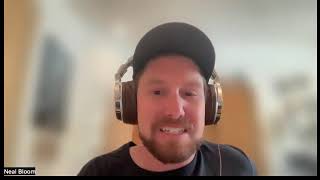
Neal Bloom, CEO of Rising Tide Partners, talks about building startups, founding Startup Week and Startup San Diego, and his philosophy of connecting people to opportunities. He shares how he shifted from engineering to entrepreneurship and what keeps talent in San Diego.
Hello, everyone.
Welcome to the Purpose Tuned Podcast. My name is Kong Chong and I am the host of the show. The goal of my show is to create valuable content to broaden your knowledge, inspire you to act and get you in the right mindset so you can apply it in your own life to drive impact, generate meaning, and achieve your purpose. Now, I'm extremely excited about today's guest. My guest is Neil Blum. Neil is the CEO of Rising Tide Partners and managing partner at Intellect Capital. Through his grassroots effort in multiple organizations, Mr. Blum has helped build a tech community that helps entrepreneurs and companies grow and succeed. In San Diego. He chaired local nonprofit Startup San Diego and has helped grow San Diego Startup Week, which has helped inspire thousands of local syndicans to take the leap in becoming an entrepreneur. He is an investor, serves as a mentor to countless entrepreneurs, and is actively engaging in growing and promoting San Diego's thriving tech ecosystem. So, Neil, thank you so much for joining us today. Let's check in. How are you?
Well, thanks for having me doing really well. It's good to be here with you. We got to know each other a little bit at a Village up event and I'm glad that led to more follow up here. Collaborating in a number of ways. So I'm excited for this conversation.
That's awesome. Yes. And I am so pumped. I think there's a lot to talk about, especially in the entrepreneurial space, as we know you're very experienced in that arena. But before we start talking about entrepreneurship, what inspired you to be involved in this work?
The shortest answer is that others did it for me when I was brand new. You know, it's, it's really hard to build a business, let alone to do it for the first time, but it's even hard the fourth time. And the first time I was starting one. When I showed up in San Diego, people said, how can we help? And that was incredible to me. I come from a place where, you know, it's a little dog eat dog and to start a business and people say, let's give before we get was immediately connected with my ethos. And so I said, as soon as I can do the same for others, I'm going to do, I'm going to follow suit in that way too. So I think I, I think it's a very San Diego thing, but it, but you see it in other cities as well too. So that's just part of our culture. Now that I've been a part of and hope to, you know, propagate forward, that's Amazing.
Could you share with us your background, your childhood experience, what that was like? I'm curious to, you know, just what was the younger meal like before you venture into the space?
Yeah, I grew up in Los Angeles, so I'm born and raised. Always a SoCal kid. My whole family is mostly from New York, so I kind of have the New York roots that I grew up around New York maybe mentality. And I grew up in a family of small business owners, multigenerational small business owners, where they either owned butcher shops or hamburger stands and did a little bit of, like, shopping center development, real estate, commercial real estate development. So I grew up around that. Grew up with no one actually have gone or finished college in my family, but that was the main focus. And I was going to go for business in college and probably work for the family. The business was the expectation for both me and my family. But literally months before graduation, a physics teacher said, you should try out this robotics team. We think you'd be good for it. And I said, I have no idea what it's about, but I'll do it. And they handed me, you know, pen and paper and a welder, and they said, go build this thing. And I built, like, a remote or a. An arm that picked up balls. And I was like, oh, my God, this is cool. I can create. I can ideate and then actually create it with my hands. And immediately changed everything in college to being an engineer. So I. I felt that I got. That's what I needed to do, was learn engineering. Engineering was really, really hard. Engineering school was really hard for me. I had to find ways to stay motivated because the classwork was really hard. And so I did a bunch of projects and internships and even started a student club about getting people off campus to go visit engineering offices so that we could see what is it that we're working this hard for, because we're not working hard to just do algorithms for the rest of our lives. We're working hard to build companies and build technology. So that was kind of my first foray into being interested in building a business community, maybe or a mindset of, you know, career mentality, not just your college career, but what's the future career potential. And my first job out of college was building rocket engines. And I honestly applied online and got this amazing opportunity and fell in love with being around passionate people. So these are people who all they ever want to do was put humans in space, and they were actually doing it. So I got inspired by that. Right. I can't claim that's what I always want to do in life. But I got addicted to building and working alongside passionate people. So that was, that was kind of my first path. And I thought, you know, man, I've made it. I'm an engineer. Exactly as I thought. You know, I never thought I'd actually get through school. And here I am, we're literally launching astronauts into space on the, on the space shuttle. That was what I was working on. And after a few years of an only engineer environment, we're talking hundreds of thousands of engineers, I started to feel the effects of, of lack of diversity of thought, lack of diversity of why and what are we building, kind of this, where are we headed besides, you know, it's great to put humans in space, but what, what are we working towards? I think that also helped, it also was that the spatial was coming to an end, was being retired and everyone was thinking, what's next? And I started realizing, you know, I need, I want the, I want to be exposed to the business sense of a company, not just maybe the engineering part only. And there I was so firewalled from the business case of, of an engineering focused company. So I started getting my MBA by night. So I thought that's how you're going to learn business. And actually started a startup idea, both from a coworker in the engineering world and through entrepreneurship classes at my MBA program at Pepperdine. And it was a product to help. Well, we thought engineers build a visual resume. So this idea that, you know, it's easy to say what you've built and worked on, it's harder to show it or maybe vice versa, maybe server. Some people, all you have to do is put up a picture and you're like, oh, you can make rockets. Got it. You know, we know how to apply that to jets or missiles or something like that, right? So we were going about this visual career tool and the space shuttle retired and they let go of 10,000 people. So they, this huge, huge wave of the workforce got let go into the market. We thought, great, this is our opportunity. We're going to use this tool to help engineers. And that's when I got into my first startup. In a sense, that was my first opportunity of running a business, starting a business, running it and figuring out what's the business model here. Many pivots later, it actually was a better tool for university students to track their first career opportunity. So we sold into universities, selling directly to schools like UC San Diego, Cal State, la. Pretty much every UC in Cal State became a customer of Ours and it was painful to sell into schools, but we figured it out, a pivot. And so that was my first foray into startups. And we got into an incubator in San Diego called Evo Nexus. That's what brought me back to San Diego and I've been here since 2013. During that time of getting into an incubator, I was surrounded by 35 other companies all in the same space, one floor. We were all kind of hitting our heads against the wall at the same time. And we realized there's a lot of shared learnings here, like maybe building very different businesses, but we're going through a lot of the same things. Whether it's co founder issues or figuring out how to find an investor or when's the right time to hire that first person, how to find capital. So there's a lot of like basic Startup 101 stuff that we started learning and sharing from each other, which turned into Startup Week. So Startup Week was, let's put on a number of talks that educating a group of people at the same time. So 200 people, 10 events. In 2013 was the first Startup Week and it just kind of took off from there. Up until Covid, we had I think 3, 500 people at 2019 Startup Week, San Diego Startup Week. So we realized there's a lot of entrepreneurs or want to be entrepreneurs who are thinking about an idea, haven't taken the leap yet. How do we help them build confidence in themselves and their idea? So that was the original premise of Startup Week. Then we realized, you know, it's also risky working at a startup when you're working at a big tech company. How do we get people to learn to take the risk and have the confidence to, to also work at a, you know, high risk startup. And that's where the content has been added as well. Whether you're interested in starting company or interested in working at a startup. We've got a lot of um, content built around that for Santa's Startup Week. And so yeah, that was, it was interesting to be building a company and building an event which really ended up becoming a nonprofit at the same time, got a bunch of venture cap, venture capital back, entrepreneurs starting a nonprofit. Um, we didn't know what we were doing in that regard either. And we said we gotta surround ourselves with people who have done it. So that's what Startup San Diego has grown into, is a nonprofit now runs year round with some staff. The board is mostly made up of entrepreneurs who are very passionate about teaching entrepreneurship by entrepreneurs who've been there, done that before. So yeah, been very involved in kind of helping and grow that community which helped me when I first got here as well too.
That is great and thank you so much for sharing your story. What a powerful way to share. One of the reasons why I enjoy connecting with you is because you have the mentality of giving back. You know, of course all of us can't do it alone and we have at some point mentors, people, advisors that guide us throughout our career to kind of create this image of who we are and you know, and also help us through our career. Navigation and so you know, I love the fact that you shared a little bit about, you know, helping entrepreneurs build the confidence they need in order to transition from either the full time job to their own company. So how does that look like? And the other part is what's more important? Confidence or having the skills necessary to build a startup company?
Well, from where my investor hat ideally both. You know there's this idea that someone who's been there done that before from building a venture backed business previously in the same industry, you're going to already naturally have confidence and you know what you're doing next. I think the biggest thing for entrepreneurs to do is to surround themselves with domain expertise where these are people who can help open shed light on the areas that you don't know. So fill in your gaps. That's important from the co founders. So you want co founders who are complementary skill sets. You don't want carbon copies of each other. I had that issue in my first startup. We were two engineers who had never built a business. And so you know, ideally you have someone you want to be forced multipliers, right? One plus one equals three of you. So there's gotta be a little bit of secret sauce of each founder that makes them have superpowers and they gotta be tackling different things, not the same thing at the same time. And so those are pieces of it. And I think confidence comes from one, an awareness of your own skills and an awareness of what you don't know and knowing that you have to recruit the talent to fill in those gaps. So I think those, that's a, that's part of the confidence that I see is that is kind of a skill sets awareness because when it comes to taking that idea, because many people have ideas, it's harder thing to turn that into a business. Right. And so, and not just validating that someone would pay for your idea, but validating that the business can run as a business I think is is kind of the big leap where people, once they've learned how to validate that, that's when they'll pro, they usually will start the startup and go full time on it. And then so you kind of move up towards talking yourself into this idea as a business, finding a way you're all in. So you quit your job possibly and you kind of drop down the confidence level again. You're like, oh man, uh, it's just two of us. Or maybe it's just myself, I'm alone. Yes, there's, there's a lot of excitement ahead of me, but there's also a really long path to, to take. And so you kind of start moving up this, this stair step of recruiting the right talent, recruiting the right advisors, recruiting the right investors that are good for, you know, helping you move forward. Then you start recruiting and selling and having some sales. And there's always, I think with an entrepreneur there's this idea of you're progressing forward but you never know when you're going to either drop back or drop down the confidence game as well. You could have, I also say in the same day you could have two ups and two downs, right? You can have an amazing call and then you can have a terrible call where you feel like your business is ruined. And that could have happened in two hours. So I think there's a lot of, a lot to go into around the mental well being of a founder and that confidence piece. Being able to have the fortitude to say today was rough, but I'm going to have 10 years of today's am I up for it? You know, and there's, we could talk for hours on what it takes to last for that long.
What does it take to be an entrepreneur?
Oh, I think longevity and staying power is one, you know, in times like now where it's a bit uncertain from the economy standpoint, some of the winners are just going to be the ones who outlast their competitors and survive. While others, there's just maybe the companies die in other scenarios where like a year ago, 20, 21, where you know, money seemingly felt like it was everywhere, it's having the staying power to say no to certain money and saying no to certain valuations that while seemed amazing, could put yourself in a really deep hole. So I think there's a lot to be said around, you know, being thoughtful and not just making rash decisions because you're going to be judged at first for your decision making. That includes who you surround yourself with from talent, founders, investors, and also an ability to learn new skills so that you can say great, I'm not good at this, I'm going to hire for it or I may be good at this and I know I easily could do this. I'm going to delegate and make sure I am not stuck doing it as well too. So I think there's elements of looking inward around that and then there's the basics of knowing how to hire and manage that make a really good entrepreneur. Especially if you want to grow this business at the escape velocity that venture backed businesses are which, you know, 300% per year growth in revenue, you know that's, that's like 1% of businesses kind of do that kind of stuff. So there's some superpowers that go along with that that don't have to be superpowers that you were born with. They very much can be learned. I'll give you one example of one. So I never learned sales properly prior to my first startup. I was an engineer but I was in charge of sales and marketing and business development and I just figured I'll learn it well. My co founder, I had a breakup, we actually had a falling out. And um, I think having already been a founder it was would have been easy for me to say I'm an entrepreneur, I'm only going to ever be an entrepreneur. And I did the opposite. I said I need to go learn formal sales and marketing. I'm going to go take a day job at a high growth company and take an entry level sales role and learn the basics of sales. So I did that for nine months. I felt like I'd done really well and said great, can you transition me to marketing now? They said absolutely. And then they moved me over to the marketing group to learn marketing focused on demand gen marketing. And then nine months later I was ready again for the next. And so I think there's a willing, a willingness to learn is big for students who are coming out of school. I always tell them school and the first few years in your twenties are about learning how you learn. How do you learn? Well, is it hands on? Is it reading books, is it shadowing people? So for me it was hands on learning. I had to go and see it and experience it and do it to say yes, I can master this skill set. So I think that's, that's an entrepreneurial trait as well of figuring out how you learn and how you master certain skills and then move on to delegate and hire the right people to do it better than you.
That's incredible. So you thought of A strategy to assert yourself in these areas of operations of the business, from sales to marketing to finance or whatnot, and gain the experience necessary in order to then apply it to your entrepreneurial journey. That's. How did you even think of that? Like, that's so my thing about so intelligent in terms of a strategy. I mean, it seems like there's some sort of creative thinking involved in it. And how much does that creative thinking drives or impact the business from an innovation standpoint?
That's a great question. Because business owners need to be creative. They need to find ways to continuously progress something, whether it's progress revenue or progress growth of some sort. And so creativity is another trait of entrepreneurs. Doesn't have to. And I actually look and say I am not creative from a design perspective. So when I think of creativity, like I'm not good at thinking of names or brands or logos or even colors, like I look to someone else who's expert at that. I think of creativity is in terms of what's. As a strategic potential. So for me, strategy of myself or of a business is around what's. What's been done before and is like a creative hack or a creative force multiplier. And so for me, I love one understanding everything that's available to me first. So I'll give you a book that I read a long time ago called Traction. It is, I think it was written 2017. I handed the book off to. I've probably handed it to 30 or 40 people now at this point, all interns, anyone who's interested in getting into marketing. This book outlines the 17 levers for a business to find Traction. Now, Traction is a broad range. It's talking everything from getting PR to hiring a sales team. Traction is traction of your business. Progressive move forward. And so for me, first understand every knob available in front of me that I can turn right? So if it's. If it's a marketing traction kind of sales thing, that book was great for me to say. And I almost want a poster of it in front of my wall saying, these are 17 different knobs I can turn at any given time. But that's the same for how I learn as well too. Like, I want to see the full picture first and then zero in on what am either what am I not good at that I should go learn and pick up a skill or something like, oh, this is something I can do in my sleep and therefore I'll do it quickly. So I think there's pieces of that that came to it. I will, I mean this is hindsight, looking back that we're saying this was intelligent. Now you got to imagine at the time I just had a breakup with my best friend and co founder of a company. I was not feeling great. Right. I really felt like I had failed. I felt like my baby, my business was out of my hands, out of my control. So I was not in mentally a great place. I knew that I just learned a ton in three years. Like I had had a 20 year education in three years of running a startup. And I also knew in this moment where I'm weak and vulnerable, I'm actually going to learn a lot too. Like I was that at least I was very much aware that right now sit and enjoy this low mental state because you're going to soak up things like a sponge. I didn't know what it would be. And so what I started doing was reaching out to people who had been there, done had a similar experience, who had run multiple companies. And I said, what should I be doing right now? Am I valuable to a company just because I've started another company or what's my value? So that was where I was at when that happened. And I realized, you know, if I was telling people that I had run a startup and I would if I wanted a job, I don't think companies would have valued that. I had run a startup before. That doesn't mean much to a company. They want to know, can I plug you into a specific job and task? Right now that's all companies want with hiring. And you know, it's hard to translate those skills of saying, yeah, I've done everything in a business, so yes, of course I can do that. That's just not how interviews work. Right. It's not how recruiters and managers are looking at things. Yeah, so. So there's pieces of that that was going on at the same time. But for me, I knew I was going to start another company one day. So what I said was I need to go obtain the skills for that next company that I didn't have in my first company. So that's why I did it. And I'm really, really glad I did. The pieces. I wasn't expecting that I got out of it, the relationships. So there's 400 people that we all became alums of that company that I got hired at. It was company that was actually called Hire.com. so we were all passionate about building a marketplace that connected talent and companies. And so I kind of found my people in that regard and we now all still collaborate. There's actually a Slack group for hired alum where we share what we're working on, help each other out, invest in each other's companies. So that part was the, the. I wasn't expecting to, to have such a whole new network that I grew out of it. But looking back now, I realize I always get something out of network. And that's kind of my, my hidden DNA is that I'm just a connector and a networker. And so now I put myself in situations where I don't know anyone and you never know what you'll make out of it. But I know I will meet interesting people. So, yeah, those are kind of some learnings that have come along the way.
Yeah, I mean, networking and those relationships are very crucial when you're building a business because when you're, when you bumped into a challenge and you don't really know how to deal with it, those are the people that you would rely on to kind of help you think through what to do next or what idea you may have to or solution to tackle that challenge. So it's very important. I. So throughout our span of 30 minutes, talking about your background and your interests and your experience, there seems to be a consistent theme that, that I'm hearing from you, which is you didn't, you didn't voice it out. But in my mind it's collaboration. And so that made me think what's. When you're an entrepreneur trying to grow, starting to grow your business, do you have a mindset of I'm going to compete with the guy next to me or I'm going to collaborate with the guy next to me to bounce off ideas and grow together? Like, what's your strategy around that?
Yeah, I am hardcore bridge builder collaborator, in fact, to the point of reaching out to competitors both same size and way bigger, as early as possible. And I've heard kind of the exact opposite advice from some people I am big on. Humans are humans and want to relate and connect. And while, yes, there's an inner competition piece, humans actually relate to people really well. And if we're competing, there's a lot of catharsis that could happen from saying, you're building this, I'm building this. We're different people, so we're going to attack it in different ways. But in the end our goal is the same, which could be change someone's life or whatever it is. Right. So in my world, um, when I was building the edtech startup, helping students get jobs, I reached out to every other company that was doing it um, because we all were early, there has been no clear successful winner still in the technology space of helping students get jobs. And I think even getting helping professionals get jobs, there's still no one clear winner out there. Because getting jobs is still just such a, I mean, there's a wasteland of who things that have started and tried. And there's also companies will use every means at their disposal to get it. So there's not necessarily a lot of loyalty. And so I'm big on sharing notes because what I could distill down to someone or what someone could distill down to me in 10 minutes could save me three years of building a business in that direction. Especially at the startup stage, where you have a premise and you need to go test it and see if customers will come. If someone can say, I did that already, save your money. You may save, you know, millions and millions of dollars and, and, and other things too. So I'm big in that part. Like, you just, you get so much more from tapping a domain expert, which is someone who's building in the, in the tranches. Fast forward to now. That's exactly my investment style, which is only invest in companies where we in our investment community have someone who has been there, done that before in, in the same area that we're looking and assessing a company. So, yes, big on reaching out. A lot of my relationships have come from reaching out to my competitors at a conference saying, let's sit down and just share notes. And they're always shocked that I do that. They're always like, wow, I was surprised you'd reached out. I'm like, you know, like, you're learning so much. I'm learning so much. Let's just share at it, share each other. And the other piece that I think that gets overlooked, but you realize from the investment standpoint is that every, each of us as humans are going to go about the exact same idea in a very different manner. Right? Like, everyone's got a different style, everyone's got a different set of experiences that are powering them forward. So even if you have the exact same carbon copy as someone else, you will probably go about the idea in completely different ways. So the people matter. Right. And so that's why I'm big on collaboration. I've now done that both from a business standpoint, from a community building standpoint, meaning there's a bunch of startup organizations that all claim we help startups and everyone's got their own specialty. Let's not compete for the same resources. Let's Bridge together and make sure we're helping. Examples in San Diego are like making sure connect and Startup San Diego and all the incubators and accelerators are on the same page and we're not wasting entrepreneurs time. Same example in investing, like I mentioned, that's let's make sure that I'm only investing in companies where we can actually help them and save their time and energy as well as give them a check as well too. So yes, I am super, super collaboration focused first.
Yeah, well there's also the human component to your process in collaborating with people. I don't know if you've heard of Simon Sinek, but he kind of talked about like purpose and playing the long term game. And a lot of companies they go out of business because they're focused too much on the short term gains. But your approach is aligned with that long term strategy. Like you're in it for the long haul because you're going to contribute to the startup ecosystem and bounce ideas with investors and help them to get on the same mission as you. And so that to me sounds like it's that long term strategy approach that you bring with you which is, you know, and I love that just because when I work with startup co founders and CEOs on, you know, my day job, it's they, they often think about like what's a short term strategy? How can I, you know, acquire these quick wins? And so it just makes it a bit more of a challenge.
I totally agree and I think that's kind of actually why we started named Rising Tide Partners as we did because I really do believe a rising tide lifts all boats. So if our community is winning as a community, meaning we're bringing good talent here, companies are building good businesses. It's good for everyone. Right? You may not have a horse in the, in the race at all, you may not be an investor at that company, but it doing well is going to train up good talent financially. It may bring money back to the community. It will be as a shining example that hey, good businesses can be built here locally. So I am all in the long game for that, empowering everyone to make sure we're building a good business community. Which I think then in turn if we have good businesses flows into a good quality of life as well. And I think a recent example of seeing all these big tech companies like Apple and Facebook coming to San Diego, everyone's like, oh my God, the housing prices are going to go through the roof. Affordable affordability is going to be so rough. Which I agree is going to happen. But imagine if we made the hundred year investment to say we're going to teach everyone how to work at a tech company or everyone who wants to. And I'm not just talking students, I'm talking your car mechanic, someone selling solar or roofing or flooring. What if we taught them to sell software? We literally could be, you know, doubling the revenue. They're already living in maybe in San Diego so they know wherever they're living it works. But we could increase the cost of their income which maybe could get them into the house that they maybe have been trying to get into. So I'm big on that long term investment as well. I'll be honest, I have not seen the companies make the investment in talent in the same vein. Meaning most companies will hire whoever's available. Not let's train people up into the skills of the future. Some organizations I see in Stan are doing it well, are focusing on the apprentice model which is awesome to see apprenticeships coming back where companies pay people to learn certain skill sets, not the other way around where people pay to learn a skill. At a school you get paid to learn. Now you can take that risk of leaving the job that you're so scared of leaving and losing income because now a company like ServiceNow or, or Apple is gonna pay you to maybe be a project manager or a product manager or you know, anything around that. And so I think that's another area that I want to start focusing on is seeing companies make investment, long term investments in talent which will benefit our whole community. Right.
So how do you describe good talent and how do companies attract good talent?
Ooh, big question, big question. The easiest answer to some people would say, you know, good talent is someone who's, who's already done it before and knows how to start now. But the bigger answer is self awareness of what you're good at and what you're not, I think is a starting point. And then the ability to concisely storytell or not storytell, but share and train others and then, and then recruit and manage and be able to say, I may not be the best person at this, but I can find better people to either replace me or level me and my team up. So there's a bit of a self awareness I think that comes through around talent in that regard. Easier said than done.
Yeah. So my, of course, you know, my, by my day job I work with, you know, with business leaders and founder CEOs to help them think through what their talent strategy is. And I believe that at the Core of a business there is, you know, an energy that we must focus on which is putting energy into not just attracting top talent, but developing them and retaining top talent. Because the worst case for any business leader is to see their, the best, the top performing people leaving their organization and working for their competitor. And so, you know, of course there's a lot with like how do you build a culture where people are excited to come to work to how do you treat your people right so that they choose to stay with you and, and not work for your competitor? There's a lot of aspects to ensuring that keeping your people will help grow your business. Um, and so, you know, I'm extremely excited with just, you know, your investment in the San Diego startup community just because, you know, more than anything, to me it's a community based entrepreneurs who are, you know, who are highly ambitious and want to do good in society. And that's just my opinion. And I love that because I coming from the Bay Area and working for some of America's best businesses out in Silicon Valley, there's a lack of that human component. And so what San Diego brings with this whole ecosystem is that the human connection. So I think that what you're building out in San Diego is an extremely important aspect to help, you know, entrepreneurs acquire the kinds of skill set, mindset and you know, tool sets really help them build their business.
For sure. No, I appreciate it. Real quick just to unpack that a little bit. I think what's interesting about when you look at geographic cities, let's say Silicon Valley versus San Diego is, and bringing back what you mentioned around retention, imagine if your entire talent pool was your city, not the company itself. And now you're looking at retaining good talent in San Diego versus retaining good talent in Silicon Valley. People don't want to leave San Diego and that's something unique. You already have. So you've retained the talent locally here. Because people don't want to leave if they don't have to. Maybe they're going to work at multiple companies and we have to be okay with that. So one as a whole community, we have to recruit good talent to San Diego because we know we'll retain them and then we have to be okay with them having an impact at multiple companies and believing that that's good for the whole community. Right. So that's a base layer that I think not every city has. In Silicon Valley it was build good companies and maybe the quality of life we sacrifice in San Diego, we kind of do it the other way around. It's live a good life and build good companies. And so I think we're already starting on on the right foot there. And so that's helping. And we've had to really teach companies that you lose a talent that that has to be okay cause it's good for the community because they're going to go in, they're going to take the skill sets and talents that you train them on and they're going to bring it to another good company and that we're all going to benefit from that. So there is a bit of that community focused retention as well too.
Yeah, I love that. I know we have just a few minutes here. How would you describe purpose and what does it mean to you and where can people find you? You should they choose to connect purposes.
I mean the why is often the first why is surface level, right? It's the short terms why are you doing this? It takes a few deep deeper to say why. Why are you really going to spend 10 years on this? And so I think that's for me my purpose is connecting good people to opportunities. I've found that I've been called lately the human router for one reason or not because I just connect dots really well. And so I might as well harness my superpower for that purpose of connecting good people. Look, I got a gain from it as well too. And so luckily I've found that connecting good people brings and then investing in good people returns tenfold back to me. And so as an investor and starting Interlock Capital, that's where I find myself from a purpose right now. Investing and finding, connecting and investing in good talent. We all stand to gain. You can find me on LinkedIn though. If you reach out to me on LinkedIn, write a note saying you heard me on this podcast just so I have a see the connection there or on Twitter as well too at Neil Bloom. Those are the best places to probably find me and reach me. And then I have my own podcast, the Talk Goes in tech podcast that I'd welcome for you to listen and give me feedback on as well too.
Well thank you so much Neil for your time and I appreciate it. All the insights and resources you're able to share folks. If you enjoyed this podcast episode, please reach out to Neil Bloom. You know where to find him and reference this podcast. The Purpose Tuned podcast. Neil, thank you so much for your for your time today. Appreciate it.
Thanks for having me on. Appreciate it.








