HOW to raise smart money: From Aerospace Tech turned Venture Capitalist, Neal Bloom
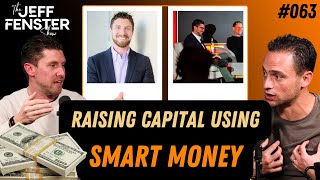
Neal Bloom went from aerospace engineer on the Space Shuttle to founding ed-tech startups and now runs Interlock Capital, a syndicate that lets people invest in early-stage companies for as little as $1,000. He talks about why the team matters more than the idea, what he learned from a failed equity-crowdfunding startup, and how community and events drive deal flow.
Questions this video answers
12 launches.
About 1,600 sensors.
Around 2010 (experimentation began ~2010).
2013 (pivot to schools; entered an incubator).
2014.
And I immediately got put on the space shuttle program, which at 22 years old is insane. It's a real problem. Space junk is a real problem. There's not a lot of other places to go build rocket engines. How could you translate those skills to something else? If you ask anyone at my high school, what was I going to do one day when I grow up, they would have said, yeah. The idea is, I mean, at this point in our careers, we've probably seen almost every idea by many people, by the same idea, even with many people. And you look and you're like, what's the difference? It's the execution. How is this team the one? And I completely agree with what you say. And it's actually in most pitch decks that you get, the team is like the last slide. And they spend all this time talking about the idea and the market and forecast. And it's like, just tell me about you guys. Like, what's the secret sauce?
Welcome to the show, Neal.
Hey, thanks for having me. It's good to be here.
Yes, thank you. I mean, we had the privilege of meeting through a mutual friend. And when I met you, it was actually at an impromptu event I was invited to. It was your event that you guys put on in the CPG space. And it was a get together at Goodagna, one of my favorite restaurants in Encinitas, California. So if you're in the San Diego Encinitas area, please go to. Good on you.
Yeah, it was a great collaboration between Sarah Brooks and I. Our first event together and we just, we've hit it off since we met only like six months ago. And now we're just collaborating all the time.
You guys have only known each other for six months. You guys look like you've known each other forever.
I know, we just were like, wait a second, did we just become best friends? You know, and I feel like that's kind of the nature of Sarah's orbit, you know, meeting you as well too. So, yeah, it's been, it's been real good.
Well, what I'm so excited to dig into your story for is you bridge two worlds. You have done incredible in the tech space. But my passion is relationship capital. And that's actually, I think your superpower. You are the ultimate connector. You put people together and create these events and as a result create top of funnel for so many opportunities. So that's a lot there. And obviously your bio speaks for itself. But take me back to young Neil.
Young Neil's from Southern California, Louisiana. The Valley. Grew up in a Family of restaurateurs. And pretty much I would have been third generation restaurateur. And I kind of was. I mean I worked in the hamburger shop in my teenage years.
And it's not just any hamburger shop. I mean, this was the hamburger shop.
There was a number of them. It was called the Sirloin Burger. There was five of them, I think at max. And it was supplying all the cold trucks in the valley, catering trucks, before there was like too much of the cooking going on. And my grandpa started it after having a bad partnership in a butcher shop in the 50s in Beverly Hills and decided, I'm gonna go out on my own and I'm gonna just flip burgers. And started in the late 50s. And he was approached by Ray Kroc in whenever Ray was on getting ready to push into LA for opening up McDonald's and he said, hey, would you fund my little burger startup? He's like, I got my own burger startup. I don't, I don't need to be in yours. And he was offering him, I think the franchises to the whole San Fernando Valley, which is now, you know, like a million and a half people, something alone. So he turned him down, you know.
Which is kind of a, which is, I don't know if it's a badge or honor, but it's a badge.
It's a badge for sure. I mean, as an entrepreneur, you look back and you're like, you know what? Like coulda, shoulda. And you know, like there's a lot of looking back and lessons learned as an entrepreneur journey. So that was a story always around us growing up. So it was pretty fun to be around that. My dad came in and took over the business at some point and I pretty much expected I was going to go into the real estate restaurant world. So I applied to San Diego State, got in as a business major and day one changed my major to engineering. For whatever reason, I just made an about face turn.
You don't remember what was the catalyst?
I kind of do in high school. My physics teacher recruited me to a robotics team the last semester of school. And she's like, go figure out how to build this arm thing that we're doing. And I went into the machine shop and I drew on a piece of paper and someone showed me how to weld. And I was like, oh, this is pretty cool. I can think of it and build right then and there. And so that was kind of in the back of my head that wow. Creating with my hands was kind of cool. And I think that was pushing me towards that. Now, if you ask anyone at my high school, what was I going to do one day when I grow up, they would have said that my answer would have been, I'm gonna be the CEO of Boeing. And so I had apparently had aspirations to be the CEO of the largest aerospace company in the world.
Do you like flying?
I do.
Are you a pilot?
No, I'm not. It's on the list of things to try and do. But for whatever reason, you know, I thought being a leader of a major aerospace company was something to achieve one day.
Well, you didn't do Boeing, but I mean, you did get involved in the space shuttle program.
I did, yeah. So I ended up working at United Technologies, which had bought the company I was at from Boeing. So there was a little bit of.
Oh, you worked for Boeing?
Yeah. I didn't know that Boeing and then United Technologies, Pratt and Whitney owned a little rocket engine maker called Rocketdyne. And I worked there out of college. And I immediately got put on the space shuttle program, which at 22 years old is insane, Like a dream for a lot of people, you know? And, Yeah, I worked 12 launches where I pretty much manage the engine from manufacturing finish. So it's off the line. I had to be with it all the way through space.
So what does that mean to a layman? Cause obviously when we see space movies, you see like 100 people in a room, they'll say, someone go. Someone go. We don't really know what they're doing.
It's actually real. But you're actually on what we call on console. So you're sitting behind a bank of computers for 10 hours. So I was in charge of three engines and. And I probably had 1600 sensors that I was looking at on this console. And for 10 hours I'm sitting there and just making sure nothing's going wrong. Because as soon as you flow cold propellants through that, things go funky. And so I was sitting there for every launch, which was about every three to four months, we would have a launch.
Did anything ever go wrong?
Nothing ever went wrong. Definitely not on our end.
So you never had a no stop? You never had to stop a launch?
No. That would be really bad. Yeah, if it was for us. It's usually weather. It's usually there's too high of winds and let's scrap the whole day.
So this is a silly question, but how can wind affect a rocket ship?
Oh, it's like wind is everything for sure.
I mean, it would have to be serious wind. No.
Yeah. And they get serious wind. But imagine you have this 250 foot tall tower standing there that is, you know, rocking a little bit and you know, it. Wind affects it and it can change its.
Are we talking 10 mile an hour wind?
Are we talking 10, 15, 20, 30?
That could throw the whole thing.
Yeah, yeah, exactly.
Space is, I have a dream of going to space.
Oh, well, it's, it's going to happen in our lifetime.
I believe so for sure. And I personally just in my own portfolio, have always invested in space companies. And some of them are going to work, some of them aren't. But I think it's going to be such an exciting frontier. My wife won't go. She's like, I won't go, but I want to go.
You should. Yeah. I think we all are going to get the chance and we should invest in some space companies together.
I mean, I'm looking at them.
I got a bunch of past colleagues who I call on and be like, is this the real deal? Is this a joke?
So there was a company that I loved. They're not, they're not public, so you can't invest yet. And I wasn't able to invest when the opportunity was. I wasn't, I didn't know about them when there was an investment opportunity. But they're basically, they're putting, they're one of the companies that once things get into space, they then have little ships that move into different orbits. And you start to think about what that means as we go to space. Because there's a lot of them talking to a guy who knows space. But my understanding there's just a lot of stuff in space.
Yeah.
And when you see all the satellites and debris that is orbiting earth, it's there.
It's a real problem. Space junk isn't a real problem.
So this thing will move the junk. A satellite needs to go in this position and they can calculate that in this many days, hours, months and minutes they're going to collide.
That's super smart. We can nerd out about that. Really. The basics I know is that satellites are only given so much propellant also. So you don't want to waste propellant just having to move it a few inches to avoid junk. Because then it might not be in space long enough to. For its whole life, you know, and you have to build a whole nother satellite. So I'm big on investing in space junk.
Well, we'll have to definitely talk about that. So you were working in space. Well, for a space program, you weren't in space. And then you had the idea.
Yeah, it actually, it came around with the space shuttle getting retired, if you will, as planned, but it still left thousands of engineers out on the street. I'd say, I think the numbers like 10,000 people were affected by the space shuttle getting retired. And there was an immediate next project to work on for most of these people.
So you were around the. You were in the industry and you were recognizing that your peers were going to be displaced without a home.
Yep. So one I. One thing I did was immediately, within weeks, I joined an MBA program because my employer, if you get let go, they pay for the next year of education.
Smart.
I'm like, I'm going to get that money if I get let go. I didn't get let go, but all of my peers did and immediately started thinking, how could I help them? And the original idea was LinkedIn for engineers. How could you, especially people who built rocket engines. There's not a lot of other places to go build rocket engines. How could you translate those skills to something else? And so we used a very visual format. The early days, the name was ThePaperclip.com and not spelled right. So you gotta always love your first domains. Right.
On purpose. Not spelled right.
Yeah. We couldn't even.
How did you spell it?
We couldn't get the paperclip.
So that's a real problem.
Oh yeah.
Because I'm a. I'm a domain whore. Like I go by domains.
Oh, yeah. I'm sitting on like 80 or 90 of them.
Right. I have like 500. If you go in our godaddy, you'll be like, why do you have this domain? Because one minute I had this idea and I bought the domain.
Totally. Yeah.
That's it.
Yeah. And we couldn't even get the paperclip with a C. It had to be with a K L I p dot com. And so we grabbed that and. And we're starting to build out kind of like Instagram meets Dropbox. So in just any kind of file. But it displayed in a nicer way than, you know, Dropbox looks.
Sure.
And.
And you didn't have Instagram really in 2000 was a.
2010 when we started playing around with it. It really came alive in 2012. Yep.
But 2010 you don't have Instagram as your inspiration.
No.
Or Pinterest.
No. Exactly. Yeah. No, there wasn't really like a file ingestion thing. There is one in the arts world that we were kind of looking at. But we wanted something for everyone. Yep. And it was Me and another coworker, both aerospace engineers. So we really had no background in any of this. You know, we had never coded before, we had never built a web platform. We were building physical products.
Sure.
And I started. He got laid off. So my co founder was one of the ones affect. And so we're like, oh great, we're going to use this product for you and your interviews. Like walk into SpaceX and hold up an iPad and you know, show off what you've worked on and what you're proud of and then they'll look at your eyes instead of looking at your resume the whole time. So that was the, that was the idea originally. Smart. And I would take sick days and just go talk to the customer, be like, all right, would you use this ever? And it started to pivot a lot.
So you were building an ecosystem though, because the customer isn't just the applicant.
Correct.
It's actually the employer.
Correct. Yeah. It's a marketplace for sure.
So you have to build both sides and one side before the other is an unequal teeter totter. And it won't work.
Correct. You have to build both at the same time. And everyone always talks about chicken or the egg and it's like you need both.
It's the hardest thing to do is to build a marketplace for sure.
What I love about it is that there's a lot of different revenue models compared to software, which just is just recurring. But yes, you gotta build both up and you gotta kind of lie or promise to both sides. Like if you come, they will come and say both sides believe.
I attempted that. I tried to build a company called Equity Circle, which was to. We helped push the initiative to legalize equity based crowdfunding. Once it got legalized, this was a technology platform to bring entrepreneurs and money together. And we had to build a marketplace and we. I failed at it because I was unable to grow both sides.
Did you just focus on one side?
I tried to focus on both, but I didn't have a good strategy for both. And I didn't appreciate that. If I bring all these entrepreneurs and there's no money, they leave and they'll never come back. And if I bring all this money and there's no deals, they're going to leave and never come back.
Yeah.
And so it was a. It was one of my lessons. One of the companies I lost a lot of money in, but it taught me a lot.
Yeah.
And it also scared me away from Marketplace. So the fact that you did this successfully, I'm intrigued.
I mean, there's definitely. You have to figure out every which way to fill the marketplace for discovery. Right. Because exactly what you just said. If someone. You have one second with someone and if they don't see what they want, ah, just another dead app to me. So we started attacking it from both the bottom and the top. Meaning started going to student. Okay. So first we pivoted to students. That was a big lesson for us, was just, you know what, who needs this? People who don't have anything to put on LinkedIn yet. Turned out if LinkedIn was already there, people are just gonna use that. But students were scared to use LinkedIn cause they're like, I haven't worked yet, so I should. I don't want to be on that. I don't wanna have a presence till I get my first job. So we saw this window. We're like, all right, we could be the pre LinkedIn before LinkedIn. So instead of just engineers, we could be for everyone. But before someone has that, and maybe we could go as early back as K through 12 and start documenting your entire educational career to pull out the things that you're proud of.
Did you gain that information because you were hearing from engineers that they were just going to use LinkedIn or did you gain that information even after you launched it and the engineers were there and you just didn't have a big enough pool of people?
The beta was with engineers. So we were hearing and trying to understand usage from afar while also interviewing them. Yep. But we started to go earlier in the engineer supply chain to engineering schools and being like, hey, why don't we get you on day one? And then we realized, oh, well, it's not just engineering departments. Every department wants to use this in school. So it actually just. We just kept going earlier in, trying to see how early could we get someone on. Because it's really the more history you have, the more info you have to.
Share and the more valuable it is.
Right? Exactly. Because in the moment when you have to go build a resume or a portfolio, you're like, I don't remember what I did two years ago. So it's. We realized you had to start documenting things in real time. Yep. And so we went as far back as freshman year of college, and then we went as far back as middle schools to talk to them. Like, LA Unified was one of our first beta pilots to say, hey, just start auto saving their homework so they don't have to do any work. And three years, they'll look back and they'll just see all their Graded work digitally. So that was where we started focusing on ed tech. We started to not have as much of an employer base now. Right. Because we were focusing on getting students as early as possible, but now we were selling into universities and K through 12 schools and making money off of that.
Did you envision me as a student, would use this as part of my admission application, applicant application package to college?
Yeah, that was the dream for sure. Yep. Because it's built, it's just like a visual, you know, whole piece of your portfolio.
Yeah, this is who I am.
Yeah.
This is what I've accomplished in these over this period of time.
Yeah, exactly. So the employer piece started become less important and we, we became more of a education software. Yeah. You know, so we, we turned off the marketplace a little bit per se, but that's what we had to learn. We had to go learn how to fit supply, which was students. And if schools would pay to onboard their entire population, that'd be a lot easier than us going student by student, kind of a consumer basis.
So what was the biggest amplifier, what was the accelerant in. In the eco, you know, in the life of it, that went, okay, we are, we're trudging along, we're figuring it out, we're going back in time, we're making these interviews. We've now identified our target market. What was that biggest accelerant that said, hey, we're now really bringing on like when you really identified your true avatar. Yeah, what, what sweet spot was that?
I think it was when we found out who our true champion was within the university ecosystem. We were trying to get everyone to love this, right. It's like, hey, career services, hey, Department of Chairs. And this light bulb went off after enough conversations at UCSD actually where I'm an alum and the alumni association said, you know, this is a peace offering for us. People do not care about us. And we tend to not care about students till the day after they graduate. But this is our chance to come onto Campus Day 1 and say, welcome to school, we care about you for life. Start documenting your career, not just your four years. And then this wall you have to jump over. And as soon as we realized where our customer was, the alumni associations, like it went off like a lightning. Like we started selling whole districts, the whole UC system signed on. Whole Cal State from alumni association signed on and they finally realized we have a place on campus again and that was our champion. And they realized it was a financial incentive because as soon as a student leaves campus without a job and in debt. They already have like a long term value calculation to how much are we going to get back from them to donate to school? So if they could use our tool to say, we're gonna get you a job before you leave and we're gonna check in on you. Did you get that job before you leave? They like already won the battle of getting the student to pick up that phone and say, yeah, I'll donate.
Well, it also gives that value which is like, you know, I'm a U of A alum and when University of Arizona Alumni association calls me, they only call me for money. That's the only time I ever hear about them.
Right.
I didn't get anything from them.
Right.
I don't have a degree from the alumni association. I have a degree from the university.
Correct.
Had I gotten something from the alumni Association.
Right.
I would have. Definitely, probably give more and more often.
Totally. And usually people are given debt and that's in their first few years. They're holding that on their back being like, wait, I still owe you and you want more money from me? So yeah, there was this much easier sell on both sides once we realized if we get show an intrinsic value of a career from the school, that was the sale.
Well, you guys built it for many years. I mean from 2010 to 2019 when you first exit.
Yeah, exactly. So we pivoted to really schools and honed in on Schools in 2013, got into an incubator and kind of surrounded ourselves with a bunch of other entrepreneurs which was really a big move for us. Just kind of level up as first time founders. We raised outside capital for the first time in 2014 and that's when we finally hired a team instead of just us and then raised only 12 more subsequent rounds and then sold to the biggest university software company in structure which makes a product called Canvas, which if you remember from back in our day, it was Blackboard. Yep, the new Blackboard is Canvas. They bought us and then they got acquired a year after that.
Did you stay on when you got acquired?
No, I was actually even gone before then. So I wasn't there all the way through the exit. Had all the equity. But yeah, I had left a little earlier before then because I was hungry to start another marketplace in the talent space. And so I didn't end up starting. I joined some friends who had started another talent tech platform called Hired.com and it was for senior talent and it was a pure like dating site style marketplace where every Monday we'd accept a batch of talent and Accept a batch of companies that we'd already pre vetted, pre code tested the talent, pre understood the intent of the buyer. Hardcore. And then 9am we open the gates and say, have at it. And it was crazy how much people were, hey, I want to, I want to interview. Hey, I want to take a job. And we close the gates on Friday.
And go again every Monday and that batch is gone.
Yeah. So yeah, it was active candidates only. No passive. Like it was a totally different kind of marketplace. It was really fun and we got to really dive into fundamentals of a marketplace. Like what's working? How do we get someone to actually say they're active? How do we get someone to have a great profile? So I dove deep into marketplace economics on the second one.
And how long did you stay with Hired?
I was there almost three years, joined. We were, you know, 10, 15 people. And after 18 months, we were already 350 people.
That's rapid growth.
Rapid growth. So I learned every three months was like we were a new company.
Did you ever use, did hired ever put themselves through the same for hiring?
Oh, yeah, we hired a ton off that. We got the best pick too, because we actually could jump in like an hour before or something as well, you know. So, yeah, we absolutely recruited off of our platform. And that company was based in sf, but I was still based in San Diego and I was identifying new cities to go launch this marketplace in. So we kind of would go geo by geo and I would just look at the flow of venture capital dollars because wherever that money went came hires, especially tech talent.
And so you were. And you started in 16 with them.
Yeah.
So I'm trying to remember where, where boom was in 2016.
We were. Boom was. I mean, just ahead of us for sure. Yeah, absolutely. And we were in SF. We launched LA, NY, and I launched another 15 or about 12 other cities to just get talent going in other markets.
Sure.
And it really got me to plug into startup communities and venture capital communities of other cities. I saw the, not just the flow of capital. I got to know investors and said, hey, how do we get your whole portfolio to use hired give you a discount. Right. If you offer to your whole portfolio. So I started getting deep into the venture capital stack and understanding why are they writing checks and what makes them special about this company. So that was kind of the first piquing my interest into the other side, the investor side a little bit.
So then in 2018 or so is.
When I left Hired, I. I had already started writing my first checks as an investor. And it was just into my peers who I had started companies alongside. My first actual direct company investment was into a company called Trust and Will. I'm gonna do their pitch for them. It's a two minute drill. Yeah. It's a wealth management platform for the millennials to get them to focus on estate planning. So most people don't think about it till way later in life, but we actually usually start thinking about it at the point of having a kid or getting married. You all of a sudden have to start combining finances and, you know, I actually invested in my, my mind, in the founders before they even had the idea. And that I found happens a lot. Yeah, yeah.
Well, I mean, obviously with Interlock, that wasn't the. That was before Interlock.
Way before. It wasn't even a thought that I would build a fund one day. Yeah, yeah. I just wanted to. I realized I'd built two talent tech platforms, which I realized was, you know, I was building algorithms to identify talent. I was kind of stack ranking them a little bit on hired. We really were rejecting a certain piece of talent that just wasn't ready for our platform.
Sure.
And I realized we all do that in our heads. Right. It's called rapport building. You have positive interactions with people or negative and they get mapped on your social graph. And there's more people you want to spend more time with. Right. And then there's some people that you want to spend so much time with that you either go work for them or vice versa, or you invest in them. And invest can mean your time, your energy, your network, your capital. And that all started to click with me of, you know, I have some capital, but really I've learned some things. I should be putting that back into other people to, you know, create kind of this value creator.
And what you quantify there, I call it relationship bank account. Right. We have a bank account with everybody, deposits, withdrawals. And it's not money per se. It's like you said, do I like this person?
Yeah.
Do I want to spend more time with them? Am I willing to give them my time? That's a deposit. Am I willing to make deposits in this relationship or am I just going to make withdrawals? Or do I not want this?
Right.
Am I not even involved?
Totally.
And what you learned, and you also mentioned something a minute ago, and I learned this so I had a. I was also dabbling with the venture capital and private Equity community in 2011. I would help companies raise money. I'm not a broker, so I would connect them I would help shape them and explain to them the process because I'd raise capital from private equity firms that the way capital moves and how and what they're looking for and what I always try to stress them from what I've learned is they are betting on the jockey, not the horse. So if you can go in there and you can show them. I mean, unless you are literally inventing the next Facebook, there's always an exception.
Sure.
But for 99% of entrepreneurs, they're looking at you. What traits and attributes do you have that they are going to bet on to say this individual or collection of individuals or will be successful despite the fact that you don't know what tomorrow brings?
Absolutely.
And that's why entrepreneurship is hard and that's why most companies don't get funded. Yeah, they haven't. They have great ideas. They have yet to. They're unable to articulate to the money. And I'm going to say this statement, I want your feedback on it if you agree, disagree, or how you would change it. But they're unable to articulate the value that they're going to bring to ensure that they are adequate and appropriate steward of your money. And return a return. Get a positive return back.
Absolutely.
Because they're always thinking about their company. What they fail to realize is private equity or vc, they're a company too. And investors are treat their money like a business. If I give you a dollar, I must get something back and it must be a return on my dollar. Yeah, that's the expectation. So if you have this greatest idea but you haven't figured out how you're going to deliver that and return that back to me clearly and, and concisely explain to me how you're gonna weather that. I'm probably not writing you a check.
Correct? Yeah. The idea is, I mean, at this point in our careers, we've probably seen almost every idea by many people by the same idea, even with many people. And you look at it and you're like, what's the difference? It's the execution. How is this team the one? And I completely agree with what you say. And it's actually in most pitch decks that you get, the team is like the last slide and they spend all this time talking about the idea and, and the market and forecast. And it's like, just tell me about you guys. Like, what's the secret sauce? And I want to know, do you guys even know. Have an awareness of your own superpowers and your weaknesses. I even have gone deeper. What do you what are you good at and what do you like doing? I ask each person now, do you know that about your co founders? Do you understand the gaps even between you as a team and how have you started to fill that in? And next order level is, okay, I like the team. Let's talk about writing a check. Do you know who you're going to hire yesterday? Do you have Personas or even people identified? Or is this money going to sit there for a while while you go figure out what the team looks like that you hire on too? So yes, I've gone deep into the jockey aspect and I think as an angel investor, you're like all jockey. You barely even care about a return. As an angel investor, you're just like, I love you, but your belief is.
That they're going to win. You don't know the idea is going to morph.
Absolutely. There's so many pivots.
I laugh at. A five year projection.
Right.
I'm like, project what you're going to do tomorrow.
Totally.
Let's worry about tomorrow. Because five years from today. Yeah, it's a, I mean it's, it's nonsensical really.
Yeah. It's such, especially at these early stages where they don't even have product market fit. Like you just have to go figure out, you know, what the problem is. Don't build anything else. Just go talk to your customer.
Think of portfolio. I mean, yeah. If I had met you when you had started the idea and you were like, it's a marketplace for engineers that are displaced to get new employment. That's not what you did.
Not at all. We would not got to buy in structure.
No.
They would have been interested.
And that's not the business.
No, totally not.
But if I understood how you think, and that's really where I think smart professional money really gets good. And good investors get good is they get into the psyche of the founders and they understand regardless of what comes. And we've had phenomenal litmus tests over the last three years from COVID Supply chain hell and inflation.
Yeah.
Where money dried up or it's extremely expensive. You can't get goods and services and goods and products that you used to get in your supply chain gets disrupted. And you had Covid when people got displaced and it blew up businesses all over the. All over the world.
Sure. And some still figure it out. Some were just like, you know what? We were a restaurant. Now we're making, you know, ppe. Yeah. Right, right.
Yes.
And then we'll open our restaurant back up yes. Yeah. You just figure it out.
And that's where. If you're listening and you're trying to figure out why or what you need to do to get your idea funded, you got to think about what you need to do to get funded. Your idea is secondary. When someone bets on you and invests money in you, they're investing in you, not your business. Your business is the vehicle, but they're actually betting on you, the founder or the entrepreneurs. And that's one of the things that I have learned and have tried to express over the last decade. And I don't think enough people talk about it to these. To these entrepreneurs.
No, definitely not.
It's an idea pitch.
Yeah. There's another way we say it is like, go find smart money. Right. So go find the most helpful money that it's helpful to you, not just to anyone. But go pattern match and find the person who, with the check is almost irregardless, they will literally open every door and give you the cheat code.
That's right.
And vice versa. And they'll only do that if they believe in you.
That's right.
Yeah.
And then raising money is easy.
Theoretically.
I mean, it just is.
Yeah.
If you can understand how to package yourself and your team appropriately.
Yeah.
And inspire the person on the other side. Because investors have a real problem.
Yeah.
They have money and they need to put it to work.
Right.
It's not like they want to sit on it, because cash sitting in a bank doesn't help them. And a lot of them are passionate about helping.
Right.
They want to be involved in the community. They want to be on the innovative, disruptive side. They don't have the time to do everything.
Right.
Which is.
Check is like your. Your general admission to have a seat on the rocket ship. Right. Yeah.
And purpose.
Yeah.
And so obviously you. Your first check was to trust and will.
Yep.
And then you started writing more checks.
Yep. Started writing a bunch of angel checks. And an angel is somewhere between 10 and 30k, you know, and sometimes you, you know, just say, hey, just let me in. Doesn't matter. Sometimes. Yeah. Whatever it is. Because you believe in those people. And I realized, I started, like, have this mental model of assessing people that we talk through. And I needed other ways to meet other people and put them in scenarios where I just wasn't getting pitched. And so I started doing dinners and started my podcast and realized this is under the radar way of sourcing and getting to know people without having them be on. Because when you're having just dinner with someone, you know they're not pitching you as hard, especially when it's 20 founders around the table. So that started kind of my community and I guess my community focus was just being out in the community and building a way finding for other founders to find other experienced investors. And the media side just kind of came along with it.
And that was the so four years ago you launched the Tacos in Tech podcast.
Yep.
Which is something that I think is awesome.
It's super fun. It's had a San Diego layer over it. But it's not only San Diegans, it just happens to be that's where our network is focused on. So yeah, we interview either technologists, CEOs or community leaders within the innovation space about what they're building. And then we also do the tech news. We read the top five stories of tech. Not just macro, sometimes micro. Something happened locally in San Diego, we want to talk about it. Especially if one of our friends just sold a company. We're kind of proud of that. So yeah, the media piece started getting me out in the community a bit more. And once people know you're an investor, that just happens. They just kind of pull you into the rest of the world there. But then Covid happened and from an investment side, actually a lot of money started pouring into online tech kind of stuff, anything software. And a bunch of other entrepreneurs that I'd either invested in or looked at reached back out to me and said, I I'd like to learn to angel invest. I have some more time, I'm home more now. And another mentor of mine in the community who also had sold his business, reached out and said we should start doing some investing together. And so kind of some stars started to align where we could invest as a community during COVID And that was the beginning of Interlock Capital. But there's pivots even from there. It was actually started as San Diego Venture Partners and it was just 30 of us together who looked at a deal and said, should we do this deal? We created an LLC for that investment alone. And you know, everyone's like, wow, like you guys did some great diligence. You brought in some experts to really look at this space and you made it really accessible for us to write a very small check. I'd like to do more. And it just kind of snowballed from there.
What is the ideal size? Because you mentioned small check. And I know to some people they think I'm not a multi millionaire. I can't get involved. And it's not true. No, it's not that's the idea of. In a way, it's a form of crowdfunding.
Yeah. Right. So the government has stated now that there's crowdfunding where you have, you don't have to have any financial background and you can put as little as like $100 into deals and then there's a credit investor which has some financial background. You need to be making a certain amount of money or have some certain kind of wealth.
And I believe it's a quarter million a year or a million dollars in assets.
Non home assets. Non primary home assets. Yeah. So actually if you have a lot of stock in your own company, theoretically that counts. If you're a late stage founder with a lot of equity in your business, you have a lot of paper money. And that's who started to join together with us. And so as an angel investor I talked about 10 to 30k individual checks and that probably would have been fine to put into these companies. We want to do more. So our minimum as a Group was 100k into companies, but each person in the group could actually put as little as $1,000 in as long as we hit our big goal minimum, which was 100, 150K to create the LLC. And that's just because of some economics. It just doesn't make sense to create the whole syndicate. Special purpose vehicle for anything under 100k.
And you probably also want to make sure that you're adequately funding the company. You don't want to underfund them and have them spending their. The idea once you put your check in is you don't want your invested company to continue to capital raise. You want them running and growing their business.
Right, Exactly.
And it's a race. So once my check comes in, let's get them back to work.
Exactly.
Probably make sure that it's an adequate size check for what they're going after.
Exactly. And actually most VCs go about this the opposite way. They raise a fund and then they realize, oh, we should help them close their whole round. So then they syndicate the deal to either their friends or their limited partners and say, hey, you want to put a direct check into this deal alongside our fund check? We did the exact opposite. We started with the syndicate and then we raised the fund when we realized we should put more capital to work. Yep. But our big thing is just accessibility. So we dropped our minimum to $1,000 per deal. And I'd say our average, most people probably are putting 5, 10 and 15k into deals, but we want them to think, do 10 deals with us a year. So index yourself in the startup world. It's already super risky, but you'll learn a lot more the more that you do because you'll start comparing and contrasting deal to deal, how you felt, how your gut was telling you, like something about this, but I still mean to do it. One year later, you're going to learn. Should have listened to my gut or vice versa. Dang, I should have done that deal. And so the more you do, the more you start learning about yourself as.
A picker and also as entrepreneurs. Investing in other companies is a great hack to learn about business and how other companies think about and solve problems. And you get exposed because as an investor, you are entitled to information. Doesn't mean you're going to know every secret of the company if you put $1,000 in, but you're going to get updates. You're going to hear from, I mean most good leaders, most good CEOs, founders do investor updates. They're going to inform their investors what's going on in the company, what are the successes, what are the challenges and how are we thinking about those challenges? Very similar to a public company and doing their quarterly calls. And when you have your money in and you pay attention, there's a lot of nuggets there. You can learn what not to do and you can learn what to do and you can start to see parallels even in different industries. That says, you know, during COVID companies were dealing with supply chain. Well, I'm an investor in this company. What are they doing to shore up that supply chain and make sure that they're, they're getting the proper products and they're making sure that they don't run out of whatever ingredients they may need to create that widget. And how can I take those lessons and apply it to my own company, my own business, my own thing? And I don't think we think about that enough that for a thousand, five thousand, ten thousand, not only do you get to support another company, hopefully make a return, be part of an industry that's booming or exciting to you, but you get that knowledge.
Yeah, it's like a, it's like a quick MBA in a sense, but you're, you're there for the next 10 years. Really something I've noticed with that I mentioned, I have a marketplaces background. So any marketplaces company, obviously I dive in a little bit more. Most of them I don't know the industries, but I can pick up pretty quick. Right. So when I just reviewed a marketplace for trading of Home plants recently home, like physical plants, succulents plants. Like people are really into their plants and you know, I'm interested. Right. Like how are you building supply and demand? What are your metrics? Like, so even if I don't know the industry, there's some kind of aspect where I can learn and I can provide value. And I think that's what we're trying to do within Interlock is take hundreds of entrepreneurs, take their brain power and say help us assess, but then let's go solve the company's problems when they come to us with issues. Because we know that the problems are really going to be like soft skill kind of related problems. Right. Co founder issues or you know, other things like that. And we can map that to. Here's what I went through when I went through this as well. So yeah, I think you're totally right in that user experience and then try to help the company with what you know. But you're going to learn something just in that same value. So it's a pretty even value trade.
Yep. And that's how you're going to empower your investees to be successful.
Right.
And to bring you more deals.
Yes. Because everyone is a scout.
Everyone's a scout.
Absolutely.
What's the thesis of Interlock Capital?
The thesis is diversity rings true. Like we want a wide variety of anyone in tech, I would say anything touching software, we're pretty capable of assessing. So B2C. B2B. We're very comfortable in anything software and we now even because we continue to recruit new syndicate investors into our group, that brings a wider audience of what we can touch and so we've even done some software plus hardware. So yeah, we're pretty open in that regard. And because most of us have built businesses from scratch, we will look at businesses pre revenue as well too, which I think gets us in even earlier because going back to what you said, we're looking at the people. Right. So you know, we're not looking at month over month revenue, especially in the first year. Like that's going to be lumpy and you're probably going to throw out that revenue model in a year later anyway.
Correct.
So. So for us it's yeah, we want to get in as early as possible.
With good people and full disclosure, I've yet to put money into a deal with Interlock but I am actively looking at deals to put my money alongside the community. I am trying to join the Interlock Capital community because I think you have access to great deals. I think surrounding myself with like minded entrepreneurs and investors is a great place to be and for all the things we're talking about. And so if you're listening and you're like, you know, I don't have a ton of capital, but it sounds really intriguing, you know, you can start with a thousand dollars.
Yeah. Thanks, man. Appreciate that. Love to have you. Your, your background was, is unique to our group, but we would absolutely love to bring, you know, any kind of restaurant tech to you. Right. Because you're the voice of the customer as well, alongside being the entrepreneur too. So I think that's also the opportunity here for just bringing new people into our group.
Well, thank you. And I'm, you know, we met the first time and you showed me it. I've been actively looking since. And you have a quote that I love. You don't have to be great to start, but you have to start to be great.
Yeah.
And one of my core values is take immediate, decisive action. It's something that rings true in my head. Whenever I get that hesitation, I just remind myself, take immediate, decisive action. Move, do something, take a step. The rest will figure itself out. It's kind of what your quote's saying.
Yeah. We know as entrepreneurs, you're going to iterate everything. Just get it out there and build the feedback loop so that you can have enough data to make to iterate again. Just got to start.
And so I had to eat my own dog food this year because I'm doing a lot of things which are new and a little uncomfortable for me. And I keep telling myself, oh, no one's going to. No one's going to, no one's going to see that or no one's going to read that or no one's going to watch that or no one's going to care. And I'm like, well, if no one sees it, watches it or cares, doesn't matter how bad it is. And if it's, if they do, then they're watching it, seeing it and reading it. Right. So it's the same token, which is you can't get great till you start. And I think that's an incredible quote. What inspired you just in your entire journey? What is the inspiration behind how you see this whole sector? Because you're an engineer mind. Engineering minds don't traditionally end up entrepreneurial because there's risk and engineers are anti risk. Something had to inspire that pivot, I think it was.
And what's funny is back to the engineering days where I was looking at a, you know, a wall full of sensors and blinking lights. Those were, you know, I had a system, a high powered rocket engine that had a whole bunch of data that was telling me things, right. And it told me what to do if something was wrong. It was like this feedback loop and that I realized powered my inner marketer. Marketing is. And you know, this is like you need to put out a test of some sort, but you need to wire it up and you retool it, right. You throw up an ad or you do a press release, but you have to know what your feedback is. And so a lot of the engineering in my head came from like, you have to have feedback loops. And that's the entrepreneur way too, right? Get out and talk to ask questions of your customer and hear where they're having problems and go iterate. So I think that is how I've somehow connected the engineering dots to here and how I'm okay with not being.
An engineer anymore and not having it. Not having the science. You're okay with the art of it?
Yeah. And I think I've tried to, as an engineer will be so pragmatic, try to build science in the art, the art of assessing people. Right. I'm sure I talk about an algorithm of assessing people. So I think there's some layer of that, right. Of just like the data and assessing. But there's also a just trait of mine where I connect dots really well. Like when I hear someone talking about I'm building this thing, three people come up in my head that I'm like, they have to meet this person, they have to talk to this person and there's no chance that they will ever meet them unless I do it. So there's some element for me that is just like this router, this human router that I've actually been called a few times that I am fired up from about building a community and now realizing kind of how to, you know, activate and monetize that community. Because my, my value is connecting people. And, and one plus one will equal three when those people will meet.
And that's like I said, that was when we met. That was my. I mean that's my favorite attribute you have is the fact that you do build community. And as mentioned at the beginning of the show, we met at an event. I was a last minute invite, like, hey, if you have time, you, Sarah said, hey Jeff, you should come by. And it was like 7 o' clock on a Tuesday or something. And I was like, you know what, I'm gonna come because I believe in making friends and having fun. And meeting as many great humans. And she's like, you're gonna want to meet some people here. I'm like, great, I'm in. So I showed up. It was a CPG event.
Whole bunch of founders, early and late stage consumer package. Good founders.
Yep. Thank you for defining that consumer package. Good founders. And you just rented out a space out again at Good on. You got to have some food, mingle, meet a bunch of great people, great minds, no agenda to sell anything. It was just truly connecting a bunch of good people. And who knows what was going to happen from there.
Right.
So many connections from that night. I met three or four people that I'm still actively engaged with and have communication with that I did not know before then.
Yeah.
You being one of them.
Yeah. Right. We sat and had like hours long conversation. You're speaking at our summit soon. We're here. Like you never know. You just got to do it.
Yes. You got to start.
Yeah. You know what happened? There's a few things I've been. So I throw event like that every three to four weeks, by the way, curated for different groups.
Which if you're in San Diego, follow Neil on LinkedIn and go to these. They're open. Reach out to him and say, hey, this one resonates. I might not be in the consumer package good space. He does in the tech space.
Yeah. We do FinTech Founder Night. We do hardware founder night. Like we really want to curate so that it's valuable for everyone.
Yes.
From that night, a new founder who was building a coffee roasting business. It's a roll up. They're buying up roasters in other communities. He made a sale that night with Chris, the CEO of Good on you. Oh, really? Yeah. Got a customer right there. So how cool is that, right? To say right there they met. She's like, I don't even need the pitch. Like talk to my person in the back. We'll put it on tap. So yeah. I just love the things that happen because you put the right people in.
The room together and knowledge is how everything gets created. Right. If I don't know that something exists, I don't know that something exists.
Right.
The only way I'm going to know is to. Is to get exposed to it for sure and to get out there. And when you start putting yourself in these circles and you start building your relationships, listen, I'd be lying to you if I said and you'd agree 9 out of 10 times you're going to get gold from it. You're not. It's like fishing. You're going to spend the days and you're okay, I met some cool people, but it's not going to help my business. But you still met some cool people.
Totally.
What's the downside? Yeah, you have another friend, right? Another friendly face.
The only. I mean there is the other side where you just raise your hand and say yes to everything. You go to every event. And I think all of us coming out of COVID realized, like, our time at home matters a little bit more now.
Yes.
And so curation matters. And so look to do as much homework you can to find your people that you're trying to meet. I tell people, always have your wish list on you of the people you're trying to meet. And if it's not a person, the Personas. So that when I say, hey, how can I help? You're like, oh, I'm trying to meet the VP of sales at this blank company. Oh, I don't know if I know them, but let me check my LinkedIn and see if someone does. So I'm trying to train people also to like be better networkers and just have that ask ready as well too.
And what you're doing is also a great life hack, which is you are connecting people and that makes you valuable to everybody. Right?
I'm the marketplace.
You're the marketplace. People want to know you because you are X. You are the access, the door to some people that they want to know. And you voluntarily open that as long as I'm assuming you have some criteria, but you make sure that they're good humans. They're, you know, you believe in something and they're not just going to.
We still value referrals and intros and, you know, human nature and building rapport still matters. Like it's not just a open door for everyone and time. And as you put yourself out there, your time, you know, matters even more too. So you make sure you're getting things out of it and you see the long tail. But it's just like investing. You got to know that it's going to come back around over the horizon, not right there tangily in front of you.
So again, if you are in the San Diego area, I definitely recommend you reach out to Neil and try to attend one of his events that does kind of fit what you're after. If you're not in the San Diego area, check out Interlock Capital because there are. They're doing a great job of not only finding good opportunities and deals, but doing the due diligence. And putting together the right group of people to make these investments. It's good opportunities. Neil Somebody everyone should know. I want to thank you so much for coming on today. This has been a ton of fun.
Yeah, it's great. And it's great getting to know you, too. Yes. Thank you.
Thank you, man. Hey, everyone. First, I want to thank all of you for tuning in. And if you guys haven't heard about my new book, Relationship Bank Account, click the link in the Show Notes or search the title on Amazon. This book is packed with all my secrets to success in both relationships and life. Make sure to pick up a copy and if the book helps you on your journey, let us know by leaving a review. I appreciate all of you and can't wait to see you on the next one. And if the book helps you on your journey, let us know by leaving a review. I appreciate all of you and and can't wait to see you on the next one.








