Inside Due Diligence: What Investors Really Look For
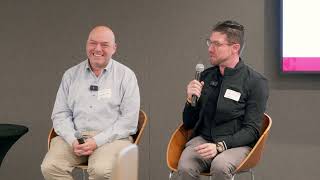
This is a transcript of a Jan 7, 2026 panel titled "Inside Due Diligence: What Investors Really Look For" (hosted/uploaded by Neal Bloom). The discussion focuses on early-stage (friends & family → Series A) due diligence, emphasizing that the primary signal is the people (founders and team), supported by legal checks (cap table, entity type, IP assignments, SAFEs) and financial hygiene. Practical tools and behaviors are covered: scorecards as conversation starters, building a subject-matter diligence team, typical red flags (founders owning <20%, LLCs that won’t convert to C-corp, missing IP assignments, empty or overly-edited SAFEs, outsourced founder engagement), and green-flag behaviors (responsiveness, anchor investors, strong subject-matter validation).
Chapters
All right, so I'm going to introduce this incredible host by the name of Kathy Kucher. Just kidding. Okay, so I would like to ask our panelists here to introduce yourself. So I'm going to ask Neil to go first. Take your time, introduce yourself, your relationship with early stage investing and anything else we should know before we dive into due diligence.
Sure.
Well, thanks for having me, everyone. My name is Neal Blum. Born and raised in la. I graduated from UCSD with a mechanical engineering degree and promptly worked in, I would say, old space, big aerospace company, working on a space shuttle program and being surrounded by the smartest people I've ever met in my life. And it was the most passionate thing I've ever been around and infectious to be around people who truly care about what they're doing and only want to work on that for the rest of their life. But from the retirement of the space shuttle program, where they let go of 10,000 people and I was not one of them, I had survivor's guilt and I wanted to do something about it. And so my first startup actually was. Was originally LinkedIn for engineers. It was to help engineers get new jobs, translate their skills. And because not a lot of people hiring rocket scientists at the time, how do you turn that into something new? And so that was my big foray from engineering into entrepreneurship, and I've kind of never looked back. And being able to create in a variety of ways through business and technology and pushing the balance of what's possible from humans, from people and from technology, I live for that every day. And so moved the company from San Diego or from LA to San Diego. When we got into evo Nexus in 2013, as soon as I showed up, actually even before I moved here, I was just touring Evo Nexus and just felt the love immediately. People were like, you're considering moving to San Diego from la. Why would you do that? And I did it and just immediately felt like, well, whatever it was that people wanted in welcoming me, I want to do the same for everyone who comes here as well too. And so while building my startup, just jumped right into helping build the startup community that made it startup founders just more successful. You know, it's very easy to just ignore founders and let them build, because founders will go do that. They'll just build. But if you actually create an ecosystem where they actually could have even more success, then there's a chance we all win in that regard. And that's kind of what found my way into angel investing, which was this idea of backing great People and being along for the ride. People did that, invested in me. Trying to think of anyone here in the room. No. But we were raised from Tech Coast Angels, which became New Fund. And so as soon as my exit happened, I joined New Fund. And I said, I'm in. I want to be part of, you know, now backing the people, the next generation around that. So that's been a lot of it for me is just being, you know, investing is kind of a ticket to be alongside good people, which has kind of been my whole career to date. And so started a fund around exited founders backing other founders called interlock capital. In 2020, we made 44 investments between me and my partner, Al Bechero. And so we deployed, finished deploying Fund One this summer. And now Fund two, I would say is on my own brand called Rising Tide Partners. And it's really doing a lot of the same backing people that we've gotten to know for years. Watch them operate for as long as possible, which I'll talk about what that means and then, you know, write the check before they're even ready for it and say, let's go.
Have you written a check with Rising Partners?
We've written one. We've got. We're ready to write our second.
Congratulations.
Thank you. And hopefully we'll write many, many hundreds more over the next 10, 20, 30 years.
So, Sebastian, tell us when little Sebastian knew he wanted to be a lawyer.
All right, so the way I would frame this, and it's hilarious too, because I am not a litigator, but how I would describe my pull towards the law is people were like, kind of an argumentative asshole. Maybe you can make money doing that. And so thus I became a lawyer. But, yeah, no, I've been out practicing here my entire career. I graduated from USD School of Law and had a very USD centric life as far as the universities and colleges here go. And then over time, got exposure to sdsu. My son now goes there, he's a senior and was just, yeah, amazed. I have seen this program now over the course of, I'd say maybe a decade, decade and a half. And every time I go, there's something new, there's something exciting, and I just love the energy SDSU brings. I'm so happy my son is there. But, yeah, I've been a corporate attorney my entire career. So I finance companies, I do mergers and acquisitions. I represent funds and form funds. So I just do this stuff. I would describe myself as a voyeur of entrepreneurs. Right. Because they're out there doing the hard work of building the business and I'm on the sideline helping them solve problems, but ultimately it's not my capital at risk. And so it's really exciting, though. It's very invigorating to live vicariously through their experience and see the pitfalls and see what makes them successful. And I'd echo your comment, Neil, about it's the people as much as anything. You're really investing in a foundation founder and their vision and their willingness to do whatever it takes to implement that vision. And so we'll talk about kind of the due diligence and the boring legal stuff and the financial numbers, but that spark is really, I think, what makes the difference. And this is an opportunity to see a wide variety of people. And there's a lot of ways that an entrepreneur can be successful and can build a business. And so it's definitely not, you know, once you've met one, they all fit into that mold. There's a wide, wide variety out there. But you're looking for that passion and that dedication, I think, more than anything. Thank you.
So, as we mentioned, tonight's topic is due diligence. And I was with many of you last year. I didn't have to do any work. I did a lot of work, but not that work, the due diligence work. And what I heard from some. Hi, Tracy. What I heard from so many was it was a lot of work. It's a heavy lift.
And.
I think when it's early stage investment, it can be even more challenging. So I think we should just level set everyone. And Neil, maybe you could take this one. What is due diligence? Why is it important? And let's start there.
Sure.
Well, let's set the stage. On what stage we're talking about in terms of companies and I think within the reference of sdac, we're talking early stage, which in the venture capital world could mean friends and family, pre seed seed and series A, that kind of nebulous area. To some people, that may mean pre revenue or just post revenue, but either way, it is early in the life cycle of a company. I think if that's okay, we can kind of focus on that area. Or does anyone want to want super late stage?
Okay, great.
I say no.
Great.
So in the earliest stages, what you don't want to talk ideas? I'd love to pull out some S1s and you can all do it together. But in the early stages, you're really determining what's real and what's not because there's really not a lot that exists within a company at the earliest of stages. There's a lot of in the future, this will be now that happens also in public companies too. Right. They're all forward looking statements but you actually have some track record to look at in early stage. It's these people and the technology that has been built and what have they done so far. And so having actual legal counsel to just say did they start themselves up right to begin actually is super important because you could spend indefinitely just going deep on the people themselves 10 different ways to just assess the people because that's really all you have a deck and kind of it at that time and so you could really hyper index on just people. So that's, that's it. It starts with people and what's real and what's not. And for me that means you need multiple data points over time. I'm an engineer, sorry, I'm going to nerd out a little bit but I, I'm all about kind of connecting dots over time. I look at a kind of an XY graph and I'm looking for kind of up and to the right rapport building even of the founders in some signal to a certain guard. Meaning you are on a social graph here. What's our next interaction like? What do you say you're going to do? Did you do that? I'm measuring that over as many points in time as the founder will give it to me.
So let's first I can talk about people and the team. So Sebastian, when you're looking at and evaluating the people in the team from a legal perspective, what do we have that we can lean on? Oh gosh, our early stage.
Yeah. The people in the team are probably one of the hardest things for the attorneys to get a good read on because our interactions are always filtered through the attorney representing the company and so we don't have that direct access. That's one of the things that the entrepreneurs have a much better perspective on as the attorneys. What we're going to be looking for from the perspective of the people is making sure that we don't have for example, a lost founder. We formed the company, three people, one of them went away and instead of setting the company up correctly and repurchasing the shares and getting that person out because they're no longer pulling their weight, they're just out there as dead weight. So that's something we're kind of looking for. So what we tend to focus on when we're doing our review is we're looking for or sometimes you'll find find employment agreements which are kind of very not standard in an early stage company. And so that's a little bit of a red flag from a people perspective because you're kind of doing it wrong and you're kind of a little bit too paranoid is what that tells me. If a founder shows up with an employment agreement in hand. So those are kind of the ways that we know.
Can you elaborate on that?
Why? Well, because they control the company. So you're creating an agreement with yourself to say that I'm not going to be pushed out. And if you put very aggressive terms in there, and this is something, you know, you sometimes have to counsel companies about before they arrive to an event like this, sometimes they will take this position of I'm afraid of getting kicked out. And my reaction is always, there's no business if you get kicked out. That's not an investment strategy to say I'm going to put a bunch of money in this company, kick the founder out, go find somebody else willing to work for the ridiculously low amount that a founder is going to work for and pour themselves into this. That's not a business plan. And so if they come in with a lot of control and a lot of employment agreements are kind of like that too, because employment agreement will generally say, hey, if I am pushed out of the company, my shares vast, I get a severance payment, something like that happens. And so that says to me, either the person is it's their first rodeo and that carries its own kind of risks and issues, or they're kind of paranoid and they're going to be hard to work with. So those are red flags for me. If we've got a founder who's potentially red flags again, if it's your first rodeo, you can teach them. If they're paranoid, you maybe want to avoid.
Can I follow up on that? Unlike what an investor would be looking for, seeing a data room with docs, a heavily marked up safe. For me, I'll get a safe in a data room and I'll go compare it to a existing safe. And if it's been, let's just clarify.
Terms because we have.
So let's say I get a document, the funding terms document has been heavily marked up. I'll go that now makes me say, oh, do you have legal counsel? Did you do this yourself or who now who is your legal counsel? Who did this? And so that's a set of rabbit hole that I start going down, right?
Why do you care?
Because certain docs were created to be simple. And if you're going and making edits to them, well, how much edits and why and what else have you edited? Now I got to go question everything to a certain regard. And if you're working so hard at it at the earliest stages when there's really nothing to really talk about because the company barely exists, it's also a bit of a flag. Why are you spending so much time on this and are you going to be a problem child to a certain regard on everything?
Just to kind of add some vocabulary here, Neil referenced a safe. And if you're not familiar with it, the word simple is in. It's an acronym. It's simple agreement for equity. And so if you. I agree completely. If I saw a safe and it was not in fact safe simple, that's a red flag. It should be simple.
Okay, so people is one of the considerations. You didn't talk as much about team, you talked about the founder. But is there anyone that has a question from when you were doing due diligence last year or other experiences or something that you would want to share in terms of how you looked at it last year without mentioning who the company is, what you learned? Okay.
It's not necessarily an observation, but rather a question.
Thank you.
It's not necessarily an observation, but rather a question because we only have a limited time with the founders. I think it was March through May and you talked about data points. So we don't have that many data points. So how would you recommend that be assess the founders?
Well, just to clarify, for due diligence, it's actually only like five weeks that you're actually talking to the founder.
And just to clarify, I loved our the founder team that I worked with, but I'm not sure about other teams, you know, how would I assume?
Sure. So this is how I'm going to differ a little bit than the nestac. I want to pick the companies that are in front of me. And so I'm out recruiting years in advance. And so the only way I could think about us doing that is out as SDAC members going and recruiting the people that we've enjoyed getting to know and encouraging them to apply. Right. So that we at least have a pool of people that we maybe already know a little bit.
But that's not how SDAC normally works.
I'm not telling you how to run sdac. I'm just telling you how I assess people, which is get to know them for as long for infinity. Right. Now, the other. And I'm Actually going to pull up a scorecard of something that me and my partner created so that we had a framework of how to assess every piece of a deal. And one of that is team. And I'll tell a story about my first startup where it was me and My Co Founder, 2 Carbon Copy Aerospace engineers of each other. Like probably the worst of what I look for now because we really had no skills whatsoever of starting a business. We'd only been engineers before and we pretty much were doing the exact same roles just together and not really dividing and conquering. And so when we first got in front of our first angel group, they pretty much said that to us. You're first time founders have never done this before and you're both have the exact same background. We literally graduated and started the same job on the same day together. And so there was nothing on the background to look at. It's like two co founders. What do you do? How are you going to divide and conquer? All right, well one said I'm going to build the website. That was my co founder. And I said okay, I'll do everything else. You can't assess really on that except going forward. And so that's why we decided during the diligence process to prove that we had nothing to show. We were going to prove that we could make a sale, right? Great, now we can sell. And then so we're going to show that we can close a deal within a certain time period and then actually onboard that customer and you know, take payment. And so that was our way for us to show, assess us in action live. And so I push founders to do the same during that two month time period. Don't just be static. Whatever's on paper, it's on the diligence team to push and say what can you do? Right. Because that's the compound of time. They can do that every day. Whatever they can do in two months, think of where they can get in two years or 10 years. Right. And so I would push on that on the people just like the merits every day going forward to a certain regard. But then the other piece I look for is now complementary skill sets. Are they aware of their superpowers? Are they aware of their flaws? Do they fill that in with people who fill those things in a co founder, counsel, advisors, smart angel investors who fill in pieces that they don't have access to industry and customers. And so that's a big awareness for me is the founder's awareness of self. And then when you're going to go raise what Are you raising for Usually for talent. Okay. How deep have you gone on? What is your team going to look like? Do you actually already have Personas prepared? Maybe even. I've seen it. You have the people lined up. Here are the three people we're hiring the second this round closes.
Great.
I'd love to assess them too, so we don't have to wait six months for you to recruit that talent. So there's a whole kind of deep. What's your sense of being a talent scout now that I start looking at? Can you attract people to the big vision that doesn't exist yet as well too. So those are elements of people, at least that I look for.
You want to add anything?
I said I tend to be removed from the people. I don't have too much to add on that.
Do you want to show your slide?
Okay, sure. Okay. So I told you guilty have the disease of being an engineer. And so my co founder of Interlock Capital and I created a scorecard more so that we could have an equal conversation. And so what we would do is when we got to a certain stage of diligence, meaning maybe we've already met the founders and already brought some subject matter experts together once we kind of felt like we had a lot of information about the company, my partner and I would on our own, score the team and then share our scores with each other to see do we have some major gaps or are we on the same page. If someone's like teams 10 and I'm team two. Okay, we both heard the same information. What are we missing here? Right. And so it forces us to have a conversation to say, what are you hearing that you're synthesizing and vice versa. So it's not how we wrote the check, but it at least give us a framework to say, what are you missing that I'm not? Go ahead.
Sure.
I can share. Probably share it.
So one of the challenges of a template like this is that it can be taken literally.
Right.
And cause the decisions to be very rigid.
Yes.
And sometimes. Tell me who I'm quoting. It's very messy.
Very messy.
So how do you balance that?
I would say in a sense, it's almost like we have five scores and this is one of them. There's a gut. There's a diligence team who we lean on. And I'll talk about how I build a diligence team. I take in a lot of data points, in a sense, and this is just one. Right. And there's been times where we said score is Low. But we want to do this deal for a variety of reasons we've thrown the score out. So yeah, I think it's synthesizing a ton of points to a certain regard in that what I will say what we see here, these are weights. So we decided to put weights on certain things based on where a company is stage wise. So impressive accelerator.
Okay.
That maybe doesn't need that much of a weighting per se.
How is this different than how you look at like in sdac? What we do is we have an application and that's when we start getting to know a company is through the application. And the application also has a video component. And then so starting there, how does something like this fit in? And then we have them do presentations and depending on how they progress, presentations get longer and longer. How does the tool like this fit in?
If it does, it fits in by being at the end of as much information shared as possible. So really it's at the end of diligence, I would say like where you have seen as much from the company as possible, not up front. So this is not a DEC scorecard. This is not a first pitch scorecard. This is a. Is this an opportunity we want to do kind of thing for us. So it's really about looking at all the information that's possible to get the. Then we score it. Not anytime earlier than that. Yeah. So anyway, this is. I'm just scrolling through here. If there's questions, let me know. But I mean a lot of this is. You'll see it in a variety of ways. You'll see each of these is a slide in a deck. Right. Each of these is probably a few questions in the application. It's stuff you're going to be asking anyway and you're probably thinking about in your own regard. It's just for us it was a way to just put all the different ways that we synthesize this data out loud so that we can share a score with each other. Now that I am solo on my own to regard, I'm kind of rethinking how do I do this scorecard and where does it go? Where does it live and how would I bounce off and how would I find maybe a number that's an outlier per se.
How's the scorecard different from like the due diligence guidelines we have or that.
Stack.
Diligence or like the first reviews?
Well, you have for due diligence. For due diligence you have kind of. These are the things that you want to look into. Is this similar or different?
I think at the onset we have kind of a high level, four or.
Five categories that we're doing kind of.
A preliminary review and then ranking the company kind of 1 through 5 on these short list of categories just to force a distribution and try to get from that 125 to the 50, 60 range. Like what can we just cut right off the top? I think it could benefit when we start the due diligence process to have something like this. And there were some that were introduced, but again, it wasn't anything formal. It was kind of everybody's kind of rolling their own, which to your point, we don't want to be so rigid, like you're just going to plug in all these numbers and spit out the winner. But I do think some structure, especially for new people, kind of helping to think about what are we looking at in due diligence. You might get really enamored with a company earlier in the process because you really like the founders or you really like the products and you think it's a good market, a good opportunity. But due diligence is so much broader than that. And so I think it really helps people. People get the mindset around the scope of what we're looking for in due diligence versus earlier in the process when we're just kind of really trying to separate the wheat from the chaff, so to speak.
Okay. And you said something really important. Due diligence is so much more than that. So I wanted to talk about that. Let me bring it back here.
Danielle, question for you. Do you use this as driving a binary decision? You want to invest or not? Not as in you're just going to deploy $5 million. Or is this to make a determination amongst multiple investments and you're trying to pick one or two of a pool of ten.
How do you.
What.
How do you use this in your city?
This is investment by investment. So it's per company and it's really more about. I would say it's more forces of discussion on is all the information there to make an assessment? So it's not whatever the score is, go with it. It's do I have enough information to make a decision itself? And so if I find. And so that's why it works with a partner or other people. If you find you have gulfs between numbers, you realize there's information that's missing from someone. Right. Someone heard something differently than the other. So I would say it's more of a conversation starter to then guide towards a final Decision not. It does not dictate that.
So now that you're on solo, right, what's the validation? Because there's nobody else Sebastian's hanging out with you, right? So there's nobody else doing kind of a check balance. Just say, hey, my interpretation of the information, same as yours.
Yeah. There's a few ways to do that. I can form an LPAC and make an investment committee that could say that we're going to as a group, decide I in panel if an informal formal diligence team for every investment I do and I could start to weigh in on them to date. I don't ask any of them to actually make an investment decision. I'm just asking for them to synthesize whatever their subject matter expertise and feed it back to me. So I'll have a technical expert, a go to market expert and a custom voice of customer expert today. I don't ask them for an opinion of would you do this deal? Unless they're saying I want to invest in this. They're saying that, then that weighs heavier for me. But I could empanel that and start formalizing their opinions further in my decision making in that regard too. I'm curious on your end what you've seen with lpacs. Like what have. Oh. So for a fund, your investors in your fund are called LPs, limited partners. Me, the fund manager, I'm a GP, general partner. I have LPs. And depending upon how you set up your fund, you actually could have in a sense a board or a committee called a limited partner committee.
What's the A for the new people? The way SDAC works is that you all, every unit that you purchase is one vote. And if you are an active investor, then it's a member driven, member managed fund. So it's ultimately the vote of the members that determines what's invested and what's not.
Yeah. Have you seen any limited partner advisory committees that actually have a say on investment committee?
I mean there usually is some overlap between the two, but they're generally distinct. In my world, the limited partner advisory committee is normally there to keep a check on the GP and conflicts of interest. And then there's an investment committee and then a bunch of support from the management team of the fund that are going out and doing the due diligence.
So let's say you do have. Oh, go ahead.
Oh, after this I have a question.
No, no, go ahead.
So on this list of items, do you have anything that you notice either on the positive or the negative as automatic Qualifiers where you're willing to forgive a lot of misses in other places because they have night that have something or on the negative side, if they're missing something that you. Even if it's a great idea, a great team, you just won't invest in it because there's some automatic disqualifier.
There definitely are some automatic disqualifiers and we've found them this late before. Like is an LLC and has no plans to be a C corp. That's kind of one that I'm out. We should have known that way up front before we started diligence. Things like that have no patent plan, but yet everything's amiss. So I think there's like a lot of like formal stuff that disqualifies people very quickly around that. There's probably also financial stuff where maybe I don't know what it could be, but not as much on this list, I would say. I mean, I think there was one on there. It's like corporate structure. It's really just kind of a check. Are you an appropriate corporate structure? But yeah, it's kind of more formal stuff like that. As opposed to what's the team makeup that probably wouldn't get a formal just you're out based on.
I know when I first became an angel investor and I was starting to learn about due diligence, I always kept thinking there's I need to understand what a lawyer would say. I need to understand what a lawyer would say. I don't know why I was obsessed with that. So from a lawyer perspective, you're doing early stage due diligence. What is it that we should be thinking about?
So the lawyer perspective, what we're looking for. I mentioned already that the cap table, right. That's the ownership of the company. So we want to make sure that that looks good, that there's not already at a very early stage, like, you know, 20 people on that cap t that would be an issue. We, you know, if I'm telling an associate and saying, hey, we're going to do due diligence, this is their first time doing it, then what I'm going to tell them is you read every single word in every single agreement and you're looking for problems. And so what? We're looking for problems. Yeah. So what we look for is an exclusive license, you know, very early in the lifespan of the company. Right. Like maybe it's in a limited enough market that that could be an issue. But that's going to cramp things down the road. Any kind of acquisition Right. And one of the things that companies often kind of do is they'll say, oh, I've got this deal, and a strategic buyer has signed something saying they will purchase us for $75 million. And they view that as, I have 75 million ready to go in the bank. But the reality of that is the only time they will ever get 75 million under that is if somebody else is offering 100 million. And then the person with the option exercises, if they're on the market and they can only get 50 million, that letter from the strategic, they're just gonna say, no, we'll give you 50, not 75. So it's not a ceiling on the proceeds, it's a cap. So that's something I'm looking out for. And then just kind of, you know, any weird shaggy dog agreements where they've said, okay, we're gonna pay this consultant and we're gonna do it. We're gonna issue shares to them. And it's a very complicated or variable formula, and it could easily bl and generate a large number of shares to this person who's not that significant, things like that. What I'm doing with early stage company for due diligence, a lot of it is spotting the issues that are going to be a problem in the next round or in an M and a context or an IPO context. I'm always looking at the next transaction. I see not just the business goals and the progress of that. I'm looking at, okay, after we are successful and we have a prototype, and now we need to bring in the team to build it to scale, we're going to have to do another financing. And so I'm looking and saying, okay, when we go in front of the next set of investors and lawyers to do a financing, have I made sure that there's no skeletons for them to find? So I want to find all the skeletons, deal with them all, and make the founder deal with them all. Really? Right. Like, we're going to say, hey, you guys need to fix this problem. That's one of the best parts about being investor counsel is you can always say, hey, fix this, as opposed to when your company consul is you're fixing it. But yeah, that kind of stuff.
Who wants some juicy stories? Without saying the company's names, there's got to be some juicy stories. Come on.
And I can turn this into a story. But to follow on, on something that on cap tables that we look for, I would say at the early stage, at a seed round, seeing the collective founders already Having like less than 20% of the company, meaning they've raised, you know, a bunch of, bunch of notes, bunch of safes, and they already have and starting to get into single digit. Big red flags for me in that regard. Is that something you're looking forward to, ownership of the founders?
Absolutely, absolutely. And it's counterintuitive too, right? Because I think one thing you could say is, oh, if the founders have less, I as the investor have more. But the issue is the only way the founders are going to work hard and give you their full effort is if they're going to get something at the end and if they're already down to 20% coming into the very, very first round and you're going to have to either give them more equity at some point and create dilution for yourself or find a new replacement. And as I alluded to earlier, that is a nightmare. So you need to make sure that the founders have enough to get them to the finish line to be sufficiently incentivized and to align them with the investors. For the founders to make money, the investors have to at least get their capital back. And so that's kind of the worst possible outcome. Honestly. I shouldn't say the worst. Worst is you get zero. Right. But like if you just get your capital back, that's pretty meh, right? You could have put that in a Treasury, got some interest on it. So, you know, the founders need to push above that though, because they're not going to get anything until they return investor capital first. And I want to make sure they have a strong incentive to do that. So. Absolutely. If they're like below 20%, that would be a gigantic red flag.
And related to that.
All right.
No, no, no, we want stories. Almost bedtime. Any stories?
Well, I mean, I think the story I'm seeing a lot of right now for how long companies have been added is founders starting to turn out because they've maxed out on the equity that they're going to have. And so that could be a four or a five year vest of their equity and they're leaving and you know, five years in to leave, it's kind of mid journey. You know, companies are. 10 years is actually not even enough these days. 12 to 15 now companies seem to have stayed private and no exit still. And so to lose a founder, I'm seeing that a lot right now because they need something new, they need some new incentive or they need a new idea or they see no end in sight for this company. So I've seen that and the founders. And it's a breakup. And that's really. That sucks, you know, for a variety of reasons. One, the company's going to go try to buy out some of that stock to get that founder off the cap table. If it's a negative breakup, you know, disparaging potentially. And you don't want that, you don't want to see that, especially since you.
Want them to still win down the.
Road for the five years that they put into that company. Or you see, I'm seeing also the opposite. They're so excited for what that founder who's leaving going to go do next. They can't wait to invest personally in that next founder as well too. But still, that's usually for me, who is all in for founders. I want to go do their next deal too. But I got money tied up in their first company as well. So that's one area is that I'm seeing just the founder breakups happening right now too. Go ahead, Kathy.
Well, I can give stories. You guys have some stories. So I know a story where the founder was dragging their feet in the due diligence process. They were really slow to respond. They kept making promises and excuses that they would get the information. That was a very, very big red flag and ultimately the plug was pulled. I can think of another example where there was just a feeling that there was something funky going on between the CEO and the cto. There wasn't any evidence that there was a problem, but sure enough, there was a problem. We did end up investing and they ended up suing each other, having being incredibly dysfunctional in terms of how they were able to move forward. And you know, that was. We should have trusted our instinct. There wasn't anything factual we could have gone on. It was more instinctually it seemed like something was wrong with them and their relationship. So that was unfortunate.
I guess.
The war stories I tend to see where due diligence process didn't work out or maybe had a breakdown would be when you get very close to the finish line of the deal. And then the one that sticks in my mind is we were very close. It was an M and A transaction. So a little different context, but nonetheless, we're very close to closing. And about two, three days before that scheduled closing, we realized that one of the inventors had not formally assigned over the patent rights to the company. And of course the buyer is not going to accept that. Right. Like they need the ip and as an investor you shouldn't accept that. And so in addition to the cap table, like after the cap table, for me, from a legal perspective, I'm looking at IP has every single person who's touched the IP of this company signed an agreement making it 100% clear the IP belongs to the entity. If you don't, then you end up in a situation like my war story, which is I'm calling this person and trying to negotiate. And of course, they know that they have leverage, right? Because they have the power to hold up or even kill this deal. Now, it's a game of chicken, because if they kill the deal, they get nothing. But you still have to play that out. And they got a payout, right? They didn't really deserve that payout. They should have just taken care of the paperwork before the company should have made sure that the assignment was complete before they parted ways with this person. And yet here we are, the 11th hour before a deal, and this person is, you know, going to take a pound of flesh in order to get a signature page. You know, that's the kind of situation you can end up with. And, you know, you just have to be careful that you don't go so far that you'll make a bad deal in that situation. Like, sometimes the right answer is to walk away when a due diligence problem crops up at that point.
Man, a lot of stories, I guess during diligence, I mean, just to start, sometimes you are really excited about a company after the pitch, and you say, send me a data room. And they send it to you and it's empty.
So just for everyone, the data room is.
Data room is pretty much a folder with just a bunch of all their extra stuff. It could be patents and ip, it could be employment agreements. It's just everything about the company from formal, formalizing founding all the way through anything. Financial projections, actual bank statements. So it's interesting because if you share a ton, well, then I'm looking at everything. And so I have had, where I've looked through seven years of the founder's monthly personal bank statements, because he put them in there. Okay, I want to know, great, he's shared that much data. Now I'm looking at how he is as a cash manager. I didn't need to, but he gave me that data and I'm doing it. I've done the opposite. Or there's the opposite, where there's nothing in there and I'm having to piecemeal say. And they say, well, what do you need in there? Well, these things. And you're having to pull it out of their teeth. I need a Financial projection. Okay. So now they're going and creating a financial projection to put in the data room for you to look at. So that's the opposite side of it is I would say that there isn't necessarily like this bulletproof checklist of five things that every data room should have, but there are some basic things for sure that you look for in a data room. So that's. Those are some narratives for sure. The other part I say of maybe not a horror story, but I had a company earlier this year, they were doing a series, a Bridge that I was looking at. So they're a team of about 30 people. The CEO I've known for a few years, as soon as I said I'm interested, looking at the material, he pretty much just outsourced the entire process to his controller. He had a CFO and a controller and every question I had to him, texting the times, saying, oh, talk to my controller. So for me that was a red flag. I was like, why can't I talk to the CEO of the company about anything? Why is the diligence process being outsourced when not a ton of technical information to go through, it's really early revenue days. So that was a red flag in that regard. I didn't do the deal. I don't think the CEO even knew what happened to our process because he just pushed the entire fundraise process to an employee to run, which I think was a really bad signal for me because I'm investing in the leader of the company.
So is there anything else I should have asked you on this topic?
Yes, subject matter expertise kind of diligence. So we talked about a lot of legal aspects, but there are a lot of aspects around assessing the company with your own expertise. And so for me, my style, I'm very much aware that I know very little about everything. In fact, mechanical engineers were known as jack of all trades, masters of none. And that's how I view myself is I know a little about a lot of. And therefore I want to go find the people who know everything about specific areas. And so they call them actually I don't know what the acronym stands for. KOLS. Thank you. KOLS is what some later stage VCs have paid. They actually have paid staff for. Right to do deep diligence on technical, do code review or actually look at bill of materials and supply chain kind of stuff. Stuff certain, certain investors can afford to pay for that I do not. I have kind of my LP group who I have assembled, who are all operators of tech Companies and I handpick each person who has specific subject matter expertise. So for me I don't do a deal unless I have the people in my group. So that's actually like my first filter. If I meet a company and no one in my group has been there, done that before from a gone to market with kind of similar business model and similar product, that's hard for me to assess if someone hasn't built a technical product like that before. Also hard for me to assess. And I look at my group as someone been that customer being sold to. Have they purchased this? Have they, you know, do they understand that voice and the pain? And so that's the little three legged stool that I build. And so I look deeply at their just synthesizing how they take it and then I assess that from there. There's a whole way of how to do that. Right. I can't just send them a deck and say hey check this out and let me know what you think. We have a conversation that often says would you join me on a call with the founding team in the C suite of the team and let's have a conversation over an hour and then let's debrief immediately after and let me synthesize what I heard from the diligence team. Right immediately after as well too. And so those are extra data points that I take for my diligence teams.
I guess the thing maybe I'd add is it's about to dovetail on what you said, identifying the most important elements and focusing on that. Don't get lost in the weeds, don't go looking at every single possible NDA because they should all be the same and they're all pretty boring and they're not very exciting. But if this is a tech company then you should have somebody on the team with again some kind of relevant experience or a patent background ideally and have them take a look at that particular element. And then the same thing with financial statements. More than legal due diligence, when I see deals die it's because of financial statement issues. That's really what kills deals, especially M and A deals in my experience.
So early stage, what would be red flags for financial statements?
I mean they probably don't have much financial. So there's not too much of a red flag there. There's not too much of a red flag there.
Well, zero in the bank when they said they're like well capitalized. Something we have to now look for, right. Are you last money in that maybe they actually haven't had money In a year and they owe a bunch of debt and that kind of things, things like that.
That's true, that's true. Those are kind of like gap, the big, big red flags I guess I'm thinking of. Usually when I see a problem crop up, it's around revenue recognition. Right? Like that tends to be, it's a little more, you know, deep accounting concept. But yeah. So you know, how, what does the focus on kind of those high level questions. To me, I'm a big picture person, I always want to understand kind of what are we trying to do here? And so even the most basic questions, how are they going to make money? What do they need to make that money? And then so do they have the system set up? Is there a customer out there? Right? Like how does the customer get into the process? What is the customer purchasing? If the customer is purchasing something, a product, how is it manufactured, how is it shipped? Right? And then what's the product itself? What stops somebody else from coming in? What's the IP under the product? Like focus on those really critical issues. Like is there even, you know, assuming they can get a customer, assuming they can deliver a product, is this a product that they can protect? Or is this something where anybody can come in and wipe them out with a much bigger, you know, the 800 pound gorilla? You know, keep an eye out for those kinds of things. So focus on the most important items and don't get lost in the minutiae of like I say, NDAs board minutes. Like read through those things, right? Like that's something, that's classic legal thing. But honestly, they probably won't have many board minutes because they probably don't have outside board members that are asking to have them kept. And board minutes themselves are kind of, they're boring lawyer documents written for boring lawyers most of the time. So yeah. And don't get overwhelmed and think, I must read this entire NDA and the other 30ndas like it put them in the bottom. And if there's a relationship that came out of the NDA, okay, let's go back and check that out. Right? But focus on what are the key issues, the key items, the key relationships. Do that as your number one priority because if there's a flaw there, you don't need to worry about the NDA. If the agreement itself is garbage.
Tying two of your issues together, the financial statements, having cleaned financials and then not having weird things build. As a financial professional trying to help somebody with deferred cash impact on them, how would you like to See that structured to compensate an early professional. You said you didn't like safes that come in down at the end, but at the same time we're trying to not burden them on the front side. So how would you like to see that?
So the question is the deferred compensation expense to the founders.
Yeah. How do we provide services early without cash impact and not have it trigger.
Your late as a service provider servicing a startup early stage and then looking at it from an investor lens.
Yeah, that's a good question. And I would look at that as a founder saying this is how I'm filling a gap. Right. And I'm putting assigning a value to it which may be equity based or deferred compensation and just an awareness that they haven't completely put an anchor in themselves saying they'll never get out of this hole.
Right.
It's like, okay, no, there's like a few points of equity, single digits. That's really strong. Especially if the service provider believes in the founders to a certain regard. I think that also shows. But if the founder has given up 30 to 40% of a company to someone who's helping them on accounting, I think we got a problem. And I think so I think it's like an order of magnitude kind of awareness that the founder has to a certain regard. I mean, I think in the beginning they're working for nothing and then they're paying themselves 60k or 50k maybe in the beginning. So, you know, I think if they have that kind of awareness then it should show across everyone who's helping build this company going forward.
Question back here.
Yeah, so I have a question. So we keep talking about red flags. So I want to get. And I like stories just like Kathy does. So I want to hear a story about green flags and what in your due diligence found that you had a green flag and the story why this one particular company was successful, what your view of that? Hopefully it was an exit, but we'll see. Whatever the success criteria you use for.
I mean, I've got an interesting story, but I don't know if it's fully on point. You want to go for it? Yeah, I sold the same company twice. And the reason that happened is because we. And this is kind of consistent with what you're saying. So we did the sale and a lot of times this is like back in 2010. Right. And so this is. We're just coming out of the 08 recession. And so I'd gotten used to doing deals where we get a term sheet and the company's flailing. And by the time we close, we've closed off the term sheet, but in a bad way. And so I had this deal and it was a financial services company and they were the opposite. We signed the term sheet and by the time we're ready to sign the definitive document, we're kind of moving up in revenue. Like, all the indicators are green and the buyer is just salivating, right? They're ready to take this company. And so we negotiated a higher price for them. And then we put in this provision saying, hey, if you sell the company again, like within 18 or months, 24 months, something like that, we get paid again. Our guys are going to get some more money out of that. Because the reason why we're going forward with this particular deal is the strategic opportunity. And so if you are no longer the dance party that was going to blow this company up, we want something to compensate us for that. And so totally unrelated to my client's performance, which was just stellar, but kind of outside of the core business of what the acquirer was doing, they were like, yeah, we're going to sell the company again. And so they call us up and we represent them again. It's a little bit different, right? Because they weren't the actual owners. We represented them more in their capacity as the employees that will make this business work. Because it is a financial services business. It's driven by these employees. And we sold the company again. And it was just hilarious. And that was one of the best ones ever because it was just this experience of, again, we're going down, we're barely going to make whatever the number is for the acquisition to work. It was, we are going up. And if you guys don't want to go forward, we can go through this process again. We're fine with that. Which is an amazing experience.
Very unique.
What's the worst investment you ever made, investment you thought would be good and it wasn't. And what did you learn? The worst investment, probably in the stocks, to be honest. I mean. Yeah, I know. I mean, I would say a lot of the investments I've made are still being written, even eight years in. They're still there. I would say the one there, I.
Have one for sure.
And this is why I mentioned the bank account zero thing. We invested. I think it was our second deal in interlock. So anyone who's interlock, you can go look that up. And we've told the story to our members within a month. So we invested. And a month after we invested, they were out of business. We're like wait, what, what happened? We just put 100k in and what? They're like oh yeah, we couldn't raise any more money. It's like what did we just invest in? And that was very clear when we realized we were left holding the bag. We were the last money in on a falling knife that had been falling for multi year. And so yes, they had other investors but the other investors were there from a year ago and they didn't re up, they didn't reinvest in the new round. So taught me a lot about time of investment. Doesn't matter that you've had investors before, how recently did they invest and you know, as anyone else participating in new rounds. So that was definitely, that was one. It's not dead yet. They actually went public. They are on like the otc. We cannot trade our shares without completely tanking the company. So we're kind of stuck. We would sell if we could. So it's not dead. But that was the quickest realization that wow, we missed some big red financial flag. But that was our second investment.
So actually I have a follow up question on that. What were the red flags that you missed? Like what should we be looking for to avoid mistakes like that?
That was all financial. We needed to like look at, I didn't know that I needed to be looking at, you know, weekly and monthly account statements to know what is your burn and how quickly are you burning and when are you out of money and necessarily think that, that because they're out raising a large round. Problem is when a company says they're raising a round, let's say a safe raising 500k, you go, this is, you go and wire your 100k. They may not raise anymore. And so when they're done with that 100k and they can't raise anymore, it doesn't matter that they're raising 500. So we also learned we don't fund until deal closes. Right. We are not first money in ever. All money hits the bank at the same time. So that we're not the only, the only one funding this company. 100%. Yeah. So we're all about closes now. Close a deal which is hard, hard. In the early days as a founder you're running around with trying to, you know, get 50k here and 25k there. And it's so easy for a founder to just say sign this safe and here's my wire instructions. And they don't, they don't want to involve their lawyer because they Think it's so easy? Well, yeah, it's easy until it isn't. Until no one wants to do business with you.
And that was specifically financial services company.
No, this is a tech company. Yeah.
Yeah. It's always a challenge to get that investor. And you're completely right because it's kind of like it's easier to get a new job if you have a job. Right. It's the same kind of thing. Like once you have that investor who is at least willing and said, we will write the check if you get somebody else, that itself will help a company do the fundraising. But until they get that kind of anchor, it's a lot of red flag. Until there's an anchor in there. In my book, that's probably the biggest thing. If it's a collection of. We call them cats and dogs. Right. Small investors writing checks for 25, 50 something in that neighborhood. I want to see somebody in there with half a million. A million. Who's driving the round, who I know would be responsible and pushing the company and has enough skin in the game to really get behind them and put a fire under them.
We're going to take a couple more questions, Robin, and then Tracy, and then we're going to wrap up. But there's time just to talk amongst us.
I actually have two, but I'll. No, you can do one that came up while you were talking about this other company that went sideways. Do you continue participation? What level of participation. Participation do you have in any of the companies that you invest in? Some of our, you know, some of our group is on different boards. And how do you keep track of status of who's doing what after you've given them funding?
Yeah. Fund portfolio management is huge. I mean, it's like 60% of my job, really. And that is what I am assessing during diligence. A piece of it is what is going to be my involvement actively afterwards. Do I have the space for it formally as a board member, do I can't be on every board, but even just the support that this company is going to need, which is also why I go back to my diligence team. Do I have people I can kind of delegate that I can say, oh, you're a sports betting tech company. We're investing in you. And I have the founders of FanDuel. They get to be the people you talk to. You don't need me, so you delegate it.
But you have someone on your team. Keep your finger on the pulse of what's happening.
I would say someone, yes, someone I would say on the team these are all, we all invest together so it's someone who is mutually aligned. Long term interest, just like me is looking out. I'm not saying they're assigned board member but they have the most knowledge to continue to help in that regard. And I wouldn't say I formally do this on every deal like I sign someone, but it's why I look for do I have a density of subject matter experts to continue to provide support to the founding team if I can't support them at all and I'm just going to be a silent partner. I don't think I want to be involved, to be honest. And that's why I don't do those deals because I'm not investing. I want investment for a ticket to be at the front seat. I want to be excited, I want to be in for as long as the founder related to that. I've been offered many times for secondaries where to get my shares bought out and I immediately go to the founders and I say are you guys taking it? And if they are taking it, I'll take some. And if they're not taking it, I said I'm in for as long as you are. So I've done. I'm not saying that's every transaction, but that's how I look at things when I've. I'm kind of a fall in love with the founder first kind of thing. And so if the founders are in, I'm in. Usually for as long as it makes sense.
Yeah, I guess one of the things I would say about the VC model generally is that's one of the best invisible unmeasured benefits is the experience that a good VC brings to a company. And it's a night and day difference between we're founders and we don't have that outside VC and the outside VC coming in. They just have such a greater depth of experience, of familiarity, of contacts, of ideas like they've seen it before. They've seen people have struggles finding the right talent or a problematic employee. And so the value that a good VC firm contributes is well beyond the actual money in the bank. It is that experience and guidance that they bring to the board.
I would follow that for angel. If you have a portfolio as an angel, which I think you should, you also start to flex that muscle because you're seeing, you're starting to recognize patterns. Right. These founders are starting to go through similar problems at these times. Oh, that founder just had that, that I invested in six months ago. Let me connect them and make sure that they talk and share that knowledge, too. So I think that's why, as an angel, it's also important to have a portfolio so that you learn a lot about yourself and a lot about the people you invested in, and then to network with other investors to share those networks and share those knowledge and learnings too. When you don't have a formal fund to go and do that, because I have to talk to my founders monthly weekly. You know, that's not necessarily imperative on an angel, but I think if you flex the muscle because you invest often and you have an index, then you start to learn that where you can be valuable and where you can actually the biggest thing, anticipate their needs. Right. It's usually when they get quiet that you're like, something's happening. I need to get ahead of it. And the only way to know that is to been there, done that before a few times.
Okay, Tracy, take us home.
We have time.
Yeah, you're the last question, and this.
May be a bigger question for another follow up, but I've been thinking about some of the themes that have come.
Up, and we talked about, like, being.
Messy and active and figuring it out versus being too prescriptive. And Randall was talking about, you know, kind of this rubric and is it individual investments or is it to compare across? And it made me think of one of the challenges with SDAC and due diligence is that you have this cast of characters coming together with, like, different levels of experience, different subject matter expertise. And we're trying to look across six different companies that are at different stages in different industries and somehow not get too attached to the ones we're closest to and still be objective and analyzing the ones that our peers are working on. And it's making me think of, like, how big of a challenge that is, because you're the. Even if you're bringing in subject matter experts per investment, you're looking at one at a time generally, or a few at a time. And you're the common thread that's kind of pulling it all together and providing that consistency. So I just wondered if any of you had thoughts about SDAC in that way. And as we look at, you know, going forward, what are some of the ways we could address those challenges in a way that still has the team feel empowered and supported and getting to, like, a good outcome?
A good.
Across the six, you know, five or six teams in terms of doing that big challenge?
That's a big question.
Big question.
All right, so we're going to answer that, let me just say, in case I lose anyone, let me just say that if you've participated before or if this is your first time, every year you need to fill out this accredited Investor Information Request Request form. This is a different form this year. All this is doing is asking you questions to assess if you're accredited. Because to be part of this program you need to be accredited and you need to do this every year. When the fund documents are available from the fund manager, you will receive them if you have signed this form. So this is an important form. It doesn't obligate you to anything. It does clear you to participate in our events. And, and then there's some other information regarding being a member and when that has to occur. And if anyone has any questions about that, I certainly can answer those. Okay, so I'm going to have you guys take that big question and bring us home.
So it's funny, actually, I would say SDAC1. Do we have anyone from SDAC1 here? Okay, you may remember this then. We had a big split between the biotech, the people with a biotech background and the people with more of a product oriented background. And those two camps could not see the value in the types of investments that the other camp wanted to make. It was very, very pronounced that first year, I think. I don't know if we have fewer biotech people or what the issue has been. That's true. It was a pretty small group. Yeah, it was a tiny, tiny group. But so I guess what I would say from that is it's about kind of understanding the limits of your own knowledge and listening to other perspectives. Because what we're also going to see is there's a lot of products that will come through that are for a particular person. And so like a good example, right, Is last time we had a breast pump, basically. Right. So if you don't have children, what's this product? Is it really that important? Is it something, you know what I mean? Like it's not going to be obvious or evident to you what it is. And so you just need to be able to listen to the other people, you know, that the product is for or with more experience in the product market and just keep an open mind. It's okay to still be like, this is my favorite. But I think you really want to work hard, hard to take in the input of people who have expertise and experience in a field outside of yours and that that's kind of the best you can do. I think.
I remember what we did in that in that first one when we were all inside USD, we all had different tables for due diligence and each table was for, you know, each team was for one particular group. We did have. You know, I'm just thinking of some of the people, the people that had more expert expertise in, in that particular field would be on the due diligence team for the particular product. You know, I remember some of the names of some of the people in some of the companies that we're talking about. And I remember I. It was my first four age and I fell into it, so I didn't know anything about anything. And I was deferring to everybody's expertise pretty much about how to do how to do. I thought there was completely fascinated that people tended to cleave to the companies that they knew the most about those industries in order to provide the due diligence. Is what I'm trying to say is that it seemed to work to some level where maybe when we were choosing winner at that time it was different. But during due diligence, the people I think that needed to be steering the ship for each individual individual tend to be the people that were.
And that's.
And that's pretty common.
Yeah. Yeah.
Okay, I'm gonna wrap it up. Okay. So first of all, big round of applause. I'm good. Big round of applause. Thank you. Our hosts have asked that we're on our way out at 7, so that leaves us only about 10, 15 more minutes. But I want to just thank you and thank you all for being here. Thank you. You guys were absolutely great.
Yes.








