Inside the rise of real-time diagnostics and the promise of proteomics
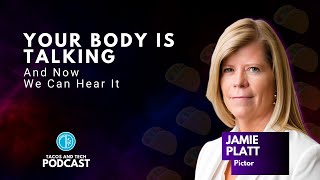
Podcast episode (Tacos & Tech) hosted by Neal Bloom interviewing Jamie Platt, CEO of Pictor. Platt describes Pictor as a proteomics platform company providing accessible proteomics-based diagnostics for human and animal health, emphasizing real-time protein measurement versus genomics' blueprint view. She traces her path from a postdoc and Quest Diagnostics into clinical genomics, discusses de-risking new tech for clinical adoption, and explains Pictor's strategy: affordable, fast proteomics workflows for labs. The conversation covers Pictor's US expansion to Carlsbad, fundraising (New Zealand early investors), regulatory context favoring LDTs/CLIA after court action, and the role of large labs (Quest/LabCorp). Episode closes with casual local talk (tacos, San Diego spots) and event mention (Pictor open house/ribbon cutting June 10).
Startups get the party. Startups get the party started. Startups get the party. Startups get the party started.
You want tech and tacos, Tacos and tech, you know we got it. Hey.
Startups get the party. Startups get the party started. Startups get the party. Startups get the party started. Startups get the party. Startups get the party started.
You want tech and tacos, Tacos and tech, you know we got it. Hey.
And welcome back to the Tacos and Tech podcast. I'm your host, Neal Bloom, and I'm thrilled to have on one of San Diego's newest companies to town and their leader here, Jamie Platt, CEO of Pictor. Hey, Jamie, thanks for joining the podcast.
Hey, thank you. It's really great to be here, Neil. Thank you.
It is nice to have you and nice to get to know you a little bit before our recording here. We always love welcoming a new company to town and so we're excited to get to know Pictor, but first got to get to know a little bit your background a bit. So why don't we start first with give us a high level what Pictor is and then we're going to dive back into your history a little bit.
Excellent. Well, thank you. Yeah. So Pictor is a proteomics plan platform company. So in the biotech space essentially, and where we have a proteomics platform that is accessible for health and wellness diagnostics both for humans and animals.
Oh, incredible. We have a lot of expertise and talent for both within, I would say, the San Diego greater life science region. So it kind of makes sense already hearing that. But take us through your background. You've got a deep background in genomics and life science in general. How did your path take you down, down here, down this road?
Yeah, it's quite crazy actually. So it wasn't by design. It's sort of by just, you know, choosing good opportunities that sort of arose, being a little bit fearless in some ways and also not being afraid to fail. So I got my start at Quest Diagnostics after my postdoc at UC Berkeley and really just was in the right place at the right time when genomics was starting to come about. So in 2006, a company called 454 was starting to get a little bit of buzz and I just had this, I guess, a real conviction that it was going to change clinical diagnostics and it would be a powerful technology. So I didn't give up on it easily and I managed to find some champions within the organization that kind of shared my vision and let me Forge a path to eventually put NGS and some genomics technologies into Quest Diagnostics and from there just sort of being one of the early folks in clinical NGS and clinical genomics just brought a lot of opportunities that I'm very grateful for.
Incredible. What a way to kind of get the playbook right out of school from Quest. This behemoth which continued to grow obviously during that timeframe as well too. I'm guessing you started to see trends specific within genomics. Obviously that was a rising space. Take us through that. What it was like on the ground, seeing it rise up and kind of where it is now.
Yeah, excellent. Well, as you may or may not know and your listeners may or may not know, the challenge for technology in the clinical space is that by nature a lot of clinical folks are risk averse. And so even though I was convinced that it would be a great technology for diagnostics and precision medicine, that was not the case for many of those around me. Really just finding a way to take this technology and I guess try to de risk it and also try to educate those around me was an important piece of how we were able to leverage what we were doing. I will say there were some early adopters in the clinical space, but being Quest, Quest Diagnostics is one of the largest diagnostic labs in the world. You know, having access to so many patient samples and having that kind of footprint was really a good opportunity to get the technology entrenched in a way that would allow more acceptance across, you know, the clinical areas. And so it was, I just really didn't give up on it. And I think the other thing is then working with the regulatory agencies to help them understand genomics was another really great opportunity. And so much of that is about co education and learning. And so I think that that was really an interesting time to help the regulatory agencies understand how they could regulate something that was so different from anything they'd seen and, and accept a new technology. And you know, knowing that, you know, if you don't accept, you know, if you don't accept some risk and you're not willing to innovate, it really holds back patient care. And you know, being able to balance that in a regulatory setting is, is very challenging but also important otherwise we can't really affect patients lives and people's lives the way we'd like to.
Yeah, it's such a dichotomy of that. Like, you know, cannot lose life, so obviously no risk yet we cannot save a life without taking a risk.
Right, Absolutely. Yeah.
How do you lead in that environment, you know, between academia, research, government, and, you know, people who are literally living in the future in terms of where they know this needs to go.
Yeah. And it's so funny, I think, you know, one of the things that I felt really strongly about and still do, is that people ought to have access to the information from their own bodies. And, you know, the fact that someone is, at least at times in our history, has always wanted to regulate that. And, you know, you can't just order a test yourself in many settings. You have to have a physician do it. And then of course, there's been times where you can't actually get the result yourself and you have to have a physician interpret it for you. To me, I just feel like knowledge is power. And, you know, while not everyone wants that much access to that information, some of us do. Some of us want to have the facts and want to be empowered with that knowledge 100%.
We're seeing that real time right now with 23andMe. Right. Like the first time, it feels like the public's like, wait, what? My data's out there? It's like there's a lot of places we just happen to have good regulations to keep the data in its place out of bad hands. But to your point, you know, people deserve their own data as well too, if they have some use with it as well. Take us through a little bit about where Pictor comes into this picture here. Right, Because Pictor is kind of the next generation related to this, especially with proteomics.
Absolutely. It's so exciting because, you know, Pictor started out really as an immunodiagnostics platform. And when I came into the CEO position here, I was used to cutting edge genomics, liquid biopsy, minimal residual disease detection, and all kinds of the real cutting edge oncology things. But something like immunodiagnostics that has been around in laboratories for decades as really just sort of a gold standard was definitely a new concept for me. But what I soon realized is that we really had a proteomics platform. And proteomics is super exciting because it really, instead of looking at the blueprint, which you do with genomics in proteomics, we're looking at what's actually being produced by the body in real time. Even if you look at. There was an excellent Forbes article way back in 2021 about how the amazing investment opportunity in proteomics, because it is really a real time look into what's going on in the body. When you look at the blueprint, you're looking at what could go on in the body in the future, you're not necessarily seeing what is going on at the time. And so by looking at the proteins, we really get a snapshot of what is actively happening in the body. And so it was really exciting to realize, hey, you know, this really isn't just an immunodiagnostics platform and something where you look at just antibodies. This is really a proteomics platform where we can look at all types of protein biomarkers and look at them in a matter of a few hours. We can look at them in a very effective and efficient way so that we can actually help laboratories implement proteomics workflows in a way that helps them be more effective and actually helps them make money. And it's actually very, very affordable. So it's something that is exciting for patients, whether those be human patients or animal patients. The fact that people can have access to, to that type of information through laboratories in a way that's so cost effective and very quick and easy is really exciting. So that's sort of what took me here and really got me most excited about our platform and how we can enable precision medicine.
Got it. Very exciting. And alongside with that is kind of the news that you're establishing a new US presence in Carlsbad. Well, welcome. Take us through kind of, you know, what this expansion strategy and growth strategy is going with in terms of roots locally.
Okay, yeah, thank you. So, yeah, we're really excited about it. We have had a small laboratory in San Diego for a number of years, but we've now expanded our headquarters to the US and that does a couple of things for us. It positions us better for our next round of investment. We've been fortunately funded with a lot of small New Zealand or Kiwi investors, as they call themselves. And we really need to be able to move into our next phase of growth and scale up. And certainly one of the things we're finding with the richness of talent and partnerships in the San Diego area, it's just a really good place for us to be, especially in proteomics. As more and more people are seeing, you know, what proteomics can do, I think there's also big need to have a very focused platform that's not just meant for discovery, but really could be used in the clinic and close to, you know, the point of need in either animal or human health. So it's really great to be in San Diego where we have access to great partners, access to a lot of talent, and then you Know, just in a space where obviously San Diego embraces innovation on many, many fronts and it's just a great environment to spawn more innovation and help us interact and network with some of the best and brightest minds in the world.
Yeah, 100%. I mean just, you know, top three at least in the US for total life sciences. But even under those umbrellas, deep depth in genomics. Right. Where a lot of talent got trained like you. Right. And then these new burges burgeoning areas. Obviously Covid exposed a whole host of stack of the diagnostics world. Right all the way down to like direct to consumer at home diagnostics, which is a whole other area, you know, that's an up and down that's been over the last five, six years that you know, hopefully is getting some legs underneath it. What do you think the state of, you know, regulatory is for diagnostics these days right now?
Well, it's certainly looking up. It was a little bit unclear over the past, you know, about 15 years quite frankly, when the FDA had stated that they would begin or had oversight over laboratory developed tests or LDTs as they're called. But luckily with the court overturning the FDA final ruling, it's put some clarity back and allowed laboratories to develop their own laboratory developed test. The advantage of this is again being passionate about innovation and making sure that people have access to the best information and especially people that may be suffering from horrible diseases or facing the fact that a child or another family member needs a better diagnostic or even a better treatment and not having access to those tests, it's really critical. And if someone is already terminal or doesn't have much hope, it seems a shame that you can't actually develop a better diagnostic or some better tool to look at the biomarkers that may provide really good insights into possible therapies. And you know, it's again, it's a sort of a risk reward type of effort. And of course, you know, in clinical we tend to be very risk averse at the point that, you know, sometimes it actually is more risky for the patient or the person. So I think, you know, that the ruling and the court ruling to overturn FDA's claim is actually very good and it actually makes medicine and diagnostic testing more affordable because the cost it takes to bring a diagnostic to market through FDA channels is just really cost prohibitive for small innovative companies. But it's also just very time consuming and by the time you get it to market, there's better technologies that could provide a better, more sensitive, more comprehensive answer in A faster amount of time. So it definitely adds a lot of clarity, which is great for us as a company because we can go about doing what we've intended to do, which is help laboratories develop their diagnostics on our platform that can really give them better price, performance and productivity. And that's really what we've been after from the beginning. And certainly the regulatory. The new regulatory rules have made that even easier and provided more clarity and given us back a path that is a proven path. It's not like there's no regulation with the ldts under clia. So it's still a regulated environment, but it's a regulated environment that allows for more innovation and better access to test.
I think what's great about that is it puts it on the businesses, These quests, these LabCorps and all the ones small underneath it, who actually probably see a more broader cross section of the population. Right.
That's so true.
Whereas delivery of care seems to have this uneven access. Right. In that regard. So that's. Can you take us. I mean, it sounds like by design that way, but obviously, because you came up through that, you saw kind of delivered care for you is through the labs, right? To a certain regard, absolutely.
I think that's a really good point. I mean, I think most people don't see it because their physician is the one that orders the test, but, you know, the physician can't make the decisions without the proper information from a diagnostic. And I think, you know, your point about the Quest and the LabCorps, and I've been at both organizations, you know, they are really. They see so many samples each and every day, and they can drive the cost down, which is important. Now, if they don't get to control their own costs because they can't develop their own LDTs, of course the cost is higher because there's just more they're paying for in an IVD that's already gone through fda. But, you know, it also allows them to move rapidly and it leaves room for smaller groups and smaller labs that may want to have niche diagnostics that, you know, also LabCorp and Quest then can use those. And they will often refer tests out to some of those smaller labs that have specialized laboratory developed test totally.
And the alignment's there around volume and even just awareness that this test exists. Right. So they're like a great channel partner and they want data and they want to do a lot of tests. Right. So it's really smart in that regard, and I'm excited to see it come to fruition. I Know, it's a long time in the making for sure, but you know, you've been leading to a certain guard in this regard of pushing the envelope in these newer areas. Do you have other, I don't know, advice you're given to maybe up and coming biotech leaders to kind of help to lean forward in this area?
Yeah, certainly. You know, I think just from my experience, I would say if you're lucky enough to have a conviction about something like stick with it and find a way to really exhaust the possibilities because things can be very, very hard, but they can also be very rewarding. And I guess an example would be when next generation sequencing was first emerging as a technology and I was talking to people about it, most of the clinical folks I would talk to would say there's no way you can do this in a clinical setting. And it was very discouraging. But I didn't give up because I just knew that it could be a game changer. And once I found a way to reduce the risk on cost to the company and implement some of a new test in the company at reduced cost, I think they embraced it. We got through some of the regulatory issues and I think everyone started embracing it around that time. So I think don't give up. Trust your gut. I think the other thing is don't be afraid to make some mistakes along the way. All of the little failures can add up to success and so the trick is you want to keep the failures small and you also want to listen. It's good to have tenacity and keep at something, but at the same time keep input coming in so that you can continually assess. Because there are times when the market doesn't align. I mean, telemedicine is a good example where people were doing telemedicine 20, 30 years ago or trying and it just wouldn't take off. So part of the challenge is with anything you can have a great idea, you can have a great technology, you can work really, really hard. And it almost always takes hard work, but it also, there is something about timing and something about luck. So, you know, you just, I guess don't give up would be my advice. But also don't be so bullheaded that you're not listening and figuring out how to pivot a little bit. Just, you know, minor tweaks to, to come up with a good strategy and help things be successful.
Really good nuggets there, that's for sure. I mean that's to a certain regard, that's a lot of entrepreneurship. You gotta Be just running uphill with this conviction, but leadership in general, it's just so easy to not lead and do the thing that everyone's doing. And not to say be contrarian, but to stand up for the things that you believe in. Right?
Yeah. So true.
Yeah, well, really, really timely I would say in that regard and I really appreciate that. And I think you'll find hopefully your team will be amongst leaders like that in North County, San Diego. So great to have the picture team around. Something we do in town and probably done all over the world. And you're from Southern California, you know this too. But you know, we break bread over food, obviously. Literally. And in San Diego we do it over tacos. Now we've had tacos named from all over the world. You've lived all over the world. Do you have some favorite spots that you like to go to for tacos?
I sure do. So speaking from where I'm talking to you today, which is in near Charlotte, North Carolina, I actually have some favorite taco spots here and there's a really good Mexican population. You said. I've lived all over the world and I really was so happy to find some really good Mexican places here because I've lived in plenty of places where they don't do Mexican well. Even though people, locals will tell you oh this is a good spot, you're like, no. So I would say amigo Taqueria in Kannapolis, North Carolina is one of my go tos. In fact I had some tacos for lunch there and then you know, in Carlsbad there's also a few great places that I like. You know, Lola's 7up Deli and the taco stand. And it just really depends. Like some people have like they want sort of an upscale taco. Sometimes I just want a simple street food taco. But you know, certainly appreciate some of the creativity that can put be put around a taco.
Yeah, right. The art and the science that goes into it that you see one worth checking out in La Costa area of Carlsbad. Lola 55.
Oh, okay.
I would say a higher end taco.
Okay.
I think they've got a Michelin rated kitchen.
Oh my gosh.
Tacos, you know, so worth checking out sometime. And then you also mentioned taco stand, like is the number one mentioned spot on this podcast.
Interesting.
Yeah, you know, from the line that's out the door there, so.
Yeah, exactly.
It is a popular one and it's a great one. City taco is another good one though I think the closest is in Encinitas. So either way, when you're in town next, look forward to having some tacos with you and the team.
That'd be great.
And we really appreciate you coming on the pod and sharing about, you know, how you're changing the world. So thank you, Jake.
Absolutely. Well, when I'm. When I'm. I'll be there. Actually, June 10th, we have our open house and ribbon cutting and so I'll look you up and see if you have time to break bread over a taco.
That would be great. Awesome.
Great.
We'll make sure we get the word out about the ribbon cutting too. Congrats again. Welcome to town and we'll see you soon. Thanks, Jamie.
Great. Okay. Thank you, Neil. Thanks a lot. I've really appreciated the discussion.
Me too. Thanks.
Startups get the party started. Startups get the party Startups get the party, party started.
You want tech and tacos? Tacos in tech, you know we got tacos and tech is on smash for the green guacamole keeper Counting, counting beans Contador Quentan frijoles found us trying to raise some queso la vida San Diego school of rappy rapping Fire tortillas round jalapenos in these modern times a craft beer and coffee my coating yoga posse fold the body origami we be surfing Coronado eating tacos El gordo the tacos standing gotta shout out to cost angels by the ocean watch the sunset La Jolla shows entrepreneurs trying to get funded When San Diego Startup week is popping in the summer Oceanside, the Tijuana St. Be full of hustlers from couch surfing to penthouses right on the beach. Tech leaders who believe stars are within reach we interview and founders who be shooting for the Moon SD TechOS with your host, Neil Bloom.
Startups get the party. Startups get the party started. Startups get the party. Startups get the party started. Startups get the party. Startups get the party started.
You want tech in tacos, tacos in tech, you know we got it.
Hey.
Startups get the party. Startups get the party started. Startups get the party. Startups get the party started. Startups get the party. Startups get the party started.
You want tech in tacos, tacos in tech, you know we got it.
Hey, Sam.








