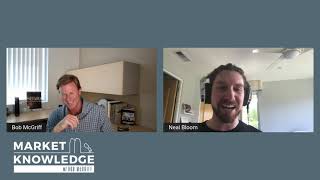
Neal Bloom, a San Diego tech entrepreneur, talks about building the local tech ecosystem, how COVID changed work and real estate, and why he invests in early-stage companies. He runs Fresh Brewed Tech, a media company covering the region's startup scene.
Foreign and welcome back everybody. Today we've got another fantastic guest. Serial technology entrepreneur. San Diego's tech industry ambassador, Neil Bloom is here. Neil, how you doing?
Hey. I'm doing well, Bob. Thanks for having me on.
Yeah, well we appreciate you being here. Fantastic. Okay, first we got so much to talk to you about. I want to talk about the tech industry, about fresh brewed tech and all the things that you've got going. But first, you are now immersed in the tech industry in San Diego. But how did you originally get started in it?
So I went to UCSD for my undergrad as an engineer and I actually moved away like a lot of students unfortunately do. I got a job in LA and worked in aerospace for a few years working on actually the space shuttle which was super cool. It was not necessarily a dream of mine, but everyone that I worked with, it was a dream of theirs and it rubbed off on me like working around inspired, passionate people. It was a great first job out of school. But then actually the space shuttle came to an end. It was retired kind of right around the time of the financial crisis, the last one. And I kept my job, stayed. But I saw like the industry wither from like 60 to 70% layoffs, which was really tough to watch, especially being like young and new and seeing like 30 year vets who've been in the industry launching the space shuttle. They're saying what do I do next? Like how do I remarket myself? How could anything be as cool as what I worked on? And I started working on the side with a colleague of mine on a project to kind of help people remarket themselves for the workplace. And that turned into my first startup called Portfolium. And so we started in la, but we actually applied to a number of startup incubators and we got into a San Diego based one called Evonexis, which at the time was downtown in San Diego. And so as soon as we got in I quit my day job, my aerospace job literally the next day and moved down to to San Diego in 2013 again and lived on my co founder's couch for a number of months until we moved in together and worked on portfolio together. So that kind of brought me back to San Diego but really immersed me in the startup culture that was happening and there's a bit of a renaissance I think happening in 2013 there was community that was happening. A lot of companies had started like the Classies and the Teliums and the Seismics, but there hadn't been this fabric that connected everyone. And so in 2013, the first startup Week happened and attended, but immediately felt like I wanted to be a part of something bigger than just building my own company. I wanted to be connected to everyone else, to learn from everyone else too. People who are ahead of me at the same stage and behind me. And so Evo Nexus was physically the manifestation of that. All of the things started happening at evo's spot in downtown. Startup Week kind of grew out of that. And then I got sucked in volunteering my time to work on the next Startup Week and other programs that kind of came out of what became the nonprofit as Startup San Diego.
Oh, wow. So when you're going through that process and you're getting into the industry and becoming an entrepreneur, is that something that you thought, well, this is where I want to be. I want to be an entrepreneur and create my destiny per se. Or did it just kind of fall. You fall into it.
So I grew up actually in a really entrepreneurial family, mostly in the real estate space. My, my dad and my grandpa owned restaurants and developed shopping centers. And so I kind of figured I would just fall into that. I thought I'd go into the family business of real estate and kind of retail restaurant kind of space. And then senior year of college or senior of high school, I had a physics professor that said, you should join this robotics class. I think you'd be good at it. And it changed my life. It immediately. I'd already applied to colleges, but when I got to school, I changed to an engineering major, and that really kind of changed my trajectory. And that's where I got into aerospace. But I still had this entrepreneurial itch. And so when I was working in aerospace at a really large aerospace company, United Technologies, which is 3,300,000 person size company, even larger now with Raytheon, I started to feel that one. I wasn't the smartest person in the room, but I also felt like we were all pretty homogenous. We were all engineers, and I wanted a little bit of diversity. I wanted a little bit of new responsibility that didn't revolve around just engineering. I started to scratch the itch of what does creativity look like for me? And some of that was new business creation or ideating and validating business ideas. And so I got an MBA actually by night. And that didn't totally scratch the itch either of like telling me, hey, this is a path for you. And so I started thinking about the entrepreneurial path. And once the idea came to us for Portfolium, I didn't actually really think about all like the skill sets of an entrepreneur. I didn't say, am I the right person for this? I kind of jumped into it and said, I love the idea. I have validated, I know people we can build this for. And looking back, I probably should have done a little bit of self assessment, like am I the right person to start this? Because me and my co founder also were two engineers who didn't really complement each other super well. We divided skill sets of just like what needed to get done, but we were very kind of similar. And so that was a learning lesson. Years later, once we had kind of a fallout between the two of us that maybe we should have had some diversity of skill sets between us as co founders.
That's a tough one because you're looking back and as an entrepreneur you want to get started, right? A lot of guys just sit on ideas and nothing ever happens to them, but you want to do it the right way too. So what do you recommend when people are thinking about that they've got ideas and they don't really know how to execute on them?
I think the biggest north star is learning of who could be your customer and being so curious, you're always looking for feedback loops of any idea from them. So even if it's not someone or you don't even have a product yet something that someone can buy, I think just being intrinsically interested in getting feedback on ideas from people who could be the consumers of this, I think is super helpful. And then also looking at your own skill set and saying in this validation process of an idea, what am I good at? Right? Am I good at having that conversation with the potential customer, or am I good at taking feedback and building and iterating on future things that I then bring back to them for stuff. So I think there's a lot of emotional intelligence, kind of self assessment of yourself to know what you're good at and then lean into your weaknesses and say, either should I learn the things that I don't like or that I'm not good at, or should I find someone to partner with who fills in those gaps? I think that I did not know that at all in the beginning and I've learned a lot from from that.
Now you Talked about in 2013 or so the renaissance in the high tech industry in San Diego and so that a while back now. How are things now in the tech industry, the ecosystem here in 2021 and how do we compare to say, Silicon Valley, New York City?
Well, I don't love to compare to other Cities. First of all, I like to say your first question. I love to say, how are we doing? I like to compare ourselves to ourselves. And so from 2013 to now, on the tech like software side, a lot of our companies have grown up. A lot of them were early in 2013, 2014, they were 2 to 10 to 20 people kind of thing. And now they're hundreds of people. And so maturity has happened. And what that means is a few things. One, the founders, who a lot of them were first time founders, have really grown into their own and understood how to build a 500 person or thousand person company. Now that usually means they've understood the value of talent, which I don't think we really valued in the in 2013. I don't think we valued that we need to find the best people to build this business. I think we used to think that the locally available was the best. Someone's around who can code or has managed a team of engineers. Great. I think we've really learned the value kind of the hard way that we need the pros as startups are going to catch up to the incumbents. We need to grow three times as fast as an incumbent. Well, how do you do that? You find someone who's done it before who can help you legally skip corners. Right. And that's big for us. So we brought talent in, we've imported talent from Silicon Valley in New York. Covid has accelerated that even more. But we've also had some exits, but we're actually still lacking there. And so I think we haven't had this recycled capital come back in to the community that Silicon Valley and New York and even LA has seen. And that is hurting our early stage company growth because you still have to get a lot of capital out of town and then when you have the exit, that money's going to flow back out of town to those investors who are in other places. And so we really haven't closed the loop on local investors investing in local and then having a return to then put that money back to work yet. And so I think that's kind of the next step that we hope we're seeing now. The IPO markets are back open, SPACs are here and exit multiples from acquisition are through the roof right now. So I think there's a chance that we see that we obviously want to keep our companies here, local. Right. So we don't want to see where a company gets acquired and moved out. So we'd rather go public so that the company continues to invest here. So yeah. On the tech and software side, I think it's still like there's still some exciting milestones to come to fruition that will benefit us locally.
One of the things that we see we talk a lot about on the office market on the real estate side is some of the companies making the transition from north down to San Diego because of the cost of living and the cost of office space. And surprisingly enough, it's a lot better down here and the lifestyle as well. You've got, as you know, the beach and it's hard to beat the weather here in San Diego. Are those some of the conversations that you're hearing from these other tech CEOs?
Absolutely, yeah. People are coming here for quality of life and now realizing that there is a scene here. I think people were timid before. They always have wanted to be in San Diego from a lifestyle perspective, but didn't want to be the only ones building a tech company here. And I think we have finally come into our own from a brand perspective that people know there's tech here and or they know someone else building a tech company so they feel at least comfortable from that regard. So, yeah, I don't think the lifestyle's ever been hard to sell. The other piece that's also great is talent retention. People don't want to move away. So now that there also is a plethora of companies here, even if you're an employee of one, you feel comfortable staying here because you can go to another tech company here as well too. So that we benefit greatly from that. Even as costs go up in California, even as it feels like there's migration out of California. I don't think San Diego has seen that en masse the way that SF and LA have seen it. And so that's great for us. Obviously it hurts on the housing side and other things. So yes, we have work to do there. But from just a retention and talent attraction for a CEO to think like I can keep employees longer and there is a big pool here that is staying here. I think that's great. It looks really well for us on the West Coast.
You know, over the past year and a half or so, during this Covid time that we've been going through, it's been industrial, but mainly on the office market, the life science and then the big tech companies that have been propping everything up, apparently everyone we talk to says that the life science is going to continue to just go, you know, be very active over the next several years. What are you seeing on the high tech side? Are we going to. In my opinion, I think we're going to see more and more expansions in the tech area. What do you think about that?
Well, first of all, I think life sciences is splitting out into a few different layers here. I think the wet lab kind of if we're going to look at it from a real estate perspective, the wet lab science is going to be one kind of building, but everything else is kind of tech applied to biotech. Our connected devices is IoT just is in your body. Right. Or genomics is data science, but it's using genomic code and some hardware which we know very well from, you know, building robots. Right. Stuff like that too. So I think I'm pretty excited to one see those, that those two converge, the biotech or as the late Mr. Bruce from Xconomy would say, big bio meets big data. You know, I think San Diego is going to going to be known for that more and more where not only the life science that we know today, but the applied life science that really is biotech, the tech side is going to boom. And so I'm excited for that. I'm excited for software to play a big role in that. And yes, we will continue to expand there for sure. On the tech side, I think it's really actually still early days on. Will companies come back to their own space versus coworking if they're in the sub 100 person right. Right now? You know, like I think companies have seen the value of both of being able to work wherever you want in the world in whatever time, but also the it's good to see each other sometimes at least kind of thing for accountability. So I think that is the early days there to see. And luckily San Diego's got a really robust or it did have a robust coworking scene that can support different needs geographically and was a good funnel for the real estate market. Right. For the over 100 to 200 person I think our offices are definitely back on. People want it back. And I don't think a lot of employees moved out of San Diego. They just stayed virtually here during COVID So it's actually not as hard as someone say a Facebook that people just dispersed all over the world and now they have to put in provisions that say if you live in this zip code, you're not your pay is changing and stuff like that. I don't think we have to worry about that in San Diego. I don't think it's a hard place to sell that people have wanted to physically be and so if your employee base have been virtually in San Diego, why not have a place for them to call home too? So I think everyone's going to come back. It just may be a little bit more flexible in terms of maybe it's not five days a week, maybe it's three days a week. And so I don't know if that does real estate market, you're the pro there.
Right.
What do you do for an 80% in person. But I think it's all pretty good signs here for our companies.
Yeah, well, and you know, we do a lot of surveys on that as tech companies do as well. And is it going to be a hybrid type situation and what that's going to look like? But I'm interested to hear what, when you're talking to all of your colleagues in the tech industry on just what they're thinking, are they thinking, hey, I really want to get back to the office or this virtual thing's really working out for me. I mean I, you know, the, the culture I think is so important to these tech companies that in person I would think we would need to get back faster. But what are you hearing from your people?
Honestly, everyone's like very shell shocked from just the last year and a half. So I don't think we've got like a here's what I'm doing tomorrow, but I think right now, and I don't know when this is going to go live, so I'll try to not be so dated around it. But what I'm hearing like summertime is that I just can't wait to be in person with people, whatever that means. Right. So everyone's starving for that. It could mean one day a week, it could mean five days a week, it could just mean like after work events. Right. I just can't wait for that to come back too. Where we work virtually and then we meet up for happy hour a few days a week as a team. But I think that's all people can grasp right now is the man I just want to see my colleagues in person and then we'll figure out how we work, like, you know, for more permanence. But I think it's still, we're so used to this temporaness of every quarter. What's different about our world that we're living in right now that I don't think people are like ready to put down on multi year leases and be like, all right, we're back. You know, like let's just handle what it's going to be like if it's awkward to be in person or not, you know, and actually see each other's mouths as opposed to mask over it. Right. So yeah, that's more what I'm hearing right now. It still feels a little kind of like short term thinking from peers and colleagues.
Yeah, well, I'm with you on that. Let's just take the mask off and be able to go to Jimbo's or something and hang out a little bit.
Yeah, exactly. Go for a walk and actually see each other speak and then sit down for a drink or something after the fact as opposed to just feeling timid about everything around you. So, yeah, I think people are excited about that and I know I am too.
Yeah. Well, talk to me about Fresh Brewed Tech. It's like a media company for technology. And I checked out the website a lot and listen to your podcast. It's, I mean, everything technology.
Thanks. Yeah, I appreciate you listening in as I do with yours. It started as a passion project a few years ago to build an awareness engine for San Diego tech first locally. Really wanted to educate people that one. Here's what's going on. I found that a lot of people were siloed to their, their one kind of information source or even to just building their own company and purposely putting blinders on. And so I want, you know, if you're going to go out into the world and say you go to a conference or go to other investors or even apply for jobs and be able to speak about San Diego, I'd rather you be educated. So that you're propping us up, you know, you're helping out the message, helping attract talent, attract companies, attract investors. So started as just like, let's educate San Diegans about what's going on here, then turn us all into amplifiers. And however we do that, sharing content on social. And so what we built is we built just a number of media properties to do that. The podcast, the email newsletter, the blog itself, and then event series as well too. And so that's where we started to educate San Diegans. What we've learned is that what we're doing is evangelizing businesses. Really what we're doing, right. We're kind of doing economic development messaging. And so a few different groups have grabbed onto us. City governments have said, can you do Fresh Brew Tech as a white labeled service for our city? So we built a little agency model to help cities evangelize their businesses. And then other startup communities and tech communities said we'd love to be able to coalesce this information, too. So we've actually launched an Orange county version called Fresh Squeeze Tech and a Santa Barbara version called Fresh Coast Tech has just come out. And so it's kind of interesting where we built this out into a business to understand kind of content marketing for business communities. So that's what freshbird Tech has turned into. What I just love about it is being able to obviously promote my home, but meet so many other builders of companies, whether that's CEO, all the way on down to employees. I just love meeting people who are interested in building tech companies. And it's brought me a lot of things. You know, I've been able to build a company around it, and I've been able now to invest in companies that I've met because of it as well, too. And so the angel investing has come just in the last few years because I've gotten to know people over time and watch them build and grow and check in with them and been lucky enough, fortunate enough to put some money into the people that I just feel like are worth backing.
Isn't it amazing when you put something together and the goal is really to help people, it comes back to you in space. It's just amazing to me.
It really does. Yeah. It's kind of a San Diego ethos, I think, like comparing to other communities. This give first mentality, it's very cultural here. You know, it's very much. Even if it's a little thing like, you know, take a meeting with someone who reached out cold, you know, you'd be very surprised how fruitful some of those things are. And then make an introduction for someone what it comes back around for. The karma thing I believe in is real and I think it's. It's built into our DNA in San.
Diego, luckily, yeah, San Diego is the biggest small town I've ever been in. It's amazing.
Yeah. Yes. The small side is interesting how interconnected everyone is, yet still how one to one we go about these interactions and connections. You can go years of just meeting all new people and then look back and be like, look at this web of networking and connecting we've built around that. Yeah, it's really kind of fascinating to watch and come to fruition.
Let's talk about your podcast a little bit because it's awesome, by the way.
Thank you.
I love it. I love the intro and the guests and just what you're doing there. But how. I mean, what has been the reaction to the podcast? How are you using it and why did you decide to go that direction?
So the podcast was the first piece that we thought of for Fresh Fruit Tech. We thought, let's interview and really put face and sound to the community. You know, like, it's really. It's easy to read articles about companies doing well. And we thought, let's humanize this a little bit. And I thought the podcast was one of the best ways to do that. And so we started it actually with one of our longest partners in town, Cox Business. They kind of came together as kind of a founding partner of IT and just wanted to help give us a voice to our tech community. And so we first were really just about. Oh, and first of all, when I started it, it was so pretty, like, bootstrapped budget, like wise, everything. I was going in person, taking my iPhone and hitting record on a voice memo in a conversation in person like this, right in a conference room or something. And my editor was hating me so much, you know, I'd send him, I text him, hey, here's the file for this week. He's like, I can't edit this. I can't do anything to the sounds or anything. So luckily, over time, we've gotten a little bit more advanced. I've even got headphones during COVID you know, you know, we got. We got professional a little bit, brought got a microphone. Finally, we've even during pre Covid, we were even in a studio in Bankers Hill, which. Which felt pretty legit. But the biggest thing is just having a conversation and letting people sit in on it. That's really my style. I want to be able to show, here's what I do every day, kind of my job is to meet people. Kind of as a super connector, meet people and connect them in and help them get to the places where they want to go. Whether it's start a company, work at a company, get invested, or invest in companies. And so the Talkers Tech podcast is kind of a way to sit in on some of those meetings that I have with people and show off what life is like, but also show unique paths of how people got to where they were. Now, I love the historical, chronological storytelling aspect. And so I use that to how did you get into tech? How'd you get into entrepreneurship? How'd you get to San Diego? And that's our style, you know, and so we've built a bit of a style over a 20, 30 minute conversation. And then the hardest question's always at the end. What's your favorite taco spot? You know, and I always give them a spoiler. There's no wrong Answer and I'll let you have more than one. So yeah, we built a little format out of it and then luckily had two friends in the community who have kind of a side hustle of rapping, freelance freestyle rapping. Ashok and Miguel. Ashok from Techos Angels. And just in the last year, year and a half, we said let's write a fun, catchy rap about San Diego and the tech ecosystem. So yeah, that's what we've got in the opening. And we hope to record a music video sometime before the end of the year as well too.
I love it. And I'm going to have you answer the question about the taco. I'll go first. So I grew up in Solano beach, so I've been here forever. You know, took some time off in the, in the Carolinas, but, but now back and I, I gotta go with Roberto's there in Solana beach just because that's, that's what I grew up on.
Yeah, I mean there's a few picture super picturesque spots for where Roberto's nailed them. Like in Del Mar as well. That one there too. Like they've got a foot on, on real estate. Either it's either it's in a picture spot or it's just geographically the closest to when you want to breed up sometimes late at night. So ye it to Roberto's. They've nailed it of being in the right spots. Yeah. This is why it's such a hard question for me. It's like, how do you love, how do you say you love one of your babies, you know, more than the other? There's a right taco for the right time of occasion. If I want a high end taco, you know, I'm thinking puesto if I want something to get lunch from downtown or Encinitas, like taco stand is always solid if you're willing to stand in line for a little bit. So yeah, my favorite. And you being, you know, from the, the north county area is gone now. It was bull taco. It was in the Cardiff campground at like their snack.
Okay.
I've never been there. They, it was, they had just unique meats that they did. They did elk tacos and they had just like buffalo tacos. And then you were right there on the bluffs over, you know, Cardiff, Cardiff Reef. So another picturesque spot. So yeah, it was bull taco, so rest in peace.
Well, I love you can't really talk about San Diego and not talk about the taco stand because that's just part of the fabric here. So I Love it. How has the. Or have you been surprised, let's say, of the power of the podcast platform?
Absolutely, yeah, I've been surprised in a few ways. One, getting people and reaching out to them and using it as a platform that they wouldn't have thought would be good for them, you know, and so I've loved being able to pull a story out of certain people who wouldn't use the medium at all. I've also enjoyed having conversations with people I never thought I would have met, like the founder of Dexcom and stuff like that, which is a company that I've looked up to. My family has diabetes in it and I'm actually, I've owned stock in Dexcom and so to have that conversation, stuff like that, it's kind of cool. The historical wise, I love also like the historical tech ecosystem of San Diego. So it's part of what we do on Freshproof Tech. We have this Tech Mafia series where we talk about what are our roots, where did some of the companies that you see today, where is the talent come from? HNC is a company that people look to in the early 90s as kind of the godfather of financial algorithms and financial security. They were acquired by FICO and you see those FICO buildings off the 56 over there. And so have loved to tap into the people, kind of the execs and co founders of HNC where they are today and follow those companies now. Like companies, you know, like my tech came out of that and stuff like that. So I love that piece that, that our platform has enabled us to go back and tap into our roots. Say where are we today because of that? And look at kind of a family tree, you know, and so that's been kind of cool to talk through in our platform.
Yeah. Do you know one of the things as we're building our office spaces and representing tenants and kind of help them put space together more and more we're seeing, hey, we need a whole room or an area dedicated for our virtual calls or our zoom calls, which is becoming big. Do you see this kind of thing happening more and more? Or maybe there's a podcast area as part of your space and. Or just the video in general.
Yes, totally agree that we're going to need to have like media spaces more and more now for people to interact. We don't know what conferences are going to be like, which is kind of used to be a bit of the lifeblood for bd, for marketing, for all these things. And it might be hybrid for quite a bit. We don't know. Right. And so I think you're going to want to have environments for that, even where you maybe set up like a virtual booth, like, and your booth will be projected into a conference hall kind of thing. Stuff like that's going to be really interesting to see. How do we come back into the way that we did business before? So, yeah, it's been interesting. San Diego actually has some interesting tech companies in the event space, the virtual events and virtual real estate space that have been interesting to tap into, like company, like lend company, like Verbella, who have been lucky enough to benefit, obviously from COVID And now we've utilized in the startup world at Startup Week, Startup San Diego, we've utilized some of these tools now. And it'll be interesting to see, you know, how do they adjust, again, the technology for doing business. Because that's what this is all for, right? We all got to transact and we're not sure how to go do that. We've kind of been on hold for a year for a lot of these pieces, and I think real estate's going to play a part into that as well, too.
You know, it's amazing. It used to be, you know, a conference call was just a conference call right on the phone. Now every conference call is a video call. It's just one of the changes that's come out of the past year.
So I don't know if everyone has to be. And I think we should reel that in a little bit. But it's hard to do when you just like, it's so easy. It's in zoom and you hit next, right? And you hit zoom and you hit next. But, you know, I remember, I feel like we were. Most of us were working harder at the beginning of COVID to do, like, walking meetings by phone. Right? I know. I was definitely was like, all right, I'm going to plan out. I'm going to take this call walking. And then it just got easier just to sit or stand there and just be on video and then be on video. But I think we should reel it back in for. It's good for everyone to have a little bit of conference call. You know, what am I. What do I say? Like diligence or something to reel it in and get a little bit of our time back from that regard as well, too.
Yeah, I agree with you. I don't. We don't need to do. Nobody needs to see my face all the time on these calls.
And let's go, like, walk and get exercise together while we're on it, right? Yeah, there's actually another. I'm gonna keep giving shout outs to local companies. There's a company called Pfizer V I Z E R that for every time you walk 10,000 steps or get 30 minutes of elevated heart rate in a day, you go into the app which is connected either to your Fitbit or your Apple device and it will say donate a meal. And you actually get to donate a meal to local charity food bank. And so just like that you could actually go walk, take a call on a walk and actually then donate a meal because of it. So something like that like is kind of motivating for me and cool to see this kind of purpose driven tech being built in San Diego.
Yeah, good, good segue too. Wanted to ask you are on the investment side when you're looking at companies, is there anything maybe a common theme that you see that kind of raises your eyebrows where you want to take a real good hard look at investing in that tech company?
There's no one, one good thing I would say for me to be honest, like I want to meet people for as long as possible and get to know them before I'm pushed into investing. So that's more my style. I invest in people and so that because of that I take my time. Now time is bit relative in this regard. Like it could be 10 meetings in 10 days maybe or it could mean five meetings in five years and I can see progress in someone, whatever that means. I mean it's kind of the basics of human interaction, building rapport. Right. We all have data points of each other kind of on a social graph. Right. So the first time we've met, you show up on a social graph in each other's brains. We meet again. You said what you said what you were going to do or you did what you said you're going to do. So you show that you can complete things and project out and actually follow through. And you know that's, that's. I like that. I like looking for natural, just kind of social traction as opposed to just purely like look at our, look at our revenue. It's amazing, you know, kind of charts that's. I don't like to just be pitched, I really like to fall in love with the person and say can I back you? And that actually happened. That's happened a few times where including a recent guest of yours, Cody Barbo, where you know, I knew I was going to invest in him before he knew he was starting his next company Trust and will. I watched him build industry and as soon as he had a falling out with his co founder, I said, whatever you're up to next, I'm in. Because I had watched him build. And so that's more my style. I want to invest in people and I want the chance to get to know them before I'm made to make a decision. So that's usually how, if I can. Now, that being said, I'm introduced to two to three people a day who are pitching for fundraising, and that's hard to do. Right. And so you have to weigh this chasing versus this chasing mentality where it's like, it's a hot deal. You get this FOMO and you got to get in. And sometimes you have to rein it in and be like, hey, are you following your gut here? Look, I am not a pro investor by any means. I've been at it three years. I don't have a lot of winnings to show that I'm doing the right thing. I'm following my own natural algorithm of investing in people. And we won't know if that works for five to 10 years. Right. But so far it's led me to just great relationships. And so in either case, if I get to invest in people that I get to spend more time with because I feel empowered like an owner with them, I'm getting enjoyment now for that. Right. And in the financial thing down the road, it's going to be great. We're going to celebrate then too. But I'm getting to spend more time with people and say I care about you and your company and whatever your passion is. Well, too. So in that, just in that regard, I'm really enjoying investing.
Well, I think that's. I mean, I would bet that so many people just heard that, like myself, and thought, that is so powerful what you just said. You know, you could have a great idea, the numbers look great, but first and foremost, you got to do what you said you were going to do. You know, you got to follow up, you got to present yourself well. And shout out to Cody Barbo as well. I mean, I would invest in that guy all day long as well. He was. He's amazing. Okay, last question and then I'll let you go. As a person who's, again, immersed in this high tech industry in San Diego, what do you always get asked the most?
Oh, it depends. If. If they're coming from outside San Diego or in, you know, and I get a. A good amount. Is that kind of what you're asking?
Yeah, yeah, yeah, let's go. Let's how about both?
So typically if people are looking to move here, they're wanting to know a few things. One, how do I get connected? What are some of the places to go or now virtually go to get connected into the ecosystem? I always give them Startup San Diego Connect and SD Tech Hub as places to start. Especially from a website perspective. There's a lot of resources to get plugged in and so that a lot of that. How do I get connected in? You know, what's like, what's the. They want to know. How do I not do two, three years of coffee meetings to meet everyone? How do I meet everyone, you know, in my first 30 days here? Right, that's you want to jumpstart that. They also want to know like what are the hot industries in San Diego? Like what's San Diego kind of known for? I know biotech. Tell me the more, tell me the other pieces and you know, I've been able to tell a good story on the kind of the biotech piece that I mentioned. Kind of this tech applied to bio and so interesting to see kind of the world spinning out of Illumina that are kind of genomics applied to things or precision medicine applied to things or connected devices like the Tandems and Dexcoms. Right. Kind of things. And then the logistics tech world is another area that I've really been interested to tell that story about where we've got companies as big as Amazon and Walmart who are headquartering their engineering teams for logistics tech kind of purposes. And then all the way on down like Linux, like Smart Drive and then you get into like your later stage startups like Flock Freight and Platform Science and you keep going down into these startups. So I think that's been interesting to tell. Kind of like our little sub clusters, people from outside in. And honestly I don't think a lot of locals even know that too, so tend to talk about that too. Kind of like where we're seeing these clusterings of tech come up. I think drone was looked at as a place where we were seeing a lot of drone tech happening. Probably have still five to eight companies that are doing really well in that maybe not as much late state like a lot of late stage, but still that's like another area that I think is interesting to talk about from the military side but then also the defense side or the Northrop and General Atomics piece as well. You know, kind of your super late stage big companies building big tech in the drone world as well too. So yeah, kind of look at those Clusterings and tell a lot of people around that. The other piece that I think is interesting to tell people from outside is geographically where to look at to live, work and play, you know, And I think it's pretty natural. The older you are, the further north you kind of move to for your family is what it's been for a while. Right. And I could usually tell where the founder is, what number company they're on based on where they headquartered their company. So it was. This is what it used to be. This is pre Covid. If you're downtown, you might have been company number one or two. And I'm not saying it's your age, it's just that you started it, you were enjoying downtown, you built it and you wanted to keep it there. By company two or three, you may now have started with a family and you probably have already moved north and we're still driving downtown to your original first company and now you're in. All right, let's look at UTC Sorrento, maybe even Del Mar kind of area and then maybe even to Carlsbad too. So I think that's what it has been for a bit. I think that's actually changing. Like I think people coming from New York still want semi urban and so downtown is desirable for even later in life now as well too. So I think that hopefully we change that up a little bit and change the age demographics of at least the coastal scene of San Diego of kind of where to live. But I'm seeing right now people in 30s and 40s moving from Del Mar to Carlsbad. That seems to be it's pulling at least like tech employees there right now as well. A lot too. So that's going to dictate where companies go when they come back in person as well.
Yeah. Neal, thanks so much for being here today. Really appreciate it. How can people reach you if they wanted to get ahold of you?
Best place. Follow me on Twitter eealbloom N E A L B L O O M and find me on LinkedIn. You know, I put out a ton of content there that I'd love feedback on as well as follow our tech newsletter at Fresh Brew Tech. We'd love to, you know, not just educate what's going on here, but we are just launching a tech job board that'll be going live soon. So we'd love to help promote open roles that are here in the community and send us a respond to any of the newsletters that come to me and love to hear from from any of your listeners as well, too. Thanks.
Thanks so much. Appreciate having you and continued success.
Thanks, Bob. Appreciate what you're doing to promote our community as well, too. It's good for all of us.
Thank you. Appreciate that. Talk to you later.
Thanks.








