Neal Bloom of Interlock Capital on the Importance of Community and Raising Fund I
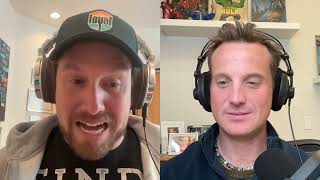
This is a YouTube video titled "Neal Bloom of Interlock Capital on the Importance of Community and Raising Fund I" recorded in July 2022. It features a detailed interview conversation between host David Paul and Neal Bloom, managing director of Interlock Capital. They discuss Neal Bloom's background, his journey from aerospace engineering to startup and venture capital, the development of his syndicate and fund, community building in San Diego's tech ecosystem, challenges in talent acquisition, and strategies for early-stage investing. The content is an in-depth dialogue focused on venture capital, startup ecosystems, and community-driven investment approaches.
Hey everybody, this is David Paul, the host of the Capital Stack podcast. Today I am here with the one, the only, Neil Bloom, who is the managing director of Interlock Capital, which is a community based venture capital firm in San Diego. Prior to Interlock Capital, Neil was the CEO and founder of Portfolium we, which was acquired within three years by Instructure. Neil was also a big catalyst in the startup San Diego movement where he provided executive leadership and creating organizations and value creation for all things technology and startups. Neil, how are you doing?
I'm doing great. Thanks for having me.
I am like your ultimate fanboy. Your media content is superb.
Oh, thank you, sir. It's, you know, it's, it's a side hustle, right, for how we do our jobs every day, which is got to be known, got to be out there.
Got to be known, got to keep talking even though no one's listening most of the time. Sometimes I feel like I'm talking into a vacuum.
I know. I have a podcast too, and that's how it feels as well, right? Like, and that's kind of why we started doing our podcast recording live on Clubhouse or Twitter spaces. Just to be like, hey, is anyone out there? So, yeah, this is, this is awesome.
You got to start saying outlandish shit, right? Like, just start just being completely controversial just to like, you know, stir some things up.
It's true. I'll give you though, the other side of that story. Coming into Covid, I was. I had recorded a ton of podcasts early. I had like 8, if not 12 in the, in the tank. And so they started coming out weekly. And, you know, they were a little. We weren't really talking about what's going on in the world. We're talking about lockdown and wasn't mentioning blm. That was happening. And so people actually started writing me, being like, hey, hey, I know these interviews are great, but you're not really addressing like, what's going on in the world right now. You know, you caught me. Like, I filmed all these in January and they're still coming out, but trust.
Me, that that content is well covered.
Yeah, I got the feedback loop. So, you know, someone's listening.
Exactly. I got a feedback loop. They're saying. Someone told me, he's like, they're like, you should really try to lower the treble on your, on your side. And I said, no, that's just my voice. I just have a really high pitch, annoying voice.
This is a nice way of saying that for him. I don't think annoying voice so stop bothering me.
You're too kind. You're too kind. Well, you just had your first close on your new fund.
Yeah, working through it. So we started as Angel Syndicate and actually really, I started as just an angel investor and friend Howard Lindsin kept saying, hey, man, start a syndicate, start a syndicate. And I pushed it off for a while until during the pandemic when a bunch of other entrepreneurs said, how do I join the deals you're doing? And I actually didn't thank the syndicate immediately. I was like, I don't know, I'll just introduce you to the companies I'm doing. And they said, no, no, no, I want to do like a bunch, like little check sizes. Right. So met another angel in town and entrepreneur and community leader Al Bashira. And he said, hey, let's build our own Syndicate platform. So 20, summer 2020, we spun up our own kind of our own little white labeled version of Angellist to do our own deals. And fast forward to Now. We've done 18 deals in 18 months, invested 3.6 million across those 18 companies, and 260 fellow entrepreneurs have joined at least one, if not 18 of those deals. Which is super cool. Was not our goal and intention to do that, but we built a community that of people who were domain experts investing in things that they know deal by deal they could choose and then, and then after them realizing, wow, you're doing a lot of deals. 18. How do I just do all of them instead of signing 18 sets of docs and chase you down for 18 sets of K1s? So the fund was kind of a natural thing to start and do. And we just announced the raise in November. We goal was 10 million. We are doing a first close on about 4 million right now. And it's almost entirely come from just our syndicate group. So we haven't really gone outside the members who have done our syndicates to raise more than that. So pretty feels pretty great. The conviction and just the trust from people who have already been doing our deals saying, now I'm in for everything you do. So we have capital to deploy, which is exciting.
That's extremely exciting. You mentioned another name who's my other fanboy, which is Howard Lindsen. I love Howard Lindzen. We go biking on Sundays.
Oh, yeah.
Here in Arizona.
So it's. I mean, it's hard, it's easy to like and hate Howard. And I think he likes it that way. You know, keeps it fresh, controversial. Speaking of getting feedback, he is the king of that and of staying relevant through Every medium possible. Blogging daily, Twitter spaces daily. Like, yeah, the guy's a, the guy's a maven, so he's fun. You get to spend some time with him on the bike too.
Yeah, he's, he's a machine. He's actually a really good biker. You know, he told me he's like, you know, David, you're actually in pretty good shape. I said, I'm actually just as in shape as a 56 year old who's in shape. So like, I don't know if that's like below average or whatever, but he's actually, he's a great biker.
That's awesome. Yeah, I need to name it. I've been asking him to go for a run in Coronado, but maybe, maybe he's been blowing me off because he wants to get on the bike. So I'll switch up.
Exactly. So, so, okay, so you know, you were doing syndicate deals and you know, for, you know, the audience. That's deals where, you know, you're essentially locating a target and you're passing the hat around to a bunch of different interested investors and you come in under one LLC and then the market actually pushed you into raising your own fund. And generally like, I mean, I, I've just, I've been in this business for about seven years and I've just, I always tell people I can raise 2 million standing on my head 10 times much easier than I can raise 20 million like within a fund structure. And have you found that or you really haven't gone out yet?
So we've gone out only to our like internal group, you know, and we set a minimum and you know, everyone kind of sticks to that minimum. So I can only imagine that that's what happens as you grow bigger too, you know. So I think after first close, raise the minimum and see if we get interest at that minimum as well too, because that is definitely what we're experiencing. I think it's also related to our group which are mostly entrepreneurs, either first or second or third time entrepreneurs, but definitely not, have not been LPs before. Right. So we're kind of bringing them into a whole new era which is one, teach them how to be angel investors and then teaching them how to be LPs. So, so there's a lot of education that goes with that and obviously even more risk tolerance too. So that's, that's kind of what we're seeing is that people are doing kind of what we were telling them to do.
No more or less is there a disconnect. With people that you go to and you say, okay, let's say their average check was a $25,000 check into a syndicate deal, but you're asking them for $250,000 commitment. Even though that's going to go over 10 deals, that's still kind of like that's from a risk adjusted basis. Does do they comprehend that?
Yes and no. I think what's even interesting from our syndicates, people were doing less like fives and tens and are now committing 200, which I think is great to see them commit higher in that regard. I think the part that most people don't know about the fund is that it's not all up front. Right. Where in a syndicate deal it's like, here's my money. Correct.
It's not getting all called at the same time.
Right. So the capital call over two years part is we is not like a given for, for everyone that we're pretty much talking to. And so it's actually more palatable for them saying, hey, just 25% at first call and then quarterly thereafter for two years. So once we explain that people seem to be biting a lot more as opposed to just like forking over a much larger check at one time. Awesome.
So give me the, give me the Neil Bloom origin story. Tell me like when you became a superhero.
Still working on it, but I'm born and raised in Southern California, went to UCSD for mechanical engineering. I really went and worked in aerospace on the space shuttle program for five years. So some people instead of superhero and other worlds call me a rocket scientist. I just feel like I was doing engineering work amongst brilliant rocket scientists. We were literally building the engines on the back of the shuttle. And you know, I said 23 year old, I got put on the. My task was launch the shuttle. So go test and launch pretty much every shuttle that had our engines on it. So I was on a team of three, learned how to manage a team of brainiacs and be there on console just like this with headphones on for 10 hours on launch day and you know, look for things that are going wrong. Pretty much nothing did on our end, you know, that for 30 years nothing really happened to our engines, which is a great boring scenario for an engineering product.
Is it hard to stay focused when nothing has gone wrong for a while? It's like, I think I'd probably stop paying attention.
Oh, for sure, yeah. Oh, it's totally true. And even more so NASA, when they called the retirement of the shuttle like four years early, they knew that was going to be a problem endemically. And so they created a whole series of ways to keep us engaged, knowing that there's this cliff where we're just like, we're going to be out of jobs, you know, so they brought us to Space Camp. They, you know, did a lot of things just keep morale up for, for this group of really smart engineers. But even on 10 hours on console, yes. You have to find ways to stay awake and keep looking at the data for sure. I've got definitely photos of friends asleep on console. So that does happen. But you just kind of have a buddy system. Keep yourself accountable. They retired the shuttle. They let go of 65% of the workforce. I didn't get let go. And I kind of had survivor's guilt that, you know, 40 year veterans working on building rocket engines are just like left out in the street. And so I started working on a tool to help engineers get themselves back into the workforce. And that was portfolium. It pivoted many, many times. But the original premise was a visual version of LinkedIn to help engineers tell their story for what they're good at.
So are you just like naturally a good person? Do you have good parents or how does that work? I can't relate to you.
I don't know. I do. That's. What do you say it that way? In San Diego, we give this idea of like, give before you get mentality. And it's like a techstars motto. Right. Give first. And I very much just feel compelled to that. And so that was the thing. I felt honored to have worked with great people. So I wanted to find a way to build a business around helping them as well too. So it wasn't necessarily altruistic. There was a business case for it, but no, I just always feel like when something's been given to me, I want to give back in that regard. So that's where it came from. We ended up pivoting hard and it being a great marketplace for talent, for new grad talent. So new people, people who are just getting into the workforce portfolio was really built for them to show and document their availability to the workforce without having work history. And so we built that, sold it into universities, which wasn't amazing. Selling universities pretty hard.
It's a tough sales cycle.
Yeah, exactly. Groupthink is crazy from going from selling from like a professor to a student to all the way on up. So cut my teeth there. That was kind of my first time trying sales, coming from an engineering background and but was hooked on building marketplaces especially around talent. I love the idea of building a tool that connected people to opportunity and that's the start of my startup journey in that regard. It's just.
Yeah, so what, what, what, what, what about that scratches the edge? Like what, what about that get you excited?
I just think that all of us have so many more traits than fit on a resume or LinkedIn. And you know, and you know this, you're in the business of storytelling to a certain extent too. Right. And, and a lot of people are really bad at communicating about how good they are at a thing or a task. And I know that doing that makes a business better, which makes a community better. And so I just love the idea of how do we unlock potential out of people, Whether that's skills based training, whether that's personality tests and that kind of stuff. There's just so many vehicles that are being underutilized to make the workforce work. And so I'm just passionate about finding new ways to do that.
Awesome. And then from marketplace building going forward, I mean, I want to get to the acquisition story, but I mean, how do you think about just the marketplace as a business model today for talent?
Marketplaces are interesting. They're tough. I think in talent world, in general talent tech, no one's stuck to one tool. Like no one's married to one thing. Maybe. Except LinkedIn might be the only thing for white collar workers where everyone is on. But in talent world of recruitment and finding a job, we're all kind of whores. Like we'll use everything available.
Total whores.
Yeah, I like it. Yeah, Anything available, a friend, a hookup, a job board, like there is. And on the business side, it's the same scenario. You go to a recruitment team and they'll use everything at their disposal as well and throw dollar amounts from like $1 at something, a hundred dollar to twenty grand, all for the same hire. And so it's really hard on the talent side to put, you know, a real good. Here's one way to hire people. Like it's a shotgun approach. So that's good and bad. Right? It's, it's, it's good because there's a lot of options you can give companies to use for hiring talent. It's bad because there's no staying power and no real loyalty. So it's hard to find, get people locked into subscription style when they're like, I'm going to use anything at my disposal today and I'm going to change that tomorrow. Tomorrow.
So yeah, and it's transactional. There's not recurring value there, right?
Yeah, exactly. And so I've gone through. So after portfolio I did hired.com, which was a senior talent marketplace. Learned a lot about those different market marketplace business models that we can talk through if you want as well.
Yeah. So tell me hired.com?
Yeah. So the quick end of Portfolium actually is that I had a co founder breakup and so I left the company sooner before than we actually got acquired. Super unfortunate, but learned a lot and still had equity, so still gained from my acquisition. But I realized after that experience it was two carbon copy founders doing different roles. So we were both engineers. One said I'll do the business, one said I'll do the tech. But we had no business doing either one because we were both, you know, mechanical and aerospace engineers. So we were brand new to everything. So after that experience I said I'm going to go learn how to do former formal SaaS and marketplace sales and marketing. And so I took a role with early early stage company. Hired dot com. I think we were under 20 people when I joined. We had only raised, I think a seed and over the course of 18 to 24 months we went from 20 people to 350. We raised about 120 million in venture capital and peaked at a point of 70 million in annual revenue. So got the real full rocket ship kind of later stage.
Yeah, you got, you got, you got, you were up close and personal to some serious scale.
Yeah. And some very experienced marketplace builders. These were Matt Mikowicz who built 99 designs and other marketplaces like that. The team that built LiveOps which was a marketplace for call center talent. So super cool to be around that and be given the task of go launch new marketplaces, go launch a new city for us and figure out how to get supply and demand jump started with this 90 day playbook. So that was super fun. I learned a ton after about nine, about a year I said the launching new markets has been fun. Teach me marketing. And so then I got the same, same kind of piece after doing, you know, BD for demand gen side, I got to do demand gen marketing and learn it as well. And, and what I really learned was the flow of capital into a community flow and how that outflows into talent hiring. And I got to Compare San Diego versus Toronto versus Boston. You know, all these, you know, top 10 VC capital cities. How does VC capital make a startup community run? And I just got enthralled with that. How does a local community help support from talent perspective? You know, When a company goes raise $50 million, what do they do with that? Where do they go find their talent? So that I decided after a period of time, I wanted to put all my energy into my own hometown, San Diego. And I started a blog and a podcast, more just showing, hey everyone, did you know what's going on here in this quiet little, you know, vacation town? And that's where it kind of all started for me of building community from that perspective.
Yeah. And so what, what did you, what do you think currently about the, the talent gap today? Because I think that's super relevant to kind of connect, you know, those learning points to what's going on with, you know, venture funding and the lack of talent and scarcity and resources.
Yeah. So talent, what's complex about it is that venture capital, they are really, the money really is going to find like expert senior talent to get your company to grow at a faster pace than the incumbent. Right. So you got to catch up to the BAME player out there and to do that, you got to pay up for it. And just the way the talent market is today and has been for like 10 years for, especially for software development talent and senior sales talent, is that it is a buyer's market. The talent can say whatever they want and can get whatever they want. And when you're fighting against the Fangs as a, as an early stage startup for that senior talent, it is tough. And so the talent wars were already tough pre Covid. Now the idea that you can hire from anywhere, I think it's kind of unlocked this whole other layer of, well, yes, there's a bigger pool of available talent. Right. Because you could be hiring from anywhere. Doesn't have to be in your, your city itself, but the talent can go anywhere they want to. And they have now infinite options as well too. So I think it's just really harder and harder for tech companies to find the talent that they need, which means they need to put that as a priority from day one. So when you're two founders building, you already need to be thinking about what is our talent attraction plan, what is the culture we want to infuse out there and not just kick it down the road and say, we'll do that when we hire our office manager who will turn into our HR person. So founders need to be learned to be talent scouts as almost like a chief skill, I think from day one. And that's not just the CEO, that's definitely the CTO as well too, who definitely does not think about that as a main skill set. Compared to the tech stack they're working on.
Yeah. And a lot of these, the really smart talent, the grade A talent that you spoke of, they're not even working for the Fangs anymore. They're going to crypto projects and moving to Miami, right?
Totally. Yeah. And crypto was the first to go to the kind of work from everywhere, anywhere mode. Right. You had many people, I would say. Most crypto projects have never claimed that HQ was in one city for years, right?
No, that would be very. That'd be very anti crypto. That'd be too extreme.
Right.
Crypto is kind of like punk rock.
Right.
They don't want to conform.
Exactly. So you're already attracting the people, the early doctors, to the work from anywhere movement. And then Covid comes around and now it's really mainstream, you know? So, yes, I think that talent is hard to get, but I think there's still opportunity from crypto world. Like, it's still early days of proving that you're working on something that changes the world. Right. With 7,000 coins out there, hard to say that all of them are going to change the world. That way that maybe some other tech companies are, can show that, hey, we made this medical device that literally is changing the way that people hydrate themselves or, you know, something like that. So I think there's still still an edge to attract those people, but it's different now. It's not beer taps and a cool, shiny place. It's flexibility and get to work on the hours that you want to work on and that kind of stuff. So it's kind of interesting that regard.
Yeah, no, it's definitely an interesting time. It seems like everybody is just, if. If you don't have an extreme opinion, you don't have an opinion.
Yeah, I think you're right. And we. We mentioned that at the beginning of the show. Like, you gotta be loud to be noticed, but I don't know if you gotta always say something to. To feel like. I don't know if you always gotta feel like you gotta say something too. I think we've definitely seen that from the Twitter world that I know.
God. I mean, I can't. I'm a loud, obnoxious guy. I can't even come close to, like, you know, interfacing on Twitter. It's like this force field that just like, throws me out of it.
I know. I totally agree. I mean, I just having a comment to just keep your algorithm up so that you are in this thread. It's not a lifestyle. I can. I want to Play it. You know, it's kind of like pay to play, but it's tweet to play.
Yeah, I'm. I'm too addicted to my phone already. I can't have live correspondence and fights with people.
I know, though.
I need less fights, not more fights.
It's true. But the other side of this for VCs is that literally investing is happening in Twitter DMS, and so is recruitment of LPs. Have you experienced any of that on your end?
No, I. I have not. I have not found a deal nor found an investor, an LP on my Twitter, but I've seen it being done and it blows my mind.
Yeah.
That people are like looking for, you know, for, you know, fund managers and all that stuff. I think Mac the VC kind of started that, right?
Yeah, totally. Yeah. I caught up with him and he was in San Diego in December and we caught up with him and he was telling me the number of people he's only communicated with through now through Tridium and now to email just to send them LP docs is crazy. But also just communication in general. Aren't you finding you can have one conversation going on in six different platforms with someone you started on Instagram DMs, you ping them again on Twitter DMs, and then it moves to text and it's same conversation of that kind of thing. I know.
No, no, no. I do that for sure. I try to stay more on LinkedIn, but, you know, you know, I think scaling the message right is kind of like a theme and, and finding a platform to do that and, you know, bringing it full circle back. You know, you started your blog, you started your podcast. Who are you writing it for and why?
Great question. I started it focused on San Diego and I wanted to be a cheerleader of all things San Diego. My intention was tech workers from other communities and I very quickly realized even San Diegans in the tech world don't even know what's going on outside their own company. So we therefore need to just educate San Diegans that, hey, did you know this cool thing's happening literally next door? And so that was the focus for the first few years was educate the local audience so that they felt comfortable sharing with others what's going on here. Because we've just Sandigans in general, we've been very heads down building and not talking and therefore, you know, we're just not part of the conversation. Whether it's on LinkedIn and Twitter or even physically, like at conferences and stuff like that. We there's you know, a community of thousands of tech workers that literally could be saying, and we're building this here in Blank City. So that was the whole part. It was a very geo focused area. Once I realized that the dynamics of tech talent versus tech founders versus VCs, government and universities, which are all kind of spelled out in Brad's book Startup Community Way, which is kind of a bible to me, I realized this can be duplicated and is happening in every city. Right. So Phoenix is having its own kind of conversation about why Phoenix. And so we started opening newsletters in other GEOs like Orange county and Santa Barbara, Central coast because we wanted to connect communities that were just isolated from each other, but yet had a reason to connect. So my blogs kind of started to transform into tech ecosystems in general. Either people who are interested in building them or people who are interested in learning from one and mapping it to another as well. So maybe. And now post Covid, there's a lot of people who like live in a few different markets, they like that too. Teach me what's going on here so I can transpose it back to what's happening where my other house is or something like that. So it's kind of a. Still a geo focused community. Interested tech worker.
Yeah. And like what I guess my question is, and this is probably because, you know, I moved around so much as a kid so I have no really place to that I would like consider home and have a lot of allegiance to. There's a ton of camaraderie around startup building within community, almost a philanthropic movement. And do you find that that can be counterintuitive to, you know, to community building and startup building at all versus, you know, focusing more on execution and, and talking to customers etc?
No, that's a great question because it also feels like like you could be competitors. So why should we be sharing notes in that regard? You know, I think it's great to be bridge builders and share notes with each other as other community members. I mentioned Brad Feld. He started a online community for community builders only about 18 months ago, right around the time he released a new book, Startup I Forget what the Startup Community Way Part two, or I'm forgetting the title is I have it on my shelf right here. But with the online community, we realized we're all after the same thing, which is make it more efficient for the entrepreneur to build a good company. That's what it is. That's what it's all about. Build good companies and community builders. Try to grease the tracks to make that happen. Now, depending on what kind of community builder you are, you either stand to benefit from it financially or altruistically. Right. You could be just doing it out of the goodness of your heart and. Or you could be doing it because you've got a fund or you've got a company that does services for that, or you have your own venture, you've got your own startup too, and you just need to attract talent. But for whatever reason, you need to be long term aligned with knowing that if the entrepreneur does well because of the efforts you've done, we all stand the game. Kind of this rising tide lifts all boats. So that's happening in a community itself. Now, why do you share notes between communities? Also? Could be, like I mentioned, could be competitive. Right. If you steal a company away from one city to another, that sucks. Or capital goes to one city versus another, that sucks. But I think we still haven't figured out the secret sauce for any one community. Like, we literally cannot point to one city and be like, this is the blueprint for everything. Even San Francisco. There's. The story is not finished being written about it being.
No, no, I don't think anyone's there anymore.
Right, exactly. So I think we're all still trying to share notes to say what's working. Because dynamics change so quickly. We need to be up and saying, all right, no longer does coworking matter or no longer does pitching one city versus another matter. So I don't know. I'm really into that part. Just the sharing notes of what's working, your city versus what's, what's working not. And there's no secret sauce. There's no recipe.
Yeah. So what, what, what are the things that, you know, San Diego is lacking to be like a bigger tech community like Salt Lake City or Boston or Denver or San Francisco.
That's a great question. The easiest answer is tech exits. We are lacking tech exits to close the loop on recycled capital pouring back into our local community. We've seen this on biotech. Biotech in San Diego has had billions and billions of dollars of IPOs and exits, you know, over the years. And the money goes right back into the next one. On the tech side, we just have not had a lot of software companies get acquired for mega dollars, let alone IPOs. You know, if we have one tech IPO in a year, over the last five years, it's a really big deal for San Diego. And that's kind of sad. So our unicorns are kind of. Our vintage unicorns are still 10 and 15 years old, they're still, they've been slowly increasing from 1 to 3 to $4 billion valuations, but they're still private. And so we really have seen a lack of early investors wanting to do a bunch of new deals because they invested 10 years ago. Right. So they're just kind of still waiting for big exits. And then you're waiting for these experienced C suites to say not only am I going to do the next company, but now I'm going to start investing as a domain expert investor. I think that's what we're missing. We don't have the early stage capital where it's coming from people who've been there, done that before, it's coming from high net worth. There is high net worth in San Diego, but it is not in the areas of tech where they made their money and therefore they can't really help the companies more than the check itself.
So they're not. And they're not super comfortable writing the check, right?
Yeah, exactly. And if they did write it, it's kind of play money to them and it's kind of for fun. It's not their livelihood. Whereas in tech, I don't know if I invest in another tech company, I feel very committed to making sure that I expel all my wisdom to them wherever I can be helpful. So we're lacking that the domain expert capital. And I hope we're closing that loop with interlock because we're 260 tech operators coming together, putting our money down and less than the dollar amount that people are putting down. It's the idea that they have skin in the game. Right. So to someone who wrote a 5k check, that may be a lot to them and I understand that. But get on the phone and help that founder every so often because you're in their industry, that's going to go so much further. And so that's what we're trying to change the gap on in San Diego.
What about the quality of founder and under capitalized markets and how do you, how do you like, what heuristics do you use to judge kind of talent?
You know, it's easy to look and see if the founder came from the same industry that they're working in. Right. That's an easy pedigree. I definitely think that people do not look at like where they went to school. I think that's a very east coast thing.
Yeah, nobody gives a about that. Yeah, not, not, not, not, not in our areas. I mean they care in San Francisco.
You know, not in the operator LED VC world either. Right. If it's like the NBA LED VC world, yes, that's that matters. But not in the realms that we kind of live in, which is entrepreneur turn investor. So I think the pedigree really matters is like, have you been there, done that before? And that's where it starts from an investing standpoint. So did you work at a company that's been doing this already or have you surrounded yourself with that kind of people? That's the other piece, I guess too. Especially in a San Diego market where it's engineer heavy, it's very easy to see an all engineer led team who are CEO, CTO and coo, all engineers say from Qualcomm, and you have to be able to peel back and say, all right, like what are each of your superpowers? How are you each complementing each other to fill in gaps as opposed to three carbon copies of each other too. So that is another thing that's easy to see done over again when it's so engineering heavy here in San Diego.
Yeah. And so what from an LP perspective did you ever get everyone likes the community based story, right? And deploying capital in your own community, does it ever get positioned that you're like a corporate or economic development kind of fund or that, you know, this isn't more, more of a charity than an actual financial instrument?
I've always expected that to come and I haven't gotten that question nearly as much more so because my blog was looked at that originally. My blog, Fresh Brew Tech, everyone's like, yeah, you're doing economic development work for San Diego. Can you do that for my city too? And we actually opportunistically started a agency where we do that. We do economic development messaging from a content creation for a bunch of cities. So I'm very much aware of that part. But I think when you're an angel investor, you also feel like some of your giving is charity in its own regard. Right. Founder charity. Sometimes we call angel investing. And so I think more so than the, hey, we can build a bunch of companies which will be good for everyone. We try to lean on the, because of your expertise lp, you specifically can help these companies and you can help them grow and be better. So we kind of lean on more like expertise of the LP match with our portfolio companies as opposed to, hey, if we just help start 50 more companies, we're going to hit a home run, it's going to be great. I don't think we lean on that model as much of just like More companies is good. It's more of connecting talent to talent. Is that's what's better for the community in its own regard too as well.
Great. Are there any names you can drop that are in your fund?
Ooh, can we name them? I think sure. Vinnie Lingam is part of our.
And then give for the audience just who are like, you know, what companies were they affiliated with or founded?
Yeah. So Vinnie founded a crypto identity management platform platform called Civic Around. He's he of all the Twitter people that we were talking about. He is like a Twitter crypto guru. I think he was known for a while as the bitcoin guru. So Vinnie moved quietly to San Diego just before COVID and wanted to keep it quiet. And then when we met up, he said, you know what? I. I want to be a part of San Diego startup community and you're my guy. So Vinny's a big chunk of that. We've got Paul Griffiths actually at a Boston east coast guy who is a serial entrepreneur. I can't remember the name. He did a company his name, but sold it during COVID as well and now is kind of acting more as like an entrepreneur turned coach. So happy to have him involved. That's the names I think we can name right now.
Nice. That's great. That's great. So tell me, tell me. So when did you. When did you go into Startup San Diego?
Startup San Diego was a group I kind of was at the forefront of starting. There's about six people are known as the founders. In 2013, I had my own company portfolio in this incubator and a group of CEOs in the incubator came together and said, let's start a we Startup San Diego Week, or what was it called? Santa? Yeah, you know, Startup Week 2013 was the first year I was just an attendee, the first year representing my company. And by 2014, suddenly I was involved in the leadership raising the funding to put on this conference. So we incorporated as a nonprofit in 2016. I became the chairman of the board in 2018. And really it's just been a volunteer labor of love with putting on a conference that excites both entrepreneurs or would be entrepreneurs and talent that maybe is working at big tech that has always wanted to work at a startup, but hasn't pulled off the band aid and taken the risk yet. So the idea is connecting people with opportunity, specifically around either starting a company or starting to work at a startup. We do twice a year conferences now, Convergence coming up in April and Startup Week During COVID has now moved to October. Used to be in the summer but pre Covid it was like a 3,000 person conference and we hired our first staff about three years ago. So took a little bit of load off of the entrepreneur only board to have some staff to put on events and content throughout the year as well.
Yeah, that's a lot of work.
It was a lot of work. And it's hard to get other entrepreneurs and CEOs to say I'll do the work while also running my company. But that's always been our mission statement is to not have a hundred person board of representing every bank and everything else. We really wanted to make sure we were by founder for founder and we've stuck to that largely. And so I think we've capped growth on purpose in a sense to make sure that the board can be hands on and can be helpful to brand new founders.
Okay, that's great. And so right now tell me Neil Bloom Enterprises, you've got the capital side with Interlock. Do you have any, you have partners with that?
Yes, go on. Partner Alba Shera, serial entrepreneur as well, who sold his company, Emo Copilot to a sales sales enablement tool. Seismic.
Oh yeah. And a Seismic. That's a big one.
Yep. So he sold the team and company to them and so he's kind of more. And how we work together is he's a, he's a really good product builder and so he's built a lot of tools for us as an investment firm which I think most VCs and syndicates would not have. So we have like our own syndicate platform where it's almost like we've duplicated our own Angellist for our own use in that regard, which is kind of cool. And so we have plans to build out a lot more tools for the LP group in terms of how they can see our deal funnel even and be connected to companies earlier in our funnel that would help get them as diligence members as well too. So he's been great in terms of product builder and then he's also a techstars mentor so he helps techstars anywhere techstars Austin and a few others. And so he's connected to a lot of groups that I'm not. So we try to make sure we're connected to different scenes in that regard and then bring in LPs VPs and companies on our own.
That's great. And so tell me about your check size, tell me about your portfolio construction. What are you like, you know, outlining as returns to hear all about that.
The syndicate to date, like we mentioned, we did 18 deals. Almost entirely were pre seed and seed with one Series A and one late stage secondary. And largely we've designed our fund in a similar scenario. The syndicate is doing between 150 and say 300k kind of checks from the syndicate perspective. And we were going to continue to pretty much do a syndicate for every fund deal. So we will still have that available capital, if not hopefully grow as the syndicate continues to grow and then the fund is going to do precede and seed almost exclusively as well. What's great about pre seed is with a fund we can actually write smaller checks. Like we're very comfortable. We could write a 50, 75 or 100k check depending upon the total round size. And us not wanting to be the full round, we don't lead currently. So we do participate I think at the pre seed level. Like there really isn't leads sometimes anyway right. If they're raising 250 or 500k. And so for pre seed you know we'll write up to 150k and for seed we'll, we'll write up to you know, 250, 300K as well on seed. So hopefully combined with pre, with the syndicate and the fund we could be doing 500k per company is kind of where we can get up to. The ultimate goal though is really more like volume. So we want to write a lot of checks, maybe up to 50. That isn't 50 unique companies. That is saving a good chunk for Follow on But 50 individual checks out of a $10 million fund, you know these checks are going to be smaller but that's fund one and so hopefully fund two, we see success there and that is, you know a 30, 40, 50 million dollar fund would be the goal for fund two.
Great. And so how much are you reserving for follow on?
At least 30% if not more. Everyone I've talked to, it's kind of been you put a number down and then you, you kind of check on it every quarter and see like is this the right allocation? How are our companies doing? Are we having a lot more success in some of our early bets than save even more. So you know, I think it's going to be a, I think that will grow and that will be a good chunk of it.
That's awesome. Yeah, that's awesome. So tell me about your kind of experience, you know, in your syndicate life before raising a fund, being an angel investor and kind of some of the companies that you've been into and like, what were some of the learnings about it and, you know, participation and the risk and the underwriting that went into all of it and then taking other people's money. Yes, that's always pitching a deal. You know, when it's, you know, when you're the lightning rod of actually validating a company is that's a big step.
It is a big step. And I think I pushed myself away from it for as, like, as long as I could. I really told myself I don't want to manage other people's money. But I, but I think that was because I didn't want to like, have to explain my conviction in companies to other people, to be honest. And once I learned how to concisely do that, then it made sense, like I could sell conviction. So my first angel deal.
So wait, so that was a really interesting thing you said. How did you learn how to do that?
I think when people started asking me, people who I trusted and were other entrepreneurs in the community, when I started saying, hey, I've invested in companies and they start asking why? And I realized, oh, like in my head it all makes sense, but I've never written out the bullet points why this person versus someone else. And they were gonna now start comparing me in the community being like, oh, like he's someone who picks talent. I had to concisely do that, you know, because my reputation was on the line in that regard.
That's really interesting you said that because, you know, sometimes when I start, you know, pitching a deal, I'll, someone like starts to like, give me rebuttals on why it won't work. I just say, okay, later dude, I'll like, I don't try to sell them on it, right. And maybe that's not the right thing. Maybe, maybe I need to go into a little bit more the detail of the work that I've done.
Maybe. I mean, not saying that what you've been doing isn't working, so, you know, don't, don't throw out the, the bathwater. But no, I, I, I think the, it was very easy to sell myself on things. And so in my first two checks, one was into a fund, it was a cannabis Tech accelerator in 2016, a little bit ahead of its time because cannabis wasn't legal really anywhere. So it was hard to get buy in and prove the topics were working or the company's working. And then my first direct deal was into trust and will. Cody Barbo.
Oh yeah.
And to be honest, the check was written before the company even existed. So Cody had a falling out with his previous co founder at his previous company. He came to me and said, hey, you had this happen to you as well too. What should I do? And I said, first of all, I've been watching you, Cody, build your own company for like four years. Company was industry. He was like a monster pitch competition. He'd win every, every pitch competition. Cody was winning at industry. I watched him from afar. He built a great company and unfortunate things happened. So I said to him, here's what you do to protect yourself right now and when you start the next company, which I know you will, here's my check. Like I am in for whatever you build next. And that eventually turned into trust and will in that regard. And then a number of things happened. A bunch of other people who had co founder issues came to me in the same regard. So I became part of the co founder.
Yeah, you're the partner. The partner issue guy.
Yeah, exactly. And so I started writing those checks the same way, like, oh, like calamity happened. Well, on number two, you're going to run through a wall because of the things you learned on and this chip on your shoulder. And so I think I now have three or four previous co founder breakup turned into the next great company that is doing well. So that was my first angel deals was that regard. I then started hosting dinners, bringing these people together and I got to meet people in scenarios where they weren't on and pitching. Right. And you got to check in with them quarterly. And they were just naturally talking about, here's how we're progressing without pitching me. And you start to see like some people are doing really well, some people are kind of flat. And I don't know, I just started taking Mark Seuster's turning dots into lines. Like it really started to connect for me that over time, if you give enough data, given enough data, you can make smart decisions about people because they've built enough rapport with you and you've been watching them. So that's been my entire angel investing style is just sit and watch and keep in touch with people and see who's doing well.
And I still what a great platform to do it with.
Right.
Because you've specialized, you're not all over the place. You're not looking nationally, you're looking in San Diego. And you have the opportunity through your media, you know, through your relationships, through your events to keep tabs on the community and see what's bubbling up.
Exactly. And I think that works as an angel when you don't have to deploy capital, right? Such as on my own time. You know, when you start managing other money, like, people are saying, like, when's the next deal coming? Right? And you're like, well, I'm not ready yet. But people, you know, to keep them engaged in a syndicate, they do want to see the next deal as well. So I think that part's been interesting to watch. Just means I got to do more events. And because that I've actually kicked up my podcast to do in like, two a week. And so sometimes interviewing people on the podcast is my own way of getting to know people and check in on them. And I think I've invested in two people after meeting them the first time they're on my podcast.
Oh, wow.
After a few meetings, you know. So, yeah, I use everything available to kind of turn dots into lines from that regard.
So tell me about your media publishing. And, you know, what. What are you. What are you doing and why are you doing it? And what kind of structure do you put for yourself?
So in the beginning, it was purely a post on social at a set course throughout the day, I actually set myself and said, I'm going to do five posts a day on LinkedIn. It was a lot. But what I wanted to push myself was to find other people's news and aggregate and promote. So. So someone who raised money, someone who, you know, hired a new executive, I was gonna be your cheerleader for that. And so I just started posting that. Everyone started saying, like, you're a machine. How are you doing that? Ana said, just use buffer. Just schedule things to buffer, and it's super simple. And that turned into an email newsletter where people were like, hey, I missed your post from LinkedIn last week. I'm like, okay, I'll write it into a weekly digestible email. And started doing that very quickly. Realized, I don't have the time for this. And so I hired both a senior writer to start writing some blog posts and a junior writer intern, really, to start writing my LinkedIn posts in that regard, too. So I very quickly. I wouldn't call it ghost writing, but went to someone to just kind of manage all the aggregated news I was seeing and wanted to promote. Very quickly after that, someone came to me and said, we'd. We'd love to sponsor what you're doing. I didn't have a plan for that. And so I realized, okay, I got to sell, you know, sponsorships. That means we need a website so that we can put logos on it, which means we need Placements in the newsletter and what else can we sell them since they've got their checkbook out? So that's when the podcast started too, was all right. We could start actually doing a pre roll, mid roll and post roll. So some of the media came from. From a business case, people saying, hey, we'd like to sponsor what you're doing. And other things came from just a personal want to get the news out. And it's grown. So now we've got. We're doing that in San Diego. Fresh Brew Tech. We've got Fresh Squeeze Tech in Orange county with the same stack, blog and everything, email, newsletter, and then Fresh Coast Tech, which is Santa Barbara Central Coast. We've got a main sponsor who's pretty much said, bring us to 40 cities. We will, we will.
Whoa.
What you're doing in 40 communities. But my style, I don't want to come into a community that I don't know and claim to be the name of news. So I'm working on how can we find the Neil Bloom of that community and build a media little stack around them and empower them to be the voice. So I'd look to you and be like, hey, David, who should we do in Phoenix? Because I'm getting asked, hey, come bring the tech news together there. But yeah, I definitely don't want to be the face in 50 cities, that's for sure.
Yeah, I don't want to be the face in Phoenix, but I'll. I'll definitely send you the person to go talk to.
Got it. Is it Howard? It's not Howard either.
No, no, Howard. Howard's very. Howard's very incognito.
Yeah.
There's another guy who does a podcast. His name is Hamid Shoaji. And he was a. Yeah, he was a. A successful tech operator. He's got a great, great voice. Like an incredible, incredible podcasting voice.
Is it Aztec, right? Or Aztec?
Is that a tech.
Yeah, I subscribe to it. So, yeah, I see what he's doing.
But he's bored with it. And I'm like, what do you mean you're bored with it? And I was like, he's like, well, I'm a f. I'm an operator. I'm like, yeah, I guess I'd be bored of it too, you know.
All right, well, we'll connect us. We'll come in and help him out for sure.
Exactly. I was like, can I just buy your podcasting equipment? Like, you know, for 50 cents on the dollar then? Like, trying to build out my studio.
But he's also an angel investor, isn't he? Like he could.
Oh yeah, he, he puts money out.
And so he's using, hopefully he's using it as a deal source mechanism as well too, right?
I think so. I think so. I mean the, the whole like investor or entrepreneur turned investor is, is coming into fruition in Phoenix. We've had, you know, some exits over the last couple years and you know, these guys are writing checks. I mean the most active SaaS investor is in Phoenix right now is Greg Scoresby who is the CEO and founder of Campus Logics.
Yeah.
And I mean he's like, I mean he's a machine. He writes more checks than anybody I know. And he's an operator. He adds, you know, incredible amount of value to portfolio companies. So he's a great person to be around. And Hamid's there. Then there's the Arizona Founders Fund which is starting to come up. And there's two new funds actually. One of them is called Envision AZ and the other one's called State 48 and they're both trying to raise right now kind of being more Series A. So capital capital is there, but you know, it's one of those things, and this is what I, you know, I come to believe is that, you know, everybody wants to be, everyone wants to look like a bodybuilder. Right. But it's the guys that go into the gym every day and put themselves out there and you know, are around the net that get the flow.
That's a good way of putting it. I, I kind of use it. I kind of use a similar thing to tell people. It's like a muscle. You gotta keep. Yeah, I guess you gotta keep working at it. Otherwise you kind of lose some of the elements.
You kind of lose it. And as long as you have your specialty and your kind of, you know, your thing like you get out there. I mean I've gotten deal flow from this. It's crazy. I can't believe that people actually listen to this stuff, you know, it's unbelievable. So what's getting you excited these days, Neil?
Oh, so I'm excited by the government's throwing money into infrastructure and some of these other clean tech and sustainability. I love seeing that when there is a.
That's a good thing. Yeah.
Non dilutive capital available to entrepreneurs to keep doing what they're doing, which is develop cutting edge technologies. I like that. And so I've been doing some EV plays, some sustainability plays. So I'm going to keep looking in that area. It also feels good in terms of the kinds of stuff that we're investing and changing, man, especially with Ukraine right now and kind of energy independence, like even more so does it feel good that we focus on technologies that are homegrown to the United States? So I'm kind of pumped around that. I'm also interested in kind of the tech mafias, almost like the companies that are having exits. What are the people been doing? Because like I said, we're expecting that in San Diego soon. We still haven't had it. How do we go get the people who are on generation company number two or three. Three to stay engaged and maybe even start helping and, and maybe even investing too. So I'm, I'm getting excited around kind of the, the generational part of, of tech ecosystems. Cool.
And so tell me who are some of this companies that you got your eye on that you really like, who.
That we haven't invested in yet.
That you have invested and then you haven't invested. I'll let you pump your book, but tell me what you haven't invested yet.
Haven't invested in yet. There's, there's a lot of the stuff that's coming around like health and wellness for the quantified self, whether it's hydration or other, you know, sensors that we're going to find ways to, to trick ourselves into using. I'm excited about all that. And then incentives to pay attention to that as well. So company, I'll give them a shout out Visor, who I haven't invested in yet, but they've got a tool that pretty much.
Marcella, go, go reach out to Visor. Sorry, go ahead.
Yeah, go meet him. I'll connect you. I love Sam and Dylan. Yeah, Sam, she's awesome. And so Dylan. So they, they do, it's really like they take your feeds from your Apple watch your Fitbit and others, they pull in your data and find incentive mechanisms for you to keep doing it, whether it's.
Oh cool.
Yeah. So. And some of them are like real feel good. So they. If you hit 10,000 steps in a day, you can hit donate and it donates a meal to local food bank. So purely by.
That's incredible.
Yeah, just by doing the exercise you were already going to do and then you start seeing like, hey, I've donated 150 meals. And so they allow brands to advertise on that. So say, I don't know, like Whole Foods could pick up the next 50,000 meals and a pop up comes up and says hey, amazing job. Meal donated by Whole Foods So it's kind of a cool way to incentivize you. They've got a B2B model that allows companies to do their own kind of corporate challenge in this as well too. So I've kept my eye on them for a while and that's what I'm watching in that regard.
What about in your own book? Tell me about some portfolio companies you're excited about.
I mean, I love them all, they're all my babies. But all right. So angel wise, which I've been doing for four or five years, Trust and will continues to crush it and they're a later. I would say they're a later stage company. Changing the way that estate planning happens, especially for millennials. So super stoked about that. Another one, Concert Health, which is a telehealth play for behavioral therapy.
I'm sure that's the one I missed. I love Spencer. I saw him, he was so early, but I mean I remember Taylor from Pet Desk introduced me to him and I was like, that guy, he's going to do something.
Yep.
He's going to do something big.
That's great.
Another.
Another co founder breakup story investment of mine as well too. First check in after a previous company. So those are some later stage ones. What are some other earlier ones that we've just recently done? So just invested in vessel health. I think you know John Carter.
I don't. What's vessel health?
Vessel Health is also digital health play where they're doing right now, pee strips that you pee on. Take a photo with the app and it'll give you real time. 15 different vitamin and other hormone levels.
That sounds like fun.
Yeah.
Who doesn't want to do that?
Yeah. I'm waiting for the device to just clip on to your toilet and it's just doing it every time you go to the bathroom. Yeah.
Or you just pee on your phone.
Yeah. I feel like I've done that to John. I feel like because I've tested so many of his early products, that's for sure. So that one, Sharp Sports, which is a company in the online gambling and online fantasy sports world, they are kind of like plaid in the fintech world where it will connect any of your data across platforms. They're doing that in the online gambling world. So imagine if on ESPN you're literally watching the game, tracking your daily fantasy picks, sharing with your friends, making the bet and tracking your earnings all from ESPN.com that's the eventual goal is just connect all your different online Personas and places for online sports betting in One spot. So super early, not pre. We did a pre seed just in December on it and we're just, just because the space is exploding, we want to get involved there too.
That's great. That's great. Who do you like to follow?
Oh, I actually love public stock investing, so there's a lot of people I follow around that. And I follow, I've been following Howard for a long time around that. I on public stocks, I like to invest in beat up public biotechs.
Oh, okay, nice.
So I love especially medical device ones that have popped after the IPO and are waiting for, you know, FDA clearance or something like that. Like I get interested in the medical device side. So in diabetes tech, I follow people who talk about medical device and diabetes tech in that regard. From a VC standpoint. I've mentioned Mark Schuster a few times. I, I read him pretty religiously as well as Fred Wilson, pre religiously. Brad Feld. I read anything that he does around community building. That's for sure. And running. I'm a trail runner too. And so I like how he talks about how he organizes his thoughts on runs and how he builds a lot around exercise in that part too.
We're going to have to go on a trail run when I'm in San Diego this summer.
Oh, let's go. For sure. I trail runs over street any day of the week.
For sure. Awesome.
Yeah.
Neil, give me the best piece of business advice you've ever gotten.
Whoa, you put me on the spot there. Best piece of business, show up. Yeah. And don't wait to start. You know, enough there's, I mean, and it's been said so many times in startup world, but like you got to put it out there. You can't wait for perfection on anything. Even building a fund or even other things. You can't wait too long. You just got to start making micro little movements forward and you will get there.
Absolutely. Everybody, thank you so much. That is Neil Bloom from Interlock Capital as well as startup evangelist and guru in the San Diego area. Neil, how can people reach out to you?
Bess is on Twitter at Neil Bloom or LinkedIn. Those are good places to find me and send me a little note on LinkedIn, like why you're reaching out the blind connect. I'd really love to phase that out, you know, wouldn't you just all these people seem like connect, connect, connect. I love if people said why if it's a drip.
Right? Like some drip campaign. Yeah. So if you want to cancel. Neil, what's your Twitter handle at Neil?
Bloom.
Neal Bloom. All right. If you want to cancel them, that's great. Anyway, thanks, everybody. That is another episode from on the Capital Stack. If you liked it, please share and subscribe. We drop every episode on Tuesday. So good to see you and we will talk to you later. Bye.
Bye.








