Podcast: Sleep, Science & Invisible Care
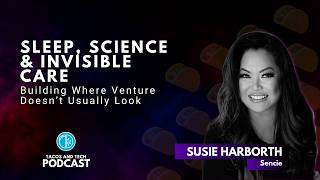
In this episode of the Tacos and Tech podcast, host Neal Bloom interviews Susie Harbath, founder of InspiraFund and the sleep‑wellness startup Sensi (also referred to as Sensee). The conversation weaves through Susie’s personal backstory – growing up in a single‑parent immigrant household, dropping out of UC San Diego, working in a venture‑capital office during the dot‑com boom, and later building biotech coworking hubs such as BioLabs and LabCentral. She explains how those experiences shaped her belief that physical hubs and human connection are essential for scientific innovation. Susie then outlines the philosophy behind InspiraFund, a self‑capital investment vehicle that targets “invisible‑care” niches too small for traditional VC but large enough to be commercially viable. The fund’s first bet is Sensi, a company that creates hotel‑room sleep‑ritual kits and broader wellness environments to improve traveler sleep, leveraging circadian science, aromatherapy, lighting, and personalized cues. The discussion covers the science of sleep (quantity vs. quality, napping, REM, olfactory stimulation, circadian alignment), the business case for hospitality partners, and the partnership with the boutique Bauer hotel in Coronado. The interview also touches on broader ecosystem themes – the importance of dense, mixed‑use hubs (proximity to airports, schools, two‑income households), talent concentration in San Diego (ResMed, SleepScore Labs), and how design and “invisible care” (scent, materiality, small details) create luxury experiences on modest budgets. Susie shares her next venture idea, Super‑HR‑O, an AI‑driven off‑boarding platform that helps employees navigate post‑termination logistics. Throughout, the dialogue is peppered with personal anecdotes (community‑college path, love of San Diego tacos) that illustrate her entrepreneurial mindset. The episode ends with mutual enthusiasm for future collaborations and a nod to the local startup culture.
Chapters
And welcome back to the Tacos and Tech podcast. I'm your host Neal Bloom, and I'm thrilled to have a longtime friend of the ecosystem here, Susie Harbath, who is the founder of Inspire Fund and Sensee. Susie, thanks for being on the pod.
Thanks for having me, Neal. Excited to be here.
Likewise. We have been in the ecosystem doing things together for a while, but this is first time having you on because you've been up to a lot. You've been busy building, and I thought this is the right time now that you're building a few new things to talk about both what you've been up to in the past and what you're doing now. So do you want to give us a quick high level of what both InspiraFund is and Scentsy?
Yeah, no, InspiraFund is my personal investment platform that I started back in actually 2018, doing, you know, a little bit of angel investing, investing in a little, uh, VCs that I've worked with in the past and formalizing that at the beginning of this year. And Sensi is our first portfolio company, which I'm really excited to talk about, which is about sleep, uh, well-being.
Oh, so timely, man. Sleep is not just the hottest trend, but Finally, people are realizing how much they need it. It is everything. So I'm excited to nerd out with you on that as a recent sleep-first convert, if you will. But let's take it back, way back, because what I think— we met just pre-exit for you into your investing world. But where did it really start? Like, where did you get the building entrepreneurial bug?
Oh gosh. So I grew up in a single parent household, was raised by a single mom who was a refugee immigrant from Vietnam. And, you know, entrepreneurship was always part of the immigrant mentality as far as like, you got to go out there and hustle, right? And I grew up in San Diego and I thought I was going to go and be a doctor, but I could barely put myself through 4 years of college, much less medical school. And so I said, okay, what is the biggest ROI if I was just getting a bachelor's degree? And I was interviewing a bunch of physicians and they're like, you should go learn about the stock market. I had no idea what the stock market was. And so I took a sabbatical after 2 years at UCSD, actually I moved to San Francisco on a whim and worked for a venture capital firm, which I had no idea what venture capital was. And this was late '90s, so this is dot-com boom time. So I'm aging myself a little, but you know, I was, willing to pay the bills and be an office manager. I said, just put me to work. And that's where I got the entrepreneurial bug of startups because we were investing in like companies like pets.com, you know, those kind of early URLs. And these guys that were raising money had no idea how to order office supplies. They're like, Susie, we have $3 million and we don't know how to order office supplies. So long story short, I became like the den mother for like 10 startups. And that's how I really started feeling like I could— I loved innovation. I just love the new idea space and the investing space. And so my entire career arc has been in that innovation space, but from an angle of life science because I wanted to make an impact on healthcare. I wanted to not be able to cure cancer myself, But, you know, if I can pay the bills so that the scientists can focus on curing cancer, that's my entire career arc. So it took me to Boston. I worked for an investment bank, um, started 3 early-stage companies, successfully got acquired, um, started a venture capital firm, started BioLabs and LabCentral, which is a coworking platform. So brought that to San Diego. And that's when I think we probably started meeting, was when I was launching BioLabs in Southern California. So long story short, it's really this arc of like innovation, supporting entrepreneurs and making an impact in healthcare.
Yeah. Wow. What a story. I didn't know all that, especially taking a sabbatical from school to go learn to go work. Like what? Smart thing to do or fortuitous thing to do.
And yeah, my mom was not happy with that idea of me dropping out and going to move to San Francisco. But looking back, it was a good—
Yeah. Did you ever end up finishing school or was it once you saw the world of work, you're like, this is it, I got to get in and involved?
Yeah, no, I came back and went to Cal State Long Beach. And I think the biggest The secret is community colleges are so underrated, right? Like, I went to UCSD right out of high school, took a sabbatical, went to community colleges to, like, really fill out my undergrad and then finished at Cal State Long Beach. So I kind of, like, did a reverse transfer, I guess. Oops, sorry, that's my dog. Reverse transfer and graduated from Cal State Long Beach and then went to Harvard and did a master's in biology.
Ah, amazing. Wow, very cool. I also am a product of the community colleges, and man, how amazing is it when you've got teachers there who all they want to do is just teach and help you get, you know, learn the things so you can move on and move ahead. So, uh, agreed, a hidden— still a hidden gem in California.
Still a hidden gem, totally.
For sure. Well, I love that you went from very early realized You may not cure cancer, but you want to create every place possible for the person who is supposed to, to cure cancer, right? This, the capital, the physical space, the, um, finding of the co-founders, like everything. And, and you went and did it. What can you tell us a little about the early days of creating a physical kind of place where that happens? Like what's a lot of people believe the hubs are dead, but, but I believe hubs are actually underutilized and hidden gems too. Like what was the, What's some of the cheat codes around that that you learned from creating that space?
You know, at the end of the day, especially in life sciences, you can't do the work from home, right? In highly regulated environments, you really need the resources and the infrastructure to work because you're dealing with, you know, chemicals and hazardous materials and human cells and all that fun stuff. So you really don't want people to be doing it in their basement or in their garage, right? Like we've heard some horror stories recently in the news of that. But at the end of the day, I always feel like people are human. They want to be with each other, right? That's how collaborations happen. And a lot of traditional labs in the past were like in basements with no natural light. And for me, when I was building these spaces, it really came to the fundamental that like scientists are humans too. Like they benefit from natural light, they benefit from beautiful furniture and biophilic flowers and really great amenities. And so I really sought out to build the environment, and that's another parlay to my hospitality focus right now, but for humans to live, play, work in. And so what we designed, and that's why it was revolutionary, was spaces that you would want to go to work in, right? And that can mean that your labs are still pristine and clinical and set up for research, but your office environment, your shared environments are places we called maximum human collision, which is places that you run into people. And so when you and I talk about hubs, it's really not about the physical space, it's about the ability to connect, right? And that's really the spaces that I love building.
100%. What are there besides the physical lab space, you know, that science needs to happen in? Is there anything else that's specific to science that needs specific things for connecting, or no, humans just need the right, the right kind of curation for the rest to happen?
I mean, entrepreneurship is a lonely game at the end of the day, right? Like, you need all of your, like, tribe around you, right? And, and especially in highly regulated industries or in tech or biotech, as you know, it's like the lawyers and the, the support systems and all of this the peripheral kind of resources that you need should be in close proximity. Because if you have to, like, and I think that's what San Diego was really powerful, it was like, everything's pretty clustered and close by and you got all your resources. I've traveled globally and talked about ecosystem building and people are always like, oh, we want to be like so-and-so city, name your city, right? And I'm like, yeah, but do you have all of the ingredients? And that really is not just people, but it's kind of like the proximity to the airport, housing, you know, schools, how do people live. And I always talk about two-income households. Like, you could be great at just science or just one industry, but you want to attract people to that area because there are two-income households sometimes, right? And like, your spouse needs to be able to work in that field or in their specific field. Field. And so I think ecosystems and hubs that really do well and that I love building in, like San Diego, are ones that have that full gamut of community, you know, space, but also just, you know, the ability to like live and work well together in that ecosystem.
100%. Yeah. Well, taking something like BioLabs from kind of start all the way through finish, I know you went off to do a few things to create more Spaces, but also invest in companies. Did some of that— did you hone some of that of seeing a bunch of founders under one roof? You obviously got a lot more face time with a certain kind of cohort. Is that kind of where you honed a little bit of like the investing muscle, if you will, of like, well, here's— I'm seeing them every day. Is that— did you place some bets in that regard?
Yeah, I think, you know, at the end of the day, you bet at early stage investing, and you know this better than anyone, Neal, is the people, right? Is the management team, how not only the vision they have for the business, but also can they pivot with the market changing all the time? And over the last 2 to 3 years, as the audience will know, We've had so much uncertainty. We've been like unprecedented first time, you know, the macroeconomic changes, you know, geopolitical climate. There's so many things that we thought were like not going to change. Like NIH funding was always going to be there, you know. So headwinds always come. And I think investing in the teams that know how to pivot given the headwinds is really what I honed in on recognizing which teams can do that and which teams have the appetite to do that. Because I think not all teams have the ability to do that. They can execute really well if they have one vision. But being able to pivot when there's so much being thrown at you all the time is kind of a skill that needs to be honed.
True. Yeah. Well, and being able to watch and help people. Also, you get to choose a little bit who do you want to spend years with, right? Which is a lot about what investing is, is building this long-term relationship with people, you know, uh, not just with like a marriage. Yeah, it really is. Yeah. So where did the idea for Inspira Fund really come to? And like, is that— tell us a little about the fund itself, like what interests you around that.
The fund is really my own capital, but it was really focused— I mean, I had done venture and life science venture, and you know, that's that's an amazing business. But when I really looked at where I wanted to place my bets and my dollars, it was really on things that I really enjoyed. And I found a niche where no one else was playing in that space, mainly because it wasn't big enough for VC, right? It's not a big enough opportunity, but it's a trend that people are obviously wanting. And that's how we built BioLabs too, was like, Nobody was— incubators had been around for a long time, but no one was doing it in the way where it was done kind of like that 5-star level incubator. And that's what we tried to be, right? But I think one of my partners is like, we're the gym, but for the Olympians, you know? And so when I see opportunities where there's white space, I'm like, okay, no one's really doing it, but it's not a business that makes sense and doesn't pencil for venture. And so can I seed with, you know, $200,000 or $300,000, get it to a point where it would be interesting or maybe cash flowing, and, you know, take it from there or acquire a small business that maybe is synergistic to help support it. So that's where InspiraFund came, and I've been doing a ton of research, looked at a bunch of different businesses, and I came across the idea of sleep because of my science background and not sleeping. And I'm going to a lot of hotels and I'm not sleeping in hotels. And then this trend of sleep tourism. And so that's really where the initial idea for Sensi came in is like, okay, who's doing this? A lot of people are talking about sleep and frameworks. Hotels want it, but there was no one in the middle translating that into like practical things for people to travel. And so as I've been peeling the layer of it, it's gotten more and more interesting. But it's very selfish for me too, because I just love traveling and I want to be able to go to places and sleep well.
Yeah, it's true. Well, I think within wellness, you know, there's been the hype part of wellness and then there's the real, which is a lot of what the hype cycles have. There's always anything First of all, consumers had so many of these, right? Um, CPG was really hot by VCs until it wasn't, right? Uh, and so when, when the VCs leave and, and chase the next sexy thing, there's like, well, hey, there's still problems worth solving here. It just may not need a billion dollars to solve the problem, right? Um, and it may need different kind of capital and have a different kind of exit. So it's great when you can take your own money and solve that problem and not have to build a platform around solving it, because you're right, it doesn't— it may need a different sort of resources and ecosystem, uh, around that. So that's really— InspiraFund is that, is looking for these like, like under, hidden under a rock kind of areas, or that was just where the first deal, uh, came?
Yeah, hidden under a rock where there's obviously demand drivers, right, that we're seeing, but they're not obvious that they're like, it's a software that can solve it, or, you know, you might have to recreate it. But it's also sitting at convergence of things like luxury travel and sleep, or, um, hair loss and menopause, you know, things like that where there's a scientific component to it, but it's not, it's not a problem that people find sexy enough to be like, I'm gonna put in, you know, $50 million to to solve.
Yeah.
But there is a big market opportunity if you can solve it.
Totally. Well, yeah, let's dive into the first— let's dive into Sensian Sleep. Like, where was the original— where was the original idea? I know you kind of teased it for yourself. Where did you see, you know, kind of this— the big problem around sleep? And, and what is the problem that you're actually solving in that regard?
Yeah, so, you know, macroeconomically, I think people are very much more aware of their health now, right? When we talk about wellness And sleep is one area because I think during COVID there was a lot of instances of lack of sleep, insomnia. You know, you were on Zoom constantly. There was no separation between work and life in a lot of ways, and that disrupted people's sleep patterns. Um, and I saw it in my own family and my own lifestyle where, you know, insomnia, if you don't sleep for 2 or 3 days, it's an immediate real detrimental impact to your health. I mean, you could age like 10 years just by not getting sleep at all, right? And so, and then when I traveled, I wasn't really able to sleep, and it just took me so much longer to recover coming home after travel. So for me, I said, okay, well, obviously there's medication for sleep, there's therapies, there's sleep apnea. What is this whole world of sleep? And so I really dug in on circadian and all that research. And I realized that, you know, hotels, when you go to a hotel, or when you travel on a cruise or whatever, you don't really sleep well. And so I had this thesis that could you start there? Because that's where sleep disruption happens. And make it better for travelers to have a better sleep experience. And how do you do that? And so Sensee was really this idea of, could we become this wellness, well-being layer on top of design when you look at a room, right? When you look at a hotel room, like blackout shades and mattresses and things, but what else? Can you do in the room? And especially when you can't go to the spa or the gym, right? You've got 2 hours, you're in a meeting between. How do you rest or how do you recover in between meetings? There was nothing in the hotel rooms, at least for me, that could help me like wind down, right? I know because I called down and I was like, can you send something up? And they're like, we don't have anything. So it's like, okay, ding, ding, opportunity, right? And so what we started with is, can we create environments with hotel partners that created better environments? And we've kind of uncovered now that anywhere you sleep, on the plane, on a train, in a cruise, in a hotel, and even in your own home, if you have the right environment, rituals, cues, you rest better, which makes you a better performer, right? If you're a high-performing executive, if you're an athlete, right? Um, musician, whatever you are, we talk so much about grinding and performance, F1 racers. We don't talk enough about rest and recovery, which is the other side of that coin. And so SenseD's whole mission now is how do we, how do we operationalize that so that you can wind down and rest? So it's not just about sleep, it's about that rest and recovery. Although sleep is kind of our first project with the hotel we just announced about 2 weeks ago, which is the Bauer in Coronado.
Amazing. Okay, we'll dive into that in a second. I want to— man, you impact a lot. Uh, I think we've got a lot of more data about ourselves these days, which maybe is why we all have more anxiety about ourselves these days too, right? There was a little bit of ignorance is bliss, but now we're wearing like 3 different wearables to tell us about our pulse, our sitting, our standing, and everything, right? And so We know more, so theoretically we should be able to make smarter decisions, but I think all we just have is a bunch of raw data that just says do something about it, right?
Yes.
Uh, and we know how we feel. That's another indicator, right, in that regard. Uh, so it's all coming together finally where we can actually like make actionable decisions about ourselves with the data about ourselves. So it's right time, right, to that where it's solved the actual problem. It's not just nice that I, I, I had an elevated heart rate at certain times of day. It's like, what does that mean and what can I do about it? Right?
Right.
Same with sleep, right? We know we underperform when we travel and other things. All right, what can we do with this about it? So perfect timing to go tackle this. I recently heard a talk by Brian Johnson, the guy who probably has done the, the most amount of knowing about himself data-wise, like from a guru of wellness, if you will, or maybe not even guru, just experimenting everything on his body. But he, he talks about the brain, the frontal cortex, of what happens when you don't sleep, when you get 8 hours, and how much that, that decays your entire day, right? You, you can't make great decisions. In fact, you're impulsive. You reach for things diet-wise that you normally would say no to, uh, which then further decays your day. And that hit me the most. So I was like, you're right, like If I don't get sleep, everything else the whole day is almost not worth doing a day around because it's like a, it's a, it's a non-quality day. And I think a lot of people are waking up to that, if you will, in that regard. Take us through a little bit of like the science and data piece that you're learning as well that's going into this.
Yeah. So I mean, so the, the science of behind it, obviously sleep and it compounds, right? So let's say you only sleep 6 hours a day. So optimally you're supposed to sleep 7 to 9 hours within a 24-hour period. So I've been talking to a lot of people. People are like, well, I can't sleep straight 7 to 9 hours. And the data shows actually that it's not straight necessarily 7 to 9 hours. It's 7 to 9 hours within a 24-hour period you should get sleep. So that's why I've been saying normalize napping, right? Because actually taking a little power nap during the day, like a lot of Asian countries do or breaks in Europe, for example, actually helps you recover a little bit more. But in our society, in a modern society, it's like I told someone, I was like, okay, don't book calls for me between 2:00 and 3:00 because I'm napping. And they're like, you're lazy. No, no. But I'm just saying we should normalize the ability to have a moment of rest and recovery during the day. Right? And so what we really recognize now is the quality of your sleep is also really important. Having 7 to 9 hours of sleep but not being able to get into that deep REM state also is not restorative, right? So there's a lot of research now that's talking about the quality of your sleep, not just the quantity of your sleep. And neural wellness is becoming much more interesting. UCI had a study. I think it was published. They still have a clinical trial now, but 2 years ago, I think they published something where they had older adults sniff or smell aromatherapy sequence over 6 months, and they saw 220% cognitive increase for the cohort that actually had sensory inputs while they sleep, right? So that means your brain is working because it's, it's the olfactory bulb, goes directly to your neuroscience, neuro networks. And that helps with, again, memory and cognition as you wake up. So there's definitely a link between the quality of your sleep and the brain activity that you have and the ability for you to stay more alert and have more cognition. The other side of the science that is really fascinating is at the end of the day, it's your circadian rhythm. And circadian is just another way of saying darkness, right? Because when you sleep, you're in darkness. And it's that ability for you to stabilize how long you are in darkness and how long you're able to regulate, especially when you travel. That's why they talk about lighting is so important that when you go to a destination, that you try to like go outside and get sunlight as soon as possible to reset your clock to the time zone you're in. So lots of really interesting research, but there's additional research now that shows sleep neuroscience and things like dementia and, and Alzheimer's support if you can continuously, you know, motivate your mind, you actually delay some of those onsets. Oh, wow.
Super interesting. The science side. What about the business case side? You say you're working with hospitality. How do they see themselves as like, hey, we have to solve this problem for our customers who are staying in our hotels and that kind of thing?
Yeah, I think, you know, you see so many new brands nowadays, right? And a lot of them have to compete on guest experience. And I think users and travelers are now demanding or actually wanting to optimize places that prioritize experience and wellness. So if you have two hotels in the same city, even in San Diego, one will give you a great night's sleep and the other one will make sure you stay up all night because the band's playing downstairs. Which one are you going to optimize for, which one you might optimize for. So our relationship, for example, with the Bauer, they're a small boutique hotel on Coronado Island. There are only 39 rooms, but the experience is so much more elevated. Their design, their focus on client services. They're across the street from the Hotel Del. You can definitely go to Hotel Del. It's iconic, but you're not going to get the same rest. Experience as a more thoughtful boutique, smaller venue. So that what we're seeing is hotels want to take wellness beyond just the spa and the gym, because that's what historically they've invested in. And they're changing how the in-room experience is. And then same thing, they're changing the lobby. The lobby used to be like a giant reception area, right? Now they're putting in cafes, they're putting in more, again, gathering places in the lobby. So you're going to see this transformation, I think, for more experience and touchpoints with guests in some of the more modern hotels.
Really interesting. So how does Scentsy integrate with the hotel? Well, tell me, take us through kind of the experience there.
Yes. So one of the first things that we do with hotels is we create these sleep ritual kits and trays. So ideally you go into— you arrive and the reception is already saying, you know, Mr. Bloom, we know that you like, you know, your tea or your, you know, lavender pillow mist, and we've got it set up for you. And then you go into the room and ideally the Scentsy kit is there with your personalized whatever preferences. And then during wind down, you know, turndown service is usually like chocolates, right? In the past here, it's— you can again go through a ritual where, you know, sleep mask, a little card, play some music, set the mood, and then hopefully that'll give you cues to, to wind down and sleep. That's kind of our introductory program. And then anything up to a hotel is going to redesign a whole floor and make that a wellness sleep floor. And we're working with some in that regard where we're like, they want a whole wing of suites that are sleep suites. So it's very quiet. There's no housekeeping running the vacuum cleaner at 3 AM. Which can totally disrupt your sleep.
Yeah. Amazing. So it's a whole system around this. And I could see how the hotel has to be bought into it. It's really not just like, let's just throw some mask in the room or something like that. It's like it's a philosophy, right, for a specific kind of traveler who is prioritizing this. That is really cool.
I think every traveler is prioritizing it now, right? I mean, you don't have time some days for a 5, 7-day wellness retreat. And I akin it to going to the dentist, right? You might go to the wellness retreat like you go to the dentist for like that major deep clean. But in your daily life, in your daily ritual, if you don't brush your teeth, you're not going to get the benefit of it, right? You're not going to get the full benefit. So That's what we're trying to do is we're trying to create these daily rituals that hotels can offer. But hopefully you can take some of that experience and be like, I had the best sleep of my life in, you know, the Bauer, and I can use some of those same cues in home or when I travel elsewhere. Right.
That's the biggest thing is changing your behavior daily, as opposed to just doing it every so often, right? That's— and so if you actually are able to change people's behavior during travel and they bring that back to their daily life, that's a huge bump, right? And both now people will look forward to going to a hotel like the Bauer because it already is what their daily life is like, right? You don't have to have something special or unique or the opposite. You're like, how do I live my daily life while I'm on travel? That's really cool. No, I'd be able to train and, and prioritize for people's everyday daily life. Yeah. Yeah. Uh, and San Diego happens to be a bit of a, on the science side, a bit of a sleep nexus actually, right? We've got some sleep science leaders here like ResMed, um, who have been a leader for building sleep apnea machines, which is really more people who have extreme cases of not being able to sleep because they actually like choke themselves, right, in sleep while they're sleeping. Uh, but they've actually had some spinouts out of ResMed of other startups for, you know, like SleepScore Labs to like actually track your sleep in that regard. So pretty smart. Uh, and obviously some talent around here who has thought about this too. Is that a bit of a, a little bit of a look at for talent density for you as well from a SoCal angle too?
Yeah, I mean, anytime that we have some density And that I don't have to travel is actually a good thing. But yeah, ResMed is a leader in the space. And I think for us, we're starting with the experiential marketing side of things. But we are kind of working, collaborating with sleep physicians so that you can do concierge health in room and hotels. And actually, I looked at sleep labs and the model there. I think it's going to be— incorporated and integrated into hotels. Like, you don't go to a sleep lab and sleep really well. It's totally a different environment than your home. Could you create it in a hotel that's already luxurious and feels nice and has all the amenities? The other area that we've been looking at is senior living, longevity residences, and how to create better sleep for senior care and how to create, again, sleep apnea. Obstructive sleep apnea is something that as you get older, more and more incidences of, and how do you support that population?
Wow, really interesting. Something I've always noticed about you is you've always had a really acute sense of design and taste, if you will. Like, I've noticed your spaces activated a lot more senses than any other spaces have. Like the, your biotech spaces, there is, I still remember the scent. Like I have a memory. I know it when I see it around the world. I'm like, that is the scent that Susie picked at that biotech space. But you're a science background at heart. Like how did you hone in your design and sense of taste piece alongside kind of your entrepreneurial journey?
Yeah, I mean, I, my mom will always say that I've always had very high-end, 5-star tastes on a very low, low budget. So for me, it's always like, okay, how do you design the most luxurious feeling space on a dime? But I think it's just, again, it goes back to human nature. It goes back to like, we all want to be, belong somewhere. We all want to feel like people care, right? And for me, you, you express that through the little details. And that's where design comes into play, is like the fact that when you walk through a space and you don't know why it feels amazing, right? And I call it invisible care, right? Is the layer of invisible care. There's obviously healthcare, there's, you know, whatever is when you walk through a space and you're like, someone thought about all the things I don't see. Right? The scent, the materiality of the sofa, the fact that there's tea that's brewing, you know, all the little things that you don't understand that there is something behind that. It's the invisible care. You feel it. And I think that's what consumers want. They want to feel something now. I mean, luxury is no longer material things or logos or, you know, car or luxury is like, I want to spend my money in places that I know people care about me. And I think that infuses in the way that I design things. It's like, does this feel like someone cared?
Yeah. Well, it's evident in everything you do. So it's apparent.
Thank you.
And, uh, it's, oh, it's a, yeah, it's like something I know of you, even if you, and you've never said it. You can just tell Susie has been here and has created and curated that even at the dinners you do in that regard too. So thank you for that. And it's left me with like always like, how can I elevate this without actually having to physically— without anyone noticing? So take us through where else you're interested in investing and starting, you know, like where else? What's the— I know you're just starting. I know you've got the first investment here and it's a lot. How do you— one, how do you as an investor not go all in on one thing because you want to invest in multiple, right? How do you stop yourself from— and that's kind of the studio failure model, which is you start the first thing and you, you're like, I'm the best person to work on this. And then there's never a second thing. Or is that the goal? Is that the goal is to find the thing to go all in and work on for Inspira Fund?
Yeah, I think that's the beauty of being able and having the privilege of not having LPs or investors and that you have your own capital to be able to deploy is kind of like there's no playbook that you have to go by. Right. And, and for me, it's kind of like I— there's so many problems to solve, Neal Bloom. Like, that's the problem. It's like there's so many things you could be doing and to solve. But I'm really honing in to, again, things that have human connection. Things that have a design and things that have a real impact, like from a science perspective or something like that. But having said that, my next project that I'm really focused on and I just need to figure out how to position is, is there's so many people that transition out of work right now, right? Whether it's layoffs, they want to transition out of work. But when you leave your company and I've had the same experience, And you'll see this theme. Like, it's always from like my lived experience where I'm like, there's a pain point here that I have. How do I solve this? When I left my company, there was no HR to call when you're kind of in between, right? Like, I have decisions about COBRA, decisions about 401(k), decisions, all these decisions, all these financial decisions. And my HR person is no longer my HR person. But I don't necessarily yet have a new HR person because I'm in transition or I'm I haven't started my new job yet. And so what we're starting is called Superhero, Super-H-R-O. And it's really meant to be this offboarding solution and HR transition for the moments when you leave your company. And I feel like it's not— I have 6 logins between Cobra, 401(k), Sun Life, whatever. And there's got to be a way that AI helps support companies personalize your situation. In my situation, your situation might be in the same company. But when we leave the company are totally different, right? You might have stock options that I don't have. You might have a family that I don't have. And your decision making needs to be personalized. But right now, it's a one size fits all. Here's your documentation. It's all paper-based. Go figure it out on your own. And so again, we are really excited because it's a problem, but I don't know that it's a problem anyone else really cares about unless they lived it. Most HR systems, we say, you know, end at termination. That's where a superhero starts, right? So lots of deals that I'm looking at is kind of like if I'm feeling the pain, I'm wondering if other people are feeling the pain.
Totally.
And there's obviously a financial consideration for a lot of this because some people don't even know where their 401(k) plans are sitting and there might be a couple hundred thousand dollars in there.
True.
Yep.
And all the downstream effects around that too. Super interesting. In fact, there's a meetup. I'll send you a link to it that spun up in San Diego about 2 years ago called The Inbetweeners. It's just a group of people who meet monthly to just share this with each other.
Yeah.
Right.
Oh, cool. Yeah.
It meets in Solana Beach, so you should come down. Come on down to it. It's a guy who sold his company and was like, what do I do next? You know? And now he's like professionally helping, trying to help people find what's next. But you're right, like it's all the other system stuff. It's not just what I work on next, it's what, what are all the loose ends that I, what do I do with them next as well too?
Cool.
I love this. All right. Well, I'm excited to see where this, this thread goes for you as well too. Um, Susan, this has been great to have you on, obviously, and I feel like a long time coming, so I'm glad we're doing it now. Um, We spend our time, both of our time in Southern California a lot, but we also travel a lot. Actually, I think I was texting you from Vietnam while jet lagged being like, I can't sleep.
But you know, you showed, you just sent me a picture of a really good bowl of pho.
So, ah, yes, the pho was so good there. Oh man, breakfast pho is something I never thought I'd look forward to, but is absolutely a daily now something that I, I miss about Vietnam for sure. Besides pho, this is the Taco and Tech podcast. People got to know, like, where do you go for your tacos in Southern California or elsewhere in the world?
Yeah, so I mean, San Diego has the best tacos. My rule is you don't eat tacos outside of San Diego. So when I go to like Boston and someone offers me a taco, I'm like, I lived in San Diego. I cannot eat a Boston taco. But, you know, everyone says El Gordo is the place to go, right? And down in Chula Vista, I, I'm good old like, I like Rubio's, like the salsa verde shrimp taco. So that's kind of my go-to when I sometimes have a craving for it. But that's my, my Rubio's taco.
Love it. Rubio's is a classic, especially their fish. I mean, they really brought the fish taco to, I feel like, the American audience, you know, uh, and a San Diego State Neal Bloom, Ralph Rubio built it and still a Carlsbad-based company, I think. So, uh, yeah, a very San Diego, but also like scaled business to brought it to the world and franchise and everything. It's a great one for sure. I'm actually right from here. I'm at San Diego State right now. So we're recording, I'm going to Rubio's right after this at their food court to get a side of their carne asada. That's what I eat now. Like sans tortilla, just the carne asada from Rubio's. So.
Excellent pick. And they have a great picante salsa that is really good.
Okay, good to know.
Um, I haven't been able to find a good replacement at other stores.
Maybe they need to bottle it. Maybe they need someone to bring them like a CPG e-commerce bottler salsa. Um, we recently had on the founder of Puesto, Alex, who is doing that with with their sauces. They're bringing their sauces to market and selling them direct to market.
So awesome.
Maybe there's an angle there for bringing good, good recipes that will— you have to visit, bringing it to just get just that one sauce to market.
All right, cool.
New business idea here. Susie, thanks so much for being on the pod. Uh, I'm excited to go get my sleep on, uh, both at home and at the Bauer. Like, I almost now just want to go do a staycation. There to just experience it. Uh, and I'm excited to collaborate more within the investment world here that, uh, we're both living in. So thanks for being on and thanks for what you're doing.
Thank you so much, Neal. Appreciate it.
Huge fan. Thanks. You too. Founders trying to raise some queso. La vida San Diego, school of rappy, rapping fire, tortillas, round jalapeños. In these modern times, a craft beer and coffee, my coding yoga posse, fold the body origami. We be surfing Coronado, eating tacos El Gordo, the tacos tenen puesto, lucha libre, en sombrero. Gotta shout out Tecostejos by the ocean, watch the sun Sunset, La Jolla Shores, entrepreneurs trying to get funded when San Diego Startup Week is popping in the summer. Oceanside to Tijuana, SD be full of hustlers from couch surfing to penthouses right on the beach. Tech leaders who believe stars are within reach. We interviewing founders who be shooting for the moon. #SDTechos with your host Neal Bloom. Neal Bloom. Come on! Party started. You want tech and tacos, tacos and tech, you know we got it. Hey!








