Podcast with Paige Craig of Outlander VC: People Over Plans
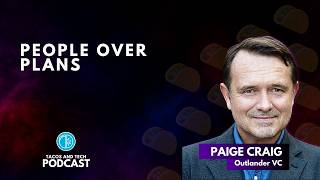
In this episode of the Tacos and Tech podcast, host Neal Bloom interviews Paige Craig, founder and managing partner of Outlander VC. Craig explains Outlander’s mission as a first‑check, people‑first fund that backs founders at the earliest possible stage, often before a product exists. She recounts her own difficult upbringing, early entrepreneurial experience in defense technology, and the lack of mentorship she faced, which motivated her to become an activist investor focused on mentorship and long‑term support. Craig describes the development of Outlander’s "Founder Framework," a 38‑point assessment of vision, intelligence, character, and execution that guides their investment decisions. She outlines the fund’s sourcing process, including a "staging area" for high‑potential founders who aren’t ready yet, and discusses how they aim to identify talent years before they start a company. The conversation moves to Outlander’s investment theses: physical AI (hardware‑software integration), manufacturing and industrial automation, defense technology, and the emerging intersection of life sciences and AI. Craig shares perspectives on first‑time versus serial founders, noting a preference for raw, risk‑tolerant first‑timers, while acknowledging the value of experienced founders. She admits to mis‑bets where the algorithm over‑valued eccentric founders who lacked self‑awareness, illustrating the challenges of predicting human behavior. Looking forward, Craig highlights under‑explored opportunities in manufacturing processes, health tech, robot insurance, and solutions for the massive displacement of creative talent due to AI. The episode ends with a light‑hearted discussion about favorite taco spots, reinforcing the podcast’s blend of tech insight and personal connection.
Chapters
And welcome back to the Tacos and Tech podcast. I'm your host Neal Bloom, and I'm thrilled to have on founder, managing partner, entrepreneur, friend, and mentor to so many founders who have built great companies here, Mr. Paige Craig.
Hey Paige. Thank you. Thank you, Neal. Glad to be here.
Ah, great to have you on. Honestly, I grew up kind of in the outside area of your network within LA as LA was becoming Silicon Beach. And it feels great to have you on and have this conversation where you are founding funders at the earliest of stages, helping really back people. And we know from what founders, what they pitch versus what they ultimately end up building, has many zigs and zags. And so you're funding pre-idea almost at this stage, oftentimes. So I'm excited to dive into that. You want to give us a quick high level though of what Outlander is?
Yeah. So Outlander is a first-check fund. We invest in founders as early as humanly possible. I usually say most deals are too late for us. We love 1, 2 people in a garage with an idea. And after that, it's really just we pick people. So we invest early and we stay for a long time. We are activist investors and we really pride ourselves on the ability to help when things really suck. And we have a very large fund where we can invest from the pre-seed through growth stage. We don't lead those later rounds, but we have the capital to get you through the pre-seed, the seed, the bridges. And then once you get to an A, we keep investing ideally all the way through the IPO and doubling down. But we are fundamentally a people picker, people helper, first check business, uh, anywhere in America and even sometimes, uh, Europe.
Wow, incredible, incredible to have patient capital but also smart capital, uh, around like that, right? Because so many angels and so many funds don't have both. How did it start? Like, take us back, like, where you learned both patience and kind of subject matter capital, if you will.
Yeah, I'd say I'm probably not a naturally patient person. Haven't been a founder before. And even as a mentor, I'm not patient, but I have a long-term view of what it takes to build monumental companies and they don't happen overnight. I'd rather have long monumental wins than quick hits. But, you know, it's really hard to know where that came from. I grew up dirt poor. Uh, we were homeless, living out of the back of a car, lived on the beach, didn't have our own. We squatted in an abandoned house in Sacramento, uh, up until 5th grade. My dad finally bought this dilapidated house that had been burnt down, and we spent 2 years fixing it up, literally putting floors and ceilings in it. Um, but you know, like, I wouldn't say bad childhood, like, uh, you know, really enjoyed my life, played sports, studied hard, got recruited to West Point. Um, but had a hard life, but I think that really made me value people over things. I wasn't a consumer. I'm still not a consumer. For me, it's family, travel, uh, founders, but I'm not a thing person. Uh, and then I think really, you know, eventually I had a passion for national security. I saw an opportunity to build a game-changing company. Uh, I did it even though everyone else voted against me and wouldn't even give me capital. And I think that's what gave me that chip on the shoulder of like, oh, you don't believe in me? Well, I'm going to go help other people as early as I am, and I'm going to give them something I didn't have, which is not the money, but the mentorship. I really wished I'd had the mentorship back then to not make all the mistakes I had as a founder. And so it was— I love building. I love working with people who are as passionate and committed as I am. And there's nothing like a great founder to partner up with.
100%. Did you end up finding, when you're building your first company, and love for you to tell more about that first company, uh, did you find other founders to kind of commiserate with and have cathartic relationships with, or wasn't so much later that you found your way to like relate to other founders at the same time that you were building?
You know, not really. You know, like they say, leadership is lonely, um, and and I was very focused on winning, and that was putting on blinders a lot and hiring great people. And it was a defense technology firm back in '03 when defense tech was not cool. Yeah. But no, I didn't have a lot— I had people I got to know, but you couldn't really open up and say, hey, you know what, this is really sucking. I don't know how to hire a CFO. I don't know how to run a pipeline. I don't know how to win government contracts, or, um, you No, a lot of times it's, um, like, I just didn't have mentors. And you can't go out to the network and just share everything, or you're going to be so vulnerable, like, people will take advantage of it. So I really, really wish I had someone, a couple someones like me, uh, because my attitude is not like, hey, like, I know things are going to be messed up. I know there's going to be massive problems. I know the company's going to go through several evolutions that look like death. but which are transformative and actually create massive value. And I wish I had a mentor who I could just open up to and be like, hey, here's the stuff that's working, here's all the stuff I don't know, here's the stuff I'm worried about. Uh, but I never had that. But I can say very confidently, like, we have become those partners to many great founders today.
Yeah, I'm sure of it. Once, once you realize what's missing, you know, that's the next thing you want to go fix. When was that time? When would— did you realize that now you have the time and space to go mentor and even provide capital to founders.
So back— so I started that company in '03. We scaled up several, you know, I bootstrapped, I tried raising and went up and down the East Coast like no one would invest in me. I had people saying, hey, I'll be your advisor, I'll take some free equity. But I just pitched dozens of investors, didn't get a dime. So borrowed money from Navy Federal Credit Union. I took out some credit cards. And then I just realized I need to stop pitching the government and just drive into the war. So I drove out, flew out to Jordan, drove into Iraq in the middle of the war and just made it hap— made it happen like most founders do. And that was sort of the, that was the early story of me realizing, uh, what it was. And then after that sale is, uh, I was, I was commiserating with a, with a buddy, really good dude, John Iadonisi, and John, I always credit. We were sitting in DC. He was a Navy SEAL, got shot pretty bad in Baghdad, and had been assigned to work in the intelligence community and pull technology from Silicon Valley to the battlefield. And over, uh, I don't know, half a bottle of Talisker and at my house, we were just talking and jamming and he introduced me to a couple guys in Silicon Valley and actually Eric Chin, um, and Matt Biggie, who are amazing investors at Crosslink these days. Open up the door and I came up to San Francisco and I realized these founders, like they opened the door, they said, hey, you should come out here. I had a little bit of an interest in investing and I met these founders in San Francisco back then and I realized I want to work with people like this. I mean, that first meeting, it was like I met, went to this event, 40, 50 founders were there and just taking pitches and I realized, wow, I can, I can literally write a check into these people, but I can teach them so much that I've learned about running a company in chaos and building a team from nothing and winning when you're under-resourced that it really clicked for me when I met those founders in San Francisco because those guys kind of opened the door for me. Hmm.
Well, okay, so that feeling when you write your first check feels empowering on both sides, right? Like, wow, I backed this person. The other— the founder feels the same.
Wow.
Someone believes in me. And some founders get addicted to that. And, you know, especially after an exit, just go full, you know, 20, 30 check mode, and then just sit and wait. But you've consistently, you know, written checks over multiple decades now and turn that into a fund. What is it that you've been able to build a system out of in terms of both finding people to back? So take us through maybe a little bit of the algorithm, and then just the long time frame expectation with that.
So I'd say part of it was, you know, I had a lot of meaningful conversations in the early days with some very generous OG angels and VCs. Brad Feld was a guy who really got me thinking about volume, how many deals you should do, portfolio theory. He's, you know, he had an amazing career. And for me, it wasn't so much about his success, but how much he put into other people. Uh, same thing with Mark Souster at Upfront. I got to know Mark as an angel, and, and, and beyond just reading, but like talking to Mark about the inside baseball adventure. Uh, Ron Conway, when he was an angel, and, and had a lot of time with him to learn. And just all these people, I put their little tidbits together. But then fundamentally, I, I'm a big believer in strategy. And when I looked at the world, I said, hey, What do I believe after my first couple of years of just— because I'll be honest, the first couple of years was me just kind of throwing checks out there at what I thought would work. Initially it was like, hey, what's a good business plan? And I realized after a couple of deals that business plans do not make startups. And, and so then I was like, okay, well, I'm going to come up with a way to pick. And I started thinking, I really learned that people— when you think about military history, military strategy, at the end of the day, people trump weapons, people trump op plans, like strategy doesn't matter. I'm a big believer in strategy, but given a decent strategy, you want to have the best people. So I started thinking about who are these humans talking to me? What's special about them? And I got into these long sessions about childhood and motivation. And, and as I thought about my strategy, I realized I really love getting into the weeds of how people work, how they think, how they operate. And that was something that I had done a bit of in the intelligence community. And it really drove me thinking about human intelligence and whether it's key leaders or tribal. Like, I really loved how humans think and work and operate. So I got pretty deep there and I told myself, I'm gonna spend these first few years figuring out what is special about founders. And I went out and I met founders who had been successful and learned from them. I remember sitting with Drew Houston at a party one day and just like soaking it up. And, but I did that over and over and over again, like thousands of times. And then wrote checks to back up those, honestly, oftentimes feelings, right? And then I would— I did this thing, I journaled, and I would write long essays about the people I'm investing in. And I started tracking the characteristics, and that matured over 5 years into the process we have today. We call it the Founder Framework, but it became, uh, what is today a 38-point process where we assess you across vision, intelligence, character, and execution, right? How you see the world, the brain power to figure out and problem solve, the character to persevere and lead others through hard times, and then the ability to execute, just get things done when the world is chaotic and coming at you full force. And, and so that was really my strategy, was, wow, I love people, I think I can understand them, and because I have this night vision, this ability to invest before there's any metrics, I'll invest crazy early. I'll invest at the idea stage. And so that's what we do today. You know, there's 6 partners here. We work across, you know, we're in Austin, New York City, and San Francisco. We meet founders everywhere. We have investments in 25 different cities. We invest all across North America and Canada. And we can talk to you when you don't even have a product built. We can talk to you when you have no customers. And we love that stage. Right? I mean, how many funds can actually fundamentally sit down and say, hey, we have real metrics, a real process to assess you pre-anything other than just an idea?
That's incredible. That's incredibly empowering to the founder, that's for sure. Um, okay, two questions. Well, let's just go with one here. On your algorithm, it obviously has taken a little bit of time to build it out. Any, any funny bad story where you thought the algorithm was there, you had all the trust you've bet on, and it was totally the wrong bet on the person?
Many times, many times. And, uh, you know, sometimes fail— as you know, failures— and remember, VCs are real assholes because like failure in our world is like you didn't build a billion-dollar company, right? Like it's, it's a high bar and it's an insane bar that also depends on luck and timing. But there are clearly cases where I've bet on people and I thought they were, um, more than— like, I, I assessed them wrong. And one of the problems is like, we are looking for really eccentric humans, right? So one thing I think about is like, how much do you believe in yourself and how much do you believe you impact the world? It's a fine line, right? You want a human who's like so heat-seeking, they don't care if there's a thousand nos and life is punching them in the face every day saying you can't do it. And they still go that direction. They make it. But sometimes those same people are the people that can't listen to reality and they're so disconnected, right? And so I always say, like, on a scale of 1 to 10, I want someone who's like a 9.9, right? To most of the world, they know where they're going. They're completely bold. They're convinced, but they're, they, they're self-aware enough to listen to a handful of people and be aware of when they might be wrong and be aware and willing to change a little bit. So that's, that's a good example. And sometimes, like when you talk about vision and creativity, sometimes that's genius-level creative vision and sometimes it's just, wow, that was crazy. I can't believe we backed that. But you need to invest in the extremes, right? Average people don't go out and do the crazy stuff. And I don't mean that in a bad way, but to be a founder, you have to be this like somewhat crazy, willing to risk it all, give up years, uh, to go build something that most of the world doesn't think you can do, doesn't want you to succeed. That's a really hard thing. So you have to invest in extreme people, and sometimes they're extremely different from what you thought they were. Now also, life changes right along the way. Like, these are long journeys. You lose a spouse, uh, you have kids, life changes, parents, like And I've watched people have the, the weight of life hit them. And you know, you're always like, oh, well, I would do this if that happened. I would do this if that happened. Well, you wake up and your spouse is dying, or, you know, this massively horrible thing happens to you. You don't actually know how you're going to respond. And so we have to make bets 5, 6 years before big life events happen. And so sometimes we're surprised by how people respond and Yeah, I mean, people are unpredictable, but, uh, we back a great portfolio of people and, and we really stick with them through hardship.
100%. Do you then therefore have in a funnel somewhere lists of people that you would like to back maybe in 2, 3 years before they're even thinking that they're going to start something, or you know that they will start something in the future and you're following years in advance?
We— so we don't do that today. We have— we do have this thing called the staging area And we have in our pipeline staging, and it is people who we meet who aren't ready to do something now. And if they strike us as like really high potential, we put them in staging and then revisit that. But another idea that we have for the future is we're increasingly asking ourselves, how can we find people a year or even years before they're ready to be founders? And we've been brainstorming, can we get into high schools and start exposing high schoolers to this? Can we do it programmatically with college kids or even people in inter— in startups? Yeah, sort of that pre-crime unit that can go and invest before they know they want to do a startup. But we're not really there yet, other than we do have the concept of a staging area. And so we do encourage people to talk to us as early as possible.
Yeah.
Have you found anything of difference between a first-time founder versus a second, third, fourth-time founder?
Yeah, you know, and I'd say I have mixed feelings about it, right? So the first-time founder, I love in some ways, uh, one, because they come in thinking everything is possible, right? And they haven't been beaten up by a system that sometimes makes you act a different way to sort of be how VCs think you want to be. So I love a raw— I mean, genuinely, if I had my choice, raw first-time founders always are my first pick. Now, second, third-time founders can be great because they learned some lessons. Um, and you don't have to pay for them to go learn those lessons again. But here's the thing, if I speak— think about this from a venture perspective, I often feel like second and third time founders overprice themselves and think that they are twice as good as they were before, and the market will often reward them with a great price. And we have to be honest, like, I, I'm in this business to help but also to make money for my LPs, and risk-adjusted, many cases I would rather work with a first-time founder that's never had a shot, but their whole life has been geared at like taking risk and sacrifice and working their butt off. And so we really pride ourselves on like, I don't care that you don't have a history in startups, right? I don't care that you came from nothing, that you didn't go to a great college. We just want to look at how you've lived your life, what drives you, what motivates you. And so I'd say we're probably most optimized for that first-time founder. But second, third time founders who've learned, learned a ton and are still pricing their deal, these deals well given the risk we take, we also love working with them.
That makes a lot of sense. Take us through some of the framework of what kinds of companies you're investing in. You know, certain industries. Is it based on what each of the GPs' backgrounds are or how do you pick the thesis?
So at a high level, we can all invest in anything we want. Any single partner at Outlander even junior partners, right, a couple years in, all of us are authorized to do our own deals. We don't have to get any consensus. You don't— there's no politics like you got to get two partners on board. So we can all invest in sectors that we like, and, and we have very different interests. But a few themes that come up a lot, and, and it's one of my jobs to sit down every, every couple years, I, I draft a sort of 10-year what I think is happening in the world. Physical AI has been a huge theme for us. We, uh, our last fund, we put about half our dollars into physical AI, robots, vehicles, automation, but we believe even deeper about that, uh, that thesis now. And so manufacturing, industrials, defense, like we really love this intersection of AI and hardware, AI and deep tech. And, you know, these This AI can power systems that are moving atoms, right? I think when Travis Kalanick came out, you know, a week or so ago talking about this thing and everyone listened to it, it's a very obvious theme. One of our first investments, Scale AI, has the whole company focused on physical AI, powering the physical AI movement. And that I think is going to be a defining theme of the next 20 years. Software is powering the production and movement of physical things, whether those are airplanes, delivery robots like Coco, therapeutic devices, you know, to solve medical problems, storage systems. Like, the whole world is gonna see this intersection of software and hardware, and we're gonna start to be able to build and create amazing things. And then it's the effect after that that also fascinates me, right? We, we all grew up You know, I, I started coding at 8 because I wanted to make video games. A lot of us are developers or hackers, and we came to this era of building software, and software now is so approachable to everyone. I am fascinated by what happens when hardware is as easy as software. That's the fascinating thing, is we're going to a world where PCBs and robots and entire systems— our kids are going to be making robots at probably 1% or less of what they cost today. And that is so fascinating that the world's going to be reprogrammed from a hardware perspective. And then the theme after that, which we're just getting into, we'll do a couple of deals, is the intersection of life sciences and AI. So AJ on their team just today brought me a deal where he's looking at metagenomics, or was it met— so out there, metagenetics. But essentially it's these systems they're sampling tons of biological material and sampling, you know, hundreds or thousands. And essentially it's giving you a biological radar inside hospital systems. So I think we're going to see this massive movement of the life sciences, whether it's biology, chemistry, and AI solving, you know, problems for health, but also problems for material sciences and construction. So those areas fascinate me. Defense. I mean, I'm a product of defense. I know national security well. I probably know it better than most VCs out there. We did a lot of defense deals last few years. Many are very successful. We will continue to do defense. It's not the, it's not focus area, but the world is rearming itself. And it's not because the world's somehow more dangerous. It's just the economics of war mean that a $1,000 device blows up a $10 million device. Well, that upsets the entire world order. And so everything that nations have built for the last 50 years has to be redone, right? Tanks, aircraft, battleships. This world of automation, AI, and manufacturing is gonna rebuild arsenals, and it's not gonna happen over 50 years. It's gonna happen over like 15 years. And so tens of trillions of dollars of spend will be compressed in the next 15 years, securing nations, securing borders. So that's, that's a very big area. And, and ultimately, We also think about how does AI occasionally, like, just a pure software product using AI, how can we apply it to business or consumer problems? So we do still do pure software deals. It's just harder and harder when I don't think as much value is created by pure software plays. Like, physical is really a big focus for us. And then I hinted at that manufacturing, we're big, big believers that America needs to build, America needs to produce. So boring infrastructure like casting, we do 3D printed batteries, we're doing lasers, we're doing industrial systems. We just funded a company in LA that is doing fully automated shoe production, like lights out factories, no humans, just printing tons and tons of shoes and eventually car parts and aircraft parts. So very, very interested in manufacturing and industrial automation.
Amazing. Which you were into way before it was cool. You've seen a lot of, I would say, bubbles, if you will. Does defense tech and manufacturing tech feel like a stepwise function change, or does it feel like it was a hot new thing just over the last 2 years, or is it both? What do you think?
No, I mean, it bubbles in the sense that there's always some bubble where an investor is willing to pay a multiple that you think is crazy, right? And in the early days, it's like many times people are wrong, but I, I think for defense tech, we don't have a bubble there. Uh, you have to invest in many companies that won't work, but the reality is the United States and its allies are going to consume a lot of new technology that the primes can't make. And there will be enough winners there that I think many VCs will be rewarded if they invest intelligently. Second, there's technology that the US government is saying, hey, we need this capability, that I think will in many cases have a 1,000x greater use in the enterprise and civilian life. So there's, there's classified communications being funded that will eventually get out into the civilian world. Things like the, you know, fully autonomous boats, which we funded and others have funded. Those fully autonomous boats and fully autonomous ground vehicles and aircraft Those are going to be the devices that in the next decade will move us around, move goods around. Right now they're getting a lot of defense investment, but those things will fundamentally change how we live and how we work and how we move. Same thing goes with space. A lot of space is driven by a need to communicate, a need to defend a nation, but it is going to power space exploration. So I'm very hopeful that a lot of these defense investments beyond just making money because they defend the nation will lead to fundamental tech breakthroughs that will be 1,000 times bigger for enterprises and consumers. And history has proven that to be true time and time again.
100%, right? So much tech from the '50s, '60s, '70s space race ended up in the consumer.
Uh, yeah.
And now, but be— back then it wasn't venture capital funding, it was actually the government. And now it's venture capital funding it, which I think the pure software part of venture capital that you mentioned as well, like, is harder to fund. It's unlocked venture capitalists to go back to go solve the hard things, right? Not just the anything that makes money thing. Go solve the things that are hard, the frontier, over the horizon kind of things. Where have you seen it? Where have you not seen a company yet that you're kind of looking and hoping to fund in the next year or so?
Oh man, you know, pretty much everything when it comes to the world of manufacturing. If you look at most factories, most manufacturing processes, that is one of the biggest opportunities out there is to sit down, look at what does the world make, whether they're making something out of wood, plastics, a new type of CNC machine. But the ability to make a thing, anything, or and think about a vertical approach or horizontal approach, both are feasible. I think that's one of the biggest opportunities. A lot of people are chasing defense because it's cool, it's popular. But like, if you truly, like, if you are a student of national security or you came from that world, like there's many veterans doing it very well, great, do it. But like the world is, there's a bigger need for manufacturing, industrialization from how can we make tires better? How can we make tires faster? How can we produce new materials, ceramics infused with metals? Like, I think that's a huge area. Another one is the world of, you know, biology and, and life sciences. And look, I'm not an expert there. We are all trying to get smarter on life sciences and AI. But I think there's a— I not think, I know there's an unlimited human demand for better health. And so anyone that sits down and says, hey, I've got a better way to deliver health solutions, like anything in the world of health, no matter how small, will have nearly infinite demand behind it if it works. Yes. Right? So I, I, so I don't see as much there, but I think, you know, we have to have a lot more health innovation in this nation and manufacturing innovation. And one idea that fascinates me all the time I think about is we have this world of robots and, and I think there are macro solutions that need to be, to, to solve all these robot issues. Like, one example is who's going to insure all these robots? So I always think, like, someone should come out there and start tracking and locating and assessing the risk and the data behind robots. And, you know, whether it's like, oh, we have a better way to insure all of your robots. You know, the growth of automation is inevitable. We're going to have robots cleaning homes, moving goods, flying stuff. And so any technology that says, okay, Robots are going to be more prevalent than humans in the future. What does that mean? And there's another one which is AI is so impactful today and it's going to be incredibly impactful in the next 10 years. We are about to face the largest dislocation of creative human talent, right? All of these white collar jobs, like there's so many smart people who the jobs they were used to getting after college are going to be gone. In the next 10 years. And so founders thinking about what does that mean? We think that means probably more entrepreneurship and there, and there's other derivatives of that. But I think founders who have a unique viewpoint and can go out there and, and basically capitalize on that shift, that's an area that, that's the fifth column of our 10-year vision is what happens with that massive dislocation of creative talent globally. And what are the technologies and solutions that we need to enable? And, you know, that class of people. So that's a few things that interest us that we just— I haven't seen much there.
Okay, those are great. I mean, I think what you're saying is we hope to— there's definitely an infinite number of problems worth solving. And as long as there are hungry people who want to go solve them and not just for themselves but for the world, there's an abundance there. Though on the AI bio side, I don't know if you saw that story recently of the guy who open-clawed his own solution to his dog's cancer.
Oh, amazing, right?
Like, literally on his own figured out how to create a custom, uh, vaccine just to cure his dog's cancer.
Like, I did not see that, but I, I fully believe that before my kids get to college, they— there will probably be biohacker kits where And I'll wake up and my, my cat will have two tails and my son will have a glow-in-the-dark dog that he's reprogrammed. And who knows? But like, the ability to modify, edit, and create new biological forms is, I mean, it's, it's possible today and it's only advancing every year.
100%.
Okay.
Well, one thing we hope never changes is the good foods that we eat because, I mean, at the end of the day, the way that people, founders and funders, break bread sometimes is over a good meal, maybe over tacos. Do you have a favorite taco spot or multiple?
Man, you know, I spent a— I grew up in California and then spent a decade there investing. I had to give up so many favorite tacos for New York City, which we moved to a few years ago. And we split our time between Florida and New York. There is a restaurant called Tola Che, T-O-A-L-A-C-H-E. Uh, 82nd and between Lex and 3rd. That is like my go-to. Now they have a birria— they have these birria tacos that are just wet and succulent, but they also have— and this is the secret one I love there— they have these duck carnitas that are mind-blowing. And I love spice. They have this like rich orange, like pumpkin-thick habanero sauce. They asked the chef to bring out to me and I just dip my duck carnitas in that stuff. It's amazing. Oh, all right, my favorite spot.
All right, that's a great one. I'm adding to this. I recently just had some, uh, Patos Carnitas, uh, and been turned on to those, so I will be absolutely adding. Yeah, those—
next New York trip, let me know, we'll go there and have some.
That sounds great. Well, Paige, this has been awesome. Uh, I— we've got some deal flow sharing to do, that's for sure, because I'm right there with you, precede and seed, back and forth.
Let's find something.
100%. Uh, and looking forward to sharing some, uh, duck carnitas with you. So thanks so much for being on the pod and thanks for funding great people.
Cause that's what's beautiful. Thank you, man. Cheers. Thank you. Have a good day.
You too.
Quentin Frijoles found us trying to raise some queso. La vida San Diego, school of rappy, rapping paella, tortillas, round jalapeños. In these modern times, a craft beer and coffee, my coding yoga posse, fold the body origami. We be surfing Coronado, eating tacos El Gordo. The tacos tienen puesto lucha libre en sombrero. Gotta shout out Tecostejos by the beach. Watch the sunset, La Jolla shores. Entrepreneurs trying to get funded when San Diego Startup Week is popping in the summer. Oceanside to Tijuana, SD be full of hustlers. From couch surfing to penthouses right on the beach. Tech leaders who believe stars are within reach. We interviewing founders who be shooting for the moon. Hashtag SD Techos. With your host Neil— Come on! Startups get the party started... startups get the party starting? You want tech or tacos? Tacos n' Tech?! Ya know we got it hey!! Startup skip this party startup skippa thartystarty startupts kip tha pawdy stahrtupz giveth partee stahtedt staruptskipthepawty Tech startups, get the party started. You want tech and tacos, tacos and tech, you know we got it.
Hey!








