SDSU ZIP Fall 2025 Bootcamp As A Podcast
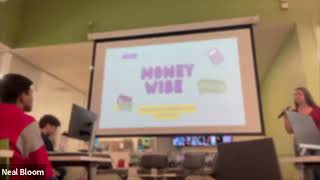
SDSU students pitch their bootcamp projects: apps, marketplaces, and hardware built in weeks. Teams share what they learned from customers, early sales, and failures. Instructors push iteration and customer discovery over perfect plans.
Chapters
Startups get the party. Startups get the party started. Startups get the party. Startups get the party started. You want tech and tacos, Tacos and tech? You know, we got it. Hey. Startups get the party. Startups get the party started. Startups get the party. Startups get the party started. Startups get the party. Startups get the party started. You want tech and tacos, tacos in tech. You know we got it. Hey.
All right, all right. We are. We are reaching the. The final leg of this boot camp.
So before we ask you to present, which is always a really important part of any making change in the real world is, is you have to. You have to sell. You have to get in front. So we're going to do that. But I just want to. I just want to sort of reflect back a few observations.
First of all.
Wow, the energy today that I saw in this room is incredible. Like, it is. It's incredible. Clearly, when we started, I think if you ask, Neil and I, like, the main point we want you to take away from this is, is that you can make so much progress in so little time. That truly what we have seen in working with hundreds and hundreds of founders is the only difference is some founders don't stop and they just keep going, and others give up. Like, honestly, like, that is the baseline. And we wanted to let you know today, there is a wealth of tools. There's AI, there's re, there's people, there's resources, There is a community that will help you. Okay? So there is all this support for you, but it requires that you show up and do the work and take the next step. And there's always support and willingness to move you to the next step. But it does require you to be the one to wake up in the morning and say, you know what? I'm going to put time, effort into moving this idea forward. And I, I'm a little concerned that we had so much success today that we're not going to get to my second point, which is.
Failure, which is, this is the one area in life. You are all students, and you're going to take tests and you're going to grade it on how well you know, and you're going to fail things and whatnot because you don't have the right knowledge. That is not failure in our world. Okay? If you can't sell anything that is great, like, you tried and you can't. That is knowledge. That is. That is insight into how you need to bob and weave and change your approach. So that is valuable. We love attempts to sell something and you fail. We love that. That is great. That is something to celebrate. Failure in our world is.
Letting a fear get in your way. Not trying, not going out to the real world, not asking other people whether they would like the thing you think is great. That's fail and giving up. Okay. But getting rejected, having to rework your idea, all of that. So as we do these presentations, just know that if you have rejection, that is something to celebrate and we'd like to learn that. We love that. Neil and I actually like it better. We actually think most people's ideas for the first month are terrible anyway. Like, it's not until you bump up against reality and real people in real world that you actually get really good ideas. So celebrate those as well as the sales. I'm a little concerned that we had so many sales that we're not going to have enough rejection in this. In this party. But just know that that is something to celebrate as well. Anything you want to. I'm going to do a second set of insights after the presentation. Okay. Okay, let's get it going. We're going to this team first. Second team on deck. Come on up. I'm gonna have to play a bit of timekeeper because, yeah, we're gonna have to be real hardcore in the time because we have a lot of to go through and I'm still rough, but two minutes. Okay.
All right, team. Team. Number one.
Our startup idea is called Focus Flow. Go ahead and tell you the problem that we found and the pattern. It's own addiction and trouble focusing. We saw this pattern between course right here. We were talking outside to students and yes, this was the main problem that we had.
We learned that there's a high demand for this problem. And one of the first things we realized starting to talk to people is changing our pitch because we realized the type of person we were talking to weren't the people who would necessarily buy something. So then we had to adjust who we talked to and then change the product a little bit to fit their needs. So a lot of that was like, at first we just had the physical product and then some people didn't want to buy just the physical product, but they liked the idea behind the data it collects. So then we transitioned to the physical product with an app option if they didn't want this full product. And a lot of that was learning how to find the right target audience of who would actually make the purchase.
So results. What we had at the beginning was a lot of feedback. Right. There were a Lot of questions about how actually it worked. Right. And I have the idea to come up with asking them their emails pretty much for the pre orders and they were willing to do it. And we got a couple of emails and yeah.
And then as we added a product feature of the physical product, being able to also kind of have an extra amenity of buzzing to help you with this focus problem. We did end up making two sales.
Great job, team. All right, next group, please come on up. I think that was this table back here. Yes.
And on deck is this table. You guys are on deck. Okay, so choose your spokesperson and you'll go after this.
All right.
Hi everybody. We are Money Wise. We are a module based learning with AI capabilities. We're here to teach young students about death financing, investing and student loans.
So what is the problem we were facing? Students these days or students? Young students and people of all young ages don't have enough financial education. You don't know how to pay off your student loans, how to do a budget, what is a retirement account? So that's the problem we were facing. And we wanted to make something that was actionable, easy to understand. And we came up with Money Wise. It has modules that start at the basics and go up in intensity into investing, portfolio management, that kind of thing. And it also has an AI chatbot feature where you can have financial education right in your. In the website, including included in the module. You can ask it questions, judgment free and. Yeah.
Okay, so what did we learn throughout this process? We learned that people are more willing to sign up when there's no financial obligations. So you'll see the results at the end. We did signups instead of people actually pledging money. We also learned that this is a real problem financial education and lack of financial education is a big problem here at sdsu. So we had a lot of people who were actually interested in joining our site, wanting to learn more and learn more about their finances. We also learned throughout the process that AI tools are very useful when you are designing a company, launching a website. So we are really excited to explore these tools and actually get to build our own website, which we showed in the beginning. And then we also learned how to find and sell to an audience. So luckily for us, our audience was on campus as young students. So we kind of had a little easy there. But it was great trying to just explore the campus, see who we can target and then how to actually get them on board with what we were doing. And then as for results.
Really, we.
Had 30 signups in just one hour, 100% success rate. Everyone we talked to was very interested and that was definitely a success.
Oh, just going around talking to people on campus, telling them about our idea and seeing if they were interested. And then we gave them a QR code to our website and so they could check it out and there was a button to click interested if they like what they saw. Yeah, we did a simple Google form with just their name and an email. Instead of telling them they were going to be bothered or anything, we literally told them that it was just to sign up, just to gauge interest. And people felt a lot more comfortable that they weren't going to be bothered and paraded by emails. So yeah, we only had an hour because we took a lot of time designing our website, but we made it work. So we had 30 signups and.
All right, next team, come on up. So three teams after that will be from the second. So track. So.
Who'S on deck for group B? Yeah.
We were a team of five and we all kind of had the same pain point of not being able to kind of sub lesser.
Sorry. For example, for me, I want to go study abroad. It took so long to find some facilities. So we did some research and found out that every year millions of renters needs to set up your apartment for work, your location, study abroad, internships. The process is super broken at the moment. A lot of tenants are forced to go to platforms like Facebook and struggle to know if the listings are real or to see.
So throughout this entire process, we learned a lot of skills. For example, I wasn't really familiar with the AI websites that allow us to create websites. So the sort of the starting up with the website. And then we figured because of so many scams online, we thought it was a better idea to do a meet and greet between tenants. And.
So we created a flyer with the event.
And luckily we were able to connect with some students a lot of them were interested in. And we're just waiting on them to scan the QR code and see if they show more interest. Hopefully we're able to get more people connected towards the end of the semester since my teammates that are familiar, some people might go study abroad or just move back home. Just try to give people options.
Okay. So we had no sales or like we said, we didn't have any signups either just because we handed out flyers. We only did it for 20 minutes because we were in this process of pivoting from a website to a flyer. So yeah, but it was a really good experience and you learned a lot.
All right, Ian, of team.
On deck, can someone else from. Yeah. What's Joel's team?
Rib. Okay, Rib is on deck.
Love to see a pivot. You learn not getting something. Try something else. Great job. Sub. Sub lead. Wait. Yeah, I see one sale on your. Hey.
Whoa.
There you go. Takes time.
I feel a little better.
So what we did was we had to go out and find someone to talk to them about what their problem was. We just spoke to them. We found a problem. And so the person that we talked to was named Jamie, and she likes readings or their favorite brands are converts and duck pros stood out to us. And she is a commuter, and she goes to school Monday through Friday.
And Jamie's problem was that like many commuters or even just people on campus, we have these large gaps between classes. And since we can't go home or to our apartment or dorm, we don't really have anywhere to go. So we'll find us just like where we found her, just sitting at a table outside. And she has a 45 minute commute, so it doesn't make sense for her to go back in these periods of time.
So the solution that we came up with was.
This concept called the Hub Lounge. So this is a place on campus where it kind of combines Starbucks with the student lounge with the library. And it takes all these and puts it together in one place. And for. It's basically, it's built on a membership fee. That's how you get in. So for $20 a month, you have access to the lounge. And included in that, our main selling point is free coffee. Only one free cup of coffee per day. And there will be a membership, like a tiered membership, where you have access to different amenities within the lounge. Yeah. Oh, and we reach out to her, and she didn't respond back to us afterwards. But we spoke to a lot of people, and every single person that we talked to loved the idea. One of the people we talked to was a professor who said that it was actually a necessity for students on campus to have this. And they all said they would be a member. And one person actually did pay, like, pay the $20 to be a member. Right.
Okay, next team coming up on deck. Let's do one more Team B on deck. Yes. What's your team name? Walking. Yeah, walking to you. Next.
My name is Gabe. And the person we met with today, his name is Gavin. He's a first year student here from sds. Sdsu. And he's originally from Houston. And as you can see from the picture, he's a skateboarder. This isn't actually him, but he's a sponsored skateboarder. And an issue that he's facing is when he moved from Houston to San Diego, he lost all of his sponsorships. So this is kind of an issue. He's starting to look for more sponsorships here in San Diego and yeah, currently.
So solution? I'm glad you asked.
RIP RIP is a.
Website that basically Gavin can go on and he can post his clips and companies are able to see Gavin and what he's made of. I, as a sponsored server, I had a really tough time getting sponsors. So this is an amazing way for athletes to be able to get recognized by big companies. How it works is you get a premium. As you see here, everything is free, but you get sponsored connections. This is huge because you're able to communicate with these big companies. And here's our results.
So we got back in contact with Gavin and he was really interested in the product and he sent us $10.
And then another, we were on campus just walking around, we were looking for more customers and what we looked noticed was people with skateboards. So we found another person outside of the East Commons with a skateboard. And he was also very interested in something that he mentioned was that him and all his other friends that scape who are looking for sponsors are really interested would probably be interested as well. So he also sent us $10. And then I guess him and like all of his friends are also interested. So that was our. All right.
All right, walking team on deck. We need someone else on deck.
From track A. Now we can do it over here. Okay, Track A now with the Rams jersey. Finance chargers. Action chargers. Yeah. No, yeah. Physical compass is the name of our.
All right, so we went out and we met with this girl named M Yun and she was a first year commuter in a San Diego local. And one of the problems we talked to her about is how she was nervous and kind of afraid to go study abroad because it would be a new environment for her and she could be exposed to different dangers, like walking around at night and stuff like that. And obviously it's an unknown environment by herself. So yeah, so one of the problems we, we found is that navigating new places can be dangerous. Obviously like you go to like New York or la, you don't know exactly what areas are safe, what areas are not. You might be in a safe area and then you take a few steps and now like you're in a pretty dangerous area. So this is the problem that we found and this kind of affects everyone, like almost equally. So for our solution.
We came up with Walk. So essentially what Walk is, is it's sort of like a navigation app, like a Google Maps or something like that, except it's specific for walking. And now instead of calculating the fastest route, which navigation apps do, it'll help you navigate around different dangers, like maybe a dark street or some a street where there's a lot of crime in the past in order to give you the safest route to get somewhere. So yeah, this is basically how our app or would look. And then yeah, we went out and we pitched this to different people and we actually did get a sale. So we had like a weightless kind of thing for $10 and someone decided to buy it. So that was pretty cool. You? Yeah.
And.
Yeah, that's it. All right.
All right, come on up and team. Another team from the A group on deck. All right. Ballet. Ballet. Sorry. Parking.
Oh yeah.
Okay, real quick, how many teams do we need to present? How many, how many?
Not everybody on the same team. So just one hand from each team. So I have account of how many teams we want. 2, 3, 4, 5, 6, 7, 8, 9, 10. 10.
All right, thanks everyone. My name is Max Beatty. I'm currently a third year accounting student at sdsu. Our project that we were working on is called Fiscal Compass and I'm going to tell you a little bit more about it.
Yeah, so what was the problem? We were focusing on a big issue that when I talk to, you know, other students at SDS do young people in general, they're not super financially literate, they don't have a lot of resources at their disposal and they don't have a lot of experience. These are all very normal things. And it can be very hard to start out and figure out, okay, how do I want to invest, how do I want to achieve my goal of trying to pay off my student debts? These are financial issues where if they're left by themselves, they will create real problems in the future. So what our app is hoping to do. Next slide please. It's going to take in some of your financial info, right? It's not that your bank's being linked, but it's going to go into your income, what your monthly expenses are, if you have any pre existing assets or debts. And then based on that, using, you know, AI power calculations, it's going to be able to help make it customizable investment plan for you or an invest or sorry, a customizable financial plan for you. So maybe your goal is to Try to, like, buy a new car. You drive like a. A really bad, you know, old car, and it's like, okay, I want to save up 10,000 to do that. How are we going to get you there? Fiscal compass is going to achieve that.
Hi, everyone. So for what we learned first, when you're interviewing someone, you need to know who you're interviewing and their experience. I remember actually with one of our customers I was talking to, trying to make the sale. I actually forgot about the sale. I was asking her struggle, and we started talking about that. I was trying to give her financial advice, and then she was like, well, you get to your pitch. No, no, no. Like, this is part of it. You know, I was more concerned for trying to help her rather than, okay, I'm just trying to make the sale. Right? So it is really understanding the background of the person you're talking to. The first thing I did, I started from zero. I, like, was. My mind was about explode because I was having so many overflow of ideas. So I literally went. My straight idea was like, okay, I'm going to mentor. Spoke to two. I was like, trying to actually sell it to them first. I was like, before I sell it to any student, because our. Our audience. Our audience was young adults. But so we. We learned that the pain points, and we try to target that. And so then from there, we got their feedback. And that's what we're trying to include for future inferences and also trying to tell them, like, hey, we're not just trying to sell you this idea, but we're also, you know, we're with you on it because we're young adults too. We experience the same issues. Next slide. Because we're off time. So we made 18 sales. Okay, 18 sales, which was amazing. And something that I actually want to include really quick just for advice for everyone. I know I'm over time, but something that's really important that every person in your group is something Neil said. And I really loved it. And I actually. I, like, took it with me so much, then I'll use it wherever I go. Every person in your team has something to contribute. I looked at everyone in my team. Can you not ask them, like, you know what? We're all gonna do one thing. And that's how we got to 18 sales, right? All of us did one thing. Like, we. I ended up getting eight sales. Some of my partner. Each of them bought two or more. So that's what led us to that. So making sure you. Thank you.
Question, how much was the sale? How much did you charge?
18.
So $1 per sign up? Yeah, Right. All right, Parking problem team, back up to parking problem team.
Okay, right here. Are you guys group B?
All right. Hello, everyone. I'm Nick Bernal. I was working with my amazing team here. First and foremost. Great job, guys. Crush it out there. Our problem is we're addressing parking constraints and parking issues on campus, and we're trying to apply this problem universally. Universally for all university commuters.
What did we learn? We learned that this is either something you need or don't need. There's not a lot of people in the middle that you can kind of win over. People are either commuters or they're not. And they either struggle with their commute and parking on campus or they don't. So we got a lot of hot and cold responses. We did realize that a lot of people were willing to pay more than we expected. We thought, you know, we'd come in at very low prices, and the people that did have an issue with it seemed to really have an issue and would be willing to pay more to solve that problem. We had a 50 to 60% positive response. And so just in my group of three, we approached somewhere between 30 to 40 people, and about 60% of those people gave us a positive response. Those results ended up being 21 early adopters. In our two hours, we charged $5 for an early adopter. We got 21 sales, and we raised $105.
There you go.
I'm going to give you all a tip as the TIPS team comes up. If you're ever done presenting, if you don't know how to tell people I'm done, just say thank you. That's a good signal that you're done and people can clap.
Thank you.
Oh, another on deck. Yes. This is a group B team.
We. Another group B team. Yes. Okay. So again, this is group B. They started with the person.
All right. Hello, everyone. My name is Paul. I worked on this project with Joel just back there. So earlier we had the opportunity to go on campus and introduce someone. So we came across a gentleman named Hector. He is a first year computer engineering student and he commutes every day to campus. Is just like a lot of us in this room. Before we get into his problem, raise your hand if you guys have a Stanley or a hydro flask or anything related to that. Like a large water bottle. Okay. Keep your hand raised if it fits into your cup holder in your car. Exactly. So our problem is.
Bottles flying everywhere. Right. They fly around the car, they roll around they smack into your door, might smash a window, might hit your kid in the head in the back seat or something. So we got to make sure that it's secured. So our solution is.
Safe sip, which is basically. It's a little bit hard to see because it's black on here, basically. Long story short, it is a plastic component that fits into your cup holder. You stick your hydro flask in it, now you're safe. It's a safe sip. You can pre order now, 6.99 a pop. Get your spot on the wait list. We currently have one major investor at 699 and yeah, thank you.
All right, next group come down, another group team from group B who started with a person to find a problem. And then the team sitting down in the back. One for you guys. A or B? B. Okay, another B. Right.
Started with Maya in her study abroad in Europe. She went for three weeks and she visited three countries and she was staying at the hostels, but she struggled to store her luggage within them.
And so the problem we found when talking with Maya was she would arrive at places and then she'd have to wait to check in and she'd be stuck because she would have her luggage with her and she wouldn't be able to do much with it. And also storage at hostels is like some of them didn't even have storage and they didn't know what was safe and what wasn't. And also like the available solutions of like train station lockers and airport lockers were really expensive. And for her and her partner, they couldn't. They wouldn't be able to afford it. And so we kind of. We started to target the hostel area and the security in the stores, but we found that that would be very niche problem. So we veered towards a larger solution which targeted just storage and blockers.
So we created unbagged. So basically it's to secure your storage at cafes, co working spaces or shops, which can easily be expanded to anywhere.
It will be affordable.
Hourly or daily rates with insurance included. Just for peace of mind. I know a lot of people in town are always walking the streets with their luggage. So this would be a very easy way to secure your luggage and explore the city. Bag free. And then those are some samples from our website.
Thank you.
The original person did not respond to us, but we did get three people that were interested.
That's pretty, right?
Right. Kitchen team, come on down and let's have a backup team from group A. Okay. T Shirt Mountains. Removing T Shirt Mountains from the world.
Hi Everyone, my name is Jay. I'm a senior studying management information systems. And today our team is presenting Travel Mentor. Travel Mentor is a program where we match experienced travelers, just everyday travelers, with a mentee who basically has no experience or wants some advice in traveling.
So we started this process really by just getting insight into what proms will have in the topic of traveling. So we were able to meet a junior at SDSU who has a lot of experience traveling to a lot of Latin American countries. But one of the problems that had really was a lot of his friends didn't have a lot of experience traveling and even didn't even hop on a plane. And we took this as a very important problem, which is how do we get people for reasons like cost or accessibility or just comfort, how do we get people comfortable with traveling like Sean has been able to do?
So our solution again was a website that would match a mentee with a mentor. So basically the mentor would be an experienced traveler who wanted to help others. And you would, the mentee would sign up for sessions with the mentor and you could, you know, plan your itinerary, ask for advice. And then one of the other problems we kind of ran into is just like cost and financial issues. Because traveling is expensive, not everyone can afford it. And so we also implemented an option where when the mentor, like, receives payment for the session, you can choose to donate part of that commission to like, call it the Pay it Forward fund. So you can, the mentees can apply for grants that can help with like visas or like insurance or plane tickets, and you can apply for a grant in order to help with your journey.
Yeah. And then we just learned a lot about the capabilities of AI today, as well as how to identify just ideas for businesses and thank you.
Great. Next team's going on down.
Paige, what's your team name?
Standby. Okay. Standby on deck. Oh, that kind of works.
So our idea is called Campus Loop and fun fact for y'. All. This global textile waste reached approximately 264 billion pounds in 20.4 level. So the problem that we're solving is college students need affordable, stylish clothing, but feel guilty about fast fashion and can't afford sustainable retail options. So what did we learn? 100% of people we sold either donated clothes themselves or have thrifted for clothes in the past. When asked for clients shops, 75% of them said that they thrift to some extent. And students were very willing to donate their clothes via drop off box or pickup, which is a huge portion of our idea. We have Our results and we had 16 total sales with 33 people being being pitched in total and a $38 total revenue and pitches were well received by subjects in general. We only had one bad interaction and the vast majority of people approached thought it was a good idea. So this is our website as well.
And this is what the donation box would look like. And yeah, so what did they pay for? So they buy used clothing that's donated by other students and drop off boxes on campus for pre purchase. Yeah, it's like online as well. And yeah, they pre purchase clothing that we would then deliver to them within 24 to 48 hours in diamonds. So people donate. So the marketplace of people donate clothes and other people buy clothes. Yeah. So everybody we sold though was either investing in our idea itself or pre ordering for clothing that we were going to give them in 24 to 48 hours. But we had to tell them we can't give you your course. So yeah.
Jp all right.
I forgot the team name. Something about airplanes coming down. That was a good thing. Standby. That's right on deck. We'll be off screen. All right.
I'll say I am very happy and impressed by all of the v0 websites you guys made. Leaned into making these, using these tools and making awesome websites that I hope that's why you share with thousands of customers, millions of customers that you trip.
Hi, I'm Paige. And problem that we were solving today was high costs for domestic flights in the US Especially when they're last minute. And you know, we're college students, we do a lot of things last minute. So the switch came up with is called standby. It partners with US Airlines to unlock unused standby seats and offer them to travelers at a deeply discounted rate.
All right. Now a couple of things we learned is target market again, like Paige said, it's spontaneous travel. Traveling. People who are college age, like pretty much everyone in this room, early to mid-20s and purely domestic. Now, we kind of base this model off of what a lot of people are doing in Europe already, how you can get very cheap, even international flights from one city to another, from Paris to Germany for less than 50 bucks. That's kind of our vision, except we want to replicate it in America. Now, what we discovered is that if this was to happen, aside from the logistics of partnering with an official airline, is that return logistics are also difficult. Sure, you got a one way flight out, but how can you guarantee a one way flight back? We are spontaneous, but we're not spontaneous to the point where we can Just be stranded somewhere. Right. That was one very valid concern from one of our interviews. Another thing is flights actually used to do this. This was a common practice back in the day, but they realized that, well, we can just upcharge a lot for one last minute ticket and then cover the price for other tickets that are not used on this flight. Open seats. But we also found that you still go on a flight, there's still empty seats that could be leveraged, that could be used. So it's money in the airlines pockets, but it's also money saved for us and individual budget airlines going bankrupt in the US is something I've learned. Spirit is actually going bankrupt and they're now not even flying out of San Diego. So our solution is not obviously a separate airline. It's an entity that reaches out to all these individual airlines and offer solutions. Result, we're met with a lot of questions, skepticism, one of them being the return logistics. And we got one sales sign up only because we didn't have a lot of time to pitch. We were developing for most part and we had over 700 impressions on Reddit just by posting on three subreddits. These are not made up numbers but we did get banned. That's another story. And 16 website impressions. And this is one of the concerns from our Reddit. And yeah, that's it. Thank you.
Okay, so 16 people visited the website. Yes, that's correct.
So you guys, whether or not that event is a viable solution, very strong signal that people are interested in that kind of problem. To get those kind of expressions. That's a good sign.
Okay, next team, come on up. And another team on deck. Yes. Language fluency team on deck.
Which track be another track. Be on death. On death. I'm done with that.
Hello everyone. Today I will be presenting to you off screen.
So what is off screen and what is our problem? Well, basically we decided to look at phone addiction through the lens of dune scrolling. Anyone, raise your hand and let me know what have you heard of dune scrolling? Quick, raise your hands. Everyone's heard of dune scrolling. We all know it's a big problem. Let's go to this website real quick. So what we do is we know that iPhone addiction is real, right? So what we do, cat is out of the bag. Your screen time on all your most addicting apps is now posted online. Yeah. No hiding anymore. So what you're going to do is you and your friends are going to set up scroll challenges against each other. Yeah. So against each other. And the more more you scroll, the Lower, you go on the leaderboard. Right. So that's how we're going to target this addiction. I believe that scrolling, you can't look at it as, like a focus issue, in my opinion. You have to look at the root cause of it. Right. So doing this allows us to socially make it so that it's unacceptable to scroll. So that was our target. You can go down a little bit. Right. So we have some other integrations within the app. Right. So the common thing with scrolling is, well, what else would I do with my time? Well, if it's 11:00pm on a Saturday, man, maybe go out or maybe do something or Sunday, like, go to sleep. So we have a second tab that allows us to have an AI integration. And what this AI integration does is it personalizes it for you. So based on what day of the week it is, where you are. Excuse me. And like, what time of day it is, it'll give you certain activities on what to do. So, like, as I was starting earlier, if it's 3pm on a Saturday, it will tell you to go to sleep. It'll tell you to go to the beach or something. So that's pretty much what it is. Go back to the PowerPoint real quick. That's the problem. And what did we learn? Well, we learned how to call approach random people who are on their phone, which seems really like you see that all the time. You go into East Commons, everyone is literally on their phone and seems really unapproachable. But turns out it's not really that true. Everyone had pretty good things to say about the app, and I kind of like the idea. And as you can see, we also learned how to go and lean into fear, which is such a difficult thing with entrepreneurship, I promise you. I wanted to stop so much out there, but I was like, I know I have to keep going. I got like 30 minutes left. So we just kept approaching people and having a good time with it, and we failed a lot. A lot of people just told us to mess off and carry on with our day, but we kept going. And we learned how to go from having this big problem to brainstorming it into idea and then creating an actual solution.
So what were the results? Okay, so we only had two sales for a whopping.
$6.
We have 6,000 of them.
But we did have a lot of interest. A lot of students were really interested in the idea of, you know, seeing their friends scrolling time, which is pretty funny. So I think we need to refine some form of the pitch so that we can Actually bring that interest into conversion, into them actually taking action. Well done. Thank you.
Who is next? Stop forgetting. Yes. Which fluency team? And then we already had the. On deck. What's your team name?
One more time. Spa Chair. Yeah, Spa to chair. I'm more interested in the spa chair. Give me a chair that's also a spa.
Just kidding.
Okay, so the big problem that we've seen in Target is language fluency. I mean, how many of you have used duolingo for and how many of you have stopped using dual?
So there's a problem here, right? Duolingo and services like that, they can teach vocabulary, they can teach phrasing, but one thing that they can kind of be bad at is actually teaching conversational fluency. So our solution, Fluency, what we wanted to create was something that would actually simulate real world conversations and real world locales, and that would give you an actual sense of the environment and ambiance of those types of situations. So this app would be for VR, PC and mobile, and it would include conventional methods so that we could kind of compete with figures like Babel, Rosetta Stone, et cetera. So we'd have grammar classes, flashcards, visual learning options, etc. But then our key feature would be the VR feature, which would include real world situations where you're practicing ordering food, where you're practicing, you know, learning in school, you're practicing buying items at a supermarket, you know, everyday interactions.
And what do we learn from approaching people? One, we refine our pitch. At first we were kind of coming up and we were just asking questions about language, but we started kind of refining, moving towards targeted pitch. We clarified our ideas, we clarified our offerings, and then we moved to the international students as a target since those students can often have a difficult time adapting and learning new languages. And for example.
So the results.
There were many students who expressed high interest here and we made five real sales.
Venmo and Cash and so got all those payment platforms. All right, Spot share one down and on deck.
What's your team name?
Smart Art. Close enough. Smart cart is on deck.
Okay. Hello, everybody, I'm Chris and today I'm going to be talking to you guys about sponsor, which is a breakthrough in parking monetization.
So on my campus interview, I was so lucky to meet Miles, who is a second year commuter. And I know there's another group who said they met a commuter and they had big gaps between classes. And so my person was kind of the same, except he did want to go home in between classes. And.
Next slide, please. Okay, so he's signing us a five hour gap, and he showed up really early for his 8am Five days a week. But then he has to debate whether to go home or in E and then lose that premium parking spot which he showed up so early for. And of course, no one wants to leave their parking spot and come back and take away furs or away parking spot. And so this was how we came up with our solutions. Spot Share, which is a peer to peer software that allows people to list their premium parking spots and then also buy them. So imagine this.
Imagine you're leaving downtown San Diego, but it's half an hour right before the Padre game starts. Why leave that spot for free when you can gouge someone?
When you can gouge someone and get them a pod stand, it takes that spot from you. So. And of course, we take commissions because we want money. All right, thank you.
Miles didn't get back to me, but I messaged my mom and she said it was. It was tacky. And.
Don't trust mom. No matter what she says, it's good or bad. All right, we have the next coming up. Who else is on deck? Is this the last group to present? Oh, okay. This group back here replacing homeware.
Houseware.
Great term of the. The great use of the term gouging.
All right, so by Joe G. Who here has gone on a grocery trip and went through the checkout, and by the time you got home, you realized that, damn, I forgot something on my list. Well, that is a common problem. And our friend Armand that we stumbled upon earlier during our outdoor adventures shared the same problem. So we realized that forgetting items at the grocery store is a common issue, and creating extra trips to different stores is a waste of time. And as you all know, time is money. So what is our solution?
Our solution is a smart cart. And this is an app that helps you track items throughout the grocery store or any type of store, as well as makes personalized shopping lists for you based on your past history. And it also maps out the store for quick navigation, take you through different aisles and sets reminders for any forgotten items. And here's our QR code for the waitlist. And some results is that we actually made three real sales. Thank you.
All right, team, come down. And then the last team, I believe, is right here. Anyone else not presented yet? Okay, getting close.
It.
Hey, while. While they're figuring this out, let's. Let's continue. I'm cj and our group is called Make Magic. How many of you guys are creatives or Have a creative street. Yeah. How many? Right. Okay. Out of, out of all these hands, who of you have done 3D printing before?
Quite a. Quite a few less. So what we've realized, there's a lot of us that are creatives that would like to see a product and haven't had the ability to go through CAD programming or a lot of other processes to be able to make that idea.
It would be helped. So what we did is we created an LM model that allows you as a creative to very simply use text to prompt and create that model in basically about an hour.
Yeah. So thanks, cj, for passing it out to me. I wish I could show you guys, but pretty much what our, our solution is to that is if you can, if you can type it, you can make it. Right. So pretty much how it works is we use ChatGPT, Sigma and 3D printing. So you can type in a prompt, make a cup, right? It's going to go ahead and make a cup. It's going to send it over to a 3D printer. That being like at a Walgreens or even just like your local 3D printer. But yeah.
Yeah. And I'm going to speak about some of the use cases. If you reflect back to some of the work you've been doing in terms of ideating some of the ideas that you have, a lot of it was supported by AI and some of you have made physical products. But if you could take that idea a step further and be able to simply create.
Prototypes, I feel like that is a sort of a use case that you guys might be able to use. So in that regard, you guys are one of our ideal clients or ideal customers. And if you're maybe somebody creative, you know, you want to make something for your significant other, just any sort of creative idea that you have or anything that is of value to you, the same reason why you would paint a picture is the same reason why you would create something with a 3D model. And in terms of what we've learned, we've actually.
Went out to the student union, spoke to some of the students, and immediately the thing that was very glaring to us was there's a big difference between utility and marketing strategy. I think with something like this being so creative and being so vast and capability, you kind of have to narrow down on who you're actually trying to reach out to in order to resonate with them. So what we did is we went after students who do have a desire to 3D print, but don't necessarily have the capability to as opposed to just creators. And in that regard, another one is having a. Any sort of social proof, Whether that's a demo or a.
Social proof, meaning like testimonial. I remember there's one interaction I had where we were able to get a sale and somebody saw that and then we were speaking to them, they kind of were more receptive because it seems like there's some sort of social proof going on there. So in terms of what we've been able to learn, it's been a lot, but those are just some of the few. And Carlos is going to tell us a little bit more about the results we're able to generate. Yeah. So with the results going to the library, the results were 24 cells and also 23 signage. So 20 plus.
Can you3 print a Stanley cup holder?
Only in pairs, though.
All right, great.
Way to present on your feet. Have the audience painted. Way to go. All right.
Hello, everyone. My name is Salo and.
Website that I made is called Safe Spot.
This is Lynette. She's a sophomore here at. She works at Starbucks and she lives on campus. Since she has classes at night, she has to work the night shift and she doesn't have a car yet. So a problem comes in when she gets out of work and she needs to walk home. It's like a 20 minute walk, but she doesn't have like a buddy or car or she doesn't want to pay a lot of money for an Uber. So the solution that I came up with was like a shuttle service combined with like a lounge spot that you can pay to have access to. And it's like a membership and the membership will be like, like $20 a month and you have like free drinks also included and a shuttle service along with the lounge spot. And you can wait for your. Right there. And. Yeah. Thank you.
All right, we'll have some closing thoughts.
Awesome. Advisors and mentors over here.
Really quick.
Could everyone. I want to collect how many sales you made today?
How can I do this? Let's go. Go down the line and tell me, tell me the sales.
So go. 21. 21. 16. 18. 16. 30. 30.
Back to the kitchen. 0. 15. 15 sales. Yeah. Next.
One.
3 6. 1 1. 3. 3. 1. 1. 5.
Two. Two. Two. Sorry. Two.
Okay.
Two. All right. Great job. That's like a hundred.
So good, so good, so good. Wow. Congratulations. Congratulations. Wow. Look what we started with here. You know.
Kind of pretty cool that that was just where I was going. A versus the B method. Ah. Okay. Anyone detect what we did differently between The A and B.
You approached people to see what their problems were. Yeah. Giving them an idea. Okay. And could anyone tell the difference in the pitches between them besides telling the story of talking to someone, see results or anything different around that? Yeah. Well, by talking to someone specifically and building a solution for them, you can assume that other people have that same exact issue, which is like certified oriented and business. Okay. That's all hearing from track A people. Right. Observed what track B people did. This is our test to see at the end of the day, was there a difference in, you know, results or other things around that. But I think in the end what I heard was actually the storytelling, the empathy really actually came through. So while we had an empathy, someone speak about empathy, I think track B actually embodied that because of they got to know a person or people. Right. And that was really clear. And I can't, I don't know if I could tell the design of the solution was different. Could you? But I definitely heard that it like it carried through that. When you were describing the solution, you had some, you had the person mind, you had Arman in mind, right? Yeah. Anything. Your insight there? Yeah, I, I mean, I think one of the worst pieces of advice ever given to entrepreneurs is. Yeah, but is that a big market or not? It absolutely ruins the energy when people say that either instructors or investors or the reason startups fail, number one is because the founder quits. Right. That's not number one is the founder quits. But number two, the reason why a startup fails is it because you do not build something that one person in the world wants.
And once that's it, like, it's that simple. Like, we build a lot of things that nobody wants. That means they have to be intense about it, they have to be willing to pay for it. So it's more than just a nice to have. But the key is, honestly, the hardest part is find one person and build something that they love, they want. And I guarantee you our test was like, when we. So when we did this test, we're like, are they going to come up with like little niche things like, oh, we have a way to paint fingernails on a little pet thing? Like, no. Like, it's actually a really good formula because it guarantees that at least you're satisfying one person, which is really the hardest thing. And once you satisfy one, the world's a big place. You can probably find two, you can probably find three. So that, that was my takeaway as I was looking at those businesses and like, yeah, they all felt like businesses to Me, the one I would probably invest in because it's cringy, but I love it is the gouging, gouging parking place software. I really like that idea. I think it's great and I think it's defensible. So let's talk about how to make that happen. But it all starts with one person's problem. And so I think whether whatever approach you're using and in, in the real world, we'll do a hybrid. Right. But it was an interesting experiment. So cool. Well, to close up today, I mean what you did in four hours. Yeah. Is remarkable.
There are people that take two years to get to this point, to be honest, because they're fearful of their idea in their head. Actually presenting it to someone and hearing feedback. Yeah. And that is a very human, natural approach. We're scared of actually hearing someone say, I don't like that. Yeah. Because that's not what it's about. It's actually what that person wants and needs. Right. And so what we really hope is that you learn a lot about yourself today, what you're capable of in the shortest period of time when time is of the essence. What do you do to go run out to make 20 sales in 45 minutes?
Well, yeah, a lot of you did and so I hope that one, you keep doing some of these ideas tomorrow because a lot of the most of these ideas are really good ideas as businesses as you know, because people told you that. So we would love for you to apply to the zip launchpad with these ideas because we'd love to keep working with you, especially if you now know what you're capable of in four hours. We'd love to see what you can do in eight hours and then one week and then eight weeks and then 20 weeks. So please think about if you haven't applied yet. Please do. And also the teams like you guys formed a kind of a bond working together today. Most of you didn't know each other at all. I consider, you know, staying in touch and seeing what you could work on and collaborate on next. Could be still on this between welcome or something new, but there's something special about, you know, actually learning to work with people and having results with them as well too. So kudos to that. Keep in touch around that. Anything else, Cameron, insights on you.
I'd love to gather some insights.
Oh, crap.
Bye. Share your feedback. Yes, let us know and then we'll do a group photo and then get them party startups get. Yeah.
Tacos and tech is on smash for the green Guacamole keeper captains counting beans Contador Quentan frijoles found us trying to raise some queso la vida San Diego school of rappy rapping Fire tortillas round jalapenos in these modern times a craft beer and coffee My coding yoga posse fold the body origami we be surfing Coronado eating tacos El gordo the taco stand in puesto lucha libre and sombrero Gotta shout out to coast Angels by the ocean, watch the sunset La Jolla shows entrepreneurs trying to get funded When San Diego Startup Week is popping in the summer Oceanside to Tijuana St. Be full of hustlers from couch surfing to Penthouse is right on the beach Tech leaders who believe stars are within reach we interview and founders who be shooting for the Moon SD TechOS with your host, Neil Bloom. Come on. Startups get the party. Startups get the party started. Startups get the party. Startups get the party started. Startups get the party. Startups get the party started. You want Tekken tacos, tacos intact. You know we got it.
Hey.
Startups get the party. Startups get the party started. Startups get the party. Startups get the party started. Startups get the party. Startups get the party started. You want tech and tacos, tacos in tech, you know we got it. Hey.
Sa.








