Startup Grind Neal Bloom from Rockets to Recruiting
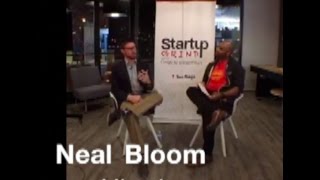
Neal Bloom went from mechanical engineering at UCSD and roles at BAE and Pratt & Whitney to founding Portfolium, a student-focused recruiting startup. He discusses founding lessons, San Diego's talent challenges, and why community-building through Startup Week matters for the local ecosystem.
Welcome to Startup Grind. This is going to be one of my favorite so far because if any of you know Neil, he's just the most incredible person in San Diego. So a little bit about Startup Grind. Startup Grind is a fireside chat, but it is what I would call an educational platform that is very intimate because with Startup Grind, you can come to an event like this, you get to mingle, you get to talk to people and drink, and then you get an incredible speaker who tells you about their journey, about their company, about what they're doing. And then we get more time after where you can talk to the speaker. You get to have a good time and then you get to go home hopefully inspired, because Neil is here. You will go home inspired. So we have 200 chapters globally and we have served over 200,000 attendees with startup Grind. And with that, I would like to ask everyone to please give a round of applause to Neil Blue and Charlie's. Thank you for being here. So I'm so excited. I'm sorry.
So the first question I have to.
Ask you is like, tell me a bit about where you grew up and about your family. Like, were they entrepreneurs?
Yeah. So I'm the first person to go to college and work for anyone else. So grew up in la. Parents, grandparents, great grandparents, all small business owners, restaurants, grocery stores, and then real estate developers. So grew up around that. Just pretty much expected that's what I would do. Just join the family business.
Absolutely.
And kind of learned a lot from that. Seeing just entrepreneurs, you know, I just kind of thought that's what you do.
Yeah, that's.
That's the lifestyle. That's hustle.
So what about that? Do you feel like shaped who you are now?
Yeah, I mean, I didn't really understand nine to five. That wasn't a thing. Right? It was.
It's still.
Yeah, right. And so it's that aspect of work ethic, it was just kind of an expectation. It wasn't like a. It wasn't something that could be taught for sure.
So what I find interesting is you say like your family, they. They did like real estate, restaurants, things like that. And you thought you were going to go into that. Now I find that you're a mechanical engineering major at ucsd. So how did that come about?
Yeah, so cruising right along through high school actually playing a lot of musical instruments, got found out. I was really like the creative side of things and real. The creative aspect of just idea of creation always stuck around and I thought that would be transpired into business creation.
Yes.
With my Parents. But it turns out senior year of high school, after I'd already applied to all my colleges, my physics professor asked me to join the robotics team. For whatever reason, he thought I would enjoy it. And I had a blast. And the idea that you could draw something up, go to the machine shop, cut, weld and then remote control drive five foot tall robots welcome was just kind of blew my mind. I mean, what is a 16 year old doing like welding and driving robots?
Absolutely.
So fell in love with that and just said like, oh, this is what I'm supposed to do now. And as soon as I started college that fall, I immediately changed my major to mechanical engineering. I just felt like, well, I'm creating still, this is still a passion of mine. So just ran with mechanical engineering.
I love that if I had the same opportunity, I probably would have burned the school down. So it's probably good that I wasn't doing that.
We had a lot of guidance, that's for sure.
So now you got to UCSD and you're a mechanical engineering major. So what, like, what were perhaps some of your transformative moments at ucsd?
Yeah, when I got to got to ucsd, I was immediately surrounded by a lot of really smart people. And at first that was, you know, I was a bit fearful of that. You know, people who are really smart. Way smarter than me.
Yeah.
And now I had to figure out how to stand out or differentiate myself because I knew I wasn't gonna just get top gpa. It just like wasn't my thing. I was too distracted by things. And so I dove really deep into clubs, anything related to project based building. As a mechanical engineer, I just thought, well, everyone else is really good at studying in the library. I'm going to be good at building things as a mechanical engineer. So got heavily involved in clubs and kind of worked my way up to president of American Society of Mechanical Engineers. And this idea that now you're the leader was really different to me. Like you now have to listen to what you're consuming wants and provide that. And so the things that we found out at UCSD were that because everyone was in the library studying all the time, they're getting no real world experience and not getting to see any of the companies that are around them where they could eventually work. Everyone thought, well, I'll just graduate and I'll just apply to Boeing and that's where I'll work. Because mechanical engineer, naturally I'm just gonna build planes and stuff. Yeah, but, but no one had actually mapped that out. What does that look like, is this really the right place for me?
Yeah.
And so we just started on our own. The leadership team doing monthly tours of local companies. So every month, you knew last Friday of the month we were gonna go tour General Atomics or Blank Company that hired mechanical engineers. And this was back in 2006, 2007, which was still like the mechanical engineer was the highest, largest major on in the engineering school. Now it's computer science by far. But you know, like, companies really wanted to recruit us. Yeah. We were in high demand and so we always had companies inviting us. And so that idea was, was really cool. How do we get people off campus, see where they could be? I actually visualize where you, you could be working.
Yes.
Really helped cement this idea in people. Like. Oh, like I don't have to just apply randomly and end up somewhere random or even leave town. Yeah, I don't, I don't think I realized that was some foreshadowing. Like I was really selling San Diego. I thought I was just selling people on a career.
Absolutely.
So that was big.
Just like, okay.
Getting people off campus for sure. Funny enough though, the jobs I got were ones I applied online.
I'm glad you. So I'm glad he brought this up. I'm upset about this. Like, I don't know about anyone else, but I didn't have the same experience. It was either like begging or nepotism.
So.
So I guess clearly he's.
But I, I was going that route. I mean, I really thought like, okay, being like in a club and being the president of the club, like, I'm gonna get to network with people that are then gonna hire me. But the best opportunities, both my internship and my full time gig came from just up applying randomly online.
That's crazy.
And that's what I took. So maybe coincidence or assumptions out the window, but that's what happened.
Nail boom, everyone.
So luck and show.
So you. You originally had intern an internship at BAE and then you were at Rocketdyne, which was then folded into Pratt and Whitney.
Yeah.
So big.
Giant. Giant giant companies. 100,000 person, 300,000 persons.
Yeah.
Giant thing.
So do you mind perhaps delving into a little bit about like what your roles were there?
Yeah, so my internship at BAE was up in the Bay and moved up there for a girlfriend. At the time, that was literally the only reason I applied to only Bay Area companies and worked with the army on kind of R and D projects on tanks. Super cool. So this was 2006, kind of the height of US and Iraq, and we had soldiers in these giant metal boxes, 150 degrees inside. And we didn't have any air conditioning for these tanks. So they just assigned me to say, hey, like build an air conditioning system for a tank as an intern. Just like, hey, like go do this. And then at the end of the summer you're going to sell it to the army. So just kind of got to work as like a project engineer, a systems engineer they kind of called us, where, you know, you got with designers, analysts, welders, just kind of a diverse team that just kind of helped put this together on a platform. Super fun. At the end of the summer, literally just fired up the tank, got it super cold, sat in there and just army generals came through and be like, yeah, it's cold. Cool. And then they bought it. And so, I mean, I didn't do the selling part, but I showed the product. Product thumbs up. So super cool. Yeah, I mean as a 21, 20 year old again, they probably, I probably should have burned the place down, but it kind of worked. So that was what I did there. Super fun.
Okay. Yeah, I passed accounting at 21. So then next, when you were at, when you were at Rocketdyne, Pratt and Whitney, what was, what was your role there?
So this was a job that also applied online, applied all over the place, ended up taking the role in la. This wasn't even planned. It was like three blocks from my parents house. Definitely was not planned, but immediately moved back up to la, live with my parents at home and worked on the space shuttle. So not something I ever dreamed of, but incredible opportunity to put people in space. So what we did was we built the space shuttle main engine. So this is on the back of the engine there three engines there, about 5,000 horsepower, 500,000 horsepower each. Giant beefy Ferrari engines. And at first our role were. My role was to take in calls from the field and assemble a team when any problems happened. So bring in the structural engineer, blank, whatever and get everyone room and just figure out whenever things are wrong. Eventually I got into the test and launch operations role. So what that meant was as a engine was finished being built on the production line, I had to get into space. The short answer, they called us engine mothers. So we would take the engine off the assembly line, get logistics to get it to the test center, install it into it. So write a test plan. Plan, get it installed, do presentations to NASA saying we're doing everything according to plan, test it, say it's good in a sense, NASA would then buy it then. So we sell the Engine there. And then we'd now be on contract to install it on the space shuttle and then be there for launch day to get it into space.
Absolutely.
So pretty, pretty insane thing to do also at 23 years old. And the people that you got to work with were so passionate about space, like all they want to do in life or just put people on Mars. And it was infectious.
Yeah.
So it was very, very cool to be around mission driven, passionate people. That was kind of my first touch of that.
Okay.
You know, like growing up, my parents, I don't think like their aunt, like they just wanted to own a grocery store, but they were just doing it, you know, Whereas this, this were people who, you know, they were lifers of just working on the space program.
Okay.
So that was really transformative for me. Just see how passionate people could be.
So you were also doing recruiting efforts while you were at Pratt and Whitney?
Yep. Yeah. So they sent us out to hire the next interns and entry level engineers. They kind of just took the people who were most friendly and just liked well, you know, had some personality compared to most engineers. So they sent us out on the road to all these universities to do career fairs.
Absolutely.
So that was cool to be on the other side because I had done that, you know. And this is where kind of this, this first startup idea came when I saw this problem where students would line up 100 deep and, you know, stand there with the resume. No offense to engineers, I am one, but, you know, everyone's looking down the resume mostly at their shoes. The joke is, how do you tell an outgoing engineer they're staring at your shoes and, you know, like 100 people deep students, they, you know, they would kind of read off their resume to you. And it was, it was just the required classes they had to take. Right. And I'm like, I took those in class like, this isn't you. This is the curriculum at ucsd. Like, tell me something special about you.
Yeah.
And that was, that was disappointing to me that people weren't motivated enough to brand themselves and say, this is what I mean, or I want to put people in space, you know, like, jump out of line and yelp. Yell that in my face. Like, I will take your resume and fold it and put in my pocket and I will call you later. Right. As opposed to the cool, cool, cool, cool, you know, so that was, that was kind of a light bulb went off in my head, that's for sure.
So I feel like for most of the entrepreneurs that start something, for a lot of them, A decent amount. They have some form of problem that they're solving and they go to do it. And this was your first venture. So how do you feel that you were able to validate your hypothesis?
Yeah, this was a tough one at first because right as I was doing this, the recession hit hard 2009 and we stopped hiring. So couldn't use like going out in the field as a test platform. And now there was an overabundance of skilled engineers without jobs.
Yes.
So out of kind of necessity we started going to universities which we thought were kind of like the, you know, like the place where these transactions should have happened. Right. You're teaching skills, put them into the world. We thought, you know, oh, career centers. These are the ones who are being hit the hardest right now with in this recession.
Yeah.
Turns out the more conversations we had and we went to UCSD first because we're alums, thought they'd listen to us because they want our money. You know, it turns out we found that the career center were not the ones that felt the pain of people not getting hired. Once you walk off campus, whether you got hired or not, like it's a little irrelevant to them. So out of that we started talking to every department on campus to see like, where are these pain points? And it came to be the alumni center became the one because financially they were hurt when you didn't donate back to school, of course, and when you graduated and then didn't have a job for three, four years because of the recession and then they call you up immediately after and say, hey, will you, will you donate to us? You're like, are you kidding me? I owe you 80k star. I've already given you a lot. That was, that took a while to get to that. But that's when we found that this was our buyer.
Okay. Yeah. So then from there like how did you go about establishing your mvp, your minimum product?
Yeah, at the time it was me and a co worker working on this idea of how do we help students brand themselves. And at the time it was called Paperclip with a K. That was it. We didn't really have even a website. My co founder decided to just, he would learn how to code and I was like, okay, then I'm going to do everything else kind of naturally. And we're both UCSD alum, both worked at Rocketdyne and both now wanted to work on this, this vision of how do we help students find their first job.
Yeah.
And really what we started doing was just conversation based. Right. It was Discovery, in a sense, it was pre sales. We didn't know that those were the terms, but you know, that's kind of what we did because we didn't have a product at all. And this was all by night. We had day jobs at Rocketdyne. So I would just take sick days to come down to San Diego from LA and just test with the alumni center.
Okay.
Yeah. And that was kind of how it first started taking place. Once we saw that the schools would maybe write us a check, like kind of become a customer.
Yeah.
That's when we really had kick into gear and like build a product and prove that, yes, we could deliver on what we're saying we can, which is make a transaction where a student would put content up and that content would represent work experience which would then get them into their first role.
Okay, so what do you feel in the beginning were like some of your pitfalls with like your V1 product?
So it was a two sided marketplace. We didn't even know what that meant at the time. But really the whole, this whole product is, it's like LinkedIn for students really was. Our goal was a place where students and new grads would go and create content or show, show off content. And it would be shown in a way that they wouldn't have to, you know, create a whole profile. It would just like naturally you, you upload the paper that you wrote or the 3D model you did, and that would sell you in a way that an employer would reach out and say, hey, do you want to work for us?
Okay.
We kind of ignored one side of the marketplace and, and so we just really heavily focus on supply in a sense. And so that was, that was tough to really catch up on. But we really thought, you know, if you build it for the students, the rest will come without putting much energy into it. Okay, so that definitely was an oversight.
Okay, so you mentioned that you were taking sick days for business development. So at what point in time did you actually leave your job and move to San Diego?
Yeah, so my co founder had actually moved down here ahead of time because he wanted to, he wanted for us to get into Evo Nexus. And so he started applying and before even getting in, he moved down here. As soon as we got into Evo Nexus the next day, I quit my job and moved down here as well. And lived on his couch for months. Yeah, so that's really what brought me back to San Diego three and a half, four years now was getting into Evo. We just felt like we didn't know what we needed, but we thought, this is something that will take us to the next step. We didn't even apply to any other accelerators or incubators anywhere else. We didn't apply to the YCS or techstars. We just applied to San Diego one because UC San Diego was an early customer. They hadn't paid us yet, but we really wanted to be close to them. We thought, like, we were building a relationship there. And so we just only looked at San Diego and kind of as soon as EVO said, you're in, I came on down.
Absolutely. So at that point in time, I mean, you were at evo, so I mean, everyone. Everyone knows and respects evo. Were you involved in any other aspect of the San Diego startup ecosystem at that point in time?
Yeah, I mean, I didn't know anything about entrepreneurship really from a startup perspective. So it was an immediate dump into that world, that's for sure. And especially at the time in 2013, Eva was the epicenter of San Diego tech by far. Every night there were meetups happening, investors were being walked through. Every day. It was ground zero. And it was just a wealth of information that just kind of got flushed at you. So very quickly I got involved in kind of everything.
Okay.
Raised my hand to just volunteer and learn with what would become Startup San Diego didn't really exist then, but it was a loose organization of founders of other companies who just started realizing, like, look, like we've been at this a long time by ourselves. What other resources would be beneficial for a larger group of us, really ourselves? But who else could benefit from this?
Absolutely.
And so started to see enough founders come together and say, like, look like, sure, I'm building my own company, but if I give to something, my company will gain more. And so that was kind of the first organizational aspects of Startup San Diego. Right when I got there was the first Startup Week. It happened. Yeah, it was June 2013 and. And it was 10 events, 200 people, and it was five founders, four founders. We put on the event and we sat on our own panels. It was like, what can we be learning from ourselves? The people who had just finished techstars, we elevated them up. Tell us everything. What is a premier accelerator? What do you gain from that? What did you gain that you could teach us? So that was like the Albashera who had just gone through Seattle. Techstars, Microsoft and Bock Lee from Shop Ventori had just come from Denver or Boulder. Techstars, and they were the gods that kind of trickled down things that we could learn. So got very involved in that very quickly.
Absolutely.
Because it was all around you physically. Everything was happening either there or in another floor of that same building. Okay, so there's already a bit of a density starting to come take place.
Absolutely. So what do you feel like in being able to interface with many other founders that you. That benefited. What do you feel benefited the most? Perhaps having that form of community?
I think like not recreating the wheel in a lot of kind of tribal knowledge. Even like early, early things like how to incorporate or you know, you'd be surprised how many people had like already into evo and like haven't made a Delaware C corp yet. You know, like they just did legalzoom for an LLC personally and you know, just kind of intros to people that you already trust. Yes, that was a lot of things. So the service provider aspect, kind of streamlining things because as a founder you're not like oh man, I can't wait to, you know, set up payroll today. Right. But I need to do it. And so just like that aspect of the network was really helpful. Also aspects of mentorship, of course, you know, we're just kind of very apparent that. And especially in San Diego, like people gave first before and so it was very, very easy to take ask of someone's time when they're already physically there.
Yes.
You know, they're already meeting with the company. You asked for 20 minutes at the end of it. That was, it was a big resource.
Absolutely. Yeah, absolutely. That's one of the things I love most about San Diego.
Yeah, definitely.
People are always willing to give their time. So with that in mind, like, I mean you have, you have great mentors, great advice around you, but. And then somewhat discussing things with you personally. Like it sounds like like, you know, the business portfolio was, you know, it was successful and you were, you were doing well, but things perhaps internally weren't, weren't going. Going well between like the team. So do you perhaps mind going a bit into, you know what that was like?
Yeah, definitely. I mean when you start a company with, with partners, co founders, you're marrying them in a sense or even more potentially. Right. And no one's personalities are perfect.
Yes.
You know, so what started to happen within the team as we started to have growth.
Yes.
And we were all, we were all first time entrepreneurs. We had no idea what we were doing really. We started becoming apparent. We had different ideas of where we wanted the company to go, what we wanted it to see in the future.
Yes.
What we kind of wanted to emulate, you know, like successful companies that we'd already seen. We were just kind of emulating different ones.
Yes.
In our own heads. So we were kind of, you know, like one was emulating, oh, we're gonna, just gonna follow the Facebook model. Oh, we're gonna follow the LinkedIn model as examples. And so it was more just like long term vision.
Yes.
Started to be different, started diverge. And once that became apparent, we had to choose which, which was the route that was going to overtake or what was the right road to go.
Absolutely.
And especially when you are so close and caught up and doing things like that, conversation usually doesn't happen as quick as it probably should have. Right. So you kind of start sitting with this uneasiness. You don't know what it is. But eventually there's, there's this, there's this chasm. Of course, we just kind of dealt with it one day very like, like longer than it should have happened before, but we just decided this company's gonna go this direction.
Okay.
Yeah. And so it was a founder breakup. That's really what it came down to. We're going with this vision and with this founder. So, yeah, it's kind of happened.
Absolutely. So, I mean, I can imagine a lot of people around the anywhere may start a company with somebody that they think is the perfect person to start a company with and might later down the road, you know, figure out that, you know, things because different goals, different. Anything else might break the founding team apart. So what do you suggest, you know, people that are like starting their first companies should do and trying to perhaps mitigate that risk?
Yeah, there's a few things. At first, you get really like close with people who have the same passion and mission as you. It's almost like an infatuation. You know, you, you realize, wow, we love the same things, but maybe it wasn't love. And so, you know, that can kind of cloud things. Right. You just like, wow, or we both want the same end result, we might as well do this together. So a little bit of shallowness, I would say, you know, in vetting you are, as a start a company, you're about to hire a ton of people. And so if you know how to hire, you also know how to kind of vet personalities. I don't think we knew that aspect really how to vet each other. We didn't as first time entrepreneurs, we didn't even know, you know, like what we, what the challenges were going to be of each other going forward. So it was hard to vet and it's really hard as a, as a, as a first time entrepreneur to determine what are the different resilience factors that you don't have that you need from the other partner.
Absolutely.
You know, like what are the gaps? So figuring that out is important, but also talking to people who have done it and have had that, had the, that fact founder breakup is actually really important. Learning from that, the openness, the inclusive aspect of a startup should be super important if that's what the kind of business you want to build.
Absolutely.
But also the kind of the long term vision, like what do you both want from the company? You know, what are the. Not just financial gains but like what do you envision culture to be? Like, you know, do you want a diverse workforce or do you want people that are all like you? You know, it's hard to ask that question.
Absolutely right.
But determining who are the people that you surround your with yourself with can be telling. And we didn't do that due diligence in a sense of each other. We just kind of fell in love with a problem and we said we're going to solve it. We did not say ask ourselves are we the two best people to do that. We just say, well, we both want to solve it, let's solve it.
Absolutely.
Yeah.
Okay. So then after, after you made your exit, what were your next steps from there?
Yeah. So when I took a step back, I kind of re. Fell in love with San Diego as an ecosystem. I realized for two years I had been grinding hard on starting a company, but I had relied heavily on everyone around me as resources to help us get to where we were.
Yes.
And so very quickly realized I want to do something for San Diego. Like I had gotten to some level and San Diego, if I put my energy into it, could benefit in some way or another other first time founders could. Yes, if I focus on something. And so I started kind of a discovery of what does San Diego need as a tech ecosystem?
Yes.
Started kind of consulting with some other companies just to kind of see, spend time and see was their experience like mine as first time founders. And I came up, kind of came on two things that San Diego needed or at least people complained about that they needed as growing companies. And it was talent and money and it's probably not unique to any other city. Everyone needs more of it. But that's what I felt like I could, I could add to if I put my energy behind especially with Portfolium. It was a talent tech or HR tech platform. So you know, I already had some Insider experience there, but just really felt like, you know, we could gain from more talent. I didn't know that meant at that time, honestly. So I really felt like, okay, like, how do we get help? Companies hire the right talent that they need at that time.
Absolutely.
Started to do a lot of investigation on that, a lot of discovery. Got to know companies of who they were hiring. And most companies were hiring developers first. Engineers, you always need to build the product. Well, that's what companies here always, the first step is hire the development team, build the product and got to know who they're hiring. You know, I just kind of spent time with that and it was a lot of very local talent that we're hiring. Coming from Qualcomm, kind of your bigger companies here, which experienced talent.
Absolutely.
You know, people who've been coding for a long time, but started to notice a trend that not everyone had startup experience. Experienced talent doesn't mean experience for the right size or stage of company we're in. So this led me to see there are some gaps, right? Like we. If we're building the next, I don't know, dating site for blank, why aren't we hiring Tinder people? Right. People who have built the dating site. Right. So that kind of came to me through discovery, getting to know our companies locally.
Okay.
And kind of determined, like, we need to import that talent. Right. Like if a company came to me and said, like, I'm building the next, you know, social network for blank, well, how do I help you go hire that guy. And that's when I stumbled across a number of technology platforms that were trying to disrupt that recruiting space. My initial thought was, how are they doing in a migration scenario? Right. Like, how are we importing or exporting or relocating talent? That's what I really thought was the need for San Diego at the time. I still think that. And that's when I found Hired. So that's when I found this startup that I guess they'd been on my radar with, Portfolium actually a bit because I wanted to partner with them. I thought, like, hey, like we have really cool profiles of people. Very visual. Like we should be able to power any, any site's profiles.
Yes.
So kind of reached out to them and said like, hey, like, what are you guys up to now? When I first got to know you were like a 20 person team, you know, I know a thing about junior talent, if that's what your platform does. Didn't really know. I know a thing about San Diego, if that's what you guys do. And so really just I reached out to the CEO on LinkedIn, said, hey, like I'm interested in your space, how can I help?
Yeah.
And that was the first interaction with them. They said, yeah, we're looking into both. We're looking to starting junior talent, like help us entry level people find jobs, engineers specifically at the time. And we are looking to open new markets.
Okay.
And San Diego's on our short list. So yeah, that was two years ago when I started that conversation.
So what are you up to with Hired now? What is your role?
Yeah, so when I first came on, I was an expansion manager. I was in a sense opening new cities and first task was San Diego. So get it, get like a new off the ground market where we take this tool, this product that exists, but build both sides of the market, get it going, launch it. So we had this playbook mentality. We had a lot of early Uber people who had built the geographic expansion playbook. So we kind of took the playbook and being pretty involved in the startup scene, I just kind of hit up every CEO, founder I knew and be like, hey, like, want to talk to you, want to help you hire. So that was almost two years ago that we started that.
Absolutely.
Over the course of that we started to help a lot of people hire talent and realized that a only transactional model SaaS platform was only going to get us to a certain point. And so since then have been part of a team that is expanding our business model to a subscription based, which is really the true SaaS model, which is the, you know, the subscription, 12 month subscription idea where you have unlimited use of the product for a nominal fee or at least monthly fee. So that's my effort now is in all of Southern California work out this new business model. Heavy BD to work with companies at the right size that could pay for subscriptions. So enterprise in a sense, adding that to our business model now.
Okay, so you touched on it a little bit. But with your interesting experience at Hired and in the HR tech space, what do you feel that the current opportunities in San Diego are?
Yeah, there's a lot of them and we have a lot going for us. And you know, being a San Francisco based company that has offices in 16 other cities, which I've traveled to a good amount of them now, it's been great to just get to know the other ecosystems. One thing to know is we all have the same challenges. We're just at different levels of not even different stages. We just have more urgent needs than others. Yes, you know San Francisco has a huge talent problem, right. Because of how many companies are growing really fast. Yes, we have that problem here too. It's just an urgency factor that I think is the difference here. So what's cool about San Diego is we respect work lifestyle balance for sure, but we do it in a way that like we don't discount, like we don't just check out at work. Right. Like we get things done and we enjoy the sunshine that we have. So that part is the talent aspect. Like we are very attractive to anyone in the world. People want to be here. It is not a hard sell to get people to geographically want to be here. Right. We all know that the, the opportunity we have challenge and opportunity. Opportunity is the idea that we could be importing that talent. Right. Like as founders of companies we have access to. It's not a hard sell to get people to want to relocate here. And I spent the last year figuring out what are the right triggers, tools and carrots to get companies to be open minded about that. San Diego is not very open minded to relocating. The right talent. Right. The best. Some are worried like, oh, we'll never compete with name brand X. Others are, oh, it's a cost thing, it's a variety of issues, but it's a big opportunity for us. For sure. People want to be here and that's proven, that's for sure. The other opportunities are the border. So not just in terms of people want to relocate here, but we have a board full of talent as well that depending upon the stage you are as a company, sometimes you outsource at first or you outsource certain aspects. That is a ready workforce that speaks our language that are in the same time zone and could actually travel over to our side of the border that we probably don't tap into nearly enough. And they're actually a very entrepreneurial site society as well. Really cool to see that. Startup San Diego Startup Week. We have collaborated there, we have welcomed them over, we've gone over there to tour their spaces. So I think that's a huge opportunity for us as well.
Absolutely.
That I hope we continue to utilize and grow from for sure. The other piece is this kind of goes with lifestyle, but culture I think, like we build companies that we are mission and passion driven by especially. Not even especially. But biotech is one area, you know, like we're curing cancer, decoding the human genome, you know, like that is totally different aspect of passion and mission driven to get retained talent and recruit talent. Then you know, like, hey, let's Go build, you know, the next chat bot for Slot for Slack. Sure, there may be money there, but the kind of businesses we're working on here are literally life changing.
Absolutely.
And so that is a huge recruitment tool. And there's not just one of those, there's hundreds of those kinds of companies that people could continue to be, you know, just passionate about for the rest of their careers. So there's some huge opportunities that we use to speak to the world if we want to or just keep doing what we're doing.
Absolutely.
Because yeah, we should be, we are very proud of what we're doing already.
Absolutely. Yeah, absolutely. And so I think we have a lot of opportunities and San Diego is absolutely a great city to be and start in, but to be like the best perhaps at being us. Where do you feel that we could even improve?
You know, we could be really good at telling each other within San Diego, like things that we're proud of, but we don't do a good job of amplifying out. And I think that's probably like a personality thing that you just kind of get when you're here because people from San Diego are from all over the world. Right. So it's not to say the true San Diegan personality, but we don't amplify probably our wins as well.
Absolutely.
So, you know, we could do more of that. There are many people who are working on it for sure. But you know, we're busy heads down building companies. So we always kind of think that someone else's, that's someone else's role to kind of be our external advocates.
I get that.
Other things, like culture wise, like we really could get to know truly the kinds of companies we want to build. Like I want to build different company than you want to build. And you know, we could get very unique about the kind of environment we want to spend what, 30 or 40% of our lives around. And we really could be the city that says we care about culture at such a level that makes our whole ecosystem unique as well. I think Chuck Loganucker from Digital Telepathy would be the first to tell you, like we have the opportunity to be the, the cultural hub or the cultural spotlight of how to build the perfect company in a sense. Right. Like we respect the work life balance. We don't grow beyond our means. We care about every employee for them and their contributions to our company, our one to one interactions and the city itself. I think that is something that we should look inwardly a bit more realizing the kind of companies we're Creating and talk about and really be proud of.
For sure. Absolutely. And so circling back to the talent thing, you, you mentioned something that, that, that made my dog years go up. You mentioned that in San Diego they hire the developers first. Is it different elsewhere or how? I, I guess I didn't understand the comment.
Yeah, I think that this isn't necessarily validate is my own perspectives but most of you know your startups here are as an engineer who has an idea that starts building product and needs to need help building the product and may not have done the pre sales validation as quickly. So yeah, I think we are very product heavy.
Absolutely.
Yeah, absolutely. It feels different here than elsewhere but I'm sure it's happening all over the place. For sure. There's not a lack of engineers in the bay, that's for sure who are working at Google and then having startup ideas.
Absolutely.
Yeah.
Okay, so then kind of keeping with the talent theme for right now, how do you think that founders or companies can reconcile between, between having a diversity of experience and talent with perhaps hiring the best person for the job?
That's a good question. Especially these days at the larger levels diversity is like this hot topic where it sometimes feels like it's a quota, you know, like oh, we just, we have to get diverse talent pool just for the sake of saying we have a diverse talent pool versus it is the sake of our business. Like if we don't emulate our customers, we don't know them and we're not building products for them. So I think there really needs to be an innate need within the entire company that says we need to emulate what our customers are. And I kind of learned this from Intuit. We had a conversation with them around like where is diversity in terms of priority for you? And they said is everything that we make sure we are, we reflect our customers. That's kind of eye opening to me and it made sense. So things that companies are doing around that you know are. There are now job boards for specific diverse talent pools, you know, so you make sure that you aren't just hitting the same talent pool over to hire from but you can't discount true talent, you know, like that shouldn't be discounted. Like if you really need to build the blank widget and this is the best person for it, you know, like sometimes you need to do it, but also sometimes you need to look beyond the skill set. Of course this is harder to do in engineering I think, but I think it really needs, you really need to feel it as a business imperative. That you are hiring not just the right people that you want to hang around, but the people who challenge your assumptions.
Absolutely.
That truly reflect the customers and the company you want to build and the direction you want to go. Of course, long term direction. So yeah, I truly believe that the challenging aspect, the people who will, who don't have the same ideas with you are better off for you.
Absolutely.
Totally.
Absolutely. So with one of my final questions for you, the San Diego startup community is incredible, as you've mentioned. And where I met you was, you know, we were in the trenches, you know, helping plan San Diego Startup Week. Which I mean, which I mean I'll plug that. San Diego Startup Week, get your tickets.
June 19th through the 23rd.
But, and you know, it's, it was such a rewarding experience. It took probably five years off my life, but like it was, it was a rewarding experience and the people in the community that I gained from being in the trenches with them has paid such incredible dividends. So with that in mind and circling back to where you said like the San Diego startup community immensely helped you, where can you perhaps suggest that the audience kind of plugs themselves further into the community?
Yeah, there's a lot of opportunity. I think a lot of people shy away from thinking, oh it's, it requires time, I don't have time. But I think sharing the resources that you already know about with others that don't, I mean literally kind of going out of your way like is a big number one. Right. Like we happen to have a great online Facebook group, few different Facebook groups for San Diego tech and Lean founders that the more people we can get into that that are sharing I think is really important. We have an online Slack group for San Diego tech founders that's you know, five, six, maybe 700 people. Like those are places where, those are online communities that you can be hopefully not too distracted from your day to day. But you could, you know, you check in here and there if someone, people ask questions all the time. You can, you can offer an answer. I mean that's number one is just being a resource because there are so many different little hubs of San Diego that we, I don't want to call them silos because that already infers like they are defensible. But just offering resources and diverse viewpoints is really what's going to keep us going. Number one, if you have the time, offer to be a mentor to first time founders. So spend some time on college campuses when you see events, go and say, look like I'm already Doing it, it usually will return dividends because you'll find some talent, some interns, you know, but then the startup world itself, like, I mean, Startup San Diego, coming out to the event, coming to multiple events, we know everyone have busy schedules, but being there and realizing there are so many more people around you, you're not in this by yourself is really a fulfilling feeling. So it's really just attendance. All right, like, like step out a little bit, you know, go out and, and attend something you haven't gone to before. Startup Grinds. Great. Come to Startup Grind, but you know, go to something else. If you have, if you're only going to this, go to something else and see what it's like and you'll be astonished at how many other people you haven't met before.
Absolutely.
So yeah, I love it. Those are just be an active, engaged member of the community. Right. And, and then start telling everyone who's not here, if you have any interest in coming here, come to San Diego.
Absolutely, absolutely. So with my final closing question before I open up to Q and A for the audience, one of the major tenets of Startup Grind is to give before you take. So what perhaps can the audience do for you?
Well, I'm used to giving first.
Right.
So, you know, topically that comes to mind is Startup Week. Right. This is our one week celebration where we stay, everyone comes out, but you know, like, we want to, we want to hear from the audience because we're serving you like it is a week where we give education, we give mentor hours, we give free food and beer, but we want to make sure that the people you want to hear from, we put them in front of you. So there are avenues to let Startup San Diego know, like, here's the speakers I want, here's the events I kind of want to go to. We really could use that, that feedback loop, always the customer development, but we really could use like that. And then if you have connections to some of those speakers that normally we wouldn't see at Startup Week, we would love that. You know, we would love the help of curating content, volunteer at some events, you know, like help check people in. I think we usually give a free ticket for that. So, you know, save some money there, but, you know, just kind of come out and support.
Absolutely.
Very, very helpful because we're an entirely volunteer based organization and you know, we could really use the, the help from that.
Absolutely. So with that, everyone, before Q and A, can you please clap for Neil? Like you just got louder though.
Like you just got a Client by Facebook.
There we go.
I'm gonna hand for Brandon, too. I really appreciate the conversation. Thank you.
Thank you. Thank you very much. So with that, I would like to open it up to Q and a. Any questions? Mr. Jeremy?
All right, so you're an engineer, you're a startup founder, you're a startup. So here's the question. Physical proximity enhances communication and therefore productivity. We've got technology like video conferencing. We don't always have to fly to the other city for that meeting. We've got stuff like Slack. We don't always have to go into the other room for that meeting. At what point are we going to be able to. This is kind of hypothetical, right? In the future, a year from now, whatever, stay in our hometowns in Kansas or wherever we're from or in the best city to live in, wherever that might be, and use technology more? It seems like technology startups could use more technology themselves. So what are your thoughts on that?
General.
That's a good one. Yeah. I mean, I think we're gonna see that because of technology, we're going to hopefully have a little more free time. We won't spend 24 hours a day on our business. And at that point, you're going to want to be where you enjoy your lifestyle a bit more. So I think San Diego has a lot to gain from there. Right, because you could be in Kansas, but, you know, like, do you want to be taking in the dead of winter? You know, do you want to be locked in your room on teleconferences? Or do you want to be on teleconferences on the beach, you know, when WI fi is moving, beaming down from our drones. So, I mean, there's something to be gained there. But haven't seen that technology replaces a good handshake sometimes, you know, seeing if someone's sweating when you start talking about things versus they perk up and get excited and lean forward. It seems hard to replace that human aspect around certain things. Things. Maybe VR is that answer, right? Like, maybe you are completely submerged and you feel there and you can even smell the room and stuff like that. Maybe that's the answer. But I hear your point for sure. I mean, people fly up to SF all the time to take, you know, VC meetings. When's the point where we don't need to do that? So I can, you know, save all that time, all that week. I'm all for it, for sure. But, yeah, we're not there yet. So that's an opportunity. Absolutely, yes.
All Right. Any more questions? Yes, Caleb.
Do you have any standard practices for your vetting process? For hiring? Yeah, for like. Yeah, hiring like corporate end people. Like higher ups. Yeah, they mean you like if you were. Okay, so probably more relevant for most people listening and myself. If you're starting business and you're finding people to be put into somewhat of like co foundery positions, what things are you looking for out of them outside of what's super standard? Like. Sure, yeah. I mean I think the idea of acting as an owner is something I want to tease out at every possible way. You know, like can people make up their own decisions for them when they don't have all the information or are they just waiting for an assignment? You know and that that's something that's not just co founder level, that's like all the way through a startup because you don't have time to hold people's hands on everything. So that's an important tenant to me. And a lot of startups just like acting like an owner. I mean, you know, like if you're at coffee, is that something you find out then? Could be, yeah. Like what if scenarios, you know, like we'll kind of do some role play. Yeah. It's certain things that you can potentially set up that role play. Not at all. You definitely don't, you definitely don't want to like precede it. Kind of throw certain decisions around. Usually they're going to sound like typical, you know, like interview questions. But you know, it's like what did you do in this situation? Or have you ever had a boss that did blank seriously cry? Yeah, yeah. But as much as like a real life situation that you're having that you can use, the better you're gonna be able to assess that because you've had that problem. So use your own personal, real world solution issues and see how they would solve it. And if it's different than you, usually that's a good thing because you want someone, especially as a co founder with diverse viewpoints that you're not, you know, always just kind of being yes men of each other. So yeah. Another thing is the diverse viewpoint, right. Do you have a different idea of how you would attack something? So a lot of problems, problem solution, kind of aspects that I would tease out of people as well. Yeah, good question. Jeremy, tell us a little bit about San Diego Venture Group, what's going on there? Yeah, so San Diego Venture Group is, it's a group and what it is, it's all about connecting venture to startups. So usually as A startup, you know, you kind of find some way to work on it on your own. Some kind of family money or friends and family that you then raise something of a seed venture group tries to get in at the next level. You know, you've already raised some. How can we connect you to professional institutional investors in in this mantra of how do we connect startups with VCs we found some problems that come up before then or even after you've raised money. What are you going to do with that money? Usually you hire and so standing a venture company found also we don't have enough talent here too. So things that venture group are doing is creating links to the bay first to connect to town there that wants to be here, that just doesn't know how many opportunities are here. So being this big advocate saying hey San Diego is not a one career town or one company town. So recently put on a 40 company career fair up in Mountain View down the street from Glass, Google and showed kind of the depth of San Diego tech. You know we had the Qualcomms, the Viasats and the Intuits and we had you know, your series A and series B size companies or classies industry who all came and said like look like there's a lot of opportunity here. We know you already want to move to San Diego. It's not hard to find out but you could spend a lifetime now, the rest of your life staying here. And if no one's going to work forever at one company, there's enough companies here to work at. So that's a big effort. The Santa Venture Group is doing is just like keep the talent connection pipeline going. Another is the office space. So we know that there are not many VCs here. We know we gotta go to the Bay whether it's telecommuting with them or physically going up there. We now have office space, a wework space that you could drop in for work. Out of use as a meeting space too in San Francisco. So there is now we call it the Beachhead, which is the San Diego beachhead. And it's a place for San Diego founders to work out of when you're in San Francisco. That just launched, right? Just launched, yep. Just a few months. And what was amazing about it is that we to get it off the ground. It takes money obviously to pay for co working space is completely community funded. So started a GoFundMe and raised $200,000 by San Diegan's to fund this for the next two years. Pretty incredible. It was done within like two months or less that this money was raised. A foundation kind of did a match, but really, really cool to see that the San Diegans really got behind this. It was founders, CEOs of companies who said, yeah, I'm going to be up there and I'm going to pay out of pocket to help see this thing through. So really cool effort. And that's all that was just spearheaded by Mike Kran, president of San Diego Venture Group. They really had the vision for doing that. Yeah. In your eyes, how would companies like Hired and Portfolium combat a recession? Yeah, I think another opportunity with San Diego is that we're very revenue focused. We don't necessarily. We can't raise the mega rounds that San Francisco can. So we have to get pretty crafty and we have to validate our product pretty quickly to start getting money in the door or we're not going to survive. So San Diego does really well I think in that scenario. Right. Validate the product, get money in the door first. So that's one hired specifically. We've come into this problem because most of our initial revenue were from venture backed startups. And so as soon as there's a downward spike in funding for companies, they can't hire as much as they could before. So we had to get our dependencies off of only venture backed startups as our customers. We had to find people who had different sources of funding, could ride out economic ups or downs. So that is a resiliency factor, a diversity factor of revenue as well that we learned and are really trying to capitalize on now. Good question. With companies out there, they're siprecruiter. Indeed. Hired, workable.
I'm familiar with a lot of them.
Angel list even. Do you typically aim when dealing with large companies to be another source of talent for their core hiring platforms? Yeah, I think at this stage of how many tools there are, you can never say that this will be. We're replacing everything. And I think it's good for companies to hire from as many channels as possible to keep the diversity factor going too. Right. So yeah, I truly believe there will never be one. Just like there's no one dating site either. Right. For people who want to find people on that. It's more about our value proposition from Hire's perspective is what can we save you time on? So it's really the kind of different push pull methods. So we view the job board as you get a lot of inbound traffic as an employer. LinkedIn is typically being used now at big companies where you Go out and ping in demand talent, say, hey, come work for us. We are trying to be the just a connector that says we've already gotten people raising their hands saying, I want a job. We already have companies saying I want to hire. And we just through smart algorithms, human curation, we make that introduction and then we get out of the way because they already know how they want to hire. It's really just we bring a specific kind of talent pool to them. We hope that saves them time so you don't have to spend time writing 100 emails to get one response back. You also get a curated piece where if you have a job up, anyone can apply. Right. There's no curation there. You are your own filter now. You have to go through that. So we want to save you time from having to go through all those and just say, hey, you're not going to get as high a volume, but you're going to get like 10 people every Monday that meet your specific needs. So that's our tool, that's our solution. It's not being done as much because people still stick to the tools that have worked. We just hope we save people time and money and hire the best talent they can. All right, thanks for asking.
Thank you. Well, I think that was the last one from Andy. No kidding. Just kidding. We have a question from Andy White.
If you could wave a magic wand and just have it happen, what changes would you make to the San Diego startup, even business? I mean, the easiest one that I kind of talked about is like allow people to be open minded enough to recruit the best that they possibly could, not just the most convenient. But I think that kind of tends to come from a mentality of like, I only have so much money. You know, we haven't raised as much here as other places. So potentially is find some wave of magic wand and find investors that want to specifically invest in San Diego from elsewhere of the world and become advocates of us. So people who have fallen in love with this place, the advocates of us, to funnel money and get companies to be open minded, as open minded as possible to say, I'm going to import the very best. Yeah, that's what I truly believe would be beneficial to us for sure at the magic wand.
All right, all right. Well with that, thank you very much.
Thank you so much.
Thank you very much.








