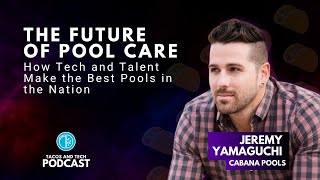
Podcast interview (Tacos & Tech) where Neal Bloom interviews Jeremy Yamaguchi (founder/CEO of Cabana). Jeremy recounts his path from bootstrapped web/design agency to selling Goldenshine, founding Lawn Love (scaled to ~120 cities and ~7,000 techs, sold 2021), and now building Cabana — a national pool service brand that combines W-2 field teams, M&A rollups of local pool companies, and vertical software/ML (e.g., satellite-pool sizing) to scale. Conversation covers YC and fundraising, the rationale for buying businesses and embedding tech, operational integration lessons, and local San Diego/taco cultural notes.
Startups get the party. Startups get the party started. Startups get the party. Startups get the party started.
You want tech and tacos, Tacos and tech, you know we got it. Hey.
Startups get the party. Startups get the party started. Startups get the party. Startups get the party started. Startups get the party. Startups get the party started.
You want tech and tacos, tacos in tech, you know we got it.
Hey.
And welcome back to the Tacos and Tech podcast. I'm your host, Neil Bloom and I am so thrilled to have on a longtime founder, serial entrepreneur and friend in the community, Jeremy Yamaguchi, founder and CEO of Cabana. Hey Jeremy, thanks for being on the pod.
Hey Neil, happy to be here. Thanks for having me.
It's a real pleasure. I know we've been in the community together building our own things and more recently, hopefully helping you support build the newest thing, which is Cabana, which I'm really excited to talk about. Do you want to give us a quick high level of what Cabana is and then we'll go dive deep into your background a little bit?
Sure, yeah. So Cabana is the first national brand in pool service. At least that's what we aspire to build. So, you know, if you look at most of the home services verticals in the US whether it's lawn or pest or you know, house housekeeping or you name it, there's usually one or more scaled national player, right? There's Trugreen on the lawn side. There's you know, Orkin on the pest control side. In many cases like multibillion dollar public IPO scale company doesn't exist in pools. Despite having largely recurring revenue and non cyclical kind of trends, there's no scaled national player and you know, we think no law of nature that says there can't be. So the goal with Cabana is, you know, how do we go build that over the next decade and kind of compound to a household name and pools.
Amazing. Well, you're already making it happen and we'll talk about that in a second. You've done this before too, in a few other outdoor home services verticals as well too. Is this what you grew up knowing you're going to do? Where does it all start for you, Jeremy?
I mean, wow. Yeah. So I think to tell the entrepreneurial story, got to go a little further back. But you know, I was born and raised overseas, born in Japan, kind of grew up there for 15 years, spent a little time in East Africa and then immigrated to the US as a 16 year old but entrepreneurial journey started right around 16. I graduated high school early right when I landed in the states and started my first business, which was a web dev and design shop. We did a lot of growth marketing, started kind of, you know, I was originally a designer because I liked, you know, making pretty things on my computer and then realized, you know, pretty things that live in hard drives that no one ever sees, doesn't really serve anyone. So taught myself how to code so I could add a little more function to the form and build things that were actually useful. And then you know, went and kind of eventually legged into growth marketing and lead gen and built essentially a small agency in and around Southern California. And at this point I was in my late teens, early 20s and you know, things were going well, right. I was definitely making more money than 19 year old me had ever planned on, but I was ultimately limited by the finite number of hours I had in a day as a consultant.
Right.
Like it was tough to scale my own time. And you can, you know, you can charge more and more per hour, but even that's like you hit an upper boundary, right. So I was looking for something that had more natural scale to it than consulting and found that opportunity. In 09 I went to go book a maid and realized the entire home services landscape was super offline, very low tech. Existing service providers were, you know, you either had like Craigslist or Yelp or the Yellow Pages to go find, find a pro. Or you could go to the big franchises like Molly Maids or Merry Maids and even they weren't using much in the way of software to run their business. So I was like, man, I know how to grow these things. I know how to market for them. I know how to build a software platform to kind of intermediate these transactions. And I went and built what was basically handy, kind of like order a housekeeper through an app sort of business just three years before them and fully bootstrapped. So I ran that into my early kind of mid-20s, ended up selling it three years later to private equity at the age of 26, 25, wow. Took a week off, started Lawn Love a week later. I should definitely have taken more time in hindsight because Lawn Love ended up being a, an enjoyable but long journey. I think we worked on that for over seven years. So took a week off, started Lawn Love, raised a bunch of money, got it through IC, scaled it over 7 years to 120 cities in 40 some states and about 7000 techs in the field mowing lawns every Day and then sold it in 2021. Took a much longer period of time off, you know, had a whole like meaningful sabbatical and then started Cabana. But there's a lot of like stuff that kind of interweaves through that whole journey that I'm happy to talk about. But I did not set up home services guy. I set out to be a technologist and a business builder and mostly just found myself in home services because it's a trillion dollar a year industry and it's super low tech and massively fragmented. And frankly there's a lot of wide open opportunity, especially if you know how to live at the intersection of building software solutions and then dealing with very gritty blue collar problems. I think a lot of tech folks are HBS McKinsey types who get into home services, find this journey to be a trying one because of, you know, the very human components to running these kind of field service businesses. But I've lived and breathed this for a long time. That stuff is not foreign and, or, you know, particularly troubling to me. So trying to exploit that advantage as much as possible in the things I build.
Yeah, well, we're gonna, we're gonna pull back the layer a little bit here.
Okay, so you took a week off.
Of between, between two companies, but obviously things were already simmering enough to know what you want to do next. Like how did you know lawn was the next area and how did you think about building it in a different way than you did your prior one?
Yeah. So, you know, the, the previous business that I built was company called goldenshine. It was fully bootstrapped, grew pretty quickly. We grew it across Southern California, San Diego, Orange County, Louisiana and we're ranked like the fifth fastest growing privately owned company in San Diego by the Business Journal in 2013. But one of the reasons I sold that company only three years in is because I was able to look down the pipe and saw these enormous, very well funded competitors start to emerge. So one of them was a company called Homejoy that ended up raising about $40 million from Google Ventures and Andreessen NYC run by a woman named Adora Chung. Another one was a company called Exec run by Justin Kahn of Twitch Twitch fame. And then finally Handy was started in kind of the northeast Boston area by a couple of HBS guys. And they'd raised tens of millions of dollars and eventually hundreds of millions of dollars. All three of these players were extremely well capitalized, had like in many cases celebrity kind of status in the startup ecosystem. Very, very well Known entrepreneurs and to a company, they were all massively like underwriting the labor economics of these businesses and subsidizing them. Um, they were selling cleaning services for 20 bucks an hour when you were paying the housekeepers on the order of 25 to 28 bucks an hour. So they were basically shedding cash and had negative unit economics and were also kind of flagrantly violating labor law and treating all these 1099s like W2 employees, which subsequently came to bite them. But I was looking at this and I was like, man, these guys have incredible war chests. They're able to basically run at a loss forever. And, you know, I will almost certainly be roadkill in the way of these very large trains. So looked to find an exit and like kind of get out of the way of that emerging kind of phenomenon in the market and did so successfully and was glad I did. And the second time around, I was pretty confident I wanted to be the guy with the war chest, right? Like, I wanted all the dry powder to go ruin everyone else's day. And, you know, that meant I had to go raise a bunch of capital. So thus began my journey into, you know, going from bootstrapped founder to, you know, kind of VC backed founder. And happy to talk about that, but how I picked the idea was frankly kind of mercenary and very opportunistic. So I didn't have any sort of religion around lawns, right? I don't have some like, deep seated passion for grass. You know, they're great, they're, you know, good for the bees. You know, there's a lot of reasons to have have a lawn. But like, I didn't wake up in the morning and think like, man, I just need to like, perpetuate the total sum quantity of lawns in the world. But what I did care about was just starting businesses where it was in a bowl. Kind of an old school, somewhat boring legacy industry where existing solutions were not sophisticated and where I could just build a much better model and lawns and frankly, many other home service verticals meet that to the T. So I sold Goldenshine, I took a week off, and then I immediately started three companies. One was an on demand personal training company. One was a on demand pool cleaning company. As it happens, we'll come back to that. And one was an on demand lawn care company. So I built three lead gen funnels, three websites, had no actual service providers on the back end of any of these businesses, right? If a customer were to call, you weren't getting your pool cleaned. Because I didn't have anyone to clean it. But what I was trying to do is validate that I could generate leads and generate leads at affordable CACs and that there was real volume there. So I built three conversion funnels, three demand campaigns, threw a ton of ads at each of these websites. Lawns showed the most, most early traction. I was generating the most leads at the lowest initial cac. So I kind of unceremoniously just killed the other two businesses and went all in on what became Lawn Love. And that was the genesis of it. So a bit formulaic and not this sort of like spiritual, you know, origin for this thing, but a very practical and quantified approach to finding what to work on next. The only thing that I did know and the kind of bounding box that I had given myself was it needed to be in home services because I knew that industry well. So the question was just like, let's find the right category within this bigger frame. And you know, I took a marketer's approach to doing that.
Marketers and design, I now understand a lot. I feel like a lot more about you knowing that you have a design background. I see, I see another dimension which makes sense, I would say dimension of taste. You know, like you actually have a really strong specific sense of taste, which I think is an important entrepreneurial trait. To a certain extent.
I am opinionated. I don't know if the taste always turns out to be good taste, but I certainly have it. I have opinions about it at least. But no, I think design is massively underrated in entrepreneurial kind of circles. I think Brian Chesky in particular flogs this and is a big believer in the power of it. But like we would, we would spend a lot of time and thought. So we built this full stack field service back end software for long live. We built way too much software. We probably should have bought more off the shelf, but wrote millions of lines of code and built like routing tools and CRM and literally rebuilt, built Zendesk and customer support workflows and all this stuff. And it was important because we were running this like very scaled dynamic business across 120 cities with like thousands of techs in the field. And you couldn't actually train them because they weren't your employees. So you kind of have to build all this tooling to coordinate the work and track performance and stuff like that without ever seeing them. We had no boots on the ground, no physical presence in any market but San Diego. So it was all like software that powered this business. But in hindsight we did build a lot and the maintenance of that software became a big endeavor, but we still cared so much about design that even for these internal tools, we would obsess about UI flows. Does a support rep in the Philippines find this kind of easy and intuitive? Is it honestly delightful? Do they enjoy the interaction with this thing? And if you don't care about that, you end up building these, like, soulless interfaces that you force your team to stare at all day long. And there's just something degrading to the human spirit in having to, like, work every day with ugly products. And so the incremental energy it takes to make it nice was worth every minute of our time. And I carry that ethos through basically everything I build. If it's going to come out of this house, it's going to look as good as I can make it. So, yeah, core kind of thing that I very much live my life by.
Well, it makes sense. I think especially you talked about a lot of other competitors that have come up. There's some differentiation that's needed beyond just the exploitation of labor that you mentioned, which every vertical was doing from Uber to everything else, which was a really interesting time for you to grow up and do, you know, be the king in the ring of your area. A lot of the other ones you mentioned, try to have all these verticals, right? The thumbtacks and all these, they had lawn, but they had everything else. You were hyper focused. So I want to dive in a little bit of that one. You went through Y Combinator, which, you know, some consider the MIT of startup path and journey, or gives you a kickstart in a way, and the community for kind of the best learning, like Brian Chesky, right, of airbnb. Take us through a little bit of that path of choosing and going through icomnet or what'd you come out with in the end and how'd that take you to the next level?
Yeah, I mean, you know, I'm a big fan. I found the program to be extremely transformative. You know, again, I at that point had sold a company and had built a couple businesses, you know, by my mid-20s, but I'd never raised a venture. And, you know, YC is the original accelerator. Their portfolios, you know, probably 10 times the size of the next second largest accelerator. So kind of unambiguously the king in this arena. But they, they are, you know, ultimately like, it was still helmed by Paul Graham at the time, and he since moved on. It was also Sam Altman's first batch who he very kindly let me into the program. But they had done a really important job at the time of democratizing I think startup wisdom that was otherwise fairly arcane and not very well known especially as related to raising venture like venture was this mystical thing that most founders had no idea how to actually approach. VCs often leveraged this to their advantage and were extremely predatory on founders. And Paul Graham and Y Combinator came out and were like look, this is how venture fund math works. This is how to pitch VCs, this is how to build scalable generational companies. And they have a disposition toward just obsession above all else, toward growing as quickly as possible. Ideally 10% week over week, maybe 20 if you can wrangle it. And if you can do that, it turns out that like that cuts a lot of the cruft off, right? Like that Laser focuses their founders on building businesses that are genuinely growing real revenue and or kind of meaningful metrics hyper fast. It forces a certain orientation in their founders that I think serves them long after the program is done and is one of the reasons why I think I was reading a stat that they've like somewhere around 10 or 15% of all unicorns have been funded by them now. So it's a crazy program, but they also just taught you how to raise some VCs. And at this point YC was no longer. It had been around for some time. It started in 08, I went through it in 2014. So it very much had a brand new and it was, I think pretty well understood that if you could get in you'd raise twice as much money on twice as good terms from better investors. So it was an intelligence test on your part whether or not you said yes. It paid for itself many times over. So I applied initially, got an invite to interview, flew up to Mountain View, pitched Paul Graham, Jessica Livingston, Paul Buchite, all these folks. It's a 10 minute pitch. So it's pretty quick, hard to fit in some totality of who you are and what you're building and why it matters in 10 minutes. But you do your best. It was very adversarial. So it felt like a boxing match in there. And I walked out of there pretty sure I didn't get in. And it turns out I was right, I did not. And I got the. This is seems interesting but like come back with traction basically. And that's what I did. I spent the next six months put my head down. I grew revenue very quickly. I think I grew it tiny numbers but you know, stood up Actually got some real lawn pros on the back end so we could service your home if you booked a lawn care service. First month we did 200 bucks. Second month we did like six. Third month, 1300. Four month, 5500. Six month, fifth month, like 13,000. So started growing it fast. And I applied again on the last day of applications in 2014 for the summer batch. And Paul Buchite, the inventor of Gmail, who's a partner there, emailed me and he's like, what have you done since? And I shared the traction, got another interview. Second time around, I interviewed with Sam Altman, Kazu Yunus, Paul Buchite, and I think Kat Minyamik. And it was a totally different tenor. Like, it's very, very collegial. They were answering each other's questions and basically did my interview for me, which was very kind of him, and, and subsequently let me in. It was great. But after that, I raised a couple million bucks from Joe Montana and the Pritzker family and a bunch of other folks in our first seed round for Long Love and we were off to the races.
Wow, what a journey. I mean, like, learn, learn by doing in every sense of the way. Right? It wasn't just y commerce to like read this book, right. And then come back. It was like, go do it and figure out what the customer wants and how to grow, you know, at the speed of what the customer needs to a certain regard. And those customers are a few different areas right there. To some people, VCs are a customer when you're raising. To some people, it's the actual customer paying you revenue. But sounds like you kind of learned it all pretty quickly.
Yeah. I mean, to YC's credit, this is one thing that they've been adamant about, that I think a lot of other accelerators have ignored this advice to their detriment. They do not design the program to optimize for what VCs want to see. They are absolutely convinced that if all you do is focus on maniacally growing your company as fast as humanly possible, the capital solves itself. And that is true.
Right.
And they've repeatedly told us, they're like, okay, here's how fun math works. Here's how to approach pitching a little bit. But all of these tactics together, if you execute them flawlessly, will have a marginal actual effect on your fundraise vis a vis you just growing super fast and building a better business. So mostly ignore all of this advice and go build a better business. And only as a second order thing. Consider like, oh, how do I concentrate pitches and like strategically structure arrays and all this sort of stuff.
Right?
Yeah, so, but it was helpful. I think like it's mostly helpful that they just changed the equilibrium for founders and for startups way beyond the YC kind of nexus, right. They invented the safe and this totally changed terms for every founder, whoever raised since because it's strictly better for common shareholders than the, you know, the previous priced seed rounds of, of Y. And that was a, that was essentially a, a leverage shift from investors to founders and was in many cases heralded by, by them. So I, I'm grateful for that and I think, I think most founders who have benefited from those programs should be.
As well, 100% and not just founder. I think the whole startup game and startup ecosystem has gained because of that. So you're right, it definitely has changed it for the better.
The thing is, it's not zero sum, right? Like old school VC used to think about it as zero sum, right. Like it's a finite hundred points on a cap table. Every incremental point that you own, I do not own and therefore I should do everything within my mortal and you know, kind of legal power to capture more points on the cap table. I think the problem with that is yeah, there's 100 points on one cap table. But what if you can like encourage the creation of thousands of extra startups and successful ones. Those are a whole lot more cap tables to go own, you know, 15% of instead of 30% of a, you know, smaller number. So if you can like, if you can inflect the arc of total startup creation broadly, you've not only done something very important for kind of the venture ecosystem because there's more returns for everyone, but, but you've also very much done something good for humanity because I think startups drive a lot of the net innovation in the world.
100%. That's the quality piece, right? If you are making better solutions to problems worth solving then one, every point on the cap table actually matters a lot even more in that regard. Like the cap table just matters more when you're building a better company. I think that's what Y Combinator has really done is build good or build great companies through quality and therefore now you can go scale that and build a lot of great companies.
Right.
And VCs have taken notice for sure.
Yeah, just encourage one net startup creation, right? Get people off the sidelines. Get great people who have the talents to build something to believe in themselves. I really like Sam Altman's take on this, by the way, like he asked himself and others, you know, what would you do if you had like 100 times more agency? And it is very true that like we kind of move through the world in somewhat linear terms, putting one foot in front of the other and just accept, you know, tomorrow is going to look the way it does because yesterday looked the way it does. And there's not much that I'm going to do to change that. And we like, we goldfish that like scale to the size of our tanks essentially. And it does take like an unusual amount of agency to just change the scale of your tank, right. To suddenly decide to do something 100x bigger. I try to try to do that more often, but it's tough because it's easy for your brain. I think it's just like a non. Not a natural human thing. Easy for your brain to see like linear steps in a path, but like step change kind of instead of I'm going to go buy 10 companies in the next three years and build to a certain scale. What if we went and just like got all of the existing larger pool companies together and rolled them up into one big $500 million deal tomorrow, right? Like why don't we try to do that? And yeah, you know, I say this, but I haven't tried to do this yet. So this is like, it feels unnatural because I'm like, well that's kind of weird. It might not work, probably wouldn't. And I have a very predictable way to go build something very successful through this other path. So I'm going to do that instead. But I know that Sam Altman would definitely go raise 500 million bucks to go buy the industry and own it for something they want.
Right?
So like why don't we all have more agency? Is a question that I am asking both myself and the rest of you.
Let's stair step towards cabana with that. But I think one piece to bring into that is this 1% better every day or 1% increase every day, which may leads to 10% in a week which may lead to that kind of stepwise growth. Easier said than done, right? Like what does different look like tomorrow than today is what you're saying is what's hard, right? And you have to lead a company, which means you have to lead people through that as well too. Not just into something that is brand new, that doesn't exist tomorrow, right?
Yeah, I think a lot about that. You know, hiring is basically the single most important job you have as a founder, right? Hiring Good people, more or less, you know, is the tail of the tape. It's going to spell the success or failure of your business. I think I'm a big believer that you should hire for slope over Y intercept, I. E. Bring on really smart people who have the aptitude to learn quickly and preference that over people who have just like tons of demonstrated prior experience doing this specific thing. And the reason for that is startups are just so dynamic that they're growing so quickly that if you're successful, almost by definition, you're always going to be operating at the edge of your competence.
Right?
Like you will have earned the privilege to have now grown past your prior skill set and like through your previous experience level to a new frontier that you have not yet experienced. And so, you know, living in a frontier you know well is kind of the definition of stagnation. You've been there for too long, you're not moving fast enough, you're not growing fast enough. I kind of always want to feel like wildly uncomfortable with how little I know about the current environment and kind of problem set that I'm dealing with because that usually means that I am now breaching some new frontier and have, have like done something new and different and grown, grown through previous kind of previous plateaus. But that's true for me and it's true for the team. So hiring high alpha people who are really good at learning new things and are comfortable living in that state of discomfort and ambiguity and kind of living in the, in the nether of, you know, you don't have like a really prescribed clear path, you don't have really clearly articulated playbooks and you know, ways of doing things. You're mostly inventing it on the fly. You know, just certain people are like dispositionally well suited for that and many people are not. So it's. How do you find those people? How do you remind them that like the state of semi controlled chaos is a privilege and a champagne problem that is the product of how fast you've been growing and how successful you've been, rather than, you know, a bad thing that we should, we should be worried about.
Right?
But the only way to get that is you got to get people who are like, right, just kind of disposition, right mindset, sufficiently high kind of intellectual horsepower that they can catch up fast on new frontiers and then above all, good people because life's too short to work with people that you don't want.
To make rich a hundred percent and change the world with. You speak to something. The playbook piece is Often talked about as used in startup in a variety of ways. You know, it's. The whole goal is to figure out what the playbook is, write it, hand it off so you can go work on the next thing that needs to be figured out at the frontier level, if you will. Right. And I think entrepreneurs often are at the. Well, if I have to use a playbook, I already know it's not interesting to me. I want to go figure out the things unfigured out yet to a certain regard. So take us through how you know, how you want to do different things differently. Again, coming out of Lawn Love, still knowing there's so much more meat on the bone in home services to go solve a lot of problems we're solving. How. How are you coming at it differently towards what eventually became Cabana?
Yeah, so I mean, just to answer that, that question real quick, the Playbooks are absolutely essential. We read a lot of them, spent a lot of time thinking about how to build better playbooks. And it's not that if you're using a playbook, something's wrong, you should be, but it's more that with any of these, especially like operationally with any of these solutions that you put in place, what you've basically done is you've earned the right to go to the next order of scale where your current slate of solutions now break and you get to go reinvent them for the new regime. And that's what I mean by like constantly being at the edge of the frontier and your competence. You do build systems, you do automate things, you do reduce the like unknown to the known and you know, make it tractable. But that just earns you again the privileged to eat yourself into a, a new abyss that you then go, you know, figure out. But so how are we doing it differently? It's, it's radically different. So Lon Love was a marketplace model, essentially an uber style thing where we would partner with 1099 kind of contractors in the field. And that worked like we grew this business to kind of mid eight figures a year in revenue and like had built a solid business that we had a good exit with in 2021. But you still had like a lot of structural challenges to the 1099 labor model. And I've thought about this a lot since this is not just a long love problem. This is true for basically any semi skilled or skilled labor market marketplace. You're, you, you more or less have an adverse selection problem on your labor where if you are a really good long guy, you probably have more jobs than you know what to do with.
Right?
Like, think about, I don't know if you have a housekeeper. I don't know if you have like a pool or pool guy. In most of these cases, you're probably, you're sticking with someone that you've had forever. They've done a great job. You usually hear one of two stories. You hear, I can never find anyone good. I've been through 19 people. This is a disaster. Or my guy's been with me for 40 years. And this is the fundamental like issue in home services is that the guy who's been with you for 40 years is the great guy. And it turns out he has no bandwidth because he's had his customers for 40 years. And so he's fully saturated out. And then the other 19 dudes are the ones who have problems obtaining their customers for a reason.
Right.
They don't show up on time, they don't communicate, they do bad work, et cetera. So the problem with a long lifestyle model, and we did solve a lot of this using the software, is that in many cases you are attracting the frequent flyers who have a hard time retaining customers and therefore need you to bring them new business.
Right.
It's harder to get the guys who already have fully saturated schedules and do amazing work because they don't need you.
Right.
So you either have to mint, you have to catch great pros as they're kind of emerging into the industry.
Right.
And we did a lot of that. And then you saturate their schedule so that they do incredible work for your customers for years. And thankfully we had lots of those on the platform. Or you have to build tools that take somewhat reliable, somewhat hairy provider bases and try to like, you know, get them into slightly more palatable, happy, customer facing shapes. And that was, that was an intra, like an intractable thing. Not fully intractable, but it was an inherently hard thing to do. And you're not allowed to train them. It's a labor law violation to actually tell them how to do their jobs better. So it's really like playing with your hand behind your back. And they do like four or five jobs a week for you. So they care that much if they get kicked off the platform. They're not 40 hours in W2.
Yeah.
So cabana has taken a radically different approach where W2 employ all of our team. They're like, they're not 1099s. They don't run their own businesses. They are full war, like day one Cabanans. And then we don't just grow through SEO SEM, we grow through M and A which is an unusual approach that I think was very non consensus when we first raised this round in kind of late 23, early 24 and now it's becoming radically more consensus in the venture landscape and I can talk about that too. But in short, we buy great pool cleaning companies typically from retiring owners who built solid businesses. We then professionalize operations, we help centralize some of the back office, improve route density, kind of deploy some early software into the business. Then we grow these companies organically again. 20 year lead gen and growth marketing background. So you know, built lawnlove.com into a top three property in lawn care on Google and we're doing that again for Cabana. And then lastly we use these businesses as the bootloader to build vertical software and we think that this is a radically better approach for vertical SaaS go to market in some of these industries. Because if you look at many kind of verticals today, the VSAAS race in many cases is already done. Like it's kind of over. In most of the large industries there's one or more like dominant players who have, you know, claimed victory and it's tough as a new entrant to unseat them. That is not true in pools. There's no 800 pound gorilla and it's mostly because it's hyper fragmented. There's 72, 000 pool cleaning companies in the country. 100, you know, average pool guy does like 130k a year in revenue and it's literally a you know, solo operator driving around in the truck all day. What we call a chuck in the truck in the business. You're not going to build a big SaaS company chasing these guys down and trying to sell them software for 50 bucks a month. It just doesn't pencil right. Cacs are high, churn is high. The economics are tough. But what does work is if you invert the model, you buy the companies outright, you embed your own tech into them, you capture 100% of the margin upside, you now have like 0 cac, 0 churn. And instead of clipping 50 bucks a month in a software subscription, you capture 100% of the Margin expansion straight to your own bottom line. And what's more, if you do this well, you haven't just built like a proprietary margin expanding machine, you've built the obvious acquirer of choice for any quality asset that comes to market because you can consistently run them more efficiently and better at scale than anyone else can. Because no one else has built vertical SaaS. Because private equity firms don't build software. It's not within their mandate and, or their DNA and, or the time horizon. And cool guys don't build software. It's not within the DNA. So we are in the rare intersection of being like technologists masquerading as pool guys with a little bit of private equity flavor thrown in. That allows us to go buy these companies, build software into them, run them more efficiently, and we're playing on a time scale that allows us to make these investments, and we're not, like, trying to find the next exit in two to three years. And that totally changes the calculus, like most private equity firms kind of struggle with. But that's how it works. But why venture? So this was an interesting dynamic, right? You. You, you were. I mean, you invested in us, right? So you, you saw this firsthand. When we first raised, I got a lot. I had so many conversations. We ended up raising from 90. 90. Some folks are kind of. We raised $6.7 million in an in. In an initial seed round. And most of the folks we pitched, if they were angels, they were flexible mandate types, right? They were high net worths, they were family offices. They were easy to work with. They were easy to kind of get on board. But many of the traditional VCs that we pitched, these general partners would say something that sounded like, this is great. You're gonna make a ton of money doing it, but I can't do it through the fund because my LPs won't understand. But I would like to invest personally, where you take a personal check. And we got a lot of those checks, and we're grateful to have those individuals on board. But, man, like, it was. It was wild how often it just, like, smelled too different or too weird for folks. And that has changed dramatically. The argument that I basically presented, which I think is bearing out to be true, is two things. One, if you're a vc, you're in the business of finding kind of truths about the world that are not broadly understood, right? Like, that is. Your job is to, like, uncover novel kind of secrets and then to trade those secrets, right? To buy those secrets early before they become well known and no longer secret. And that's where the alpha is. And one of the ways in which there are secrets in the business is like these weird, arbitrary demarcations between private equity and venture capital, right? Like, these worlds emerging, they're blurring progressively, like Andreessen Horowitz and whatnot. They're now an ria. Lightspeed just switched to being an ria. They're changing their mandate so that they can invest in all sorts of stuff from crypto to buying businesses to whatever. But for a long time they were generally viewed as these like very crisply demarcated asset classes and neither the two shall touch. And so we pitch these guys and we're like, yeah, we buy businesses on day one. And they would say, oh, that makes you private equity. And I would say, no, it doesn't. What makes a bet, a venture bet is step one, can you use venture dollars to grow at venture rates?
Check.
Step two, are you growing into a market and a prize and an outcome that's large enough that should you be successful, it's a multi billion dollar outcome. It matters for venture fund math also. Check. And then three, are you building technology and using it in some way that actually expands your margins, delivers a competitive moat, kind of grows the business faster and gives you real advantages through a technology lever also. Check. So if those three things are true, the bet is definitionally a venture bet. And the fact that we buy companies on day one instead of day 1000 is just a go to market detail, right? We can buy these things and use them to embed our software into them and grow them more quickly. We. It's also hyper efficient, right? Like you can use these companies, you buy cash flows and you buy cash flows for, you know, kind of sane multiples, and then you recycle those cash flows into R and D to expand your margins, and then you use those expanded margins and larger cash flows to go buy more cash flows. It's hyper. You're profitable on day one. As you know, right? It's a, it's an incredible model. And VC has now figured this out. So Andreessen's now doing these buyouts. You know, Josh Kushner from Thrive just raised a billion dollar fund, Thrive holdings, to do nothing but buy companies and cram AI into them. General Catalyst raised a billion and a half dollar AI buyout fund. This has now gone from like very fringe and like weird and like, you know, people didn't do it because it smelled like PE to now every vc, you know, on Sand Hill is like running it this aggressively. So it's been fun to see that evolution though. But that's who we are, that's what we do, and that's kind of why we built it that way.
Amazing. We're going to peel back what is Cabana in a second. But just to touch on this trend from us at Interlock, we saw within our LP base a lot of exited founders like you who were saying, what's next? And a lot of people who had 10 years of running a tech business, scaling it to a point, you know, obviously of, of higher and higher growth, which is what it happens right. When you're building a business in that regard. And then saying, okay, starting from scratch is hard. That was 10 years ago that I did the start from scratch part. Right. I spent the last five years scaling, you know, so one, how do I go take my recent tools and experience and apply that into something and then also are there all these new opportunities to take my tech experience into areas that have no tech and so and then layer that on with the Silver Tsunami and we start just seeing a lot of, just our personal friends doing this. Right, right. And so when you came to us with it, and I think we, I think you're part of. Well, we did like a business buyer breakfast where we just put 20 people together and was like, what's everyone doing right now? And people were all over the place, you know, whether it's scaling and buying agencies in the servicenow area. Right. Matt Stoica do doing that or I'm, you know, there's just like 20 different flavors of people saying I want to, you know, go from building a tech company to bringing tech to non tech areas, but scale it at tech what I'm used to at tech. So for, so for us, like we were like, of course this feels like the next thing to go do and of course Jeremy is going to do it in an industry he already knows. Right. Of this home services. So it seemed for us we were like, of course this is what Jeremy's going to do next and of course we want to be a part of it. So thank you for having us along for the ride. And you know, it's a chance for us to learn alongside you while you're scaling and growing this too. So thank you.
Glad to have you, man. And excited to be building this with you. I. Yeah, again, I went on a long founder journey after selling Long Love. So I sold it in 21. I spent a year over there, ran the integration, you know, essentially handcuffed for a year, left a year and a day later because, you know, Lonstarter already had a perfectly good CEO with Steve. He's an awesome dude, incredibly good at his job and they didn't need a second one. So it was time to figure out what was next. And I like spent 18 months, you know, not just playing video games and traveling. I Built a AI powered kind of LLM based business that reads, summarize and annotates the news to try to break kind of tribalization across, you know, political reading.
Right.
If you ask most people if they know that what they read in media is, you know, lensed and, or biased, they will probably say yes. If you ask them if they'd rather be more broadly read across the tribal aisles, they'll also say yes. But as a practical matter, no one wants to go read everything that like team B or team A posts.
Right.
But LLMs can do this. You could literally build something that says tell me everything about Russia, Ukraine. It'll tell you how coverage has evolved, you know, across different sides, right. Like how the left is reporting it, how the right's reporting it, how the center's reporting it. It'll tell you where there's like coverage gaps from left to right and, or sensationalism or spin. They literally can do this. It's like an incredible product. It, it exists. I built it with a buddy out of Airbnb and then realized a couple things there. One, you're competing against the New York Times and Facebook and Instagram for finite attention spans. So this was a fundamentally hard business to be in. And I also realized something more kind of intimate about myself, which is I'm not a zero to one guy. I don't, I've zero to one to a couple companies. You know, Lawn Love was fully zero to one, but I don't enjoy that part. Like I'm a one to end guy. I don't like the like searching for product market fit and you know, flogging hedges and seeing what comes out. Mostly because I like moving very fast. And when you're in the zero to one phase, you can't move too quickly. It's this like statico stutter step of like explore one path, see if there's a there there. If not retreat, explore you know, some other path. And you don't want to run too fast in any one direction because it's probably the wrong path. Whereas like one to end games, you know, you're on the right path. Like with, with Cabana we industry is obvious, been around for you know, a couple hundred years. Pool cleaning is not going anywhere. It's non cyclical, goes through every macro environment. Once you have a pool, you kind of got to keep cleaning it, right? But it's, it's purely and singularly an execution game where we just have to go build a better business. And the top the you know, the marketing channels and the Conversion funnels and the, you know, playbooks and the team and the software to go enable this at scale, which people haven't done before. And we're happy to go eat that. And it doesn't feel like there's like any big novel technical risk or you know, fundamental laws of physics that we're going to have to solve for in order to go build our business. You know, I'm in search of a business model. The business model is obvious. It's like can we just build a much better service? Can we attract and retain talent better? Can we buy really good companies? Can we underwrite them well, can we manage a capital stack intelligently? You know, these are all like not easy things to do, but they're thoroughly, you know, known things. So I like to run fast at known quantities where I just have to be better than the average player rather than go figure out like if a customer wants this novel thing that, you know, no one in on planet earth might actually need. Right. Like that's solutions and sorts of problems and all that is like not my sweet spot. So that being said, most great companies go through a zero to one and some people are like zero to one specialists and they love that phase. It is actually their favorite part. And once it gets to like the scale game, they hand it off to people like me and you know, they go back in search of the, you know, the new. The new, the new new. But that's not me. So I figured that out about myself and I realized, man, you might not have set out to be a home services guy, but You've now spent 15 years developing a very specific set of skills that afford you a whole lot of advantages on these things. So maybe go do that. So we got back to it.
Amazing. Well, let's, let's peel back what the caban cabana experience is. And by the way, I know if I ever told you, I think I've told you this, I was a pool boy during college. It was a part time job I had while in community college. My God, I cleaned my pool. My grandparents, like everyone who was on the route of my pool guy, he hired me for Fridays and then Thursday Fridays and then Wednesday, Thursday, Fridays. And you know, he was at it for 30, 40 years try to get his son into the business so that he could hand it off to the son. I don't think that ever happened. Right. So shout out to, to John of Simi Valley who ran his pool route, you know, until he didn't. So that's the story.
Amazing dude. I, I don't hear that that often. Glad to hear you've got chlorine in the old bands.
Yep, exactly. I loved it. It was just so fun to, like, spend the day outside, you know, and to be able to look at. You start a pool looks dirty, you step back, looks clean. You're like, I did something onto the next, you know, like, really, like. Like, it feels really great. Just the same as, like, putting up a wall or painting, you know? So there's a lot to be said around that. So in the end of the day, the job guy has to get done, but, like, what's the experience like, and how do you optimize that beyond that job?
Yeah, I mean, I love that you said that. You start, it looks dirty, and it. And you end, and it looks clear. That's one of the things I love most about pools.
Right.
Like, so I built these marketplace businesses and house cleaning and carpets and windows kind of in home. Then I built it with lawns. And what I learned and then again with pools, and what I learned there is there's basically these different home service verticals all look kind of similar on their face.
Right.
You alluded to how vertically focused we are and how we don't try to boil the ocean and do all these different kind of home service categories all at once. And one of the reasons for that is if you look at them in depth, I mean, at a high level, yeah, sure, you're quoting a customer, you're scheduling a job, you're dispatching a pro, you're completing the service, you're billing the customer. Done deal. Like, those are the mechanics of the thing. But each of these industries has a ton of nuance. You know, like, lawns are very weather sensitive because you can't mow wet grass, or you're going to rut the yard and have to resold someone's backyard, which is extremely expensive. Right. You know, pools are heavily sensitive to kind of algae growth and temperature and chemicals and all this stuff. Right. There's a lot more complexity around the pool pad and the pumps and the filters and the heaters and the plumbing. And so, like, each of these things have a lot of nuance when you actually get into them. But one of the things that's most interesting is just how variable notions around quality are from market to market. So in maidservice, for example, there's no standard.
Right.
Like your grandmother's definition of a clean home, it might be radically different than yours if you're, like, a bachelor or, you know, some college kid. And so, like, Calibrating that and helping, you know, design process so that customers were always satisfied was just like a herculean task. Because half of your customers would find that you were too slow because you were paying attention and you were detail oriented. The other half would find that you were too fast and non attentive enough to the details because you were efficiency oriented and like there's no winning.
Right.
It was just a, it was a really tough model. You also have like other logistics challenges. It's in home. So you've got like way more trust, higher trust barriers, harder logistically because you got to break the threshold of the home customer has to be home for a one hour arrival window instead of being able to show up anytime that day. Pools are binary, man. It's clear or it's not clear. That's a beautiful thing. Like it's hard for the customer to be like oh my God, the pool is like, like half clear, half clear. Like if it's half clear you, they're right. You failed to do your job right. And like I just like that there's like the, the, the success criteria is very obvious and that's a, that's, it's not true for all home service verticals. There's. Some of them can be a lot more nuanced. Lawn lives somewhere between house cleaning and pools. Like the grasses out of the moat or not. But maybe they'd be mad because you didn't hand weed the planner beds and you use selective herbicide or you didn't edge correctly or whatever or you mowed to like slightly the wrong height because they might have a different height preference on how they cut the grass.
Right.
Those are all things again pulls pretty binary. So one of the things I love about it, it does make for a more scalable business if you have more homogenous services that are easier to build playbooks around. I think.
Yeah.
So what are the things, what are some of the things you've brought to it? Beyond the pool is clear to optimize, I would say how a business scales to be the largest national brand.
Well so the long term play is we just build the full suite of field service software behind everything.
Right.
There are existing kind of off the shelf SaaS, solutions and pools. Most of them are pretty small and none of them are really built for a scale player.
Right.
They're all built for single polar kind of chuck in a truck style businesses on up to maybe 500 pools. A thousand would be pushing it. They're not built for 20,000 pools. They're not Built for multi state, they have no multi region support, they have very little to no kind of good work order inventory management. So just building your own software that solves for your own idiosyncratic problems and automates away a lot of the headaches and kind of issues that bedevil the average business owner I think goes a long way. But we've also built cool stuff like we built a custom ML model that looks at satellite imagery when you get a quote. And we find the pool in your backyard and we measure the circumference and triangulate the depth and we can now give you a quote, sight unseen, without you actually physically talking to a human. You just punch in an address, bang. Here's how big your pool is, here's your price. Doesn't exist in the industry and we built it in like a month. So it's a lot of stuff like that that we think we can continue to build out to give us either a better customer experience or unlock the potential of our techs and help them be better in the field and kind of continue to coach and train and educate them or drive more efficiency and kind of margin expansion or all three. So most of the stuff we build is going to be oriented toward those three ends or integrate companies better. Like nobody's ever built software and pool cleaning imagining that you're going to buy 10 businesses a year or a month or whatever. Right? Like, like integrations are an afterthought if considered at all. We're building it, you know, integration friendly from day one under the premise that we're always going to be introducing new customers to cabana because we're going to be buying a lot of companies. So that's a, that's an enormous advantage that we can exploit given that we can actually build software.
Okay, so take us through what are some things you've learned through integrating companies and, and even where I think you're mostly been in Southern California to date because you found so much opportunity in just SoCal and so many companies, they're like, yeah, what are some learnings and how you extrapolate in that?
Oh man. Yeah, so we're learning a lot. It's so we're just over a year old. We've bought nine companies. We've gone from zero to 50 employees in that time. Integration is tough and it's something that we are getting better at. I think integrating companies is actually where most private equity roll ups go to die. And the reason for this is it's just an inherently difficult thing to take a legacy Business that you've often bought from a retiring owner who's run it for 40 some years and has a very specific and discreet way of doing things. And they have a team that they've hired who are loyal to them and know them well and like, working for them, presumably. And then you come in and you're like, hi there, we've bought this business, you work for us now. Here's why you should be excited about this new future. And you have to do that very well. And we've spent a good time and a lot of energy, a good amount of time and a lot of energy building the onboarding for the teams because they're where it all starts and ends, right? If you walk out your front door, no amount of, like, ML powered quoting is going to make a difference. If your pool's green, right? If you walk out your back door, your pool's green, right? It starts and ends with the techs in the field and the repair techs and the service managers. And so building really slick onboarding to help them understand, or just like educational onboarding to help them understand why you exist, what this means for their careers, why you're not just going to come in and make a bunch of changes and make their lives harder and, you know, blow up a bunch of stuff that you don't understand. Like, that all goes a long way in building trust and eventually, you know, retaining folks. I think we've been very lucky and deliberate in this effort so far. Of all the companies, we've bought nine of them, we've lost one employee.
Wow.
Yeah, one employee. The rest are all with us and happily and, you know, doing incredible work. So we're, I think, very proud of that and I think have done a pretty good job landing that plane. But, man, it's not like, like that's, that's the tip of the iceberg or that's the duck above the water. Below the water is the, you know, the feet furiously paddling to, you know, get billing systems cut over because you find out after the fact, you know, that, oh, 25% of these customers don't have an email address and received paper invoices in the mail. And you have not accounted for this. So now you got to figure out how you pay for invoice dozens of, you know, half a hundred customers, right? So, like, it's countless things like that that are just like, you gotta react. And we've been doing this without a playbook, so we're writing the playbook as we're doing it, and that's just like that's a naturally tough thing. And I'm extremely proud of the cabana team for having helped through that and executed so, so well against what are, you know, genuinely tough challenges. But like, customer retention is way above kind of norms for post integration. Team retention is extremely high and we're only going to get better at it. So excited for like the deals to come, but it is nevertheless a big learning because with every integration you're like, oh, we didn't even consider this. We didn't consider that customers wouldn't have an email address because like coming from Techland, that's unconscionable. Like how do you talk to them, right? But you might not have like they might have a phone number and it might be a landline, so you can't even text them, right? It's a literal landline in some like 90 year old woman's home, but she's got a pool and you want to service it, so you got to figure it out. So that's, that's the game.
That is the game. And luckily with nine acquisitions and probably countless more you've looked at under the hood to see what's right and wrong, you're learning a lot of like what makes a business in this industry. And to have done that in, in about a year, I already have had kind of these nine shots on goal. Which is what you're going to continue to do, right? You're going to continue to scale through acquisition. So you know, you're learning to flex that muscle really well. Of what are we getting when we are acquiring this and how do we as rapidly as possible integrate them into the spot, into the cabana model?
Yeah, yeah, definitely. Like you. The beautiful thing about M and A driven models, which I learned, it's actually like we discovered it as we were going, is that in some ways you get to like parachute into a parallel universe where you made different decisions. And when you're running a normal startup, right, you go down this path, you hit these crossroads, you decide to go left path, right path. You never really get to go back and interrogate what would have happened if I did the other thing. When you buy companies, you get to see, oh, these guys made the opposite decision. This is how it's working. And then you get to triangulate the best of all decisions into your own internal operating model. So if you do it well, every addition to your team and your roster and your kind of fold teaches you something that you then democratize across the entire rest of the company and you benefit from it. So you should, much like the Borg, just get smarter as you get bigger. And I know, like, I probably shouldn't compare us to the Borg because that's soulless and, you know, largely comprised of automatons, but we are, you know, the Borg in terms of our rapidly accelerating learnings, but Otherwise very human.
100%. And you're, you're the happy Borg. Cabana always is, like, that's where you want to be. Right? That's where the party is, you know, so bring the cabana. Bring the cabana Borg to the whole nation.
Right?
People want that.
A vacation in your own backyard. Sun, sunscreen, chlorine, like suntans. Who doesn't like the pool? That's what I love about pools. Like, it's, it's, it's a joy making device. Like it. No one swims angrily. Like, it's fun to be in a pool. A pool is, like, associated with having a good time and relaxing and vacation. And it's fun to bring more of that joy to the world if we're successful. And I like that. I like that feature of the business a lot. Lawns are cool too, but I don't know, like, people don't play in their lawns as joyfully as they swim in their pools. So we're winning on that equation.
True. And, and you know, people view mowing their lawn as a chore to a certain regard. No one's talked about with that pool. Pool's like, can't wait to jump in, you know, and like, I don't know. So, yes, there's a lot more to it for sure.
Cleaning it is a chore like that that will take off your plate so that you can only focus on the jumping in part. That's exactly. That's why we're here.
100. Well, we're super excited for Cabana's continued growth. Let me know when you're in my neighborhood or I'll just make the intro to my pool guy. So we can get that going now, please. Yes, 100%. So just like pools, everyone loves a good taco. And this being the tacos and tech podcast, you being in San Diego a long time, being a part of a taco culture, we got to know, do you have a favorite taco spot or multiple?
You know, I think one can say I had a favorite taco spot. There was a place called Salud in Barrio Logan that had just elite tacos. They were amazing. I believe they met a untimely demise circa Covid times, which was sad to see.
Yeah, their door too, you know.
Oh man. Yeah, they were a neighborhood staple. They were incredible. So, you know, absent. Salud. You know what I actually like, this is probably a slightly controversial answer, but I'm a fan of Puesto. Oh. Like I know that like it's kind of Cheney and there's like five or six of them in town, but they do that thing where they caramelize the cheese on the bottom of the tortilla and then it creates a vapor barrier so your tortilla doesn't split open in your hands and you get like caramelized melted cheese on it. This is just like obviously a superior way to produce a taco and I don't understand why everyone doesn't do this, but it is interesting. Incredible. And that's got to be probably my favorite taco in town.
Oh great one. And having just had coffee with Alex Adler yesterday of Puesto, there will be some future, future things happening between Puesto and the tacos and tech podcast. So stay tuned around that. But the very least Alex will be on a up and cominging podcast here soon because it's been a family run labor of love bootstrap business in San Diego that has figured out scale of some sorts and is going in a few veins coming up here too as well.
So.
Amazing.
Yeah.
Well, glad Alex did his thing and happy to have laid him up like that, huh?
Great job there. I love Puesto as well. I just love the, the obviously quality. Their event spaces are really fun to throw stuff at. We do a bunch of events there and then they have a variety of tacos from so many different, you know, kinds that you can try and taste. They remind me of like city tacos in their sense to help broad the menu is just doing it at a sit down level, you know.
Right.
A little more pinkies out. That's right.
Uh huh.
Yeah, exactly. So no, it's a great one. Awesome. I salute is a great one. I also always have my poor one out for mine was Bull Taco which they used to have like six to eight locations and they slowly all shut down. Um, the last one in San Diego was at like Cardiff campground but was, you know, a good memory so never had the pleasure.
Um, I guess that one will fade into the, the mist of what once was and could have been. But yes, there'll be many more.
Yeah, yeah, well, no, we will. I don't think Salud has been mentioned before, so I'll make sure. I'm gonna go back and check our taco database that we keep here.
They're a staple. I agree. Tortillas, the grungy bathroom that looks like it was like the epicenter of, you know, where heroin was invented. It was amazing. It was great.
Well, Jeremy, it's been really fun to. To chat, get to know bit more of your background, your story and how you're, you know, doing things at a whole another level here with cabana. So thanks for the time and let's go make some more pools clean.
Yes, sir.
Yeah.
Great chatting, Neil. Thank you.
Appreciate it.
Thanks. Cheers.
Tacos and tech is all smashed for the green guacamole keeper. Counting's counting beans. Contador Cuentan frijoles found us trying to raise some queso la vida San Diego schoolers crappy wrapping fire tortillas round jalapenos in these modern times a craft beer and coffee my coating yoga posse fold the body origami we be surfing coronado eating tacos el gordo the taco standing puesto lucha libre and sombrero Got a shout out to cost angels by the ocean watch the sunset La Hoya shows entrepreneurs trying to get funded When San Diego Startup Week is popping in the summer Oceanside to Tijuana Sd be full of hustlers from couch surfing to penthouses right on the beach. Tech leaders who believe stars are within reach. We interviewing founders who be shooting for the Moon SD TechOS with your host, Neil Bloom.
Come on, startup, skip the party, start off, get the party started. Startups get the party. Startups get the party started. Startups get the party. Startups get the party started.
You want tech in tacos, tacos in tech, you know we got it.
Hey.
Startups get the party. Startups get the party started. Startups get the party. Startups get the party started. Startups get the party. Startups get the party started.
You want decking tacos, tacos in tech, you know we got it.








