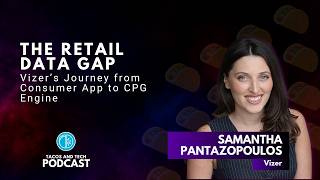
Sam from Vizor explains how the company pivoted from a fitness app to a B2B platform that lets CPG brands measure digital offers across channels. The fragmented coupon ecosystem creates a data gap, so Vizor ties QR code scans to conversions in real time, giving brands a dashboard to optimize spend on paid media, out-of-home, and in-stadium activations.
Chapters
Hello everyone and welcome back to the Tacos and Tech podcast. I'm your host Neal Bloom and I've got on my friend Sam from Vizor. Hey Sam, welcome back to the pod.
So excited, round 2.
Round 2 and oh, has Vizor been on a journey that we cannot wait to tell. So we will—
Journey of transformation.
Last time we had you on the pod, you and Dylan working from a garage in an obscure San Diego spot were a step counter that incentivized fitness. Did I do the pitch right? The old pitch?
I think that's great. Super clear.
Give us the new pitch. What's the one-line high level of what Visor is now?
We still do rewards. So if people had heard of us in the consumer days, you would think it's quite similar, but we now do it directly with brands. So we help CPG customers create incentives or offers they can distribute on the open internet to drive people into their biggest customers, which are Walmart, Kroger, Albertsons, places like that.
Amazing. And many of us do miss the old consumer piece. In fact, we used it on all of our founders hikes. But you learned a lot. I think that's what I want to focus on is what you learned and where the company morphed because of how much the consumer brands liked what you were doing with consumers. But before we get there, take us back, just remind us the original founding of this company. And how'd you even like find yourself as, you know, wanting to jump into the entrepreneurial fray?
We go way back in the story. I was studying abroad on a program called Semester at Sea, and they had a social venture pitch competition. So that was my first introduction to entrepreneurship, especially the social dimension of it. And the whole challenge of the competition was to come up with an idea that you personally would be motivated to work and solve that problem and also had some kind of societal benefit or impact. So the original concept for the consumer app was if every day I worked out, a brand and the network would donate a meal to a food bank and I could earn rewards for myself, I would probably be motivated to work out. And it totally worked. To your point, like, I, I loved our consumer app and we built an incredible community with it where studios were involved, brands were involved. We were working with national food banks and restaurants and running this incentive ecosystem. We did that for several years. With COVID it was a little challenging to scale the marketplace side of it with restaurants and studios and all the changes that were happening there. And that's what actually led us to retail and figuring out how to do retail rewards and discovering that was an opportunity when the economics of the app got a bit more complicated. And it was an unforeseen detour, but it was really customer-led, and it's been a fun journey to figure out that piece of it. But I don't work out as much as I used to. I was motivated by the app as well, so I feel you on that.
Yeah, it— I get it. Uh, I remember the late nights being like, I got 200 steps left, let me go. I knew exactly the area of my house I need to go march in to to, uh, to hit the reward. It was awesome. Um, but what was so cool from your— I was hearing from you then was just like the, the customer— the, the brands want more FaceTime and want to put more of their brand in front of the customer, not just once a day but all the time. Um, and then they want product. And I remember when you started, I remember the mezcal bars showing up, you know, and like I suddenly was getting, you know, actual product for doing steps too. So that seems to be kind of where it alluded to, right? It was just the brands wanted more of their brand with— in front of people, right? Is that what you kept hearing?
Totally. Well, it started with the restaurants, right? You could go into Parakeet and get a free coffee. Yep. And when restaurants shut down because of COVID we pivoted to the online ordering. So that's the NesClip bars you're thinking where you could work out and you could have it delivered to your door. But the challenge was a lot of the brands that we work with they're not D2C businesses. It's food and beverage, and they're selling in a handful of stores being mass grocery and club and drug and convenience and shipping like a canned beverage is pretty unsustainable. So finding a path to do the rewards in retail and once we have that technology, that's when the brands were excited about the opportunities that opened up for them. Yes, they could offer rewards in our app and reach an audience of aligned shoppers. But what opportunities existed outside of the app on the open internet? And that was the question we kept getting from customers. Can we use this technology in other ways? And would you be open to supporting that? So very much a customer-led path, but it's been really cool to see all the use cases. It unlocked to take that technology and put it into different distribution points and channels and get it in front of all these different audiences of shoppers. Hmm. Okay.
So what was the, what was the big unlock? What was the big brand that just really took you down this whole new vein, new path? And did you at that point been like, ooh, this is about, we're about to like go down a rabbit hole? Or was it like big opportunity?
Did you say there were a lot of brands that were really helpful in the early thought partnership? I would say so. Ones that come to mind: Olipop, HealthAid, fast-growing innovative brands that had national distribution and a large presence were really constructive in, in some of those early conversations. And it became a snowball where the more brands that we talked to, the more were interested in this kind of capability. So At first, it certainly seemed like a detour. And we were running a consumer app in a consumer app community in a multi-sided marketplace. This was not in the orbit of what we were, we were doing. And I'm a very focused product founder. So I don't really like chasing things that seem really deviant from the roadmap, unless there's a really good reason to. So there was a lot of back and forth with my co-founder Dylan and myself around, is this, is this the right path or is this a distraction? And going back and forth on that was how we made the ultimate decision to go to B2B from consumer because there was so much evidence in those conversations. But yeah, there were brands that definitely helped spearhead early partnership. In making that decision. And then also the innovations that we've made to the product. I think almost all of them have come from conversations with customers about ways they would like to use it or things that they're experiencing while using it.
I completely forgot about the COVID aspect. You're totally right. I remember even like, like Tokaya and some of those other like the taco spots too. And when we recorded the last pod together, I went and looked it up, May 2021, we were still in COVID at that time. Yet somehow feel somehow it's almost 5 years. Crazy. Okay, but take us on a little bit of a journey then. Like, what have you started? What did— what was the original thesis, I guess, towards moving towards D2C, bigger brands? And where did it— where did it ultimately end up? Because we always know it changes down the road.
Yeah, I mean, it's funny when you look at the timeline and its totality because the thesis is always evolving as the climate's evolving. I remember when Takaya was launching, for example, we were rolling out national restaurant partners and that was such an exciting time and expanding out of San Diego and launching other cities and markets. You don't expect every restaurant across America to shut down. Like that's not something that was really in our frame of reference pre-COVID. So I think here the thesis was really We have brands that are expressing an interest in using these offers offsite is what we call it. So you could think anywhere on the open internet that you could attach a link, you could attach a VIZOR offer. That could be paid media, could be influencer, could be streaming, connected TV, CRM. So all of these channels that brands are marketing in, were a compelling place that you could start using these offers to help drive sales. And that was really the original thesis. How do we turn all of these marketing channels into more conversion-based tools along the way? I think that uncovered the opportunity for measurement. The second that you have conversion, you have the opportunity to measure and how do those things work together to build a really scalable demand generation system. So not just a sales tactic, not just a marketing tactic, but how is that working together for retail demand generation? And that, I would say, is how the thesis has really evolved. Less of a feature or an offering and more of a, a suite or a solution for that, that central goal.
Okay, well, let's dive into kind of the world of coupons and offers, if you will. Like, set the stage for us. Like, where— what is what has been the state of offers for brands and how they get in front of and where are you, where do you hope to take us and what's already working?
It's really a mixed bag. So if you think of your grocery shopping experience, where do you shop?
Well, I'm still actually an Instacart user. I'm really a rare person around that cart, but nearest to me is Gelson's and Whole Foods, I guess.
Okay, so Instacart versus Gelson's, that's a good breakdown for shoppers. Like, are you shopping online or are you shopping in store? Across the US, the large majority of these kinds of transactions are still happening in store. So in California, it's a little weighted differently in Southern California, but 85, 90% of food and beverage transactions are happening in store in grocery. So when you're looking at offers, you could run offers like in Instacart's platform, for example, but for that in-store shopper, you're traditionally looking at paper coupons, which are much more ubiquitous than you might imagine, and rebate programs for your offsite offering. So taking a photo of a receipt and being reimbursed. And then you have the retailer properties themselves. So maybe the Gelson's app they're running a discount in, or a third-party app like an Ibotta that's offering discounts. So you have these kind of fragmented options where it's either a closed ecosystem, a retailer property, or an app like Ibotta, or it's open, but it's a more antiquated technology, paper coupon rebate, and digital offerings in that middle area, it's really underserved, I would say, or has historically been underserved, given how much marketing is happening online. So the landscape is a little fragmented, but you're seeing consolidation and you're seeing a push towards accessible and digital across the whole industry and all of those, those offerings I just explained. Got it.
And what used to be a team that would just hyperfocus on one area now has to allocate to different things. They have to allocate to every groceries app, the third-party apps, and the paper coupon, you know, distribution network. Is that kind of what you're saying?
Yeah, I would say the more complex the promotions offerings get, there's more buckets and places to spend. Exactly what you're saying. And then also the more complex digital marketing gets. So the more places that you're marketing, there's now more calls to action to be made versus when it was just a weekly flyer being mailed to people's homes or maybe a television commercial. There was less opportunity to engage that end customer directly. There was more top of funnel awareness. So there's certainly more players and it's pulling for budget in different ways.
Yeah, but luckily we all have embraced the QR code, so shouldn't it just be super easy and you just scan and get whatever you need to get?
I think that's what's really cool about it is for the consumer, it is super easy, right? Like all you're doing is scanning. All you're doing is scanning the offer at checkout, for example. And that's what I really like about grocery just as a category is consumer packaged goods, I think, has a reputation for being like a fun, sexy industry to work in. Like you get to do branding and packaging and all of these fun things in consumer, but it's an incredibly competitive industry on the shelf of a grocery store. Really slim margins, really challenging to differentiate. So it's a— there's a lot happening behind the scenes to enable a consumer or a shopper to have a really simple experience checking out at a grocery store. And it's cool to see like how much complexity goes on behind the scenes to make that so smooth for you when you're shopping.
Yeah, it's really interesting. I mean, we think about how many pieces pieces of products are in a grocery store? I don't know, you probably know the numbers, like 1,000, 10,000? I don't even know, couldn't even— what's, what's a rough order of magnitude?
It depends. If it's a, a smaller footprint, it could be a few thousand. If it's a large footprint, it could be tens of thousands. Yeah. And a lot of that gets consolidated down to a handful of brands, but tons of products, tons of different SKUs in and out always. And fighting for shelf space. So trying to stay as relevant as possible. And it's called velocity in the industry, but like how quickly is the product moving off the shelf because there's demand for it?
Totally. And seeing is believing. I mean, and any consumer product, yes, some of us buy certain things off of an Instagram ad. Guilty. But so much of it we see just for the first time on a shelf and it's like, split-second decision also, right? Or we know that it's always there and just like, yep, it's always going to be on that shelf on that spot. And I know where it is. I don't have to go search and find that new thing. So yeah, kind of it's a big, big role to be a brand manager, I would imagine, of just, just thinking about how does our product actually make it from shelf to cart? And is that kind of where you're—
Absolutely. Yeah, because you're trying to really— obviously you're trying to retain the people that purchase your products, but think of how loyal you are to some of the products you buy. If you find something you really like, your switching costs are pretty high for you to try something, a different product or a different brand. If you're a new-to-brand shopper, so they're trying to bring you in, that trial is like the most important thing. To drive because you're trying to win that long-term loyalty where, okay, I know where this is in the store. I know that I like it. Every time I go to the store, it's ending up in my cart. That's the true measure of retention in consumer packaged goods. But it's not like I saw something on Instagram and I signed up for a subscription. It gets delivered every 30 days. Like you have to re-win that loyalty every time they're in the store. Which means if you're not easy to find or if they're not where they expect you to be, or the ingredients change, the packaging changes, like there's so many things that could happen to lose the shopper that you work so hard to win. So it's like, how do you drive that initial trial? And then how do you keep that relationship through the lifecycle of your relationship with that customer? And I would say those are the two problems. That we work with brands on new trial and then long-term value and retention.
And tracking compared to when you're used to maybe doing D2C online, you can see the exact source of where that purchase started, right? You can see literally from an email, from web, right? There is no, you know, physical analytics for how did that cart, how did that thing get to checkout? Right? You do not actually know if that person has been buying the same product for 10 years, 1 year, if it was their first time. Yet that's what brands have gotten used to in the DTC environment. So how are they doing it now? Like, what's the analytics piece around really tracking and understanding if you're retaining people?
It's difficult, admittedly, in the industry if you're not using a tool that's designed to do that. And the standard hasn't been to do that because those tools haven't been ubiquitous and easily affordable and accessible and all these things. So what you're seeing is a lot of investment top of funnel, and then it goes into this really murky black box, and then we see sales data on the back end, and we're trying to attribute what happened where, and that can be really difficult to do because there are a lot of lagging indicators. So Did my top of funnel spend actually turn into a conversion in the short term, or did they need 8 more touchpoints? And the ways that you can track those things digitally is far progressed beyond what the consumer packaged goods industry has been doing to date. And that's one thing that offers enables is, is tying that impression to a conversion. So you're able to map that much more directly and make decisions off that information. But without that information, it is far behind what like a D2C marketer would be used to having at their disposal in terms of optimizing and running campaigns that are targeted around efficiency rather than maybe scale.
Well, I can understand the frustration. Paint us the picture of someone who has seen the light, who has seen Vizer offers and attributions, maybe even drop a name if you want. Like, what's, what's the difference once you actually realize I need this I will do whatever it takes to get it and starts working with Vizor.
Yeah, I think what you'll see with Vizor and a lot of the brands that we work with is they're using us across their marketing stack. So they have their offers, but that's becoming the call to action on a bunch of different programs and properties that they're running. So maybe their Facebook influencer meta paid strategy that has an offer component. Their CRM strategy, so email and text that has an offer component, their out-of-home strategy that has an offer component. And now they can start to see like, how are all of those verticals performing as silos? How do we make each of those more performant and efficient by looking at the data? And then how do we reallocate our investments based on what we're seeing across the board? So a good example would be we did something with Poppy at the Staples Center where they were a partner and they were promoting at the game. This time they put a QR code up on the jumbotron so everybody could just scan it and that would link directly to an offer. And it's just an example of compressing the funnel where maybe you had seen Poppy and that was influential to you in that out-of-home experience. But by attaching an offer to it, we're now taking that whole stadium and turning them into like a serious purchase intent or converting audience. So I would say like, how do we just compress the funnel, compress those learnings, equip those to the brand so then they can be making decisions every 2 weeks, every month versus waiting 6 months. Let's look at our data. What can we glean? Well, our next 6 months are already planned, so we can't really action on that information until next fiscal. So we're really trying to speed up that feedback loop and saving a good amount of money in wasted media and distribution spend that wasn't being caught before. And then also helping drive more sales because the ads are converting.
Yeah. So end of, end of a game, QR code goes up like that. You, your team, and the brand team sitting there on the, on the Vizor dashboard just watching like tens of thousands of scans come through?
So it all happens in real time. So yeah, as people are scanning it, you can see the conversion behavior of that and then you can follow it all the way through the path to purchase. So real-time dashboard designed it. I'm a fan of it.
Yeah, of course. Product-led founder right here. Have we had a Vizor QR code, an offer on a Super Bowl ad yet? Or is that coming next year?
So it's funny, there, there was a campaign that that was being discussed around and then it, the timing of it, they were trying to spin it up too quickly to get it into the creative. But I would, if I had to hypothesize, I would say next year you will likely be seeing a VIZOR offer in a Super Bowl commercial.
Awesome. Love it. A cameo in a Super Bowl ad before Dylan. Surprising.
Didn't think he could beat us to the punch. True.
The race is on. The founder or the product. That's for sure. So take us, take us through like where— so you like sit at the nexus of, you know, analytics, fintech from a payments, and then hard retail. And, you know, in CPG, like, what's that world like right now? I mean, obviously the macro has been crazy for, you know, a variety of news trend lines or whatever, whatever it is, right? But what's, what's the world feel like, especially when everyone else seems distracted by AI?
It's a great question. I think that I, I don't align with some of the fearmongering on LinkedIn that like AI is going to be the death of everything that we know, but it's, is certainly going to transform everything that we know. I, I do think that retail and CPG will be a little bit slower to integrate that. Like the technology I think is far eclipsing the industry's pace and their ability to absorb some of that. And I also think it may, I'll be surprised if we see grocery shopping change as dramatically as the technology enables it to in that short of a time period. So technically, will it be possible for everybody to have an agent doing their shopping and have that delivered to their door? Yes. Will people do that? I think yes. I just think it may be a slower adoption curve. So it will be interesting to see I think so much of what drives innovation in retail and in consumer packaged goods in particular is the shopper. If the shopper's preferences change, the industry will move. But I don't think it's an industry that is heavily investing in technology and infrastructure to meet demands that have not materialized yet. So it'll be interesting to watch, like, how does the shopper evolve and how do their shopping preferences evolve? And then what does that require on the technology side? Operationally, I do think that data is going to unlock a lot for brands because it hasn't been accessible before, but we've seen how powerful measurement data is across marketing in other verticals and other dimensions and sales. So I think you're seeing a lot of brands consolidate what used to be really siloed and fragmented. They're now trying to bring into a central team or build a new division that focuses on how do we enable our teams with more tech solutions and more data. So you're seeing that adoption for sure. And AI, I'm sure, will play a role in that. But again, the speed at which it will do so, I will be curious to to sit back and watch. I love AI. I'm a fan of it. So I'll be curious.
Yeah, it feels like the brands have been sitting on a lot of— some of a lot of data, but like it's siloed and they don't even know what to do with it. Right. And so if they can access it, it feels like that's the area where you're like, well, I've got a bunch of data here. Let me just throw it into an AI and see what happens. You know, seems much easier than breaking down your payment operating— your payment provider and being like, We're changing what data we're collecting at the scan, right? Like that seems really hard to go and just do even if new technology shows up, right? So are you seeing that like our brand managers and brand analytics, you know, kind of leaders being like, whoa, the power is at my own fingertips and I need to go demand more data?
Yeah, I was gonna say, I think the industry is, is struggling with bureaucracy and how large these organizations are. But the people that work at these organizations are incredibly sharp and know what this data and this tooling can unlock for them and are hungry to have it. So I think once it's in their hands, they can really move quickly with it. But how, how do we break down some of those organizational silos and get the right people at the right table and give them the right power to be able to action against the ideas that they have. Because at the brand level, I mean, we're seeing that the, the vision and the hunger to do this kind of work is certainly there and the skill set certainly there. It's the red tape of the organization that often can make things more challenging or slow. But I believe when people have the tools, like, we'll really see innovation pick up quickly.
Yeah, you, you mentioned bureaucracy across an organization, but this also is multiple players. You've got a brand inside a physical retailer with a different payment provider. Are they— do you get a sense that they are all mission-aligned to be like, hey, if we can track and understand consumer behavior better, and deliver the right product to the right consumer at the right time, do they all feel like they all win? And it's kind of like a rising tide directionally.
I would say yes, directionally. I think everybody in the industry is motivated by the shopper and what leads to more transactions in a retail store. Like, that is the ultimate goal. And If it was ideological, I would say yes, I think everybody is aligned towards that. But I think the reality is all of these businesses have different competing priorities that are equally important and on their roadmaps that may not always be aligned in the same timeline, if that makes sense. So that is what makes it slow down a little bit. Not the desire's not there, but the industry— how do you get I mean, these are all independently owned, not independent in like a private or small business sense, but independently owned retailers and independently owned brands. So although they all are accomplishing a similar goal in a similar environment, a similar store, they do have differing motivations and categories and priorities for that reason.
Yeah, interesting. Makes sense. It's a big world. And you guys are just trying to connect everyone, that's for sure.
And to your point, I, I do think there is beauty in that simplicity and reminding everybody at the end of the day, the, the desire of this industry is to best serve the shopper. And if we're doing that well, everybody wins. And bringing it back to that as often as possible, regardless of what team you're on, that usually will, will be a common point or desire for executing as their goals and seeing success.
Yeah, totally. Outside of, I mean, is grocery, is grocery the big market or is there the next frontier that you think where consumer and brands are starting to test and try? Or is this the, this is it, this is the big, the biggest tent in that regard?
There are certainly opportunities beyond fast-moving consumer goods. So under that umbrella, I would include food and beverage. I would include household products. I would include personal care products. So you can think anything on the shelf in Walmart, home and garden. There's a lot that could sell through Walmart and fits in that category. Beyond that, things that are adjacent, beauty, would be a good example. Sporting goods would be a good example. So a retailer that is selling third party, so like a Biore store selling Biore products is a different relationship and ecosystem and requirements and needs than a small business would be. Or is that right?
I need an offer. I need an offer for more of these. Come on, help us out, Sam.
There you go. Hey, we, we may expand to vertical, but right now I think the bigger players with large footprints and a lot of brands on their shelves is where we are the most helpful.
No, I get that. I mean, in a, in a, you own your own store, you've got more verticalization, you have your own problems in that regard, but like you're, you're not competing against other brands per se. You're just competing against your own SKUs, I guess, in that regard.
Yes.
Yeah. Okay.
And some things get, get easier in that situation, like loyalty or having a customer base you're engaging with. A lot of those have a strong D2C presence. So I would say that customer profile-wise, it's, it's a little different.
Well, let's stick to that for a second. Do brands feel like in-person retail versus D2C cannibalizes themselves? Do they sometimes fight, you know, interdepartmental in that regard, being like, hey, it would just be great if we can get more of our sales through our own website as opposed to big box in that regard? Does that come up?
Certainly. Yeah, I would say you see a split between D2C retail and Amazon, and there are preferences to each of those and there are costs to each of those. And you definitely have different teams acting towards them. So a good example would be if you're running media, where is that media driving to? Is it driving to a website? Is it driving to Amazon? Is it driving to Walmart? Is it driving to a store locator? Like, there's a lot of places that that media can drive to, and different teams are often eager to have that real estate because it can help support their goals. So having as a brand to understand, like, if Amazon's a big part of our strategy in our business, why is that? And like, are we willing to prioritize that over a different channel? Same with D2C. Or is winning in retail really important for the business in this season? And are there certain retailers that may need more love than others? So it's a strategy problem of like probably the highest order for the brand. What is their mix and where are they trying to grow and why?
Got it. Interesting. And who's, who's the leader at this organization, like leading this effort? I mean, is it a CMO that really kind of owns this entire thing, or are there other, other partners that come to the table asking and demanding this data and this, this offerability?
It usually sits in marketing. And is adjacent to sales. So both of those teams are really working together. They own different pieces of the funnel on that path to purchase, but I would say it usually sits in marketing. And then sometimes you see like a data measurement team that is consolidated across both of those parts of the org and can be helpful in getting information back and forth, but primarily I would say CMO sitting in, anybody sitting in that like senior marketing leadership seat is who sees the most visibility of where this could play in their organization and why. Got it.
And there's a lot of, you know, products that compete, right? It's all about like some Coke and Pepsi, right? Is there a little bit of that that happens that you do? You actually see where one does it, the other is like, oh, we got to do that. Or is it sometimes the opposite? We have to go— we can't be seen as doing the same thing as our competitor around this stuff.
I think you see it all in, in consumer packaged goods. I mean, just think how much money has been spent. Coke and Pepsi, just a history example over the last 100 years to compete for the same shelf and a largely— I mean, obviously different, but like a largely similar product. And they're outcompeting on brand and they have, you know, flavor differences and trying to win over that shopper. So you'll see both. I think you'll see really blatant, we wanna do exactly what they did just to kind of show people they can, or you could see, hey, we wanna be the total opposite. We want a unique brand voice and we wanna do something really different. I think Olipop and Poppi were a really good example of this where they were kind of publicly in each other's comments on TikTok and people loved it because it was such a forward example of the competition that can exist. So I think you see both, but the brands I think that are winning right now are the ones that are being really unique in their strategy. Liquid Death from a marketing lens. If you look at what they were able to do in water, which is probably the most full category you can imagine, new entrants coming into water is incredibly complex. That is a marketing challenge through and through. And I think they did something that was special and the market really responded. Well to it. So uniqueness, especially with everything happening with AI, like as thought continues to consolidate, people that are critically thinking and are being creative, I think will become a differentiating factor. So we'll see, but you see both.
Cool. That's really fun to see the consumer piece, the attention piece. I mean, obviously, Liquid Death's partnership piece now is really interesting. The other— the brands that they decide to partner with have nothing to do with water, right? Just for cross-promotion and getting their brand out in front of stuff. Um, super interesting. What, what's some of the most unique ways that brands have gotten their offers out to the community? I mean, obviously scoreboard at a game, that's pretty cool, right, to drive people to the store. What else have you seen from— maybe they haven't come to fruition yet, but just ideas thrown at the wall?
No, a bunch of, I think the, the most popular channel is like paid media for sure, because that's a performance tactic. But when we think of fun things, I think one of my favorite was Olipop did this Barbie fridge where you could go in, it was a whole website and you would like open up the Barbie fridge and then you could win. It was a sweepstakes type thing. And we had built a whole new product actually like around that campaign to power these sweepstakes loyalty type experiences. So Another good example of like a thought partner coming in, having a use case, and that led to the evolution of the product. But personally, I've always loved the surprise and delight campaigns that we do where it could be an ambassador program, a micro-influencer program. Maybe they're working with a unique community. We did a Snap offer. With Beechnut that was a really cool increasing access to baby food campaign. So I really like when people are using it in creative ways to activate how am I actually bringing value in an unexpected way to the shopper and being creative with the promotion. I would say using it as a savings or a discount or an offer is like the majority. Of the work that we do because that's the more performance-driven approach. But there is really cool campaigns where it's very brand-heavy and there's a lot of creativity in how it's delivered. And those are probably my favorite.
Cool. I'm surprised we haven't had more of these like Pokémon Go moments where people went outside to like go do stuff, right? With AR, VR that happens to like bring you into a store. Have you seen anything like that? I just feel like the AR into real life piece, that was like a moment. For Pokémon Go.
It was, I think, because it was so new, right? And it's another example of when that technical innovation comes, everybody kind of rushes to it, but it's not fully ready for market adoption. So it cools off and then it comes back. I haven't seen anything in that space. Not to say it's not out there. We're actually about to do a program in Bentonville. For a few weeks. We're really excited about it, and it's bringing a bunch of tech companies that are kind of on like the forefront of retail to Bentonville. So I'll be curious if anybody in that cohort is doing anything in that world, because I have to imagine there's cool opportunities there.
I would think so. Uh, the other areas tech is like pulling us into, especially consumer— obviously no one's going to Google anymore, so everyone's searching for things in LLMs, Right? So that's a whole new thing for exposure for brands, I would imagine. And then actually related, actually Google Glass finally is here, the Meta Glasses and some of these others, like people are actually, it's their day to day, right? They actually are using smart glasses and smart other things. Brands haven't tapped in yet. So that maybe that's, maybe that's an area to watch out. I'd be curious to hear your feedback.
New frontier. Neal's going to start a VR retail tech company with glasses. I'd be curious, right? Like, I always think of Iron Man, where Tony Stark comes into the room and all the screens pop up and the holograms, and he's talking to his agent AI guy. And that technology is here. Like, we— that technology is here. And I mean, if you go to CES, like it's probably been here for a bit, it's just not been commercialized. And what does the world look like in 5, 10 years when technology is moving faster than our brains can really compute it? Who knows? So the shopping experience as we know it today is very emotional. Like you walk in, you look at the shelf, maybe you're scanning price points and that is causing an emotional reaction as to which pasta sauce you're going to choose. Or maybe it's the name, maybe it's the color, maybe it's where it is in your line of sight, maybe it's familiarity, maybe it's a memory. Like there's a very emotional experience that happens when you're evaluating a shelf. And what happens when you put an agentic layer between somebody and that. It really is a commodity business. Like, are the tomato sauces terribly different from one another? I think you have certain cohorts, like you have like your healthiest one and then you have a healthier one and then maybe you have like an imported one, but maybe there's 5 to 6 different categories that you could be pulled for, for different reasons. But if you're just competing on price and your cohort, a lot of that emotional goes out of the way. So what is the role of VR and AR in that and agentic shopping? I don't know, but I'll be very curious to see. Yeah.
At the very least, just get like a Google Maps for route mapping a store. I mean, that would really help a lot.
So that exists. Okay. I have seen that. Yes.
Like, just tell me, go to noodles first, then pasta, and then veggies to plan your meal, and tell me it's aisle 1, 4, 7. Great, done, right? Like, dinner secured.
At that point, I'm curious to ask you, like, if you had that technology and you could just press a button and somebody was going to do that for you, you use Instacart, so like you've already kind of made that efficient. What is the instance where you're going into the store yourself? Like what, what causes you to go into a store?
Something like I need on demand, right? I'm just like, I need lunch and I really just want to pick it out myself, right? Honestly, I still use Insert because I don't know where things are in stores and I just like, I hate walking. I know this is a more efficient manner. Then that was a better use of my time. So that's the only reason I use Instacart. I still love product discovery by just wandering around, but usually I'm on a mission and I don't want to go search 20 aisles to find the one thing I need, which is what I tend to do, you know? So I don't know, I think there's a variety. Like maybe the stores do that on purpose. They want you to—
they want you to walk around.
Yeah, they want you to see every shelf possible. So I get it.
I'm a European grocery store type. Like, I love going grocery shopping. I walk really slowly. I check everything out. I buy it up like 2 days. I go to Lazy Acres. It's a whole experience for me. I very much romanticize it. So I— but if I need— similarly, if I need like a really big haul of stuff, like if I'm ordering paper towels, I'm an Instacart person because then it's just efficient. But if it's an experience, I want to discover some new products, like I will take my time walking through the store.
Yeah, I think I'm similar. Like staples, just, you know, like it's for the stuff I need. It's Costco and Ralphs always on Instacart and it's like you can almost subscribe weekly. I think you can probably same stuff shows up. But when I want to go experience something new because I'm like, you know what, I'm feeling like I want to change my diet or something. Totally., in store or farmer's market to be like, what is, you know, cheese these days compared to what I've been experiencing. So I get it. Uh, you know, something that you cannot, will never be able to outsource is our love for tacos. You're just going to have to go in person and just enjoy them. Uh, when you last, I'm curious if it's changed for you. Last time you were on the pod, uh, yours was Takaya in downtown. And Dylan's Don Bravo's in Bird Rock. Has your taco palate changed in 5 years?
So, so it's funny because Don Bravo is probably what I would say is my favorite. Bird Rock, I'm like obsessed with that neighborhood. And Dylan is going to find it so funny that he was the first mover on that and that I stole his taco choice. So I will have to call him and tell him for sure.
Well, 5 years ago you guys weren't spending as much time in Bird Rock. For sure. You were— it was not an area you had— you're spending more time in Mission Hills, I think, at the time. So, um, but we know there are more North County taco spots to start showcasing you in your future, and, uh, we welcome some of that. Definitely some city tacos in your future, I think, in downtown Encinitas, uh, with our friend Shane Scaff would be a go-to. But, uh, Sam, a real pleasure to have you on. As always, always welcome, and congrats on riding and really paddling forward in this new wave of CPG and marketing.
Thank you. Always so fun talking to you, and we will get tacos at Hoggo's. That'll be our next stop.
Okay, let's do it.
See you later.
Bye. interviewing founders who be shooting for the moon. #SDTacos with your host Neal Bloom. Startups get the party, startups get the party started. Startups get the party, startups get the party started. Startups get the party, startups get the party started. You want tech and tacos, tacos and tech, you know we got it. Startups get the party, startups get the party started. Startups get the party started. Startups get the party started. Startups get the party started. You want tech and tacos, tacos and tech, you know we got it, hey!








