This Week on San Diego Tech News
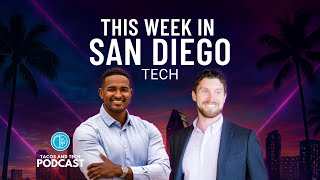
Neal Bloom and Fred cover San Diego tech news including Novartis acquiring Avidity Biosciences for $12 billion, startup fundraises like Turnout's $20 million round, and Qualcomm's new AI data-center chip. They also discuss biotech funding trends and the Regional EDC's business impact awards.
Startups get the party. Startups get the party started. Startups get the party. Startups get the party started. You want tech and tacos, Tacos and tech, you know we got it.
Hey.
Startups get the party. Startups get the party started. Startups get the party. Startups get the party started. Startups get the party. Startups get the party started. You want tech and tacos, tacos in tech, you know we got it.
Hey, foreign.
Hello everyone. It has been a minute, but Neil and Fred are back at it and with you. Thanks for tuning in as always. Hey Fred, how you doing?
Hey Neil, good to see you. Welcome. Thanks for tuning in. From New York City.
Yeah, I'm in the Big Apple.
Fun.
It's always. I feel like my pulse goes twice as fast here for whatever reason. I love it. And we're here for the Uncharted Pitches event which is a national syndicate of operators and exited founders kind of doing a funding companies together. So kind of what I've been doing for the last few years and now doing it on a national scale, I'm kind of heading up the San Diego chapter of it, if you will. We've got bunch of members of Uncharted Pitches in San Diego, people we've already been investing together that now we're doing it at a national scale, which is cool. And so we brought two companies from San Diego for the inaugural pitch day. There was eight pitches and was cool. It wasn't pitches, it was actually sit down with a journalist and a journalist interviews you. And so we'll be doing a future cine event and you will be interviewing our members. Fred as our local tech journalist. And so we had two journalists from cnbc, Tyler Matheson and I'm forgetting Ron's last name. It was great though. Like they really treated it like a CNBC interview, right? Like let's get to know the CEO. Tell us about your company, right. And ask questions about it in front of an audience of angels and family offices, which was awesome. So really cool event. Mercado and Natalis flew out from SoCal to be there for it and they have open rounds raising and so yeah, it was great to have a contingent of San Diegans out in New York and we're still here now, so that was a really fun one. We also this week Rising Tide Partners and Interlock hosted a an investor day with our most. One of our most recent investments company called Exome X Zom. We did a little investor summit with them. So we brought all of the people that we collectively invested in this company to spend 2, 3 hours with the company and you know, do a deep dive on the demo and the product, like really understand like the company so that we can all talk about it and pitch it, you know, when we're out in the community and then here, you know the company's 2026 strategy and then ask see where the company needs help. So it was a really cool experience to get us all together. I think it was 30 or 40 of us and you know who welcomed us surprise welcome in the lobby was Irwin Jacobs himself, the CEO of Exome, who to say welcome and thanks for betting on us and let's roll up our sleeves and let's get to work. So it, it was a cool experience to do together and it was there that we heard some fun news about Qualcomm which had some big news on Monday which we're going to get to. So I'm going to tease it out a little bit. But anyway, it's been a good, good week so far. We've got a ton of news to talk through from M and A fundings, big tech news, macro global news, how that's affecting local and then some upcoming events as always. So why don't we kick it off? Fred, you want to take us through the first story here?
Yeah. So there's been, as you alluded to, there's been a lot of M A activity in the last month. These deals probably have been in the works for early this year, but they're kind of hitting the wire a few weeks ago. The first one that a lot of people were talking about in the life science community is Avidity Biosciences. They were acquired by a big pharma company, Novartis, for $12 billion. I was told that this is the largest M and A deal in life sciences in San Diego in history. If you recall there was Prometheus, which was a company acquired BY I think 8 billion. There's another company, I mean there's racing, but there's a ton of biotech companies that were acquired. But Video BioSciences was an RNA focused therapeutic company. They were kind of the next next company up that was going to be the next, you know, Illumina. It's funny because San Diego is more of a build to buy company. And so we're always seeing Big Pharma continue to acquire these startups who are kind of like the R D for, for Big Pharma, huge win. This is led by a CEO female named Sarah Boyce and I think they're actually going to Do a spin out company following this acquisition and they're going to capital infuse it with over $200 million. So I'm curious to learn more. This is breaking news and I think it has to go through the FTC before it officially closes going into the new year. So TBD on all those details. But yeah, we'll have a scoop for you as that story unfolds. We also had another big publicly traded company get acquired. Actually got turned to private collage. It was acquired by Black Blackstone as well as tpg, the private equity growth oriented firm. And there was a great scoop by Routers which we'll link below. But you know, do you have any comments on. Yeah. The broader M A landscape? I mean this is more life science focused but every definitely seems to be consolidation in the market from a life science perspective.
Yeah. And maybe we jump to your state of bio here in a second to kind of bridge this. But you know, I found it interesting what you just said of the. That the buyout turning into a spin out. This is exactly what happened to Prometheus too, right? They I think it was a $10 billion acquisition and within a year, nine, 10 months, we saw the C suite founding team of Prometheus come out of stealth with like a 2 or 3 or $400 million raise. Like same thing happened, right? They're like let's rinse and repeat and go do it again. And I think that speaks to a lot of what's happening in biotech, which there's a number of fronts happening. There's that a lot of patents are coming due, right. The 2025 year time frame clock is up on a lot of drugs which makes, you know, pharma be like, oh no, there goes our cash cow. We gotta go find our next ones. Which they're always working on, right? They're always working ahead of that. That's one big macro that's happening as well as just the same Covid bubble that happened, right. There was all the deals that were. All the drugs that were in market got pushed aside for like four years during cova to hyper focus on mRNA, right. And then or diagnostics. And then everyone shoved that aside and said okay, what were we working on? Right. And they brought those back up and some of them they just threw away and said let's go buy our way back in. Buy a bunch of R D to, to jump start and not have to start from scratch. Well, we know San Diego is a huge R D hub. So if you are on, if you're out open for business to go buy your way into a drug or, or a clinical phase, two or three, that's what you do. You go and look for companies who are already at that stage and San Diego is benefiting from that. And what you've highlighted and we've done on this podcast is that over the last 24 months Indigo's have been one of the net gainers of big biotech M and A. And so while everyone talks about this biotech winter, which is more on the funding side, including all the way through IPO, not a lot of IPOs in biotech, it's been a lot of exits for San Diego biotech companies and so the capital is actually recycled. And you know, if you go and look at some of the people who've been in the market 20 plus years from a variety of areas, like Greg Visconti, the life science real estate guy, he writes that he's super. He's seeing already things are starting to rebound on the funding side and people therefore looking for new space because 2026 is already starting to come back. So it's just interesting to watch, you know, in all these, these scenarios.
From.
Us down on like the ground level I would call us, where we're seeing startups just start. Right. You know, we're seeing like 10 year out horizons. So we don't necessarily see these, these waves and these bumps. The same way that macro sees it, right. These, oh, we're in the winter. I don't see that. Right. Because I'm, I'm placing a bet now that's going to pay out 10 years from now, maybe even 15. And so I don't see the trend lines nearly as much there. I just see fundings whether they're happening today or in two weeks or in a month, it's just kind of, that's my seasonality. Did the funding happen this week or next week? So it's just kind of interesting to compare all that. But I think the M and A is going to benefit San Diego. The we keep talking about IPO market is starting to come back better. I don't know if that has been better. I think we've only had three or four IPOs in San Diego this year and they haven't been biologically actually. Right. Like I don't think we actually are going to talk. We should put it on our docket. Aptera Direct listing. This is a EV company. You know, I think it's one of four that this year in San Diego that are not bio. So I don't Know, all that's kind of interesting in that regard, but do you want to just die? Should we dive into the state of life sciences now? Is that a better time to.
Sure, yeah. Let's go high level. There was a about three major life science events, conferences, summits in San Diego. One was hosted by Biocom, their annual CEO summit, which was at the Del Mar thing, the Grand Fairmont Del Mar Hotel. They also had Scripps Research hosted their annual biotech summit as well as a biopharma conference. And this featured leaders from Kinetics, which is kind of an OG San Diego life science startup company. We also had some investors like Frazier which raised 1 billion plus fund. So they're actively deploying in local companies as well as some upcoming new companies sharing, you know, what they're seeing in the, in the landscape. I think there's a few key quotes and themes. It was that, you know, there's a valley of death right now for both drug development as well as, you know, founders trying to raise that first round of capital. And they, these executives were kind of sharing that it's important to have a network that you navigate. You know, this is a tough environment right now and so you really need a community and relationships matter even more. It's not just about good science, also about relationships with investors, mentors and also your peers, especially when capital is kind of scarce. And there was also a discussion around how San Diego has about 8 to 12 satellite VCs here. But what we're really lacking is institutional VCs being based here. And he said if we can have more of those institutional players, you know, here in San Diego, that would help us grow San Diego's innovation ecosystem even faster. And Scripps, you know, also talked about how they've been a big player in San Diego's life science ecosystem. They've been involved indirectly in about 50 biotech spin outs and have contributed to over 15 plus FDA approved drugs and vaccines in total 1000 plus patents. There's about 200 new inventions disclosed each year. So they talk about how they've been an important player for San Diego. And then the CEO summit also highlighted how there's increased competition from China and how in order for the US to continue to compete at a global scale, there's going to be a need for more cross border collaboration which I thought was interesting. But they said, hey, you know, San Diego has a way of turning challenges into momentum and it's not about having the most capital, it's also about having the most convention. Convention. And I think you Know, resilience was a, was a key theme. And you know, while this year has been challenging the life science ecosystem, we have a lot of positives that are going to help us, you know, navigate this, this kind of, you know, uncertain environment that we're seeing today.
That's a good point. I would say. You know, I think speaking to the VC list, which by the way, me and another local angel, Chris Barber put out the San Diego investor list. It's just a spreadsheet that we crowdsourced people have been commenting, they've been adding and updating it in real time. So go look in here. I dropped it in the show notes. San Diego Investor List SD Investor List.com. it's like a whole bunch of, it's, it's anyone who's local, meaning you Salesforce VC Rob is on the list. Right. Alex Bard from Redpoint VC lives local but you know, he flies up every week to Menlo Park. So anyway, there's a big list of people who, who are here local that may not be even know that there are companies to look at here because their networks are elsewhere. And I think that's a valid, valid point. But to the point of we just need more funds here. Well, you know, go start a fund, right? Like to all of you, it's not just no one's going to move a fund here. It's not happening. Maybe one partner will move here. I think if people like, it's not easy to start a fund. It's like starting a startup. It's risky and it's real nice to say yeah, great to have more capital here. And I've been saying to that regard, it'd be great to have more capital here. I've been saying, well we just need more exits and then, and then that will happen. And I, I would say that isn't happening on the biotech side. Even with all the exits now I get it. The exits have only been in the last 24 months like these big ones, these big multi billion. But the fact that these founders of these exited companies are just going back and starting another company, right. Tells you one, they see opportunity out there to go make money off of another biotech company. Not the opportunity, oh I should just go fund a bunch of biotech companies. So that tells you right there, you know, if you had a great exit and you just want to start a, just want to invest in other companies, then that'd be happening. But what we're seeing is these builders who want to go right back in and build more. And I Think that's a good sign. I would rather there be more founders starting companies as opposed to just suddenly a whole bunch of VCs but no companies to invest in. So yeah, we got more work to do, we definitely need more local capital, but we kind of just got to create that local capital ourselves. We need, you know, to find the full stack. The LP base needs to be local, the GP VC stack needs to be local and the founders need to be local. And that's if we can work towards that. Then we've got self sustainment and then we start to move the needle even more. But in the meantime, builders are going to build and they're going to get capital from wherever they find it most available, which may not be local and then therefore the money will not stay local. So we'll do what we can. But speaking of some fundings, there's been a few Walla, which is a group of serial builders actually speaking of this, this is a really cool team. Doug Hecht, who was one of my first angel investors in Portfolium, he had a great exit originally with a software development agency. That was his big exit. He was a company that he started while he was at UCSD as an undergraduate in the late 90s, him and Chuck started that company, it's escaped me, all of a sudden sold it and then he went and started building a company that was in the. It's called Limber L Y M B R and they got acquired within 9 months by mindbody to go and build like SAS for gyms and stuff like that. He got sucked up into Mind Body which was a massive public company that pretty much runs the back end for gyms and sports centers and yoga studios. And after his two year earnout he's like, you know what? We could build a better Mind Body. And so him and Lauren started Walla to pretty much be a vertical SAS for the SMB for you know, gyms, yoga studios and stuff like that. I think his co founder Lauren was a yoga studio owner and so she knew, she knew the space really well and he obviously has built SaaS at scale and, and when he came out of stealth for Wall initially he had money from social leverage, Crescent Ridge Ventures and I think they came together and put a new round of 5 million together for him. Right, so take us away on what you know about this latest raise here, Fred.
Yeah, I just, I would just say it's great to see some tech software funding. We also talked about on the last podcast Turnout raise a $20 million series seed or series A Round, we're starting to see some, some tech funding. So it's great to see and great to see some serial entrepreneurs, builders still back in the arena, you know, moving along. We're also seeing some additional funds.
All the funders are all local. Right. So social leverage, largely San Diego and Kona Capital, largely San Diego, Crescent Ridge, largely San Diego. So cool to see the local tech company get local capital and we should continue to highlight and make sure that that's happening, which is really cool to see.
Yeah. And just to kind of piggyback on that, there's been some other fundings in the kind of the clean tech battery space. We have two battery companies that have been able to receive some funding. One is called Uni Grip Battery, which received a $2.9 million grant, I believe it was from the California Energy. And they're actually expanding. They're opening a 12,000 square foot facility in Toronto Valley. And yeah, I had a chance to talk to the leadership team and going to have a scoop there further. And then there's another company that was kind of new to both of us, me, me and Neil here called Wildcat Discovery Technologies. They raised a $4.9 million round. So we're seeing definitely some, some active investments in both software, also clean tech, batteries, etc, so it's a positive signal.
It is, yeah. There's a ton of battery tech here in San Diego attacking a whole bunch of different pieces of the stack. Right. And, and so battery, you've got companies who are just doing the alternative battery liquid itself, Right. Which we're talking lithium ion or lithium ion plus or what's the next generation. So there's groups, multiple companies just focus on that. Right. Then there's the components inside, just the material, the exterior material or the internal components of what makes cathodes and anodes dipped into these different things. So it's interesting to see all the different pieces within San Diego for technology on energy to that regard. And that's just battery. And there's all a bunch of other pieces there too. So don't sleep on our energy tech or clean tech or energy tech, whatever we're calling it these days. I think since Trump created the clean tech winter that that happened earlier this year, people aren't using clean tech anymore. So whatever it is we're talking about for energy, we need a ton more energy. And you know why we need a ton more energy? Because of all the craziness going into the AI world. And our next two stories are directly related to that. We all know that, you know Hundred I mean close to a trillion dollars or more is being spent on the AI race from a variety of ways meaning making a, a local domestic to Sandy, sorry to United States AI superpower to be able to build the models for national security and just for compute itself being American. And then the whole hardware infrastructure layer there as well too. All the way down to the data, the data layer and down to sorry the data data center layer and down to the chip layer. And so there's two San Diego companies that play major role in that. And I actually did a. I reposted someone's post on what is the full supply chain to make AI happen. And they hyper pinpointed down to ASML which acquired a company called cymer I think 10 years ago. ASML is this Dutch company that has kind of the global monopoly on, on a piece of the chip manufacturing process. So they have a light that does lithography on silica, that does the engraving and then the verification of the engraving. And that light source is made by Cymer and the machine that does this whole thing is made by asml. So Cymer is an internal component, the light source into the machine that does the lithography on chips. They were he. They still continue to heavily recruit out of ucsd. I know a lot of colleagues of mine ended up there and so they are a major player in the global production of chips which are made by, made by the TSMC in Taiwan and that's San playing a role in that. And so there's was a big announcement this week in a company coming out of stealth to take on ASML and Cymer directly. Especially since ASML being in a European company, Dutch company. There was a big announcement by a, a Teal and Founders fund funded company coming out of stealth. I think with a hundred million billion dollar valuation to be able to do that part of the lithography on silica itself. So macro news affecting local got obviously a ton of local talent. I hope they find their way to you know, this new lithography company here. Any takes here from you Fred on this?
No, I think we're going to talk a little more on the next story. Just about Qualcomm. They're also leading into the AI space. I mean semiconductors, cell phones like Apple's expanding tremendously in San Diego trying to build their own 5G modem. You know stock Qualcomm had some news recently and their stock went up I believe 10% on the news, 20% of the news. I was trying to just curious you know what was Their high, their Last high was July 2000. Their stock was trading around $215. They're now at 178. And they're, they've, they've been up year to date about 16%. I think we're seeing, yeah, obviously with Nvidia, open AI, Amazon, it's interesting to see a lot of the layoffs in the technology space. But at the same time, there's been a lot of new jobs being created by, you know, the tail winds of AI. We're seeing that activity happened with new AI companies in the Bay Area, in New York, we're also seeing increased investment for just manufacturing of chips in the U.S. i think broadly, we're going to see continue to see this. You know, we're going to see more, more companies just increase their R and D efforts and the AI chip space. And Qualcomm, it's obviously one of the biggest employers in San Diego. They're, they're standing benefit for sure, 100%.
Yeah, obviously the chips in crazy demand. But it's very specific chips, right? It's, that's the GPUs that started going off and being a huge player in AI technology. But it really is, you know, compute in general and chips from all sorts are needed for data centers to scale up to do AI in that regard. But Qualcomm, their big announcement was building a chip specifically for the AI data center. And so they're directly taking on AMD and Nvidia for some of this. And look, there's plenty to go around, right? There's, there's so much demand just from the Mag 7 themselves, spending hundreds of billions, if not trillions on infrastructure build out from them alone. There's so much demand as well as this kind of supply chain war as we're talking about, right, where we're starting to cross lines and say, you know, we need to manifest our own destiny. We need to build in America. We need to not rely on adversaries to disrupt our supply chain. And Qualcomm is one of the first to go, fabless, if you will, meaning they design and then outsource build to TSMC out of Taiwan, which is, you know, obviously it's got some defense concerns of potential for China to take it over. And so TSMC has actually been setting up mega factories in Arizona. And I think Qualcomm will be the net benefactor of that, of having hyperlocal, both design and build right here in the two states next to each other. So big news from Qualcomm. To come out and say that their Stock popped up 15% on the original news and I think now is still up 10, 11% since then, which is great. This is San Diego's largest company by market cap, easily the largest tech company in San Diego. So all this is, is great news and they have to, they got to stay relevant. They got to, you know, they have to continue to be a provider of technology on where we're headed. And you know, it took them 30 years to just be the global dominant player in mobile handsets. And we've seen the last 10 years where they've spent their time diversifying into auto, into all these others. And obviously AI is the next big spend in area. So good to see that overall for sure. Our last story here is about a list that just came out by the San Diego Regional edc. They did a story on the top growth, top companies, top growing companies. What do they call it? The Business Impact Awards. These are local companies who are making waves. And I think you've got a deeper dive here on the story, Fred.
Yeah, so they had a reception in San Diego where they actually recognized about 30 companies in San Diego, both Tech, Life Sciences, Early Stage and Late Stage. There was a number of local companies that I recognized on the list as well as some kind of new companies. So to call out a few, there was Natalist, which is a defense tech company, csats, another defense tech company, Psionic, which is Robotics. We also saw some therapeutic companies in there. Lens Therapeutics, Arc Tourist Therapeutics, asml really just really highlighting upand cominging companies in San Diego. And I think JP Morgan Chase was a kind of a lead sponsor for this event. And you know, it's, it's awesome that time of year to kind of recognize, hey, what are the good companies that are making an impact in San Diego? If you're looking for a job, this could be a good list to check out who might be hiring. Check out the open role.








