Get to know Supernotes and its founderss - mindful productivity podcast ep 2 with Connor and Tobias
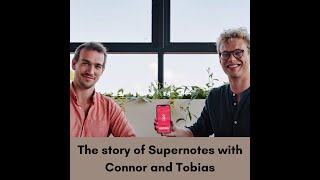
Connor Neblett and Tobias built Supernotes after meeting at university and pivoting from a learning-management system to a note-taking app. They launched in 2020 as the pandemic hit, grew without VC funding by listening to users, and reject AI features that would replace thinking instead of automating grunt work.
Chapters
Hello, and welcome to another episode of the productivity podcast, the Mindful Productivity Podcast. And today, today's episode, we have a new guest. Or actually, we have two new guests. They are the founders of the note taking app, Super Notes. Note taking app, primarily made for students, but it is also a favorite among PKM nerds. We will discuss their journey to this point and their thoughts on the future. Today, I have the pleasure of welcoming Conor and Tobias to the podcast.
Hello.
Hello.
Hello. And they have gotten a few questions, so they have had the time to prepare. And let's just start off with the first one. How would you describe yourself?
I'll jump in. Yeah. So both Conor and I, we both met at university, and we both have a passion for. For building and creating and developing as well. So when we're both at young ages, we like to create websites, design things, and sort of see how they'd go. And that was during our teenage years. And then when we were at university, we realized we could actually use our talents to a bit more productive use cases, and so kind of had little side projects and things. So I was building a sort of a website full of my notes as I wanted to learn HTML, CSS and JS at that point. But, yeah, we're just very, very passionate. I'm sure Connor would probably say the same as well.
Yeah, I think passionate is good. I think also, you know, perfectionists is a good way of putting it. That's both with the classic ups and downs of that. Of that adjective. I think we care a lot about making things as great as they could possibly be, but we also sometimes spend a little bit too much time worrying about the small things, maybe. So I think that's probably one thing that most accurate. Like, I think one of the great things about Tobias and I actually are that we're not super alike in a lot of ways. Like, we have very many complementary skill sets and kind of behaviors and everything. But one thing where. One place where we do actually overlap a lot, I think, is. Is the perfectionism, which I think, you know, isn't always a great thing.
Well, it all depends on what you're doing. If you're making a productivity app, being a perfectionist can actually be a good thing as well.
True. Yeah, it's very true. Yeah, go for it. We both go. I think it's also one of the things is we both love building something and we're both very genuine about why we want to build it. And I think that's quite what comes across in supernotes. Like, we use it both Every day, at least, sort of sometimes four or five hours a day ourselves. So we want to make sure that we can build a product that is useful for everyone, not just ourselves as well. And I think that dog feeding approach, where we kind of use our own products really, really helps and is sort of visible in the patch notes and the release notes, especially the most recent Release of SuperNote 3.1. We really would like to take that care and attention to detail and um. So yeah, it's a very big positive. But then sometimes we want to make sure it's really done right and that that can take longer than sort of usual and other sort of applications like they just want to ship it out, whereas we want to really make sure that supernotes is right for our consumers and users around the world.
And that is a really good thing. And when we're on the topic of building things and enjoying building things, where did the idea of supernotes come from? How did you come up with the idea, Connor?
Go for this one. So we'll go back and back forth.
Yeah, so I mean, so we originally came up with the idea for Supernotes when we were, when we were in university. It actually started out as it was supposed to be a learning management system. So it originally some the original ideas spawned out of a frustration with the learning management system we had while studying in university, which was Moodle. Well, it was a reskin of Moodle, which kind of makes it even worse. It's kind of like Reskins of Android where it doesn't really have all the best parts necessarily and kind of just makes certain parts worse. Anyway, so yeah, so we didn't really like our LMS in uni, so we wanted to kind of, we wanted to build our own. And we were both approaching our frustrations with the LMS from different perspective. So Tobias started building a website for him to publish his own notes from the various classes. And then I was basically building some scripts to make it so that I didn't have to interact with the LMS at all and just automatically download and upload things for me anyway. But basically, long story short, we decided to start building a learning management system. And one of the things that we really wanted to focus on was how can we keep students engaged. Right. Because the existing learning management systems were mostly just upload download facilities and even if they did have, you know, commenting forum, blah blah, blah capabilities, students and educators didn't really use any of those capabilities. It was just like upload the lecture slides, upload your coursework, you know, kind of that was the extent of it. So anyway, so we were trying to come up with ways of keeping people on platforms so that people would actually interact with each other in a deeper way than just uploading and downloading files. And one of the main ways we wanted to tackle that was by integrating the note taking directly into the learning management system. So we wanted to have it so that you could take your notes in the learning management system, then like write your courseworks in the learning management system based off of your notes and have all that be sort of collaborative. And that was the ambitious goal. And we kind of built a v1 alpha of that that was, you know, had some of those features, but obviously was very, very early. But anyway, the note taking system we built was kind of based around note cards and was based around being sort of alongside your other content and, and when we put it in front of our friends and other people kind of in university and whatever, the thing that really resonated with them was not the learning management features, it was the note taking. The way we built the note taking and the way we built it around this digital note card format. So that was kind of the very initial how we got started. We set out to build an LMS and instead we built our own unique take on note taking and then kind of just went from there. And at the same time we were realizing that, you know, if you build an lms, you have to sell to universities and other educational institutions and the lead time on that is, you know, two to three years minimum. And we said to ourselves, we probably don't want to spend our 20s selling, selling software to universities, so let's sell B2C instead. Let's make a customer facing note taking app. So that was kind of the how it started.
And you have gotten a long way from where it started. You launched Supernovs in 2019 shortly after the entire world profoundly changed with the pandemic. How was it like taking your idea, your app to market? And everything just changed so quickly.
So I would say it's both a blessing and sort of a curse in some regards. You know, it's exciting because everyone was really excited about it, about productivity apps in general. So not just notes, but calendars, task management tools. How can you get work done faster together in a remote sort of place? And with sort of our timeline, sort of. We started building supernotes in 2018 and we sort of had our first sort of beta ish in 2019. And then we launched Supernotes 1.0, really on Product Hunt in April of 2020. And that's when we sort of discovered ourselves that Super Notes wasn't just a tool for students. Super Notes was a tool for everyone. So because we had this note card idea, we thought it was great. Because if you're a student writing sort of in lectures and things over eight weeks, the note cards allow you to have all your information in sort of in a freely flexible format. So if a lecture had mentioned a topic in three different weeks, you can then just filter them down and see everything that's relevant to you. We thought that use case was fantastic, but then we discovered, because of sort of the pandemic and everything, now everyone was using these different digital online tools. A lot of people had these problems and it wasn't just students and it was also people in meetings. So let's say you had, over the last three months, lots of different meetings with different clients. You can now just click a hashtag and see all those client note cards in one go, which was incredibly powerful. Or if you wanted to create, if you created a great recipe for a new cake that you really like and you wanted to send that to your friend, you could go and use Super Notes to do that. Because there wasn't really that many other platforms which had that piecemeal sharing that we do. So we discovered all these amazing use cases, which for us was. Was fantast. But then it was. We had too much on our hands. We were like, oh, we want to prioritize students. But also also personal, you know, people using for personal use cases are great. And then also we also have companies and sort of professionals within companies using it. So how do we homogenize all three? And what we also saw was that people used it for all three themselves. And we call these the super users, right? So using it for their personal, their education and their work. So the pandemic sort of unlocked all those things. It also unlocks lots of competition and we encourage competition we think is great. And it was a lot of very passionate founders building incred products all over the world. And it gave them the space and the limelight to really do that. Whereas I think without a sort of, without the pandemic happening, there'd be a lot more difficult to actually start building a productivity app. Now we also see how that's changed. I think you might be touching on that later, so we can talk about that a bit later.
Yeah, we will be touching on that later. But there is also a distinction between like building something, coming up with an idea, taking it to market, and then actually managing and running the business. How has that been, that transition been from going from having an idea to actually running a small business?
Yeah, so I think we're actually pretty, pretty lucky in that regard in that it's gone. I mean, lucky in that it's gone. It's gone fairly slowly. So, you know, we've been building it over a number of years so we've really had time to, to learn all the different things we need to do, you know, accounting, marketing, developing all this stuff. We've also had some very, very good mentors along the way. So when we were in university, we joined an accelerator that was put on by our university to help kind of inculcate those first few ideas and get started with all the accounting and setting up a bank account and all that stuff. So I think that really helped. And we were actually on a number of different accelerators over the first year or so. Tobias was very, very good at finding new accelerators which could help us like get some more mentors and more experience and more office space. That was also good. I won't say which one, but there was at least one accelerator we got onto and the only reason we wanted to be on it was just for some office space. So yeah, so that was all very good. And yeah, and it's just been, it's been pretty, pretty slow and steady. But we also have, you know, we have two investors who for some of the more complicated business stuff, they've been great to have as well. So they put in some sort of pre seed angel money pretty early on when we were still kind of figuring everything out. And to some extent we were all almost still like in that kind of, oh, maybe do we want to build a learning management stage? So yeah, so I think mostly it's just been surrounding yourself with people who have more experience has been invaluable. And then also just when you can find the spaces where they're trying to help you start a business. I think that's also been very helpful because more and more countries and places are trying to help people be entrepreneurs. So I think really if you look for the, look for the support and look for the help, a lot of stuff is actually there because generally, you know, people want to see entrepreneurs succeed. So I think, yeah, it's been, it hasn't been, it hasn't been too bad. I think it could have been a lot worse. And we've been pretty lucky in that we've gotten to spend most of our time realistically building the product and all that and building the brand. So I think, I think We've been pretty lucky in that regard that turning the idea into the business, actually, it's mostly just putting, putting the time in. But honestly, it kind of all came pretty naturally, I would say.
What would you say is the biggest lesson you've learned the last couple of years?
Yeah, that's a good one to be. What's your, what's your biggest lesson?
Okay, it's on my turn. Yeah, biggest lesson. I think we just ship faster. I think what we've basically we touched this at the beginning that we really are perfectionists. We like to make things right and I think sometimes we were trying to make things right a bit too much and then we want to ship faster. Even with the Super Notes 3.1 release, we kind of bundled lots of different big features we had in progress together. We're like, hey, we want to get these out. But then that also makes it harder for us to make short, fast release times. So it's a bit of a challenge really. We want to make sure we can ship fast, but then also not sacrifice the quality of our product. So how do you sort of manage that? And in the beginning when you're sort of really early stage, it doesn't matter. And I think if we knew that, then just chipping fast as soon as you had a prototype that kind of works. Do it. I'm a big fan of the word mechanical turking. I'm not sure you've heard of that before, but the idea is that you imagine a soda machine and you are a vending machine and you were trying to, you know, see if that product would work in a certain position. Instead of going and buying one, you know, you could just sit in a cardboard box and hand out soda cans. And I think that's a great example of does that actually work? And we could have maybe even proved it even earlier on and made even quicker and faster mvp. So I think that's something we could have done better, but we've learned from that now and we're now shipping a lot more faster, a lot more quickly.
And yeah, I like that answer. My answer was going to be don't build a note taking app.
When you're beginning to cultivate a user base, a community, users often propose new feature ideas. Not all of these ideas might be in line with the goal of the app. What is your philosophy and thought process regarding new future implementations?
Yeah, I think it's the philosophy behind Supernotes is really we don't actually have a roadmap, which is pretty fun. We have a few features we've put on sort of our website, this is what we're doing next. But we don't have a specific, oh, this is what's happening this quarter, this is what's happening this year. It sort of leads to lots of expectations. And with a note taking apps, kind of touching on what Connor mentioned just now, there's a lot of expectations from consumers to build a note taking app is really difficult. If anyone out there is trying to. It's not as just as simple as oh, I want to just create a web app. Because the consumer wants a web app, they want mobile apps, they want desktop apps, they want offline to work, they want real time collaboration and all of these things. They're coming from incredible products like Evernote, which existed for 15 years. Evernote was founded in 2007, so they've had 15 years ahead of to try and build these incredible products. But then people are now wanting to find alternatives. It's too expensive and they're looking for new opportunities. And instead of going to a product where they're like, okay, I'm going to just try this new product fresh without any sort of ideas, they want to sort of put what they've used, their previous workflows and use them in a new product, which doesn't always work. So I think if you are using a new tool, go in open minded, try out new workflows as that's a perfect opportunity. And for us, we also use that on the other side of things. So we have these things what we call continuous feedback loops. So whenever you sign up to supernotes and you purchase an unlimited plan at Supernotes, we will send you a quick survey and we'll ask you why did you sign up? But we won't actually pre fill any responses. We want to know the real ideas. What was the persuading factor for you to sign up? What's the thing that you really want implemented? And we want to implement those things for you. So there's no checkboxes telling you, okay, we're having this next, this next, we get the real answers and we also like working on new novel things. So just in SuperNote 3.1 we released custom collections and this gives you the benefits of sort of a folder. But unlike any other before, and we had so many users previously say to us, hey, I really want folders and supernotes. And if you're not new, if you haven't used Super Notes before, the way we've previously done it is that you could only nest note cards inside of other note cards. So that's the power of Super Notes is that you can have one note card inside of multiple places. So really, really useful. So if I have a restaurant that I like going to, I might have that in a restaurants card. I might have that in a food and drink card as well. But then we also understood why people sometimes wanted folders as well. And custom collections is a new solution. So we just haven't just implemented folders, we've added a completely new take on it which automates everything. Right. So it's a save filter set which updates and shows you new cars and new content when that comes in. So it's a lot more powerful. And people's response to custom collections has been phenomenal. So I think we also like creating more new and novel approaches and building things that haven't been seen before. And I think that's one of the differences with supernotes.
Yeah, and you mentioned new and novel ideas. You guys have a different take on AI than a lot of the other note taking applications because in Supernotes 3.1 you release your AI, but it works a little differently than what many people might be used to in a note taking, apparently. Would you like to say a couple of things about your philosophy on AI and how you want to incorporate it into supernotes?
Absolutely, yeah. Yeah, I'm actually working on a, on a blog post, a more long winded blog post about this right now that I need to finish. But yeah, basically our philosophy to boil it down. Wait, actually I'm going to. So I'm saying a lot of words in my blog post, but the gist, I think, of the entire blog post, if you summed it up in a single sentence would be other people are using summaries that you didn't create yourself is bad. Actually, that's kind of the overall gist. And basically the idea is I think we can actually relate it back to kind of the early days of Supernotes, which is when we were first getting started and we were building a collaborative note taking platform. We were talking to some VCs, to some potential investors. And one thing that everybody, as soon as we kind of like introduced the product, a lot of people, their first idea about how to best monetize supernotes was you should build a note marketplace where students can buy and sell notes from each other. And everybody thought that was a very clever idea. And to be honest, yeah, it is probably a clever idea. It's probably a pretty good way to make money. The problem is neither of it like Tobias and I didn't really believe that that would help anyone that people who are buying notes from other people, it's probably not actually going to have a meaningful impact on, you know, your ability and your, and your learning process, right? Like a lot of people like the idea, you know, even before there's a no marketplace, you know, people did this before that, right? Where there's a smart kid in your school, in high school, and you think to yourself, hey, if I just had the smart kids notes, then I would also do really well in the examination and that's all I need. And I'll buy the smart kids notes off of him and he'll make a photocopy and then I'll do great. And of course, it turns out you don't do great because the, you know, the reason the smart kid does really well in the exam and the reason his notes are so good is because he made those notes, right? Like that's why he was able to do well is because he was the process of writing those notes made him synthesize the ideas in his head and distill those ideas in his head. And now it's, you know, those ideas, they're able to work with that, right? So basically our idea of a lot of this LLM stuff and all this AI stuff, generative AI stuff, is. It's kind of like that, but on steroids, right? It's kind of buying the notes from the smart kid on steroids. Where if you're using generative AI to write an email and you're saying, oh, I'm just going to give you a list of bullet points and write a nicely worded email about this, you know, I think that's probably fine, right? Like, realistically, you don't need to be excellent at writing emails based on bullet points. If an LLM can take your bullet points and make it into a nicely worded email, why not? However, when it comes to personal knowledge management, note taking, all this kind of, this whole thing, I think, yeah, it's like, it's like the buying the notes off somebody else on steroids. Instead of writing your own notes, you're saying, complete this note for me. Instead of reorganizing your own notes, you're saying, reorganize these notes for me. And while that sounds very nice in, you know, if you don't think about it too deeply, I think basically what you end up doing to yourself is atrophying the muscle that is your is your brain, right? And your, you're causing all those neurons that normally would have been connected because you were rearranging your notes yourself and doing all that, that's not going to happen. So you're basically, in short, if you let AI do all the work for you, you're going to become worse at thinking. You're going to be less capable of linking your ideas together and generating new ideas. And your only recourse at that point will be to ask the AI to generate ideas for you. Right, which probably will be possible. And once we have brain machine interfaces, you know, maybe that's a more practical way to do all this. But until then, I think probably for your personal knowledge management tool, it's much better if we kind of. If we don't make AI do all that for you. So, yeah, so that's basically the kind of driving idea behind our philosophy. So with this recent release, we added AI for the first time. And the main thing is just we will automate things that are. We're willing to automate things with AI if you weren't going to do them in the first place is one of the, is one of the ideas. So if it was too complicated to do in the first place or just like too onerous, then fine. So, for example, if you, you know, one thing we would. This isn't actually available on supernotes yet, but one thing we would maybe be willing to be able to do in the future, hint, hint, is, you know, if you upload an image to the platform, we might automatically say what that image is about, right? Because generally nobody is actually, you know, uploading an image and then describing what that image is about. Nobody actually does that as part of their existing workflow. So I think that would be a fine thing to automate with AI because it just accentuates the data without actually replacing something that you're currently doing and something that's currently being like a constructive process for you. And then the other side of that is basically if we do automate things for you, we want to make it as thoughtful as possible. So instead of just saying here's a better version of your note, here's a nicer version of your note, here's a whatever version of your note, we would like to help lead you into making your notes better, but not really doing it for you. So, yeah, that's basically the ethos and.
The hope here is that by just asking you to click every time you have a spelling mistake or click every time that, you know, something happens, you are training your brain to think about that. So next time when you, when you want to do that organically by yourself, without AI, you'll actually Spell it right. Yeah. So it's definitely.
I would definitely need something like that to remember how you spell different things in different languages. So I was also the kid who bought all of my notes from the smart kid in school. Didn't work out.
No fair.
Not at all. Because we actually have a marketplace like that in Norway where you can buy off notes from different universities and classes. So I did that a lot. They don't help at all. Just something to keep in mind for everyone listening.
I mean, I think it can like it. Yeah. The other thing is it doesn't fundamentally, you know, like it can help you pass the exam maybe, but it's definitely not going to help you actually understand whatever it is. If you actually care about actual learning and actual knowledge acquisition, then, yeah, reading the Cliff Notes, buying the notes off somebody else, then you. That's never actually going to help to get you there. It might help you pass the test maybe, but it definitely won't go deeper than that. So, yeah, so that's, that's definitely what we're trying to avoid.
Yeah. And the last question I have for you is the fact that the note taking and productivity market is getting saturated. We mentioned that earlier. What are your perspectives on the current market and in what ways do you think Supernote set itself apart and what do you intend to do to maintain Supernote's unique value?
Yeah, so I think definitely, I would say actually it's, it's. I slightly disagree here. I'd say it's desaturating now. It has already saturated. So with the 2020 boom, we had, we had all these investors getting very excited about note taking and there was. So I think there's like 30 different note taking apps. Fun fact. We've got a, an alternatives page. So every time someone comes from a different app, it just. We add another app on there. And so we have an actual list of all of the different note taking apps out there and it's, it's nuts. But the. Yeah, so I'd say that now we. What we're seeing is some of these apps are now getting acquired, some of them are kind of running out of steam. Like it's really hard to continue being passionate about building something. I think what Connor and I have together about building Supernotes is quite rare, but where you have founders who wants to continue to build something five years plus. I mean, many apps, generally startups want to find an exit, especially if they're VC funded. And because we are not VC funded and because we are now, you know, running on revenue, we're allowed to focus really on what the consumer wants rather than prioritizing what our investors want or you know, if we were previously running an lms, focusing on what the businesses want. So it gives us a really unique value that you can't really find in too many other apps out there. So I think that's quite interesting. And then also it's quite difficult, as I mentioned earlier, to build a note taking app. To have all the resources to build it is one thing, but it's also the time and linking them all together, making it performant and you know, kind of supernotes ourselves as our second brain. But it also was kind of also another second brain of how we've built it. I mean, Connor and I know the ins and outs of everything about Supernotes and so if there's a problem with it, we know immediately which file where that is. And often when you have to build a note taking app that has all these different apps, you have an Android app developer, an iOS app developer, a web team, you'll have a another architecture lead somewhere else. So you have all these different people talking to each other and it just be a lot slower to build something. So the criticism we often get is, oh, you know, you guys are only two, there's only two people in your team. How do I know that's sustainable? And I'd say actually that's the benefit because we are just two, we're able to build faster, iterate more, listen to you guys, rather than listening to our investors and building a great product and sort of maintaining our value proposition is that we are continually releasing updates. We aim to release an update every month and so there's always something more relevant and new for you and to help you build and create a better knowledge management system for yourself.
I'm a big fan of Supernodes. I mainly use it when I'm studying. So right now I'm learning Japanese and that's a perfect use case for something like Supernotes. But I know a lot of people love it as a personal knowledge management app as well. I was just wondering, what is your favorite feature inside of Supernotes?
Oh wow. I'll have a think Connor, I'll let you go first.
Well, I mean I actually really do, you know, not to crow too much about recent features, but we just released this new 3.1 release which has custom collections which Tobias already touched on, which I wouldn't necessarily is my favorite period. But I have already found like a lot of use cases that I, even when I was building it, you know, before it actually hit production, obviously I was testing out a lot of different custom collections and everything. And yeah, once I actually applied it to my actual collection of note cards, I came up with like a lot of new collections. So I already have like seven or eight collections and I was, you know, really only thinking I, oh, like I'll have four or five, you know, that's a reasonable number. But I already have seven or eight. But I think, yeah, like long term, I think, yeah, I don't know. I think personally the thing I use the most that probably nobody else uses really is the multi cursor support. As a developer that's very important to me and not very many note taking apps have multi cursor support. So that you can use, you know, I use command D to select more occurrences of that, that thing and then modify them all at the same time. And yeah, I don't think most of our users are reaching for that, but I reach for that all the time. So yeah, that's probably, that's probably my favorite feature.
Yeah. And for me I'd say the Thoughts collection. So this was available before we had custom collections and I have super notes on the go all the time on my mobile and because we've recently made it work offline and so you can go online offline. I'm always on the tube in London and I'm kind of always, you know, my signal is not, not there. And I used to hate kind of using task management apps and I know some of my friends love also have different ways of doing it. They'll have calendar events but what I do is I'll just create a new note card and I just write down quickly what I had. And I think this is actually a better way of doing tasks. So instead of, you know, writing down I have to do this thing, I just start doing this thing. So if I have an idea for a blog post, I just start drafting it or if I have a shopping list I want to do, I'll just start drafting it again. So I'll have all these unfinished note cards and then what Super Notes does is it finds all those note cards that are unfinished that aren't linked to any other part of your sort of knowledge structure and it will show them in the Thoughts collection and that allows you to then title it to then put it somewhere else to finish the card or if it's just kind of ephemeral, just to junk it and remove it. And I love it and I use it every day and I kind of always look at my thoughts so during the weekend I'll try and use Supernits less because the ideas kind of the idea of supernatural, right. It gets out of your way. I kind of just write all my ideas down and then on Sunday evening or Monday morning, I'll review my Thoughts collection and see all the things I have to remember what I have to do and sort of this ever, ever living, everlasting sort of task management tool. And that isn't tasks and I love it and I use it all the time. And I'm actually writing a blog post about it and what are the benefits of it and hopefully that'll come out in the next couple weeks.
Sorry, just. Just to chime in there once again, I think actually Tobias's response really made me realize what the true, actual best feature of Supernotes is. Because I was listening to him talk about how much he loves the Thoughts collection. Full, like, disclosure, I never use the Thoughts collection ever. Like, not at all. So I think the true beauty of Supernotes is that the two founders who have built, obviously built it very much in sync with each other and everything can take the same app that we've both built together and use to, you know, use features very differently from each other. And like, that's kind of, I think obviously what we're to some extent what we're going for, right, is building, building an app that's very opinionated and as to be said, gets out of your way and tries not to distract you with too much configurability and all these things like that. But at the same time, you really can do totally different workflows. So for example, for the workflow that Tobias just talked about where he uses the Thoughts collection, we actually, a couple versions ago, we launched a Telegram integration which is just the messaging app. And basically you can just send messages to a bot that we have on Telegram. And for, for the Tobias, for the use case to be as just talked about, I use the Telegram bot for that. So when I have an idea for something that I just want to jot down very quickly and I want to, you know, do organization and categorization of that idea later I'll just send a message to the, to the Telegram bot and then I will. And the Telegram bot automatically tags any cards that it creates with a Telegram tag. So basically I just go through later and I look at all my cards tagged with the Telegram tag and then I sort it out. So that's my version of the Thoughts collection. So yeah, so I think that's, that's actually the real best features that it's opinionated, but you can still, like, use the use the app in very different ways for the same for the same use case. Right? For the same goal.
Yeah. Supernotes is a versatile application. I am a big fan of the Thoughts collection. I love it personally, but it is versatile and people can use it however they need and use use it so it fits their workflow. And that was everything I had in this podcast episode. Thank you, both of you, for joining me today.
Thank you for having us. It's been a pleasure.
Thank you very much, Daniel.
And if you haven't and if you haven't tried out supernotes, I will leave a link to it down below so you can check it out. And as usual, I hope to see you again quite soon.