12 Diet Myths and Misperceptions. WARNING: This video is Provocatively Reasonable.
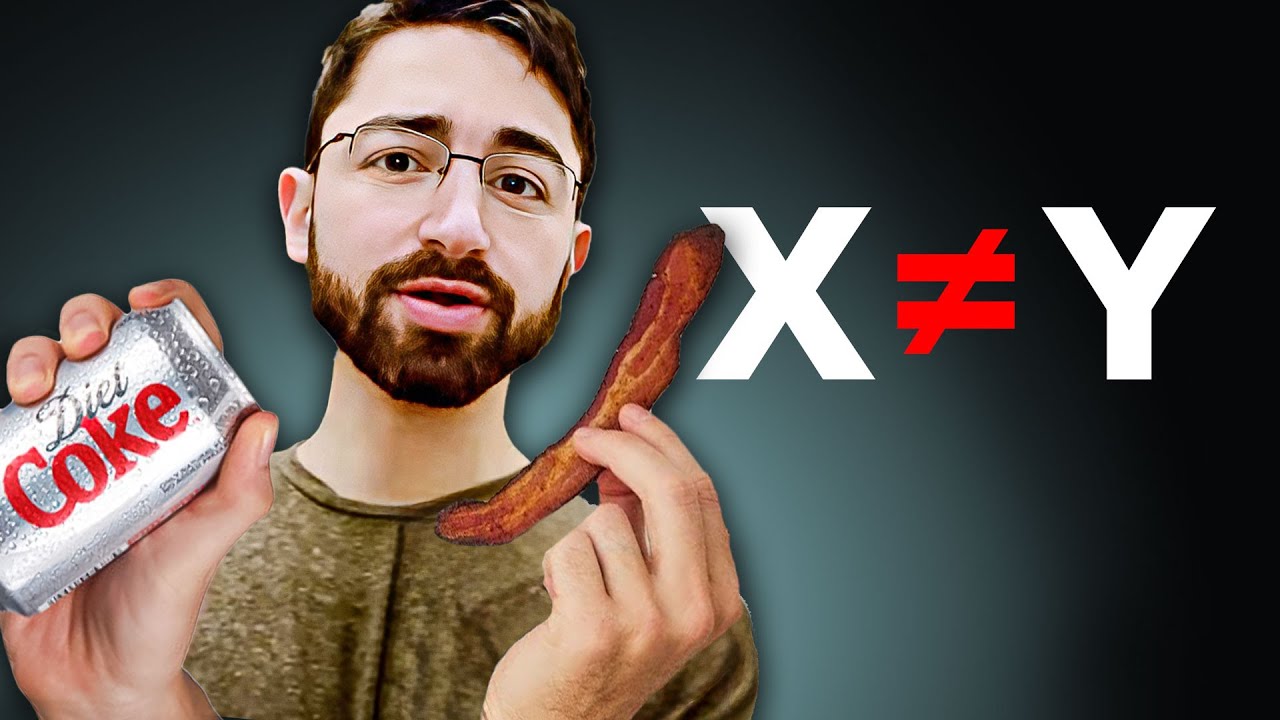
Nick Norwitz breaks down 12 common diet myths, from ketogenic diets and saturated fat to seed oils and artificial sweeteners. He argues for nuance over hyperbole, emphasizing that individual responses vary widely and research gaps matter more than provocative claims.
Chapters
I thought time was due for a video specifically about common myths, misperceptions, and what I'm going to call false equivalencies—statements like X where they don't equal other statements Y that might seem very similar but are actually incredibly distinct. I want to highlight these because, as you probably well know, discussions on social media can be oversimplified, leading people to talk past each other. And on these topics, I think it's important to have nuanced discussions because they are important. That they're core to individual and public health. And so when we have hyperbolic statements or strawman statements that don't really represent the core argument that's being made by, let's say, thought leaders in the space, it leads to deterioration of the dialogue. And that helps nobody except for the algorithm and maybe some ads revenue people get from getting more clicks. So with that, I'm gonna roll straight into them. The first on the list is the idea that that keto is an optimal diet. You see some people trying to represent the idea that carbs are bad, that going keto is the best diet for metabolic health, and I think that leads to kickback where keto is shamed and vilified. The truth is no, keto is not an optimal diet because there is no optimal diet for all humans. Diets are incredibly individual and depend on not only individual preferences and culture but individual metabolic states. And existing states of health. The, you know, 40-year-old with diabetes and obesity isn't the same as the 27-year-old marathon runner who's training 100 miles a week and maybe can benefit from some carbs for athletic performance. So keto is an optimal diet is not the same as saying keto has unique benefits for some people. I'll repeat that again. Keto is an optimal diet is not the same as saying keto has unique benefits for some people, which is indeed the case. There are some people with treatment-resistant epilepsy or inflammatory bowel disease, polycystic kidney disease, autoimmune diseases, mental health disorders, and yes, weight loss, who seem to uniquely benefit from a ketogenic diet where they haven't had other successes with other approaches. So for these individuals, I think it might be fair to say that keto is an optimal diet for them, or at least it's the best thing that they've ever tried and it's working for them. And so I I think there's a tendency to diminish the power of a ketogenic diet as a metabolic health intervention when we have the strawman or hyperbolic statement keto is optimal. It's not optimal for everybody, but for some people it is uniquely beneficial. That's number 1. Number 2, the concept that saturated fat doesn't increase LDL is distinct from saying body mass index is more important, a determinant, for LDL levels when people are low carb than saturated fat. This is really important because saturated fat and, or I should say, LDL levels, high LDL represents a boogeyman of sorts, I've covered this in other videos, of low carbohydrate diets. It's an obstacle to clinical implementation of ketogenic diets for those, reviewed in point 1, who might uniquely benefit. So it's really important to identify sources of heterogeneity, drivers of high LDL when people are low carb. And the strongest data we have, including a meta-analysis of randomized controlled trials, really does show that saturated fat has a tiny impact compared to being lean and generally metabolically healthy. Those who are lean and metabolically healthy tend to see the massive increases in LDL, not those who are overweight, um, or with obesity and diabetes. So it's important to identify that so you can identify the patients who are likely to have the response rather than making saturated fat the scapegoat and the boogeyman. That doesn't mean that saturated fat can't increase LDL. It just means that, you know, it's not really appropriate to say, you know, high saturated fat ketogenic diet is bad for you because it increases LDL because that's actually not entirely accurate. The thing that's driving it is BMI. So identifying the main driver being lean and healthy isn't saying that saturated fat has no impact. And those are important to distinguish so that we can actually move forward with the science and identify risk factors that would put people at increased risk for high— having high LDL. The consequences of that, yet to be determined. Moving on to the next point, which is also about lipids: statins. There's definitely a culture of statin bashing to the point that people say, you know, statins are rat poison, that the worst thing for you, they're going to poison you, nobody should be on a statin. I disagree with that statement strongly. They're a form of pharmacotherapy that have use cases and can improve outcomes in certain patients if those patients are properly selected. I think there's a false equivalency, and this is statement 3, between statins are bad and not every patient with elevated LDL cholesterol requires pharmacotherapy. And that's not me giving medical advice, that's just basic common knowledge. You want to wrap context around an individual patient. People like to say lower is better with respect to LDL and maybe more specifically LDL-P and ApoB, that lower LDL-P, lower ApoB lowers your risk of cardiovascular disease, all things being equal. I.e., if you have this variable that that is necessary in the causal pathway. If you remove it, then, you know, you are removing some degree of risk. But all things are never equal. Patients, individual patients, are complex, and you have to weigh the pros and cons of any intervention. And so I think it's important to say we have to wrap context around the patient. Not every patient with high LDL needs pharmacotherapy. Some patients might choose not to have treatment. Other patients might choose lifestyle intervention, which can actually be, in some cases, more effective. So that's not the same thing as saying statins are bad, and I think it's important to distinguish those things so that we can have an evolved discussion and say, look, statins, like most other drugs, have their pros, have their cons. You need to weigh those in each individual case rather than having an umbrella statement like they're bad or they should be in the drinking water, neither of which are statements I agree with. So that's point 3. Moving on, point 4. The false equivalency: meat can be beneficial for human health, and meat has no problems ethically and environmentally. Personally, I think that meat can very much be a health food. You know, a lean or fatty steak, some ground beef, super dense in nutrients, and I think can be included as part of a healthy diet. In fact, if you want to take it to the extreme and take the example of carnivore diets, I think it's very legitimate that some people may uniquely benefit from a full elimination diet based primarily on meat. You know, we have these clinical anecdotes, and you can say anecdotes are, you know, a dirty word, but there are patients that come forward and say, "Nothing else worked for my autoimmune disease, my inflammatory bowel disease, until I did this, and it has given me my life back." And you can't discredit those stories. But at the same time, just because somebody might individually benefit, and it actually might have utility in particular cases, and meat might just be a healthy food for the human body, which is a controversial statement in and of itself, but if we take that as the basis of some argument, it doesn't necessarily then follow that meat has no problems in terms of its consumption on a population level. We're approaching 8 billion people. Can 8 billion people eat a very high meat diet on this planet? I don't think so. And certainly factory farm systems, the way we do farming now, has ethical problems. So I think as adults having adult conversations, we have to acknowledge that even if we say meat has health benefits, there are also problems with consuming too much meat on a population level with respect to the environment and with respect to ethics in the modern food ecosystem. So those two things can coexist and we can have adult discussions.. It doesn't mean that you have to say this is perfect in every way, or this is the worst thing in every way, depending on what your, you know, where your ideology sits with respect to meat. We can say, okay, some people can benefit from this intervention, say a carnivore diet, or meat is healthy. And at the same time say, you know, there might be legitimate concerns about the whole planet eating a heavy meat diet. So that's point 4. I'm sure of all these points, that probably is gonna be the one that I get the most flack for, but we'll see in the comments. That's my prediction. Anyway, moving on to another hot topic food or food component item, fructose. Saying fructose has unique metabolic properties that are potentially harmful beyond just its calories is distinct from saying things like fruit is bad. Yes, fruit has fructose, but fructose, you know, it's a molecule that when consumed in excess, when it overwhelms the ability of the GI system even to convert it into other sugars, It gets into the cell and has unique metabolic properties that I think are potentially harmful. I've reviewed them in other videos, but to briefly go over it, you can talk about the basic science of how fructose, you know, the, the enzyme that acts on it is somewhat unique in that it lacks negative feedback leading to ATP depletion. You get translocation movement of certain enzymes like NADPH oxidase 4 towards the mitochondria. You can actually get a little bit of mitochondrial damage. Buildup of components like citrate driving things like de novo lipogenesis, the generation of new fat. And fructose, you know, pound for pound, calorie for calorie, can exacerbate things like hypertriglyceridemia, de novo lipogenesis in the liver, and fatty liver. These are statements with, you know, evidence backing them. And fructose consumed at the levels that we consume it, I think, is uniquely metabolically harmful. You know, a calorie is not a calorie. Fructose, I think, is. Potentially damaging. It does not follow that blueberries or strawberries or even a banana are bad for you. When you take an individual food component and then you mix it into a food matrix, you know, a lot of things come into play—interactions with other components in the food. And also you need to consider the dose. You know, do I think a bowl of papaya and mango and banana, maybe a little honey drizzle on it, is a good breakfast for someone with diabetes? No. Do I think wild blueberries are a potentially healthy food? Yes, because wild blueberries aren't just fructose and there's a dose consideration there. So 0.6 or 0.5, sorry, was fructose I think does have unique properties that make it potentially metabolically harmful. It does not follow that fruit is bad. That is a false equivalency. The next one, somewhat related, has to do with fiber. Fiber is a really controversial topic. And the truth of the matter is fiber is not essential. You do not need fiber in the diet. Emphasis on the word need. I think, you know, the concept of essential nutrients gets confused with the idea that some nutrients can be beneficial but not essential. Another kind of tangential example would be long-chain fatty acids, um, EPA and DHA. That's not controversial to say they're good for health, but they're not actually essential nutrients. And in the same way, you don't need fiber. You don't even really need carbs. And in some people, fiber elimination can be beneficial. For example, in some cases of Crohn's disease, fiber elimination can be incredibly beneficial by changing, um, positions of certain pathobionts in the microbiome. This has been shown in recent papers published in journals like Cell, Host, and Microbe. But it doesn't equate to the statement that fiber is bad for you or fiber doesn't have any benefits. This is now more of a controversial opinion statement. I don't think it should be, but I think for your average person, fiber from fiber-rich fruit foods, let's say wild blueberries, chia seeds, Brussels sprouts, probably does have some benefits in many different ways. And the literature would overall, I think, support that. But there are heterogeneous responses within any individual. And for some people, lower fiber diets actually might have some therapeutic benefit. So again, you don't need fiber is not the same as saying fiber has no benefits or fiber-rich foods aren't healthy. Those are false equivalencies. All right, moving on. Another controversial food topic, seed oils. Seed oils are, I think, a very poorly defined term. I think, you know, some people hear seed oils and they think of like the fryer oil at McDonald's, you know, highly oxidized, fragile oil that, yeah, I don't think you should guzzle fryer oil. But there's a creep of logic and terminology where some people take seed oil to be any oil, you know, high in omega-6 fatty acids, linoleic acid, which means any food— or this is how the logic progresses— any food high in omega-6 is therefore unhealthy for you. And some people say even highly obesogenic, which means things like walnuts or pecans So I want to, you know, delineate the very clear distinction between guzzling fryer oil and including some raw walnuts and pecans in an individual's diet. I think it's pretty common sense to say don't guzzle fryer oil, and even that highly oxidized processed omega-6 fatty acids potentially do have unique metabolic properties that make them harmful. That is not the same as saying that nuts are unhealthy. I think nuts particularly raw nuts, are incredibly healthy. Now, there are actually nuts with lower omega-6 if you do choose to want to limit that in your diet, but, um, again, false equivalency. Fryer oil is not the same as some raw pecans, which personally I really enjoy. Moving on, diet soda and artificial sweeteners— use Diet Coke as the canonical example— it's not a health food. I don't believe it's a health food. That's not the same is saying Diet Coke is worse than Coke. That's often the Montanbéli argument stream I see. If I represent a paper and say, look, in this paper there are pretty interesting data that Diet Coke can enhance anxiety, and that this even might be a transgenerational effect, at least in animal models, because you can only do those experiments in animal models, and that should give us pause for concern and let us consider whether or not this is a good intervention, all things being equal, all things being equal, I mean the comparison will be, say, water. That is not the same as saying Diet Coke is worse than Coke. This actually often comes up where I'm saying, look, artificial sweeteners, you know, be they aspartame, which is in Diet Coke, saccharin, sucralose, there are data that they're potentially harmful. They can screw up the microbiome, lead to glucose intolerance, you know. Those are the data we need to consider. But then somebody's like, but Diet Coke is such— so much better than Coke. How could you say don't drink Diet Coke? I never said don't drink Diet Coke. Be an adult, make an adult decision. But in making informed adult decisions, we need to consider the data open-mindedly. And so there is a middle point between saying Diet Coke is the same as water, that is perfectly healthy and it's all about the calories because it's fewer calories, and saying, you know, Diet Coke will lead to cancer and you're gonna develop a massive glioblastoma multiforme and die in 4 days. So you see these hyperbolic positions represented. I don't think Diet Coke is gonna cause cancer rapidly, but I also don't think it's health food. I think as an adult, you need to decide whether or not it's something that is a tool, because it is a tool, that you want to incorporate into your diet, or whether the data on aspartame's negative health effects potentially give you pause and you might wanna try something different like sparkling water with a little bit of lemon in it, or just plain water if you can tolerate it. Again, Be an adult, make an adult decision, but don't stick your head in the ground and ignore the data that aspartame does have negative health effects. Those are the data. Moving on. Point 9. Now, if you don't follow me a lot, you might not know what lean mass hyperresponders are, but lean mass hyperresponders, they're the population of people who go low-carb and see massive elevations in LDL cholesterol because they are lean and metabolically healthy. As explained by the lipid energy model. Now, there's a lot of controversy around this phenotype, and the false equivalency I want to represent has to do with the risk in that profile, in that phenotype, with a very, very high LDL along with the high HDL and low triglycerides that are part of a metabolic response to low carb in some people. So the question we pose, or one question which we are research— researching I'll repeat that. The question we pose, or one question we pose, which we are researching, is: are lean mass hyperresponders, are people who are lean and go low carb and have massive increases in LDL, are they at increased risk for cardiovascular disease? Which is not equal to the statement LMHR aren't at increased risk for cardiovascular disease. I'll repeat that because this one's very, very important. Asking the question 'Are LMHR at increased risk for cardiovascular disease?' is not the same as the statement 'LMHR aren't at increased risk for cardiovascular disease.' The first is a question which is a legitimate question to ask in the present, um, you know, given the present research available. We don't know. This is a unique metabolic response. We don't have anything that's really a good parallel, and we don't know what the consequences of high LDL are in this particular population. That is an open question that needs to be explored. We also don't have data, at least not very strong data, saying that they are a low-risk population. It's very possible that they're a low-risk or high-risk population. So I and my research colleagues aren't making any claims— some are, but we aren't— that LMHR aren't at increased risk. But we think it's valid to ask the question, "Are LMHR at increased risk?" And these two things are incredibly distinct. And important to distinguish between if we're actually going to have a, a discussion and move forward. The next point, point 10, the false equivalency, is related to inflammatory bowel disease, something that's near and dear to my heart because it's something that I suffered with and I've talked with lots of patients who have suffered with it as well, a lot of whom have had success in trying a ketogenic or carnivore diet in treating inflammatory bowel disease. And the theme I hear again and again and again is they went to their doctor and their doctor said, "Diet doesn't play a role in treating inflammatory bowel disease." And I've heard doctors say this as well. That diet doesn't play a role in inflammatory bowel disease is very distinct from saying we don't have strong data that diet plays a role in treating IBD. So this comes to the concept of absence of evidence isn't evidence of absence. The reason we don't have strong data that diet plays a role in treating IBD is because rigorous studies on this topic haven't been done, because there isn't the funding to do them, or at least there hasn't been historically. There hasn't been, for example, a great randomized controlled trial comparing a standard American diet to a clean ketogenic diet to a vegan diet to a carnivore diet in IBD. That would probably provide really useful data, and my prediction is that there would be dietary approaches that are incredibly effective for inflammatory bowel disease, but those studies have not been done. It does not follow that diet doesn't play a role in IBD. Just from a 50,000-foot view, it makes sense that inflammatory bowel disease would be affected by what we eat. And when you align that with all the tens to hundreds, maybe even thousands of clinical anecdotes of people treating their IBD and even going into biopsy-proven remission, like myself, with changes in diet. It seems obvious that diet does play a role in IBD, or almost certainly does. We just haven't done the studies to prove what diet or what diets are best. So that's point 10. Saying diet doesn't play a role in IBD, which I think is false, is not the same as saying we don't have strong data that diet plays a role in treating IBD, which is technically true and a statement that I think needs to be overturned by pursuing more rigorous research that thus far hasn't been pursued. Moving on, point 11 has to do with the carbohydrate insulin model of obesity versus calories. People hear carbohydrate insulin model and then try to boil it down out of some naivete or ignorance to saying the carbohydrate insulin model says calories don't matter. The carbohydrate insulin model explains the obesity epidemic as follows: that when you eat a high glycemic load diet, there are increases in glucose and insulin, and that overall hyperinsulinemic, high insulin state causes fat cells to want to gobble up energy. And that causes you to eat more and also actually causes your body to burn fewer calories, all things being equal, leading to, you know, weight gain and increased caloric consumption, decreased energy expenditure over time. The core here is the carbohydrate insulin model is perfectly consistent with thermodynamics, the idea of calories in, calories out. Um, calories in, calories out, and here's where the nuance lies, I don't think is actually a model of obesity. It's a description. It's a description of thermodynamics. It actually doesn't give any causality. It's just saying when there is weight gain or weight loss, there must have been an energy deficit or an energy surplus. That's accurate, that's just a statement of physics, thermodynamics. But it doesn't actually give any information about the pathogenesis of obesity, which the carbohydrate-insulin model does. Now it's important to recognize scientific and biological models often aren't complete. They should be useful, but they're often not complete. So the carbohydrate-insulin model isn't pretending to be a universal model of obesity. It's carbohydrate-insulin model that when you eat a high glycemic load diet, you have these waves of insulin and glucose, and that actually ends up creating an energy deficit for available energy in the blood that drives hunger. There are actually a lot of data on this, and I go over them in other videos that cover papers that colleagues and I have conducted. You can see a prior video on the diet fits analysis by Professor Adrian Sotomayor, which reanalyzed, for example, a popular randomized controlled trial showing that in that data set where it wasn't represented, you know, in the original data as it was presented, there actually is evidence for the carbohydrate-insulin model. So we've done reanalyses of other major trials that we didn't conduct and find actually no, the carbohydrate-insulin model holds in these trials as well, makes certain predictions, and those predictions tend to carry through. It does not follow that calories don't matter. It's just providing a, causal cascade through which we can see the obesity epidemic through a new lens, which personally I think is very valuable. And as a scientific model, places the carbohydrate insulin model as much better than the energy balance model, which can always do that thing of sweeping everything else under the rug of calories without, without needing to necessarily provide a concrete model identifying factors other than those that are a little bit hand-wavy, like hedonically pleasurable foods, which are hard to define, that explain obesity. So core to point 11 is saying the carbohydrate insulin model is a useful model in understanding obesity is not the same as saying calories don't matter. All right, moving on. Point 12. Point 12 has to do with the Oreo versus statin study, which obviously has been a point of controversy. The misperceptions that I see with respect to Oreo versus statin were that I was trying to prove something. I've been clear again and again, Oreos aren't a health food. I think that should be pretty obvious. And I'm not trying to prove anything about LDL and its risk with respect to cardiovascular disease or the value of statins. I'm not trying to prove anything with an n 1. I've seen a lot of people trying to brush the Oreo versus Statin paper under the rug because it's, oh, it's just an n=1. To me, that's pretty superficial and defensive thinking and represents that whoever's commenting clearly doesn't understand the scope and purpose of what that project was. And I think with any project, it's important to understand the scope and purpose. Oreo versus Statin for me was productive provocation. It was an idea that came to my mind, to test in myself a provocative prediction of the lipid energy model, to make people who maybe weren't familiar with lean mass hyperresponders and lipid energy model turn their heads and go, what's going on here? And just say, this is interesting and I want to ask more questions. So in brief, it wasn't meant to prove anything. It was meant to draw attention to the existing body of rigorous literature and the emerging literature on this topic. So some people say, oh yeah, it's just an n 1. Those people are also— tend to disregard the fact that we have a meta-analysis of 41 randomized control trials. We have rigorous literature. That's what I actually want you focusing on. But to get your focus there, you need kind of, you know, a spearhead to poke people a little bit. And so that's what Oreo versus Statin was. I think that's just a representation of the idea that projects, whatever projects, always have their methodological limitations. They have scope, they have purpose. And it's always really important with any study to identify what was the purpose? What was the team trying to demonstrate here or elicit in terms of a response? What point were they trying to make? Because often the criticism is in line with the scope and purpose. So when you say, Nick, you proved nothing with an n 1, I'm like, I wasn't trying to prove anything. I was trying to provoke you and get you interested. And guess what? Now you're commenting and now we can have a discussion. So those were my 12 points. I hope you found them interesting. If you have other points that maybe I missed and you'd like me to address, let me know. I think this is, uh, kind of a fun and important approach to have highlighting false equivalencies because we know that, uh, Twitter, X, and, uh, other social media spaces could really do with a lot more nuance. So highlighting those false equivalencies, those, you know, dips, dodges, and diversions that people tend to use to stoke, intentionally or not intentionally, controversy, I think are important to call out so that we can move forward productively together.










