5 Quick and Easy Biohacks for 2025
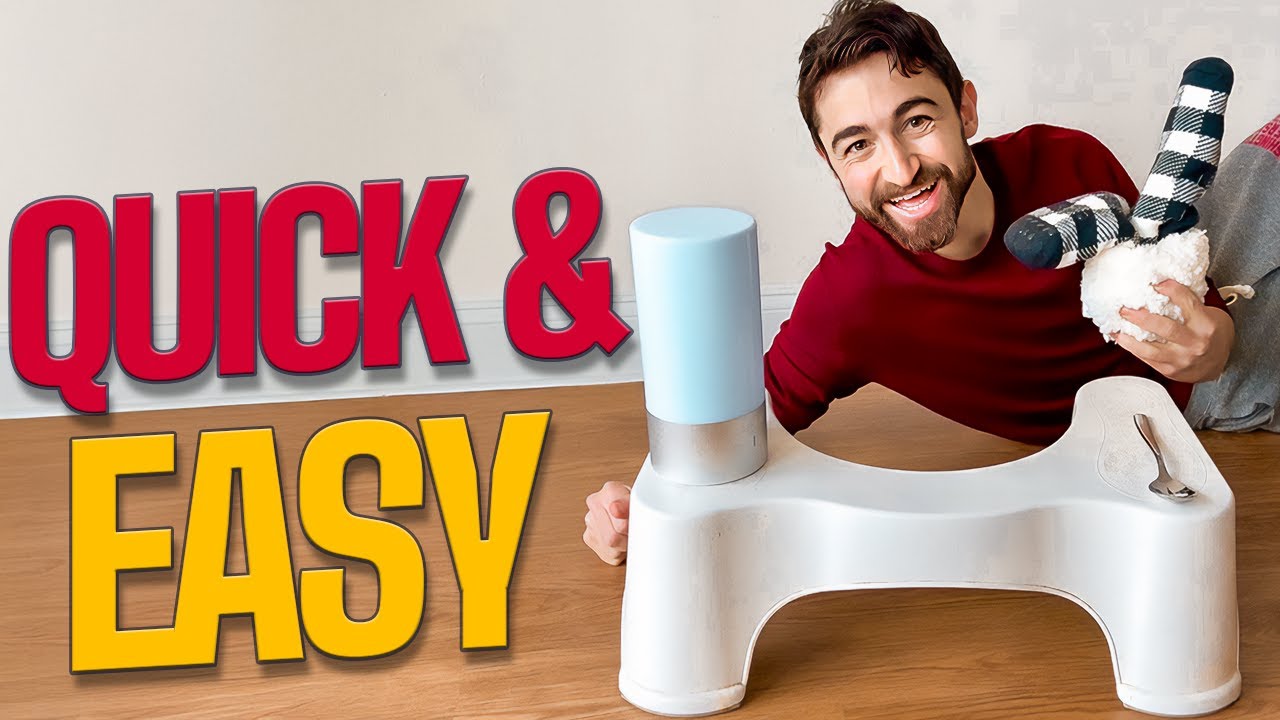
Nick Norwitz walks through five low-effort biohacks: warming your feet to improve sleep, 40 Hz light stimulation for glymphatic clearance, breathing techniques to shift your nervous system, tongue scraping for nitric oxide, and toilet posture for better bowel movements.
Chapters
Would you believe that fuzzy socks, flashing lights, your favorite spoon, and how you breathe and poop could improve your health in 2025 and beyond? In this video, I'm going to share with you 5 low-effort, quick, and easy biohacks that I've either adopted or am adopting in 2025. And stick around because I'm going to let you know what I'm interested in exploring next and where to find much, much more metabolic health science. But let's get into it. 1. Warm feet for sleep. Back to fuzzy socks. These were a gift from my Aunt Nicole. Little did she know they're also a sneaky biohack. Here's how they work. When your body is preparing for sleep, your core temperature needs to drop. In general, your core is warmer than your extremities, your hands and your feet. So if your hands and your feet are cool, your body needs to heat up the core even more so that heat can flow outwards from the core to warm up your extremities. Does that make sense? Now, this temperature difference between your core and your hands and your feet is known as the distal to proximal skin temperature gradient. And the greater the gradient, the cooler the extremities, the more heat your body core needs to produce in order to warm up the extremities. In fact, one study found this distal to proximal gradient was the best predictor of how quickly someone fell asleep. You can see that here in this graph. The green dots show a pattern whereby the hands and the feet were warmer and the temperature gradient was closer to zero. What you can also see is that sleep onset latency, which means how long it takes to fall asleep, was significantly shorter when the distal to proximal gradient was smaller, closer to zero. And this is why fuzzy socks are a sleep biohack. They keep my feet warm, reduce the size of the distal to proximal gradient, and helped me fall asleep faster. And in terms of some other rapid-fire tips for good sleep hygiene, the basics: sleep in a dark, cool room. I prefer 68°F or below, and if you sleep above 72°F, you're a weirdo. Get blackout shades if you can. Include a wind-down period before bed where you're not focusing on work and you're doing something that relaxes you. And try to get bright sunlight in your eyes in the morning and avoid intense blue light before bed. The list goes on, but that's your basic starter pack. Anyway, thank you, Aunt Nicole, for the fuzzy socks. Moving on, biohack 2: 40 Hz stimulation. Cards on the table, my sleep isn't great. It's the Achilles heel of my health report card. Diet: A. Exercise: A. Sleep: C minus, and that's with grade inflation. This concerns me because sleep is brain prime time for cleaning metabolic waste out of the brain. The brain is so densely packed with neurons and support cells called glial cells and blood vessels, it literally doesn't have any space for what's called the lymphatic system, a waste removal system that operates throughout the rest of your body. There are no space for lymphatic vessels in the brain. So how does the brain eliminate waste? Well, during sleep, when the brain's metabolic demands drop, blood vessels constrict slightly, creating channels along the sides of them between the brain and the constricted vessels. Then, cerebral spinal fluid flows through these channels, rinsing out waste. And this process, this system is called the glymphatic system, a mashup of glia, brain support cells, and lymphatic. The issue is when sleep is poor or deficient, glymphatic clearance suffers and waste can build up. That's why I'm always looking for ways to boost glymphatic function, glymphatic efficiency, and maybe even boost glymphatics while I'm awake. And one promising strategy is 40 Hz visual stimulation. Flashing lights at 40 cycles per second, that's that's what hertz means. Research suggests this may promote glymphatic clearance and protect brain health as you age. And if you're like me and you want to geek out on the science behind how the glymphatic system really works and how 40-hertz neural stimulation can improve glymphatic function, I've linked deeper dive videos in the notes below, along with the associated papers. And if you want to know the devices I'm experimenting with, I'm using gamma light therapy, and I've also included links to those below. Anyway, sleep is essential. You need to get enough, or you need to try to get enough. But if you're like me and you're just not an A+ sleeper, this is a pretty promising biohack. Moving on, 3, breathing techniques, specifically the physiologic sigh. And I'm also going to talk about a related non-sleep deep rest protocol. Now, if you haven't noticed, I'm a type AAA++ person. I'm really high-strung and sympathetically driven. My body is constantly on high alert. Over time, this takes a toll. That's why I think it's especially important for me to develop tools that shift me out of this sympathetic overdrive and into a calmer, more restorative state. Breathing exercises are powerful tools for this, for rewiring your nervous system. 2 in particular I want to highlight are the Physiologic PSI and Non-Sleep Deep Rest, or NSDR. The Physiologic PSI involves 2 stacked inhales followed by a prolonged exhale, like— In a randomized controlled trial published in Cell Reports Medicine, just 5 minutes of this breathing technique daily for a month outperformed other breathwork and mindfulness techniques for improving mood, specifically positive affect. If you want to think of it simply, the Physiologic sigh is kind of like a reset button for your inner chaos. Just don't try it when you're in mid-fight with your girlfriend or wife. And I wonder what would have happened if they had that comparator arm in the randomized controlled trial. Talk about an interacting variable. Moving on, non-sleep deep rest, NSDR. This is similar but not actually defined by a breathing pattern per se. It typically involves closing your eyes and listening to a prerecorded script and focusing the spotlight of your attention on different bodily sensations. The goal is to reduce narrow sensory input, almost like a nervous system reset or an intentional cognitive halfway point between waking and sleeping. I frame it like this because I'm leaning more and more on NSDR protocols when I don't get enough sleep, which as I've suggested already is honestly most nights. Now, one open question I have, and maybe you have too, is could practices like NSDR promote glymphatic clearance? Maybe, probably wouldn't be as effective as good sleep, but perhaps it could help with glymphatic clearance. If so, long-term practice of NSDR and related protocols might protect against cognitive decline or diseases like Alzheimer's disease. I can't promise that based on current data, but it's a hopeful idea. Also, NSDR may help you fall asleep when practiced in the evenings and may improve heart rate variability—make it higher, that's good—and lower cortisol levels, the stress hormone. Again, in full transparency, I could not find rigorous data showing that NSDR lowers cortisol. It's possible I missed it, but I do think it's a physiologically reasonable hypothesis, so I raise it in case it's a helpful concept for you and one that will motivate you to try this health-promoting practice. All right, moving on. 4. Tongue scraping. I thought this was a gimmick when I first heard about it, to be honest. But here's the deal: the oral microbiome, The community of microbes living in your mouth is connected with the microbiome throughout the rest of the body—the gut microbiome, the skin microbiome—and has a real impact on your overall health, even affecting things like Alzheimer's disease. One thing tongue scraping may help with is the production of nitric oxide via bacterial enzymes. Nitric oxide is a crucial cardiovascular signaling molecule It promotes blood vessel dilation, improves circulation, and may help lower blood pressure. So, how does tongue scraping play into this? Well, it removes bacteria from the surface of the tongue, reducing competition and allowing deeper-dwelling nitric oxide-producing bacteria in the crypts to thrive and flourish and produce more nitric oxide. In this way, it may help enhance nitric oxide production and support cardiovascular health, even lower blood pressure. Otherwise put, if I were to create a TV ad for tongue scraping, it would be, "Tongue scraping? Because bad bacteria need a little eviction notice now and then." Anybody gonna hire me as an ad agent? Now, to be honest, again, I could not find strong human trials showing that tongue scraping directly improves clinical endpoints, like blood pressure. But to me, this is more of a case of "hasn't been tested rigorously" than "has no benefit." And this, like the other interventions I'm going over in this video, is a low-effort intervention. Costs you almost nothing. You can just use a basic spoon. So why not? Plus, my tongue has never looked pinker. It's like Kirby went on a keto diet. And it feels kind of nice, honestly, like a tongue massage. Here's how you tongue scrape. Using a metal tongue scraper, which you can just buy online, or even just your favorite spoon, place the utensil at the back of the tongue, as far back as you can go without gagging, and pull it to the front of your tongue in one clean motion. When I'm doing this, I try to channel my inner Mr. Miyagi. "No inhibiting bacteria, off!" Although, I guess Sensei Kreese deserves some credit too. Sweep the tongue. Bad bacteria deserve no mercy. That said, don't go too hard or you'll bleed. I've made this mistake. And rinse the tongue scraper with water in between scrapes, and repeat this for about 2 minutes. Another relevant aside: while mouthwash might be great before a date, it's probably not ideal for your health. Most mouthwashes wipe out the good nitric oxide-producing bacteria. So remember, scrape, don't swish, at least not with standard commercial mouthwashes. Finally, 5, Squatty Potty. If you haven't seen this ad, "This Unicorn Changed the Way I Poop," look it up. It's hilarious and has earned its 42 million views. But seriously, most people don't poop optimally. When you sit with your knees level with your hips, as modern toilets encourage, a sling-shaped muscle of the pelvic floor tightens around the rectum, choking it. This slows your bowel movements. But elevating your feet using a Squatty Potty or just overturned wastebaskets or even some stacked books, this releases the tension and makes pooping easier and more complete. My Squatty Potty is probably the single best cheap health-promoting device I own. This is not a joke. Constipation is a real issue, not one we talk about, but it's a real serious issue that affects a lot of people, and having a healthy morning bowel movement can set the tone for your entire day. And honestly, I've never felt so well positioned for success. Now, what's next? Before I conclude and tell you where to get more information, I want to quickly firehose you with the hot topics in health that I'll be looking more into this summer and fall. I share this with you in case any of these topics pique your interest and you have specific questions. You ready? Yerba mate, rucking, methylene blue, lipid manipulating agents, creatine, which has definitely gotten big in 2025, a survey of biohacking tools, molecular hydrogen therapy, and new biomarkers biomarkers in tech and cardiovascular health. What else would you like to learn about here? Tell me. I take your votes and proposals very seriously, and sometimes do videos in responses to requests from subscribers, like the coffee microbiome video as proposed by subscriber and community member Sarah Turner. So please subscribe and send me your votes and thoughts. I do take them seriously. In conclusion, What unites all 5 of these biohacks is a respect for our biology. Each one works with our natural systems, not against them, to restore balance, efficiency, and resilience. And that's the essence of holistic health: learning how to support your body's built-in health-promoting systems through intentional daily practices, some of which can be quite simple and easy. And you don't have to adopt everything all at once. You don't need abrupt, radical changes, although I'm the last person to knock that if you're someone who thrives on extremes. Some people do, some people don't. Optimization doesn't require perfection. It starts with awareness, consistency, and a bit of curiosity. Now, tell me in the comments which of these practices you'll adopt or have already adopted, or share something that you do that I didn't mention that others could benefit from. The list is certainly long, and the umbrella of metabolic health is broad. That's the best part—there's always something new to try, always another variable to tweak. That's why I love this space. And as a final call to action, if you want to get the latest on metabolic health sciences, please see my Stay Curious Metabolism newsletter. This is where you're going to get the first reviews of the newest research on all things metabolic health. From lactate made during exercise that can bind to proteins, one called SNAP91, in neurons in the brain, changing brain activity to reduce anxiety. How specific fatty acids, in one case stearic acid, can alter cell signaling and inflammation to inhibit tumor growth and potentially suppress the risk of colon cancer. How compounds found in olive leaves might fight muscle aging by improving calcium transport into mitochondria. How different cell types in the brain can form physical tunnels between each other to exchange components, like some neurobiological potluck. And so on. Honestly, I'm just so happy and grateful to be here, learning with you, teaching you and learning from you. Stay curious, and thanks for listening.










