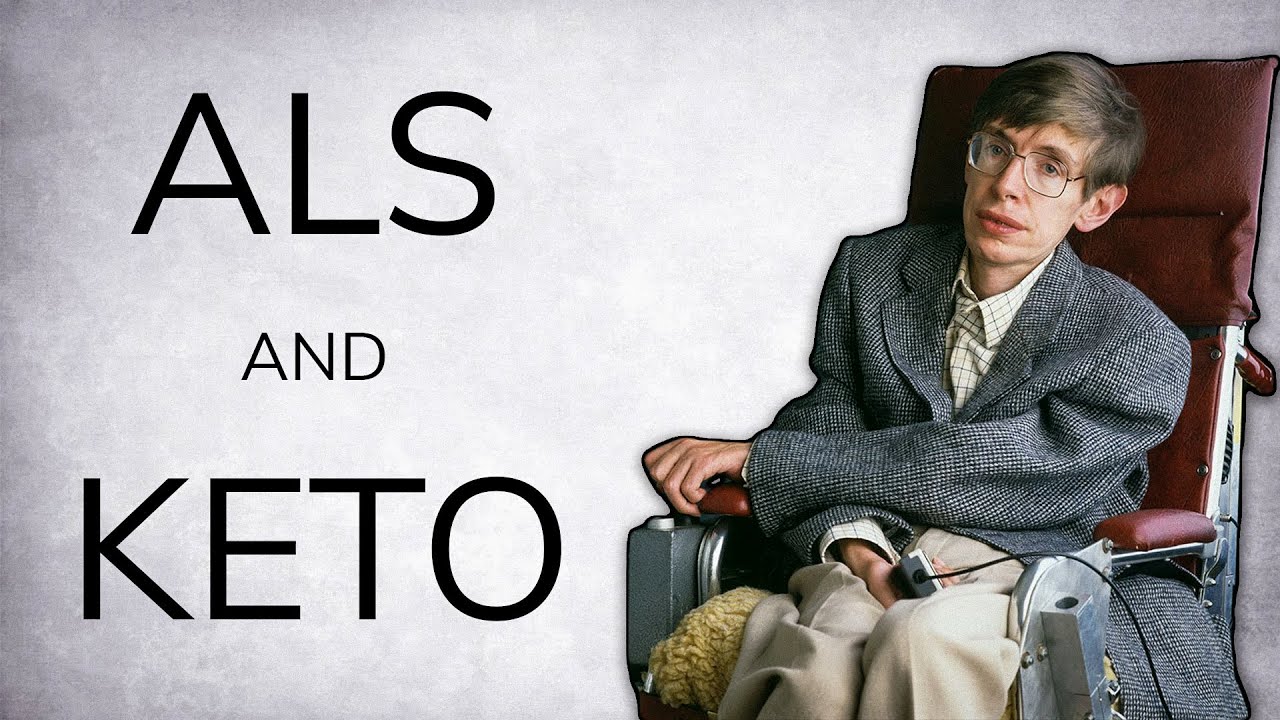
A 64-year-old man with bulbar-onset ALS, typically fatal within 24 months, survived 45 months and showed unexpected improvements on a ketogenic diet combined with time-restricted feeding. His ALS Functional Rating Scale rose from 42 to 45 over 18 months instead of declining, and his lung capacity improved from 3.83 L to 4.33 L. This single case suggests ketone bodies may support neuronal energy and reduce oxidative stress, though broader trials are needed.
Chapters
Amyotrophic lateral sclerosis, or ALS, is a devastating condition. It causes degeneration of the nerves in your brain and spinal cord. It also goes by Lou Gehrig's disease, after the baseball player who was diagnosed with it, and famously affected the physicist Stephen Hawking. Now, Stephen Hawking provides an interesting case. He was diagnosed at age 21, and wasn't expected to live to even age 25. And yet, he lived for over 5 more decades, eventually dying at age 76. And over the course of his life, his amazing life, he made exceptional contributions to humanity, cementing himself as one of the most famous scientists of all time. There's actually a great movie about it if you haven't seen it called The Theory of Everything starring Eddie Redmayne, which I recommend, great movie. But that aside, I now want you to imagine for me what the world would be like if instead of being basically an immediate death sentence, very terrible one at that, we could have many more patients diagnosed with ALS who live full lives like Professor Stephen Hawking. Just imagine that for a second. How hopeful that sounds. That's what I want to talk about now. The case of a gentleman diagnosed with a particularly severe form of ALS who, despite a terrible prognosis, underwent an experimental treatment that may have given him the best shot he could have had. This case report published in Frontiers in Neurology by Professor Matthew Phillips et al. reviews the case of a 64-year-old gentleman who was diagnosed with what's called bulbar onset ALS. This is a fancy term for a type of ALS that involves the lower cranial nerves early on. And what's important for you to know is this form of ALS, the Lar ALS has a particularly severe prognosis with a median survival of only 24 months. But at the time of this reporting, at the time of this case report, the patient was not only 45 months since symptom onset, about 2 times longer than median survival duration, but was actually having an improvement in some of his symptoms relative to the time of diagnosis, which is wild in the ALS world. So the question, what was his special treatment? It was a ketogenic diet. It was actually a ketogenic diet coupled with time-restricted feeding to further boost ketosis. But let's rewind a little bit and paint a picture of just what this poor man was experiencing before his treatment with the ketogenic diet. Prior to his diagnosis, he was having about 9 months of slurring his speech and slowing his speech. He was having difficulty swallowing solids. He was coughing when consuming liquids. He had constant fatigue and depression with episodes of inappropriate laughing and sobbing in inappropriate context. This is an emotional disturbance called pseudobulbar affect. Anyway, over the course of months, he lost over 20 pounds and his symptoms were just steadily getting worse. Then, the patient's treating team thought about trying something different. Cut the carbs, up the fat to induce nutritional ketosis, i.e., a ketogenic diet where your body is burning fat and turning some of those fat into ketones. Why? Because ketones produced on a ketogenic diet have known beneficial effects on mitochondria, the powerhouse of the cell, and neurons that are dysfunctional in diseases like ALS. Burning ketones can also, in some respects, improve energy efficiency and reduce the generation of oxidative free radicals that can damage mitochondria in cells. And what's more, there are actually some data in mice suggesting a ketogenic diet could help in ALS, but that's in mice. And until now, a ketogenic diet for ALS really hadn't been tried in humans. So that's what they report. And the response of this patient was impressive. On an ALS function rating scale, where higher numbers represent better function, the score actually went up for this patient from 42 to 45 over 18 months. Now I want to emphasize this is very impressive given that in ALS, in this form of ALS, scores scores are expected to downtrend 1 point per month, and yet the patient's went up over the course of a year and a half. Additionally, forced vital capacity, which is a marker of lung function, which is also expected to decline in ALS by about 2 to 3% per year, also improved in this patient over 18 months, going from 3.83 liters to 4.33 liters, when it should have dropped instead to 2.87 liters. So again, where we would have expected to see a drop, we actually saw an improvement. And perhaps most impactful on this patient's quality of life and that of his partner were his improvements in mood symptoms, including resolution of his depression, along with improvements in fatigue. Other symptoms stabilized, and yes, a few actually did get worse, in line with standard disease course. It's unlikely that this patient will regain full physical function or live to be 100 running marathons, and I don't mean to pretend that bacon and eggs or salmon and extra virgin olive oil are silver bullets for ALS. There's no such thing. However, In a medical world where there's very little to offer patients with this devastating disease, ALS, I find these data awe-inspiring and hope-giving, and I hope you do too.