Calories Don’t Cause Obesity… Yes, Really
In this long‑form monologue, Nick Norwitz argues that calories are not the primary driver of obesity; instead, they are a downstream consequence of how the body processes different foods. He opens with a provocative claim that “calories don’t cause obesity” and uses the reaction it provoked on social media as evidence of a societal fixation on calories. The core of the presentation is a series of scientific examples: (1) animal studies showing that fat‑gain can be uncoupled from caloric intake when diets differ in glycemic index, illustrating energy partitioning; (2) human metabolic variability research from the 1990s indicating that some individuals increase energy expenditure dramatically in response to excess calories; (3) a detailed clinical case of a 29‑year‑old who ate 5,800 kcal/day on low‑carb versus low‑fat diets, gaining far more weight on the high‑carb version despite identical calories; (4) references to randomized controlled trials where macronutrient composition, even under calorie‑controlled conditions, alters energy expenditure and weight outcomes. Norwitz critiques acute over‑feeding experiments as poor models for chronic obesity development. He then enumerates mechanisms that make calories a consequence: non‑exercise activity thermogenesis (NEAT), mitochondrial uncoupling, microbiome‑mediated fecal calorie loss, and hormonal effects of insulin. The talk shifts to practical advice: prioritize food quality (protein, healthy fats, low‑carb vegetables), stabilize insulin and blood glucose (use CGM, avoid processed sugars, prefer allulose/stevia), and monitor energy levels as a proxy for metabolic health. Throughout, he reflects on the backlash to his tweet, framing the emotional responses as proof of the very calorie‑obsession he challenges. Finally, he promotes his “Stay Curious Metabolism” newsletter and community, positioning provocation as a tool to spark deeper inquiry.
Chapters
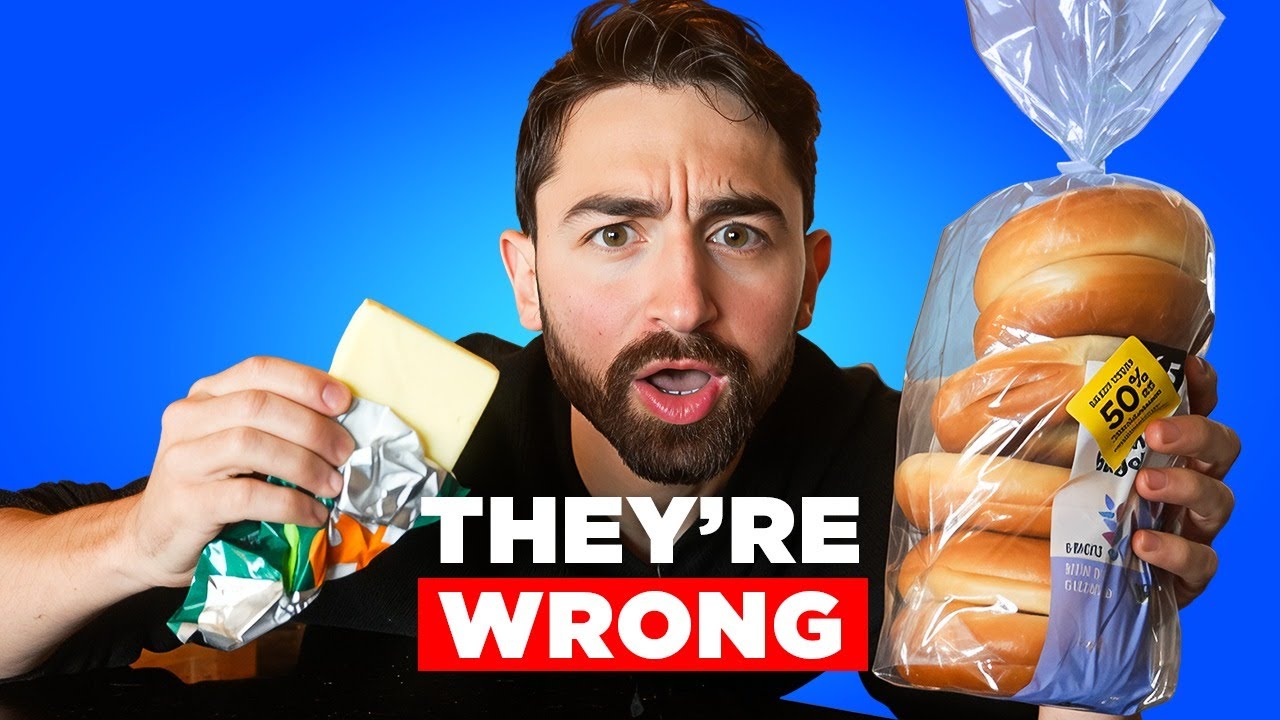
Look at this butter and these bagels. Both have the same number of calories, but only one will make you fat. And it's not the butter. Because here's the truth. Calories don't cause obesity. Calorie deficit. Calories. Calories. Calories. Calories. Calories. Calories to lose weight. Those four words, calories don't cause obesity. They're sufficient to set the internet on fire, as I've recently demonstrated. That one word calories. It's enough to make people's brains shut down as if their neurons were in a caloric deficit. Some people were so upset they threatened to petition Harvard to take away my medical degree. But here's the best part: I did this on purpose. Because buried in all of the emotional responses are data. Proof that our society is pathologically obsessed with calories and that obsession is making us fat and sick. What should you focus on if not calories? The arrogance of SICO fails. It's like trying to understand flight by jumping. Fat excretion in the feces— shove 10,000 calories per day down their throat. It obscures true understanding. It obstructs scientific progress. Calorie balance is a consequence, not a cause. Hi, real quick before we start, I want to flag that you can always find more information at the associated Stay Curious Metabolism newsletter, which is now a top 3 overall bestseller in science on Substack in the world, and that's thanks to you. It's a community that we're building of people who want to go into the deeper nuances and nerdy asides, and for those who want early access to content that goes beyond the videos. So self-plug over, let's get into the video. Okay, now I promise I'm gonna get to that tweet that sent social media into a tailspin a bit later, but I actually wanted to front-load this video with some data so you can more clearly see what I see that I think the average person misses. We're going to start with animal models, and then we'll build up to the human data and randomized control trials. So to start, look at this. What you're seeing here is a fat mouse and a lean mouse. But here's the deal. The fat mouse didn't actually eat any more calories than the lean mouse. It actually ate the same or fewer calories. So what differed? What differed was that the fat mouse had a diet that was more sugary. It had a higher glycemic index. And what this does is it instructs the body to partition fuel as fat That's nothing using it for other purposes. The main point is it's actually well established you can uncouple fat gain from calorie intake. This doesn't violate thermodynamics, it doesn't violate calories in, calories out per se, it's a question of energy partitioning. And over time, if you partition more energy into fat tissue because of the quality of the food you eat, it drives increased hunger, increased calories in, and reduces energy expenditure, decreased calories out. So you are adhering to calories in, calories out, but that is a consequence, not a cause. And we're going to keep coming back to that. I can't stop eating. But even with respect to humans and just weight gain, we know people with faster metabolisms— you've heard that term, right? And sometimes it feels like a mystical gift, doesn't it? An unfair spin of the genetic roulette wheel if you don't have a fast metabolism. But it's not mystical, it's biology. As far back as the 1990s, studies showed that some individuals respond to an increased energy intake with massive increases in energy expenditure. In other words, they jack up their calorie output, leading to massive discrepancies in weight gain, at least temporarily. And that difference isn't something we can easily predict in advance with the calories in, calories out model. Calories in, calories out doesn't explain why. It's just post hoc arithmetic, not a predictive biological model. Again, the point is calories— calorie balance is a consequence. Not a cause. But at this point I know some people are thinking, "Well, what if you just put somebody in a metabolic ward and shove 10,000 calories per day down their throat? They'd gain weight, right? Inevitably? Doesn't that mean calories can cause obesity?" Maybe. Well, no, not exactly. First, you're not force-feeding someone calories, you're feeding them food with specific macronutrients and biochemical properties, and the body will process different foods in different ways. And those effects go far beyond caloric load. But secondly, and far more importantly, and please listen to me on this one, the physiology of acute overfeeding studies is fundamentally different from the slow, insidious development of real-world obesity. So trying to prove calories cause obesity by overfeeding someone for a few days, it's like trying to understand flight by jumping. Sure, you gain altitude momentarily, but the lift from the jump and the lift from true flight couldn't be more different. And it's the same way with acute caloric overfeeding. Anyway, let's move on. Let's get on to the human randomized control trials, because the human randomized control trials show that you can manipulate the macronutrient composition of foods, of diets, even under weight and calorie control conditions, and then alter energy expenditure downstream. This has been observed for various diets: carbohydrate restriction, protein restriction, And the point here isn't to evangelize any specific diet. The takeaway, the key takeaway, is that by manipulating non-caloric factors, you can induce physiologic adaptations that are directly relevant, that cause weight management, alter chronic obesity, and long-term weight regulation. Hi, future Nick here. I was going back over the edit of this video and I decided I want to provide another case to make the point and tease future content to come. Remember the mice we discussed earlier? Those that were calorie matched but when you cut into their bellies one had a ton more body fat because it was eating a higher glycemic index diet? The point there being that the food we eat, the quality of the food, the macronutrients we eat, they dictate fuel partitioning which then itself dictates energy balance over the long term, making calories a consequence not a cause. Well, I wanna double down on this point and share a clinical report that might resonate with you. Consider this fascinating report involving a young man, a 29-year-old, who increased his caloric intake to 5,800 calories per day, but he cycled through different diets with different macronutrient breakdowns. So for 3 weeks, he ate a low-carb diet with 5,800 calories and 6% of those calories from carbs, consuming a total of 121,674 calories over those 3 weeks. But he only gained 1.3 kilograms and his waist circumference actually decreased by 3 centimeters. But then he did a calorie-matched low-fat diet with 64% of calories from carbs. What happened? Did he gain the same weight? No. Despite equal caloric intake, he gained a lot more weight, 7.1 kilograms, and his waist circumference, rather than decreasing by 3 centimeters, increased by 9.25 centimeters. The big point here is the macronutrient breakdown and the overall quality of his diet determined what happened to his his body, his weight change, his waist circumference, and the differences couldn't be more important. And as a teaser, there's much more support for this in the human controlled trial literature, some of which I pointed out in this video, and more of which I'll review in upcoming content, like this upcoming video on a study where scientists overfed people by 1,200 to 1,500 calories of junk food and candy, and remarkably, they didn't gain weight versus the control, but something else worse happened. Can you guess what it was? Yeah, I'm giving you a cliffhanger, but you'll have to hang on for that video, or you can check out the newsletter at staycuriousmetabolism.com for early access. Anyway, with that teaser over and some more food for thought, let's get back to the main video. Again, the simple point: calorie balance, it's the consequence, not the cause. But now I want a tangent to talk about that tweet that sent social media into a tailspin. I'm going to show it on screen now. Pause if you want to read it word for word. But here are the key points to kick us off. If I, I being Nick Norwitz, overeat by 2,000+ calories that are surplus calories beyond my estimated caloric needs on a ketogenic diet, what happens? My heart rate and body temperature rise. I feel jittery and I burn off the excess energy. Without thought, my body just automates this. Some studies even suggest that certain microbiome shifts on a ketogenic diet can lead to greater fat excretion in the feces although I haven't put my poop in a bomb calorimeter. Sorry, I'm not that dedicated. Anyway, I don't gain weight. I've tried this many times. Now sure, one could argue that retrospectively it's calorie balance, right? My energy expenditure increased to match my energy intake. So calories in calories out wins? Wrong. Because that logic only truly works after the fact. This isn't to say you can't place everything in a caloric framework at the end of the day. It's to say that if you're doing so, you're entirely missing the point. You're making the dependent variable the independent variable. If you focus on calories first and as the primary for chronic weight management, you will lose. And as a sidebar to that, for anyone who now wants to bring up bodybuilders as an example, I'll just say first, again, short-term cutting is different than chronic pathogenesis of obesity. Control for steroids and after all that, still Find me the bodybuilder who cuts calories with candy and let me know how that really goes. Now for the juicy part. Let's look into some of the responses, and I'm intentionally highlighting the brutal ones because I find them instructive and a little bit amusing. Interesting, aren't they? What should be patently obvious is that they're emotional. They're not intellectual. It's very clear that they didn't even read the full tweet. That is obvious, and even self-described academics responded not to what I said, but to a caricature that they either imagined or worse, that they digested secondhand from someone else's oversimplified interpretation. Now I find that extremely ironic because I'm gonna be honest with you, fully transparent, fully authentic, anyone with a sizable social media following engages in some form of attention capturing tactic. I use the tools at my disposal openly. My Harvard brand when it's applicable, Oreo versus statin, 720 eggs. And I'm very transparent about all this. I see no reason not to be. And what I think is hypocritical is pretending to be above those tactics while using them openly. And this is worth pointing out because like it or not, I'm gonna tell you a truth here. You, your attention is the currency in this game with which we're playing. The bigger issue, and the one I hope you'll appreciate, is this: people, whether gym bros or PhD bros, we respond viscerally. We're human, emotional, tribal. The responses, they are generating straw men, caricatures, and in some cases they generate outright lies. And in a very meta way, this proves the very point I'm trying to make. Our society is pathologically fixated on calories, and this pathological fixation, it obscures it obstructs scientific progress, and it derails productive dialogue. So yeah, calories do matter. I didn't say they didn't. In fact, energy is matter after all, right? E equals MC squared? That's a joke. But calories, they're not a cause of obesity or a biological driver of obesity. Caloric imbalance is a consequence, not a cause. The real drivers of obesity, admittedly, they're complex. But that complexity does not justify clinging to an oversimplified CICO model. We can keep going. NEAT, mitochondrial uncoupling in fat tissues, changes in the microbiome for fecal excretion of calories—all these factors and many more impact energy balance in ways that simply aren't captured by simplistic arithmetic. No single biological cascade explains all of obesity. That's not the job of a biological model. A good model doesn't need to be comprehensive, it needs to be useful. And that's exactly where the arrogance of CICO—calories in, calories out—fails. So, now reducing the temperature a bit, if calories aren't the cause of obesity, what can you actually do if you're struggling with weight? What should you focus on if not calories? Well, here are a few high-level practical suggestions, and I'll provide more elaborate teachings elsewhere. I'll link some below. For example, focus on what you eat, not how much. Base your meals around protein, healthy fats, and low-carbohydrate vegetables. Why? Because foods with these macronutrient profiles and this high quality, they affect your hormones, your hunger, and your fat storage in profoundly different ways than high-sugar, ultra-processed, high-carb meals. Focusing on calorie counting and calorie density is like putting the cart before the horse, and this, A focus on food quality puts the horse before the cart—where it's supposed to be. Moving on, stabilize insulin and blood sugar first as a primary. High circulating insulin is one of the major drivers of fat storage. In fact, I'm not even sure you can develop obesity without elevated insulin. So, a key strategy is to minimize blood sugar spikes. You can measure this with a continuous glucose monitor, or more simply by reducing or eliminating intakes of sweets or processed sugars. And if you do feel like you need sweet, Quickly, I'd just recommend probably allulose or stevia as your sweeteners as opposed to artificial sweeteners— aspartame, sucralose, saccharin, etc. More on that elsewhere. Anyway, finally, pay attention to your energy, not just your weight. Your energy levels, especially compared to a previous baseline, are an underappreciated indicator of your metabolic health. If you're sleeping well, moving your body well, and fueling with the right foods, your energy levels should go up. And this is not just about feeling good, it could actually reflect increases in non-exercise activity thermogenesis, which makes you burn off calories, and is a bigger reason some people are resistant to weight gain, like me. And yeah, it feels good too, having energy feels great. That's a feature of eating well, not a tax. And it won't be consistent day to day, but if you make the right lifestyle shifts, your energy will improve and chances are the weight will follow. Now, with all of that, I wanna just take a step back. I want to reflect on this social media episode, not from a biological lens, but from a social one. Was my aim, Nick's aim, achieved? First, let's define that aim. My goal was to put a dent in our pathological fixation on calories, to crack through the noise, at least for some people, I never expected one post or a series of posts to change the minds of the majority on calories. There's a lot of unlearning to do, and I don't think I can do it all in one day. I'm not so naïve to think a single reel or tweet will spark epiphanies across the board, but I do believe in the power of provocation to ignite dialogue. And if that means I walk away with a few arrows in my back, so be it. The attacks quite honestly are shallow. Even a little bit entertaining. The threats are weak. What matters more to me is the thoughtful minority. The people in whom something clicks. The ones who, when they hear "calories don't cause obesity," don't respond with a knee-jerk visceral emotional reaction, but with curiosity. "What does he mean?" And that's what scientific communication often is: finding different ways to say something important until it finally sinks in. And if I've helped even a few people reach that point, then it's all worth it. And frankly, maybe the turmoil, the emotional provocation is necessary to amplify a message, at least to some degree. And frankly, if the collateral damage is I gave some internet trolls a cortisol spike, that's a price I'm happy for them to pay on our behalf. Because what I care about is connecting with the people who want to go deeper, the ones hungry for nuance, the ones who wanna really understand why. And then I want them, I want you to become part of the Stay Curious Army, a growing community that amplifies deep thought, critical inquiry, and long-form understanding. And isn't it ironic that sometimes it takes shallow emotions to open up the door to amplify the message of deeper thinking? Stay curious. Let me know what you thought. Let me know what I missed. And let's continue this discussion. Bite! Hey, hey buddy, hey buddy. Oh, you going to take the bagel? Take the bagel. Huh, not even the squirrel wanted the bagel. Oh, the duck will eat the bagel. Oh, I wonder if he can take the whole bagel.










