In this monologue, Nick Norwitz challenges the conventional calories‑in‑calories‑out (CICO) framework and the widely‑cited 3,500 kcal per pound rule. He explains why simple arithmetic fails to predict weight change, pointing to measurement errors in food labels, variability in non‑exercise activity thermogenesis (NEAT), mitochondrial adaptations, and microbiome influences. Norwitz argues that strict calorie restriction not only misleads people but also harms them psychologically, fostering self‑blame when expected weight loss does not occur. Instead, he advocates a more holistic approach: eating nourishing, satiating foods—including higher‑fat options like butter, nuts, avocado, and steak—while prioritizing sleep, exercise, and social wellbeing to support metabolic health. The overall message is that calories matter only insofar as they affect long‑term body composition, and focusing on food quality and lifestyle factors yields sustainable results.
Chapters
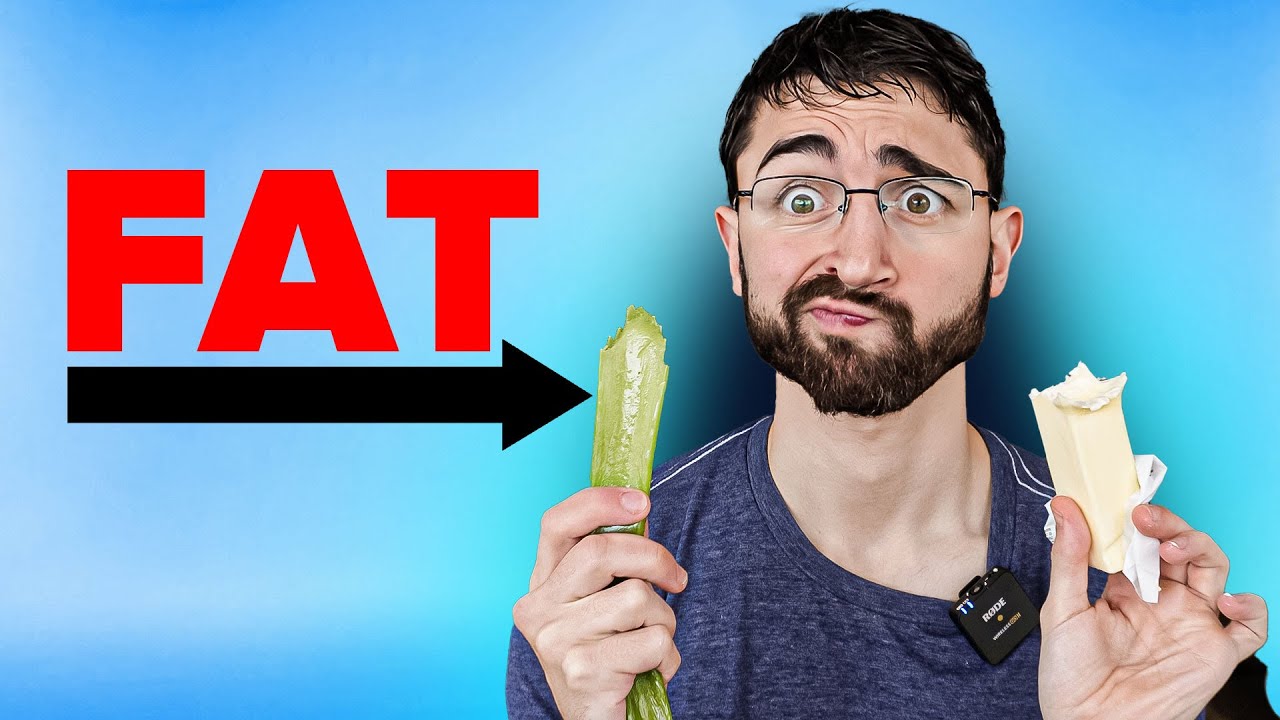
Celery has more calories than butter! I know what you're thinking: "You're off your rocker, Nick. What are you talking about? You're mad." But at the same time, you clicked on this video, so you must have some confidence I have a point to make. I do have a point to make. And what I'd encourage you to do now is pause the video and think about this: How do you define a caloric deficit? Welcome to my channel. Stay curious. Do you have an answer to that question? How do you define a caloric deficit? If you're like most people, you probably thought about the problem something like this: calculate your calories in, maybe use a diet tracking app, then calculate your calories out. You can go online, get a basal metabolic rate calculator, put in your age, your weight, your sex, and maybe get a rough output, then tack your activity on top of that, then subtract calories in from calories out, and then you have a deficit, right? Or a surplus. But then, what do you do with that deficit or surplus? Well, the obvious functionality is to use it to predict weight gain or weight loss. And the heuristic you hear again and again and again is that 3,500 kilocalories equals 1 pound of weight lost. Now, I'll ask you another question: have you ever tried to actually apply this logic in your real life, or asked anybody who has tried to apply it how it works for them? No surprise, it doesn't work. It fails almost immediately or fails in the long term, and that's inevitable. So why does this approach fail again and again? Again, why can't you just calculate a 3,500 kcal deficit and expect to lose 1 pound per 3,500 kcal unit? The answer is pretty obvious, isn't it? Our bodies are much more complex than simple addition-subtraction problems. Even if you could measure calories in, which is very difficult considering nutrition labels have a 20% margin of error and it's really difficult to measure everything to the nearest gram, but even if you could, there are so many factors you can't account for. Things like individual changes in non-exercise activity thermogenesis when you overfeed or underfeed, things like changes in mitochondrial morphology that can occur with different macronutrient compositions in the diet, changes in the microbiome. So many things that don't go into a simple calories in, calories out mindset, at least not that can be accounted for when you treat these as the independent variables, the levers you're controlling. What I'm really saying is the calories in, calories out mindset is not only problematic but actually harmful, because when you get attached to that calories in, calories out approach What inevitably happens is expectations will not be met. And when expectations aren't met, there's self-blame. Oh, I failed. This is thermodynamics. It's a law of physics. It must apply to me. So if I'm not succeeding, then it must be my fault. There's no other explanation. I'm not doing calories in, calories out right. And I'm here to tell you it's not your fault. It's the fault of society getting attached to this CICO model, which as a fact isn't a pathophysiological model of obesity. It's just not. It's a tautology. It's circular logic. You'll see this actually when people try to rationalize how all dietary approaches kind of fit under the Seiko umbrella. When something works or something doesn't work, there's always post hoc rationalization. The idea that if somebody gained weight, then they must have been in a caloric surplus, or if they lost weight, they must have been in a caloric deficit. You define surplus or deficit based on the result not the expectation. It's kind of insidious. So I return to the statement: celery has more calories than butter. What I'm really trying to point out here is that calories only matter to you insofar as it relates to weight gain or weight loss or body composition. And focusing on restricting calories via the celery approach is a doomed approach. It's going to lead to metabolic slowing, adverse fuel partitioning, and you're going to get hungry and break down and eat that Häagen-Dazs ice cream at 11 o'clock and then blame yourself for failing the calories in, calories out approach. Rather, what I'm suggesting is eating in a way that nourishes you, which can include high-fat foods like butter or macadamia nuts or avocado, ribeye steak. You're not going to live on butter alone, but the idea is not to be restrictive in terms of calories because that can have a negative downturn consequence on your overall metabolic health and yes, your calorie balance over the long term, versus allowing yourself to indulge in rich, low glycemic load foods, optimize your metabolic health,, and then along with that obviously do the things that are important to our health as well, like sleep and exercise and socialize, that's what's going to result in the results you want, which can be described if you want as a beneficial calorie balance, but that's all downstream. So think about that and enjoy whatever nourishing foods, be they high in calories or not, you truly enjoy. I know I'll enjoy. A little butter every now and then.