Glucose Game-Changer: 5-Year Study Proves Remission is Possible
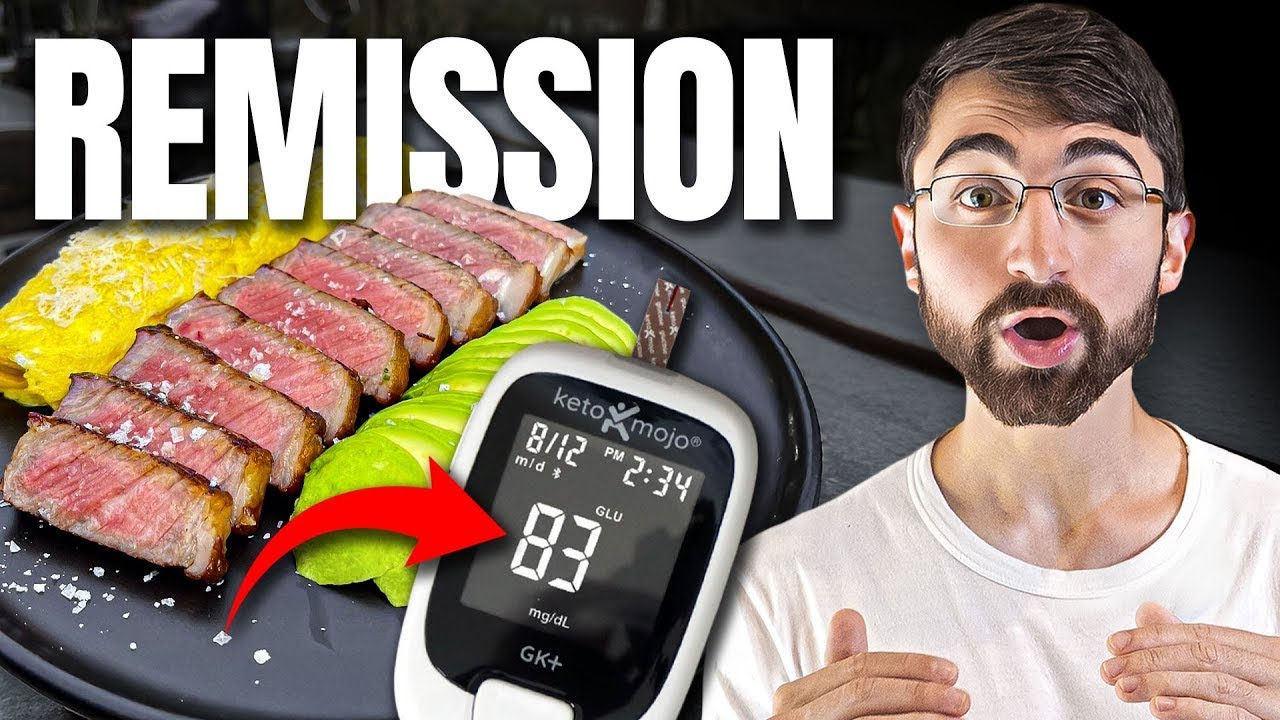
A 5-year study of 120 people with type 2 diabetes found that 20% achieved remission using Virta Health's remote ketogenic diet program (under 30g carbs daily). Even those who didn't remit lost weight, improved HDL, and reduced inflammation. Higher ketone levels predicted success.
Chapters
Medication-free remission from type 2 diabetes is possible and sustainable, and there's no question about that. Well, that's not entirely true. We know remission is possible and sustainable, but what are the key ingredients for long-term success in remission from type 2 diabetes? What does a person need to do to go from having out-of-control blood sugar and metabolic dysfunction to getting their blood sugar under control, their metabolic health in order, and getting off medications? That's the core question to which we will build in this video, after reviewing critical data published on a 5-year study from Virta Health assessing diabetes remission among 120 incredible human beings. So without further ado— nut— let's delve into it. I want to start by describing what I mean by diabetes remission. Then describe the Virta Health model, and finally discuss the results before moving into a broader discussion about diabetes remission in our society. Diabetes remission is having an HbA1c, a marker of average blood sugar, of less than 6.5% while also being off all blood sugar lowering medications. For obvious reasons, diabetes remission is thought to confer protection against the ravages of the disease. It doesn't mean that at some point you can go back to eating endless breadsticks at the Olive Garden, which I used to love, or munching on munchkins at Dunkin' Donuts. You do not develop a metabolically gifted set of adipocytes, fat cells, or a superhero pancreas. You're still vulnerable, but provided you're happy to stick with the lifestyle that brought you into remission in the first place, in this case a low-carb ketogenic diet, then your organs and overall health are thought to be protected against the devastations of a disease that otherwise can lead to amputations, nephropathy, neuropathy, retinopathy, heart disease, dementia, and a multitude of disastrous consequences. Diabetes, uncontrolled, is no joke. Now, the Virta Health model is, at a high level, a continuous remote care application that can actually now be accessed commercially through direct payment or insurance coverage. And there's also a telemedicine care team that advises Virta Health participants on nutrition therapy and manages diabetes medications. The dietary therapy that Virta recommends includes advising patients to consume less than 30 grams of carbohydrates per day, a moderate amount of protein, about 1.5 grams of protein per kilogram of body weight, and fat intake to satiety. Other than that, the diet plan is flexible, individually tailored, be your personal preference a tomahawk in tallow or tarragon tofu. I don't actually know if that's a thing, but I like alliteration and I have ChatGPT to make images, so this is what you get. Anyway, Virta has previously published the results of its prior controlled trial comparing the Virta Health model to usual care. With the Virta Health model yielding far superior results in terms of blood sugar control, including large drops in HbA1c, in fasting blood glucose, and fasting insulin as compared to usual care. But in this recent study, the one I want to discuss in this video, researchers reported on 120 people who consented to an extension of the prior trial and completed 5 years of remote monitoring. Now, remarkably, 20% of these 5-year completers, 24 people, achieved diabetes remission. Of these, 8 were in complete remission from prediabetes and diabetes with an HbA1c of less than 5.7% and off all medication. And 32.5%, one-third, achieved an A1c in the non-diabetic range with no diabetes medications or or only metformin. One-third! That's pretty great. But how should you think about these numbers in context? Because I'm sure there are some of you who are impressed, but others who may even be underwhelmed. Maybe you were expecting a majority to achieve complete remission at 5 years. But consider these 3 really important facts. First, with regards to the study population, at baseline these people were very poorly off. The average weight was 117 kilograms or 258 pounds with an average of 8 years since diabetes diagnosis at the start of the study. Second, these are free-living human beings dealing with all the complexities and challenges that come with living in a modern food environment and in the modern social norm ecosystem with constant sugar pushing and dietary booby traps galore. You know the type, I don't even need to give you examples. Third, diabetes is often presented to patients as a chronic, progressive, and irreversible disease. The status quo, it assumes remission can't be achieved or that it's too hard, so it's not even worth talking to patients about. Despite that, through an app and telemedicine, in the Virta Health program, 20% of those who stuck through it did achieve remission. With some even achieving complete remission after 5 years with an HbA1c in the 5% range and off all medications. The point? It's possible. Remission is possible. These data prove that. And these data provide hope. I'll also point out that even among those who did not achieve remission, the vast majority exhibited massive improvements in health, including increased HDL cholesterol, the so-called good cholesterol, decreased insulin resistance scores, weight loss, and decreased inflammation. The majority of patients also on diabetes medications that have the harshest side effect profiles, like sulfonylureas or insulin, also came off those medications entirely. Health, as I hope you know, isn't an all-or-nothing game, and even among those who didn't achieve remission, they made tremendous progress that should be applauded. But now, the question that is of greatest interest to me is what is, or what was, the secret sauce of those who achieved remission and sustained remission? And how can we, as a biomedical community, as a general public, scale that proportion from 20% of people to 100% of people? Well, first, it's important to note that those with higher ketone levels in this study tended to show better results. This is proof in the pudding— sorry, sorry, proof in the cheese platter— that adherence to a lower-carb, more ketogenic diet yields better results in terms of blood sugar control. Of course, in a free-living environment over half a decade, there are going to be challenges, and adherence isn't always easy. But for those who can find ways to adhere more strictly to very low-carb, even ketogenic diets, they're more likely to achieve remission and improvements in health. The physiology just makes sense, and in some ways, biology actually plays fair. So in my success formula for diabetes remission, were I to create one, it includes all the tools available to empower people, empower patients to happily adhere to an optimized, personalized low-carbohydrate diet. This includes education on metabolic health— some of the things we're doing here on this channel— support communities, biofeedback tools like continuous glucose monitors, and more broadly, placing patients' data in their own hands. Your data in your own hands. That is individual empowerment. The final ingredient in the formula to diabetes remission and more broadly metabolic health success is in my opinion, stimulating broad social change. Yes, your health is your personal journey, but it's also a communal responsibility. We construct and shift social norms together. If you adopt lifestyle changes and become a case study in reclaiming your own health, then your family and friends may follow, and these positive behaviors can spread across society like hot butter on warm toast. Uh, sorry, I did it again. I mean, hot butter on steak? So, coming to our conclusion, what I love about these data from Virta is not that 20% remission is good enough. No, not nearly. But that Virta is pioneering in a place, in a time, where normal is inevitable disease progression. They're providing proof of what's possible., and in that way shifting cultural norms until, to paraphrase the late great Sarah Hallberg, a critical mass of individuals is reached such that diabetes remission becomes the norm, and remission and hope become mutually reinforcing dance partners in a more metabolically healthy society. So the takeaway here is clear: diabetes is often labeled as a lifelong progressive disease, but these data show That narrative can be rewritten. Type 2 diabetes remission is possible. So the real question is, how many more people can we empower to achieve it? And how quickly? So tell me in the comments, what are you doing to change the conversation and also change your own health? Stay curious. I hope you feel inspired. I know I do.










