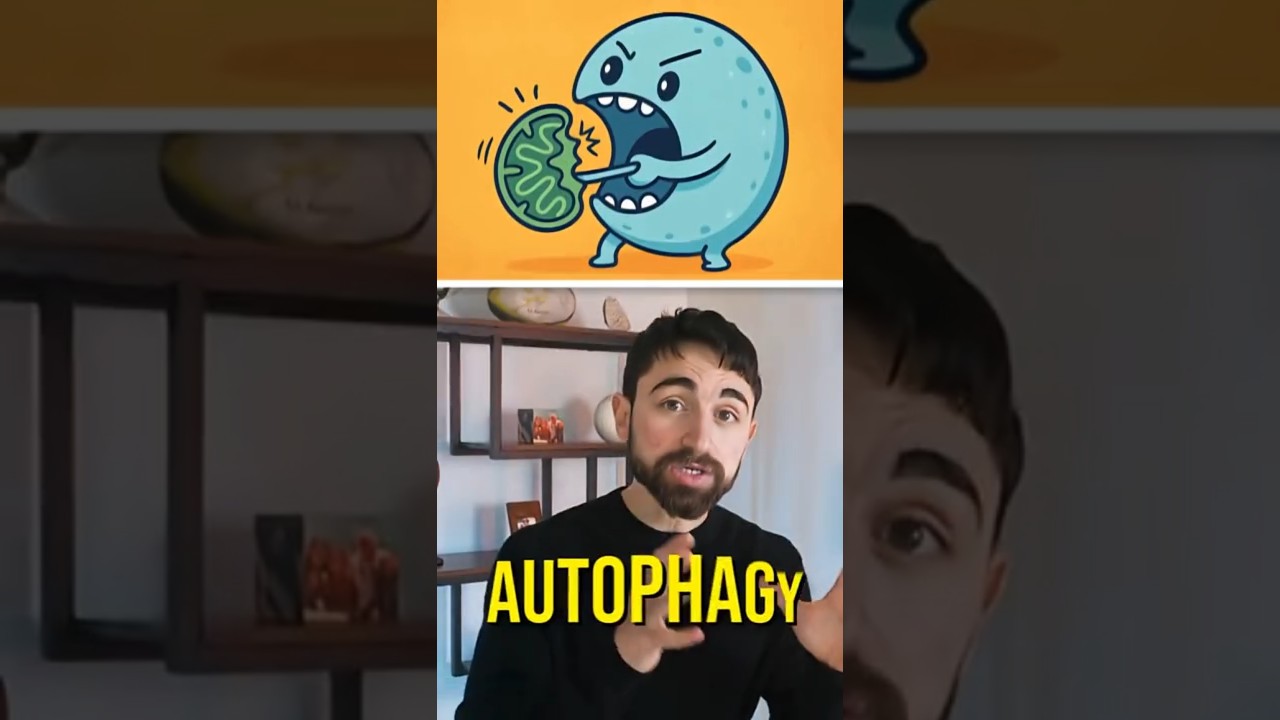
Chronic stress shuts down autophagy, the brain's cleanup system, in a region called the lateral habenula. Damaged proteins pile up, glutamate receptors accumulate, and neurons fire more intensely, amplifying depression and distress.
Chapters
Lateral habenula is kind of synonymous with the stress and depression center of the brain, at least for the purposes of this paper in this video. Now, autophagy, you can think of it as the brain's janitor crew. It's a built-in cleanup and recycling system within cells. When proteins get old or broken, a membrane wraps around them like a trash bag. It's called an autophagosome, isolating the waste from the rest of the cell. And that trash bag, that autophagosome, then fuses with the cell's digestive center called the lysosome. And this breaks down the waste for reusable parts and recycling. But here's the catch. Under chronic stress, it's like the janitors go on strike. The trash piles up, the system clogs, and neurons start to malfunction. That's where things start to go wrong and potentially spiral towards depression. And that's at a very high level what they show in this paper. They show that autophagy within the lateral habenula, the depression center of the brain, is impaired with chronic stress, contributing to depression. It amplifies feelings of distress and despair. So summarizing, putting it simply, chronic stress decreases autophagy in the lateral habenula, This increases the number of glutamate receptors, leading to neurons firing in the lateral habenula a lot more and more depressive symptoms.