I Put the World's Most Controversial Drug To the Test — Here's What I Found
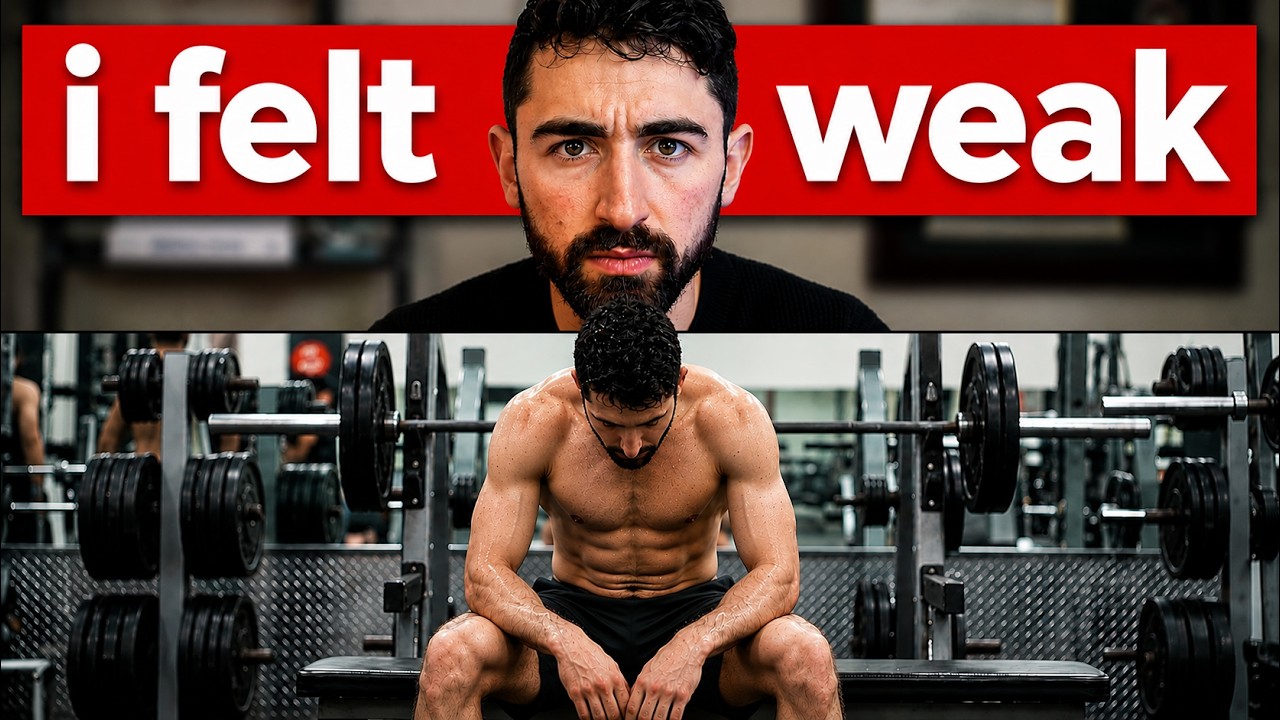
Dr. Nick Norwitz tested whether high-dose atorvastatin impairs exercise performance on himself. During the statin phase he experienced leg pain and fatigue, with declining sprint performance; the placebo phase showed improvement. He argues personal stories shape medical opinion more than data alone.
Chapters
This little white pill is one of the most prescribed drugs in the world. And this specific statin has generated over $150 billion in sales and remains the frontline treatment for cardiovascular disease. It's often hailed as a God's gift to medicine, and after 4 years at Harvard Medical School and 6.5 years as a patient with high cholesterol, I would know. But statins come with heavy baggage. And beyond the well-known muscle pain, myalgias, recent studies suggest a troubling link between statin use and age-related muscle loss. So enter controversy. No, not you. Anyway, enter controversy. We've covered those data on statins and muscle loss before on this channel. They're interesting. But still observational and can't prove causation. Still, after that post, I was flooded with comments from people saying statins annihilated their workouts. So I decided to close the knowledge gap. Using my own body, I ran a blinded crossover experiment taking high-dose statin versus placebo to find out what would happen to my body. And if you think you know where this video is going, You don't. Is the most profitable drug of all times. It's a gorilla dose.
I'm gassed.
Did statins impair my performance?
Hey, what's going on, man?
People deserve to know. So this video is going to be broken down into 4 chapters. First, I'm going to go over the design of the study, how I ran the methods and did this self-experiment. Next, I'm going to go over the results. Did statins actually impact my performance? And if so, how? And third, we'll go over mechanisms, possible biological explanations for how statins could affect muscle physiology and performance. And four, I'll give you the reveal, the behind-the-scenes twist about something else I was actually testing, but you need to earn that first. And also, I'll just plug, if you want more details, you can always find them at the associated Stay Curious Metabolism newsletter where I drop all these data first. But let's get on to Chapter 1: The Design. This was a blinded crossover design, meaning I completed both a placebo phase and a statin phase, each intended to last 3 weeks and I didn't know which was which, with a 3-week washout period in between them. At least that was the plan, in practice each phase ended up being 10 days with a 3-week washout period, and I'll explain why in a little bit. Anyway, the reason for this approach is that I've taken statins before and have a general sense of how long it takes for them to have a biological measurable effect on my body. Specifically reduction in LDL cholesterol, which I can use as a proxy for other biological effects. Anyway, the statin I used in this case was atorvastatin 80mg. Here. Atorvastatin brand name Lipitor is the most commonly prescribed statin, and 80mg is the highest dose. It's a gorilla dose. And as an aside, this specific statin has been ranked as the most profitable drug of all time, generating over $150 billion for Pfizer as of 2017. More now, obviously. Now, randomization was simple. Actually, no. No, it was not simple. I thought it would be, but it wasn't. It wasn't all that easy to source a placebo pill that was the correct shape and size as the statin. Ultimately, I was able to find a 16mm white oval placebo. Tablet, closely mimicking the 80mg atorvastatin, but in full transparency, the atorvastatin was 18mm, not 16mm in length, and had an engraving on one side. So, to do my best with blinding, I used a cheese grater to remove the engraving on the side of the statin and created a mirrored mock mark on the placebo. Then, I mixed them in with my normal morning supplements, more on that here, in a pillbox which I can swallow all in one go, even without water, I know, hardcore. Then, a third party was responsible for labeling one set A and one set B and keeping the randomization code until the end of the trial. This was honestly my best effort at blinding, and as a little bit of a sidebar and mini-rant, I'm a bit annoyed that voluntary n=1 placebo trials aren't easier to conduct. I once asked my doctor about assigning me a placebo and a statin— this was years ago— and they said, "We don't do that." But I won't derail us talking about why I think patients should be allowed to run placebo trials on themselves with professional support. Let's get on to the stress test. How did I test perfo— performance of the statin versus the placebo? Well, throughout the run-in, 2 weeks before the start, and then both phases A and phases B and the washout, I continued my normal exercise routine, which is about 1 hour of calisthenics per day. The only difference was that during the intervention, phase A and phase B, the intervention and placebo arms—again, I don't know which was which—I tracked a primary outcome: performance on a Concept2 Vertical Ski Erg Machine. The stress test protocol was specifically as follows: 5 sets of 500-meter full-out sprints with 2-minute breaks between. The pace on the 5th set was recorded as the primary performance metric. Now, this format was designed to strike a strong balance between explosivity and endurance. And notably, this is not an exercise I do at baseline, nor during the lead-up or washout phases, only during the statin and placebo phases. Okay, so that was the design. Let's get on to Chapter 2: The Results. During Phase A, around day 6, I began to experience muscle pains, mostly in my legs. They started getting worse by day 8, along with noticeable sense of fatigue. I was just tired after workouts. And these symptoms worsened—
Today is day 8 of the first arm, and I'm gassed. I just finished a pretty routine workout, saw in the shower I've been having these pains in my legs similar to when I had Crestor before, and I'm even more fatigued. I usually don't feel that fatigued after workouts, recovery is usually pretty good, but I just feel terrible. Um, I might end up ending this phase early. Just feel shit.
Ultimately needing to terminate the first arm of the trial, Phase A, after 10 days. This was still a blinded phase, but the symptoms were strong enough that I didn't want to continue for another 11 days. It was just really impairing my quality of life.
Alright, it's day 10 of Phase A and I'm calling it. I'm just not feeling good. I've been having these leg pains, feeling pretty fatigued. So, I'm going to go into the washout and we'll go to Phase B. As I was thinking about this, you know, honestly, is there the possibility that if I don't have these symptoms in Phase B that I don't try as hard, which could confound the results? And despite this being a fully blinded crossover, that's a possibility and I just want to name that. There's nothing I can do to protect against it. I do feel like the symptoms I'm feeling are quite real, so take that what it's worth, but we'll go into the washout and then we'll see how Phase B does.
And in addition to leg pain, again, I felt more wiped out after workouts. This is bizarre to me. It was like as if recovery was impaired, and that was also reflected in my performance here, which began to decline around day 6. Subjectively, I don't think this was pain limited because the pain was localized to my lower legs and I was doing a lot of upper body movement, and I have a pretty high pain tolerance, but I'll come back to mechanisms later. Now here is where things get really interesting. After the 3-week washout, during Phase B, I noticed the opposite trend. Rather than performance dipping after 6 days, it improved and I felt great after each workout, motivated to head into the next. This is much more consistent with my normal baseline activity and workout motivation. Now, two quick notes before I reveal what A and B actually were and if I'm embarrassing myself. Anyway, note 1: I'm an endurance athlete by nature. Even as a teenager, I was running sub-3-hour marathons, my PR was 2:45 at age 17, it's just how I'm wired, so these daily stress tests weren't overwhelming for me under normal conditions for 10 days straight. Pretty basic. Also, I didn't measure lipids or creatine kinase, a marker of muscle damage throughout this experiment because doing so would unblind me. Still, I think it's safe to assume that the statin phase would lower my LDL probably by 15-30% over that duration based on previous trials I've done, and you can look at this paper for more. Also, in my previous statin trials, I did have an elevation in creatine kinase, which suggests some susceptibility to muscle damage when taking statins, at least in me. Anyway, the reveal, at least the first reveal. Did statins impair my performance? In a word— drum roll please— yeah, statins did impair my performance quite dramatically. Phase A was indeed the statin and Phase B was indeed the placebo. Now, those are the results. Take them for what they're worth to you, we'll get into caveats in a minute, but I think the results are less interesting than the potential hows, which brings us to Chapter 3: Mechanisms. And first let me say again, this is an n=1 experiment. It's most relevant to me, and I would not assume it generalizes. That said, if we accept a real negative impact on performance in meat, what could explain this? Well, one possible mechanism is a direct inhibition of mitochondrial metabolism. Human studies show that even at very low nanomolar concentrations, statins, particularly atorvastatin, this one, can inhibit key components of the mitochondrial electron transport chain, including complex IV. This component is necessary to generate the proton gradient that powers ATP production and fuels the body. Disrupting this This process effectively creates a bottleneck in energy production via what's known as oxidative phosphorylation, which you can think of as endurance energy. Another potential mechanism is reduction in coenzyme Q10 within my muscle cells and their mitochondria. CoQ10 is an electron carrier and antioxidant. It's also vital to mitochondrial energy metabolism, and lower levels could create another choke point in the energy pathway. A third possibility is that my cells were actually starved for fat fuel. Because I'm lean and insulin sensitive and ketogenic, my body runs on fats and ketones. And the fat fuel is carried around in particles that also contain cholesterol. This is actually why my cholesterol is high in the first place—see this letter for more. Anyway, I'll spare you the nerdy details. It's plausible that lowering cholesterol via statins could restrict my body's ability to generate whole body energy flux—circulate fat fuel throughout the body. Now, in this particular case, I don't think this third mechanism is carrying the bulk of the performance impairments, and provide some further commentary linked below. But there are more possibilities: direct myotoxicity—muscle damage—caused by the statin, altered intramuscular—within the muscle—calcium signaling, impaired tissue recovery. Now, those are just some highlights. Do you think there are other mechanisms I'm missing? I want you to brainstorm with me, this is all hypothesis generating. Tell me in the comments. Anyway, pinpointing the precise mechanism is less the point than revealing just how many possible mechanisms there are. The biological plausibility to explain the real human clinical effect in me and in others. But that brings us to Chapter 4, the second reveal. Now, my actual purpose was something else that I wanted to measure. But first, I need you to indulge me in another little mini rant. The question: where do we place the burden of proof in science and medicine? There's ongoing controversy about the real impact of statins on muscle health. Now, the data, the human data beyond me, aren't perfect. They aren't definitive. So when weighing long-term risks of a medication, should we assume no risk until proven risk without a shadow of a doubt? I don't think so. I don't think pharmacology should be innocent until proven guilty. My opinion is if there is credible credible risk, including associational data, credible concern about the long-term effects of a medication like muscle loss, it should be taken seriously rather than having concerns dismissed because we don't have the perfect data. Bottom line, powerful drugs should not be innocent until proven guilty. That said, to be clear, I'm not claiming that statins definitively cause muscle loss of function or loss of muscle mass. I'm saying we haven't proven they don't. They might. There's reason to believe they would, and that's something people deserve to know. Now, the plot twist. I just said people deserve to know, but how do we actually get people to know? Because there's a huge bias in medicine and media towards highlighting drug benefits and downplaying side effects. That comes from how doctors are trained—I know from my training—how incentive structures are built, and how dominant narratives reinforce themselves over time. It's status quo inertia. That's why statins are often held up as untouchable, God's gift to medicine, and if you say otherwise, you're a denier, without significant acknowledgement of the well-documented human trial data showing real downsides of statins. Now, I do not have Big Pharma billions for advertisements to get the word out. What I do have is social media, credentials, and some creativity. So here's the twist. This video wasn't about performance data. It was a social experiment. And I've done this before. Several times. For example, a while back I did a paper review on dietary cholesterol and why it doesn't raise blood cholesterol covering some metabolism data and a hormone called cholecin. Fine video. It did a few views. And then I had an idea. What if I told the same scientific story but made it personal? That then became the famous 720 egg experiment. Same data, just wrapped around an n=1 narrative, my narrative, and it exploded. It spread like a mind virus across social media platforms, gaining literally hundreds of millions of views across platforms, even those I'm not on, like TikTok. Various media sources. It got me flown around the world to party with celebrities.
Hey, what's going on, man? This is your boy Akon. Just wanted to give a big shout out to my man, Dr. Nick Norwitz.
And had reporters from several continents coming to interview me at my apartment. It was weirdly big in South Korea and India for whatever reason. Anyway, I've repeated that pattern again and again, and every time it works. If I tell a story through my own experience, it gets attention, sparks curiosity, and gets people thinking. And that's the paradox. We say we want rigor, randomized controlled trials, and peer-reviewed prestige. But what we actually respond to, what spreads and convinces people, are stories. Personal stories. Human stories. Mine. Yours. That's how we learn. That's how we internalize information. That's how we're built by evolution to make decisions as a social species. We might try to override that with logic and data, and sometimes we can. But our emotional learning drive is still really powerful. So in truth, this whole thing is a social experiment, a proof of principle about what drives conversation and what ultimately changes minds. And I don't just mean the minds of the general public. Doctors are humans too. This impacts them as well. So this is what I did. I posted two videos. I already posted one covering the 300,000-person study on statins and muscle loss. The other one— This one you are watching right now covers my little dinky n=1 experiment. The data will be to see how these two videos do. Let's compare them and let's see if my hypothesis is right. Stay curious. Let me know what you loved, hated, your thoughts. I love your feedback. They're data to me, and that's the point.










