Is the New Food Pyramid Science-Based? A Dietary Guidelines Scientist Weighs In
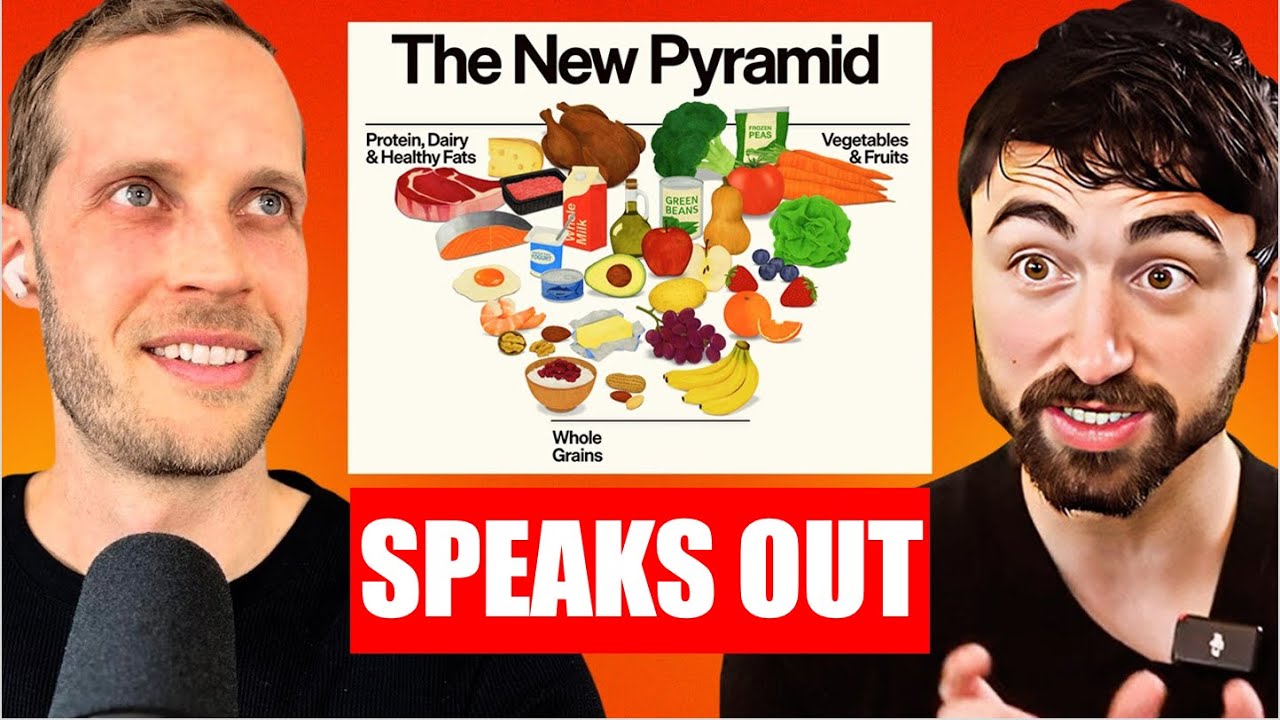
In this YouTube interview, host Nick Norwitz talks with Dr. Ty Beal, a researcher at the Global Alliance for Improved Nutrition (GAIN) and a lead author on the scientific review for the 2025‑2030 U.S. Dietary Guidelines. The conversation examines the apparent contradictions between public messaging—most notably Robert F. Kennedy Jr.’s claim that the "war on saturated fat" is over—and the guidelines’ retention of a 10 % of calories limit for saturated fat. Dr. Beal explains the structural separation between the scientific review panel, which evaluates the evidence, and the USDA/HHS administration that drafts the public‑facing guidance, noting that political compromises often shape the final numbers. They discuss the limited evidence for the saturated‑fat cap, the continued sodium ceiling despite widespread potassium deficiency, and the new emphasis on whole‑grain over refined grain, including the debate over fortification. The interview highlights the increased protein recommendation (1.2‑1.6 g/kg body weight) and its evidence base, the specific recommendation for omega‑3 intake during pregnancy, and the effort to downplay artificial sweeteners and added sugars. Both guests critique the use of vague terms like “real food” and the NOVA processing classification, arguing that such heuristics aid public communication but lack scientific precision. Policy implications are explored, including potential SNAP restrictions on sugary beverages, school‑meal reforms, and the broader goal of making minimally processed foods more affordable. Throughout, Norwitz and Beal balance criticism of inconsistencies with acknowledgment of progress, emphasizing the need for clearer messaging, greater scientist involvement in policy drafting, and continued research to refine future guidelines.
Chapters
your total saturated fat quota for an entire day.
I think there is some conflict in the messaging, the way it's communicated and presented.
Never reviewed and approved this document. We must assume there might be a pink elephant on the back of, like, Pluto.
I think that argument is pretty ludicrous, to be honest.
One of my least favorite terms in nutrition is empty calories.
That low carb can actually work.
Probably my favorite single thing in the guidelines was—
Right, you're not eating your meal and you're like, is this 10% of my calories?
If we focus on, I'm gonna say, real food propaganda, my hope is that All right, everyone. I'm here for a really exciting conversation about news I know you've heard of. It's being marketed as the most significant reset of federal nutrition policy in our nation's history, the new 2025 to 2030 dietary guidelines. Now, I just want to give you my opinion up front. I think these guidelines do mark progress, but I think there are some issues and contradictions. For example, Robert F. Henry Jr. is saying we are ending the war on saturated fat. We are ending the war on saturated fats. And yet the restrictions on saturated fat and the guidelines are the exact same number, 10% of kilocalories from carbs. So I connected with one of the lead authors on the scientific review committee, Dr. Ty Beal, who's with us here today to provide some clarity. We talked a little bit offline and I know we're gonna get a lot of clarity in the confusion around just what the process is, how these guidelines are evolving. So I'm very excited for this conversation. Ty, welcome.
Great to be here, Nick.
So first, please just tell my audience a little bit about who you are and what you do.
Yeah, so I'm a researcher. I work for a nonprofit called GAIN, the Global Alliance for Improved Nutrition, and really my research is focused on nutrient density, what people eat around the world, micronutrient status, you know, the prevalence of inadequate intakes of different nutrients, and diet quality. And some of my work is focused around animal source foods and plant source foods and what proportions do you have in the diets. And so that's sort of why I was asked to write those sections on vegan and vegetarian diets. And across the life stage in this recent dietary guideline report.
Now I'm going to brace my audience. It's going to seem like I'm giving you a hard time, but I don't think you came here to play softball. So I want— I want to open with what I think, and I think most of my audience agrees, is conflicting messaging. So specifically, administration, Robert F. Kennedy Jr. saying on national television, we're ending the war on saturated fat. We are ending the war on saturated fats. And he signs a document, page 1, these guidelines, 2 pages later, the exact same 10% of kilocalories, um, from saturated fat limit as all the prior guidelines. And to give people a perspective on how much that is, if you had a 4-egg omelet cooked in 2 tablespoons of butter, you have maxed out your total saturated fat quota for an entire day on a 2,000-calorie diet. So that's just kind of a, a sense of scope. First question is, do you agree that there's a conflict in messaging? First, focusing on RFK Jr.'s words and what's in the guidelines.
Yeah, I think there is some conflict in the messaging, the way it's communicated and presented, and with what's actually in the guidelines, as you state. However, there really are, I think, some nuances and important, I think, alignment that, that are important to highlight. So one thing is, is that the messaging around full-fat dairy, allowing meat— you have a picture of a ribeye— that sort of is aligned with this idea that whole food sources of saturated fat are not a big concern. And I think that's along the lines of what was sort of being communicated. There has been this sort of war in the sense that those foods have been demonized for different reasons. And I think this is in the guidelines. It does say full-fat dairy is okay. It does not say specifically you have to eat lean meat, like it leaves room for some fatty meat. But I take your point. If you're having Uh, like most of us eat, I think, I think actually probably 80% of the population in the US consumes, uh, over 10% of their calories from saturated fat. So when it comes down to the practical implementation of that, it's probably gonna be a bit tricky for people. You'd have to go very light on the butter. You just have to sort of use it to coat the pan. Right. I cook with butter. I cook 3, uh, 3 egg, uh, scrambled eggs in the morning with a little bit of butter, but I don't use 2 tablespoons. Right. So I think that we can get into some of the nuance between the lower carb versions of a diet versus a higher carb, right?
We're on the same page here with respect to, you know, there's a big difference, or we should be looking at food more as complex ecosystems rather than as reductionistic nutrients, including saturated fat. So there's a big difference between having a milkshake and having like full-fat cheese. And it sounds like we're both on the same page at like full-fat dairy is probably very healthful, as is potentially like, you know, a dinner of steak and broccoli. However, the value, the restriction is still there. So I think one could fairly argue if you're really trying to end the war on the vilification of this nutrient saturated fat, why is there even a holdover limit? Because it explicitly stated, I can find the actual quote from the guidelines. In general, saturated fat consumption should not exceed 10% of total calories. Like It's written right there, right? Presumably that wasn't just a typo. Some people are saying, oh, he must have meant 100%. No, it's, it's 10%. So how does one justify other than saying, oh, it's a political compromise, which if it is, should be stated even if not in the guidelines. How does one square that? I actually had a conversation just as an aside with ChatGPT going through like not a low carb diet or anything, just being like, oh, you know, you have some eggs maybe cooking 1 tablespoon of butter, then like some salmon and olive oil for lunch, and then like a cup of Greek yogurt. They're like, you've now doubled your saturated fat quota. Like very easily you can go beyond this on a reasonable diet of just small portions of full-fat dairy and just whole foods. So how is this justifiable?
Yeah, well this is I think a lot to unpack. So let's start with the appendices in the real, realfood.gov These are the direct reviews that the scientific authors that were involved in this drafted, right? One of those reviews, or a couple of them, are on saturated fat. So you can read the evidence regarding, uh, all the studies that were included, the methods, the limitations, and the findings. What you'll see in there, from my, uh, sort of understanding and memory, is that really there's, there's not strong evidence for a, a limit of 10% of energy from saturated fat, right? At the same time, they don't present strong evidence that suggests the, the limit shouldn't be there. And I think it's, there's room for debate about that. But the, the, the scientific review background document, I think to your point, it does appear a little bit in contra, in contradiction, right? Because it's not saying we, we need to keep this 10% limit on saturated fat. Now, at the same time, when you have a status quo, there are, I think, forces at play. And I don't know because, as a scientific author on the report, as in previous years, I was not involved in sort of drafting the guidelines, right? We do the work and the reviews, and then the HHS and USDA kind of draft the guidelines, right? So I think that there's probably reasons for why that was kept in there, and there's probably some sort of compromises that have to be done. I think you're right. Like, we want messaging around whole foods, real foods, minimally processed foods. We don't really want people to try to think about the actual specific nutrient amounts. 'Cause people don't really think like that. You're right. You're not eating your meal and you're like, is this 10% of my calories? How many grams, right? Yeah. How much can I have? And so I think there's some confusion there that could have been improved.
So what I hear you saying, and I, I don't think most people realize this, is that the scientific review panel is not drafting the guidelines. You give 2 cents, but then a non-scientific body puts together this 9-page document, which is the one that is policy shaping and facing the public. If you go to realfood.gov and you download the 9-page PDF, this is what people are seeing. But to be clear, those on the scientific review committee— you, other names people might know, Jeff Volek, Ben Bikman— never reviewed and approved this document, the one with the 10% saturated fat.
This is sort of the same as in all years, right? If you ask anybody who's been on a dietary guidelines committee, there's a separate process from the scientists and from the administration. Now, that's not to say there's not scientists. I'm sure there are scientists who are in drafting these guidelines, right? But that is, if I had it my way, certainly I would love to be able to write the guidance. I think the scientific authors should be included in that process, and I think that that would be maybe as a future goal that we can have. But I mean, as it stands, that, that's not really— that hasn't been very different from year to year, I don't think. And so that's sort of carried on. It's— there is a large bureaucracy with the US government and there's the USDA involved. And it's hard to say, you know, who's, who's in charge of making all of the decisions.
Right. This is, though, a really important nuance that even if it is, you can call it a tradition that I don't think most people understand. And I'll give you my direct two cents. I think it undermines messaging and public credibility because there are things in there like basic math inconsistencies or even just terminology that I will consider problematic. So another one I know we both picked up on was the reference to focusing on intake of essential fats, which is a very particular meaning. It's fats that the human body can't produce itself, which includes things like linoleic acid, omega-6 and omega-3s. And the examples they give are like olive oil and also butter and beef tallow. Beef tallow, I think, is about 3% essential fatty acids versus something like corn oil is like 54%. So I know I'm getting nitpicky here, but the reason I'm doing it and, and is not just to be a, a jerk, but because precision with this kind of stuff matters if you want to build trust between an administration giving what is dietary advice and the scientific community, especially when there's a rift here. What are your thoughts on that?
I agree with you. I think that you, you want to see the science accurate, and even if this is sort of a, nitpicking issue. I agree with you. You'd want to see, if you're going to mention essential fatty acids, you should probably mention a source of, uh, that's high in essential fatty acids.
And they do. Like, I'm, we're going to get into the positives, but it's like, one thing I want to say I liked about these guidelines among other things is there was a rather plant versus animal agnostic focus on whole food fat. So like omega-3 fatty fish, nuts and seeds. They weren't being dogmatic, just eat beef tallow. It was like, right, have a ribeye steak, have some walnuts, just eat whole food, real food, which we can get into what that means and what it doesn't mean in a moment. But I do wanna give credit where it's due in that I think there was in general a plant versus animal agnostic focus on quote unquote real food. So sorry, I interrupted you.
Please continue. Yeah, no, I, I think we agree here. I think, you know, if you wanna build ultimate trust and optimal, I just say like There is like a goal. There's sort of like we get as close to as we can. I think the guidelines are really, really good. It's a positive step in the right direction. It didn't get everything perfect and I think there's room for improvement. Uh, but in general, recommending sort of an olive oil first, I do think this is probably political and there's probably compromises being made, but olive oil is one of the less controversial, right? If you notice, there's not seed oils that are mentioned in the guidelines. And so I think they've just probably have language that's sort of getting around some of the the controversies that different groups may have. And so they're trying to like thread the needle. If you also notice on the— they do emphasize whole food sources of fats, like you said. So they're saying, and you may add small amounts of added fats. If you look on the serving sizes, it actually says, you know, a little bit of added fat is okay and use these. So I think that the fact that butter and tallow are listed, you can also use— it is trying to say some sort of hierarchy that there's there's maybe potential benefit of a sort of an olive oil type thing. And probably there's an implied, some of the essential fatty acids are also good to prioritize, but it's very, it's a little bit confusing because it's not particularly accurate to say that olive oil contains a lot of essential fatty acids. Right.
In terms of actual implications, because the points people have made in, in, in my comment section that I talk about this, people are like, people aren't gonna read the guidelines. They're gonna get the holistic message, see the inverted pyramid, and there's gonna be like, more of what is the public messaging around this. However, the guidelines are a basis, as I understand it, for like public school, like lunches. So when you have numbers like limit saturated fat to 10% of calories, that remains. What are the actual effects when it comes to like the American populace and American health?
Now this is, I think, very nuanced and I don't understand all the implications, but the way that a phrase is mentioned and stated in the document itself may have implications for whether that is a requirement or a suggestion, right? I don't know all of those, but I do think that the saturated fat limit probably will affect school meals. Now, the catch is I think there's a bill, there's a potential policy to take dairy out of that contribution, which would be a huge difference, right? So if that passes, I think there's something up for discussion about whether dairy is included in that or not. Now, other statements, I don't know the implications. And I think a lot of this has to do with the guidelines are there typically, like you said, they are a, they're actually for policy guidance and for practitioners. They're not really for public-facing purposes typically, but this year there's obviously a clear focus on the general American, right? There's messaging around that. We have this kind of catchy upside-down pyramid being flipped. And so you can see they're trying to say, simple language. We want actually, we want some advocacy here. We want actually to communicate with the American public. I don't know how this is going to happen, but when we see policy levers, we look at things like SNAP, changes to SNAP, restricting sugar-sweetened beverages, for example, the school meals, which is one procurement level, hospitals.
That SNAP thing, is it actually going through? So for, for people's context, I think SNAP benefits like food stamps, something like, and I hope I'm not misquoting this number, but like $100 million in food assistance. And I think, I think 18% of it historically has gone to basically sugar-sweetened beverages and sweets, which is $18 million, I think, of taxpayer money. I'm not an economist. I might be misquoting these numbers, but point being, is it actually moving forward that they're going to be a restriction on being able to use food stamps for, say, I probably shouldn't mention brand name for— Crippling beverages.
Yeah, I don't know the exact numbers, but I think it is a very large share. It could even be one of the highest shares. I did see some number that sugar-sweetened beverages were among the top share of SNAP purchases. Right. So it's a big lever. Now, if you notice over the last year, if you paid attention to any state policies, there are a lot of policies that have proposed to restrict sugar-sweetened beverages or sodas in particular in SNAP. About 30 states have done some sort of policy around SNAP or school meals. The announcement about the policy for SNAP, which is the Fed at the federal level, was made. I don't know if that has been implemented or if it's in process. I'm sure it will take some time, but that does appear to be the intention. I think that's a huge win if that actually goes through. Yeah. And that's what I was saying is like the guidelines are the first step. Now what you do about it, what the administration does about that afterwards, if they stand up to industry, if we actually put through policies that maybe they even— there is another mention by the Secretary of Agriculture, Brooke Rollins, that said, look, we're going to try to incentivize minimally processed foods. So grocery stores that receive SNAP will need to increase the amount of whole foods that they have available. Right. That's a powerful lever as well.
Yeah. No, there was a statement about— and I can't find the exact quote, but about making real food more affordable. So one of my other questions was like, do you know of any policies other than, I guess, what you're mentioning, maybe reallocating like food assistance funds to make quote unquote real food more affordable. And then I wanna get into what real food even means. But other than what you mentioned, do you know any action initiatives on that front?
I don't know specifically. I think time will tell, but there is a sort of a pathway of the economy of scale. So when you start making these big procurement changes at the federal government, there can be an impact where it actually reduces the price overall because those foods are sort of prioritized and there's an economy of scale where the price per unit decreases. Yeah.
So kind of just to step back and summarize what I've heard from you so far in this conversation was one important fact is that the scientific review committee is displaced from the document actually going forward to the American public, which I think everybody intuits. But it's nice to hear kind of clearly laid out that it is somewhat a political document. It's not just based on evidence. There's probably some, like, compromises going on that lead to what appear to be inconsistencies in messaging or even math. And that's just the way things are. I'm not trying to be, you know, a jerk and obstructionist, but I think that's important to at least name to qualify what people are reading.
One clarification is that this recent— these recent guidelines, we were really scientific review authors. We were not the same as a committee. Which goes through a different process. So there's a small, small difference there. But yeah, point taken. I think that there's, there's always been this sort of separation of the scientific authors who are working on this evidence and then the document that comes out. I don't know how easy that would be to change, but I would love to see a little bit more involvement, at least of where, you know, scientific authors are also involved in the process. Now, I will say, in defense of the guidelines, I think if you look at the full reports, the full evidence reviews, they actually, they actually do a pretty good job of recommending the evidence based on what those are in. Now, there's some— you can debate some of the issues there, maybe the saturated fat recommendation, but in general, I think they're getting things right.
I'm not criticizing per se the scientific documents. It's the one that is more forward-facing. Yeah. I mean, as a scientist, even the things you said earlier, like which could be used as public-facing political excuses. So the example you gave was Well, there's not actually evidence for the 10% saturated fat cap, but there's also not evidence for removing it. You and I both know that is not a scientific argument. You can't claim there's absence of evidence to remove an arbitrary threshold. It's equivalent to me saying, hey, Ty, you can't disprove that there's a pink elephant on the back of Pluto. Therefore, we must assume there might be a pink elephant on the back of Pluto. It's not scientific. So point being, there are some things I read as probably unfortunate consequences of compromise, and that's just something to observe and leave it at that. And then people can make their own judgments. I want to get into a few other specifics. What do you think? And now I'm just asking your personal opinion as an individual. There's still the sodium limit of 2,300 milligrams that has not changed. A prioritization of whole grains. They're still recommending at least a minimum of 2 servings of whole grains. Any opinions on those? Tibbetts.
I think the sodium thing, when you're looking at the population, we consume too little potassium by a long shot. Very few people get actually enough potassium and we're eating these ultra-processed diets. I think that the sodium limit kind of makes sense in that context. Now, I think if you're, if you're having a low-carb diet, if you're having minimally processed whole foods, it could be a different story, right? You probably know better than anyone that when you're on low-carb, if you're, especially if you're ketogenic, you really want to have enough salt. You're, you're probably looking to make sure you may wanna increase your sodium intake, right? So I think that it depends on the type of diet. So at least these guidelines for the first time recognize that they're, they're sort of a therapeutic use or a use at least for people with chronic condition, which a lot of people have in the US, that low carb can actually work. So I think that it's a reasonable, uh, it's still reasonable to retain. I think that there's some nuance around who does that apply to.
Somebody was asking, um, is there a section in the guidelines on low carb?, and I wanna be clear, not at least in the main forward-facing document, is there any mention of low carb. The only mention is there's a statement, if you have a chronic disease, talk with your healthcare professional to see if you need to adapt the dietary guidelines to meet your specific needs. The reason I wanna highlight that quote, about 9 in 10 people do have at least poor metabolic health, if not a full-blown chronic disease. So who are these guidelines written for? Are they written for Americans? Or healthy people.
It's a fair point. I think it's a totally valid point in the, in the scientific reviews. You do see, uh, some of the evidence laid out for lower carb versus higher carb. So you can look at the documents. I think that's a fair point. Um, on the whole grains, grains are a staple of the US diet. I mean, the, the reality is that most people eat 'em. So I personally, um, I have some whole grains, but I don't feel like they're essential by any means. Like we don't need to eat whole grains to be healthy. We can get plenty of fiber and plant source foods from fruits, vegetables, legumes, nuts, and seeds. Now, I do think that, you know, most of the diet, uh, currently about 87% of grains are refined in the diet. So the fact that these guidelines for the first time say refined grains are really not good, we need to shift any type of grains there, should be whole grains, I think that's a big positive. It reduces the overall servings, right? I know it still says 2 to 4, but it still reduces the overall servings. And if you look at the pyramid, the messaging is that, look, we're not building the foundation on tons of whole grains or refined grains, right? We're trying to build it on more on protein and fiber-rich vegetables.
On that note, actually, I didn't realize this is, this really is the first time refined grains are being—
if you notice, if, if you go back, even the previous committee's report for this year, they stayed in there. Generally the scientists agree, like you wanna emphasize whole grains, but even in the report it says at least half of the grains should be whole grains. And so it gives this, like, you can have 3 servings of whole grains and 3 servings of refined grains. So it leaves in a lot of room for these refined grain products. And in one of the points made by the, by the committee and in previous years is, look, when we do the food pattern modeling, you can't meet all your nutrient needs without the fortified refined grains, like for folic acid, for example. So there's this justification, which I think is totally wrong, that says, look, we got to keep eating refined grains so we can get the nutrients we need. As opposed to saying, let's get the nutrients that we need from whole foods. And by the way, you can actually fortify whole grain flour if you need to. So if our diets aren't making it, you can still put in fortified nutrients to those flours. It's not like just they have to be refined. So I, I think that argument is pretty ludicrous, to be honest.
No, I, I agree entirely. I probably shouldn't say this, but I'm gonna say it anyway. I remember there was, I was taking a nutritional elective at, at Harvard while I was a medical student. And we had a nutritionist come speak to us and she actually pushed like sugary breakfast cereal. She says, I'm a nutritionist, I would feed this to my kids. It is fortified. Fortification's amazing. And I'm like, there's like 20 grams of sugar in that and that's a serving and your kids are never gonna eat just a serving. And this wasn't like a solo opinion. Everybody in the class was like, is this really happening? So it really has entered the zeitgeist of nutrition to be like, yeah, fortification offsets The negative impacts of like sugary rich foods. Sorry, I'm getting on my soapbox.
There are two, yeah, there are two different issues, right? You have nutrient adequacy and you have metabolic health and it's not like you're, it's not like you, you should have poor metabolic health so you can get your nutrients and it's like we need both.
Well, also I really, so there are like terms that I think have brainwashed us. One, one of my least favorite terms in nutrition is empty calories because it gives this sense that like the macronutrients we get are just a vehicle. For like micronutrients, vitamins, and minerals. And I'm like, if you smash a Coke and some Sour Patch Kids, those aren't just empty calories. The biomolecules, the fructose, the glucose, they're having detrimental metabolic effects in and of themselves. And that often gets overlooked. So I don't believe in empty calories as a concept. I'm not sure if you do, but anyway, that's, that's a fair point.
Yeah, there's harmful, there's harmful ingredients and compounds in those foods. Yeah. Yep.
Well, let's get onto some of the positives, 'cause there were a lot of positives in addition to what we went over. One, a real focus on reducing sugar and artificial sweeteners. I'm a big fan of this. I think artificial sweeteners like sucralose and aspartame get a pass too often. Do you agree?
Now, if I was to say what is worse, having the added sugars or the— I would probably say have the—
Have the Diet Coke, not the Coke, but it's a false binary.
Yeah, it's not like you, you also can choose water, right? Yeah. You can, you can, you don't have to have 'em. So yeah, I totally agree.
And then, um, another big one that was very popular is prioritizing protein. So the prior recommendations, if I'm correct, targeted, what was it? 0.8 grams per kilogram, which is 0.36 grams per pound. That is like, I would hit my protein recommendations with like a single chicken breast, a large one, but like a single chicken breast. So that's been brought up to, 1.2 to 1.6 grams per kilogram body weight. I think this is one of the biggest wins. Um, what are your thoughts and what was the scientific basis for this shift?
First off, there's people on all sides of this. I think a lot of people were critical of this, which, uh, fair enough. You can have your view. Um, I think it's a great thing. Now, first off, most people in the US I think are getting probably closer to that lower range anyways, around 1.2 or 1.1 maybe. And so that's more natural. Like we eat to sort of satiety with protein in general. When you look at the evidence around optimal intakes, it really is closer to one between 1.2 to 1.6. Now the previous guidelines, they just sort of use the RDA, which is that 0.8 grams per kilogram. They don't necessarily say just eat that minimum, but it is sort of implied like that's just the target. Just make sure you get 0.8 and that's it. And I don't think that that's optimal for a lot of reasons, right? First of all, protein is the most satiating macronutrient. Um, you know, these new guidelines emphasize with every meal you want to have protein, right? You want to have, uh, ideally you can have some non-starchy vegetables with that as well. So I think this is going to be a positive. Now, one point they don't necessarily state in there, but the exercise, you generally want to be doing resistance training. And especially if you get towards the higher ends of that, that limit. You want to be able to make sure that you're, you're making use of that protein. And I think you've sort of stated before, and probably some of the elite athletes or the bodybuilders will say, you know, we could get up to 2, 2.5, 3 grams per kilogram when you're actually trying to optimize. Right. But the, but the US population's not, uh, does not need to consume that much. Right. On average. Now the evidence goes through and you can look at the research from that, uh, Donald Layman and Heather, uh, Leidy. They go through and they, they do these reviews and you can kind of see the justification. A lot of it's based around the. Sort of satiety and the amount of body fat regulation when you're eating higher protein. And it's all there to look at. I think you're gonna see people, I think I saw an article out by, uh, Darius Mazzaferri saying he didn't like that the protein intake was so high because the, the protein turns to, you know, fat, excess protein.
You have glucogenic amino acids, but that doesn't mean eating a chicken breast is gonna spike your blood sugar to 200, like Skittles. And another thing, when it comes to like making dietary choices, it's very interesting where people put the burden of proof. We were kind of alluding to this earlier, but when I think about like how I'm going to build my diet, I'll give another example. Omega-3s came up. They're an essential fat. They're really important for heart health and brain health. I had a conversation recently with, um, I don't know if you know, uh, William Harris. He invented the Omega-3 Index. Big on omega-3s, and we were talking about the limitations of what you can do with omega-3 research. So an obvious example is, is there a rigorous randomized controlled trial showing that, you know, DHA intake can reduce the risk of Alzheimer's? And the answer is no. And the answer is no, because you can't do a 30-year double-blinded RCT for this particular outcome. So we lack that evidence. But then the question becomes, okay, what do we know about the physiology? What, what can we reason? And also what are the risks of doing this thing? For me, like omega-3 intake, I'm like, I'm gonna have a ton because I think, you know, reasoning from first principles and evidence we do have, there could be a big benefit and there's really no downside. And I see the protein thing as the same thing. It's like, okay, fine, you're creating this unrealistic bar of evidence for this, you know, higher protein threshold. But what is going to be the harm of eating? And this is in grams per kilogram of body weight, not grams per pound. So it's not saying 1.6 grams per pound, 1.6 grams per kilogram. So I haven't done the mental math out, but for like, you know, 150-pound woman, that's like just eating a decent size, like 5 ounces of protein at each meal. It's not an absurd amount. In fact, I actually found the tight bound a little bit interesting because I think a lot of people eat more than that. People in the fitness community definitely eat more than that. I think the heuristic is 1 gram per pound of body weight, which is 2.2 grams per kilogram. In fact, I don't have his diet log, so now I'm speculating, but I'm guessing RFK Jr. eats more than 1.6 grams per kilogram. So this upper shift isn't even that high. It's not like high protein. It's high protein, but not high protein. You know what I mean?
Yeah. Yeah. I agree. I think what you're talking about is what I would sort of translate as sort of some of the common sense principles that are in there, right? Mm-hmm. It's sort of like if there's much more to be gained from doing something and very little downside, why wouldn't we sort of do that, right? With the omega-3s. And I, and one of the things that I specifically highlight in that Life Stage course during pregnancy was that omega-rich seafood, right? Because Yeah, there's these fears around mercury, right? And we actually had some— we had some reviews in there, if you look at that, that kind of cleared that up. But I mean, even if you have those concerns, you can do the lower mercury stuff, right? Like the smaller fish, like the sardines or something, right? Or even the, the certain types of tuna that have, that have less mercury, right?
That actually was probably my favorite single thing in the guidelines was focusing on omega-3s for pregnant women. This came up when I was talking also with, um, Bill Harris. And my dad is actually a high-risk obstetrician. And what the FDA has done about like mercury concerns, I think has been classified as a net detriment to people in the know. Because when you think about what the brain is, I mean, it's like fat, cholesterol, the majority fat, at least I think like 40% of the fatty acids in the gray matter is DHA, a long-chain omega-3. So think you have a growing brain literally inside you that is hungry for DHA, and then you're saying don't eat fatty fish, which is the primary source of DHA. It is, I think, detrimental to like neurodevelopment, and the mercury concerns have been blown out of proportion. I mean, if you're pregnant, probably shouldn't eat like shark and swordfish, but you do the math out, you'd need to eat 77 servings of sardines to get the amount of mercury in like one serving of swordfish. So I thought the focus on omega-3s, especially for pregnant women, was a huge plus. So kudos for that.
I agree. And I agree. And I appreciate that you actually, uh, really saw that value. The risk of not consuming omega-3s and omega-3 rich sea, seafood during pregnancy is higher than the risk of consuming it. So I fully agree. It's really great to see that in there.
Yeah, no, that was the big win. One other thing I wanna double-click on, this is again getting a little bit more nuanced, but was the focus on real food. So like right up front, there are these, um, uh, there's a statement. I actually want to find it and read it word for word. We're putting real food— this is literally page 1, right above RFK Jr.'s signature and, uh, Brooke Rauland's signature. We're putting real food back to the center of the American diet. Real food that nourishes the body. Real food that restores health. Real food that fuels energy and encourages movement and exercise. Real food that builds strength. The reason I wanted to read that is it sounds like a propaganda line., and it is, and I don't think it's a bad thing. So I wanna unpack it and then get your reaction. The reason I don't like the term real food as a scientist, like sitting in my, like, you know, Jay Tower, is it, it's not scientific. Like, what is real food? How do we define it? And then how do we translate that into designing and executing studies? However, there's also utility to heuristics, guides that we use to go through the world. And like real food, you know it when you see it. And I think I use the term propaganda intentionally because our dietary choices as Americans, I think, are influenced by a synonym for propaganda, which is the mere exposure effect. If you get exposed to a message again and again and again, you internalize it and it dictates your behavior. So if we get exposed to the message, it's just about calories, it's just about calories, calorie balance, calorie balance, calorie balance. You know, whether or not it comes from a Twinkie or, you know, isocaloric amount of avocado doesn't really matter. It's calorie balance. If we shift the focus on— I'm going to say real food propaganda— my hope is that starts to get internalized into behavior. So even though it's not scientific and it's hard to design studies on, I have to say I'm a fan of making that messaging a cultural norm. Thoughts?
I think that's a fair criticism or critique, and I appreciate that you like it. I think I'm a little softer on that term, so I don't think it needs to be a scientific definition. I think the point here very clearly is that there's sort of an attempt to communicate to the public in a way that they can understand. And there is an FAQ, and I'll read what it says. So if you're at realfood.gov, I think they anticipated some of these questions. And so they defined some of these terms. And it says, what does real food mean? Eating real food means choosing foods that are whole or minimally processed and recognizable as food. These foods are prepared with few ingredients and without added sugars, industrial oils, artificial flavors, or preservatives. Right. So it's saying something. Now, I don't think even a term like the NOVA Ultra-Processed Food— now that is— that was sort of designed to do epidemiological research, right? Before the randomized controlled trials took place. It's very hard to define that. We have debates right now. We had a call from the FDA and the USDA for comment on developing a new definition. I don't know if you saw how many comments. There were like hundreds of comments. I submitted a comment as part of that. So I don't think it has to be translatable from the public to like, how are you going to do a study? I think as scientists, I would say, now we're going to do a study and here's what we're going to define this sort of real or healthy healthy food.
But I, I do want to parse that because I think it clarifies the purpose of the document, which is not necessarily scientific. I mean, you're talking even about NOVA, which has huge problems if you look at it and you actually class it out. Sardines— a tin of sardines is more processed than like maple syrup. I'd argue a tin of sardines is healthier than smashing maple syrup, personally. So I just want to reveal like terms like this scientifically have their problems, that doesn't mean that they can't be used in a public-facing document. But I do think those things are just important to separate. Some people might not.
With the sardines, okay, that is a NOVA— typically that's a NOVA 3 food, and the maple syrup is NOVA 2. It is not saying that the NOVA 3 is more processed than the NOVA 2. I think that's a misunderstanding with the NOVA system. Certainly NOVA 1, NOVA 3, and NOVA 4 are progressively more and more processed, but it's just sort of a separate category. I wish that they would've done something like you could include it in a category. You could say 1, 2, 3. I mean, if you look at the background document, you can go through and see the definition of highly processed foods. Now there was, I think it was probably intentional to not use the definition ultra-processed foods, partly also because refined carbs often get a pass in ultra-processed foods, right? Yeah. Refined grains. Do not make a food ultra-processed. So in the definition, when we're looking at in the intro to the paper, when you see some of the summaries of what our diets are like, there's an inclusion of NOVA 4 and NOVA 2 foods. So all of those refined oils, uh, right. And fats and the starches are included in that, the additives. Right. I think that those foods, to your point, we should not be saying that NOVA 2 foods are just totally fine. Just have as much as you want.
Well, the thing with processing is it doesn't actually define what processing. So is it the equivalent to cold press olives into extra virgin olive oil as turning, you know, whole fruits into fruit juice? And I would say those refining processes lead to very drastic metabolic differences.
Yeah.
Is it just the point as in like from the scientific perspective, this is messy. From the public perspective, I, I'm not against the whole idea of real foods. I'll get off that soapbox, but I think it's another thing to just digest a little bit, pardon the pun. Um, but this has been exceptionally helpful. Uh, Ty, is there anything I asked that I should have added? Anything I didn't ask that I should have asked?
I don't think so. I think I just— I, I agree with most of the stuff. I think we agree about most of the issues here. I think what I'd like to see going forward is— and I don't think this has been always the case with the messaging around these guidelines— I'd like to see more alignment around what we agree on and the general messaging, because I think the polarization, I think that that can take away from progress and from bipartisan support. So I want to see the policies that actually start taking actions to improve the school meal so that our kids aren't eating. My daughter says I eat— they have donut holes and they have cinnamon rolls for breakfast, right? I'm like, I don't want them eating that. Can we at least agree about that? That has somehow gotten through. We're trying to make changes to that. And then I think to your point, like, we need more research, we need these scientific debates, but it doesn't have to prevent us from taking action on what we agree on right now, right? So that would be my hope going forward.
Yeah, 100%. And to clarify my own purpose at pointing out what I perceive to be inconsistencies, the scene from— I'm now aging myself, so this is my generation— but, uh, the first Harry Potter where Neville, uh, stands up to to the core crew, and then afterwards Dumbledore applauds him for, it's harder to stand up to your friends than your enemies. I think there's truth to being able to say like, I am so on board with this direction. At the same time, here are things that require further refinement and improvement when it comes to messaging in order to progress. Because the reality is things are polarized and you know everybody who wants to be truly obstructionist. Is going to take advantage of those moments. So I think, you know, it's about looking in the mirror and, and figuring out where we can go next. But this was great. Thank you for joining me. Uh, I also wanna plug, it sounds like you're starting up, uh, your own, uh, YouTube channel or podcast. So, um, I will collab, uh, with this video on you and people should go over and subscribe. Can you let them know what your handle is and where they can follow you?
Yeah, that would be great. So it's Ty Beal PhD. You can follow me on YouTube, on X, on Instagram, on LinkedIn. It's just Ty Beal. And really happy to join you, Nick. I appreciate what you're doing. And I think we, we have a lot of hope of making progress. So I think the administration is going to be receptive to feedback. I hope you keep having it. We want honest, good faith sort of critiques. And I think we hopefully will do better and better.
Yeah, no, that's what we're here for. Constructive criticism, not just being a thorn in the side, but Thank you for coming and clarifying. This is very helpful for me. I know it'll be helpful for the audience. So, um, with that, we will sign off.










