Keto Diet Dramatically Improves Depression Symptoms! New Study Finds
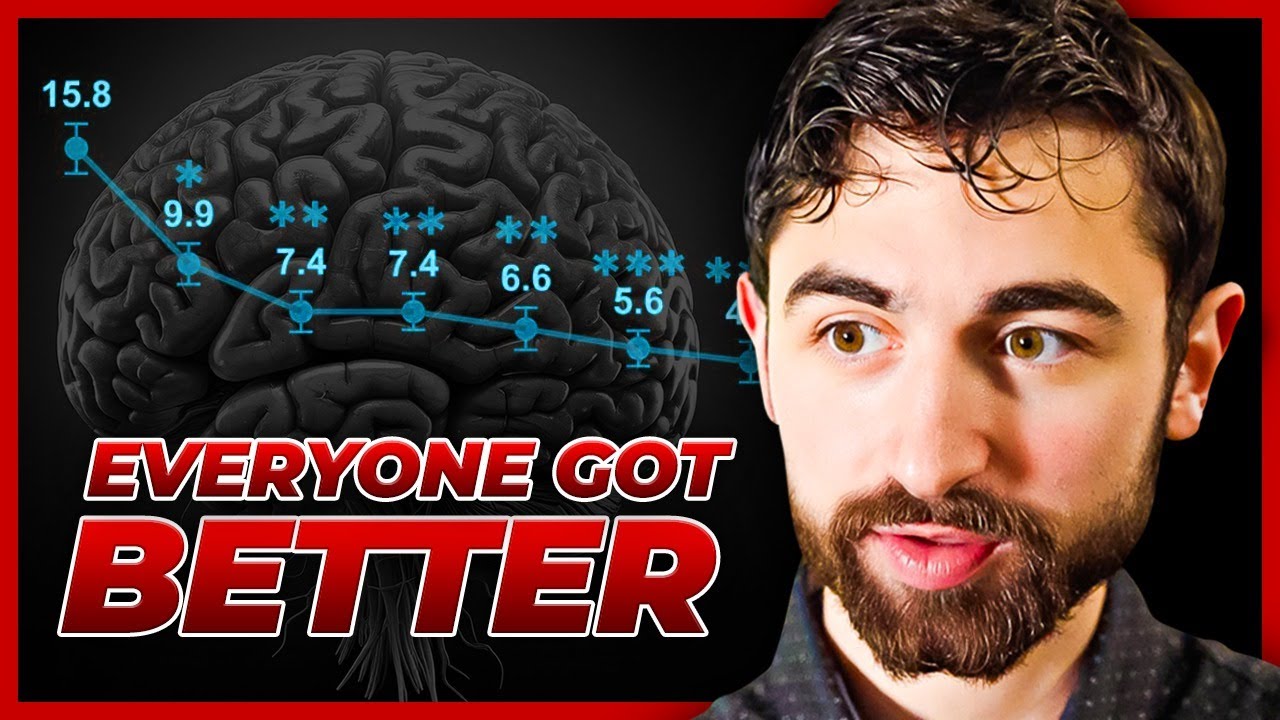
Nick Norwitz breaks down a study where 24 college students with major depression followed a ketogenic diet for 10-12 weeks alongside standard care. PHQ-9 depression scores dropped 69%, wellbeing nearly tripled, and 100% reported symptom reductions. The study had no control group, so processed food elimination may have played a role.
Chapters
In case you've been living under a rock for the past week, the big mental health news that's been running across media headlines relates to a new study just published in Translational Psychiatry. That study found that a ketogenic diet is highly effective in treating depression among college students. In this video, I'm going to break down for you what this study was, what it found, and importantly, why it makes total sense, including discussing mechanisms by which a ketogenic diet, a low-carb diet, does make biological sense for treating major depression and related mental health conditions. And at the end, I'm going to tell you where to find more information, including a practical lifestyle checklist to support metabolism for mental health. But we'll build to that. Consider it your reward. Let's get into the study first. In this study, 24 college students with confirmed diagnoses of major depressive disorder each of whom were already receiving standard of care treatment, including counseling and medication, participated in a 10 to 12 week ketogenic diet intervention. Now, quickly, the dietary intervention itself included a variety of whole nutrient-dense foods, including animal proteins like beef, chicken, pork, fish, lamb, and cheeses, healthy fats with a stated focus on monounsaturated and saturated sources like olive oil, avocado oil, coconut oil, and butter, and nuts and seeds and non-starchy vegetables. Furthermore, to support the transition into ketosis and prevent symptoms of what's often referred to as the keto flu, which is typically just due to shifts in electrolyte balance during keto adaptation, participants were also provided with electrolytes and broth, like bone broth. So that was the dietary intervention. With respect to the mental health assessments, all the mental health assessments used in the study were validated and widely accepted clinical and research tools. These included the Patient Health Questionnaire-9 — you might have even gotten this from your doctor— and the Hamilton Rating Scale for Depression to measure depressive symptoms. The reason they used two depression scales is to see if they agreed with each other to improve the robustness of the findings. We'll see what the results were in a minute. And they also used the WHO-5 to assess for overall well-being and global mental health. Now, the results. Among participants who completed the full protocol, Participants were in nutritional ketosis 73% of the time as measured by finger stick, with an average blood ketone level of 0.7 mmol. So we didn't just take the participants' word that they were eating the diet, we proved they were in ketosis. Now what about the mental health symptoms? Symptoms of depression improved progressively over the course of the study, showing a 37% improvement by week 2 and 69% decrease by weeks 10 to 12 according to the PHQ-9. And the Hamilton Depression Rating Scale showed a nearly identical 71% reduction, improving the robustness of the findings. And as for the WHO survey, it identified a near tripling in overall well-being. So pretty awesome results. And if you want more details on the results, including the per-protocol analysis, the intention-to-treat analysis, and so on, you can find more details linked in the letter below. But the key points are that every single participant, 100%, reported a reduction in depressive symptoms. And these improvements were, on average, not only large, and statistically significant but clinically meaningful. These findings suggest that a well-formulated ketogenic diet may offer meaningful support to people struggling with major depression. Now, in the rest of this video, I want to talk about ketogenic diet mechanisms. How exactly does low-carb address the pathologies underlying depression? We're going to talk about the microbiome, inflammation, autophagy. But before we get to those tasty mechanisms, forgive me for just one minute while I steal some time to talk about the sponsor of this video, Chapter. Now, I know sponsor messages can feel like a pill, but this one isn't. Chapter isn't a pill or supplement. It's a support program to help older adults navigate the chaotic maze that is Medicare insurance. And this is actually relevant to this video because 5 to 20% of older adults, depending on setting, can suffer with depression or related mental health conditions. It's not just college students. Depression and mental health disorders, they span the life spectrum. Plus, data show that the right health insurance for an individual —which most people don't actually have—can improve all-cause mortality. You can see the links below for more information. Anyway, Chapter was founded by people whose parents, their parents, were scammed by sleazy medicam brokers, so they vowed to fix the system. And Chapter is fully independent. They search every Medicare plan available and only guide their decisions based on what fits your needs and priorities. You'll always talk to a real human, and their advisors aren't compensated based on steering you to particular plans. The ultimate result is savings in 3 currencies: money—the average user saves $1,100 per year—stress—you always talk to a real human and be supported—and even in life years. Yes, the right insurance can improve all-cause mortality. So if this could help you or a loved one, maybe a parent, call the helpline we've set up: 815-STAY-CURE. That's 815-782-9287. Metabolic health is life insurance, but you also need the right real health insurance. Now, with that, let's get back to ketogenic diets, depression, and mechanisms. A question many of you might be asking at this point is, was there a connection between ketone levels and reduction in depressive symptoms? Well, technically speaking, if we take p 0.05 as the threshold for statistical significance—this is the conventional scientific cutoff—then the answer is no. There wasn't a statistically significant association. But let's pause here for a minute because that threshold is arbitrary. It's convention, not a definitive line between truth and falsehood. To be clear, biological reality doesn't always or even usually align with that p-value threshold. So, we can look for trends. And that's where things do get interesting, because a trend was observed between ketone levels at 4 weeks and changes in depression scores among study completers, with a p-value of 0.084, so pretty close to that threshold and an r-value of -0.46. And this matters because this study wasn't powered to detect a dose-response relationship between ketone levels and depression. And we know that ketone levels can be quite dynamic, fluctuating from moment to moment or hour to hour, so the data can kind of be noisy. Yet despite those limitations, a moderate inverse correlation did emerge, with higher ketone levels associating with greater improvements or lower scores on depression scales. That is a signal in my in my opinion, worth paying attention to. And to me, it suggests something biologically meaningful might be happening, and that a larger, higher-powered study could very well confirm a dose-dependent effect of ketones on depressive symptoms. Will be interesting. Area for future investigation. But whether there is a bona fide dose-response relationship or even just a threshold effect for certain ketone levels, there are biological rationales for how ketones could benefit depression and mental health. I'll walk through 3. First, mental health disorders are increasingly understood as conditions of metabolic dysfunction in the brain, particularly glucose dysregulation and impaired glucose metabolism. So supplying the brain with an alternative fuel source in the form of ketones could help address an underlying metabolic imbalance that contributes to depression. Second, ketones have well-documented anti-inflammatory effects, including in the brain. And neuroinflammation plays a role in neurodegenerative diseases and mental health disorders, including depression. So reducing neuroinflammation could be another mechanism by which ketones exert their antidepressant effects. And third, ketones are known to increase levels of brain-derived neurotrophic factor, or BDNF, a neuromodulator that supports brain plasticity and resilience. BDNF levels are typically reduced in people with depression, and increasing BDNF is one of the many ways by which antidepressants are thought to work. And notably, in this study, researchers did observe a 32% increase in BDNF levels over the course of the 12-week ketogenic diet intervention. So you're already starting to see a pretty compelling mechanistic case come together. But moving on, another way low-carb ketogenic diets may improve depression is by influencing other key metabolic pathways in the brain, including autophagy. Autophagy is the brain's cellular recycling system. And recent research has shown that dysfunctional autophagy in particular brain regions, including one called the lateral habenula—you can think of it as the brain's depression center—may contribute to clinical depression. The way this works is when autophagy is impaired in this region, it leads to an abnormal buildup of receptors for the neurotransmitter glutamate, the brain's primary excitatory signal. And this accumulation essentially turns up the volume on despair and depression-like signals, amplifying feelings of hopelessness and low mood. That's one of the underlying causes of depression. In fact, this is also how different antidepressants work. They converge on this autophagy in this brain region. But ketosis and intermittent fasting can modulate autophagy. So supporting or restoring proper autophagic function in these brain regions may help reduce the neurobiological drivers of depression. In this context, the idea that a ketogenic diet could help relieve symptoms by normalizing autophagy isn't just plausible, it's increasingly likely. Now, moving on, another important variable to consider is just what was removed from the diet. By design, ketogenic diets are elimination diets or partial elimination diets. And in this study, there was admittedly—this is a limitation—no control group comparing, for example, a dirty ketogenic diet with processed foods to a clean ketogenic diet with whole foods, or even just a whole foods, low-carb, non-ketogenic diet. This all means we can't rule out the possibility that part of the observed improvement in depression was due to the elimination of certain harmful components in the diet, rather than to just ketosis itself. In particular, the removal of added sugars and various chemical additives commonly found in processed foods may have contributed to the mental health benefits. That's a legitimate mechanism. And another important category of change to consider involves the gut microbiome. A ketogenic diet is known to shift the composition of the microbiome, and these changes can have profound effects on brain function. For example, recent research previously covered on this channel has identified specific gut microbes often depleted in individuals with depression. These microbes produce a hormone and neurotransmitter called homovanillic acid, or HVA for short. It's a structural cousin of dopamine, but unlike dopamine or serotonin, HVA, homovanillic acid, can be secreted from the gut, enter the bloodstream, and cross the blood-brain barrier. Dopamine and serotonin can't do that. So here, in this way, homovanillic acid can exert antidepressant effects. So far, these effects have been confirmed only in animals, or primarily in animals. However, it's really worth emphasizing that both HVA and the microbes responsible for producing HVA have been found to be significantly depleted in human patients with depression. There's a lot more detail here, if you want more detail, see this video. But keeping it simple, this suggests that microbiome changes could represent another plausible mechanism by which a ketogenic diet improves mental health. Now, let's put all of these mechanisms together into one summative figure. Take a look at this. Maybe you want to pause the video here, take a screenshot. It's pretty interesting at the very least, isn't it? And taken in the framework of these new clinical study findings? I think it's really beautiful. Now, wrapping up, for those of you looking for something more concrete to motivate you to turn these insights into action, I've put together a checklist of interventions and suggestions that can support basic metabolic and physiological functions to hopefully support your mental health. Currently, these resources and other resources, protocols like these are available at staycuriousmetabolism.com. So I'm going to force you to go there and be a subscriber to my newsletter to get access to these. If this is of interest to you, please chase the links below. But on this study, I think it's a breakthrough. Every single student, every participant improved, and many experienced dramatic reductions in depressive symptoms, all by changing what they ate. So a ketogenic diet, it's not just another wellness trend. It's a biologically sound, evidence-based metabolic and mental health intervention. Mental health is metabolic health. And metabolic health is mental health and the tools to change your mental health that are already in your hands and on your plate. Now with that, if you found this video valuable, we want to spread the love, spread the knowledge, please do so. Click subscribe, share this video, comment, and consider checking out staycuriousmetabolism.com for more details. I thank you for your attention and your compassion and your curiosity.
Bye. After I was on the keto study, I found that I have a reason to survive and things to look forward to. And there's a lot of beauty in this world. And sometimes all it takes is just putting something different in your body.










