Muscle is Not What We Thought (ft’ Dr Gabrielle Lyon)
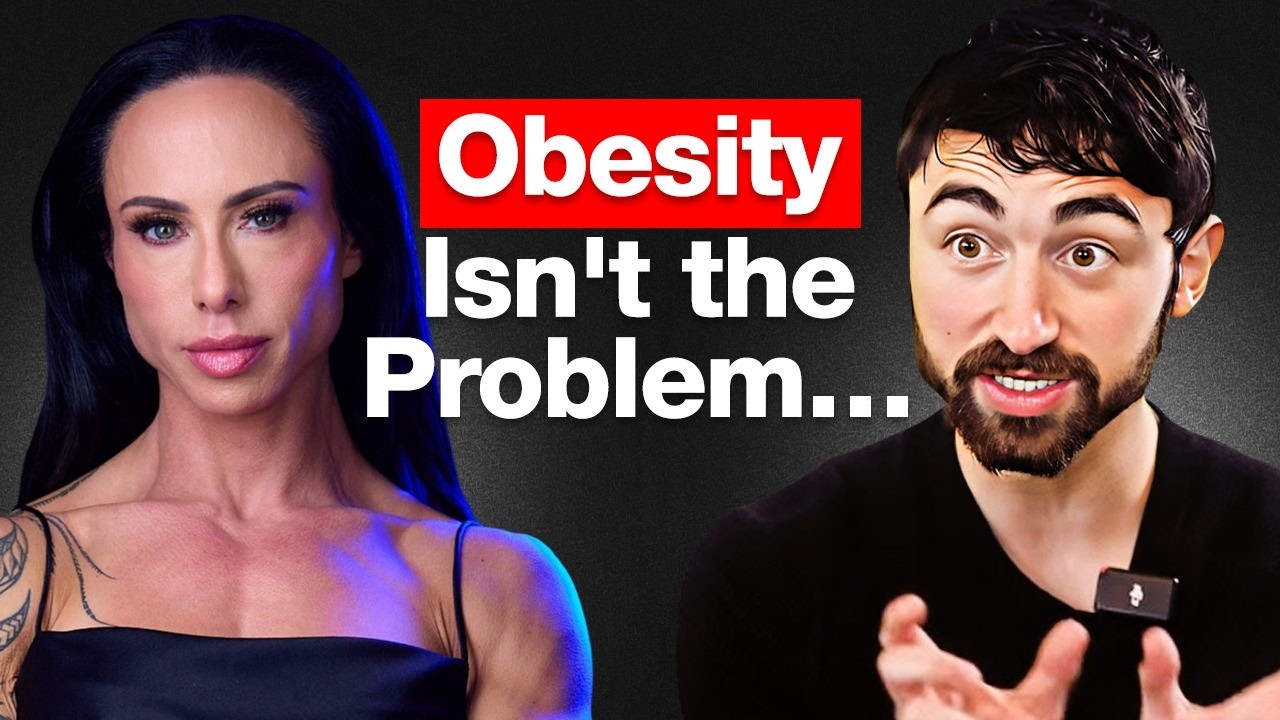
Nick Norwitz interviews Dr. Gabrielle Lyon on muscle as an endocrine organ and why traditional body composition metrics miss what matters. They discuss how GLP-1 drugs may accelerate muscle loss, why DEXA scans mislead, and resistance training protocols from Lyon's Forever Stronger Playbook.
Chapters
Your thyroid, your adrenals, muscles literally secrete hormones that go to your brain and impact your entire body physiology.
Muscle can become healthier simply by moving.
We don't think of muscles as endocrine organs.
It's a huge oversight, a glaring oversight in the literature.
You're giving me goosebumps because I'm thinking about some of the—
You did? These are markers of unhealthy skeletal muscle first.
They're basically a fingerprint for poor muscle quality.
I do think that We're at the precipice of real advancement.
All right, everybody, we have today a special guest whose reputation precedes her, Dr. Gabrielle Lyon, to talk about muscle-centric medicine.
We don't have an obesity epidemic, but what we really have is a midlife muscle crisis.
And I just wanted to frame up this discussion with a personal story, which is— gives some resonance to this topic for me. I think people think about like muscles as just something aesthetic or something that lets you lift heavy loads, which is functional, but it really is a sort of health insurance policy of sorts. So my personal story is when my dad, uh, was younger, he was an international rugby player. I'm actually South African background, and, uh, he played all over the world, played against the All Blacks, was really a stellar athlete. And then, like many people who go into the profession of medicine, you kind of lose track of your health. He was in high-risk obstetrician, had a very high-stress lifestyle, sleep deprived, didn't eat the best, and when he was relatively young, around 44, he had an occlusion, a blockage of a major vessel in his heart, and it should've killed him. Like he should've died, but he didn't because his heart had all these extra vessels apparently from the time that he played rugby, at least we thought. So his athletic past, his muscle insurance, you could call it, literally saved his life. And I always think about that when I think about you talking about muscle-centric medicine. So with that, we're here to talk about about that topic and a, a new guide you have, the Forever Stronger Playbook, which I read through and I'll just say it's a great place for everybody to start. Super practical, lots of pithy insights. So we're gonna have a two-part conversation. Part one, get into a lot of the practicals, the foundations, the philosophy, and then part two, we're gonna nerd out a little bit together. But that is where I wanna start. Dr. Lyon, welcome.
Nick, thank you so much for having me. I had no idea that you came from such an athletic background. The brains part, I knew that, but you know, when you combine brains and movement, it is no surprise.
What? Yeah, I, I was not much of a rugby player myself. I tried once and a little too late in life, but yeah, I actually will get into my athletic background in a little bit because I have a question that might stump you. I've asked other exercise physiologists and nobody's really answered the question, but we'll make it practical. That's a teaser for later, but I wanna start start maybe with a broad question. What is the number one misconception people have about muscles?
That you're too— it's too late to start. It's too late to start. And what I think that we're gonna start to see more of is that muscle can become healthier simply by moving regardless if body composition changes or not. And that's really underappreciated, especially because one of our biomarkers for a particular outcome is body fat percentage. And quite frankly, I think, and I'm hoping that you will agree with this, that body fat percentage in part is gonna become more of an outdated biomarker, believe it or not.
Elaborate on that. I agree, but I wanna hear why you think that.
Well, when we think about body fat percentage, there's a quote, certain body fat percentage that may be associated with certain comorbidities, let's say 30% body fat. But when you really look at it, is it really the body fat that drives disease or is it the IMAT, the intermuscular adipose tissue? And I think that we're starting to see more and more evidence that it's the intermuscular adipose tissue, the fat infiltrated into skeletal muscle. I'm not talking about the athlete's paradox where fat triglycerides are around mitochondria that athletes are using for exercise, but the intermuscular adipose tissue, The fat that infiltrates into the tissue through inactivity and perhaps a diet that outpaces muscle health. This is what we're seeing also contributes to insulin resistance and other cardiometabolic diseases. It's the percent of IMAT, not the percent body fat.
And do you measure that clinically? Like in your clinic, IMAT versus overall body fat percentage?
I want to. And we're not there. And this highlights something that's really important is that right now the foundation of our literature and the foundation of what we know related to body fat percentage and body composition is largely informed by DEXA. And as you know, DEXA does not measure lean mass, muscle mass directly. It extrapolates, you know, puts lean mass altogether and then extrapolates how much skeletal muscle mass one has, has nothing to do with the quality. Why this becomes important is, remember when the literature came out showing higher muscle mass in individuals that had obesity?
Was associated with obesity or just have them?
Because the, the conversation around, um, more muscle mass was that obesity, because they were carrying so much weight, increased muscle mass.
That those, yeah, if you gain body mass, you're gonna gain some degree of lean mass as well.
This was, this was somewhat of the conversation. However, it says nothing to do with the health of skeletal muscle, and the health of skeletal muscle is probably more important than the total mass. By saying someone who has obesity also has more muscle mass does not tell what I consider the most important aspects of the story, which is it is about healthy muscle mass, and we have not been measuring the quality and quantity of muscle mass directly. It's a huge oversight. A glaring oversight in the literature, which with the influx of MRI data, I'm, I'm hoping that we're gonna begin to see a shift.
I really like what you're saying. It's like an added level of nuance. I think a lot of people probably resonate with the idea that, you know, BMI is a weak proxy, but there's a broad literature on it. You go one level deeper, it's like, oh, it's body comp, but it's not actually just body comp because the body comp fat and muscle each have two components that are really nuanced. Just speaking about the fat, like the distribution of fat matters. Is it visceral? Is it abdominal? Is it gluteal? All these have different like hormonal profiles. And then there's the element of muscle, which you're saying, which can be infiltrated by fat and also have different qualities independently. So to talk a little bit more about that, if people aren't getting like MRIs for intramuscular fat, how do they know if they have high-quality muscle?
When we think about high-quality muscle, the definition of literature typically refers to strength. But I would say as someone who treats patient— patients and as a clinician, markers, biomarkers like fasting blood glucose, fasting insulin, fasting triglycerides, these are markers of unhealthy skeletal muscle first. We relate them to metabolic syndrome, but what is metabolic syndrome and what's actually at the root of metabolic dysregulation? It really is that your diet and activity outpace muscle, your muscle health. And that, you know, clinically, if someone is listening to this and they go to their doctor and they begin to see various biomarkers related to, quote, metabolic syndrome, this is how we think about skeletal muscle mass in terms of healthy skeletal muscle mass. Of course, there's what relates to strength. And, you know, strength is relative and people are— listen, I'm much better at pushups than my sister, or my sister is much better at squats than me. And while we can recognize that there's certain strength movements, understanding individual baseline and then where someone is gonna progress to, and then metabolically, what does, what does their metabolic profile look like? That's how I think about healthy skeletal muscle.
So what I hear you saying is that like as a, a clinician and a muscle scientist, when you look at somebody's metabolic health panel, setting aside any sort of imaging of their body, when you see these markers of metabolic syndrome, the high triglycerides, the low HDL, they're basically a fingerprint for poor muscle quality. Fair enough.
Fair enough. I mean, I don't know. I, I think you should take over my job because that was an excellent explanation. And imagine this, we've built decades of literature focused on what we have to lose, which has always been centered around obesity. When the obesity epidemic happened, the conversation was all about highly processed foods and palatable foods and that our calorie consumption, that this was the problem. Skeletal muscle wasn't, and movement wasn't even brought into the equation because at the time muscle activity hadn't really changed and people hadn't really, they didn't relate physical activity and metabolism and body composition. Huge oversight. And then the next, I don't know, 50 years has all been focused on weight loss and how we need to tackle obesity as if obesity in and of itself is the primary problem. I would argue that it's not. I would argue that obesity is secondary to unhealthy skeletal muscle. You know, whether it's liver becomes dysregulated and then muscle becomes dysregulated, at the end of the day, glucose disposal happens in skeletal muscle. This is the primary site for glucose disposal. And that becomes aberrant.
Yeah, I guess the way I think about it, because everybody has their issue that they're more sensitive to, is we explain these things as like linear progressions when really we're just describing one thread on what is a web. And what I hear you saying is that like muscle health and physiology is an underappreciated string on that web. And even as I hear you talk about the cultural focus on like what we focus on, it's occurring to me in real time why culture is so resistant to have this shift towards muscle-centric medicine because we are so weight and calorie focused. And my understanding of the literature is exercise, especially resistance training, isn't necessarily good for weight loss. And so the conversation can very easily stop there. Oh, just get your calorie, you know, balance managed, lose weight, and that's gonna improve your health. And muscles get sidelined because, you know, the pushups you do probably aren't gonna make you lose much weight. Even if they're improving your health. And it's harder for your individual, like individual person, patient to get biofeedback on how the exercise is actually improving their health.
When, when I hear you say this, I, I really can relate and I wanna take it a step further. We talk about how resistance training exercise isn't great for weight loss. And then as we think about it and we think about what's is muscle's role in health and wellness, in body composition, in outcomes that we care about. One of the things that is always said, and I hear this all the time, is that you put on muscle mass and muscle is more metabolically active, and that's why, you know, we should train. And the reality is what you're pointing out is very true. At rest, muscle is not very metabolically active at all. It might burn 2 to 3 calories or 2 to 3 grams of, of carbs per hour. Muscle at rest burns primarily fatty acids. It is not an extraordinarily metabolically active tissue. The part where muscle really plays a role from my perspective is that it's a voluntary choice. When you engage in physical activity, whether it is resistance training or endurance, you now have the ability to increase calorie consumption, increase energy expenditure because of your input into this organ system. And it's the only— frankly, it's the only organ system under voluntary control. Now, skeletal muscle from a body composition perspective, again, is it a weight loss aspect? No. But over time, when we think about the body composition aspect, it really is focusing on skeletal muscle is ultimately what is going to move the needle. Again, Yes, for power, for strength hypertrophy, but from a metabolic perspective and even a brain health perspective. So as you know, I did my training in geriatrics at WashU. I was a geriatric nutritional science fellow. And one of the things that we saw was that as body composition changed, we saw brain function change. We also saw brain volume change, and those that engaged in more physical activity had better looking brains.
So your training's in geriatrics. Mine's actually in, uh, neurodegenerative diseases. So a little bit of overlap there. Alzheimer's. Alzheimer's.
We like each other so much.
See? Yeah. And, um, I was actually reading a paper, we'll get into it in part 2 a little bit deeper, but now that you bring it up, um, it was looking at what differentiates Alzheimer's brains from other brains. And it's not really the amyloid. People hear about amyloid and tau, right? But there's a resistance factor. So there are some brains that are loaded with amyloid. And they're fine. And it's not clear why, but this study was looking at as a key energy molecule. You probably know of it from geriatrics, NAD. We can get into NAD in part 2, but basically it's important in like most energy metabolism networks, mitochondrial metabolism, carb metabolism, fat metabolism, beta oxidation, yada yada. And Alzheimer's brains had deficient NAD levels, but even brains with similar amounts of amyloid load, if they had higher NAD levels, cognition was typically fine. Now, Where I'm going with this is when they looked at things that predicted higher NAD levels independent of age, what popped up? VO2 max and lean mass. The reason I bring this up is because I think there's like two things we're both highlighting here. One is it's not just about like what your muscles do in terms of say burning calories, but their, their functionality, but also that there's this endocrine aspect. They're not just mechanical levers or like moving your bones as levers. They are secreting hormones like anything else in your body, your thyroid, your adrenals, muscles literally secrete hormones that go to your brain and impact your entire body physiology. And I think that is an element of muscle-centric medicine that is just grossly overlooked because we don't think of muscles as endocrine organs.
This wasn't really highlighted till roughly the 2000s, and this is largely by the work of Bente Pedersen, and she's actually at Copenhagen in Denmark. Her work. She was, I think that she was an exercise physiologist who was also an immunologist. Again, she's an MD practicing physician who also was involved in research, obviously. And it was her discovery around myokines. And exactly what you were saying is true. When you contract skeletal muscle based on intensity and duration, it releases myokines. What is the impact of this? And myokines, to the surprise of the, the listener or the viewer, are quote cytokines like interleukin-6, TNF-alpha, all of which are also released by macrophages. And it's kind of counterintuitive because we've put, uh, quite a bit of criticism, stigma, whatever you wanna call it, uh, identified these cytokines as, as bad. But they are pleomorphic and they are released from muscles as well. And this somewhat balances the inflammatory effect. And also, for example, interleukin-6, which is probably the most famous myokine, will help or possibly helps. Again, this is still early. It's only— we've been studying this for 26 years, which is not that long, helps with fuel utilization, meaning it potentially can sensitize the liver to use more fuel. It directs fuel partitioning. And from my perspective, how I have been taught is exercise does X, Y, and Z. It's good for VO2 max, it's good for brain function, it helps with blood flow. There's a whole series of reasons as to why exercise is important. The one aspect that we don't think about is this interorgan crosstalk. And that is what I think that is going to become more valuable. And then, the other aspect, what I'm hoping to see in the future is how do we then determine if exercise is effective? Is this person doing the right type of exercise for them beyond body composition, but for their biomarker imprint or for their biochemical needs? And I think that that's what I would love to see is the way of the future because we should be able to test. If something is effective, we should be able to test it in the blood.
Yeah, you're giving me goosebumps because I'm thinking about some of the, I don't know if you know the work of Michael Snyder. I've had him on a couple of the channel a couple times, but he is a researcher at Stanford and his thing is, what is known as longitudinal multiomics. So like all the omes, the genome, the proteome, the transcriptome, and then taking time series. So you get this like intense video of what an organism is. And one of my favorite papers, my favorite exercise paper of all time was published in Cell by his lab. It's called the Molecular Choreography of Acute Exercise, which is named beautifully. But what it does is look at all the things going on in a person as a result of exercise. And one of the things they, they noted was exactly what you just mentioned. So this idea that exercise causes what they termed a fitness inflammatory signature. We think of inflammation as bad, but what they're saying is this isn't chronic inflammation, it is a spike. It is a signal to the body, stimulus to adapt. So when we think about what's going on to mediate the beneficial effects of exercise, it is a molecular program. And in this case, you don't want high baseline inflammation, but you do want that spike because that is a trigger for adaptation. Now, the other reason I bring it up is because you were talking about Precision Exercise, and based on what somebody's baseline is, it was very interesting. They were able to show how, um, gene expression patterns changed So there's this one beautiful graph. I remember it back from like when I read it in 2020, it's 6B and it's showing exercise, um, induced gene changes, gene expression changes. And there's this inversion pattern for some genes where based on your insulin sensitivity, a gene can be expressed in opposite directions, up or down. So some genes, if you're insulin resistant, go down. If you're insulin sensitive, they go up. I bring this up just to highlight how complex a particular exercise might be with a particular host. And while we might not have that resolution yet, I do believe it's like within a 5-year horizon where we have, you know, not just CGMs, but multi-metabolite continuous meters. And it's saying, hey, do this exercise, you know, combining AI with like all your biometrics. I think it's the wave of the future. I think you're seeing the future there.
I, I agree with you. And what, from my perspective, what that's gonna look like is a digital twin. Of all of the outcomes that potentially could happen, and it's modeled for you. I, I do think that we're at the precipice of real advancement, and I also believe we have to shift the focus to muscle. With the use of GLP-1s, we are going to trade an obesity epidemic for an epidemic of sarcopenia. And if we do not get smart, we're going to overlook, like, what happened when the, quote, obesity epidemic hit. When the obesity epidemic hit, it was a massive failure. Spent 50 years trying to fix a problem that we were not able to fix, and it just kept going in circles. Again, why does this matter? I, I did a fellowship and, you know, part of it was I ran a weight management clinic. But now, because of the influence of GLP-1s, they're here to stay. They're extraordinary. We are also still overlooking the importance of skeletal muscle. We're going to be able to treat type 2 diabetes in large part and be able to treat obesity. We're going to swap that out for sarcopenia. My fear is that we're going to accelerate aging because of the success of these GLP-1s. We're going to lose more muscle tissue early. And again, it's not specific to muscle tissue. It's simply the ability to restrict consumption, delay gastric emptying, reduce that impulse for food. But most people will go off of these GLP-1s within 2 years, regain the weight, and that weight is going to be fat. They're going to be left in a, you know, arguably for the long term, if we're thinking about long-term outcomes, in a worse place. And that, that becomes very concerning. Understanding muscle, reorienting to our metrics and our imaging, everything to skeletal muscle, and then getting the dose right. I think it's gonna be transformative to, it's gonna be transformative for Americans and just everybody.
Yeah, I couldn't agree with you more. And I wanna get into the practicals, but I really want to double-click on something that I think my audience probably isn't seeing, but I am seeing. And that is the difficulty. What I see, and, and I mean this in the best of ways, is I see you struggling with how to talk about this. And, and I'll tell you my, I'll tell you my impression as to why, and you can tell me if I'm correct or not. When you bring up something like a GLP-1, it immediately induces a visceral reaction. People are gonna be like, you know, you're for it or against it. It's black and white. And I think where we both agree is like, look, at an individual level, like anything, like this is a tool that can be used with precision and effectiveness, and it can be very helpful. However, We also can't lose sight of the forest for a tree. And one of the things that I think people don't talk about enough when it comes to where we put the spotlight of medicine is what are the incentive structures driving it? So it's very easy to say, like, follow the money. Big Pharma wants you to be sick, yada, yada, yada. It's not about that. It's not about conspiracy theories. It's about is there a business model for this in modern medicine? For GLP-1s, there are. For statins, there are. It doesn't make them good or bad. It just means This is the incentive structure driving the research and also driving medical and scientific dialogue, which makes it very difficult to take the spotlight off of that because it seems like you're going against the grain of like evidence-based medicine when we're just saying, actually, to the best of our ability, can we please put the compass directed true north towards patient health instead of financial incentive structures? And that's such a hard thing to like communicate in a nuanced and sensitive way. Athletic manner. I think you do it really well. I forget how you put it, but I remember listening to your episode with Andrew Huberman and he put you on the spot around GLP-1s and I forget exactly what your answer was, but I just remember being impressed.
I appreciate that. And I think your audience is very astute and it's important that things can get communicated well and it's difficult because there's a lot to be said and also it's very critical as to how it is said and how it is said responsibly. Again, around GLP-1s, as I've been doing this long, you know, I graduated med school in 2006. I finished my fellowship in 2015. You know, I did psychiatry and then family medicine. And, you know, through the years, and especially with the velocity at which information spreads, I've become more and more careful with the words because I recognize the gravity at which they play. And we're all human and we all make mistakes. And there has to be a level of thinking, what is the actual point that needs to be made? How can it be said? I'll say, I'll give you another example. As I sit here, and I do want to come back to funding because I think that that's also important. And most people don't understand that studies and research, it has to be funded. And it doesn't guarantee outcomes. So I do want to touch on that because we are going to be talking about the Dietary Guidelines, which I was there. It was amazing, very emotional moment. But the reality is how we intake and ingest information changes not just our own personal perspective, but also medical providers, medicine. It's It, we are all able to be swayed and our biases come into place. And here is, here, I'm gonna highlight this for you in this way. GLP-1s have come on the market. They've been around for a very long time with treatment in various diseases before they were approved for weight loss. Been around for 20 years. If an individual takes GLP-1s, here's what we hear. And again, I'm still, you know, I'm still a practicing physician. I see patients every Tuesday. It's cheating. It makes weight loss easy. People still eat whatever they want. There's a whole slew of reasons as to why people are against GLP-1s. On the flip side, what we see in evidence is nothing has been more effective for weight loss, for weight loss, period. Can look at this for mountrout. Like you, these agents are incredibly effective at weight loss. We're going to see what I believe to be better cardiovascular outcomes. I think that they're gonna be in PCOS. There's a handful of studies coming out for the treatment from the metabolic perspective of PCOS, all of which are extraordinary. They're not going anywhere and they're here to stay. Someone could now go to their doctor and say, I want a medication to help me lose weight. Very rarely would someone go, oh my gosh, I, I can't believe you're coming to the doctor to, um, help you lose weight. Would you agree with that statement, Nick? I'm going somewhere with this.
In the general public or the physician?
The physician. They'd be like, okay, no problem. Mostly.
There's anything wrong with it.
I mean, don't worry. I'm going somewhere with this. If Someone goes to their doctor and go, okay, so there's no problem with the perspective of obesity and weight loss for obesity. Can we agree on that? We agree on that, right?
Yeah. Mm-hmm.
Someone goes to their doctor and they go, I want a medication to help make my muscles stronger, help me recover better, to help with muscle health so that I have more muscle mass and more healthy muscle mass. What, what do you think a doctor would be like? Sure, no problem. Let me write you A for testosterone or B for an anabolic agent.
I, I will say yes if they were educated in it. So I think it's just not in the medical career. If a doctor's only going to comment on something, or probably should only comment on something if they have any background on it. And I can tell you, having just graduated medical school, we don't learn about muscle, like we don't learn about prescribing anabolic agent. It doesn't come up even for one second in medical school. So no, a doctor's just not gonna be comfortable in commenting on it because it's not in the medical zeitgeist.
But it's FDA approved. There are agents that are FDA approved for anemia, for, again, sar— well, not quite sarcopenia, but there are FDA— I wanna be very careful now because now I have entered into a moment of major bias and major— what's the word— judgment, right? As soon as one says now anabolic agents that have been used for the treatment of HIV from cachexia, muscle wasting, HIV, and saved many, many, many lives, these anabolic agents have been used either off-label or they have FDA indications. But, there is still a huge stigma about the use of "anabolic agents." And finally, even testosterone now has shifted. But, why am I saying this? And, why your listeners are like, "Oh, come on." But, I think that they come to you for different perspectives. What I've seen you do, I mean, I've obviously been watching you since you came onto the scene. But, one of the things I really respect about you and always felt very supportive is, there'll be a commentary from the community, both the medical community and online, and people are repeating the same thing. And then you come in and you go, okay, well, here's my evaluation on LDL. Here's my evaluation on the Oreo diet and what does it really matter? And you've taken upon yourself also with our friend Alexis Cowan, who's a dear friend of mine, PhD, went to Princeton, is you form your own opinion, quote, indoctrinated opinions. And This is— we are at the precipice of something that we've never seen before. And this is a long-winded way of saying, why did I write a playbook?
As a quick little bonus and extra value for you, Gabrielle is generous enough to give away 5 signed free copies of her Forever Stronger Playbook to members of the Stay Curious Metabolism community. All you have to do to enter, and there is a challenge, is you need to read a new letter that I wrote on the mTOR muscle paradox, some really weird stuff on how muscles age and how to slow or maybe reverse it. So check that out, leave a comment, and that will enter you to win a free copy.
Why did I write a playbook for muscle health? Because we're gonna need it. And the medical establishment is not and has not kept up with where I think we're going to have to be in order to protect human health. And the only way that that's gonna happen is if we can recognize our own biases, like our thoughts and feelings about GLP-1s, and then our thoughts and feelings about anabolic agents and hormone replacement. It's a very important conversation because at the end of the day, you educate people to allow them to make their own decisions. I, if I'm not putting words in your mouth, you're educating to be able to help people, right?
Not at all. I, the funny thing is whenever you talk about these issues, people immediately assume you have a value judgment. And my purpose is just to be like, hey, here's the data, whatever you do with it, I don't care. I've never been prescriptive on any of these topics. And this is the tricky thing. And now I'm gonna break the fourth wall, so to speak, and like, you know, provide my transparency about how I go about things because I know that, you know that. And also to amplify a message, you take advantage of that. Oh, at least I do. I won't say you do, I do. So you brought up like the Oreo study. I'm like, I want people to talk about this thing. I have like 5,000 followers on social. I don't have any money to do like a major study. What am I going to do? I'm going to combine my Harvard brand medical student PhD status and show I can drop my cholesterol with Oreo cookies. Not to put values on statins. This is the crossover trial with statins or LDL, but be like, hey, I'm going to provoke your emotions. I know you're going to come with a confirmation bias, but at least the conversation gets stimulated. And then those who want to engage with the nuance do. And then other people are collateral emotional damage, which honestly, you know, Your rage bait's not gonna upset me. The algorithm's gonna love it. So that's aside, it's a whole different kettle of fish. I do wanna get into some practicals, um, from the playbook, but quickly before you do that and before I forget, the new guidelines. So one major change in the guidelines was upping the RDA for protein, for protein from 0.8 grams per kilogram. And I will say per kilogram, so that's 0.36 grams per pound was the prior RDA. It's been upped to 1.2 to 1.6 grams per kilogram. I think that's a huge win. I wanna hear your perspective.
There is something really important to understand. Let's frame up what the role the guidelines have. The role of the Dietary Guidelines, which they come out with guidelines every 5 years, is to inform people, inform federally funded, um, organizations that receive funding, funding from the government. The Dietary Guidelines do not provide hard, fast numbers. Typically, it typically is a range, and there has been a point of confusion around dietary protein. The RDA for protein has not changed, but our minimum require— so we have not doubled. I want to be very clear on this. We've not doubled the minimum requirement. The RDA has not change. The RDA is based on a minimum amount of protein required to prevent deficiency. That number remains. The guidelines establish this healthy range. The guidelines now are recommending, uh, 1.2 to 1.6 grams per kg. This is how they've now reoriented the conversation around protein, but the RDA did not change, and the current dietary intake is 1.1 grams per kg. That is what the current NHANES data suggests, which means 50% are above and 50% are below.
Um, that's the median intake for Americans.
Yes, right now.
So most people are already in this range, but only 50%. 50%.
And that's important for us to recognize because what these guidelines have done is they reprioritize the importance of protein. And I definitely want to talk about the logistics, the nuts and bolts, but I don't want people to think that the minimum requirement has changed. That number has not changed. 1.2 to 1.6 grams per kg is now the recommendation. And this means, again, 50% of people are below 1.1 and 50% of people are above. If you take a 70 kg person, 50% of those, you know, 50% people, if that intake is 55 grams, 50% are below that. Yeah.
Important. A question is, one, like, do you think that is the appropriate range? Because the number that gets bandied about is 1 point, sorry, 1 gram per pound, which is 2.2 grams per kilogram. So somebody might get the impression, hey, you're above the 1.6. So 1 gram per pound is quote unquote bad thoughts.
Again, this is the range. The range goes up to, there's a range of protein intake from 0.8 grams to up to 2.2 grams per kg, which comes comes out to 1 gram per pound. The idea that there's one fast number for people that will take them through their life is something I don't agree with. Protein decisions are based on a handful of items. Number 1, how old you are. The older you are, above 35, we pick 35, the more protein you need. How much physical activity do you have? People do not recognize that the more sedentary an individual is, the more protein they need. Comes as a, a somewhat of a counterintuitive statement for people.
The more based on percent of kilocalories or more in terms of absolute, absolute number, like grams per— explain that.
Absolutely absolute number. Another great point. I expect nothing less. Sometimes calories are reported in terms of percentage. I don't think that dietary protein should ever be thought of as in terms of a percentage of calories. It really should be thought of in in thought of as total grams, for example, we don't recommend anyone go below 100 grams because it seems to lose its— some— there's metabolic advantages that become very helpful at 100 grams or more. And this is beyond, let me say, variety, like just structural components. Yes, it's beyond.
My question though had to do with— I agree with you. I think grams per amount of body weight makes more sense. But did I hear you right? If you're more sedentary, you need more absolute protein. It would make sense if you're sedentary, your energy needs are very low, so your percentage is higher. But you're saying your absolute grams per mass needs are more if you're sedentary. That is counterintuitive. So explain that to us.
You would be on the higher end. Skeletal muscle is stimulated in two major ways, and that is resistance training and amino acids, primarily leucine, which I know that you've talked about. I've, you know, again, I watch your stuff. And as we age, skeletal muscle becomes more anabolically resistant. It becomes more resistant to, and this is somewhat controversial, physical activity. It requires a certain stimulus, but also the efficiency of protein utilization decreases and the efficiency at quote sensing protein seems to go down. As an individual becomes more sedentary, you still need to stimulate that tissue. And if maintaining muscle is so critical, you remove one input, say resistance training, then you must account for it from the other end of the equation. And that would be through dietary protein. And this becomes really important because, you know, as individuals age, once their total caloric intake decreases, and their physical activity decreases, you do have to prioritize dietary protein. All that being said, is there evidence to go above 2.2 grams per kg or even evidence for that? I would say that there is not strong evidence, which is why even though I have my own personal beliefs that I kept it at 1.2, you know, in the book it goes up to 1 gram, but it's, that is more my own personal perspective, but the evidence supports 1.2 to 1.6 grams per kg.
You are thinking a risk-benefit analysis. There's very minimal risk to adding protein. Like there's always gonna be a bound on the literature we have. So then you just make educated guesses based on what's available. And I think upping the protein typically won't cause much detriment. But what I'm hearing you say is obviously just eating more protein's not gonna replace exercise, but if you don't exercise, you kind of have to like, bring the bottom end of the range up because you just need a little bit of extra stimulus because your muscles aren't getting exercise stimulus. So hit 'em with a little extra protein and it will be damage mitigating potentially, potentially.
And the evidence is clear that resistance training is, is really the key component. And I've looked at some of the bedrest data and after around 7 days, and I say this cautiously cuz I really do want people to consume dietary protein, it's, it's critical. But after around 7 days, if you are fully inactive, is protein gonna totally protect you? It, it's not. There still will be an acceleration of both muscle mass loss, strength. It is very difficult to protect that tissue otherwise.
Yeah, I know. I had a knee surgery once and I had to be on bed rest for my one leg for like over a week and just watching my quads, like I was a marathon runner, just like shrink day by day. It was Heartbreaking.
Heartbreaking. Terrible.
But I wanna, I wanna go through a quick rapid-fire series and then we're gonna get onto part 2. But what is your MVP protein? Like even setting aside just total grams, like your go-to protein source for people.
Lean beef because of the food matrix. Again, you and I talk a lot about protein, but really we're not quote eating protein. We're not eating a little side of saturated fat. We're eating whole foods and lean beef is, is definitely my go-to. Same with my family. What's yours?
Mine? Oh, sardines or I've always loved seafood, but I think that there is something in particular about, well, I just take sardines as a whole food, tons of micronutrients and then the omega-3s, which is, you know, are muscle healthy and heart healthy and brain healthy as well. So that's probably my go-to. Although I realize it's not everybody's cup of tea.
Doesn't make you popular on an airplane, I'll tell you that.
It doesn't make me popular at home either. I don't know if you know, um, I don't know if it's my sardine experiment video, but I did this sardine experiment where it was my major food source. A lot of really interesting metabolic things happened, but one thing is I developed sardine scent and I don't mean my breath. I mean like volatiles coming out of my skin even when I was like fasted, had brushed my teeth and my girlfriend was very upset. You smell like fish.
Like you smell like you're sweating the smell.
And I've had other people since replicate this. Like I didn't coerce them to doing it and they're like, yeah, my spouse is not happy with me. So it's a limiting factor on that particular experiment. That was the big downside. But otherwise I like sardines. Um, so I don't know. I don't know what happened with that, but, um, okay. Next question. What are your opinions on junk protein? And what I mean by that is we're kind of living in the protein maxing era where everything has protein, like Protein Starbucks, bunch of protein bars. And a lot of 'em, I mean, they, they even market themselves as like only what's necessary. And then they're filled with like, you know, Frankenfats and artificial sweeteners. Is there a place for junk protein or thoughts?
Very misleading. The idea that you should add extra protein on an already high calorie diet, assuming that someone is eating a ton of calories, I think it's very misleading and very disingenuous unless protein is a usable biological dose. And what do I mean by that? You use all of the protein, but there's a lot of conversation I see online about this idea of protein distribution. And people say, well, protein distribution doesn't matter. And the reality is that may be true if your total protein is high enough. Okay, possibly. However, when you look at the aging data, typically the data is based on a first meal response, which would then indicate distribution does matter. It's a, a bolus response at once that people are studying. And the idea that you're gonna add in another 2 grams of protein, and typically the majority of the plant protein comes from wheat, it's not a high-quality source of protein. I think it's very misleading. I love that people are reorienting the conversation to dietary protein cuz it is the most important essential macronutrient and we need more of it, but not by, um, junk protein. I like that term. I've never heard that before. Yeah.
All right. Now onto exercise. I'm gonna do rapid fire. I'm gonna give you a muscle group and you tell me your favorite exercise for the muscle group. Chest.
Push-up.
Agreed. Oh, actually, this is my question for you. I mentioned it earlier. I have a weird muscle wiring, as in my muscles don't fatigue, but I'm not a power athlete. So like when I was running, my 5K time wasn't that good, but I could keep the pace for a marathon. And it was the same with push-ups. So my, I don't know if you know this about me, but my freshman year of high school, I decided I wanted to break a school record on the fitness tests and I decided to do push-ups. So the prior record You do them to like a 3-second military-style cadence. It was set by a senior football player at 72. I trained for a few months. Nick Norwitz, what he accomplished is the most amazing thing I've seen in my 11 years of teaching in PE. And did 240 and ended up doing 427 in a set. And I trained a lot, but my muscles don't get tired. And this has also made it prohibitive, like, well, I think it's associated for me to gain a lot of mass and power. And I've talked to other people about this. I don't know if you know Ben Bocchicchio because he has like this plan. I'm like, try to put mass on me and I can gain power and I can gain muscle endurance, but I cannot just like hypertrophy. Have you ever seen that?
What was his reason?
He, he, he like, I guess you have a lot of like, you know, like more endurance fibers and not a lot of glycolytic fibers and that's just how you're wired genetically. He's like, maybe you can rewire it, but That was about all he had. Have you ever seen that?
Um, well, I think it's a, a really difficult, if we were to quantify that, the only way to know what kind of muscle fibers you have would be to do muscle biopsies, which I promised myself I would never be doing those again. I did those for 2 years, 4 in the morning. Yeah. Like not fun. I mean, I have seen what quote we, uh, we call as a hard gainer. I don't know if I can give you a scientific explanation. But is it potential that there is a certain musculature that people have an ability to have, right? There's, there's limits to the human genetic potential without the use of various agents to push past that cap. I think that, that there, that does exist. Again, your question is about pushups and, and maybe you just have these endurance fibers, which is absolutely could potentially be true. But in terms of the growth standpoint, you, you know, there might be a limit to, uh, yeah, it's, it's fair to say you might not be up for Mr. Olympia.
Yeah, fair enough. I just did turn 30 and my older guy friends were like, you're gonna hit second puberty, don't worry. So we'll find out. But, um, all right, let me get back to my list. All right, back.
Um, now I, this is, I love a pull-up. I, I love a pull-up. People will argue it's not all back, but I love a great pull-up and I love a great—
like a wide grip chin-up or something.
Yep.
You get a lot of back from there. I hard to argue against that. All right.
Glutes. You're not gonna like my answer. My answer personally is not squats. It is, um, a hip thrust machine.
I probably would say the same. I feel like I get more isolation.
I agree with you.
All right.
Quads, leg extensions. Probably not gonna like that answer. Leg extensions.
I like, they're satisfying and also it's isolation. I think if I'm doing compound, like I'm on vacation, something like a jumping alternating lunge will get a lot. But for like isolation, actually I would've had the same answers as you. Okay. Last question, then we're gonna get to part 2. What's better for cardiovascular fitness? Zone 2 cardio or high intensity?
I put high intensity in the playbook. Probably both very beneficial. Hard to study them both head to head as we know. I would say if we're talking about realistic practical application, most people are short on time. And that is why I think high-intensity interval training and Martin Gabala outta McMaster University talks about the 1-minute workout. Also Stu Phillips. I will lean on high-intensity interval training. If I had to choose. Right. If I had to choose.
Yeah. No, no, no. I'm in agreement. I've recently gotten into those vertical ski ergs.
The best.
Oh my God. They're depleting.
The best.
You're like, you're like, I was doing, um, uh, uh, cycles of like 2-minute sprints broken up by 2 minutes. And by the end of like the 5th set, you're just like, but yeah, no.
Real question, how fast were you going? 2-minute sprints. So did you hit 500 meters?
Yes. So I was my, actually we're gonna get into this in part 2 because I did a randomized crossover trial with a pharmacological agent.
You did?
Um, which I had not released yet. I did. It was very difficult because it's hard to get a placebo. So I had to source the placebo and it was 1 or 2 millimeters off the actual pill. And then there was a sign on it. So I had to like get a cheese grater out and like grate the signs off. It was difficult, but I did. Um, my. At like for fifth, for the fifth set. So that was after some fatiguing. I was doing like, like a 1:52:500 pace. Okay. So yeah, I'm not a big dude. It felt pretty good. I mean, anyway, so yeah, that's my cardio. That and stairs.
Very efficient and effective, you know, I think.
Yeah.
Especially for a busy person.
Yeah. All right. Thank you, Dr. Lyon, for joining us for part 1. Everybody should come back for part 2 where we're gonna nerd out a little bit.










