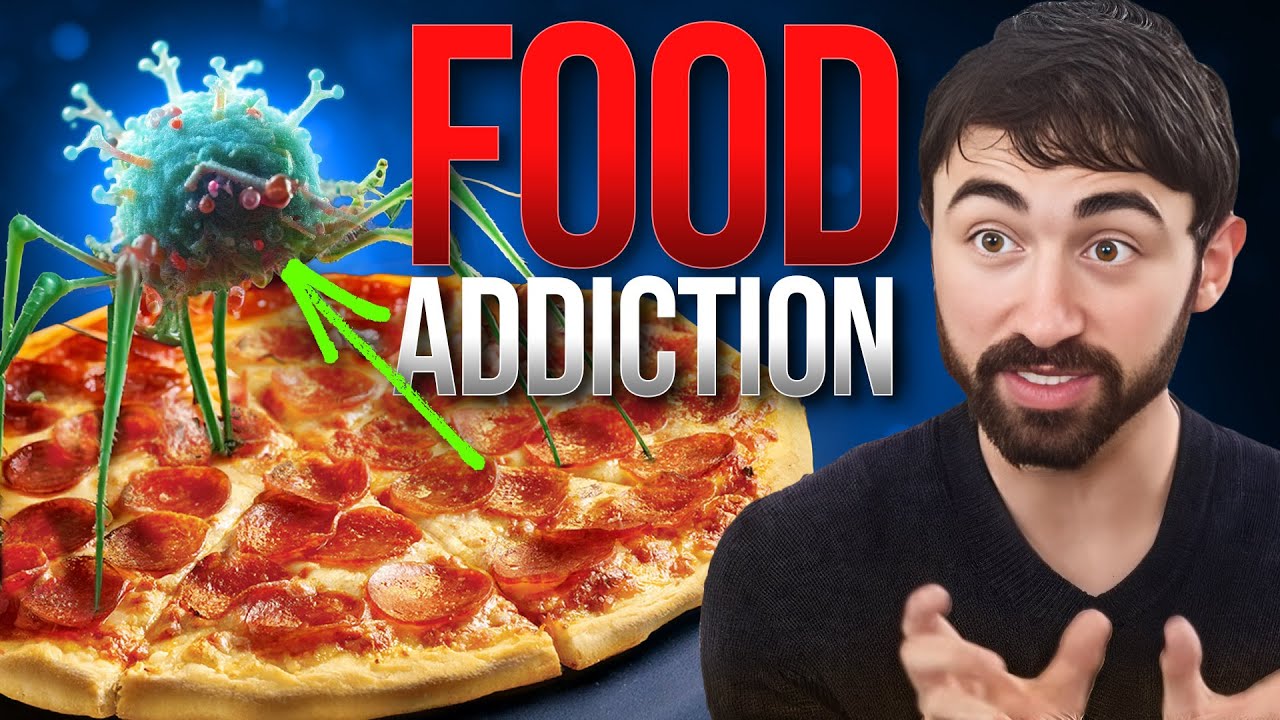
In this YouTube video, host Nick Norwitz introduces a freshly published Nature Metabolism study that links a specific bacteriophage, Gokushou virus WZ2015A (a member of the Microviridae family), to food addiction in humans. Norwitz explains the clinical definition of food addiction using DSM‑5 criteria and the Yale Food Addiction Scale, then outlines the gut‑brain axis and the understudied role of viruses in shaping the microbiome. The study found that higher levels of Microviridae viruses correlate with higher Yale Food Addiction Scale scores, larger waist circumference, and altered dopamine‑related brain activity on fMRI. A causal experiment showed that transplanting human stool containing the Gokushou virus into mice induced chocolate‑seeking behavior. Metabolically, the virus appears to disrupt tyrosine and tryptophan pathways, lowering anthranilic acid—a molecule that, when supplemented, protected mice from addiction‑like behavior. Norwitz highlights the excitement of these findings, their potential for personalized treatments, and ends with an exclusive clip from the research team discussing the importance and next steps of the work.
Food addiction is real, and it might be caused, at least in part, by a virus. And no, this is not some conspiracy theory about the big food Illuminati engineering a bioweapon to get you to buy their tasty treats. Although, as I say that, I hope I'm not giving them any ideas.
Oops.
But seriously, this video is going to speak about brand new data, actually published yesterday as I record this, in the journal Nature Metabolism that suggests a virus can contribute to food addiction. We are going to break down what the data say and what they don't, and why this might actually be a hopeful finding. Before I get to the rest of this video, I just want to flag that this is a special video because at the end I'm going to include an exclusive clip from the research team themself, made specifically for my audience, for you. This is part of my initiative to help amplify the researcher's voice and bring you as close to the science as possible, so stick around until the end. Now let's get back to it. But first, let me clarify that food addiction is indeed real and can be defined based on criteria for a substance use disorder from the DSM-5, Diagnostic Manual for Mental Health Disorders. This includes taking a substance in larger amounts than was intended, inability to control substance use, taking a substance for longer than was intended, and continued use despite adverse consequences. Specifically, the Yale Food Addiction Scale, and Yale Food Addiction Scale 2.0 has gained widespread acceptance as a clinical tool for assessing this condition, food addiction. Now, here's another fact. The brain talks to the gut, and the gut talks to the brain. More to the point, the microbiome, the community of organisms, bacteria and otherwise, living in our intestines, well, they can influence our brains and therefore influence our minds and mental health. That's not controversial. It's a biological fact, although one that lacks a bit of specificity. So now here's another question. What shapes the microbiome to shape the brain and shape the mind? Well, there are many things, but one that is understudied is viruses. Specifically, bacteriophages, viruses that attack bacteria, have the capacity to shape the microbiome and by extension, shape human metabolism and the brain and human mind. So running with this logic, the researchers behind this study first looked to see if there was an association between any viruses and higher Yale Food Addiction Scales scores in humans, and indeed they found one family of viruses stood out: the microviridae. The presence of microviridae family viruses was positively associated with food addiction scores, and not just population, but also in a validation human cohort. In other words, to confirm their findings, the researchers checked multiple independent human populations and found the same association: more microviridae viruses associated with worse food addiction scores. And to add to the story, they looked beyond that, looking at BMI and even waist circumference, a better marker of abdominal fat than BMI, and and found also an association between the microviridae and abdominal fat or waist circumference. Then to dig a little deeper, they looked at what specific species of microviridae family viruses was most abundant and found it was a virus called Goku-Shou Virus WZ2015A. Say that 5 times fast. And no, I don't think there's any association to Dragon Ball Z. Then if that weren't enough, They did functional magnetic resonance imaging, brain scans of the human brain, in another cohort to look at how this Gokushou virus, WZ2015A, no, I'm not really going to say it 5 times fast, associated with changes in brain activity and found higher levels of the Gokushou virus associated with changes in the dopamine networks in the human brain. In fact, they found changes that align with research on the brain dopamine effects of drugs like morphine and cocaine. So now we have a specific species of virus associating with higher clinical food addiction scores and brain activity states, dopamine states, on fMRI imaging in humans. But they went a level further to demonstrate a causal relationship. The researchers then transplanted human samples with and without the Gokushou virus to mice and found that the human-to-mouse Gokushou virus transfer, the transplant, indeed caused food addiction-like behavior in the mice. In this case, in response to chocolate-flavored pellets. So they were causing chocolate addiction in mice with a human Gokushou virus from human poop. That's what they did. Now that's pretty cool. We have a specific species of virus that can be transmitted between organisms and in so doing transmit features of food addiction. How crazy is that? But again, we have to ask how. Now I'm going to spare you a lot of technical details and scientific jargon, basically a jargon tsunami, and just say they found that the Gokushou virus messes with the metabolism of precursors to dopamine and serotonin, which are the amino acids tyrosine and tryptophan respectively. But more to the point, an intermediate of tryptophan metabolism named anthranilic acid that is lower in humans with more of this food addiction goku shou virus actually showed a protective effect against food addiction when supplemented to food-addicted mice. How exactly it does that is not yet clear, nor whether this relatively simple molecule could protect human patients against the food addiction virus. This research is so new, literally this was published yesterday as I'm doing this. But given what we now know about higher microviridae, gokusho virus levels, in humans associating with more and worse food addiction and obesity? And higher waist circumference and dopamine brain changes in humans? Well, the spotlight of metabolic knowledge is shining really brightly on this hot topic, and the black box of mental health is looking just a bit more illuminated. Isn't that exciting? I'm so excited and so curious that I might even go get a tattoo of "Stay Curious" on my bicep. Actually, that's what I'm doing this afternoon. Anyway, I'm super pumped. Let me know what you thought about this video. And as always, stay curious. I'm excited for the next one. I am just so enthusiastic to be here teaching and learning with you. There is just so much to learn. And moments like this, when I get to read this kind of paper, just, you know, write about it, talk about it to a camera, and then feed your enthusiasm back to me, and then back to you, and then back to me, It's just the best. So thank you and have a great day. Now, as promised, here's a clip from one of the authors specifically made for you. I asked him, why are these data important and what's the next step in this research? Here's what he had to say.
Hi, Nick. So thanks for getting in touch about our research. I'm curious what we plan to do next and why we're excited about these findings that we found. So first off, the gut is not just about digestion. So every time it's more clear that there is a connection between the gut and the brain, and the gut can influence the way we think, we believe, or we behave. However, most of the studies so far, I would probably say more than 90% of the studies, just focus on bacteria. But we know that the gut microbiota is much more than that. You know that in the gut microbiota we have viruses, we have fungi, or even we have protozoa. And actually, viruses are the most abundant entities on the planet. And despite this, they have been largely overlooked when it comes to human health. In addition, most of the studies focusing on the gut-brain axis are just associative. So we don't really know whether the gut microbiota is responsible or is the result of a particular disease. And plus, most of the studies just focus on what kind of microbes we have in the gut. So their composition, but completely neglect or overlook what are they doing, what are actually they doing, that is their function. And this is a really big deal because maybe you and I, we have different, completely different microbes, but maybe they perform the same function. So maybe this difference, that doesn't matter. So we tried to address all these issues where we actually found that this Microbiota Bacteriophages, are responsible for food addiction by altering the metabolism of the main neurotransmitter, that are serotonin and dopamine, as you have really, really well explained. And here is the other really interesting finding. And it's that the viruses have high individual specificity. So it means that they are unique to each person, but they are really stable over time. They can last for several years. And actually, Microviridae are the most stable in the human gut. This is really important considering this specificity and stability because it opens the window for new treatments to personalize the treatment against, and in this case, to tackle food addiction. All that said, there's still a lot that we don't know. So for example, we have seen that this Microviridae bacteriophages influence the metabolism of serotonin and dopamine. But we don't know exactly how. For example, are these viruses directly responsible or are they influencing the gut bacteria that in turn then modify the levels or the metabolism of these neurotransmitters? These are big, big questions that we are trying to address. And finally, I would just like to make a clarification because we are talking about bacteriophages. So this means that these are viruses that infect bacteria, but not human cells. This is important to avoid any kind of misunderstanding because I've seen in several posts that they talk about viruses that are attacking us or are infecting us, but this is not the case. They are just infecting bacteria. So don't worry if you see this kind of thing. And Latni, thanks again for reaching out and your interest in our research because it's really awesome to see that there is people that is interested in this connection between the brain and in the gut and particularly in the, in the role of viruses.