Nuanced Response to Peter Attia about LDL on Keto
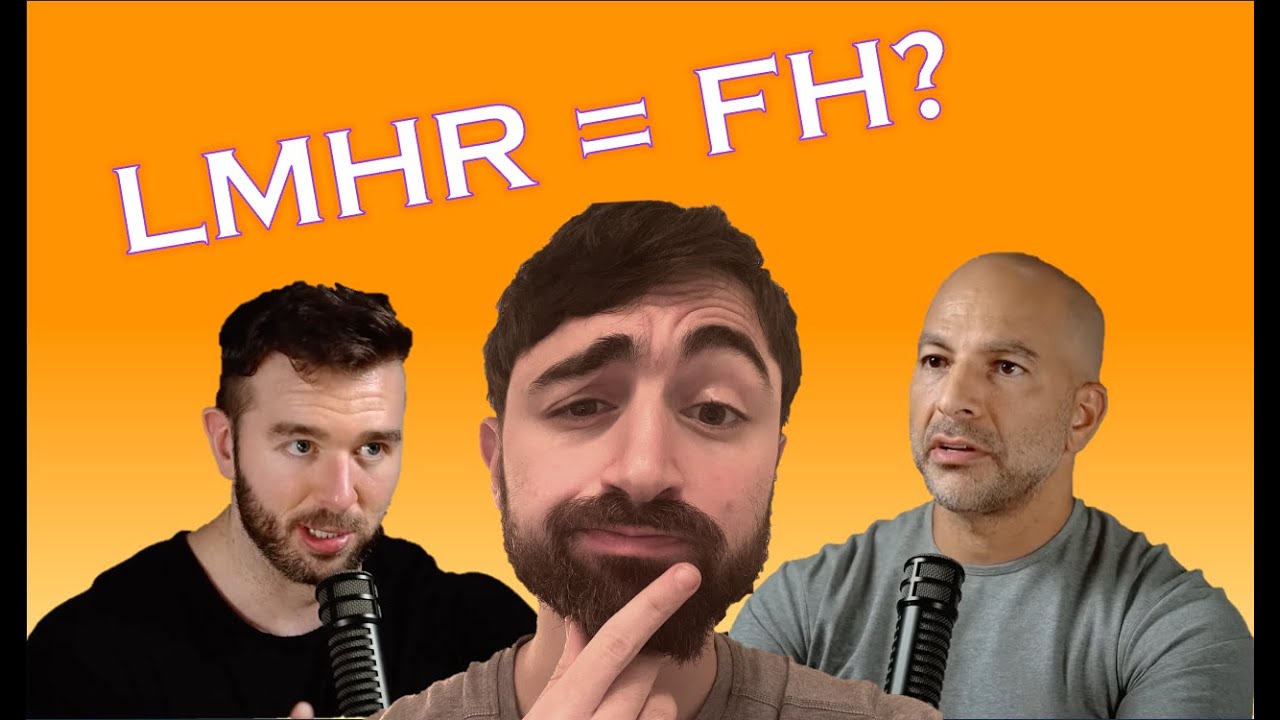
Nick Norwitz, a Harvard medical student and PhD scientist, responds to Peter Attia's discussion of LDL and cardiovascular risk on keto diets. Norwitz distinguishes the lean-mass hyper-responder phenotype—high LDL over 200, high HDL over 80, low triglycerides under 70—from familial hypercholesterolemia, arguing it's a reversible metabolic response rather than genetic disease. He calls for rigorous data on whether this lipid pattern actually increases cardiovascular risk.
Chapters
I don't tend to do, um, response videos, so this will be new for me. And if you're looking for me to try to get personal or put someone in their place, that's not what I'm going to be doing here. To the contrary, I appreciate the circumstances that surround what I'm about to do, so let me lay them out for you. I'm a 20-something PhD scientist and third-year Harvard medical student. Recording this on an iPhone to a relatively shrimpy follower base, although I love you guys, um, as compared to the person I'm going to be responding to, Dr. Peter Attia, who is a practicing clinician, not a medical student, and who is also among the most prominent clinician educators in the world. So what's my goal here? Shoot myself in the foot? Pick a fight with a giant? No, uh, actually I think the, um, that Peter and I and, uh, the host of this particular discussion, Derek, have similar goals. We want to help the public appreciate scientific nuance and inspire interest in science, and we want to provide people with information to help optimize their health and well-being. I also think we align on most things with respect to diet, nutrition, metabolism. And the divergence of opinion, um, or framing, let's say, that I'll highlight in this commentary is, I feel, understandable and the result of the filter of social media, where positions tend to get simplified and people are clustered and stereotyped. It is what it is. Social media in the year 2023, almost 2024. But with that said, I do want to start where I think we do agree. First, I love the way that Derek frames the discussion that Peter and Derek then have about LDL, ApoB, and cardiovascular risk.
So let's say optimizing to reduce your chance of having cardiovascular disease but simultaneously not hindering quality of life. To any significant degree.
Uh, so kudos to Derek. I think we all agree that optimization should include person-specific factors related to quality of life. In other words, when we're talking about abstract things like lower ApoB is better when it comes to cardiovascular disease, that whole 'when it comes to cardiovascular disease' part is really important conceptually at a population level, but but must be taken into a person-specific context for any individual case. The conversation then turns more concretely to LDL, ApoB, and cardiovascular disease. And Peter correctly points out that ApoB particles, the class of lipoparticles, lipoprotein particles to which LDL belongs, are causal and necessary for cardiovascular disease.
ApoB is necessary, though not sufficient. So here you have a causal marker that is necessary. You can't develop atherosclerosis without it, though it's not sufficient. You can have it and not develop atherosclerosis.
This is not disputed, and it follows— it does follow— that a logical risk mitigation strategy is to target a causal factor of disease. That is, to lower CVD risk, it makes sense to innovate approaches to lower ApoB and LDL, as Peter points out. So, um, where are we in terms of what we agree upon? ApoB is causal and necessary for CVD, although ApoB is probably not sufficient to cause CVD, and you can have high ApoB or high LDL and not get CVD. As he fully points out. Um, and we also agree that a logical treatment strategy would include targeting a causal factor. However, this needs to be balanced against quality of life and, um, comorbid medical conditions, as Derek points out. So I'll also mention— I'm not going to go into detail here— but Peter explains that, you know, statins have side effects, especially at high doses. And I'm aware that he recently disclosed he himself is not taking a statin, but he then argues that innovation in LDL and ApoB-lowering pharmacotherapies now provide many other options for ApoB lowering, and thus there's a large menu of options for patients and care providers to choose from to minimize side effects. Um, I think this is a really well-made point that I wanted to acknowledge, although I'm going to put a pin in it for now because practically speaking, most patients are still prescribed statins given their widespread and historic use and thus broad range of available data on statins, the known known of statins as Peter calls them. Conversely, we don't know as much about the short-term effects, or maybe more importantly, the long-term effects of some newer medications like PCSK9 inhibitors and other classes. Interestingly, I am aware of data that, for example, PCSK9 inhibitor loss of function you know, it reduces cardiovascular disease risk, but I'm not aware that it increases, uh, healthspan or lifespan in people with loss of function mutations. And Peter talks about, um, Mendelian randomization studies. I know of at least one that points out PCSK9 inhibition actually might increase Alzheimer's disease risk. Now, I personally don't love to rest my hat on Mendelian randomization, and I don't mean to cause a scare or prevent people from choosing that medication as an option, as it might be very clinically reasonable. But I did think it was worth noting. Again, I want to put a pin in that and acknowledge Peter made a good case that with continued innovations, there are a lot of patient options. And I typically think more options for patients when they're laid out to patients with the pros and cons is generally a better thing. That's definitely something we agree upon. Anyway, here's where I'm gonna push back a little bit.
Why do you think it is that people are so dogmatic about cholesterol and its impact on atherosclerosis? Like, a lot of people want to assert, if I have no inflammation, I'm insulin sensitive, etc., I can't have plaque accumulation. And as long as I stay metabolically fit and healthy, then it's not a concern. Like, are these people just completely neglecting everything intentionally to not make their diet models seem bad? Or what do you think is the— I just have a hard time wrapping my head around somebody who has almost a self-induced familial hypercholesterolemia level from their carnivore diet saying something like, "Don't worry about it." I don't know that I can answer that question.
And I certainly have spent some time in the past trying to understand that. And I've even used the example of FH to try to make the point, right? So for people watching us who don't know what that is, so FH is a disease called familial hypercholesterolemia, and it's, uh, actually the second most common genetic cause of atherosclerosis. Now, it's a disease, it's genetic disease, but it's a polygenic disease, and it's very heterogeneous, meaning it's not like, you know, Huntington's disease where there's one gene that causes the disease, or even Lp, where the single Lp gene leads to elevated Lp, which is actually the most common familial form of atherosclerosis. Here you have literally thousands of different mutations that all produce the same phenotype, and the Disease is defined by the phenotype, not the genotype. So FH is defined by having an LDL cholesterol greater than 190 milligrams per deciliter. So what do we know about people with familial hypercholesterolemia? Well, we know that regardless of their metabolic status, regardless of their inflammation, regardless of how high their HDL is and how low their triglycerides are and all the other things that people in this camp want to talk about, they still get accelerated atherosclerosis at an enormous rate.
First, I, I want to say I get the frustration. I appreciate the dogmatism on social media and the frustration that arises with comments like, if I'm insulin sensitive, then I don't need to worry about cardiovascular disease. And to be clear, I would disagree strongly with that statement. However, there's a clear conflation of positions here with respect to a phenotype known as lean mass hyperresponders, um, who are subjects who go on low-carb diets and see elevations in LDL cholesterol as part of a triad of high LDL above 200, high HDL above 80, and low triglycerides. So there's a clinical distinction, or a critical distinction, apologies, there's a critical distinction between the statement insulin sensitivity and low triglycerides with high HDL equals low risk, i.e., if I'm insulin sensitive, my trigs are low, my HDL are high, I don't have to worry about it. There's a distinction between that and the question, do we know, do we know with certainty if persons with this lean mass hyper hyperresponder phenotype are at increased risk. Do we know that? I'll repeat myself because this is a key sticking point for me. There's a distinction between the statement insulin sensitive, low trig, high HDL is low risk, and the question, do we know if lean mass hyperresponders are at increased risk? Peter then uses the analogy of familial hypercholesterolemia, as you heard in the clip. I would argue this is actually not a fair analogy to the lean mass hyper-responder phenotype, and I'll tell you why. FH, familial hypercholesterolemia, is an inherited disorder with presumed genetic etiology. It's true, as Peter points out, that technically speaking it can be a phenotypic rather than a genotypic diagnosis, but I would take this largely to be because, as Peter also notes, there's broad possible genetic contributions, and the human genome is still not completely understood. So there's just the practical level of, you know, we're just gonna make a clinical diagnosis based on a level, assuming a genetic etiology, which is again distinct from a population LMHR, which we have reason to believe, and I'll get into that in a minute, isn't a congenital disorder, isn't necessarily a genetic etiology, but rather a metabolic response, which is different. So in FH, LDL-ApoB levels are elevated because of a presumed genetic etiology, a broken lipid metabolism, i.e., the LDL receptor is broken, so to speak, and there's decreased LDL uptake. It's familial, it's congenital, If untreated throughout the life course, LDL is elevated, basically from birth. By contrast, in lean mass hyperresponders, LDL levels are typically actually normal on a mixed diet before somebody carb restricts. For example, you know, in myself, when I'm on mixed diet, my LDL naturally runs about 90, even on a standard American diet. But in response to carbohydrate restriction, LDL then goes up. My peak, I've disclosed this before, so this is nothing new, has been well over 500 milligrams per deciliter. And then it's reversible. You add back carbs and the LDL goes back down. Even carbs that are, you know, not healthy carbs. Even in me, as was disclosed 2 days ago very publicly by another clinician, you know, I added Oreo cookies to my diet as part of a experiment that I'm doing, and my LDL plummeted like a rock, over 270 milligrams per deciliter with Oreo cookies in 16 days. Kind of nuts. We'll table that for another discussion, and you can go see the prior video. Again, not recommending Oreo cookies as healthy. This was a metabolic demonstration. But anyway, um, moving on. So in LMHR, LDL levels are normal on a mixed diet, increased in response to carbohydrate restriction, go back down with carbohydrate introduction. And this is a very different situation for congenitally, congenitally elevated LDL from a broken lipid metabolism, whether or not you've identified the precise gene that's contributing to the genetic etiology. In both cases, LDL is increased, and in both cases, it's actually possible to be insulin sensitive and have a low triglyceride to HDL ratio, but the underlying driver is still distinct. One is the function of a presumed-to-be genetic fracture in lipid metabolism, and the other does seem to be a metabolic response. A few more points I want to highlight to really hammer home this case. So with carbohydrate restriction, there's actually an inverse association between body mass index and LDL cholesterol across people, where leaner people have higher LDL. And this is published with, um, verification, you know, about to drop um, with different levels of evidence, including human-controlled trials. Also, the LMHR phenotype presents as an unusual lipid triad, not an elevated LDL in isolation, but with also elevated HDL above 80 and triglycerides below 70, which is unlikely to occur as a triad in a mixed diet. It could occur in FH, but it's definitely not typical. Um, it also appears that in lean people on ketogenic diet, gaining weight lowers LDL, weight loss increases LDL, increasing energy expenditure through like increased cardiovascular exercise increases LDL, and less exercise decreases LDL, less energy expenditure decreases LDL. All this can be explained by a model we've presented, the lipid energy model, Um, actually, I have to give a hat tip to Bob Kaplan, Peter's prior head of research, who was a co-author on this paper. Um, so thank you to Peter for helping to educate, um, uh, Bob. Uh, he made a great contribution. Um, but anyway, um, this can be explained by a metabolic response. I would find it very difficult to explain everything I just went over with a gene dysfunction. It's very clearly distinct from typical FH. I, I, I don't really see a great parallel. I also want to point out, um, people like to point the finger at saturated fat. Now saturated fat can be, uh, have a modifying effect in this LMHR phenotype, but it's definitely not the main driver. I've tested this to start with n 1 data on myself. I can achieve LMHR lipid status on a vegan ketogenic diet, eating very little saturated fat, with crossover to a high saturated fat plus a bit of carbs diet. And guess what? My LDL will be higher eating avocado, macadamia nut, and tempeh as compared to eating steak, butter, egg yolks, and banana. And I test negative for phytosterols as well. Granted, that's an n=1. I'm not generalizing, you know, my own scenario, but I, I can tease that we will have pretty robust data dropping in the coming months making the case that saturated fat is not the driver of the LMHR phenotype. So look out for that.
Now, Peter then next emphasizes, um, again, I've never heard a compelling answer for why FH isn't at least one model here. Furthermore, the Mendelian randomization very clearly establishes the causality of LDL. So I suppose you would have to come up with an argument, which I am not aware of, that would say, even though LDL is causal, because you can't dispute that— I mean, not if you understand mathematics and science— even if LDL is causal, there's something so protective about my fill-in-the-blank diet that it offsets any of the harm of LDL in a way that the person with familial hypercholesterolemia who's eating a normal diet doesn't have, even though on the surface, by all measurable accounts, we're both the same— insulin sensitivity, low inflammation, etc. Again, part of what makes this difficult is that people confuse causality with sufficiency.
So I'd like to reframe that challenge. It's not that one would need to prove there is something so protective about a low-carb diet, but rather I feel the onus is on one to make the case as to why FH is a reasonable analogy to lean mass hyperresponders given all the distinctions I previously laid out. So let me cut to the chase.
Part of what makes this difficult is that people confuse causality with sufficiency.
I, I honestly could not agree more. Um, people do confuse causality with sufficiency. Um, and scientifically speaking, what we have in lean mass hyperresponders is a unique population with what appears to be a metabolic response to carbohydrate restriction as explained by the lipid energy model, leading to an elevation in a causal risk factor for cardiovascular disease, but one that is not sufficient. So the question arises, are lean mass hyperresponders then at increased risk, um, as there's no reason to believe their phenotype is the result of a maladaptive genetic etiology as in FH? So again, I don't think it's a fair analogy. This is not— there's no reason to believe LMHR have a, you know, clear genetic dysfunction as is occurring as the basis for FH, even if it is a phenotypic diagnosis, but there's a reason to believe it's a metabolic response to an environmental pressure. Again, very different things. So I pose the question as a scientific one: what can we say we know about lean mass hyperresponders, and what remain open questions? Um, I love when Peter says earlier in the conversation, I think in some ways we've lost a bit of the awe. I couldn't agree more, and I'm in awe of this LMHR phenotype and very interested in it. With respect to risk, as a scientist, I need to say we don't know. We don't know about lean mass hyperresponders because we don't really have a good comparison population, but we definitely need to find out. So that's me with my scientist hat on. Now, putting my medical student and clinician-to-be hat on, I have urged on social media and in publications, clinical caution at this time. I'm going to link below my Journal of Clinical Lipidology editorial if you want more on my position. It's completely open access, so you can read it. I published it with 9 other co-authors, including respected clinicians and lipidologists. I actually did reach out to Peter about collaborating on the, this very project. He respectfully kind. I know he's very busy, that I'm not a known entity, um, but he cited, you know, this wasn't his realm of expertise. He did suggest very helpfully that I reach out to Professor Ronald Krauss, who ended up being, um, senior author on this particular editorial, as you can see there on the author list. So, um, thank you, Peter, for directing me to Professor Krauss. I do point this out because I want it to be known, um, that I do want to collaborate with anybody who wants to find awe in science around lean mass hyperresponders while at the same time putting forth a unified message of appropriate clinical concern, um, and open-minded consideration of lipid-modifying options. I'm not in favor of the position, "Oh, I'm insulin sensitive, so I don't need to worry about it." Um, uh, and then balancing this, as Derek pointed out, against individual quality of life factors and comorbid conditions. Um, for my closing comments, I should be wrapping this up. This is going longer than I expected. I, I do want to answer the question, why now? Um, like, why am I doing this video now? Foremost, um, over the next several months, big data will drop, several publications that will force conversation about lean mass hyperresponders as a topic with respect to cardiovascular risk. And I really want open and respectful lines of communication I hope you found this all reasonable. I do hope Peter and Derek both get to watch this and consider my position. And I do think we could synergize well, and I would love to have feedback and input on any ongoing projects, including the little silly ones like, you know, Recently, my understanding is actually today on Joe Rogan, Sean Baker is going to talk about an experiment I was doing as a clear provocation. I alluded to it earlier, the Oreo cookie versus statin experiment. And on projects like that where I have the ability to bring in input from anybody, you know, I genuinely would love to have, say, you know, Peter look at something a priori so I can be careful about my messaging. So again, open invitation, Dr. Attia, if you want to have editorial input before I publish anything on that or other topics with respect to projects I'm leading, I am very open, uh, to receiving input. So thank you for what you do, and I hope we can have a nuanced discussion going forward.
Bye.










