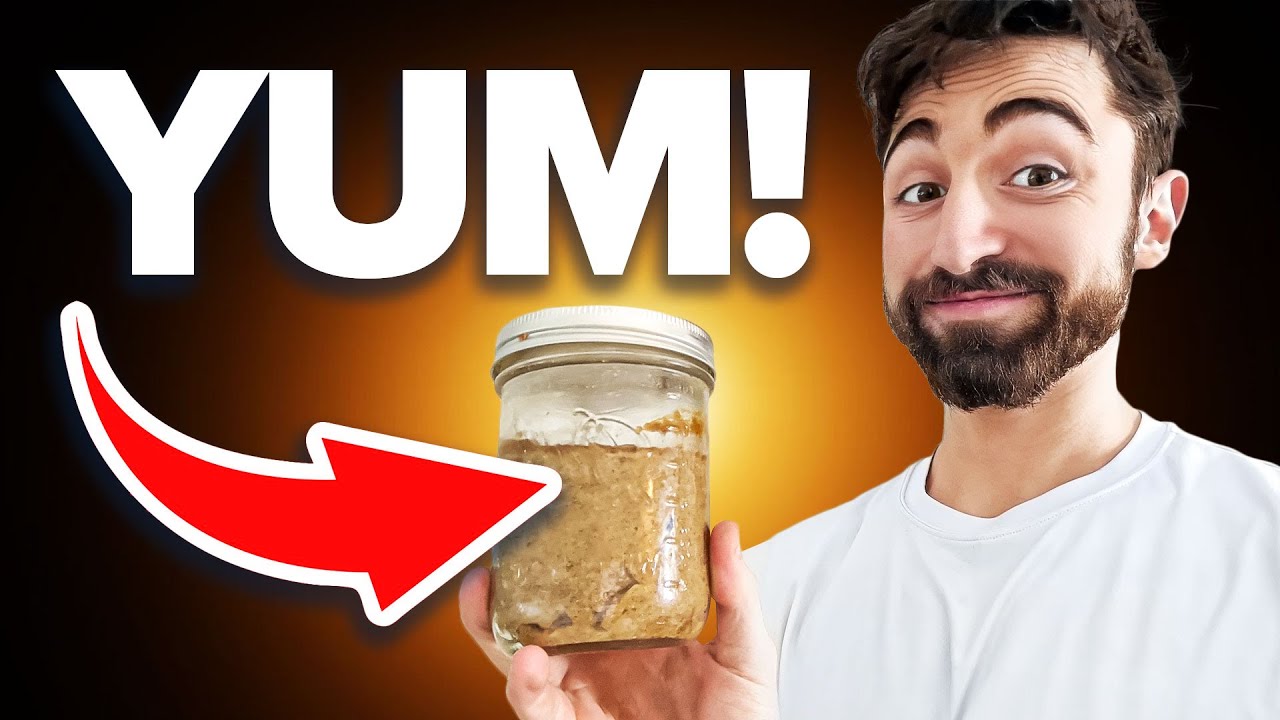
In this 20‑second, three‑ingredient keto nut butter tutorial, the host (Nick Norwitz) demonstrates how to blend macadamia nuts, walnuts, and tahini into a high‑fat, low‑carb spread (87% calories from fat, 2 g net carbs, 5 g protein per 2‑tablespoon serving). Beyond the recipe, the video serves as a rapid nutrition lesson, citing scientific literature on several bioactive compounds. Walnuts provide ellagitannins that gut microbes convert to urolithin A, which RCTs have linked to visceral‑fat loss, improved mitochondrial function, and reduced inflammation. The host addresses common concerns about omega‑6 fats, explaining that dietary omega‑6:3 ratios do not directly dictate cellular ratios and that raw walnuts (vs. roasted) avoid oxidation. Macadamia nuts contribute omega‑7 palmitoleic acid, a lipokine that enhances insulin sensitivity and may aid weight management, supported by a short‑term intervention trial showing BMI reduction. Tahini (sesame butter) supplies lignan antioxidants (sesamin, sesamolin, sesaminol) that protect omega‑6 fats from oxidation, exert anti‑inflammatory effects, and appear highly ketogenic; a personal fasting experiment showed a sesame preload can raise beta‑hydroxybutyrate to ~6 mmol/L within 20 h. The presenter also mentions a free sample of Mark Bell’s Steak Shake Mix (no affiliation) and promotes House of Macadamia with a discount code. The video concludes with a call to action for comments, subscriptions, and personal variations on the nut butter.
Chapters
This might be the best nut butter you'll ever make. It's just 3 ingredients, you can do it in 20 seconds, and it's packed with science-backed benefits that are nuts. But this isn't just a recipe video, it's a sneak attack nutrition lesson. And you butter believe I've got the receipts, by which I mean references to the scientific literature and linked content where you can dive deeper into topics that we're going to touch upon in this video, including the microbiome, visceral fat, Urolithin A, omega-6 fats, palmitoleic acid, omega-7 fats, and ketogenesis. If you find this video appetizing, there's a lot more. But first, what's in this amazing nut butter? The base is macadamia, walnuts, and tahini. Just 3 ingredients chosen for their particular nutrition profiles and, of course, delicious flavor profiles too. And I'm a lazy chef, so the proportions are basically just 1 container of each macadamia and walnuts and a jar of tahini. Since containers do vary in size, here are the ratios in masses and volumes, although you really can just titrate to taste. This yields a mixture that is 87% fat by calories with 2 net carbs and 5 grams of protein per 2-tablespoon serving. The protocol to make it is as simple as dump and blend. Thereafter, you can spice it up as you please—vanilla, espresso, cinnamon, cocoa—or add your favorite protein powder if you want more protein. I don't usually do protein powder to be honest, but my friend Mark Bell sent me these free samples of his Steak Shake Mix, which is dairy-free, and honestly, They're pretty bomb and nicely formulated if I do say so myself, with stevia, organ blend, although you don't taste that, and no artificial sweeteners. I don't have an affiliation, I don't get revenue share, I just really appreciate the gift from Mark, and honestly it's one of the best protein powders I've ever had. So, plug for a friend. Okay, with the recipe behind us, why these 3 ingredients? Let's learn. Walnuts. Walnuts are great because they contain ellagitannins, complex polyphenols that can be converted by microbes in the gut into a compound called urolithin A. There are data suggesting that urolithin A can help reduce visceral fat, which is the inflammatory fat that sits around your organs and contributes to poor cardiovascular health. Also improve mitochondrial health, and improve metabolic health. For example, in one randomized controlled trial, those assigned to a diet rich in compounds that can increase urolithin A, along with other compounds that I review in an associated video called "Uric Acid," anyway, they lost over 14% visceral fat in this RCT, which was over 3 times the visceral fat loss as those assigned to to a more standard healthy eating diet. You can see this video for a review of that really cool study. And if you want even more about urolithin A, I recently did another video covering a 4-month randomized controlled trial using urolithin A supplementation dosed at either 500 or 1,000 mg daily, which found improvements in muscle strength and endurance and signs of improved mitochondrial health. The magnitude of the effects functionally was actually really stunning to me, with the urolithin A treatment increasing leg muscle strength by 10-12% in some tests, along with signs of decreased inflammation, decreased CRP, and increased mitochondrial fat metabolism. But you'll need to see that full video for the details. Now, I know some of you may be thinking, "You said decreased inflammation, but aren't walnuts high in omega-6 fats? And aren't omega-6 fats inflammatory? That's what everybody on the internet seems to be saying." That's a whole other kettle of fish. And while it's true that a high omega-6 to 3 ratio in the body can be pro-inflammatory, your dietary omega-6 to 3 ratio doesn't directly translate into your body's omega-6:3 ratio. And as a case in point, I personally am happy to eat walnuts and also sesame, which is high in omega-6, and I boast a perfect 1:1 omega-6:3 ratio in my cells. So my advice to you is don't fear walnuts or other raw whole foods that happen to be rich in omega-6. Instead, focus on avoiding highly processed industrialized oils and prioritize getting your omega-3. From fatty fish ideally in your diet at least twice per week. And if you want more on the controversial related topic of seed oils, please check out this video. Seed oils and dietary omega-6 are definitely hotly debated. And while I'm surely biased, I do think my seed oil video goes deeper and has a more nuanced take than most media coverage, so I encourage you to check it out. Hopefully it doesn't fry your brain. What's more, people's concern around omega-6 derives largely from the fact that omega-6 fats are fragile and prone to something called oxidation, or damaging of the fats. Therefore, it's important to use raw walnuts, in my opinion, as opposed to roasted walnuts. And here's a teaser for something later in the video: compounds found in tahini, in sesame may actually protect walnuts' fragile fats. We'll get into that shortly, but it may be a synergy in nutrition just as much as it's a synergy in flavor. Now, speaking of omega-6, let's add one and talk about omega-7, specifically omega-7 fat found in macadamia nuts. Omega-7 is a rare monounsaturated fat, or group of them, and the specific one is called palmitoleic acid. It's found in macadamia nuts and few other foods. It's something called a lipokine, or fat hormone, with beneficial metabolic properties, including enhancing insulin sensitivity. I delve into the particulars of palmitoleic acid in this video if you want more. And though my nut butter may show bias, it's worth sharing that I've been a happy customer of House of Macadamia for almost 6 years. My go-to are the kilo bags which I think have great value, and if you use my discount code NICK15, which you can check out in the video notes, it's only $0.84 per serving. Macadamia have a reputation for being expensive, but it doesn't need to be that way. And with that fat-tastic plug aside, let me reassure you that high-calorie macadamia nuts are actually unlikely to butter up your love handles. Interestingly, it turns out that macadamia nuts may actually help with weight management. The only interventional trial of which I'm aware where people were instructed to consume macadamia nuts without caloric restriction actually led to a statistically significant decrease in BMI, body mass index, in just 4 weeks. So, sorry calories in calories out, you lose. Again. And if you want to reconfigure your mindset around calories and whether they cause obesity or don't, which is my opinion, check out either of these two videos. Alright, moving on to our third ingredient, sesame butter, also known as tahini. Sesame and sesame products have been shown in multiple trials to be anti-inflammatory, which may be partly due to a set of antioxidants they contain called lignan antioxidants, which include compounds like sesamin, sesamolin, and sesaminol. These compounds have direct anti-inflammatory effects and also protect against the oxidation of the fragile omega-6 polyunsaturated fats that are found in sesame and walnuts, as we already reviewed. And you can see here a graph of the oxidation of omega-6, specifically linoleic acid, in the presence of sesame's antioxidants. Those lignans, and you can clearly see how oxidation rates drop as the fats are shielded from oxidation by these lignan antioxidants. Additionally, while many people may opt to try to reduce the omega-6 intake in their diet, that's a decent option for some people, there can be benefits to consuming omega-6 particularly in the context of low-carbohydrate ketogenic diets and when the omega-6s come from raw, unprocessed, or minimally processed foods. I'm not endorsing eating ultra-processed foods rich in "seed oils." Specifically, omega-6 fats can be particularly ketogenic, meaning they increase ketone levels more than many other fats. I'm not sure if there's a synergy here with the lignans that I mentioned, but I personally find that sesame products are among the most ketogenic fat sources for me. After just 20 hours of fasting plus a sesame preload, which is 3 tablespoons of sesame oil with my last meal, on the background of a 75 to 78% fat diet, which is my normal diet, my beta-hydroxybutyrate levels, my ketones, can hit 6 millimoles. It takes most people 5 days of complete fasting to reach these levels, but I can do it in less than 1 by leveraging the power of sesame. Admittedly, I have had others try to replicate this, and some have had success hitting these levels while others have not. However, even among those who don't achieve the very high ketone levels like 6 millimol, they tend to see an increase by playing with sesame and to a lesser extent walnuts. It may be a dose effect or a somewhat individual phenomenon. To be clear, this has not been rigorously studied. In, say, human-controlled trials, so maybe it's an area for future research. I'm just reporting what I've seen in other people by anecdote. I know, dirty word, but I think there's value in that. And in case it's not self-evident, this nutritional hack can have interesting therapeutic applications, since some conditions, like neurological disorders, mental health issues, and inflammatory bowel diseases may benefit from higher ketone levels, higher beta-hydroxybutyrate levels as measured in the blood. Now, I'm going to wrap up this video here. And I'm nut gonna lie, this was a fun one. So if you pee can, drop a comment, hit subscribe, and let me know how you'd spice up your own batch of this ultimate biohacker nut butter. And what you're gonna spread it on. Stay curious. I hope you enjoyed this video. It was a different one, but I had fun with it.