Nutrition versus The Lipid Problem: Response Video
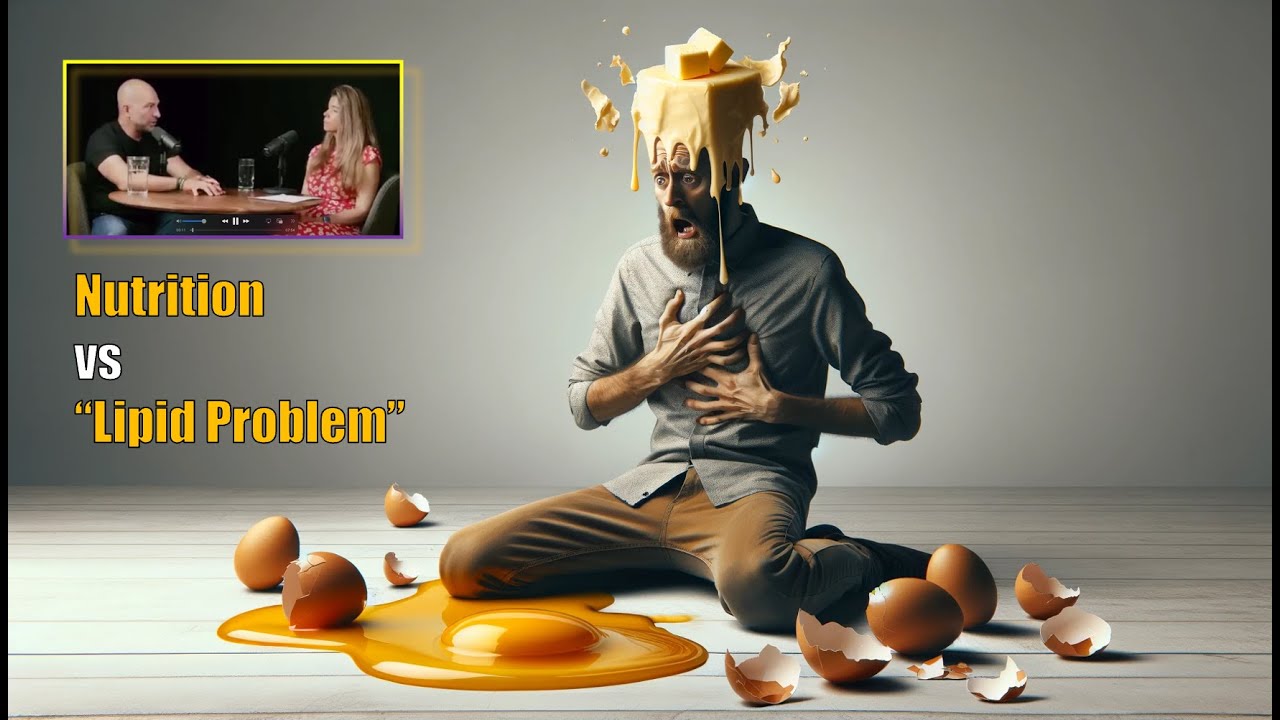
A medical student pushes back on Peter Attia's claim that nutrition solves the lipid problem, arguing the issue is more complex. He cites research showing residual cardiovascular risk persists even with statins, and notes that some people see massive LDL drops from diet alone, suggesting nutrition's role depends on individual metabolic context.
Chapters
I believe that using nutrition to solve the lipid problem is not a good solution. I think use nutrition to solve the nutrition problem. So I want to respond to this clip by Peter Attia. The first thing I'll say is obviously this is a 9-second clip taken out of context of the more complete discussion, which you're free to watch, but I do think it's fair to respond to this clip in particular for a few reasons. One, it's a very direct and explicit comment that I think is pretty self-contained. Two, lipidologists are circulating this 9-second clip— that's where I got it— trying to make the point he just made again as an isolated statement. And three, because I provide further context in other videos where I, you know, I think do go into a lot of nuance on my thoughts in response to Peter Attia, specifically his comments with respect to to LDL cholesterol in the context of The Nutrition Problem or ketogenic diets, if you will, even if that's not maybe what he's referring to exactly here. But now I wanna respond to what he says here with 3 big points. The first has to do with the changing landscape of atherosclerosis as it was put in a Nature Reviews article. So the lipid problem relates to cardiovascular risk, high atherogenic lipoproteins promoting atherosclerosis. And what we actually know is that despite innovations in pharmacotherapy targeting the necessary LDL particles or ApoB particles, mortality rates aren't getting that much better. Now you don't have to take it from me, a 20-something medical student PhD, you can take it from the horse's mouth, in this case, Professor Peter Libby at Harvard, who has a beautiful review out of Nature Press. It was published in 2021. It's entitled "The Changing Landscape of Atherosclerosis." I'll read a couple sections from it because I think it's very well written. Bearing in mind, this isn't a pro-keto fringe article in any sense. This is from a very conventional institution or by a respected professional. So, you know, you can read it and I think it's— something that everybody can get something from. But anyway, here are some sections for you to consider. It reads, rather than elevated LDL cholesterol, an elevation in triglyceride-rich lipoproteins— so high triglycerides— and low HDL now comprises the major pattern of lipid abnormality in many patients who are treated for ASCVD. Highly effective, now inexpensive therapies for lowering LDL statins, ezetimibe, PCSK9, et cetera, have contributed to an overall drop in LDL, whereas obesity, its attendant insulin resistance, and a high carbohydrate diet favor a rise in the prevalence of the cluster of conditions referred to as metabolic syndrome, which is characterized in part by elevated levels of triglyceride-rich lipoproteins. And later on it says, despite effective intervention, so this is pharmacotherapy, drugs like statins, ezetimibe, PCSK9, for the control of LDL, blood pressure, and other traditional risk factors, those related to diet, um, are a considerable residual risk, um, that remains for ASCVD. For example, recent clinical trials of novel cardiovascular agents performed in subjects optimally treated— optimally treated— with standard of care background therapy found that 1 in 20 will have recurrent ischemic events in the year after acute coronary syndrome. 1 in 10 individuals who survive an acute myocardial infarction, a heart attack, in the United States will require readmission within 1 month at considerable personal and societal cost. Moreover, in addition to obesity and its associated insulin resistance, rises in air pollution, transitions from traditional diets towards those that may aggravate cardiovascular risk, the nutrition problem, etc., etc. You can kind of see the point. The idea is that you can't separate nutrition from the lipid problem and the cardiovascular problem. If you try to do that, you know, you can target necessary and causal elements of the cascade, namely ApoB, LDL, but you will be left with residual risk and you will not fully resolve the problem. So no, I disagree completely, and I think you do need to address nutrition with respect to the lipid problem. Now, the chosen phrasing I thought was interesting. Nutrition to solve the lipid problem doesn't make sense. Use nutrition to solve the nutrition problem. You can see the play on words there. I can look at this through a different lens as well and suggest that the lipid problem actually requires nutritional context. Is the same lipid problem, i.e., the same level of LDL, ApoB, the same problem in different nutritional and metabolic contexts? That's the big question we're asking now with study of lean mass hyperresponders who have dramatically elevated LDL cholesterol and ApoB, but in the context of otherwise good metabolic health., and in a carbohydrate restriction-induced phenotype as opposed to something that's genetic like FH. And, you know, based on the preliminary data, which was, um, released on December 8th of, uh, this year, 2023, you know, on first look, it seems possible that elevated LDL in this population doesn't confer the same risk as might be expected by similar levels in other conditions, namely FH, or if somebody else is metabolically unhealthy. So it remains a question. Is the lipid problem informed by nutritional context? And if you treat the nutrition problem, i.e., you treat bad nutrition, bad metabolic health, does the lipid problem take on different, possibly lesser relevance? I think that's an open question. Also, trying to cast lipids, and this is more of an aside, um, and nutrition as exclusive by a play on words is kind of interesting because a lot of nutrition is actually lipids. We eat a lot of lipids, so I'm just gonna put that out there. And the final point that I have to ask is, but what if nutrition just more effective than pharmacotherapy? Actually, it's very ironic that this clip ended up on my timeline the same day that I complete my 5-month Oreo versus statin trial. And you might not know, but I now know which is more effective, the Oreo or the statin. So You know, context matters. Individual patient cases are individual patient cases, and I'm definitely not gonna claim Oreo cookies are healthy. No one's claiming that, um, nor that, you know, nutritional manipulation will be more effective, um, than say statin therapy or PCSK9 in all patients. But we do have reason to believe in, in certain subsets, namely lean mass hyperresponders, addressing nutrition will have a more dramatic impact than, um, medications. Now I do want to do a proper, uh, crossover trial on this, but we already have other data from cohort studies and an interventional trial showing that nutritional manipulation can have a dramatic effect on LDL cholesterol. The highest I've seen is a drop in LDL of, uh, 480 mg/dL and relative drops upwards of 70% in LDL, which is much more effective than, you know, average statin therapy. So, you know, this is all food for thought. Peter is very welcome to reply to my reply or reach out to me to have a longer form discussion. I do think it will be a productive discussion that all of his audience and my much smaller audience would enjoy. I think we could come together on a lot of things. Ball's in his court.










