Plant-Based Low-Fat Study was Wrong
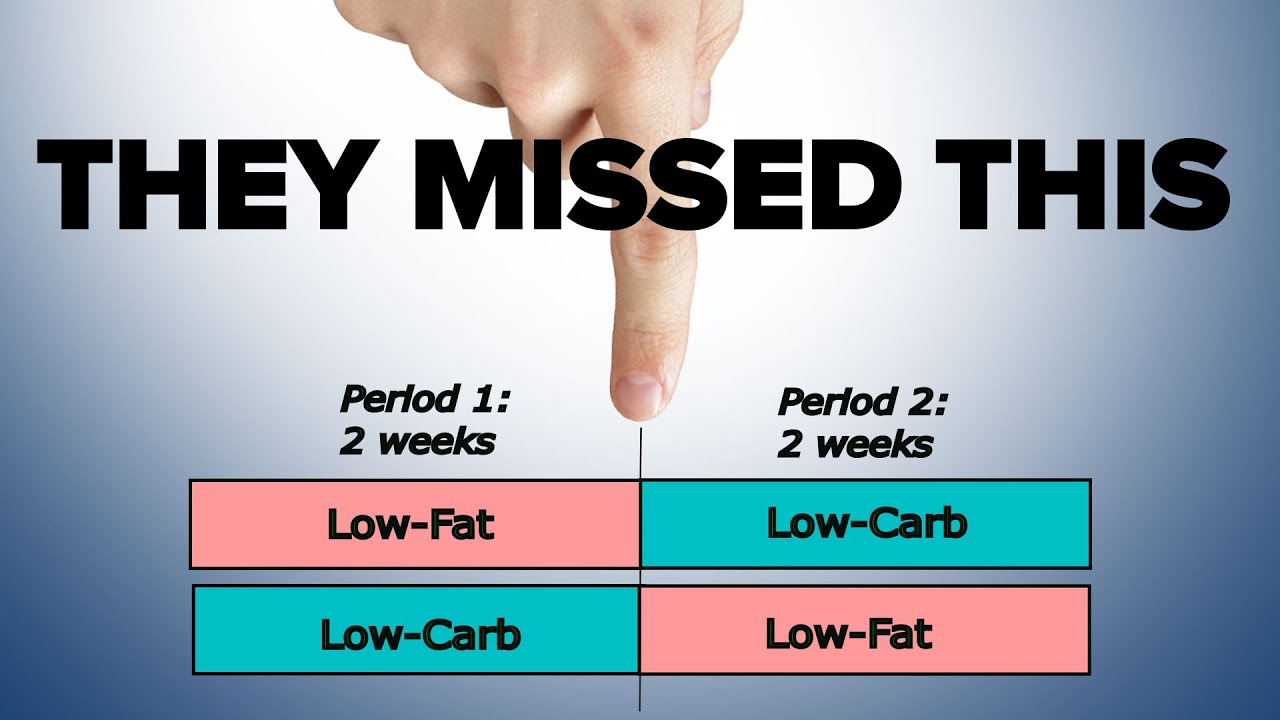
Nick Norwitz reanalyzes a 2021 plant-based diet study and finds massive carryover effects: participants ate more and lost less fat when the low-fat diet came first, opposite when low-carb came first. Diet order was a stronger predictor than diet type itself, suggesting the original study's conclusions were wrong.
Chapters
With the obesity epidemic on the rise, it remains as important as ever to understand the pathogenesis of obesity. Two opposing models have been at the center of the debate: the calories in, calories out model, also called the energy balance model, or EBM, and the carbohydrate-insulin model, or CIM. The EBM suggests that hyperpalatable foods and excess caloric consumption drives overeating and that fat gain and obesity is, simply, a caloric excess problem. The carbohydrate-insulin model reverses the causal arrow. While still adhering to the laws of energy conservation, the carbohydrate-insulin model posits that a major, although not the only, driver of the obesity epidemic is high glycemic load diets, in other words, consumption of sugars and refined carbs that spike blood sugar and insulin, leading to hormonal waves of insulin and overall elevated insulin levels, or hyperinsulinemia, that stimulates fat cells to increase energy uptake and pull in the calories. While there have been many studies purported to support each model, one of the most highly cited studies to support the energy balance model is a 2021 Metabolic Ward study that took 20 participants and put them on alternating 2-week low-fat plant-based and low-carbohydrate animal-based diets. As a brief aside, I will disclose I've personally been critical of this study before for its lack of washout period between dietary phases, which will become very relevant momentarily, and also for the design of the diets, particularly the suboptimal design of the animal-based low carbohydrate diet, which highlights foods like broccoli alfredo, fried chicken tenders on salad, and roasted salted peanuts. To me, this seems far from representative of how these diets are practiced in the real world and by clinicians and patients, thus already qualifying the conclusions. But I'll let you be the judge of that. Returning to the matter at hand, the research team reported that the low carbohydrate diet led to greater caloric intake during the study, and— over the past couple of years, this study has been held up as a victory for the energy balance model over the carbohydrate insulin model. But that narrative has just changed. In a reanalysis of publicly available data from that trial, we provide evidence that the initial trial failed to account for large diet carryover effects and that the data actually more strongly support the carbohydrate insulin model. So let's dig in. The original 2021 publication in Nature Medicine reported that 20 subjects were kept in a metabolic ward and fed low-fat or low-carbohydrate diets, and the low-carbohydrate diet arm ate more calories. Importantly, the authors reported that they looked for and did not find evidence of significant diet carryover effects, as noted here.
Recently, the original team posted a preprint reporting a diet carryover effect, but they buried the lead. What are the implications for the validity of the original study? And what are the implications for the carbohydrate-insulin model? That's why we did our study. So, just how big were the diet carryover effects?
The effects were massive, and much bigger than the effects for the diets themselves. Take for example the low-fat diet. When the low-fat diet was consumed first, participants ate more calories than when the low-fat diet was consumed second. Conversely, participants ate fewer calories on the low-carb diet when it was consumed first as compared to when it was consumed second, and you can see that here. The results were similar for fat loss, i.e., eating a low-carbohydrate diet first had a metabolic advantage. These data are consistent with the conclusion that eating a low-carbohydrate diet first led to positive adaptations, priming subjects for decreased intake and increased fat loss, and that the low-fat diet primed subjects negatively. This can actually be tested statistically. When we pitted the effects of each diet versus the effects of diet order, the results were remarkable. In the spiderweb plot, larger surface area suggests a variable is a better predictive model of caloric intake or fat loss depending on the variable we're looking at. This hexagon represents the effect of diet on caloric intake, and this hexagon represents the effects of diet order on caloric intake in this study. And the spider graphs for fat change were similar. As you can see, diet order dominates. There were huge diet carryover effects. To further strengthen our findings, we assessed for biomarkers of diet carryover effects in the form of serum beta-hydroxybutyrate, a ketone, levels in the blood, and respiratory quotient, a measure of fat burning versus carb burning. We found that participants who ate the low carbohydrate diet first had much higher ketone levels, beta-hydroxybutyrate, when it was consumed first than when it was consumed second. Furthermore, individuals on the low-fat diet arm had lower respiratory quotients when the low-fat diet arm was consumed after the low-carb diet arm as compared to when it was consumed first, consistent with metabolic priming by the low carbohydrate diet. Now, here's a question: since the carbohydrate insulin model posits that high insulin drives fat gain, would you expect that insulin in the first phase would impact energy intake and fat gain in the second phase? We sought to test the carbohydrate insulin model by looking at a biomarker of insulin release, C-peptide, and seeing if its change during the first phase of the diet, the first 2 weeks, predicted caloric intake and fat loss during the second 2-week phase. And indeed it did. We found that changes in C-peptide, a marker of insulin release, during the first 2 weeks was strongly predictive of caloric intake and fat loss in the second 2 weeks, as you can clearly see here. This finding strongly supports the carbohydrate insulin model consistent with the idea that greater release of insulin, as marked by C-peptide, put fat cells in a state in which they were pulling in calories, leading to subsequent increase in caloric intake in the second phase of the study. So this study is consistent with the carbohydrate insulin model. So these data, rather than supporting the energy balance model over the carbohydrate insulin model, actually support the carbohydrate insulin model over the energy balance model.
With a major differential carryover effect, the only valid test is the comparison in the first phase. These tests suggest an advantage for the low-carbohydrate diet versus the low-fat diet, with values opposite in direction from those in the original report. Importantly, energy intake in the second week of the first phase, after participants had some time to adapt to their respective low-carb or low-fat diets, showed a statistically significant advantage for the low carbohydrate diet in terms of energy intake in week 2 of the first phase, consistent with the carbohydrate-insulin model. So, what are the implications? These findings invalidate the conclusions of the original manuscript. The only valid findings support the carbohydrate-insulin model over the energy balance model.










